This is Newcastle Eldon Square was like back in the 1970s before I was born as you can see it was a lot different then to how it looks like now. It was like this for years in the 70’s.
Weevl Bloggers Corner

This is Newcastle Eldon Square was like back in the 1970s before I was born as you can see it was a lot different then to how it looks like now. It was like this for years in the 70’s.
Dorothy Field was one of the first women who volunteered to work overseas as a Voluntary Aid Detachment (VAD) nurse. She tended the wounded throughout the Battle of the Somme.
Dorothy was a member of the Voluntary Aid Detachments of the British Red Cross Society during the First World War. In spring 1915, she went to France and was posted first to No.4 General Hospital at Versailles and then to No.10 General Hospital in Rouen.
Private papers

Dorothy Field photographed in her Red Cross uniform after the end of the war. She is wearing the medal ribbons of the 1914-15 Star, the British War Medal and the Victory Medal, and has four chevrons on her arm indicating four years service overseas.
In small pocket diaries, Dorothy recorded brief details of what she saw and heard. On 24 June 1916, the great artillery bombardment on the Somme began, marking the start of the battle. Although she was many miles away at the time, in Rouen, Dorothy noted in her diary that she could hear the guns firing ‘very distinctly’. When the sound finally stopped on 1 July, casualties began to pour into No.10 General Hospital.
Private papers

Pocket diaries kept by Dorothy Field during the First World War.
The first convoy of 170 men arrived at 4am on 2 July. ‘The “going over the top” results’, Dorothy wrote. ‘Practically all surgicals.’ Over the next 48 hours, four convoys of wounded arrived, while two convoys of stabilised patients left for other hospitals in France or Britain. Such was the intensity of the work at the hospital, it was 13 July before Dorothy was able to take a rest from her duties.
Over the following weeks the steady arrival of wounded men charted the course of the battle. In July, Dorothy nursed her first Australian casualties. A few weeks later she met soldiers from New Zealand and towards the end of September men from Canada.
With patients frequently dying from wounds, it was a tiring and, at times, depressing experience. But like the soldiers at the front, the hospital staff took their mind off the war with theatrical entertainments during quiet periods. Among Dorothy’s possessions is a concert programme from 2 September 1916.
Dorothy later served for a year in Italy, where she was stationed at Genoa, Turin, Arquata and Cremona. During the Second World War, she worked for the London Volunteer Ambulance Service.

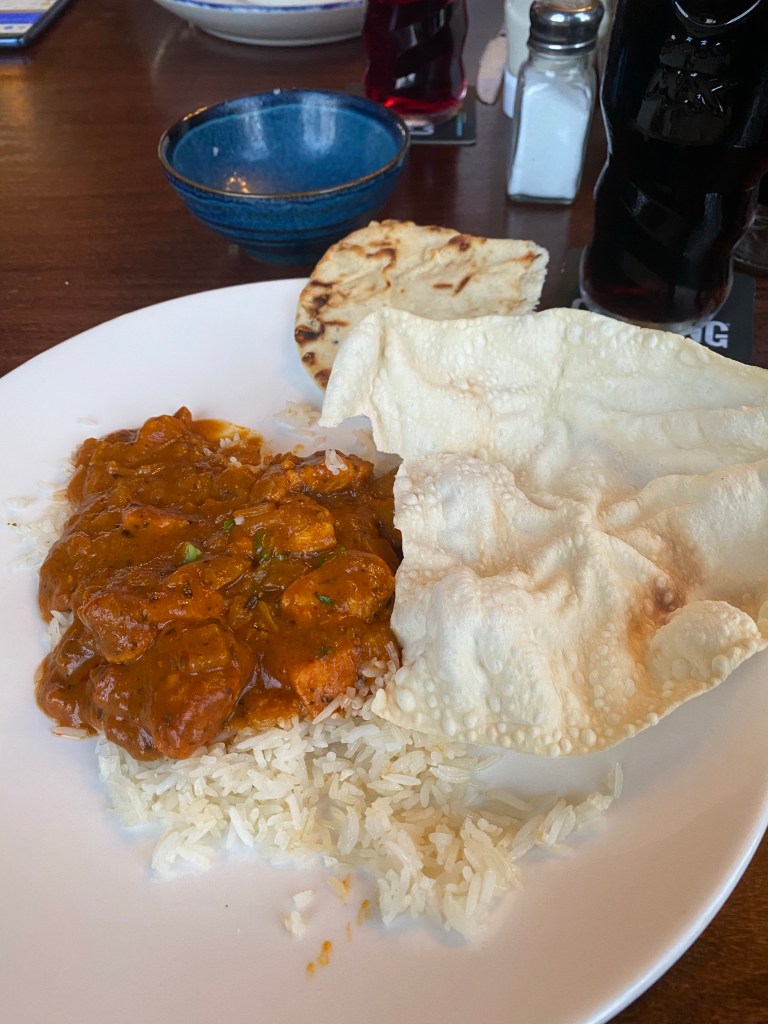
I really enjoyed my Bacon and Cheese Burger and Chips I had for dinner last night when I went to The Beacon Pub with my Mum and Steve it was very nice. It had been a while since I had a Bacon and Cheese Burger and Chips at The Beacon so I really enjoyed it.

With the outbreak of war with Nazi Germany, Britain needed manpower and in October 1939 the ‘colour bar’ was again lifted. The RAF began recruiting for aircrew in the Black colonies in November 1940, but despite the formal end of discrimination Black people still found it difficult to enlist. Some therefore travelled at their own expense to join the RAF in Britain while others joined the Royal Canadian Air Force (RCAF).
In 1939, the population of the Caribbean stood at less than three million people. From this, some 6,000 Black Caribbean men volunteered for the RAF, 5,500 as ground staff and some 450 as aircrew. Another 80 women joined the Women’s Auxiliary Air Force (WAAF). The largest Caribbean contingent came from Jamaica, and in February 1945 there were over 3,700 Jamaicans in air force blue. In Africa, the colonial authorities obstructed enlistment and only 60 volunteers were accepted. A further 5,200 entered the West African Air Corps, a local auxiliary force supporting RAF units based in Nigeria, Gold Coast (Ghana), Sierra Leone and Gambia. A number of Black Britons are also known to have served.

Once the volunteers arrived in Britain, they found that the RAF took the issue of racism seriously. An Air Ministry Confidential Order of June 1944 stated:
“All ranks should clearly understand that there is no colour bar in the Royal Air Force…any instant of discrimination on grounds of colour by white officers or airmen or any attitude of hostility towards personnel of non-European descent should be immediately and severely checked.”
Having abandoned the ‘colour bar’, the RAF was now more advanced regarding race than civilian employers of the day.
Flying Officer Jellicoe Scoon later flew Spitfires with 41 Squadron and Typhoons with 198 Squadron.


In August 1914, Lord Kitchener, the Secretary of State for War, realised Britain needed a bigger army.
He made a direct appeal to the men of Britain. Posters showed him pointing his finger at anyone passing by.
Men felt proud to fight for their country.
In the first weekend of the war, 100 men an hour (3,000 a day) signed up to join the armed forces.
By the end of 1914 1,186,337 men had enlisted.
Recruitment drives were held in places like Trafalgar Square
Only men aged between 18 and 41 could become soldiers. (The age limit was increased to 51 in April 1918 because so many men and boys had been killed by the end of the war in 1918)


Photograph of a man giving his name to an officer at a recruitment drive in Trafalgar Square during World War One, Recruitment drives were held in places like Trafalgar Square Only men aged between 18 and 41 could become soldiers. (The age limit was increased to 51 in April 1918.)
The Government wanted as many men as possible to join the forces willingly.
But in 1916 a law was passed to say men had to join whether they wanted to or not. This was called conscription.
Watch our video to find out more about men from workplaces, churches and villages who joined the army together.
Lord Derby, a politician, encouraged men to join up with their friends as a way to recruit more soldiers.
People who already knew each other would be good for the army. They would keep each others’ spirits up. These groups became known as ‘Pals Battalions’.
One famous Pals Battalion was a group of around 700 men from Lancashire.
When the Pals left the small town of Accrington over 15,000 people crowded the streets, waving flags and cheering.
1 July 1916 was the first day of a battle near the river Somme. In just 20 minutes, 235 of the Accrington Pals were killed and over 350 were wounded.
Everyone in Accrington was shocked and sad. In some families all the men died on the same day.

Some men refused to fight for moral or religious reasons. They said their consciences would not allow them to kill.
There were about 16,000 conscientious objectors.
Some were allowed to do non-fighting work, such as farming or as stretcher-bearers on the battlefields.
Thousands more were sent to prison. They were often treated harshly there.
A white feather was used as a symbol to mean a man was a coward. They were presented to men in the street or on the bus if they weren’t wearing uniform.
The idea was to shame the man and make him join the army. This was unfair. There were many good reasons why a man might not be in uniform.
Millions of British men were injured or died in the war. The government needed to replace them so recruitment became a part of everyday life.
By the end of the war almost one quarter of all the men in Britain had been in the armed forces.


I love my new T Shirt and my new wrestling socks my Dad and Bern got me for my Birthday. I’m going to wear the wrestling socks everytime I’m having a couple of pints🍻watching my wrestling in the afternoon. I’m going to wear them when I am watching RAW Smackdown AEW Dynamite AEW Collision AEW Rampage and things on the WWE Network.

This is one of my favourite Only Fools And Horses episodes it is called A Losing Streak. It is from 82 from before I was born I think it is one of the most funniest episode’s. It is where Del Boy and Boycie play cards and Del Boy beats Boycie I like watching it when it is on the Sky channel GOLD. The episode came out and was released on Thursday the 4th November 1982.

I am looking forward to catching up with all of the AEW Rampage episodes on The Sky Plus Planner at home the last few weeks. I think it is just as good as AEW Collision and AEW Dynamite. I have downloaded the last four AEW Rampage episode’s on both Sky Planner’s in The Living Room downstairs and in my Bedroom at my Mum’s House I am talking about. I am going to watch and catch up with AEW Rampage later on tonight.

I have caught up with all of my AEW Collision episode’s the last couple of days since yesterday and Sunday I can start watching it every week now it is really good. I am really enjoying watching it at the minute. I also think it is just as good as AEW Dynamite and AEW Rampage.

I really enjoyed my Fish and Chips I had for my dinner last night when I went to The Hunting Lodge with my Mum and Steve they were very nice. As you can see I had Garden Peas with it I prefer them to Mushy Peas I had a couple of pints with it too.