This is one of my favourite Wwe wrestling pay per view’s from a couple of years ago it was on Saturday the 19th February 2022 two years ago. I am going to watch it on the Wwe Network again sometime to it was on Saturday the 19th February 2022 it is on for 2 hours and 49 minutes just under 3 hours. Brock Lesnar wins the main event Elimination Chamber match.
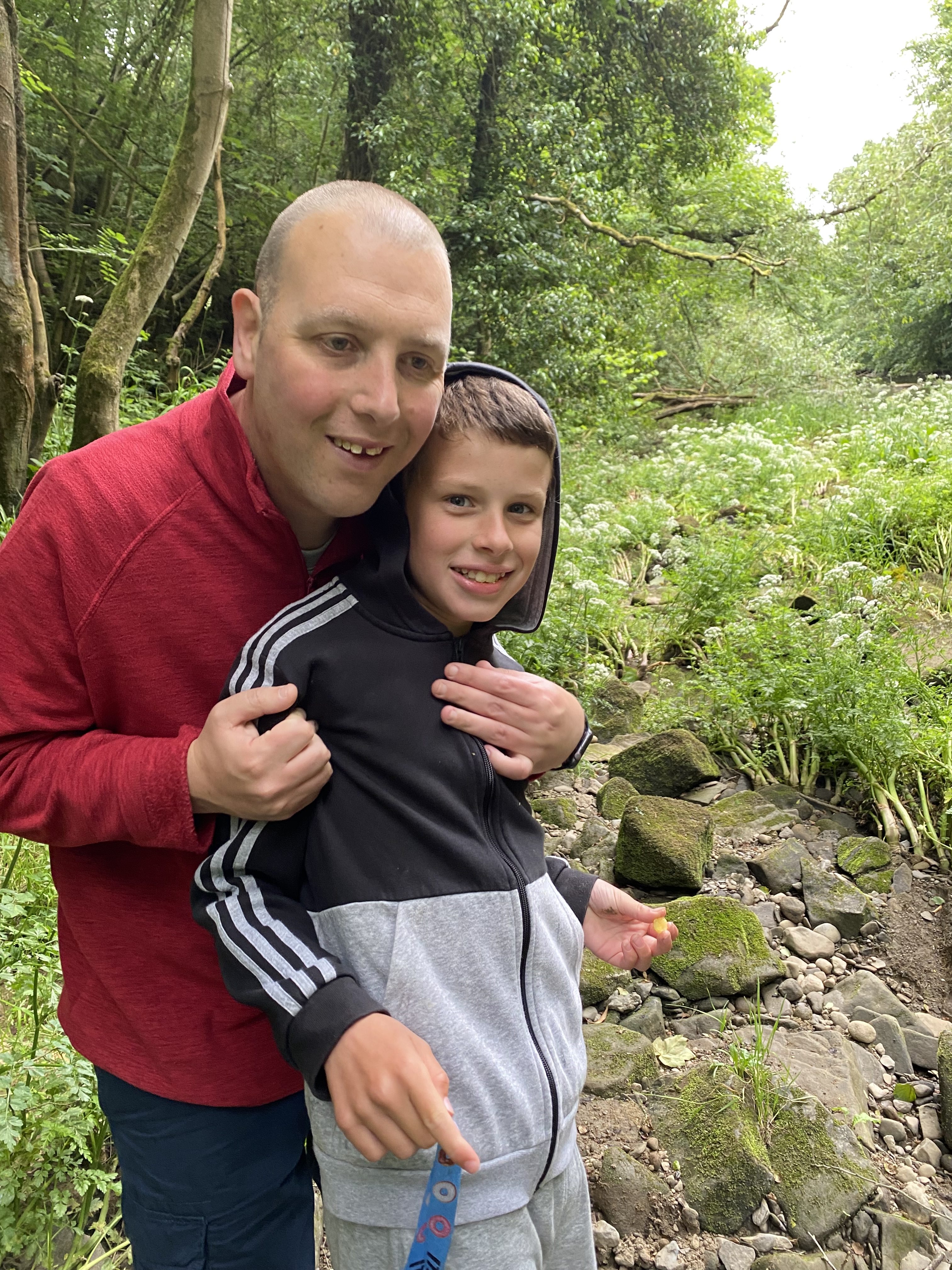
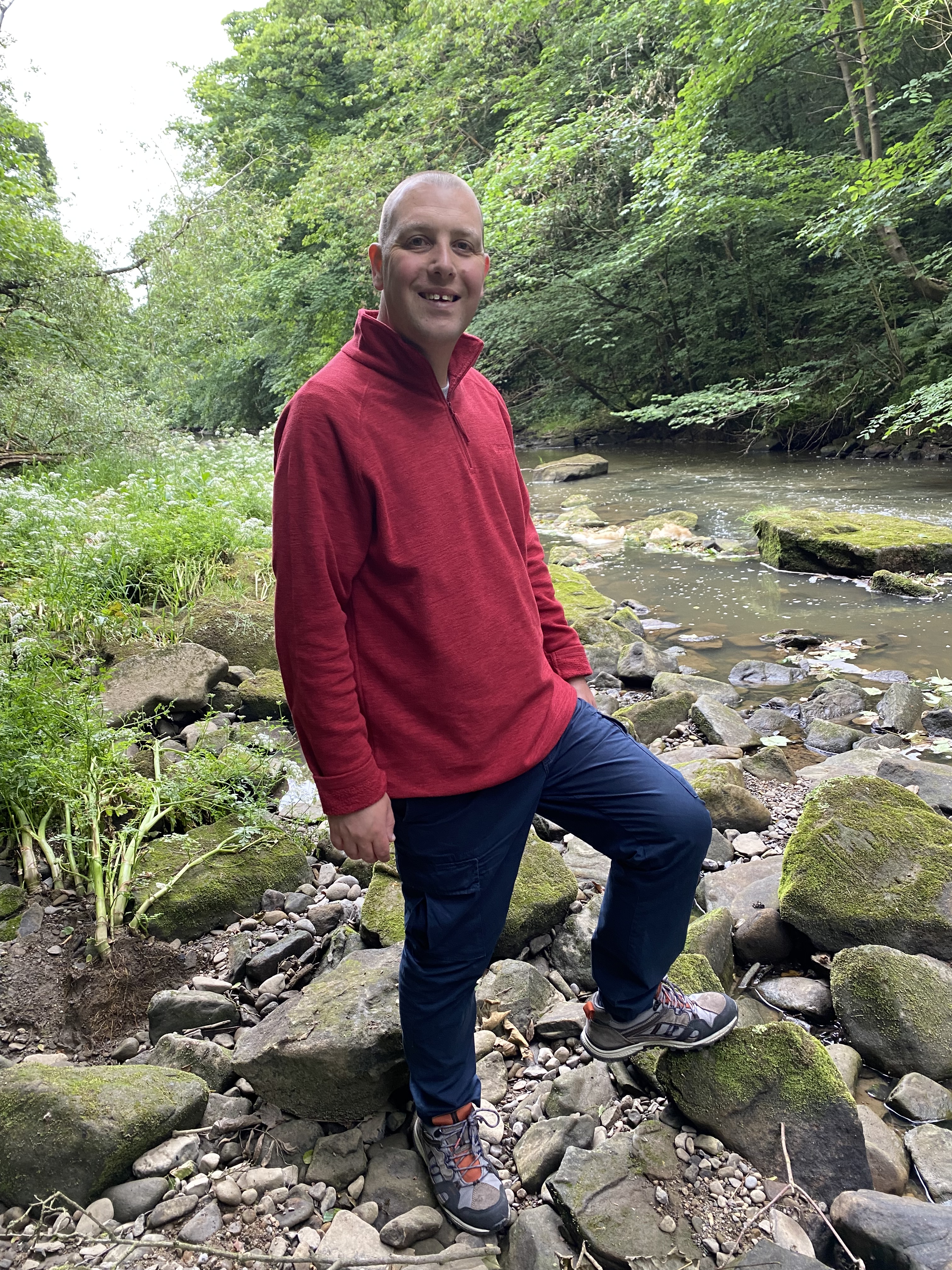
I had a really nice day at Plessey Woods Country Park with my Dad Bern Harry and Ellie on Sunday. This is me and Harry standing together next to the rocks and The River it is also a very nice Countryside over there to where we walk to it is all in Plessey Woods Country Park.
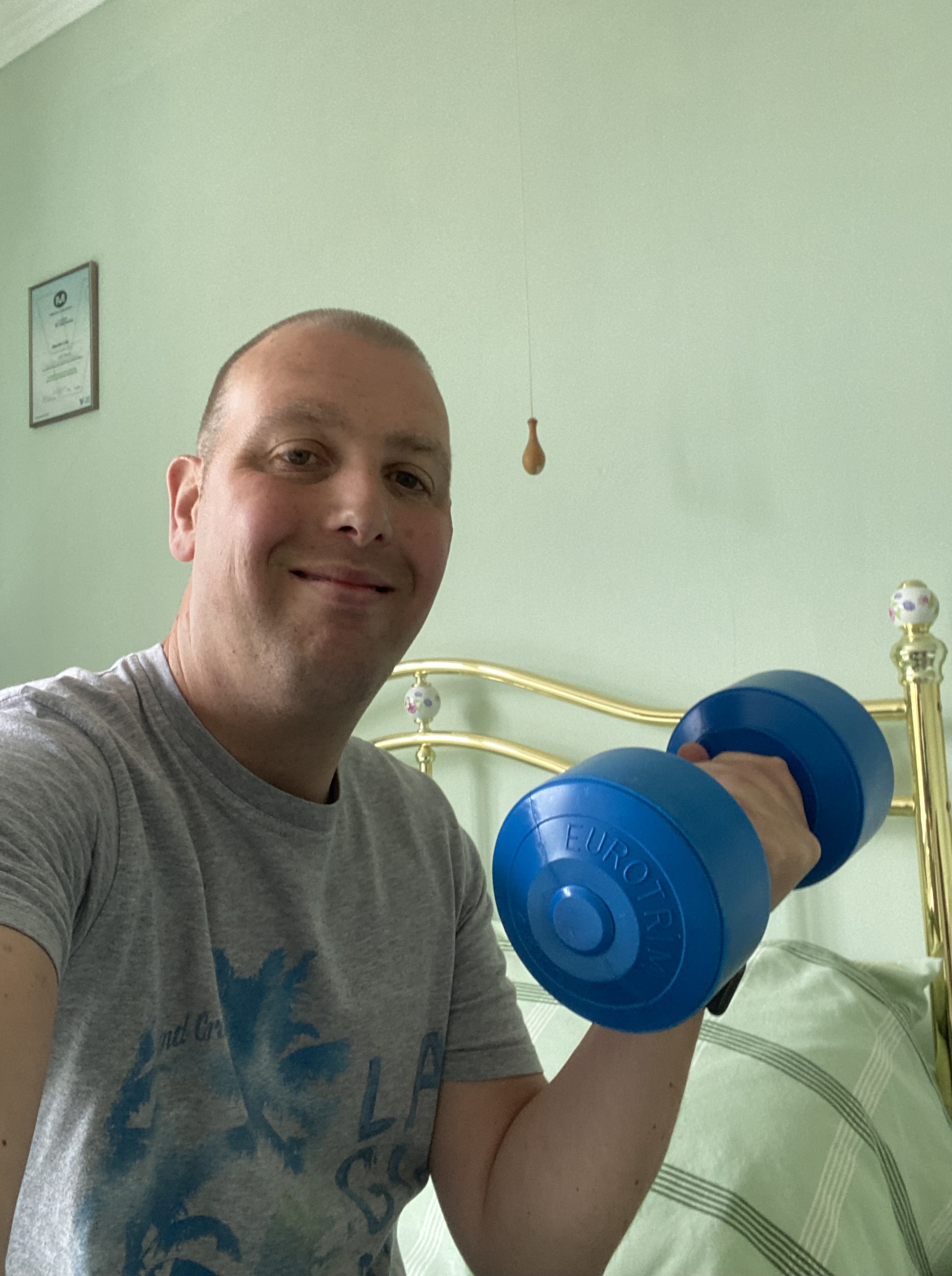
I have moved on to my big blue dumbbell and I am still using my big yellow dumbbell to so I am now using both of them in my Bedroom at mine and my Dad and Bern’s House. This is the selfie I took yesterday and the blue dumbbell is the heaviest dumbbell out of the yellow one. The pink one the pink one is small and the yellow one is medium and I am still really enjoying my weightlifting Exercises every morning and every night to.
I am really looking forward to watching Coldplay at Glastonbury and perform at Glastonbury from Sunday night I have not seen it yet their are on for 2 hours. It is Chris Martin that is performing with his band Coldplay it will be good when I watch it and catch up with it.
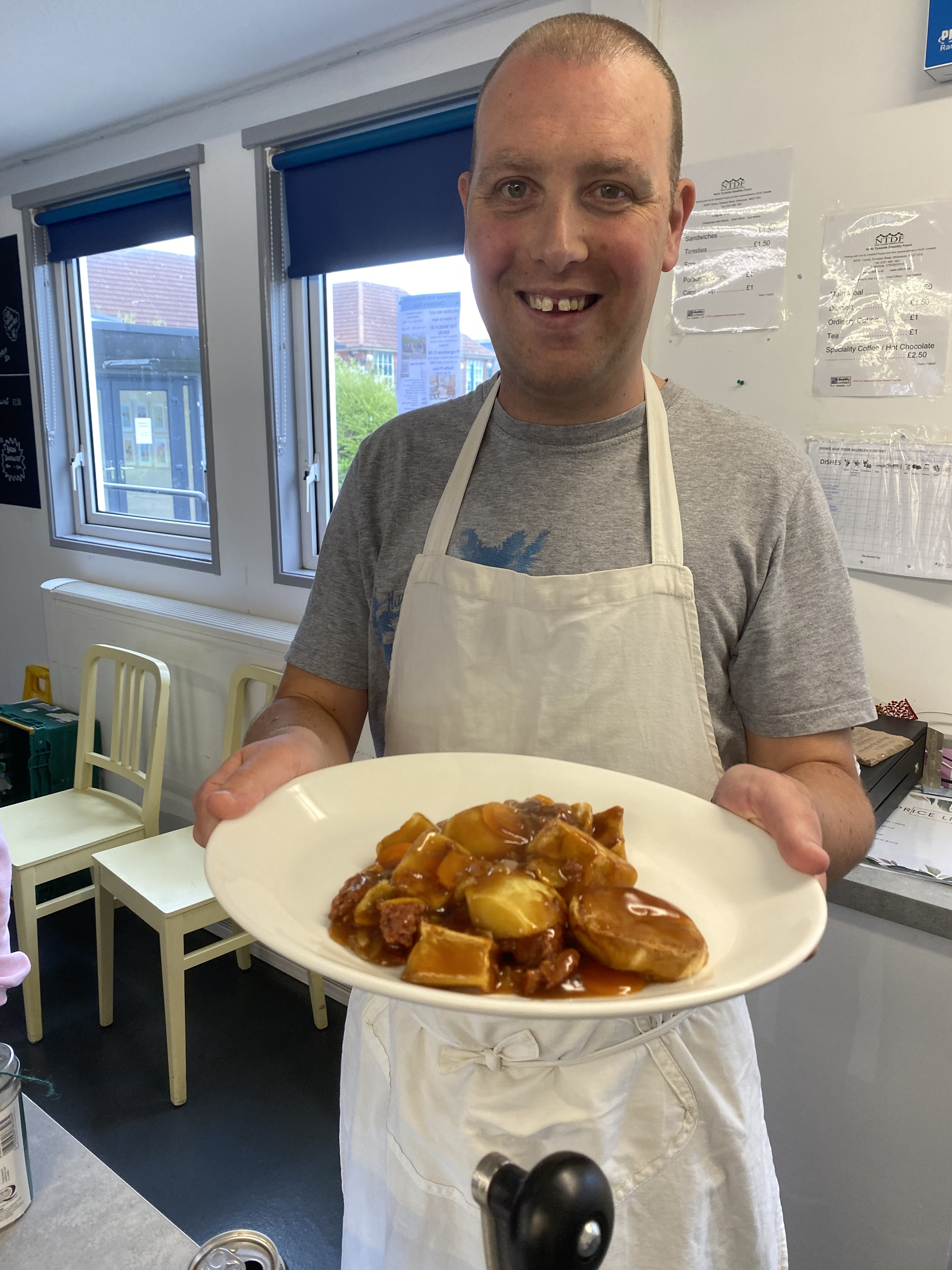
I really enjoyed my Cornbeef Hotpot I made yesterday in The NTDF Cafe it was very nice. Joe helped us cook our own Cornbeef Hotpot as he always does a good job helping us every Monday.
These are the really old BBC logo’s from the 90’s from when I was little The BBC Channel was like this for years back in the 1990’s. This picture use to come on the telly just before The News use to come on and just after The News went off the air and finished.
I am looking forward to watching Wwe NXT from last night on the Wwe Network sometime this week now that I have caught up with all the Wwe NXT episode’s from this year on the Wwe Network. I will be watching it every week on the Wwe Network after it has been on every Tuesday night from now on now that I have caught up with all of them.
I love the Wwe theme song No Chance In Hell it was Vince McMahon and Shane McMahon’s entrance song. I love The Wwe Music Volume 4 1999 version from when I was twelve years old from when I was in year seven at Southlands when I was in my first year at Southlands School that is The Wwe Corporation’s version which is on for 2 minutes and 2 seconds. The Mr McMahon version is on for 1 minute and 59 seconds but it is all the same song but Vince McMahon’s version is shorter at the start of the song when The No Chance In Hell song comes on. I love both version’s of the song and I love listening to both of them on my music library on my iPhone when I am out and about walking or on The Metro on my way to NTDF or on The Metro on my way back home from NTDF. The song was originally from The 99 Royal Rumble which Vince McMahon won that year. It was the theme song to Royal Rumble 1999 from The Attitude Era 99.
I am looking forward to watching Coronation Street 60 Unforgettable Years on itvx sometime. It is on for 1 hour and 4 minutes just over an hour. It has also just recently went on itvx it will show episodes probably before I was born after I was born and probably when I was little just after I was born to.
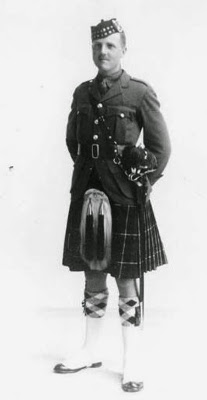
Norman Baillie-Stewart (15 January 1909 – 7 June 1966) was a British army officer who was arrested in 1933 for espionage, and subsequently convicted and imprisoned.
He was an active sympathiser of Nazi Germany, and moved there after his release from prison in 1937; he became a naturalised German citizen in 1940. Before and during World War 2 he made English-language propaganda radio broadcasts and became one of several broadcasters associated with the nickname Lord Haw-Haw. After Germany’s defeat, he was again imprisoned. He was released in 1949 and spent the remainder of his life in Ireland. He died in 1966.
In 1933, he became widely known as The Officer in the Tower as he was imprisoned in the Tower of London after his first arrest, becoming the last British subject to be held in the Tower as a proper prisoner.
Early life
Baillie-Stewart’s father was Lieutenant Colonel Cron Hope Baillie Wright (1875-1937) an officer in the British Indian Army who served in the 62nd Punjabis during the First World War. His mother was from a family with a long tradition of military service. His older brother, Eric Codrington Stewart Wright (1905-1987) also joined the army, and became a 2nd Lieutenant in the Loyal Regiment (North Lancashire) in 1925.
In January 1929, just before he graduated, he changed his surname from Wright to Baillie-Stewart, perhaps under the belief that he was looked down upon by more senior officers. He graduated tenth in the order of merit and in February 1929 received a commission as a subaltern in the Seaforth Highlanders although he soon grew to dislike army life.
In 1929, Baillie-Stewart was posted to the Seaforth’s Second Battalion in India. In 1930, he saw active service on the North West Frontier, where he was reprimanded by his company commander for removing a native banner from an Afridi tribal graveyard, which aggravated tensions with local tribesmen. He later replaced the banner on the orders of a senior officer.
A campaign medal was authorised for that campaign, but Baillie-Stewart did not receive it. He returned to England in early 1931 after he had applied for transfer to the Royal Army Service Corps.
Espionage career
In August 1932, the British Security service, MI5, became aware that a man in Berlin, who claimed to be a British army officer, had attempted to gain an interview at the German War Office. The British embassy in Berlin tentatively identified the man as Norman Baillie-Stuart. An investigation was begun, in the hands of Major William Hinchley-Cooke of MI5.
Hinchley-Cook searched Baillie-Stuart’s quarters and began intercepting his mail; this revealed his communications with a German contact. During the autumn of 1932, Baillie-Stuart made three weekend trips to the Netherlands, briefly meeting a German contact in Rotterdam each time, although MI5 was initially unaware of this as they confined their investigation to intercepting his mail. In November 1932, MI5 opened a letter to him containing £50 in £5 banknotes. Baillie-Stuart replied with a letter to “Herr Obst” in Berlin. A second letter to Baillie-Stuart in December contained £40 in £10 notes.
In January 1933, it was decided to confront Baillie-Stuart with the gathered evidence, and offer him the chance to quietly resign from the army in exchange for information about his contact in Germany. He refused to do this and so was charged with offences against the Official Secrets Act. He wrote a further letter to “Herr Obst” in Germany, describing he predicament, which he gave to his Adjutant to post. However the adjutant instead gave it to Major Hinchley-Cooke.
On 20 March 1933, Baillie-Stuart was taken to the Tower of London, the authorities believed this was the least-open military establishment in London, and holding him there would help keep the matter out of the public eye. He was the last British subject to be held in the Tower as a proper prisoner, rather than as one awaiting transfer. However this attempt at concealment backfired. The story of Baillie-Stuart’s arrest was revealed in the press by the well-known romance novelist Barbara Cartland (then working as a gossip columnist) who got the details from an acquaintance. The story of an officer from a prestigious regiment, facing the unprecedented charges of espionage and held in the famous Tower of London quickly became a press sensation.
Baillie-Stewart’s court-martial was held at Chelsea Barracks and began on 20 March. There were ten charges under the Official Secrets Act for selling military secrets to a foreign power. Baillie-West pleaded not-guilty to all charges.Because Britain was not at war, he was not in danger of execution, but the ten charges against him carried a maximum sentence of 140 years in jail.
The court was told that Baillie-Stewart began to offend in 1931 when he met and fell in love with a German woman while he was holidaying in Germany. He decided to become a German citizen and wrote a letter to the German Consul in London to offer his services. Receiving no answer, he travelled to Berlin without permission to take leave, where he telephoned the German Foreign Ministry and demanded to talk to an English-speaker. That resulted in him making contact with a Major Mueller under the Brandenburg Gate, where he agreed to spy for Germany.
The Vickers A1E1 Independent tank, the only example built, now preserved at the Bovington Tank Museum (2010)
Using the pretext of studying for Staff College examinations, he borrowed from the Aldershot Military Library specifications and photographs of an experimental tank, the Vickers A1E1 Independent, as well as a new automatic rifle and notes on the organisation of tank and armoured car units.
Baillie-Stewart was convicted of seven of the ten charge against him and was sentenced to cashiering and five-years in prison. Soon after, while held in Wormwood Scrubs, he was interviewed again by an MI5 officer and revealed that the Herr Obst he had addressed his letters to had been the cover-name of Major Muller (“Muller” was also likely a cover-name). Marie-Luise had been merely a figment of his controller’s imagination. Baillie-Stewart’s code-name was Poiret (little pear). That and Marie-Luise (a variety of pear) were names used to conceal the correspondence with Muller. Muller’s cover name, Obst, was the German word for “fruit”
Baillie-Stuart was released from Maidstone Prison on 20 January 1937.
German collaboration
In August 1937, eight months after his release from prison, Baillie-Stewart moved to Vienna, where he applied for Austrian citizenship, however, it was refused since he did not meet the residency qualification. In February 1938, the Austrian government, led by Kurt Schuschnigg, suspected him of being a Nazi agent and gave him three weeks to leave Austria. Officials at the British embassy in Vienna refused to help him once they learned who he was and Baillie-Stewart’s disenchantment with Britain was increased. Rather than return to Britain he went to Bratislava, which was then in Czechoslovakia.
Following the Anschluss, Baillie-Stewart was able to return to Austria, where he made a modest living by operating a trading company. He applied for naturalisation, but the application was delayed by bureaucracy at the ministry, and he did not become a German citizen until 1940. In July 1939, Baillie-Stewart attended a friend’s party in which he happened to hear some German English-language propaganda broadcasts. He criticised the broadcasts and was overheard by a guest at the party who happened to work at the Austrian radio station. He informed his superiors of Baillie-Stewart’s comments, and after a successful voice test in Berlin, Baillie-Stewart was ordered by the German Propaganda Ministry to report to the Reich Broadcasting Corporation (Reichsrundfunk) in Berlin, where he became a propaganda broadcaster in August 1939, taking over as chief broadcaster from Wolf Mittler. Baillie-Stewart made his first broadcast reading pro-Nazi news on the Germany Calling English-language service a week before the United Kingdom declared war on Germany.
It has been speculated that it was Baillie-Stewart who made the broadcast that led the pseudonymous Daily Express radio critic Jonah Barrington to coin the term “Haw-Haw“. The nickname possibly referenced Baillie-Stewart’s exaggeratedly aristocratic way of speaking, but Wolf Mittler is usually considered a more likely candidate. When William Joyce later became the most prominent Nazi propaganda broadcaster, Barrington appended the title and named Joyce “Lord Haw-Haw” since the true identity of the broadcaster was then unknown. Another nickname possibly applied to Baillie-Stewart was “Sinister Sam”.
By the end of September 1939, it had been clear to the radio authorities that Joyce, originally Baillie-Stewart’s backup man, was more effective. Baillie-Stewart, who had gradually become disenchanted with the material that he had to broadcast, was dismissed in December 1939, shortly after his last radio broadcast. He continued to work in Berlin as a translator for the German Foreign Ministry and lectured in English at Berlin University. In early 1940, he acquired German citizenship.
In early 1942, Baillie-Stewart made a brief return to radio under the alias of “Lancer”. He made several broadcasts for both the Reichsrundfunk and Radio Luxembourg. He spent much time avoiding the more blatant propaganda material he was asked to present. He translated to English the words of “Lili Marleen“, which were sung by Lale Andersen as a form of propaganda towards Allied soldiers but then taken up strongly by the Allies themselves.
In 1944, Baillie-Stewart had himself sent to Vienna for medical treatment, where he was arrested in 1945 in Altaussee, while he was wearing “chamois leather shorts, embroidered braces and a forester’s jacket”, and was sent to Britain to face charges of high treason.
Postwar
Baillie-Stewart avoided execution only because the Attorney-General, Hartley Shawcross, did not think he could successfully try him on charges of high treason since he had German citizenship and instead decided to try him on the lesser charge of “committing an act likely to assist the enemy”. The Security Service (MI5) reportedly lobbied for him to be sent to the Soviet occupation zone of Germany, where there would be no “namby-pamby legal hair-splitting”.
In January 1946, Baillie-Stewart was charged under the 1939 Defence Regulations with aiding the enemy; he pleaded guilty and was sentenced to five years in prison. He was released from HM Prison Parkhurst in May 1949. He moved to Ireland, where he lived under the pseudonyms of James Scott and Patrick Stuart.
In Ireland, he married and settled in the Dublin suburb of Raheny. He had two children before he died of a heart attack after collapsing at a pub in Harmonstown in June 1966. At the time of his death, he had just completed his autobiography, which he had co-written with John Murdock. This was posthumously published in 1967.














 Weevles Updates Disabled Bloggers Team