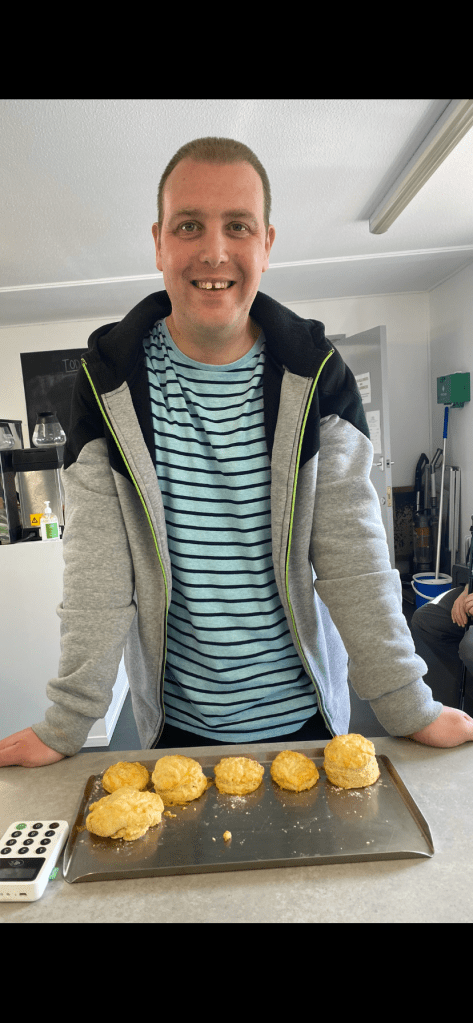
These are the cheese scones I cooked yesterday in The Cooking Session in The NTDF Cafe at NTDF yesterday. I cooked cheese scones and they were very nice these were before and after the scones were cooked. I also really enjoyed yesterday’s cooking session because I thought it was really good fun again like it is every Monday.
This is my new light and my new lampshade my Mum got me three weeks ago for my bedroom. It makes my bedroom nice and bright at night when I’m lying in bed watching my telly. I really like it and it makes my bedroom nice and bright at night time to.
Suitcase wireless transmitter seized by MI5 from captured German spies. This is believed to have been the set belonging to agents Werner Heinrich Walti and Karl Theo Druecke who landed by means of a rubber dinghy dropped from a seaplane off the Scottish coast near Portgordon on the morning of 30 September 1940.
Unlike other European powers, Britain entered the twentieth century without a secret police force. However, in 1883 the London Metropolitan Police had formed a Special Branch to combat Irish nationalist terrorism.
In spite of being under-staffed and with limited powers, its duties expanded to include the monitoring of suspicious foreign nationals and political extremists. Fears of foreign powers such as Imperial Germany and Russia gripped the nation and the British authorities ordered the creation of a security service to combat an espionage offensive.
On 1 October 1909 the War Office’s Secret Service Bureau began its work. It soon developed ‘home’ and ‘foreign’ sections which became MI5 and MI6. The purpose of MI5 was to protect Britain’s secrets while MI6’s task was to find out the secrets of potential enemies abroad.
The Home section was a small unit but achieved rapid success. By the outbreak of the First World War, it had assisted Special Branch in the arrest of twelve German spies.
Carl Hans Lody was the first German spy discovered by MI5 during the First World War. German intelligence had sent Carl Lody, a naval reserve officer, to the United Kingdom in 1914 where he failed to pose as an American and began to attract suspicion. Lody was placed under surveillance which hindered his attempts to contact his controllers and on 2 October 1914, he was arrested in Ireland. Lody was found guilty of espionage and executed at the Tower of London on 6 November.
On the morning of his execution, Lody was calm and asked an officer: ‘I suppose you will not shake hands with a spy?’ The officer replied: ‘No, but I will shake hands with a brave man.’
At the time of his death, Lody was the first man to be executed at the Tower of London for 150 years.
MI6 Going out and finding out the secrets of our enemies to use against them
Oluf Olsen, an SIS wireless operator, sits at his radio set deciphering an incoming message.
MI6 is the Secret Intelligence Service and has the role of seeking out information on enemies abroad, developing contacts and gathering intelligence that helps further British interests. It was established in 1909 amid fears Germany was targeting Britain.
During the Second World War, the service was dramatically expanded. Oluf Reed Olsen, a Norwegian who resisted the Nazis as soon as his country was invaded and was forced to flee, was recruited to MI6 to provide important intelligence about the activities of the Germans. He was parachuted back into Norway with a mission and supplies provided by MI6 – and his wartime actions earned him medals including the Distinguished Service Cross.
The work of MI6 was a closely guarded secret – its role and very existence was not officially recognized until the Intelligence Services Act of 1994 and the authorised history of the service ends in 1949.
On the MI6 website, the service says more recent successes have gone unnoticed but that it ‘is playing a major role in safeguarding the country’s people and interests’.
The Enigma was an electro-mechanical enciphering machine, ultimately produced in large quantities for the German Armed Forces. Invented in 1923, the first models were marketed for commercial company use, as a counter to industrial espionage.
Throughout history, governments and military commanders have tried to keep their communications secret by the use of codes and ciphers.
At the same time, the interception and decoding of enemy messages has been of paramount importance.
The development of cable and wireless communications made messages more secure but methods of eavesdropping soon developed creating the need for ever more sophisticate cryptography.
This Enigma Machine, like the one in this photograph, was invented in 1923 and the first models were marketed for commercial use as a counter to industrial espionage. But various German government and armed forces adopted the machine as a tool to maintain secure radio communications.
The British Government Code and Cipher School was set up in 1939 at Bletchley Park in Buckinghamshire, and devoted large resources to breaking the various Enigma ciphers. This became known as the ULTRA programme, and was increasingly successful from 1941 onwards in penetrating German enciphered radio traffic.
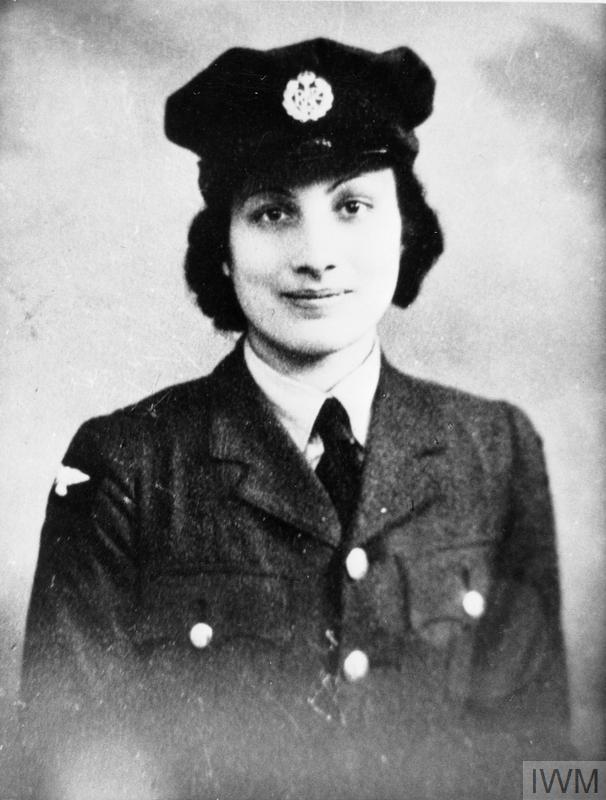
Hon. Assistant Section Officer Noor Inayat Khan (code name Madeleine), George Cross, MiD, Croix de Guerre avec Etoile de Vermeil. Noor Inayat Khan served as a wireless operator with F Section, Special Operations Executive.
The Special Operations Executive, created during the Second World War with instruction to ‘set Europe ablaze’.
It was created in July 1940 after the triumph of Germany’s armies on the continent and the Nazi occupation of most of Europe. It would help resistance movements and carry out subversive operations in enemy-held territory.
Operating on a global scale, SOE’s headquarters in London were supplemented by subsidiary missions on every continent.
It maintained close relations with the governments-in-exile both for recruiting purposes and to coordinate resources and objectives.
This is my Buttermilk Chicken Burger and Chips I had on Saturday at The Hunting Lodge it was very nice as always. I love getting that in The Hunting Lodge sometimes and sometimes I have it on a Thursday night when I go with my Mum. Sometimes I have it on a Saturday when I am with Carl depending what I am feeling like to eat.
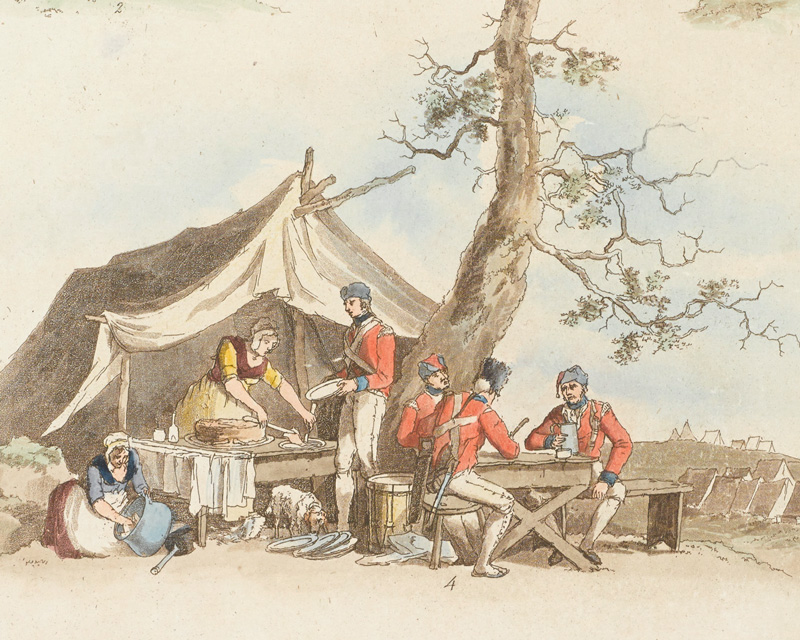
During the late 18th and early 19th centuries, soldiers were given two meals a day. This was usually simple, slow-perishing food like salted pork or boiled beef, along with some bread. They also received a morale-boosting daily ration of a pint of wine or a third of a pint of rum or gin.
In 1811, the pioneering Donkin, Hall and Gamble company developed the vacuum tin can and the world’s first factory solely for canning food. From the Napoleonic Wars (1803-15) onwards, their invention had a major impact on how food could be delivered to troops engaged in conflict. Supplies, including meat, could be preserved and protected from damage prior to consumption.
However, by the mid-19th century, despite being one of the most successful armies of the time, the British Army was unable to maintain supplies to its troops. Its transport and logistics problems during the Crimean War (1854-56) became a national scandal.
Troops in the Crimea were regularly on half rations. Biscuits and salt meat were the staples, with the monthly vegetable ration often restricted to two potatoes and an onion per man. Many soldiers developed scurvy, which led to inflamed gums, making the hard biscuits difficult to eat. In fact, more soldiers were admitted to the hospital in Scutari for scurvy than for battle wounds.
Nearly 20,000 pounds (9 tonnes) of lime juice was provided, but the newly arrived cargo was ignored. Commissary-General William Filder (responsible for supplies) felt that it was not his job to tell the troops that it was there. As a result, all 278 cases sat untouched for two months.
After the Crimean War, Army dietary reforms were undertaken. These focused on providing a high-energy diet for soldiers, but one that was often lacking in variety and sometimes almost indigestible.
Early 20th Century
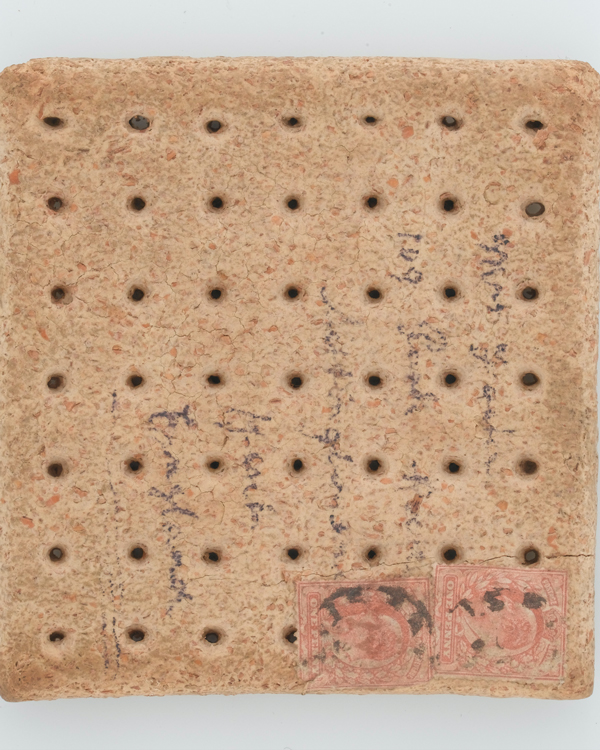
Hardtack biscuits became a staple of soldiers’ diets during the Boer War (1899-1902) and were universally loathed. The notoriously hard biscuits could crack teeth if not first soaked in tea or water!
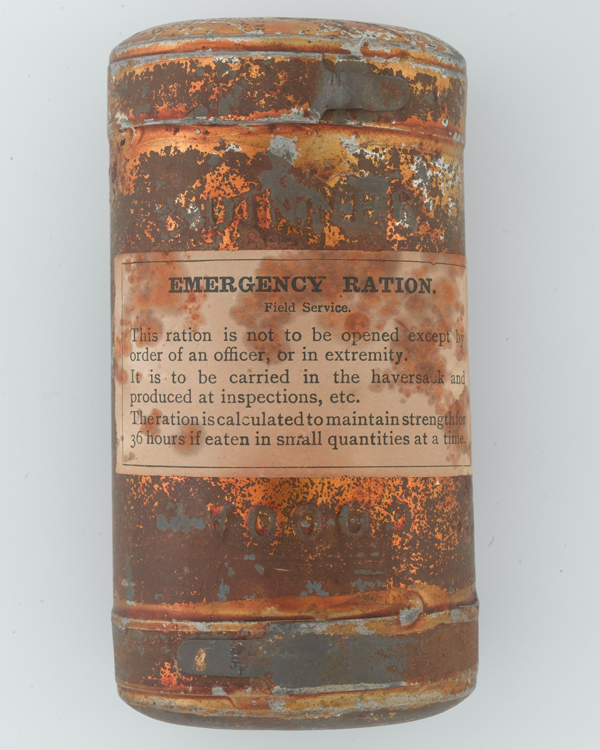
Tinned goods continued to be used to feed soldiers en masse at meal times. But the South African conflict also saw them used as ’emergency rations’, given to each soldier as part of their field kit. A typical emergency ration tin consisted of a meat ‘dinner’ in one end and cocoa in the other. It was designed to sustain a soldier for 36 hours while on active service.
By the First World War (1914-18), Army food was basic, but filling. Each soldier could expect around 4,000 calories a day, with tinned rations and hard biscuits staples once again. But their diet also included vegetables, bread and jam, and boiled plum puddings. This was all washed down by copious amounts of tea.
The mostly static nature of the war meant food supplies were generally reliable. And soldiers were able to supplement their rations with food parcels from home, with hot meals served behind the lines in canteens and kitchens, and with food obtained from local people.
Cooking in the front-line trenches was very difficult, so soldiers ate most of their rations cold. If cooking did occur, it was done on a small folding solid-fuel stove, known universally as a ‘Tommy Cooker’, that many men carried in their packs. Soldiers also cooked in pots over charcoal or wood.
Usually, the men would create a stew by adding tinned meat and biscuits into the pot. When the food was ready, it would be dished out individually for men to eat from their mess tins.
As well as the endless supply of ‘bully beef’, soldiers grew to hate another tinned item, Maconochie’s stew. Made with beef – or gristle, more commonly – and sliced vegetables, such as turnips and carrots, Maconochie was deemed edible warmed up, but revolting served cold.
On top of his regular ration issue of food, each soldier was given an emergency ration. This comprised a tin of beef, along with some biscuits and a tin of sugar and tea. This ‘iron ration’ was only supposed to be eaten as a last resort, when normal supplies were unavailable.
Second World War
During the Second World War (1939-45), British troops were fed freshly cooked food when in camp or barracks. On deployments, field kitchens were sometimes established. These also provided hot, fresh meals, considered vital both for nutrition and morale.
However, soldiers at the front still relied on preserved foods. These largely consisted of tinned items, but also dehydrated meats and oatmeal that were designed to be mixed with water. Morale-boosting items, such as chocolate and sweets, were also provided. And powdered milk was issued for use in tea.
These items were packaged in 24-Hour Ration packs. They were supposed to be used by each soldier until field kitchens were set up or standard food supplies, known as composite rations, were delivered.
Also known as the 14-Man Ration, the ‘compo’ ration came in a wooden crate and contained tinned and packaged food. A typical crate might include tins of bully beef, spam, steak and kidney pudding, beans, cheese, jam, biscuits, soup, sausages, and margarine. Cookable items could be heated up on a variety of portable stoves.
As in the First World War, soldiers were also issued with an emergency iron ration, usually consisting of high-energy foods like chocolate.
Post War era
Tinned rations continued to be provided after the Second World War. But as time went on, these were supplemented with packets of freeze-dried foods and products in vacuum-sealed plastic. Soldiers were supposed to be issued different menus for each day, but often ended up with the same one over and over again.
A 24-hour ration pack would contain enough calories to sustain a soldier in the field for one day. It would contain breakfast, a main meal, the ingredients to make a hot drink, and a variety of snacks including chocolate bars.
Diversity
One of the more controversial changes to Army ration packs was the removal of the chocolate bars for service in Iraq and Afghanistan, as they frequently melted in the desert heat. They were replaced by sachets of peanut butter, which were significantly less popular.
By the mid-1990s, the few remaining tins were replaced with foil-packed boil-in-the-bag meals.
The British Army has long employed overseas recruits and soldiers of every faith, so its rations have had to take these factors into consideration.
The multi-faith British Indian Army also had strict dietary guidelines when it came to feeding its troops. Two cooks, or langris, were normally maintained in each company of a battalion. The composition of the company would determine if a cook was a Muslim, Sikh or Hindu, and of what caste if the latter. This ensured that the correct food was prepared for troops of different religions and in the right way.
The Army also provided stackable cooking pots for Indian soldiers for use on campaign. Each soldier could then cook their own food if necessary. For high-caste brahmins, these cooking pots were of considerable importance, since it was necessary for them to prepare their own food in order to preserve caste.
Kitchens
During the First World War, separate kitchens were set up so that the dietary requirements of Muslim, Sikh and Hindu soldiers were met. This happened on the Western Front, as well as back in Britain.
In particular, the Indian hospital at Brighton made an effort to cater for patients’ religious and cultural needs. Muslims and Hindus were provided with separate water supplies and nine different kitchens.
Today’s British Army rations continue this tradition and have a wide range of menus with halal and kosher options now available for soldiers.
Improvement Works – seven day Major Line Closure Monday 8 to Sunday 14 April
The seven day line closure is needed so we can replace over 5.6km of overhead power lines and carry out secondary works.
During the closure buses will replace trains between Benton and North Shields in both directions.
Replacement bus service 900 You’ll still be able to make your journey as the replacement bus service number 900 will call at or close to all stations between Four Lane Ends and North Shields. You may find it easier to transfer from Metro to the replacement bus at Four Lane Ends instead of Benton, as Four Lane Ends is an interchange station. Some of the buses may begin/end service outside of these areas, please view the replacement bus timetable for details.
Metro tickets and passes will be valid on the replacement bus, or you can buy your ticket from the bus driver. If you have a smartcard remember to touch in and out at the start and end of your journey.
Journey times on the replacement bus will be longer than on Metro, and the buses may be affected by road congestion, but we’ll do all we can to keep to the planned bus timetable. Your journey will take longer especially if transferring between more than one mode of transport. Please check train and bus times before travelling.
Train service During the closure trains will be running frequently elsewhere on the system to a revised timetable (areas shown below). Please check train times before travelling.
Airport-South Hylton / South Hylton-Airport
St James-North Shields / North Shields-St James
Benton-South Shields / South Shields-Benton
Trains will return to service between Benton and North Shields on Monday 15 April.
View the latest service updates or get service notification by using the Pop app.
Our neighbours near the line Residents and businesses close to the Metro line may experience work taking place nearby including night-time work and an increase in activity by our teams. However we aim to keep noise levels to a minimum. If you’d like to receive the night-time working schedules you can sign up to receive regular emails here.
If you have any questions or concerns about the work taking place, please email us at customerrelations@nexus.org.uk. or call us on 0191 20 20 747 (lines are open Monday to Friday, 9.00am to 5.00pm).
At the start of the First World War, with the assistance of the police, MI5 rounded up all the agents of any significance working for German naval intelligence. No remaining agent was able to pass on potentially crucial intelligence on the departure for the continent of the British Expeditionary Force. Gustav Steinhauer, the head of the British section of German Naval Intelligence, later acknowledged that the Kaiser had been beside himself with fury when told of the ‘wholesale round-up of our secret service agents’: ‘Apparently unable to believe his ears, [he] raved and stormed for the better part of two hours about the incompetence of his so-called intelligence officers, bellowing: “Am I surrounded by idiots? Why was I not told? Who is responsible?” and more in the same vein.’ Steinhauer is unlikely to have fabricated such a devastating denunciation of his own alleged incompetence.
German archives reveal that at least 120 spies were sent to Britain at some point during the First World War. MI5 caught 65 of them. There is no convincing evidence that any of the remainder sent back significant intelligence to Germany. Some appear to have been ‘reconnaissance agents’ on neutral shipping, able to report only on what they could observe when calling at British ports. A number of other agents broke contact with their case officers.
A post-war MI5 report concluded: ‘It is apparently a paradox, but it is none the less true, and a most important truth, that the efficiency of a counter espionage service is not to be measured chiefly by the number of spies caught by it.’ Though MI5 caught a record number of spies in 1915, it was probably less successful then than in 1918 when it caught none. Good ‘protective security’ (better developed during the First World War than ever before) and the deterrent effect of the executions of some captured spies had by then made it difficult for Germany either to recruit any spies for work in Britain or to carry out sabotage operations as effective as those in the United States (which included blowing up a huge arms dump in New Jersey in which 900 tonnes of explosives was detonated, killing seven people and damaging the Statue of Liberty).
Faced with the declining threat from German espionage, MI5 paid increasing attention during the second half of the War to counter-subversion. Like the government, it wrongly suspected that German and Communist subversion was inflaming British industrial disputes. Its New Year Card for 1918, correctly forecasting victory by the end of the year, showed MI5, depicted as a masked Britannia, impaling the beast of Subversion with her trident before it can stab the British fighting man in the back. The card was personally designed by Kell’s long-serving deputy, Eric Holt-Wilson.
In the course of the war MI5’s staff increased almost fiftyfold to reach a total of 844. Though the leadership remained overwhelmingly male, several female recruits achieved positions of greater significance than in any other British official agency or department. Miss A. W. Masterson became the first woman to manage the finances of a government office. Jane Sissmore, who joined MI5 as a sixteen-year-old secretary straight from school in 1916, progressed so rapidly that by 1924 she had qualified as a barrister and become MI5’s chief expert on Soviet affairs. Though the intelligence glass ceiling was not broken until Stella Rimington became Director General of MI5 in 1992, the first cracks began to appear in the First World War.
At five feet, eight inches tall and weighing barely 100 pounds, the diminutive Frank Stringfellow proved to be one of the Civil War’s most effective spies, acquiring and passing a bevy of secrets to the Confederacy about Union troop movements and plans throughout the conflict.
A scout in the 4th Virginia Cavalry, Stringfellow repeatedly donned civilian clothes, disguising himself as a dental apprentice, a store assistant, and even a woman, enabling him to operate freely and extensively in Washington, D.C., as well as in Union-occupied Alexandria, Virginia. In one instance, in August 1862, Stringfellow guided Confederate cavalry on a raid at Catlett’s Station, Virginia, where the Union Army of Virginia, under the command of Major General John Pope, was headquartered. After overrunning Federal troops guarding Pope’s tent, the Confederates seized documents, including Pope’s dispatch book filled with valuable intelligence. The information was used to aid General Robert E. Lee in his decisive defeat of Pope’s army at the Second Battle of Bull Run.
In April 1864, General Lee wrote to Confederate President Jefferson Davis, informing him of a report that Union General Ambrose Burnside was marching with 23,000 troops through Alexandria and toward Confederate positions outside Richmond, Virginia. Lee believed the report came from Stringfellow and was trusting enough of it to ask Davis that troops previously diverted to North Carolina be summoned back to Virginia to strengthen Confederate defenses there.
From left: Convalescent camp; Ambrose Burnside; Marshal House, Alexandria, Virginia; Erecting a stockade, Alexandria, Virginia
Stringfellow’s daring led to capture on multiple occasions. After his first arrest, the Union failed to identify him as a spy and released him within days as part of a prisoner exchange. After his second arrest, he was jailed at the Old Capitol Prison in Washington, D.C., and interrogated by operatives of Union spymaster Allan Pinkerton, who threatened him with execution. Stringfellow was in his Confederate military uniform when captured, though, and was thus treated as an ordinary prisoner of war, rather than a spy, and subsequently exchanged once again.
Union soldiers captured Stringfellow for a third time in April 1865, but he escaped during his transfer to a prison in Maryland. At the same time, a manhunt was underway following the assassination of President Lincoln, and Union authorities briefly suspected Stringfellow might be an accomplice of John Wilkes Booth, since the pair had once shared the same boarding house. Stringfellow fled to Canada, where he remained until 1867, when he returned to the United States to marry.
From left: William McKinley; Ulysses S. Grant; Stringfellow grave
Later ordained an Episcopal priest, Stringfellow wrote a letter to President Ulysses S. Grant, revealing that in 1864, he had once been close enough to shoot Grant, then commanding the entire Union Army, but could not bring himself to pull the trigger. Grant responded to the letter, thanking Stringfellow for sparing his life and promising that he or any future president would accommodate any request made by the former spy. In a letter to President William McKinley in 1898, Stringfellow referenced Grant’s offer, and asked that he be allowed to serve as an army chaplain in the Spanish-American War. McKinley agreed.
Stringfellow died of a heart attack in 1913 at the age of 73 and is buried at the Ivy Hill Cemetery in Alexandria, Virginia.





 Weevles Updates Disabled Bloggers Team