Women on the front line in WW1

At the start of the First World War many people harboured the view that war was ‘man’s business’. Front-line roles had, after all, always been undertaken by men.

Between 1914 and 1918 opinion changed when women – invigorated by years of struggle for female emancipation – stepped out from their traditional roles and placed themselves at the heart of the action.

Taking on key medical roles, they emerged from the conflict with newfound respect and observers heralded the war as ‘a revelation of woman’.

Trained nurses had been part of the military establishment since the 19th century. Thousands of untrained women now stepped forward to help support the care of the wounded.

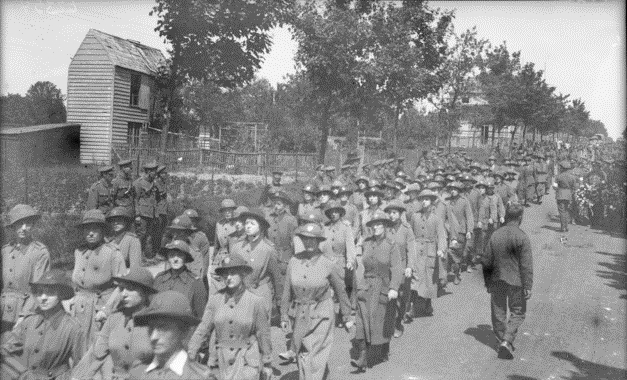
Members of Queen Mary’s Army Auxiliary Corps marching in the funeral procession of comrades who were killed in an enemy air raid near Abbeville on the night of 29 May 1918. © Australian War Memorial

Within the Wounded exhibition we hear the voice of Sophie Hoerner, who was stationed at No. 1 Canadian general hospital near Étaples. She paints a vivid picture of the scale and severity of the task faced by nurses as they cared for the wounded at the Western Front.

In a letter home she wrote:

‘No one could imagine the horrors of a war like this unless they are here and could see for themselves. I have never seen such awful wounds.’

The job of the war nurse was both varied and hectic. Some administered pain relief and redressed wounds. Others assisted the surgical teams in the operating theatres of casualty clearing stations, acting as anaesthetists or carrying out minor procedures when surgeons were rushed off their feet.

Female surgeons found it far harder to offer their services. The army was initially reluctant to make use of their skills, telling them ‘to go home and sit still’.

Undeterred, they set up voluntary hospitals on the Western and Eastern fronts – many staffed exclusively by women. One such volunteer was Dr Phoebe Chapple, who became one of the first at the front line and the first to be awarded a medal for gallantry.

On 29 May 1918, while she was visiting the Queen Mary’s Army Auxiliary Corps near Abbeville, the camp came under enemy attack. One bomb hit a trench where 40 staff had taken cover. In near darkness and with further risk of attack, Chapple worked her way along the trench, tending to the wounded.

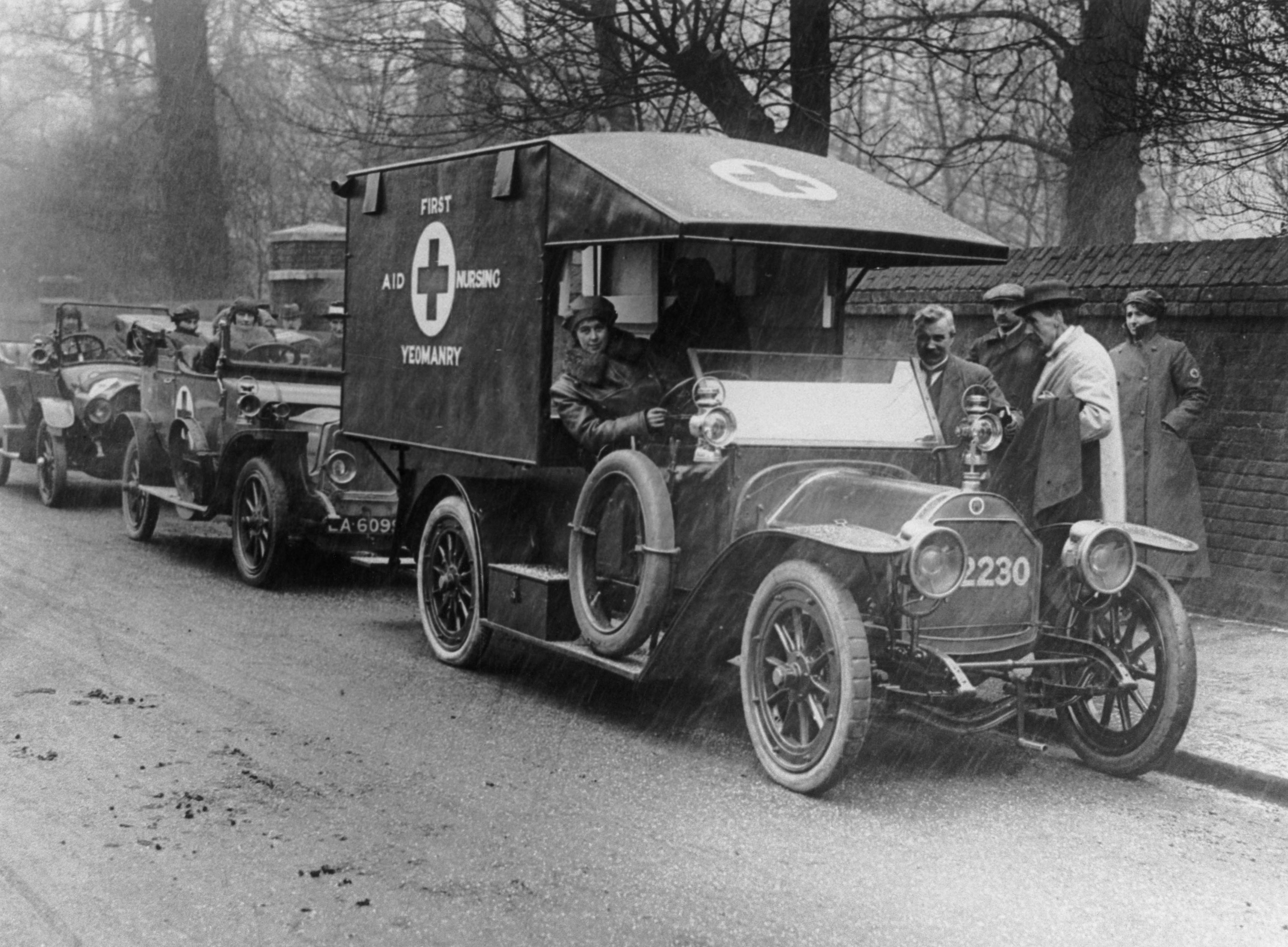
Women also provided a vital link between the battlefield and medical units. The First Aid Nursing Yeomanry (FANY) ran field hospitals and drove ambulances, often in extremely dangerous conditions.

First Aid Nursing Yeomanry (FANYs) in ambulances. © NMeM/Daily Herald Archive/ SSPL

Pat Waddell, an accomplished violinist, acted as an ambulance driver from 1916 onwards, having learned to drive in London by cajoling taxi drivers to let her take control of their vehicles. The FANYs challenged the traditional view of women drivers. One sergeant wrote:

‘When the cars are full of wounded no-one could be more patient, gentle or considerate, but when the cars are empty they drive like bats out of hell.’

Mairi Chisholm and Elsie Knocker travelled to Belgium as part of the Munro Ambulance Corps designed to support the Belgian Red Cross and transport the injured to hospitals away from the battlefield. They quickly decided that they could be of greater help to the wounded by treating them closer to the front line.

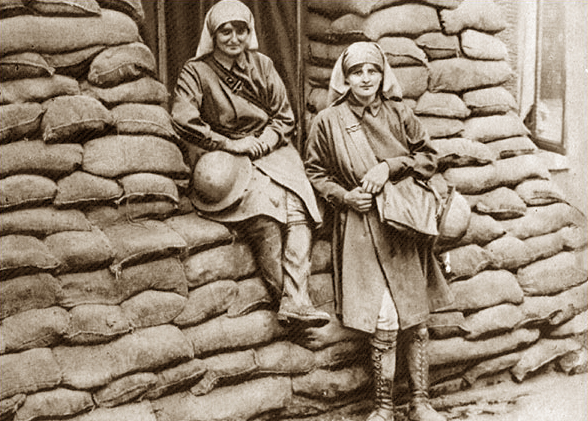
They set up their own dressing station in Pervyse near Ypres – only 90 metres from the action. Earning 17 medals for their bravery they became celebrated in the press as the ‘Angels’ of Pervyse, having saved hundreds of soldiers’ lives.

Elsie Knocker and Mairi Chisholm outside their advanced dressing station. © Illustrated London News Ltd
Elsie Knocker and Mairi Chisholm outside their advanced dressing station.© Illustrated London News Ltd
Marie Curie and her daughter Irène at Hoogstade hospital in northern Belgium.
Marie Curie and her daughter Irène at Hoogstade hospital in northern Belgium.© Musée Curie (ACJC collection).

Perhaps the most famous woman to work at the front line was Marie Curie. By the time war broke out she was already a double Nobel prizewinner – one for physics (the first Nobel Prize to be awarded to a women), the other for chemistry.

Curie was shocked to see how soldiers’ lives were being lost because they had to be transported long distances for examination.

So she set about bringing diagnostic equipment to the battlefield.

Twenty vehicles were fitted out with X-ray units, darkrooms and technical personnel. Curie learned to drive so she could operate one of the mobile cars herself.

She also set up 200 stationary X-ray stations, helping train 150 women as radiology technicians to help run them.

Over 1 million wounded soldiers were examined thanks to her efforts, with Curie herself declaring:

‘The use of X-rays during the war saved the lives of many wounded men and saved many more from long suffering and lasting infirmity.’

Women’s front-line activity did not end there.

They acted in many other important roles, from telegraphist and cook to war correspondent and spy. Added to the vital work being carried out by female workers back at home, these varied roles show that the First World War was not just a conflict that made heroes, but many heroines as well.

Medics in the frontline WW1

Medical care throughout the First World War was largely the responsibility of the Royal Army Medical Corps (RAMC). The RAMC’s job was both to maintain the health and fighting strength of the forces in the field and ensure that in the event of sickness or wounding they were treated and evacuated as quickly as possible.

Every battalion had a medical officer, assisted by at least 16 stretcher-bearers. The medical officer was tasked with establishing a Regimental Aid Post near the front line. From here, the wounded were evacuated and cared for by men of a Field Ambulance in an Advanced Dressing Station.

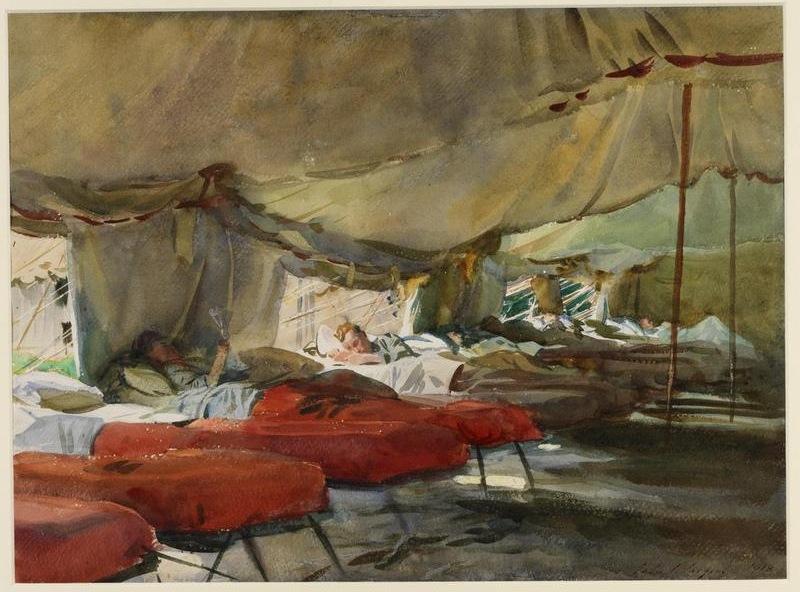
The hospitals set up immediately behind the lines were often housed in tents during the First World War, including wards and operating theatres.

This was particularly true of Casualty Clearing Stations, with base hospitals further away from the fighting sometimes making use of existing or more permanent buildings.

A casualty then travelled by motor or horse ambulance to a Casualty Clearing Station. These were basic hospitals and were the closest point to the front where female nurses were allowed to serve. Patients were usually transferred to a stationary or general hospital at a base for further treatment. A network of ambulance trains and hospital barges provided transport between these facilities, while hospital ships carried casualties evacuated back home to ‘Blighty’.

As well as battle injuries inflicted by shells and bullets, the First World War saw the first use of poison gas. It also saw the first recognition of psychological trauma, initially known as ‘shell shock‘. In terms of physical injury, the heavily manured soil of the Western Front encouraged the growth of tetanus and gas gangrene, causing medical complications. Disease also flourished in unhygienic conditions, and the influenza epidemic of 1918 claimed many lives.

The Tynemouth Castle Inn.

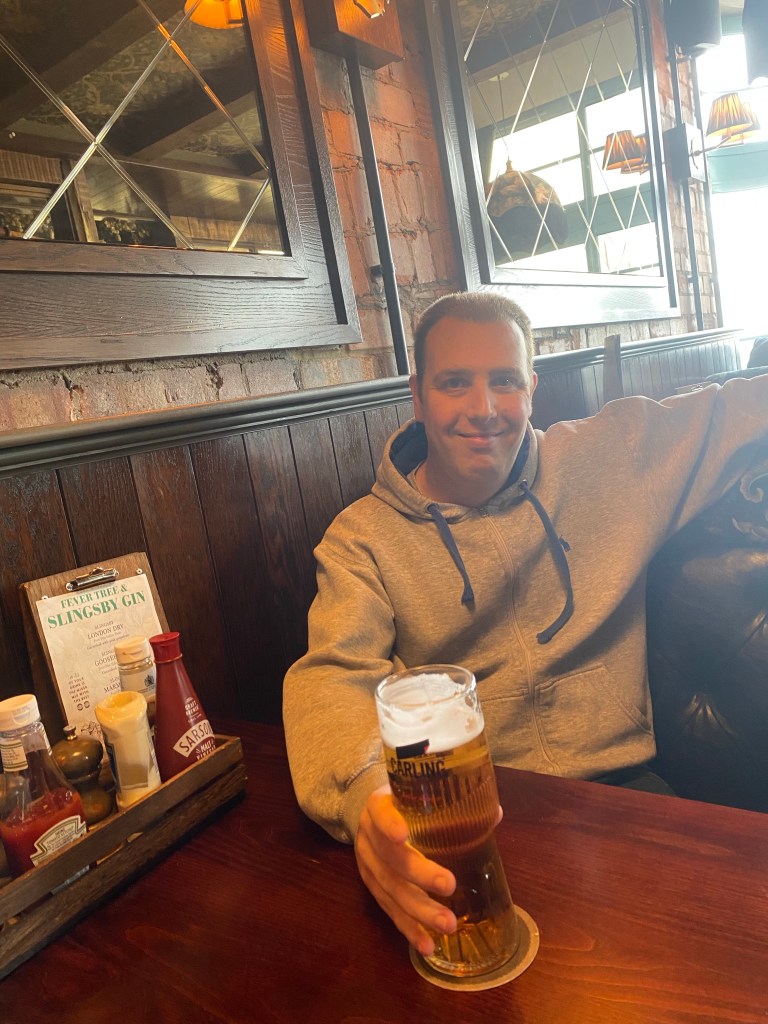
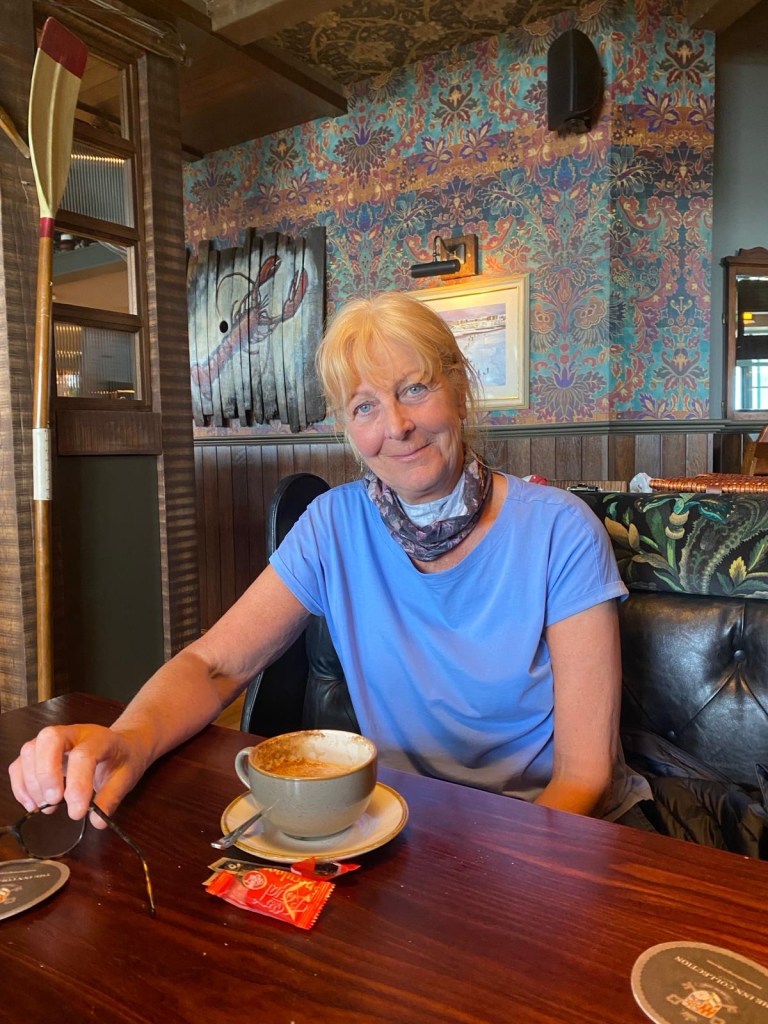
Me and my Mum went to The Tynemouth Castle Inn in Tynemouth last Thursday the place which use to be The Park Hotel years and years ago. It was very nice inside I had a pint 🍺 of Carling and my Mum had a Cappuccino. This is The Bar / Restaurant we are sitting in and we had never had been in before it was the first time we went in since it was The Park Hotel. I went there when it was The Park Hotel and it was a Voda Volunteering International Forum Event in October 2005. It was the back end of 05 when I was nineteen years old nineteen years ago when I was younger so it brought back nice memories from that going back there last week.

Josef Jakobs 1898 to 1941Last man to die in the Tower of London by firing squad

Early Life

Josef Jakobs was born 30 June 1898 in the city of Luxembourg. His German parents moved the family to Berlin in the early 1900s. Josef attended the Dominican College in Vechta and, at the outbreak of the war, joined the German Army. He served with the Fourth Foot Guard Regiment on the eastern and western fronts. He was wounded in 1918 near Amiens and sent to Berlin to recover.

Dentist

After the war, Josef studied dentistry in Berlin. In 1921, he traveled to Buenos Aires, Argentina to complete his dentistry degree. In 1924, Josef returned to Berlin, and after becoming accredited as a dentist in Germany, set up a dental practice. In 1926, he married Margarete Knoeffler and by 1932, they had three children, two boys and a girl.

Switzerland

The economic depression of the early 1930s caused Josef to close his dental practice. In 1934, he traveled to Switzerland with a friend to engage in counterfeit gold-making. His wife came to visit him in the summer of 1934, but by September, Josef and his friend had been arrested and both were imprisoned for almost two and a half years.

In June 1937 Josef was released from prison and returned to Berlin. He found a job as a traveling salesman for a while, selling books and typewriters, but in 1938, after meeting a former acquaintance, got involved in providing black market passports to Jews eager to escape Germany.

Black Market Deals

For a fee, often a hefty one, lawyer Dr. Juergen Ziebell, could secure Finnish, Irish or Uruguayan passports/visa to Jewish clients. Josef’s job was to bring possible clients to Dr. Ziebell, for which he received a “finder’s fee”.

One of Josef’s contacts was a Frau Reiwald who recommended Frau Lily Knips to Josef. Frau Knips had a son in England, and was desperate to leave Germany. Frau Knips decided not to a passport through Dr. Ziebell, but Josef tried to arrange various other financial deals with her, often of a very shady nature. In October 1938, Dr. Ziebell and his various business associates, including Josef, were arrested by the authorities. Frau Knips was able to arrange her own way to England, with the help of her son, and left Germany in April 1939. Josef was sent to Sachsenhausen Concentration Camp and was released in March 1940.

German Intelligence Service (Abwehr)

Josef may have been called up for military service and/or been approached by a recruiter for the Abwehr. Either way, in September 1940, Josef went to Hamburg to be trained in espionage by a certain Dr. Beier (Julius Jacob Boeckel) under the supervision of spymaster Nikolaus Ritter. While in Hamburg, Josef became enamoured with Clara Bauerle, a singer with the Bernhard Ette Orchestra.

Josef returned to Berlin on the weekends to visit his family. On one of these visits, he apparently divulged to a “friend” that he was planning to use his mission to England as a means to escape to America where he had an aunt. The “friend” denounced Josef to the Gestapo and very quickly, Josef was recalled to Hamburg. The Abwehr still considered Josef  suitable spy material and on 8 January, 1941, he was sent to The Hague to be trained in wireless transmitting and receiving.

To England

On 31 January 1941, left Schipol Airport, near Amsterdam, for England in the belly of a German bomber, most likely a Heinkel 111. Josef left the aircraft at approximately 8:30 pm and injured his ankle during his exit through the narrow hatch. Josef had never practiced a parachute jump or landing and his ankle injury was compounded when he landed. He found himself lying in an English potato field belonging to Dovehouse Farm with a broken ankle. Covering himself with his parachute, Josef smoked his supply of cigarettes throughout the night, drifting in and out of consciousness.

In the morning, around 8:30 am, he fired some shots into the air with his Mauser automatic pistol. A short while later, he fired some more shots into the air and was found by two farm hands on their way to work – Charles Baldock and Harry Coulson. Charles stayed with Josef while Harry went to nearby Wistow Fen Farm and notified Harry Godfrey, a member of the Ramsey Home Guard. Godfrey notified the police in the nearby town of Ramsey and accompanied Coulson back to the parachutist.

A short while later, Captain Newton and Lieutenant Curedale of the Home Guard also arrived, having been notified by the Ramsey Police of the capture of a possible enemy spy. Josef was searched by the men and a variety of items were found in his possession, the most damning of which was the wireless transmitter which was partially buried in the soil beneath Josef. Bundling Josef into the back of a horse-drawn cart, the men accompanied him to the Ramsey Police Station.

At the station, Josef was examined by Acting Inspector Horace Jaikens who summoned Dr. Willem Hertzog to diagnose Josef’s ankle injury. Dr. Hertzog determined that the ankle was indeed broken but that Josef was fit to be transported to London. The police made a more complete inventory of Josef possessions, taking particular note of his well-dressed appearance.

Meanwhile, Acting Sergeant Pottle from nearby Bury had been sent to the field at Dovehouse Farm where Josef had landed to recover a small shovel that had been in Josef’s possession. While there, Pottle gathered up some scattered paper fragments which later turned out to be part of Josef’s code disc which he had torn up during the night.

Back at the police station, Detective Sergeant Thomas Oliver Mills from Huntingdon asked Josef several more questions and summoned RSLO Major Dixon from Cambridge. The property in Josef’s possession was carefully itemized and found to contain several other interesting items: £497 in £1 notes, a wireless radio transmitter/receiver, a torch, two identity cards (one in the name of James Rymer), a ration book, several mystery tablets (possibly for use as secret writing materials), a flashlight, a German-English dictionary, a touring map of Great Britain,, 2.5 pounds of chocolate and smoking accessories. Upon the arrival of Dixon, around noon, Josef was loaded into the back of a car and accompanied to London by Mills and Dixon.

Arrival in London

Josef was driven to Cannon Row Police Station and arrived around 4 pm. He offered a voluntary statement to Major Thomas A. Robertson from the War Office, who was accompanied by John Marriott, also of the War Office. After the interview, Josef given some pain killers by the police surgeon and conveyed to the hospital wing of Brixton Prison.

The next day, despite his broken ankle, Josef was taken to Latchmere House, the MI5 interrogation centre for captured spies. Josef was given a brief interrogation by Colonel Robin Stephens but it was quickly recognized that Josef’s ankle required serious medical attention. After leaving Latchmere House, Josef was returned to Brixton Prison for the night.

The next morning, he was to the more advanced medical facilities at Dulwich Hospital. There he remained for two months, having developed fever, sepsis at the site of his broken ankle and broncho-pneumonia. Josef was eventually released to Latchmere House in reasonable physical condition on April 14 and was quickly convinced to write several personal statements regarding his life.

Interrogation

Over the next three months, Josef gave several statements to the officers at Latchmere House. Colonel Robin Stephens, commandant of Latchmere House and Dr Harold Dearden, psychiatrist at Latchmere House led the interrogation, attempting to glean every bit of information from captured spies. Normally, captured spies were turned into double agents, if they were found to be suitable. Since Josef’s capture had been widely publicized, it was determined that he did not meet the criteria to be turned into a double agent.

According to the Treachery Act, neutral aliens and British citizens were to be tried in a civilian court by a judge and jury. Their punishment would be death by hanging, unless they were soldiers, in which case, the Attorney General could decree that they be executed by firing squad. Enemy aliens could be tried by military court martial. Since Josef was a German citizen, and had no neutral alien or British accomplices, MI5 and the Director of Public Prosecutions decided that he would make an excellent candidate for trial by General Court Martial. An application to try Josef by court martial was submitted to the Attorney General in late June and approved. During that same period, Josef was used by the MI5 officers to “break” another German spy who had arrived in mid-May, Karel Richter.

Plans for a speedy court martial were hampered by the logistics of where to hold Josef prior to, and during, his court martial. The Office of the Judge Advocate General was in charge of the proceedings and after much deliberation, it was decided to designate a cell at Wandsworth Prison as a military prison. On 23 July, Josef was transferred to Wandsworth Prison and guarded by several Military Policemen under the authority of the Deputy Provost Marshal, Lt. Colonel C.R.T.M. Gerard. The following day, Josef was formally charged with an offence under the Treachery Act 1940 by Lt. Colonel William E. Hinchley-Cooke. Less than a week later, the Summary of Evidence was taken at Wellington Barracks under the direction of Lt. Col. George Mervyn Cornish, Officer Commanding Holding Battalion Grenadier Guards.

Conviction

On August 4 and 5, Josef was tried by General Court Martial at the Duke of York’s Headquarters in Chelsea. Unlike the other World War 2 spies, Josef was tried by Court Martial because (a) it was clear he was an enemy alien and (b) he was a member of the enemy’s armed forces. All of the other World War 2 spies were tried by civil court and hanged, most by Albert Pierrepoint.

Josef’s court martial was under the direction of Judge Advocate Carl Ludwig Stirling who provided legal advice for the members of the court, all of whom were high-ranking military officers. The attorney for the prosecution made his case and although Josef was provided with a defence attorney and an interpreter, it was all for nought.. After 10 minutes of deliberation shortly after noon on August 5, the members of the court returned a verdict of guilty and Josef was returned to Wandsworth Prison to await his fate.

The prison chaplain had been attempting to see Josef but because he was a military prisoner, the chaplain was not able to do so. After several letters between Bishop James Dey, Bishop of the Forces, and MI5, a military chaplain was found for Josef, Fr Edward Jackson Griffith. On August 8, Josef wrote a letter of appeal to His Majesty King George VI, but it was rejected.

Execution

In the early morning hours of Friday 15 August, 1941, Josef left Wandsworth Prison, taking his leave of the Governor of the Prison, Major Benjamin D. Grew. In the company of his military escort and Fr. Griffith, Josef was driven to the Tower of London. A doctor at the Tower offered him a prescription to calm his nerves and after initially refusing the offer, Josef accepted the medication.

He was led to the miniature firing range located between the inner and outer walls of the Tower, where the World War I spies had been executed – some with courage. A firing squad composed of members of the Scots Guards, Holding Battalion, awaited him. He was seated in a wooden Windsor chair and fastened to it with ropes. A circular target was pinned to his chest and a black hood covered his head. The commander of the firing squad, Major PDJ Waters MC gave the signals to the firing squad to take aim. Josef’s final words asked the soldiers of the firing squad to “Shoot straight, Tommies”. Colonel Robin Stephens, upon hearing how Josef faced his death, commented that Josef had been a brave man.

Some sources have suggested that Josef spent his last night at the Tower of London, but several eye-witness accounts unequivocally state that Josef spent his last night in Wandsworth Prison. In actual fact, the Tower of London was a Royal Palace and fortress, not a prison.

Autopsy & Burial

After the execution, Josef’s body was removed to the Tower Bridge mortuary where it was examined by Sir Bernard Spilsbury and the East District coroner, W.R.H. Heddy, who pronounced “death due to the passage of bullets through the heart”. On Monday August 18, Josef’s body was taken to St. Mary’s Roman Catholic Cemetery where Fr. Griffith conducted a funeral service in the chapel along with the Rev. Charles B. Flood. Josef’s body was buried in an unmarked grave in the common plot of the cemetery.
The letter that Josef wrote to his family on the eve of his death, which was to have been delivered at the cessation of hostilities, was held in MI5 files until 1993, when it was released to his granddaughters. Josef’s letter was not the only one to languish in the files of MI5.

Rose Greenhow spy in Civil War for the Confederates

Born to slaveholding parents in Maryland, Rose Greenhow was a Washington, D.C., socialite and a passionate sympathizer for the Confederate cause who became one of the most infamous Southern spies. A widow, she lived with her young daughter, Little Rose, on 16th Street Northwest near Lafayette Park, in close proximity to the White House, and was among the first Confederate secret agents in the capital.

In the pre-war years, Greenhow became acquainted with people at the highest levels of Washington society, including presidents and members of Congress. She socialized with then-Senator Jefferson Davis, the future President of the Confederacy, and considered Senator John C. Calhoun, the firebrand and ardent defender of slavery from South Carolina, a mentor.

At the outset of the war, Greenhow was asked by Lieutenant Colonel Thomas Jordan, an assistant to General P.G.T. Beauregard, the commanding general of nearby Confederate forces, to organize a spy ring in Washington, D.C., among Southern sympathizers that could provide information on Union military activities. She immediately agreed.

Greenhow became a driven and enthusiastic agent, later described by the Provost Marshal in Washington, D.C. as “formidable,” with “masterly skill.” In the early months of the war, she and her network employed a wide range of tactics to relay intelligence to Confederate forces in Virginia. Couriers carried messages that Rose stitched into tapestries or sewed into silk pouches concealed in garments and hair. Before the Confederates were driven away from the immediate Washington area, she transmitted signals across the Potomac River by placing varying numbers of burning candles in her window and communicated in Morse code using her window blinds.

camera icon - click to for more details about the image

Ciphered Greenhow letter

In July 1861, Greenhow relayed two ciphered messages to the Confederates about an imminent Union advance planned against Manassas Junction, Virginia, just 30 miles from Washington. Greenhow’s report, combined with other intelligence received, aided the South in its first major victory of the war at the First Battle of Bull Run. Brigadier General P.G.T. Beauregard, commanding the Confederate forces at Manassas Junction, later credited Greenhow’s intelligence as pivotal to the outcome of the battle.

camera icon - click to for more details about the image

From left: Map of Bull Run; Ciphered Greenhow letter; Beauregard’s headquarters at Bull Run; General P. G. T. Beauregard

Greenhow soon came under suspicion and Union General George McClellan, commander of the Army of the Potomac, ordered his intelligence chief, Allan Pinkerton, to investigate her activities. While personally surveilling Greenhow, Pinkerton witnessed a Union officer visiting her residence and sharing a map of Washington, D.C.’s defenses. Greenhow was arrested, and after searching her home, Pinkerton discovered one of her secret messages written in plain text, as well as sensitive documents and personal letters from well-known dignitaries. These included correspondence from Senator Henry Wilson of Massachusetts, the Chairman of the Senate Military Affairs Committee, who shared with Greenhow information about Union troop dispositions and defenses around the capital.

camera icon - click to for more details about the image

From left: Old Capitol Prison, Washington; Little Rose Greenhow; Senator Wilson letter to Rose O’Neal Greenhow; Rose O’Neal Greenhow; Rose O’Neal Greenhow with her daughter; Senator Henry Wilson

Greenhow was undaunted by her house arrest and continued to gather and transmit information to the South through her visitors, even using her young daughter who passed secret messages scrawled on candy wrappers. In January 1862, Greenhow was transferred to the Old Capitol Prison in Washington, D.C., and remained there for four months with her daughter.

After her release, Greenhow was deported to Richmond and welcomed as a hero. When Confederate President Jefferson Davis asked her to serve as a European envoy promoting the Confederate cause abroad, Greenhow departed for England. She published a memoir there and became quite popular with the European social elite, many of whom were sympathetic toward the South, and even had audiences with Queen Victoria and French Emperor Napoleon III.

In 1863, a year later, Greenhow returned to America aboard a British blockade-runner. As the ship neared the North Carolina coast, it was pursued by a Union gunboat and ran aground at the mouth of the Cape Fear River. Greenhow fled in a lifeboat, but drowned when the boat capsized near Fort Fisher, North Carolina, and the weight of the gold she was carrying dragged her underwater.

PERSISTANCE PAYS OFF

It has taken me quite a long time to complete the Learning my Way, every time I thought I was nearly finished they added more categories to the already long list.

I have now completed everything and am so proud of myself for eventually completing the course. (it would have been so easy to give up).

My certificate is much appreciated and once its Laminated I will take it home and put it on my wall.

I must thank Simon Schofield for his assistance and encouragement to complete the work.

I also need to thank Bob for his support and encouragement and Marty for all the photos he has taken throughout the course.

It is great to work with a group of really nice people.