WW1 Battle of the Somme

1. The Battle of the Somme lasted nearly five months

A view of a large, sunlit crater blasted into white chalky soil. The remains of German barbed-wire defences in the distance are a dark rust-coloured pink. A German and a British steel helmet and the remains of a uniform lie on the edge of the crater in the foreground. The sky is covered in dense white cloud with blue patches visible at the top of the composition.

© IWM Art.IWM ART 3006

The Battle of the Somme was one of the most bitterly contested and costly battles of the First World War, lasting nearly five months. Despite this, it is often the first day of the battle that is most remembered. The offensive began on 1 July 1916 after a week-long artillery bombardment of the German lines. Advancing British troops found that the German defences had not been destroyed as expected and many units suffered very high casualties with little progress.

The Somme became an attritional or ‘wearing-out’ battle. On 15 September, tanks were used for the first time with some success, but they did not bring a breakthrough any closer. Operations on the River Ancre continued with some gains, but in deteriorating weather conditions major operations on the Somme ended on 18 November. Over the course of the battle, British forces took a strip of territory 6 miles (10km) deep by 20 miles (32km) long.

2. There were over a million casualties

Scene outside a Casualty Clearing Station (CCS) as casualties, including Canadians, wait to be loaded onto the Princess Christian Hospital train.

Image: IWM (CO 915)

As an attritional offensive, the Battle of the Somme involved heavy casualties on both sides. By the end of the first day on 1 July 1916, British forces had suffered 57,470 casualties, of whom 19,240 were killed. This represented the largest losses suffered by the British Army in a single day. 

While casualty rates were not as high as that for the remainder of the offensive, they were consistently heavy as both sides fought intensively for every yard of ground within a relatively small geographical area.

In total over a million men from both sides – including Britain and her Empire forces, France and Germany – became casualties during the battle.

3. It was the first major battle of Britain’s new volunteer army

Battle of the Somme. A support company of an assault battalion, of the Tyneside Irish Brigade, going forward shortly after zero hour on 1 July 1916 during the attack on La Boisselle.

Image: IWM (Q 53)

The Battle of the Somme saw the first involvement in battle of many men who had volunteered for Army service in 1914 and 1915. This included men who had joined Pals battalions â€“ infantry units that were made up of friends, relatives and workmates from the same communities.

After around a year of training, most of these men began to see active service from late 1915 and early 1916, particularly on the Western Front. As a result, the Battle of the Somme, the largest offensive the British Army had yet launched, was the first to be fought by a largely citizen army made up of civilian volunteers rather than professional soldiers. This meant that many of the attacking British infantry did not have battlefield experience. As one French officer wrote on 10 July 1916, ‘The British…infantry… is very brave but undergoing a costly apprenticeship’.

4. The British Army gained valuable experience
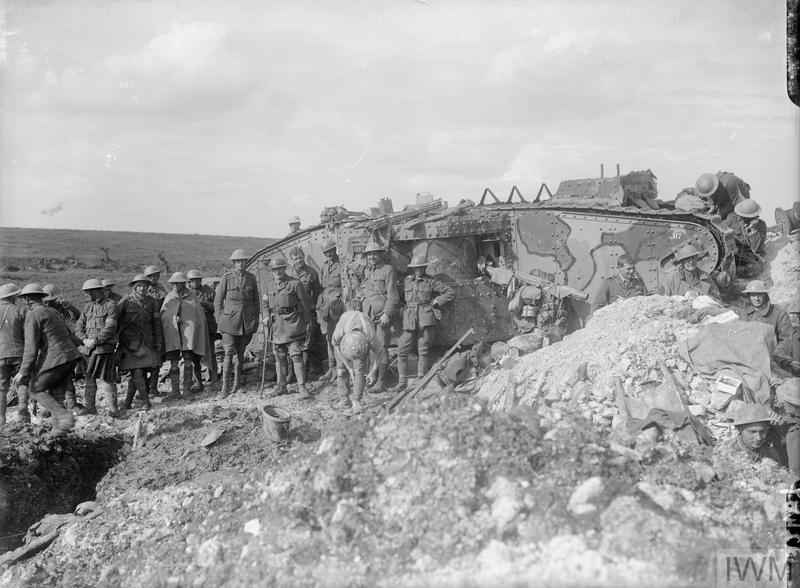
Battle of Flers-Courcelette. A Brigadier and his staff outside Tank 17 of D Company, which was used as his Headquarters. Near Flers, 21st September 1916.

Image: IWM (Q 2487)

Although the British Army suffered heavy casualties for relatively little territorial gain on the Somme, the battle has increasingly been seen as important in providing experience that later contributed to victory on the Western Front. 

During the course of nearly five months of fighting on the Somme, an inexperienced citizen army began to evolve into a battle-hardened one. The same was also true of British commanders, who had never previously commanded troops on this scale before. Improvements were made in the use of artillery and infantry tactics, and new weapons, including tanks, began to be integrated in the British Army’s methods. This came at a very high cost in casualties, but proved equally costly for the German Army, which began to realise that the British Army was becoming a major opponent.

5. 20 million people saw film footage from the battle

An official documentary film, The Battle of the Somme, was the first feature-length film to record soldiers in action. It was filmed by the official cinematographers Geoffrey Malins and John McDowell, who filmed the build-up and early days of the battle.

When the film was shown in cinemas from 21 August 1916, an estimated 20 million people saw it in the first months of its release.

Many hoped to glimpse a son, brother, father or friend. It was intended to show that the ‘Big Push’ had been a success and that British soldiers were well supplied and cared for. The later phases of the Somme offensive were also represented in a follow up film, The Battle of the Ancre and the Advance of the Tanks, released in 1917
My Digital Metro Train Journey

Today i decided to test my video taking skills, which is new to me on getting my updated Android phone. At some point I will attempt to edit this using one of our Apple Mac desktop computers https://drive.google.com/file/d/1OYi3UFcpx6BJ0adbk3Soskutp2h6W_cZ/view

The Harlem Hellfighters

The most storied Black combat unit of World War I

On the Western Front of World War I, death did not discriminate.

Artillery screaming towards the trenches treated men of all color the same. But the soldiers of the 92nd and 93rd divisions lived segregated lives both in and out of war.

These all-Black units, which served under mostly white officers, readily took up arms with their fellow Americans, hopeful that their patriotism and service would lead to better treatment at home.

In the end, the Harlem Hellfighters, as they were likely first dubbed by their German adversaries, spent more time in continuous combat than any other American unit of its size, with 191 days in the front-line trenches, according to the National Museum of African American History and Culture.

The unit also suffered 1,400 total casualties, more than any other American regiment. Many of those soldiers are buried or memorialized at American military cemeteries overseas managed by the American Battle Monuments Commission (ABMC).

Members of the all-Black 369th, or Harlem Hellfighters, pose on the boat home from World War I after fighting valiantly, Feb. 10, 1919. Photo via National Archives, originally captured by Western Newspapers Union

More than 350,000 African Americans served in the Great War. The majority were assigned to labor and stevedore battalions—digging ditches, building roads and supplying the front lines.

Throughout the course of WWI, only about one in 10 African Americans in the U.S. military served in a combat role based on leadership decisions at the time.

The 369th Infantry Regiment of the 93rd Division, formerly the 15th New York National Guard Regiment, was unique.

The 369th landed at Brest, France, in December of 1917.

In March of 1918, the regiment began training under French command due to their need for replacements.

Despite the expectation that this arrangement would be temporary, members of the 369th never served under American command during the war.

By summer, they were fighting in the Champagne-Marne Defensive and the Aisne-Marne Offensive.

It would be then that the Harlem Hellfighters would see grisly combat during the Meuse-Argonne Offensive, which began on Sept. 26, 1918.

As the 369th advanced, capturing towns and a key railroad junction, the losses mounted. In a matter of days, these advances cost the regiment 851 men, and shortly after they were relieved from the front lines.

In recognition of their bravery during the offensive, 171 officers and men received medals and the entire regiment received the Croix de Guerre from France.
 

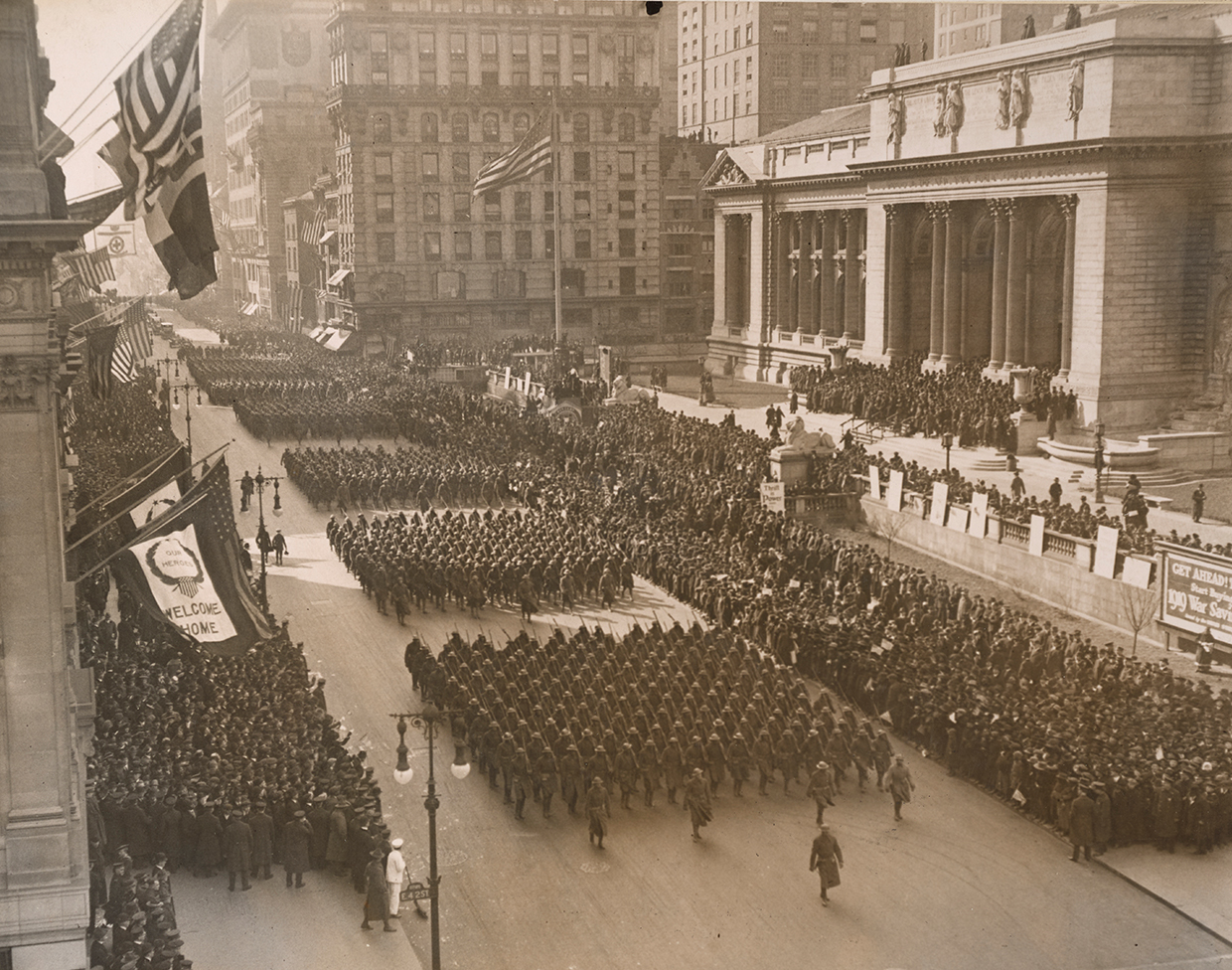
The all-Black 369th Division, or Harlem Hellfighters, return home to New York City for a victory parade after fighting valiantly in World War I, Feb. 18, 1919. Photo via National Archives, originally captured by Western Newspapers Union

The 369th returned to a huge victory parade in New York in February of 1919.

Thousands gathered along 5th Avenue and 42nd Street, outside the New York Public Library,  welcoming home the brave soldiers. The division was even featured prominently on the cover of the Sunday New York Times.

But despite this celebration, little to nothing changed in their day-to-day lives. It would take another world war, and decades of civil rights activism before the hopes of these African American doughboys would start to be realized.

In fact, the inequalities experienced by these brave men are still being remedied today. Legislation passed by Congress in 2014 paved the way for Pvt. Henry Johnson, a Harlem Hellfighter with the 369th, to receive the Medal of Honor. And in 2020, the Army Center of Military History approved the official special designation of the Harlem Hellfighters.

Meuse-Argonne American Cemetery in France
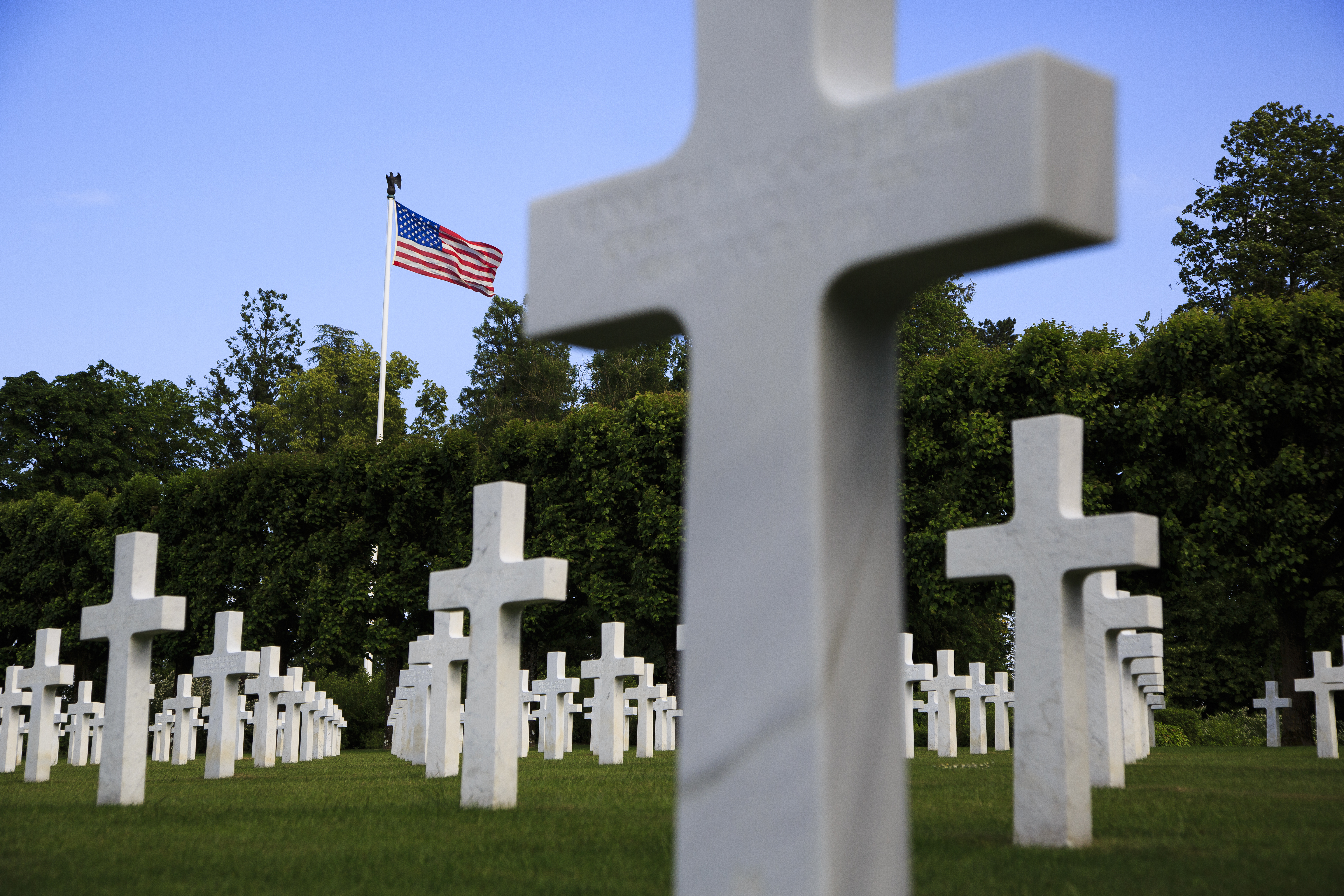
The Stars and Stripes in the background of the Meuse-Argonne American Cemetery in France, the final resting place for more than 14,000 Americans who gave their lives in World War I, June 16, 2015. ABMC photo

There are 169 members of the 369th Infantry Regiment, 93rd Division, buried or memorialized at ABMC cemeteries. The majority are at Meuse-Argonne, but also at Aisne-Marne, Oise-Aisne, St. Mihiel and Suresnes American cemeteries.

Among the more than 14,000 total American soldiers buried at Meuse-Argonne is Freddie Stowers, a member of the 93rd Division, 371st Infantry Regiment, and the first African American to receive the Medal of Honor from WWI.

As at all ABMC sites, the cemeteries are integrated. Race, rank, gender or creed had no determination on burial location and every day the fallen are remembered for their selfless sacrifice.

End Digital Poverty

What is Digital Poverty?

Digital poverty is the inability to interact with the online world fully, when, where, and how an individual needs to. The alarming reality is that 1 in 7 adults and 1 in 5 children in the UK are digitally excluded. This divide exacerbates socio-economic disparities, severely limiting access to education, employment, and social interaction.

Addressing digital exclusion is essential to combating poverty. Digital access is crucial for education, job opportunities, and affordable utilities. Bridging this divide is a moral imperative and a critical step towards fostering equity and unlocking significant economic benefits. Immediate and decisive action is needed to ensure everyone can fully participate in and benefit from the digital age

Here is the link for Further Information. https://www.getonlineathome.org/2024/07/31/get-online-home-support-end-digital-poverty-day/?mc_cid=59b49968c0&mc_eid=98e43f4cb0

The forgotten army of Black soldiers in WW1

America sent almost 400,0000 black soldiers to Europe. In 1914 the barriers to black advancement were scarcely less formidable than they had been just after the abolition of slavery. They were hemmed in by complex legislation confirming their status as ‘ separate but equal’. In fact these laws based voting rights on property and education condemning the blacks to permanent inequality.

When war broke out black leaders hoped that service would dissolve prejudice and segregation. Far from it. In places such as Spartanburg, South Carolina there were riots at the presence of Black Yankees in training. The men and their black officers were allocated to labour battalions and given menials chores. There were no black artillary officers and no black pilots. On arrival in France segregation was imposed no black was allowed to speak to a French woman and French officers were told not to meet blacks ‘ outside the requirements of military service’

Yet the black soldiers fought as bravely as whites. Several hundred received the French Croix de Guerre but none received the Medal of Honour from their own country. At home their contribution to the war effort vanished utterly beneath renewed waves of oppression. Wilson had won the support of those few blacks with political influence in 1912, saying that he wished to see ‘Justice done to coloured people’. And in this Fourteen Points he asserted a right to self determination. It was one of the ironies of history that 10 per cent of his own population had to wait another 40 years before they had any hope of benefiting from those ideals.