WW1 Recruitment for War

How were people persuaded to join the army?
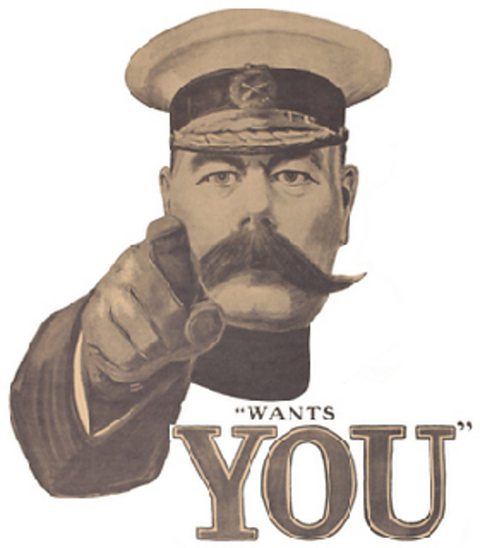
Original recruitment poster of Lord Kitchener pointing at the viewer

In August 1914, Lord Kitchener, the Secretary of State for War, realised Britain needed a bigger army.

He made a direct appeal to the men of Britain. Posters showed him pointing his finger at anyone passing by.

Men felt proud to fight for their country.

  • 54 million posters were issued.
  • 8 million letters were sent.
  • 12,000 meetings were held.
  • 20,000 speeches were given by military spokesmen.

In the first weekend of the war, 100 men an hour (3,000 a day) signed up to join the armed forces.

By the end of 1914 1,186,337 men had enlisted.

Who could join the army?

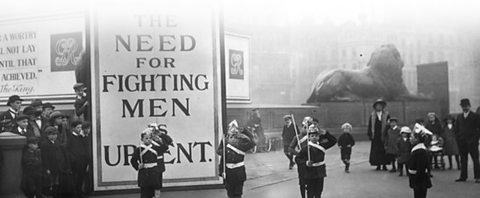
Recruitment drives were held in places like Trafalgar Square

Only men aged between 18 and 41 could become soldiers. (The age limit was increased to 51 in April 1918 because so many men and boys had been killed by the end of the war in 1918)
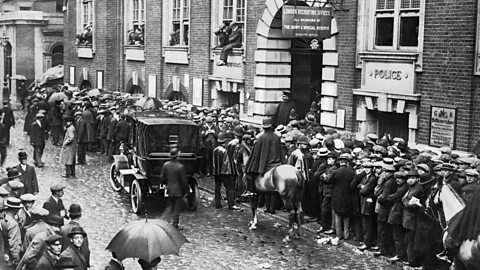
  1. Young men queuing eagerly along a street outside a recruitment station in World War One
  2. Men queued outside recruitment offices to join the armySome men failed the medical test. Others had ‘reserved occupations’, like working in coal mines, shipyards, munitions factories and farms, which meant they stayed in Britain.
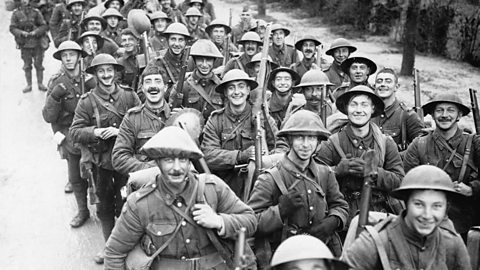
  3. A group of British soldiers in World War One smiling as they march to the trenches
  4. Younger teenagers tried to join tooThey wanted to be treated like men and thought war would be exciting. Many lied about their age. Some boys as young as 13 or 14 went to war.

 Photograph of a man giving his name to an officer at a recruitment drive in Trafalgar Square during World War One, Recruitment drives were held in places like Trafalgar Square Only men aged between 18 and 41 could become soldiers. (The age limit was increased to 51 in April 1918.)

The Government wanted as many men as possible to join the forces willingly.

But in 1916 a law was passed to say men had to join whether they wanted to or not. This was called conscription.

What were Pals Battalions?

Watch our video to find out more about men from workplaces, churches and villages who joined the army together.

Video Transcript

Lord Derby, a politician, encouraged men to join up with their friends as a way to recruit more soldiers.

People who already knew each other would be good for the army. They would keep each others’ spirits up. These groups became known as ‘Pals Battalions’.

The Accrington Pals

One famous Pals Battalion was a group of around 700 men from Lancashire.

When the Pals left the small town of Accrington over 15,000 people crowded the streets, waving flags and cheering.

1 July 1916 was the first day of a battle near the river Somme. In just 20 minutes, 235 of the Accrington Pals were killed and over 350 were wounded.

Everyone in Accrington was shocked and sad. In some families all the men died on the same day.

Who were conscientious objectors?

A white feather
Image caption,A group called The Order of the White Feather tried to make men feel ashamed.

Some men refused to fight for moral or religious reasons. They said their consciences would not allow them to kill.

There were about 16,000 conscientious objectors.

Some were allowed to do non-fighting work, such as farming or as stretcher-bearers on the battlefields.

Thousands more were sent to prison. They were often treated harshly there.

White feathers

A white feather was used as a symbol to mean a man was a coward. They were presented to men in the street or on the bus if they weren’t wearing uniform.

The idea was to shame the man and make him join the army. This was unfair. There were many good reasons why a man might not be in uniform.

How did life change?

Millions of British men were injured or died in the war. The government needed to replace them so recruitment became a part of everyday life.

By the end of the war almost one quarter of all the men in Britain had been in the armed forces.
My New T Shirt And My New Socks.

I love my new T Shirt and my new wrestling socks my Dad and Bern got me for my Birthday. I’m going to wear the wrestling socks everytime I’m having a couple of pints🍻watching my wrestling in the afternoon. I’m going to wear them when I am watching RAW Smackdown AEW Dynamite AEW Collision AEW Rampage and things on the WWE Network.

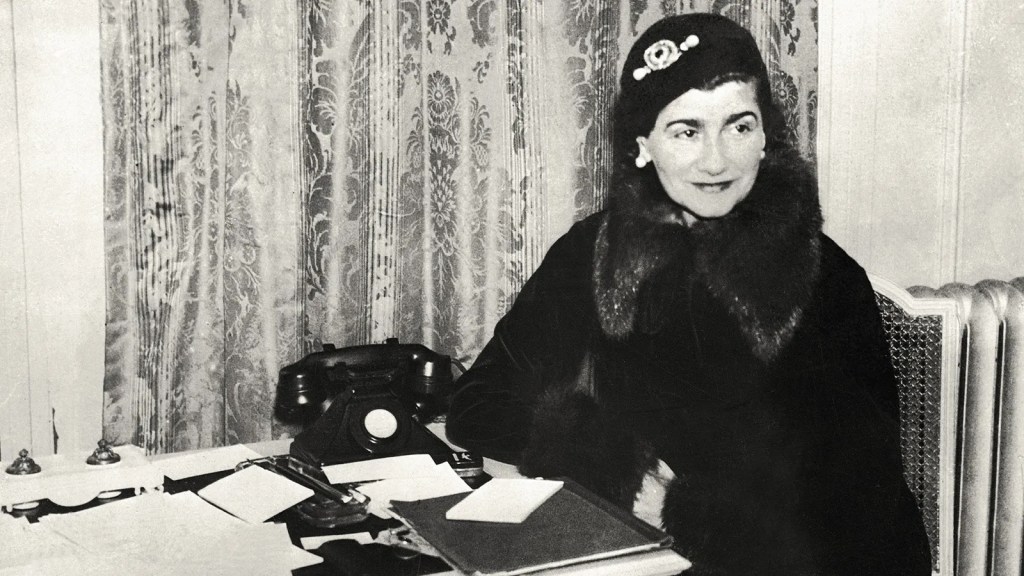
Coco Chanel German spy 1939 to 1945

Thanks to her introduction of the little black dress, trademark suits and Chanel No. 5 perfume, Coco Chanel is credited with transforming sartorial tastes for the modern woman of the 20th century, her name becoming synonymous with impeccable fashion sense.

In recent years, however, the availability of declassified French government documents has revealed her covert work for Nazi military intelligence during World War II.

Chanel grew up in poverty but rose through the ranks of society by the start of WWII

Born into poverty in 1883 and sent off to a convent-orphanage at age 12, Chanel overcame her rough beginnings to debut her visionary women’s wear by World War I.

Her meteoric rise thrust her into the stratosphere of Europe’s most powerful and influential figures. Along with hobnobbing with artistic luminaries like Pablo Picasso and Serge Diaghilev, she became friends with Winston Churchill and mistress of Hugh Richard Arthur Grosvenor, the Duke of Westminster.

Chanel’s prominent standing and connections helped her regain control over her life at a crucial time, as Adolf Hitler’s forces began closing in on Germany’s neighbors in the late 1930s.

Chanel dated a German military officer

After the Nazis took over Paris in 1940, Chanel cozied up to Baron Hans Günther von Dincklage, an officer in Abwehr, the German military intelligence. Their romance enabled Chanel to move into comfortable living quarters at Paris’ Hôtel Ritz, then doubling as a German headquarters, and kept her firmly entrenched in high society, which also had been infiltrated by German officers.

Chanel’s relations with Dincklage also allowed her to deal with important personal matters. Most pressing was her need to see to the release of her nephew André Palasse, who was imprisoned in a German stalag in 1940.

Then there were her business interests: Since 1924, when the Jewish Wertheimer family had backed the launch of her perfume line in exchange for most of the profits, the fashion maven had sought to renegotiate things on more favorable terms. Now, with “Aryanization” laws forcing Jews to give up their businesses, Chanel saw the opportunity to reclaim a lucrative branch of her empire.

Chanel became Abwehr Agent F-7124 in 1941

Dincklage introduced his lover to another prominent Abwehr agent, Baron Louis de Vaufreland, who allegedly promised to help Chanel free her nephew in exchange for her service to Berlin. Sometime in 1941, Chanel was registered as Agent F-7124, with the code name of “Westminster,” after her former flame.

Tasked with obtaining “political information” from colleagues in Madrid, Chanel traveled to the Spanish city for a few months in mid-1941 with Vaufreland, under the guise of business dealings. According to Hal Vaughn’s book Sleeping with the Enemy, there is a record of her dinner with British diplomat Brian Wallace, during which she casually discussed life in occupied Paris and the animosity the French and Germans held toward each other.

It’s unclear whether Chanel’s interactions in Madrid moved the needle in any way, but they were apparently enough to impress Abwehr supervisors and earn the release of Palasse.

However, her desire to reclaim her perfume profits reached a dead end, as she learned that the Wertheimers had transferred control of the company to a non-Jewish Frenchman named Félix Amiot before fleeing to the United States.

She was outed as a German spy in 1944

Sometime between late 1943 and early 1944, with the tide turning against Germany, Chanel was tapped for another mission by General Walter Schellenberg of the SS. Named Operation Modellhut, German for “model hat,” she was to use her personal connection to Churchill, now England’s prime minister, to relay word that many SS senior officers were seeking an end to the bloodshed.

Chanel arranged for the release of Vera Lombardi, a mutual friend of hers and Churchill’s, from an Italian prison. They traveled to Madrid with Dincklage, where Lombardi was instructed to hand over Chanel’s letter to Churchill at the British Embassy.

However, this plan was blown up when Lombardi denounced Chanel and her associates as German spies. Lombardi was taken back into custody, though Chanel managed to safely return to Paris.

Chanel escaped punishment and erased evidence of her actions that tied her to Abwehr

In August 1944, a few months after the Madrid fiasco, French forces reclaimed Paris from the Germans. With her reputation as a “horizontal collaborator,” Chanel was taken in for questioning before the Free French Purge Committee, though she was released in short order and promptly fled to Switzerland.

After the war’s conclusion, Chanel appeared in a French court to account for sworn testimony from arrested German officers that tied her to Abwehr. She managed to wriggle her way out of trouble, confirming that Vaufreland had promised to get her nephew out of prison but otherwise denying the extent of their interactions.

According to Sleeping with the Enemy, Chanel also took care to erase evidence of her actions, where possible. Upon learning that an ailing Schellenberg was planning to publish his memoir, Chanel paid his medical bills and ensured his family was on sound financial footing; the subsequent memoir had no mention of her involvement as an agent.

Ultimately, Chanel never endured any ramifications for her wartime dealings with the Nazis. She made a celebrated return to the fashion world in 1954, aided by the very same Wertheimer family she had fought for so many years, and lived out her years as a celebrity, before her death at the Hôtel Ritz in 1971.

The most famous German spy 1939 – 1945

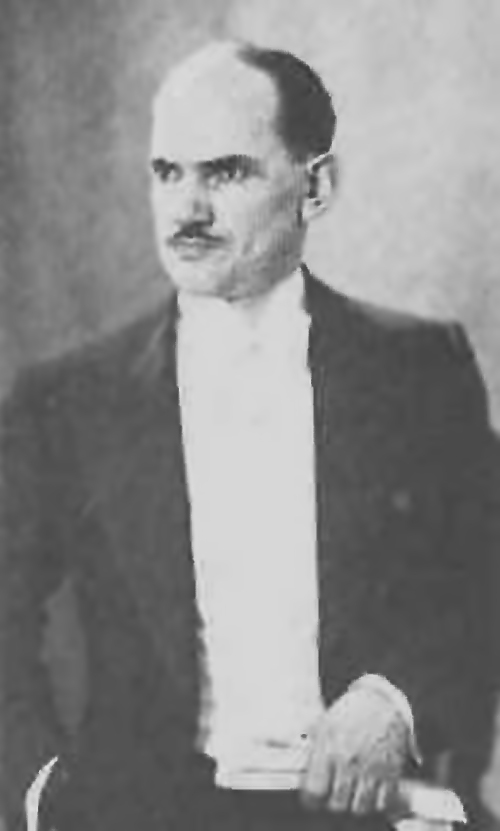
Cicero (born 1904, Pristina, Ottoman Empire [now in Kosovo]—died December 21, 1970, Munich, West Germany) was one of the most famous spies of World War II, who worked for Nazi Germany in 1943–44 while he was employed as valet to Sir Hughe Montgomery Knatchbull-Hugessen, British ambassador to neutral Turkey from 1939. He photographed secret documents from the embassy safe and turned the films over to the former German chancellor Franz von Papen, at that time German ambassador in Ankara. For this service the Hitler government paid Cicero large sums in British money, most of it counterfeited in Germany. Despite the evident authenticity of the films, the Nazi officials in Berlin mistrusted Cicero and are said to have disregarded his information (some of which dealt with plans for the Allied invasion of Normandy on D-Day, June 6, 1944).

He spent his last years as a night watchman in Munich. Der Fall Cicero (1950; Operation Cicero) was written by L.C. Moyzisch, who transmitted all communications between Cicero and Papen. A motion picture, Five Fingers (1952), was based on this book. Ich war Cicero (1962; I Was Cicero) was written by Bazna himself (under his real name) in collaboration with Hans Nogly.

Digital divides and rural realities Good Things Foundation. 11th August 2023

Minimum Digital Living Standards Project (rural areas) Dr Emma stone, Good Things Foundation):

Over the summer of 2023 Good Things Foundation hosted five stakeholder workshops to discuss rural digital exclusion. Please click on link for access to their website. There is also a list of useful resources relating to digital inequalities in rural areas of the uk.

https://www.goodthingsfoundation.org/discover/digital-inclusion-insights/digital-inclusion-insights-2024/digital-divides-and-rural-realities.html?fbclid=IwY2xjawEpxP5leHRuA2FlbQIxMAABHYftKz06cKl9RWvedgTdMtA-owNWYjfaMiB1LgDYZfgyI39Lw3K4Bg-VWA_aem_lSAY5M0FvtUfswIGNU1FtA

WW1 Battle of the Somme

1. The Battle of the Somme lasted nearly five months

A view of a large, sunlit crater blasted into white chalky soil. The remains of German barbed-wire defences in the distance are a dark rust-coloured pink. A German and a British steel helmet and the remains of a uniform lie on the edge of the crater in the foreground. The sky is covered in dense white cloud with blue patches visible at the top of the composition.

© IWM Art.IWM ART 3006

The Battle of the Somme was one of the most bitterly contested and costly battles of the First World War, lasting nearly five months. Despite this, it is often the first day of the battle that is most remembered. The offensive began on 1 July 1916 after a week-long artillery bombardment of the German lines. Advancing British troops found that the German defences had not been destroyed as expected and many units suffered very high casualties with little progress.

The Somme became an attritional or ‘wearing-out’ battle. On 15 September, tanks were used for the first time with some success, but they did not bring a breakthrough any closer. Operations on the River Ancre continued with some gains, but in deteriorating weather conditions major operations on the Somme ended on 18 November. Over the course of the battle, British forces took a strip of territory 6 miles (10km) deep by 20 miles (32km) long.

2. There were over a million casualties

Scene outside a Casualty Clearing Station (CCS) as casualties, including Canadians, wait to be loaded onto the Princess Christian Hospital train.

Image: IWM (CO 915)

As an attritional offensive, the Battle of the Somme involved heavy casualties on both sides. By the end of the first day on 1 July 1916, British forces had suffered 57,470 casualties, of whom 19,240 were killed. This represented the largest losses suffered by the British Army in a single day. 

While casualty rates were not as high as that for the remainder of the offensive, they were consistently heavy as both sides fought intensively for every yard of ground within a relatively small geographical area.

In total over a million men from both sides – including Britain and her Empire forces, France and Germany – became casualties during the battle.

3. It was the first major battle of Britain’s new volunteer army

Battle of the Somme. A support company of an assault battalion, of the Tyneside Irish Brigade, going forward shortly after zero hour on 1 July 1916 during the attack on La Boisselle.

Image: IWM (Q 53)

The Battle of the Somme saw the first involvement in battle of many men who had volunteered for Army service in 1914 and 1915. This included men who had joined Pals battalions – infantry units that were made up of friends, relatives and workmates from the same communities.

After around a year of training, most of these men began to see active service from late 1915 and early 1916, particularly on the Western Front. As a result, the Battle of the Somme, the largest offensive the British Army had yet launched, was the first to be fought by a largely citizen army made up of civilian volunteers rather than professional soldiers. This meant that many of the attacking British infantry did not have battlefield experience. As one French officer wrote on 10 July 1916, ‘The British…infantry… is very brave but undergoing a costly apprenticeship’.

4. The British Army gained valuable experience

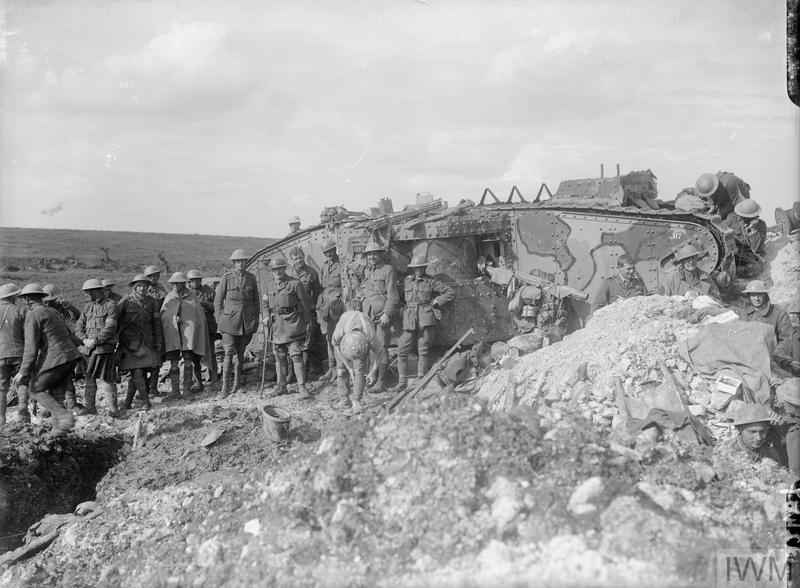
Battle of Flers-Courcelette. A Brigadier and his staff outside Tank 17 of D Company, which was used as his Headquarters. Near Flers, 21st September 1916.

Image: IWM (Q 2487)

Although the British Army suffered heavy casualties for relatively little territorial gain on the Somme, the battle has increasingly been seen as important in providing experience that later contributed to victory on the Western Front

During the course of nearly five months of fighting on the Somme, an inexperienced citizen army began to evolve into a battle-hardened one. The same was also true of British commanders, who had never previously commanded troops on this scale before. Improvements were made in the use of artillery and infantry tactics, and new weapons, including tanks, began to be integrated in the British Army’s methods. This came at a very high cost in casualties, but proved equally costly for the German Army, which began to realise that the British Army was becoming a major opponent.

5. 20 million people saw film footage from the battle

An official documentary film, The Battle of the Somme, was the first feature-length film to record soldiers in action. It was filmed by the official cinematographers Geoffrey Malins and John McDowell, who filmed the build-up and early days of the battle.

When the film was shown in cinemas from 21 August 1916, an estimated 20 million people saw it in the first months of its release.

Many hoped to glimpse a son, brother, father or friend. It was intended to show that the ‘Big Push’ had been a success and that British soldiers were well supplied and cared for. The later phases of the Somme offensive were also represented in a follow up film, The Battle of the Ancre and the Advance of the Tanks, released in 1917

The Harlem Hellfighters

The most storied Black combat unit of World War I

On the Western Front of World War I, death did not discriminate.

Artillery screaming towards the trenches treated men of all color the same. But the soldiers of the 92nd and 93rd divisions lived segregated lives both in and out of war.

These all-Black units, which served under mostly white officers, readily took up arms with their fellow Americans, hopeful that their patriotism and service would lead to better treatment at home.

In the end, the Harlem Hellfighters, as they were likely first dubbed by their German adversaries, spent more time in continuous combat than any other American unit of its size, with 191 days in the front-line trenches, according to the National Museum of African American History and Culture.

The unit also suffered 1,400 total casualties, more than any other American regiment. Many of those soldiers are buried or memorialized at American military cemeteries overseas managed by the American Battle Monuments Commission (ABMC).

Members of the all-Black 369th, or Harlem Hellfighters, pose on the boat home from World War I after fighting valiantly, Feb. 10, 1919. Photo via National Archives, originally captured by Western Newspapers Union

More than 350,000 African Americans served in the Great War. The majority were assigned to labor and stevedore battalions—digging ditches, building roads and supplying the front lines.

Throughout the course of WWI, only about one in 10 African Americans in the U.S. military served in a combat role based on leadership decisions at the time.

The 369th Infantry Regiment of the 93rd Division, formerly the 15th New York National Guard Regiment, was unique.

The 369th landed at Brest, France, in December of 1917.

In March of 1918, the regiment began training under French command due to their need for replacements.

Despite the expectation that this arrangement would be temporary, members of the 369th never served under American command during the war.

By summer, they were fighting in the Champagne-Marne Defensive and the Aisne-Marne Offensive.

It would be then that the Harlem Hellfighters would see grisly combat during the Meuse-Argonne Offensive, which began on Sept. 26, 1918.

As the 369th advanced, capturing towns and a key railroad junction, the losses mounted. In a matter of days, these advances cost the regiment 851 men, and shortly after they were relieved from the front lines.

In recognition of their bravery during the offensive, 171 officers and men received medals and the entire regiment received the Croix de Guerre from France.
 

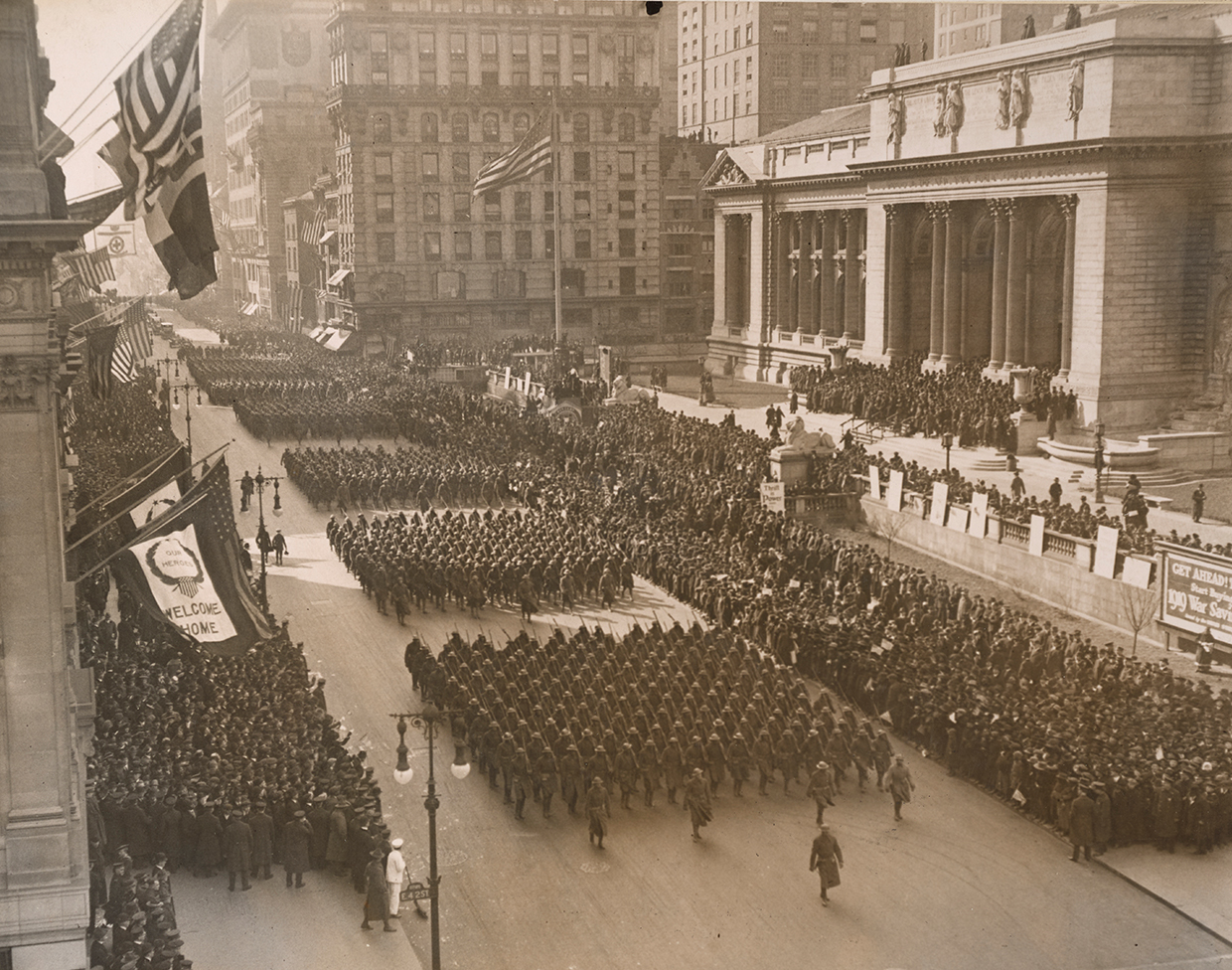
The all-Black 369th Division, or Harlem Hellfighters, return home to New York City for a victory parade after fighting valiantly in World War I, Feb. 18, 1919. Photo via National Archives, originally captured by Western Newspapers Union

The 369th returned to a huge victory parade in New York in February of 1919.

Thousands gathered along 5th Avenue and 42nd Street, outside the New York Public Library,  welcoming home the brave soldiers. The division was even featured prominently on the cover of the Sunday New York Times.

But despite this celebration, little to nothing changed in their day-to-day lives. It would take another world war, and decades of civil rights activism before the hopes of these African American doughboys would start to be realized.

In fact, the inequalities experienced by these brave men are still being remedied today. Legislation passed by Congress in 2014 paved the way for Pvt. Henry Johnson, a Harlem Hellfighter with the 369th, to receive the Medal of Honor. And in 2020, the Army Center of Military History approved the official special designation of the Harlem Hellfighters.

Meuse-Argonne American Cemetery in France
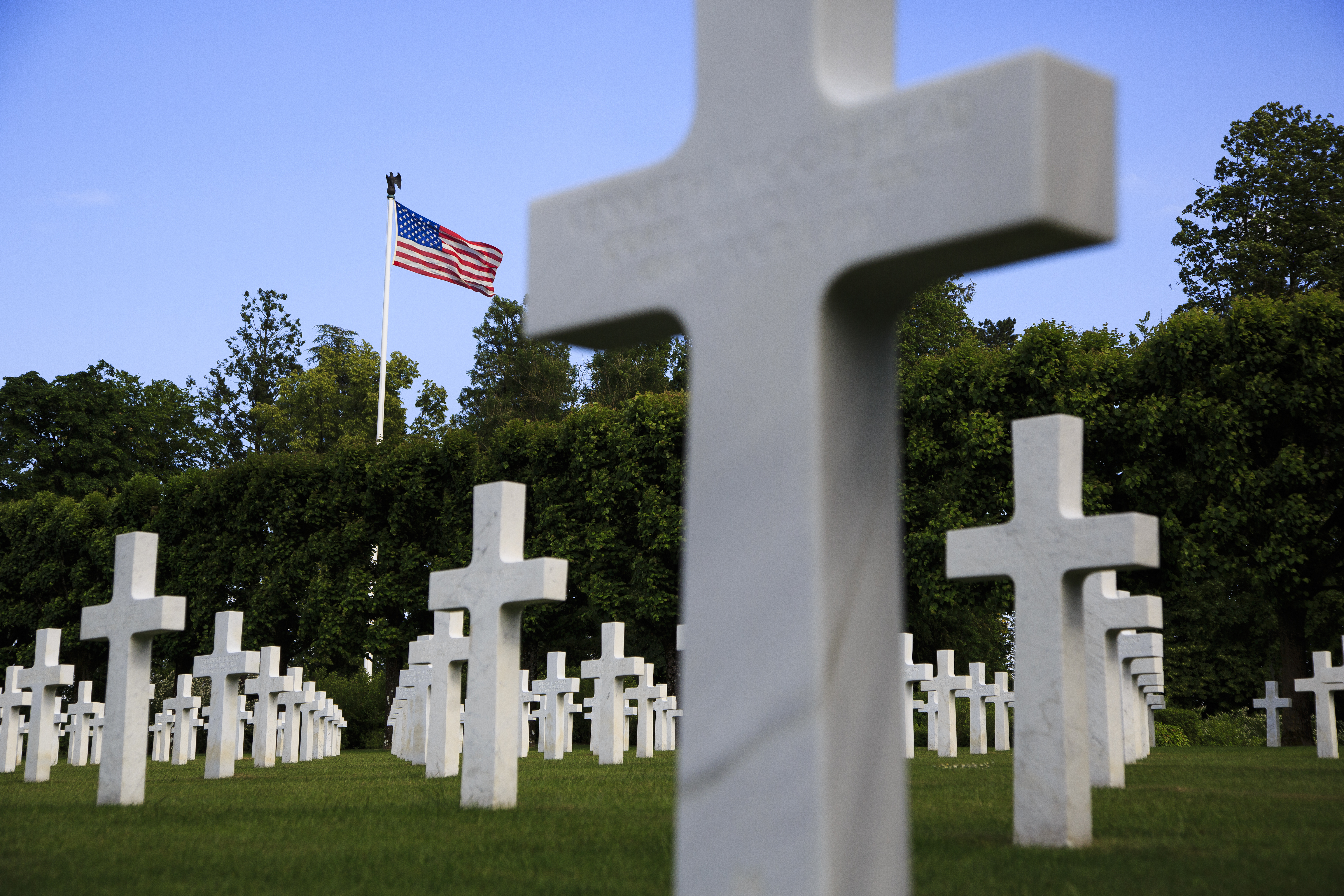
The Stars and Stripes in the background of the Meuse-Argonne American Cemetery in France, the final resting place for more than 14,000 Americans who gave their lives in World War I, June 16, 2015. ABMC photo

There are 169 members of the 369th Infantry Regiment, 93rd Division, buried or memorialized at ABMC cemeteries. The majority are at Meuse-Argonne, but also at Aisne-Marne, Oise-Aisne, St. Mihiel and Suresnes American cemeteries.

Among the more than 14,000 total American soldiers buried at Meuse-Argonne is Freddie Stowers, a member of the 93rd Division, 371st Infantry Regiment, and the first African American to receive the Medal of Honor from WWI.

As at all ABMC sites, the cemeteries are integrated. Race, rank, gender or creed had no determination on burial location and every day the fallen are remembered for their selfless sacrifice.