I picked this train timetable mode, which takes the following rote Rochester to Gillingham in the Southeast of England. This online simulation enhances your navigation skills and hand eye coordination
Month: October 2022
WW2 German Scientists and Operation Paperclip ran by USA
In a move that stirs up some controversy, as part of “Operation Paperclip,” the United States ships 88 German scientists to America to assist the nation in its production of rocket technology. Most of these men had served under the Nazi regime and critics in the United States questioned the morality of placing them in the service of America. Nevertheless, the U.S. government, desperate to acquire the scientific know-how that had produced the terrifying and destructive V-1 missiles and V-2 rockets for Germany during WWII, and fearful that the Russians were also utilizing captured German scientists for the same end, welcomed the men with open arms.
READ MORE: What Was Operation Paperclip?
Realizing that the importation of scientists who had so recently worked for the Nazi regime so hated by Americans was a delicate public relations situation, the U.S. military cloaked the operation in secrecy. In announcing the plan, a military spokesman merely indicated that some German scientists who had worked on rocket development had “volunteered” to come to the United States and work for a “very moderate salary.” The voluntary nature of the scheme was somewhat undercut by the admission that the scientists were in “protective custody.”
Upon their arrival in the United States on November 16, newsmen and photographers were not allowed to interview or photograph the newcomers. A few days later, a source in Sweden claimed that the scientists were members of the Nazi team at Peenemeunde where the V-weapons had been produced. The U.S. government continued to remain somewhat vague about the situation, stating only that “certain outstanding German scientists and technicians” were being imported in order to “take full advantage of these significant developments, which are deemed vital to our national security.” The situation pointed out one of the many ironies connected with the Cold War. The United States and the Soviet Union, once allies against Germany and the Nazi regime during World War II, were now in a fierce contest to acquire the best and brightest scientists who had helped arm the German forces in order to construct weapons systems to threaten each other.
Nazi Germany and its Scientists
Beginning in 1933, hundreds of physicists and other academics fled the country, transforming their lives and the global scientific landscape.

Two months after Adolf Hitler was appointed chancellor, the German government issued the Gesetz zur Wiederherstellung des Berufsbeamtentums—the Law for the Restoration of the Professional Civil Service. With some exceptions, none of which lasted for long, the 7 April 1933 law ordered that those in government positions who had at least one Jewish grandparent or were political opponents of the Nazi Party be immediately dismissed. Thousands of people lost their jobs as teachers, judges, police officers—and academics at the country’s top universities.
Over the next several years, hundreds of German scientists and other intellectuals would flee to the UK, the US, and dozens of other countries to protect their livelihoods and their lives. The Nazi regime pushed out leading researchers such as Albert Einstein, Hans Krebs, and even national hero Fritz Haber, who had helped develop chemical weapons during World War I. The extraordinary intellectual exodus would have tremendous implications for not only Germany but also the countries that took in the refugees.
Read the rest of our series on displaced German scientists.
- The scientific exodus from Nazi Germany
- The unlikely haven for 1930s German scientists
- The tragic story of Hans Hellmann
See also a map of the career paths of every physics Nobel laureate.
To capture a snapshot of the scientific exodus from 1930s Germany, we’ve tracked the movements of 129 physicists included in the 1936 List of Displaced German Scholars. The Notgemeinschaft Deutscher Wissenschaftler im Ausland (Emergency Association of German Scholars in Exile), founded by German neuropathologist and refugee Philipp Schwartz in 1933, compiled the document to help dismissed academics find positions in other countries. The association disseminated the list discreetly to minimize the risk of harm to the scholars who were still in Germany. The list contains nearly 1800 names in various fields. Many of the people on the list were Jewish, but not all—some had Jewish spouses or other family members, some supported communism, and others had spoken out against the government.
Displaced German Scholars classifies academics by their fields of study and details their work history in Germany. Each entry ends with the position the person held as of 1936. Some fortunate scholars were already safe with permanent employment abroad; others had the short-term security of a position lasting a few months or a year. But a sizable portion of entries, particularly for scientists early in their careers, end with the abbreviation Unpl—unplaced.
The names in the physics section read like a who’s who of early 20th-century physics: Hans Bethe, Felix Bloch, Max Born, Albert Einstein, James Franck, Otto Frisch, Fritz London, Lise Meitner, Erwin Schrödinger, Otto Stern, Leo Szilard, Edward Teller, Victor Weisskopf, Eugene Wigner. Three of the displaced scientists—Einstein, Franck, and Schrödinger—were already physics Nobel laureates; five more would eventually receive the prize. A 2016 study found that the 15% of physicists who were dismissed from German universities accounted for 64% of all German physics citations.
Fortunately for those physicists and other displaced scholars, colleagues from outside Germany acted quickly to provide assistance. In April 1933, British economist William Beveridge founded the Academic Assistance Council, later renamed the Society for the Protection of Science and Learning. The group’s first president was physicist Ernest Rutherford. Ultimately SPSL would help more than 2500 scholars from Germany and occupied countries flee to the UK. A similar organization in the US, the Emergency Committee in Aid of Displaced German (later Foreign) Scholars, rescued more than 300 academics. The Notgemeinschaft kept detailed records of the scholars at risk and, working with organizations like SPSL, helped find jobs abroad for many of them.
Thanks to such efforts, the vast majority of physicists on the list survived past World War II. One notable exception is Hans Hellmann, a pioneering quantum chemist who fled Nazi Germany only to be executed four years later in the Soviet Union’s Great Purge (see the accompanying article). In general, displaced German academics fared far better than other displaced citizens in Germany and occupied countries. “Would that shiploads of scholars, of artists, or ordinary men, women, and children might have sought and found the sanctuary that these men and women were helped to find,” Nathan Kravetz wrote in a foreword to a 1993 reprinting of the displaced scholar list.ESCAPING GERMANY. Hover over the arrows to see the physicists who fled from Germany to a given country. The more refugees to a country, the thicker the arrow. Credit: Greg Stasiewicz
The map above shows where displaced German physicists found new employment in their first move to escape their home country for good. Much of the data comes from Displaced German Scholars; for physicists who were unplaced in 1936, we performed our own research to chart their destinations. We obtained information for 126 of the 129 physicists. (Please contact the author if you have information about any of the remaining three: Heinrich Goldschmidt, Hans Kohn, or Emanuel Wasser.)
Unsurprisingly, the UK and the US were the most popular destinations. Einstein and Franck headlined the 30 German physicists who relocated to American institutions such as the Institute for Advanced Study, Harvard, and Stanford. Teller, Schrödinger, and 34 others headed to Cambridge, Oxford, and other UK destinations. (Schrödinger eventually made an ill-fated decision to accept a position in Austria, where he wrote a fawning letter to Hitler before changing his mind and again retreating to England.) Many of those physicists eventually became key contributors to the Manhattan Project.
Other countries gained from Germany’s brain drain too. Ernst Alexander and Günther Wolfsohn helped jump-start the fledgling experimental physics department at the Hebrew University of Jerusalem. Gerhard Herzberg landed a job at the University of Saskatchewan in Canada, where he would perform work on the spectra of free radicals that would garner the 1971 Nobel Prize in Chemistry. The young republic of Turkey eagerly courted German astronomers, experimental physicists, and other academics to bolster its educational institutions (see the accompanying article).
After the war, some academics returned to Germany (East and West). But many stayed in their adopted country or found new opportunities abroad—with long-term consequences for scholarly output in Germany. For physics, one way to trace the effects is through German-born recipients of the Nobel Prize in Physics. Following Hitler’s rise to power, two of the next three Germans to win the physics prize had fled the country. Even decades later, the impact of the intellectual exodus is clear: Physics laureates Arno Penzias (1978), Jack Steinberger (1988), and Rainer Weiss (2017) were born in prewar Germany but emigrated to the US as children, and Michael Kosterlitz (2016) is the son of German refugees.
Police Interceptors.

I love watching Police Interceptors on channel 5 when it is on the telly. I find it really interesting and it is all real life stuff about the police and the jobs the police have to do day and night and sometimes twenty four hours a day.
Gavin And Stacey.

I love watching Gavin And Stacey when it is on the telly it is one of my favourite comedies I really like watching it at Christmas to when it is on at Christmas time in the Christmas holidays.
Tommy Cooper.

I like watching the old Tommy Cooper stand up comedies whenever they are on the telly I think he was really funny. I think his stand up comedy stuff on stage was very good and I thought he was very good to I thought all of his episodes were really funny.
Wwe RAW 2020.

I have five more episodes of Wwe RAW 2020 from a couple of years ago to watch on the Wwe Network then I have seen all the episodes of Wwe RAW 2020 from two years ago. They are all really good and love watching them all they have all been very good.
Weapons of World War One
World War I is often considered the first true ‘modern war’, a conflict fought between industrialised countries equipped with modern weapons. It saw the rise of powerful weapons such as heavy artillery, machine guns and aeroplanes – and the decline of 19th-century weapons like sabres and bayonets. This page contains brief summaries of the most significant weapons of World War I.
Bayonets
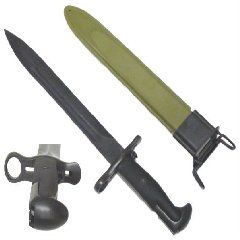
The bayonet was a comparatively simple weapon: a bracketed dagger attached to the end of a rifle barrel. Its primary function was to turn the rifle into a thrusting weapon, allowing its owner to attack the enemy without drawing too close.
Bayonets are believed to have originated in medieval China but by the late 17th century they were widely used in Europe. The shape, size and design of bayonets evolved alongside changes in firearms.
The ‘bayonet charge’ was also an important tactic in modern warfare. Bayonet charges were designed for psychological impact: men were trained to advance in rows, with faces contorted, lungs blaring and bayonets thrusting.
Though effective in the 19th century, these charges were thwarted by rapid-firing small arms and machine-guns. Lengthy bayonets attached to even longer rifles also made close-quarters fighting difficult and ungainly. As a consequence, bayonets quickly lost their effectiveness as weapons during World War I.
When not employed in battle, bayonets were often detached from rifles and used as all-purpose tools, for anything from digging to opening canned food rations.
“Bayonet injuries were cruel, particularly since British soldiers were trained to ‘thrust the bayonet home then give it a sharp twist to the left, thus making the wound fatal’. Perhaps the shock-and-awe value of the bayonet is what made those 19th-century generals so enamoured of it.”
Jonathan Bastable, historianRifles
The rifle was standard issue for infantrymen from each country. Rifles were relatively cheap to produce, reasonably accurate and easy to carry.
Almost all British and British imperial soldiers were issued with the Lee-Enfield 303, German troops received a 7.92mm Mauser and French soldiers the 8mm Lebel and Berthier. All were bolt-action repeating rifles, meaning that each round was fed into the chamber manually before firing (unlike modern automatic and semi-automatic weapons).
These rifles were known for their durability, long range and reliability in difficult conditions. All could fire accurately over a distance of around 500 metres, while the Enfield could potentially kill a man two kilometres away. This long range was largely wasted on the Western Front, however, where distances between trenches could be as low as 40 metres.
Rifle cleaning, maintenance and drilling occupied a good deal of an infantry soldier’s daily routine. More than 40 million rifles were used on the battlefields of World War I.
“The Lee-Enfield was not as effective as a semi-automatic, but with a ten-round magazine and a quick bolt action, it was far better for rapid-fire than the German Kar 98K Mauser… Unfortunately, British rifle training emphasised pinpoint accuracy rather than volume of fire.”
Allan Converse, historianRevolvers
In World War I, hand-held pistols or revolvers were issued mainly to officers. Enlisted soldiers only received pistols if they were required for specialist duties, such as military police work or in tank crews where rifles would be too unwieldy.
The most famous pistol of the war was the German-made Luger P08, with its distinctive shape, narrow barrel and seven-shot magazine. British officers were issued with the Webley Mark V or Mark VI, which fired a .455 bullet from a six-round magazine.
The Webleys were reliable if somewhat ‘clunky’ weapons. Many accounts suggest the Webleys could fire even when caked with mud or dust – but they were also heavy and difficult to fire accurately. One officer wrote of his Webley that “after assiduous practice, I am at last able to hit the side of a fairly large house at a distance of five paces – with luck”. Many British officers resorted to using much lighter Lugers captured from German officers.
Pistols were not usually a significant weapon during World War I, though they were sometimes important as concealed weapons or for close combat in the trenches.
“About 1.6 million Luger pistols of all types were made by the end of the Great War, and they earned the affection of the troops. They fired rapidly, pointed easily and were superb pistols for their time, giving excellent service if properly cared for.”
Stephen Bull, historianMachine Guns
The image of infantrymen charging pointlessly into machine-gun fire is a common motif of the Great War. World War I machine-guns were not as common, portable or manageable as modern weapons – but their impact was deadly nevertheless.
At the outbreak of war, Germany had the upper hand in both the quality and quantity of machine-guns. The Maschinengewehr 08 or MG08 was capable of firing hundreds of 7.92mm rounds a minute at ranges in excess of two kilometres. More than 130,000 MG08s were manufactured during the war and deployed on the battlefield or mounted on German aircraft.
British forces used the older Hotchkiss Mk I and the heavy and unwieldy Vickers Mk I, before adopting the more efficient Lewis gun in 1915. These guns were capable of firing up to 500 rounds per minute – but they were cumbersome, very heavy (often more than 50 kilograms) and required at least three well-trained men to set up and operate effectively. Their rapid rate of fire caused machine-guns to quickly overheat, requiring elaborate water and air-based cooling systems to prevent them from jamming or exploding.
Combatant nations quickly recognised the value of machine-guns on the battlefield, installing placements that allowed them to repel charges with sweeping and interlocking fire.
“Few technical developments had quite the impact of the machine gun on the Western Front during the First World War. The German army’s Maxim guns effectively ended an entire, attrition-based, strategy of military campaigning, although it took the best part of the war for the allied generals to realise this.”
Peter Squires, writer
Grenades
Grenades are small bombs thrown by hand or launched from a rifle attachment. They are either detonated by a percussion cap on impact with the ground or after the expiration of a timer.
World War I grenades varied significantly in size, shape and weight. Germany led the way in grenade development. Developed in 1913, the Kugelhandgranate was a light, ball-shaped grenade; it was armed by pulling a friction wire and detonated after a delay of five to seven seconds. More common was the heavier Stielhandgranate or ‘stick grenade’, sometimes dubbed the ‘potato masher’.
Early British models like the Mark I had a similar design but were awkward to use and prone to accidental detonation. These were superseded by the pineapple-shaped Mills bomb, the design of which continues today.
Mills bombs had a safety pin and firing lever and were designed to fragment on detonation, causing shrapnel injuries to the enemy. They were produced with four and seven-second fuses. The weight of these grenades (in excess of 750 grams or one-and-a-half pounds) made lengthy throws difficult; they were designed to be hurled from behind cover to protect the thrower from shrapnel.
“The Mills bomb was a simple, rugged and effective hand grenade… At the start of the war, Britain lacked an effective grenade and troops often resorted to the use of home-made ‘jam tin’ bombs.”
Roger Lee, historian
“Even after the appearance during World War I of machine guns, tanks and attack aircraft, artillery remained the major source of firepower on the battlefield… World War I is an example of a period in which firepower technology got far ahead of mobility technology, and the result was trench warfare.”
Spencer Tucker, historian
Artillary
No weaponry had a greater impact on the battlefields of World War I than artillery. These large and powerful guns fired explosive shells against enemy positions, causing enormous damage to men, equipment and the landscape.
Artillery had been a feature of warfare since the days of heavy cannon. Technical improvements brought about improvements in size, range, accuracy, rates of fire and mobility. Light artillery or field artillery referred to small to medium calibre guns that could be transported by men, horses or vehicles. Heavy artillery fired much larger shells, often over a distance of several miles, but was much less portable and was moved by specialised trucks or trains.
There was no denying the deadly impact of artillery. More than one billion artillery shells were fired during World War I and more soldiers were killed by exploding shells and shrapnel than any other weapon.
At the Battle of the Somme in 1916, almost 1.8 million shells were fired on German lines in the space of just one week. The largest single artillery piece was the German-built ‘Paris gun’, used to shell the French capital from 120 kilometres away.
Mortar
A mortar is essentially a miniature artillery piece, capable of launching small-calibre explosives over short distances. They were either transported on their own wheels or installed on special mounts and operated by one or two men.
Mortars launched grenades, small bombs or shells of calibres from 75 to 250 millimetres. These explosives were launched with high trajectories so that they fell on enemy positions from above. This made mortars an important weapon on the Western Front, where they could lob shells into enemy trenches, machine-gun nests or sniper positions. Mortars made a distinctive ‘whoomp’ sound when launched and a whistling sound when falling to earth; these noses were often a signal to take cover.
The German army deployed several types and sizes of mortar while the British relied chiefly on the Stokes mortar, developed in 1915. The Stokes mortar launched improvised grenades and could fire one every few seconds at distances in excess of one kilometre.
“The Stokes mortar… was little more than an ‘educated drain-pipe’, without wheels and divisible into man-portable loads. Its bomb was detonated by a firing pin as it fell to the bottom of the tube, and it could fire quickly enough to have three rounds in the air simultaneously.”
Hew Strachan, historian
Tanks
Tanks were another of World War I’s legacies to modern warfare. The idea of large armoured carriers, impervious to rifle and machine-gun fire, was developed by a British military committee in 1915. Their official name was “landships” but the British government’s cover story – that it was developing mobile water tanks – led to their more accepted name.
Britain became the first nation to deploy tanks in battle at Flers-Courclette in September 1916, with mixed results. The first British tank, the Mark I, moved only at walking pace and was susceptible to breakdown and immobility.
Designers and operators quickly learned from these problems, leading to the development of the Mark IV in 1917. More than 1,200 of these tanks were built and played an important part in some of the war’s final battles.
The French also designed and constructed their own tanks, first using them in battle in April 1917. The Germans, in contrast, focused mainly on anti-tank weapons and built only a handful of their own tanks.
“The effectiveness of the tank was severely curtailed, even into 1918, by the evolving nature of its technology, its limited speed and its mechanical unreliability. The British Mark V… was the first that could be controlled by one man, but carbon monoxide fumes could poison its crew.
Mines
Mines are large bombs or explosive charges, planted underground and detonated remotely or when triggered by passing soldiers or vehicles.
The use of underground mines was embraced by combatants during the stalemate on the Western Front. Specialist units would dig tunnels under ‘no man’s land’ to plant huge mines under enemy trenches and positions. These mines would be remotely detonated, usually in coordination with an attack on the surface.
Tunnelling and mine-laying were used extensively on the Somme, Messines Ridge and at Verdun. One notable use of mines occurred at Hill 60 during the Battle of Messines (June 1917), when Australian tunnelling specialists detonated 450,000 kilograms of underground explosives and killed thousands of German troops.
Laying underground mines was dangerous work: tunnellers sometimes veered off-course and ended up emerging in enemy trenches, while both sides installed special equipment and sentries to listen out for underground digging. Sea mines, or floating bombs that exploded on contact with ships, were also deployed by naval forces.
“The Flanders campaign of 1917 opened June 7th. Nineteen underground mines were exploded by the British at different points in the German front line, causing panic among the German troops… A million pounds of explosives were detonated and the sound was heard in London, 130 miles away.”
Martin Gilbert, historian
Barbed Wire
Barbed wire is fencing wire containing sharp edges or spikes at various intervals. It was developed in the United States in the 1870s for the purpose of containing cattle. It was adopted for military purposes in the Boer War (1899-1902) and Russo-Japanese War (1904-5) and used by all combatant nations in World War I.
Barbed wire and caltrops (single iron spikes scattered on the ground) were used extensively on the Western Front, mainly to halt or slow enemy charges against one’s own trench.
Barbed wire was installed as screens, ‘aprons’ or entanglements, installed by wiring parties who usually worked at night. Advancing infantry often found large these defences impossible to penetrate; many died slow lingering deaths entangled in the wire.
The positioning of wire entanglements was done strategically: it could keep the enemy out of grenade range or funnel them toward machine-gun positions. More than one million kilometres of barbed wire was used on the Western Front.
“If you want to find the old battalion / I know where they are, I know where they are, I know where they are / If you want to find the old battalion, I know where they are / They’re hanging on the old barbed wire.”
British trench song
Flame Throwers
Flamethrowers are devices for spreading fire over significant distances. Usually wielded by one or two soldiers carrying a backpack or tank, flamethrowers used pressurised gas to spurt burning oil or gasoline up to 40 metres.
The military function of flamethrowers was trench-clearing: the burning fuel filled trenches, landing on equipment and soldiers and forcing them to withdraw. Like chemical weapons, flamethrowers were also psychological weapons: not frequently used but designed to strike terror into the enemy.
The first Flammenwerfer was developed by the German military and used in battle in late 1914. They were used more extensively in Flanders in 1915, causing terror among British soldiers and claims of wartime atrocities in the British press. Flamethrowers were so feared and despised that soldiers using them became targets for rifle and sniper fire.
The French developed their own small one-man flamethrower and used it in the final months of the war. The British experimented with a larger fixed-position flamethrower at the Somme, using it to hurl fire at German positions 60 metres away.
“The psychological effects were comparable to those of gas, and that was not all the two had in common. Just as many soldiers became the victims of their own gas, the flame-thrower gave a new slant to the term ‘friendly fire’… The weapon became extremely hazardous for those using it.”
Leo van Bergen, historian
Torpedoes
Torpedoes are self-propelled missiles capable of being launched from submarines and ships or dropped into the sea from the undercarriage of planes.
The first torpedoes, produced in the 1870s, ran on compressed air and were slow and inaccurate. The German navy pioneered the diesel-powered motorised torpedo. By 1914, German torpedoes could travel at up to 75 kilometres per hour over ranges up to 10 kilometres. They were not particularly accurate, though this mattered little when delivered by U-boats (submarines) at close quarters.
Each torpedo contained several hundred pounds of explosive, usually TNT, that detonated on contact with the hull of its target. As the war progressed, the British made rapid advances in underwater torpedoes and managed to sink at least 18 German U-boats with them.
“The Germans’ combination of submarine and torpedo technology came close to winning the First World War for the German navy in 1917. The Allies were terror-stricken by the invisible enemy. By World War I, German models weighed almost 2,500 pounds and cruised at speeds close to 40 miles per hour.”
Jason Richie, historian
Room 101.

I love watching Room 101 Frank Skinner is the host of the television series it is on BBC One when it is on. I think it is really funny sometimes to and I think it is very good it is normally on telly on a Friday night on BBC One.
Only Fools And Horses Its Only Rock And Roll 1985 Episode.

This is one of my favourite Only Fools And Horses episodes its from 85 it was out the year before I was born the episode came out and was released on the 14th March 1985. I think this is one of the funniest episodes. It is the one about Them Bunch Of Wallies starting a pop band and Rodney joining the group and then dropping out of the band because of Del Boy saying to Rodney they will never get to number 1 on Top Of The Pops and they did after Rodney left the band.
 Weevles Updates Disabled Bloggers Team