The theoretical daily rations for a British soldier were:
- 20 ounces of bread.
- 16 ounces of flour instead of above.
- 3 ounces of cheese.
- 4 ounces of jam.
- 4 ounces of oatmeal instead of bread.
- 1 pint of porter instead of rum.
- 4 ounces of dried fruit instead of jam.
- 4 ounces of butter/margarine.
This British Army issue biscuit was a key component of a soldier’s rations. The biscuits were produced under government contract by Huntley & Palmers, which in 1914 was the world’s largest biscuit manufacturer. The notoriously hard biscuits could crack teeth if not first soaked in tea or water. Tea was also part of the British soldier’s rations. It was a familiar comfort and concealed the taste of water, which was often transported to the front line in petrol tins.
An Australian NCO used to check a batch of bread before it is transferred to the bread store at an Australian Field Bakery in Rouen, France, September 1918.
Soldiers on and behind the front line ate their meals out of a British Army issue mess tin. It was an essential part of every soldier’s kit. If you lost it you had nothing to collect your food rations in.
Many soldiers said if it had not been for the Salvation Army giving them tins of corned beef they would have actually starved, as getting supplies through to the trenches was very difficult. German soldiers used to use dogs with special harnesses to carry the large tins of stew to be dished out to soldiers. as each had a tin to eat out of, whatever it was that day.
Hard tack
After the Crimean War, Army dietary reforms were undertaken. These focused on providing a high-energy diet for soldiers, but one that was often lacking in variety and sometimes almost indigestible.
Biscuits became a staple of soldiers’ diets during the Boer War (1899-1902) and were universally loathed. The notoriously hard biscuits could crack teeth if not first soaked in tea or water!
Tinned goods continued to be used to feed soldiers en masse at meal times. But the South African conflict also saw them used as ’emergency rations’, given to each soldier as part of their field kit. A typical emergency ration tin consisted of a meat ‘dinner’ in one end and cocoa in the other. It was designed to sustain a soldier for 36 hours while on active service.
By the First World War (1914-18), Army food was basic, but filling. Each soldier could expect around 4,000 calories a day, with tinned rations and hard biscuits staples once again. But their diet also included vegetables, bread and jam, and boiled plum puddings. This was all washed down by copious amounts of tea.
The mostly static nature of the war meant food supplies were generally reliable. And soldiers were able to supplement their rations with food parcels from home, with hot meals served behind the lines in canteens and kitchens, and with food obtained from local people.
Cooking in the front-line trenches was very difficult, so soldiers ate most of their rations cold. If cooking did occur, it was done on a small folding solid-fuel stove, known universally as a ‘Tommy Cooker’, that many men carried in their packs. Soldiers also cooked in pots over charcoal or wood.
Usually, the men would create a stew by adding tinned meat and biscuits into the pot. When the food was ready, it would be dished out individually for men to eat from their mess tins.
As well as the endless supply of ‘bully beef’, soldiers grew to hate another tinned item, Maconochie’s stew. Made with beef – or gristle, more commonly – and sliced vegetables, such as turnips and carrots, Maconochie was deemed edible warmed up, but revolting served cold.
On top of his regular ration issue of food, each soldier was given an emergency ration. This comprised a tin of beef, along with some biscuits and a tin of sugar and tea. This ‘iron ration’ was only supposed to be eaten as a last resort, when normal supplies were unavailable.
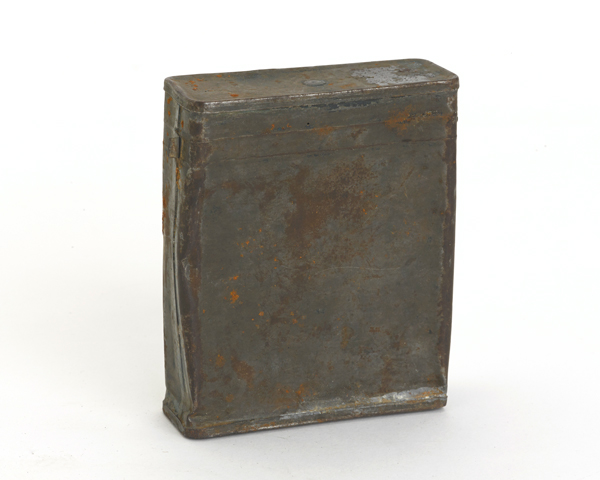
Iron ration in sealed tin, 1915
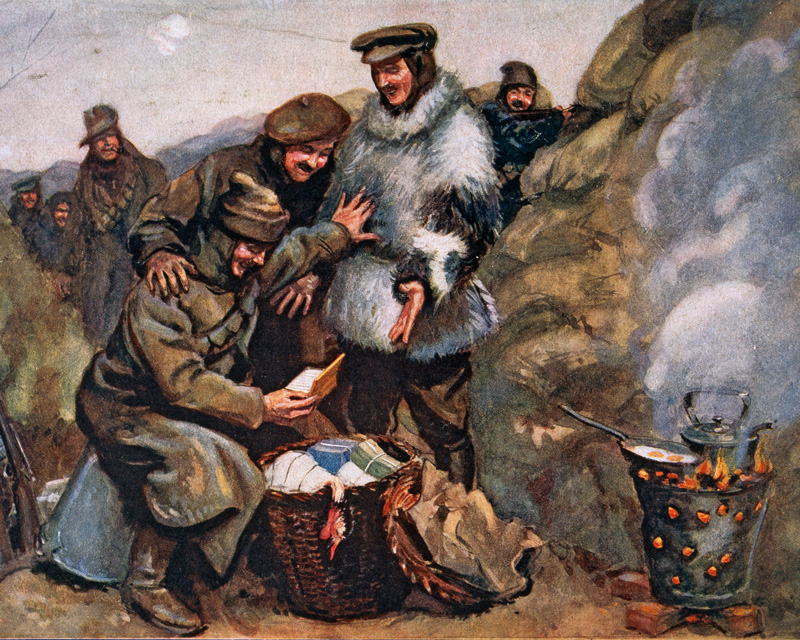
A food parcel from home, 1915
Diversity
The British Army has long employed overseas recruits and soldiers of every faith, so its rations have had to take these factors into consideration.
The multi-faith British Indian Army also had strict dietary guidelines when it came to feeding its troops. Two cooks, or langris, were normally maintained in each company of a battalion. The composition of the company would determine if a cook was a Muslim, Sikh or Hindu, and of what caste if the latter. This ensured that the correct food was prepared for troops of different religions and in the right way.
The Army also provided stackable cooking pots for Indian soldiers for use on campaign. Each soldier could then cook their own food if necessary. For high-caste brahmins, these cooking pots were of considerable importance, since it was necessary for them to prepare their own food in order to preserve caste.
Kitchens
During the First World War, separate kitchens were set up so that the dietary requirements of Muslim, Sikh and Hindu soldiers were met. This happened on the Western Front, as well as back in Britain.
In particular, the Indian hospital at Brighton made an effort to cater for patients’ religious and cultural needs. Muslims and Hindus were provided with separate water supplies and nine different kitchens.
Today’s British Army rations continue this tradition and have a wide range of menus with halal and kosher options now available for soldiers.

 Weevles Updates Disabled Bloggers Team
Its a wonder they had sufficent protein to find the eneergy for fighting. Or maybe they didn’t?
LikeLike
Yes all soldiers you see are very slim aren’t they? When you see films.my Grandad told my Mum if it had not been for the red Cross they would have not eaten at all sometimes.
LikeLiked by 1 person
I noticed this, but the obvious didn’t occur to me.
LikeLike