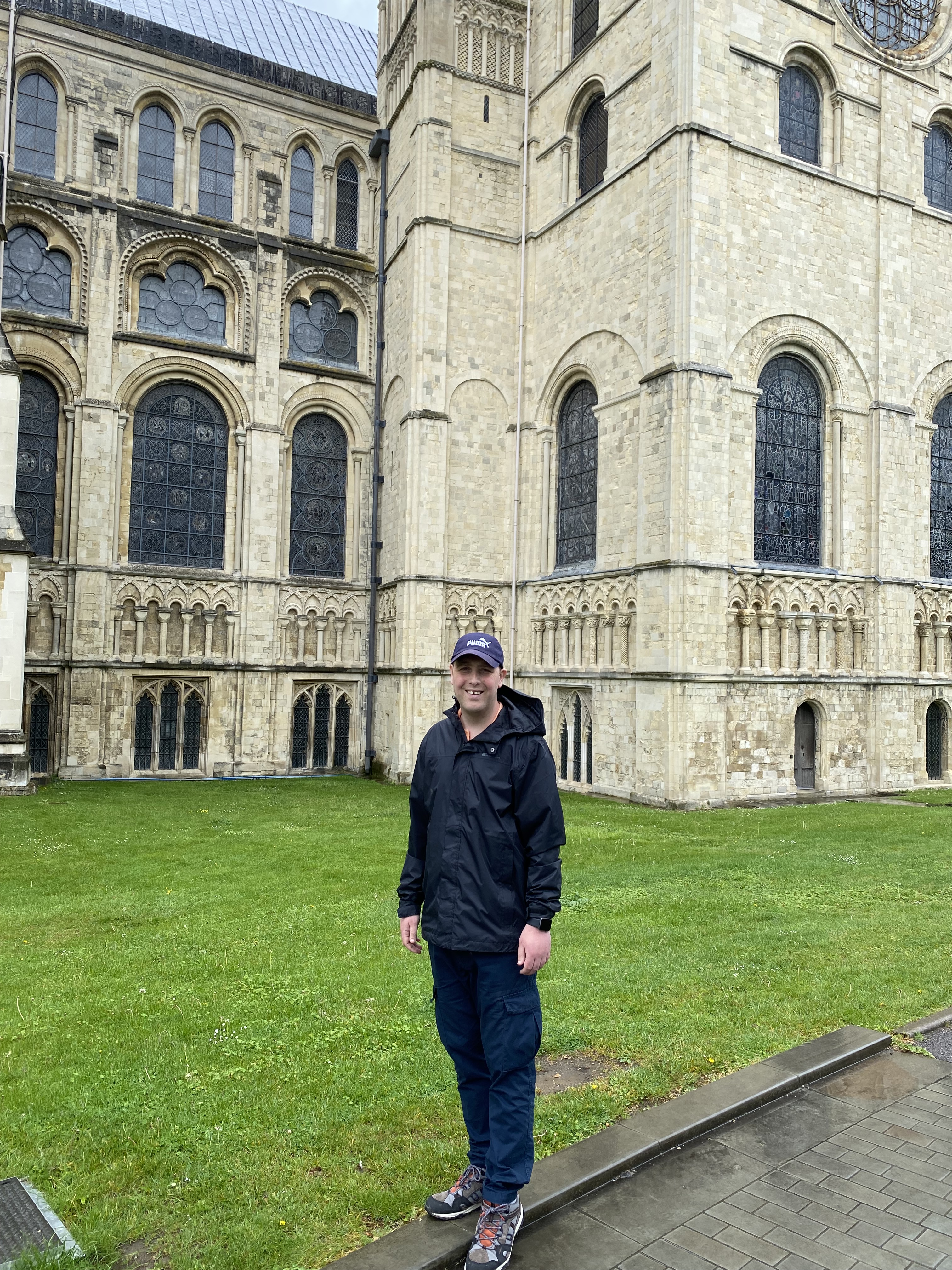
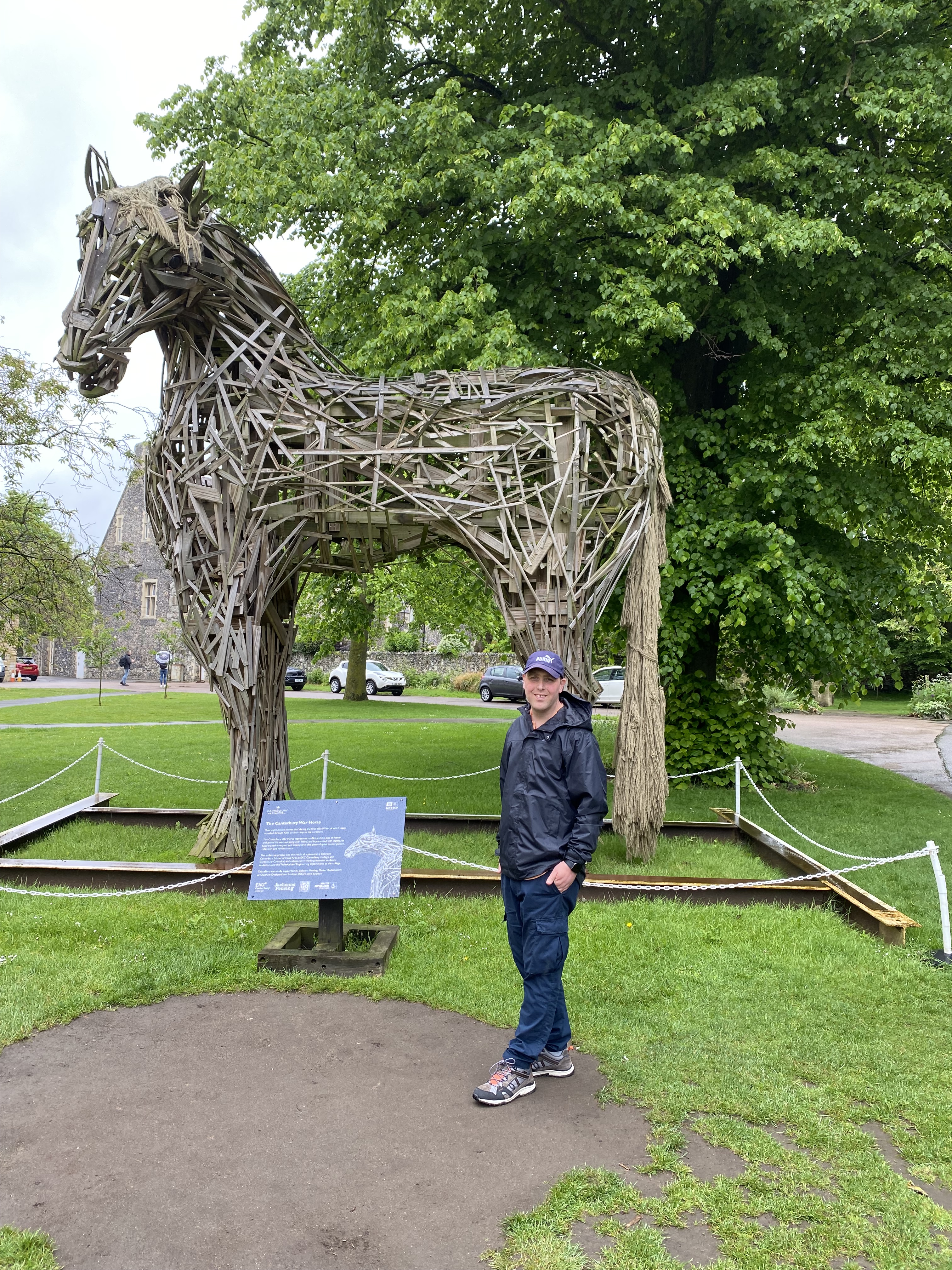
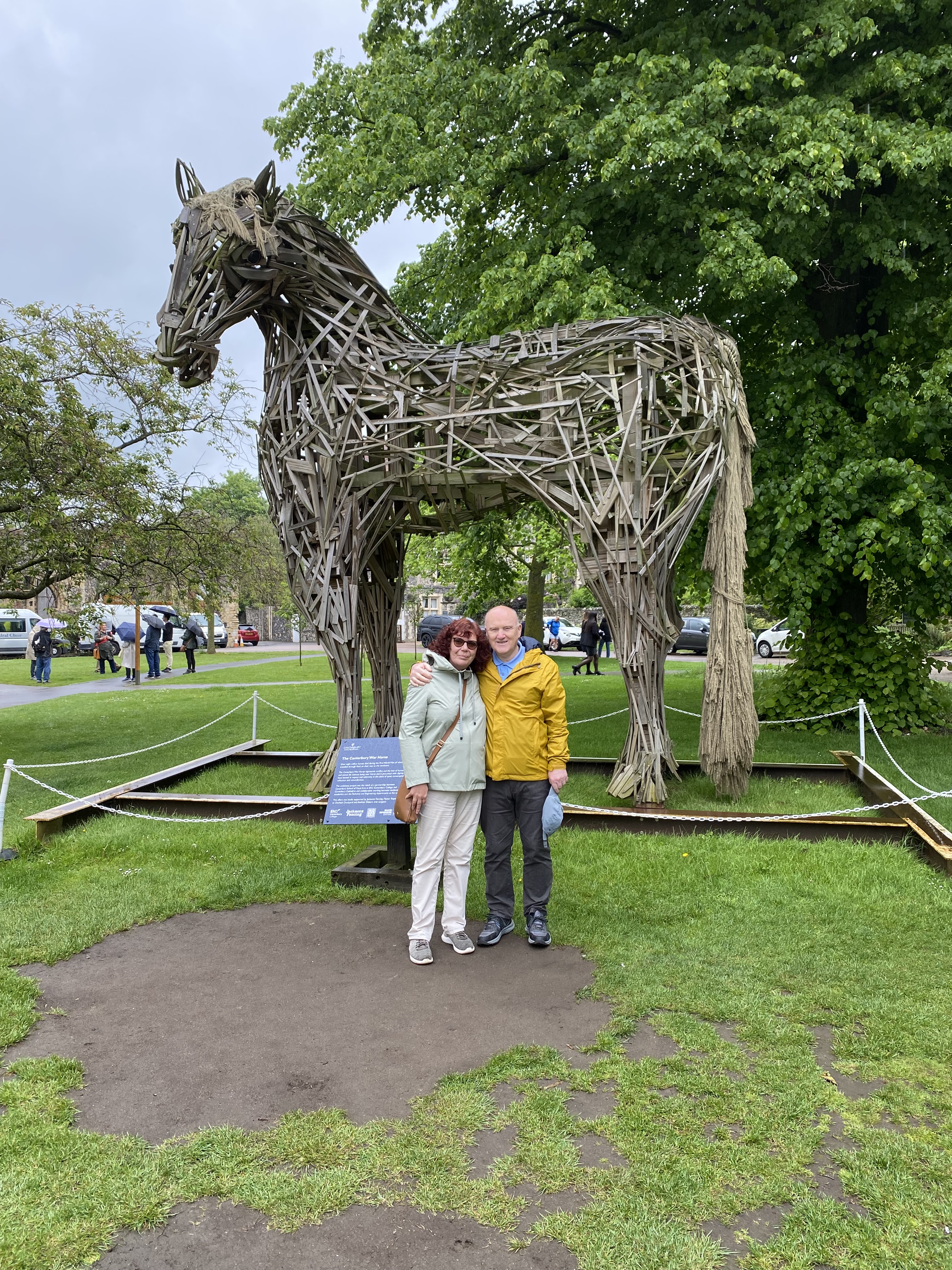
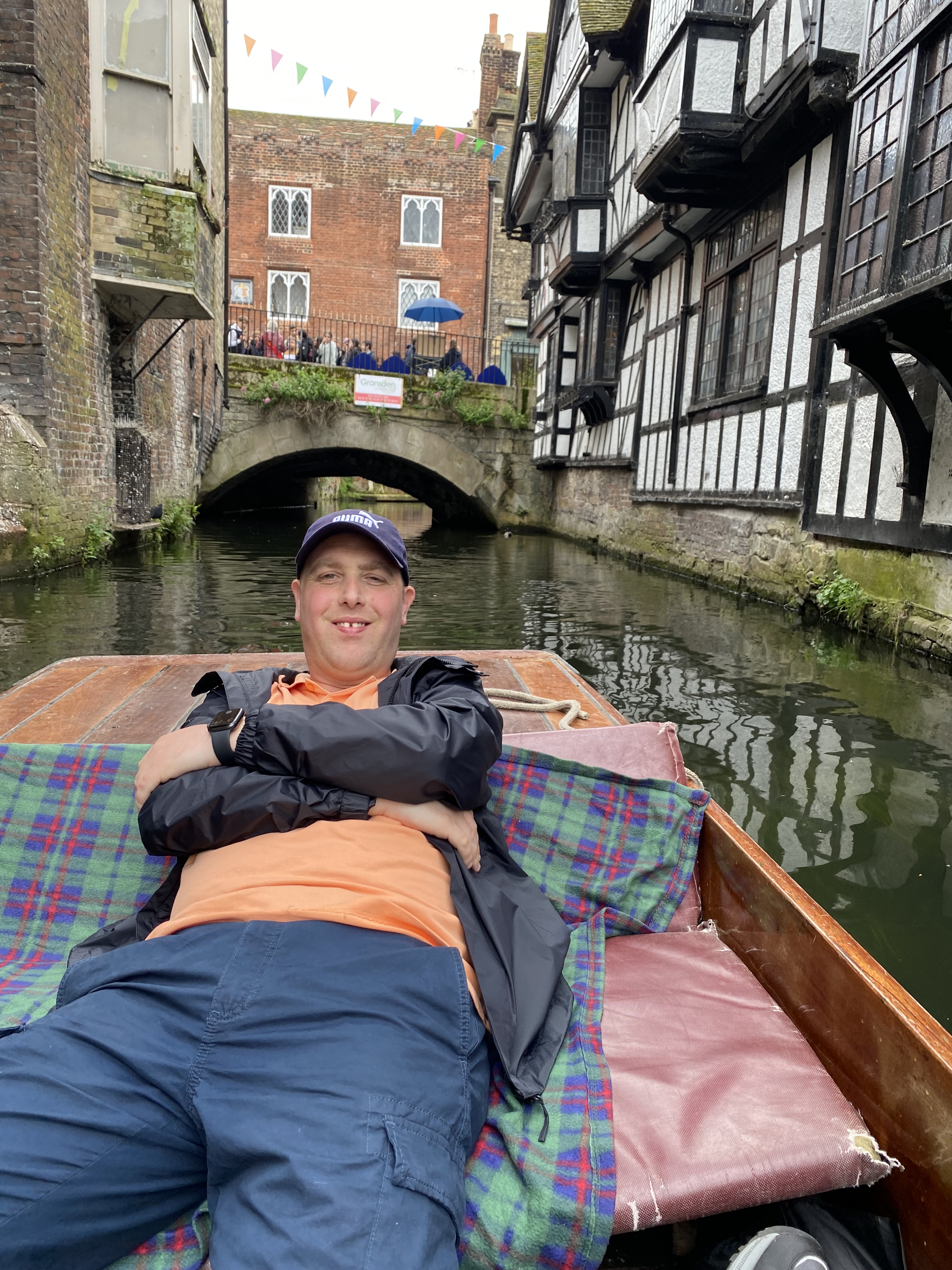

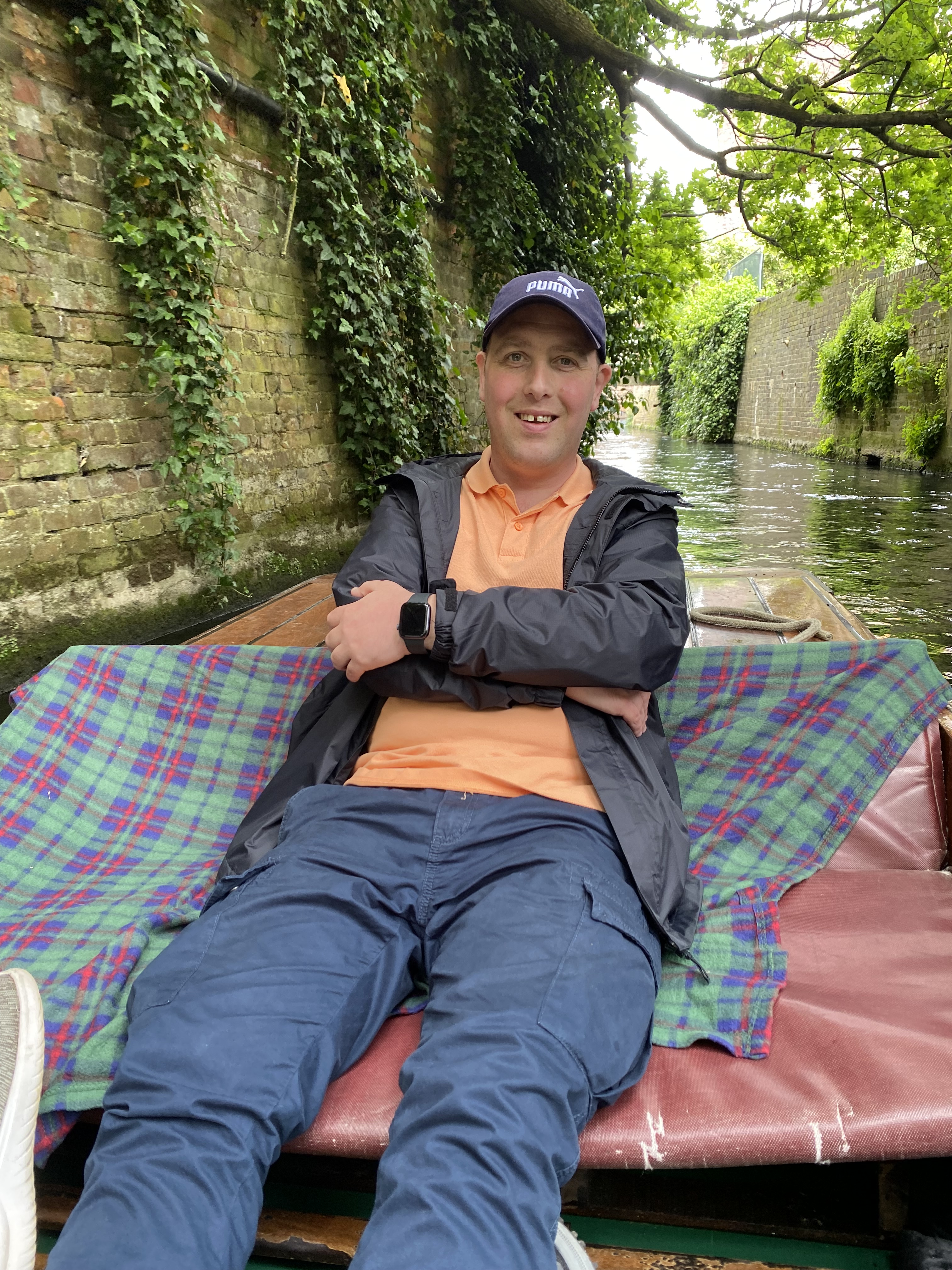

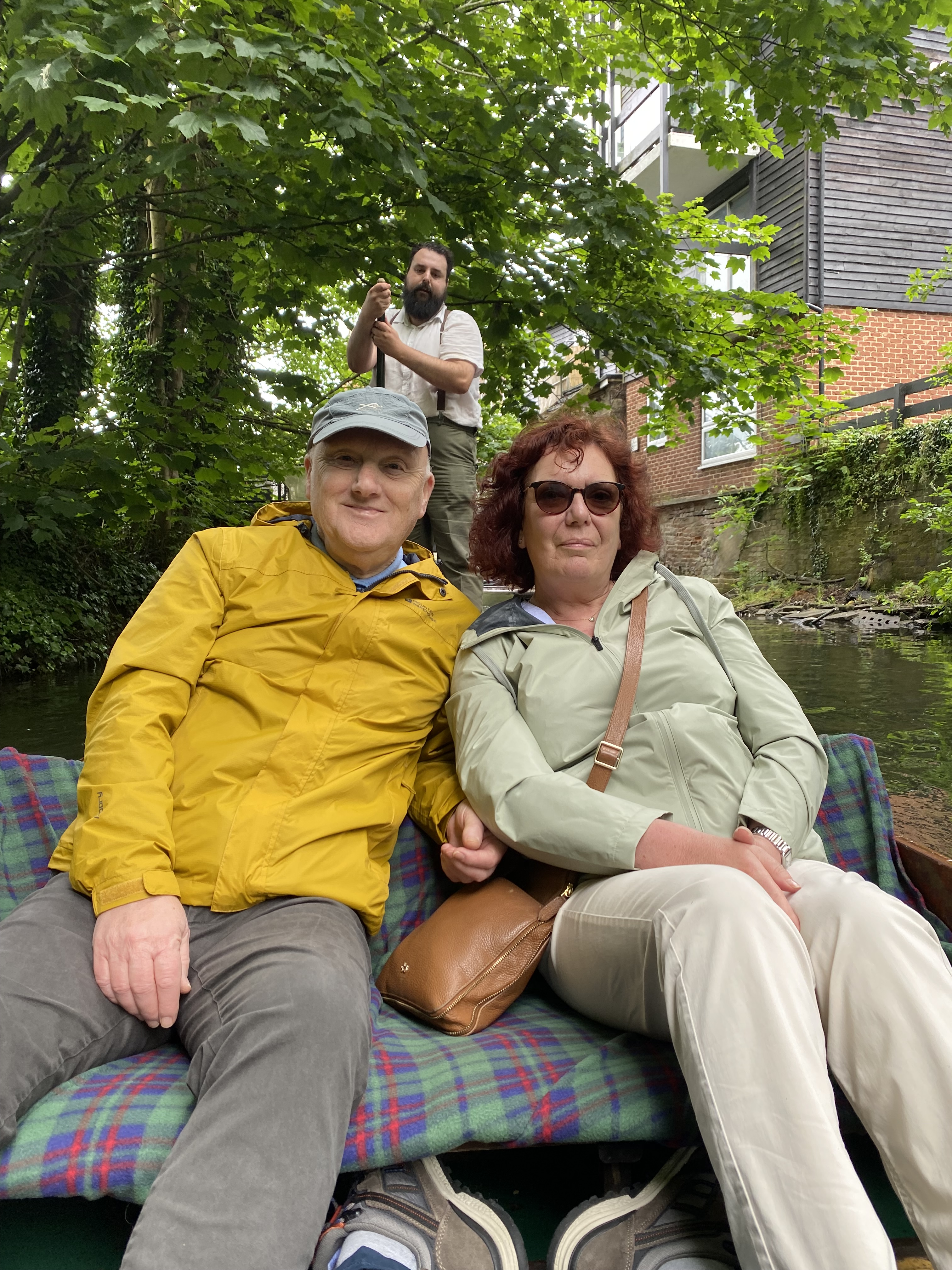

 This is me standing outside of Canterbury Cathedral and me and my Dad and Bern standing next to this Horse which is a statue of a Horse. It’s made by sticks where people or someone has used loads of long sticks to make it in to a statue of a Horse. I was very impressed with it. Me my Dad and Bern also really enjoyed going on The Canal to which was nice and relaxing and the guy who was pushing The Canal was telling us some very interesting stories about the history of the building’s we were seeing when we were on The Canal.
Canterbury Cathedral May 2024.
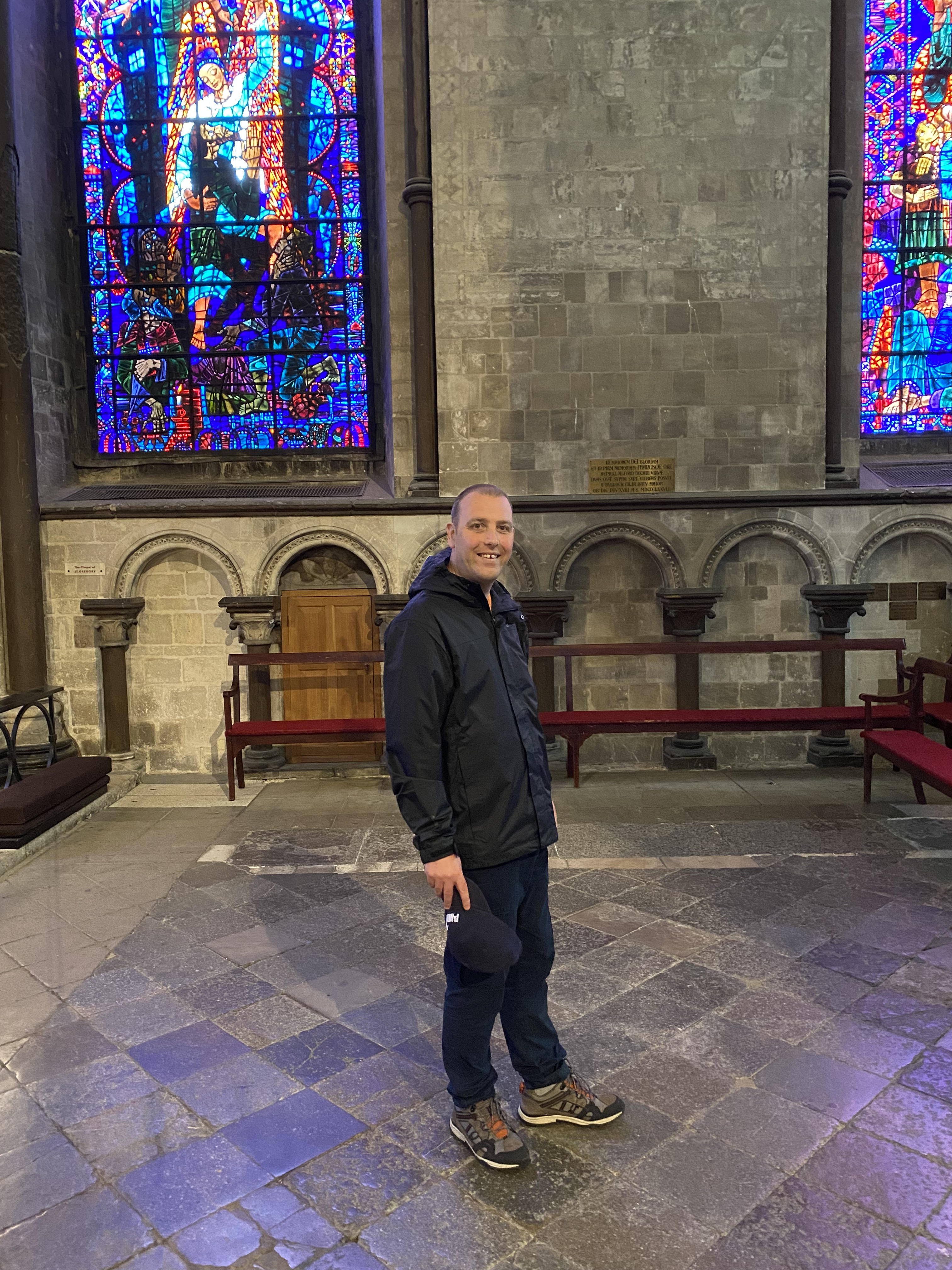
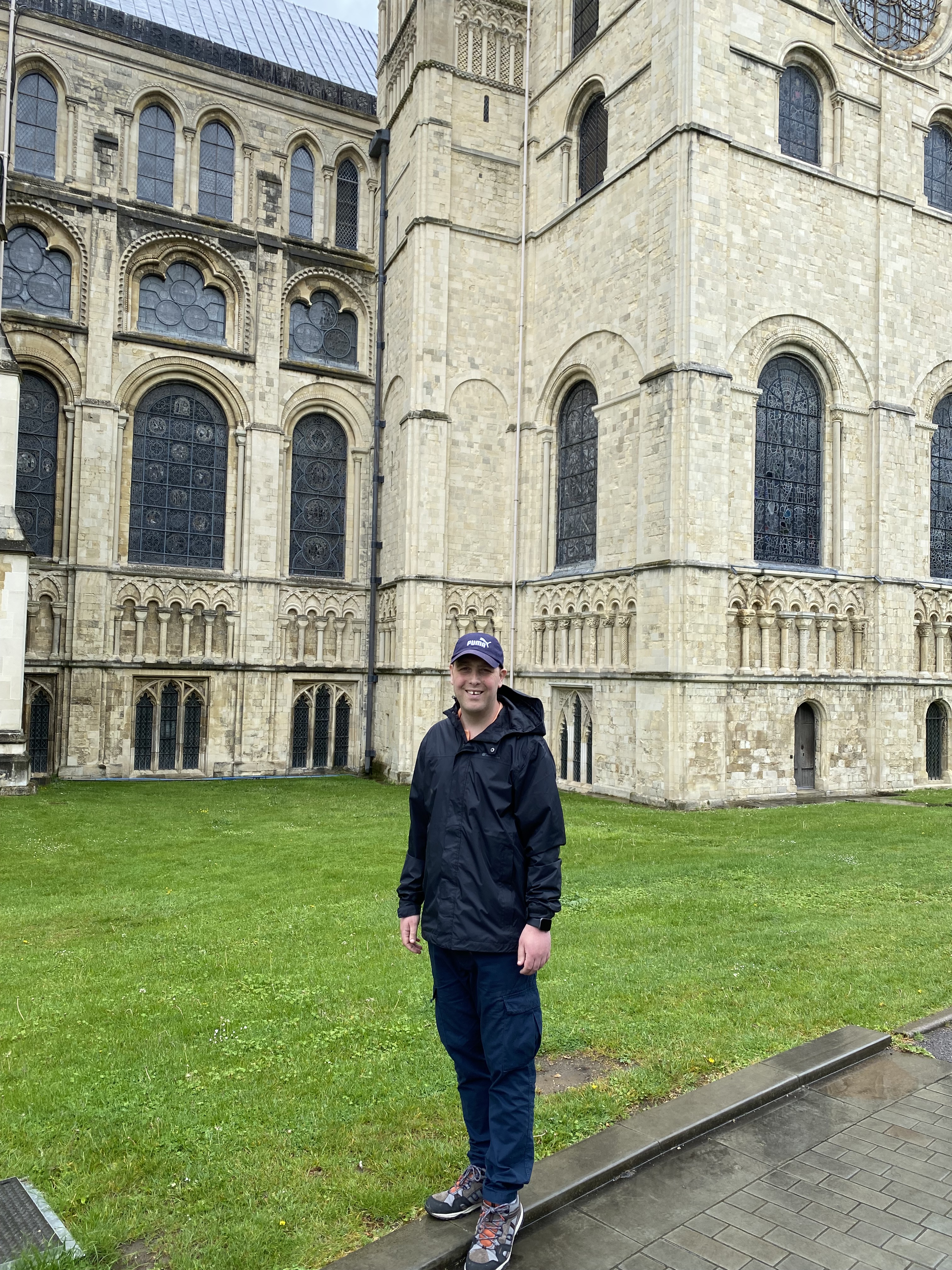
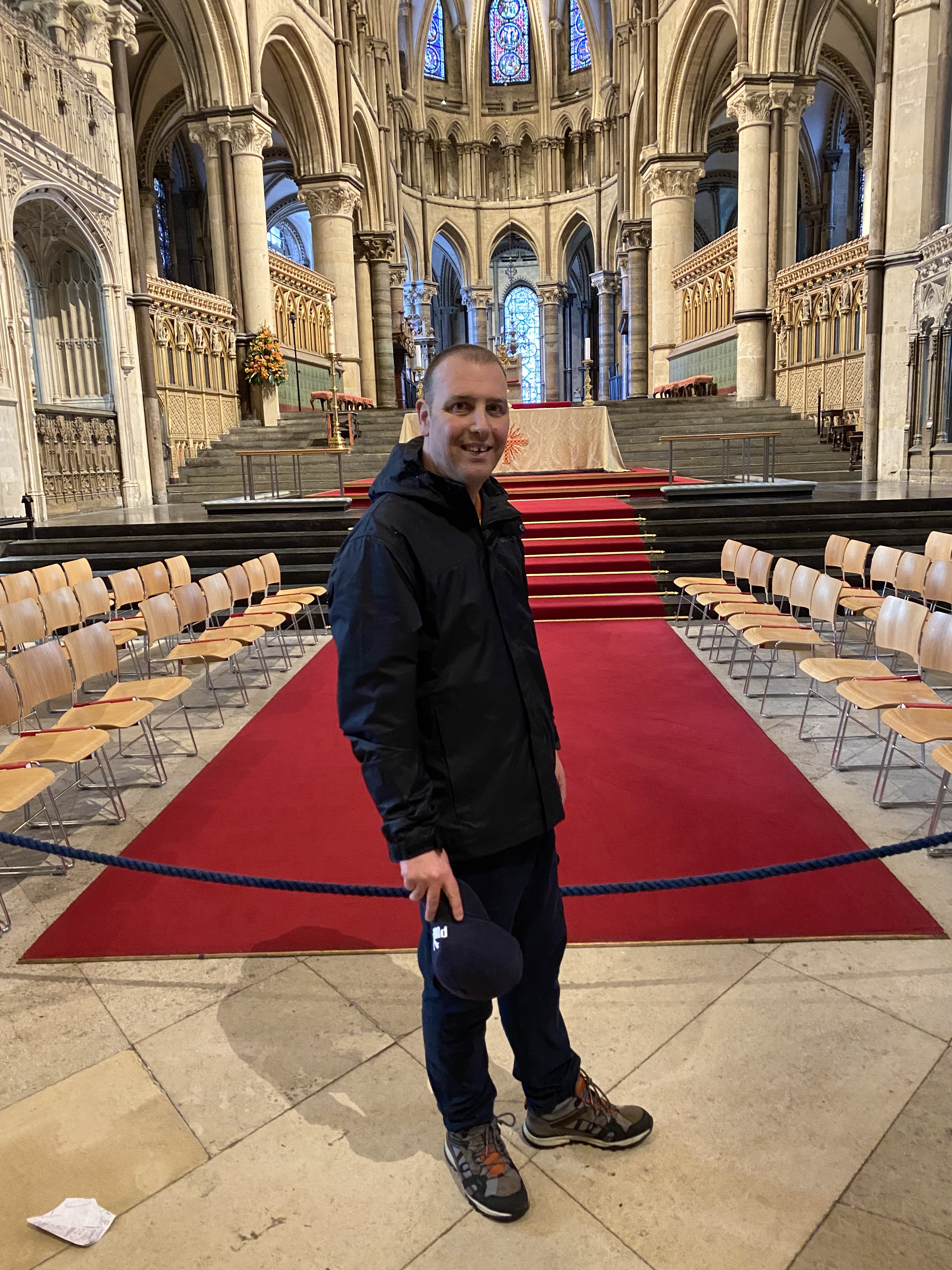
I really enjoyed going to Canterbury Cathedral me and my Dad and Bern found it very interesting. This is what it also looked like outside The Cathedral it was also a really good experience it was also a very big Cathedral and it was fun having a look inside it to.
Rye May 2024.
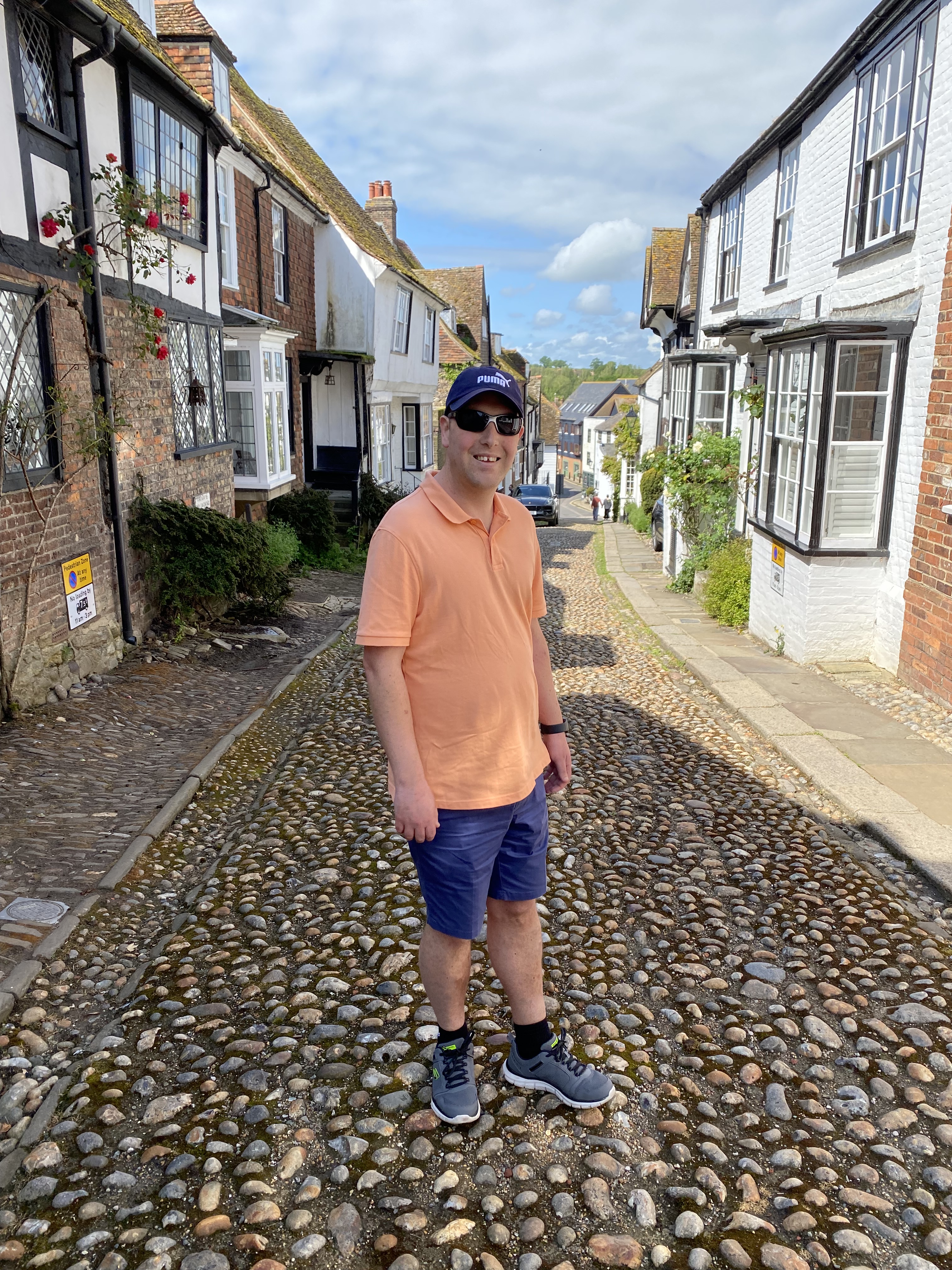
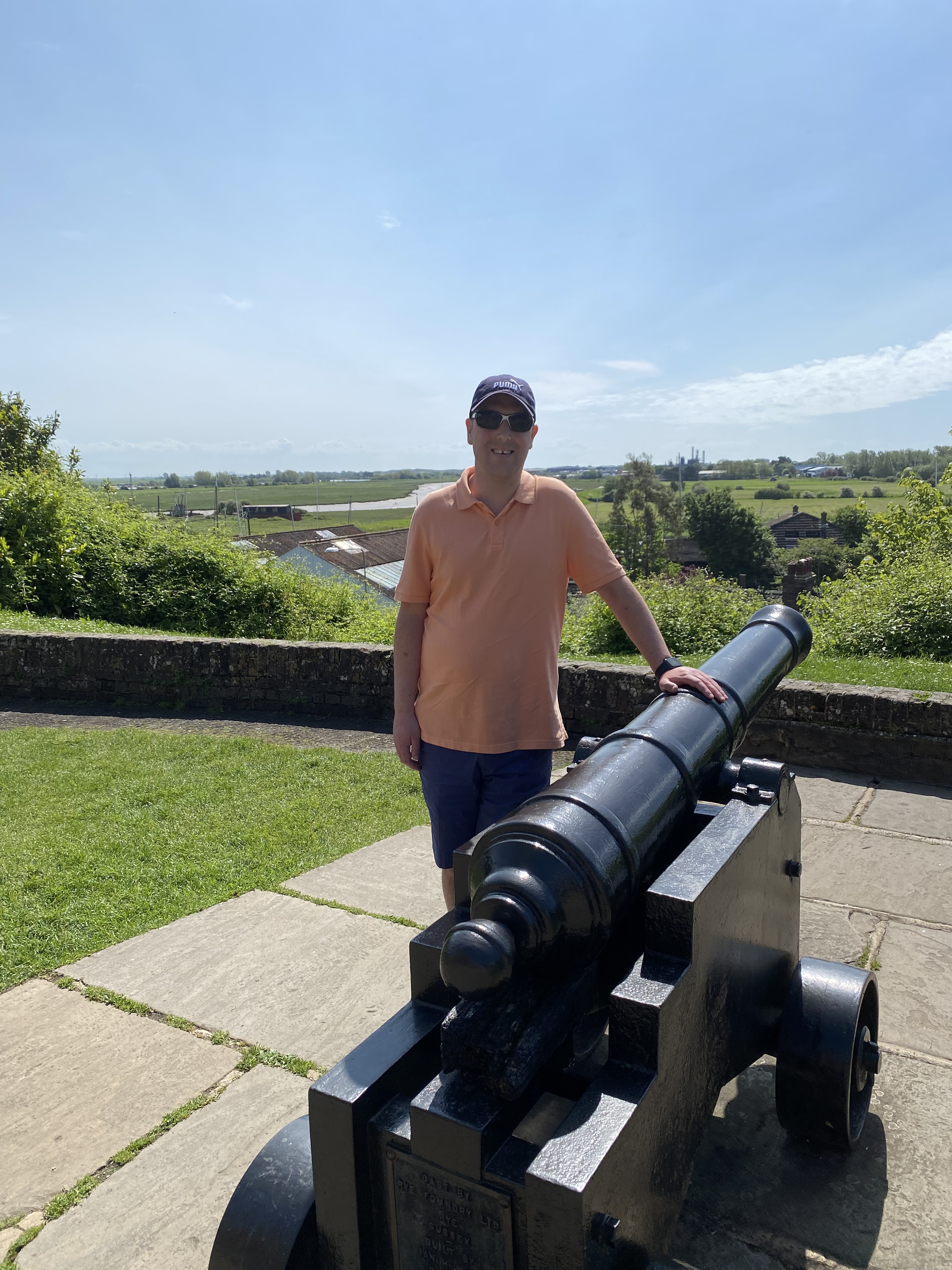
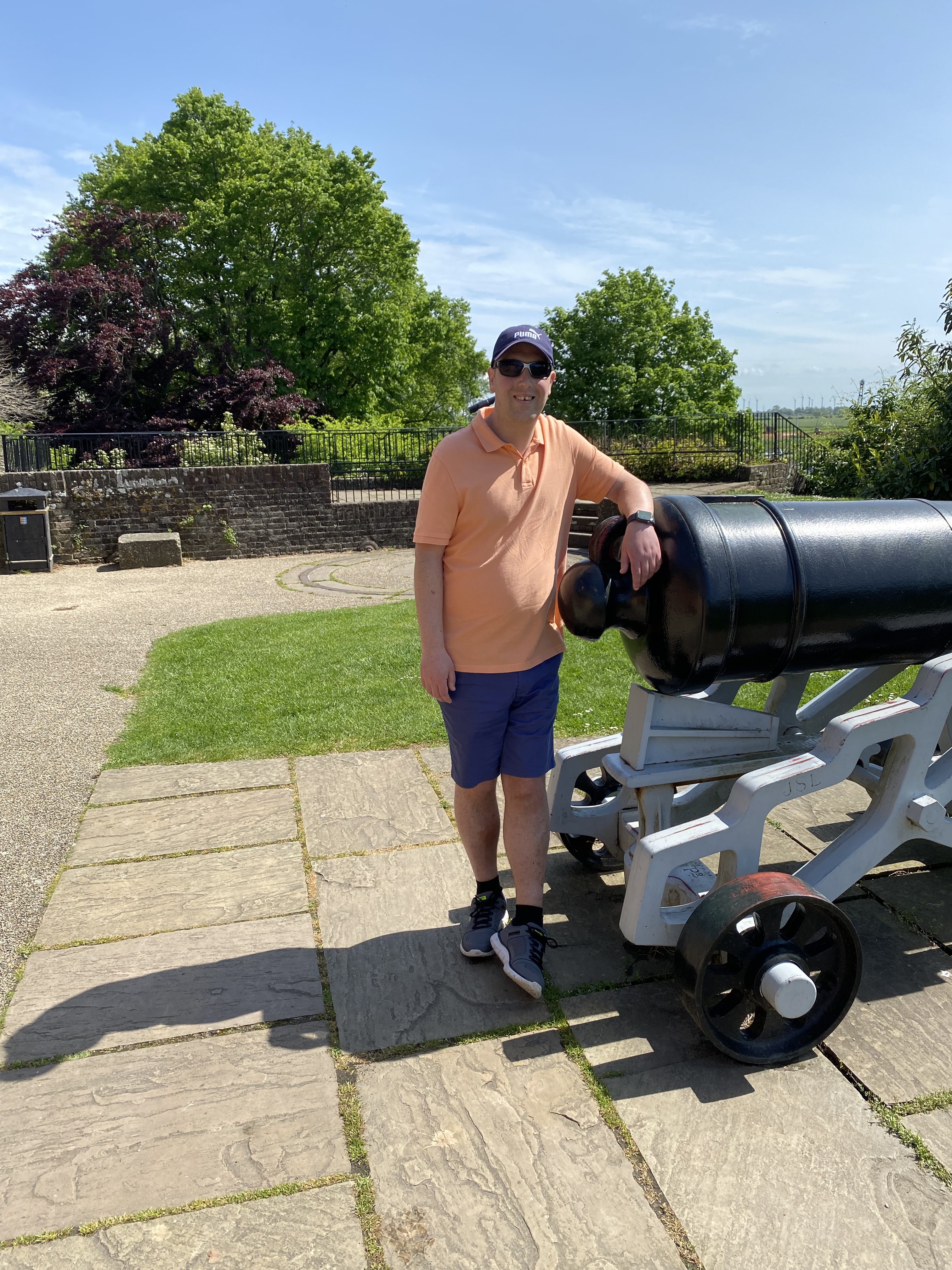
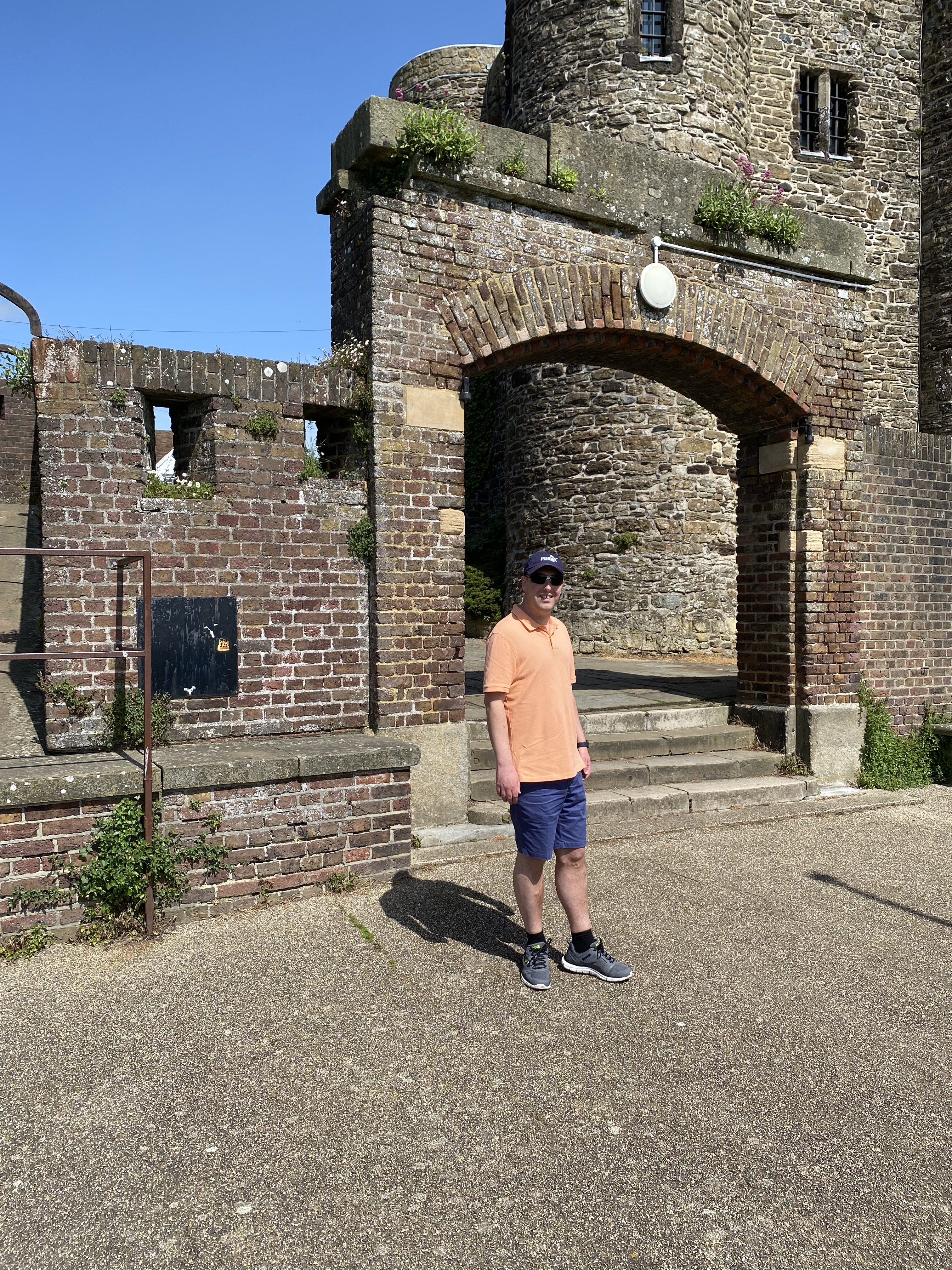
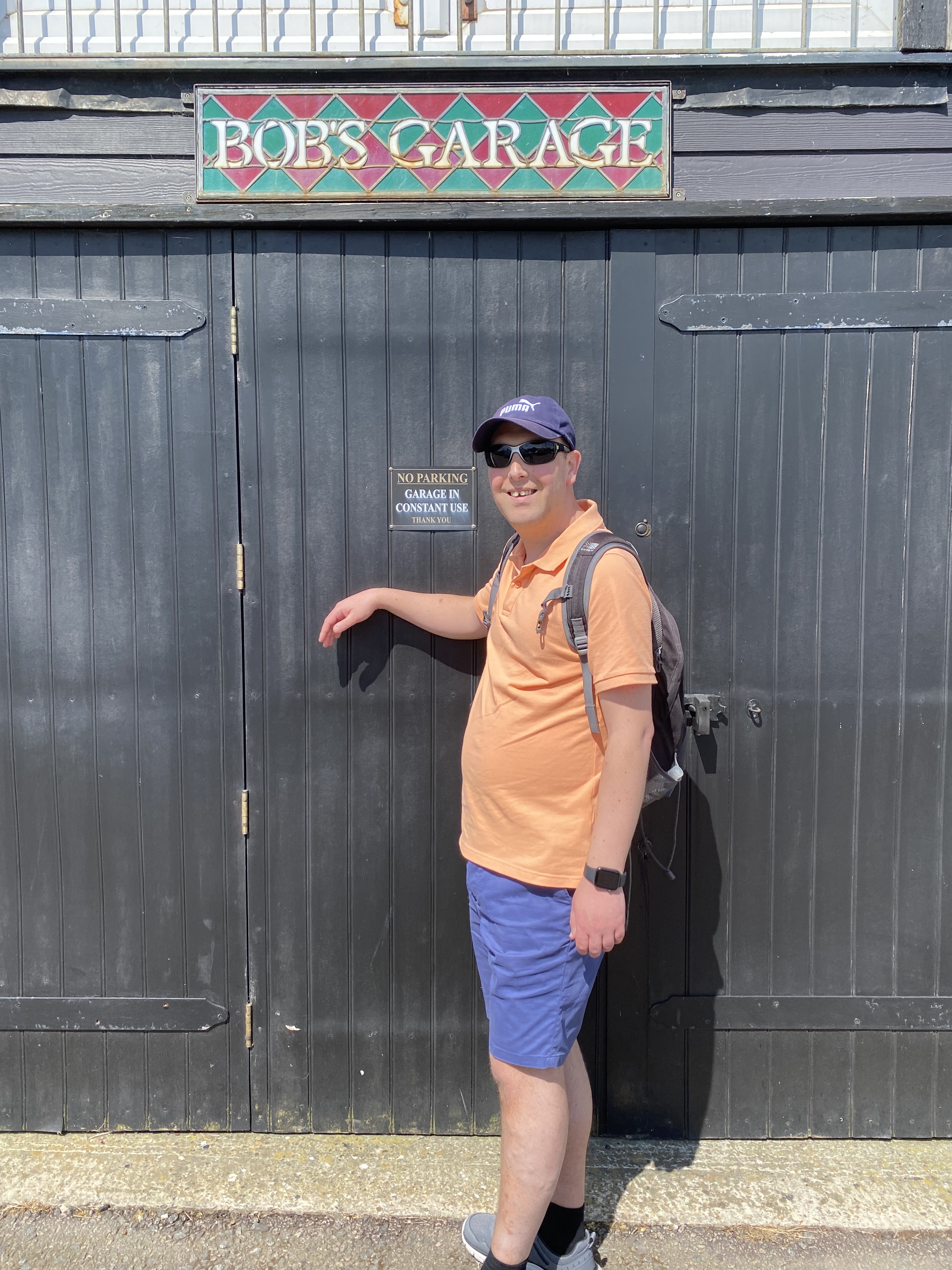

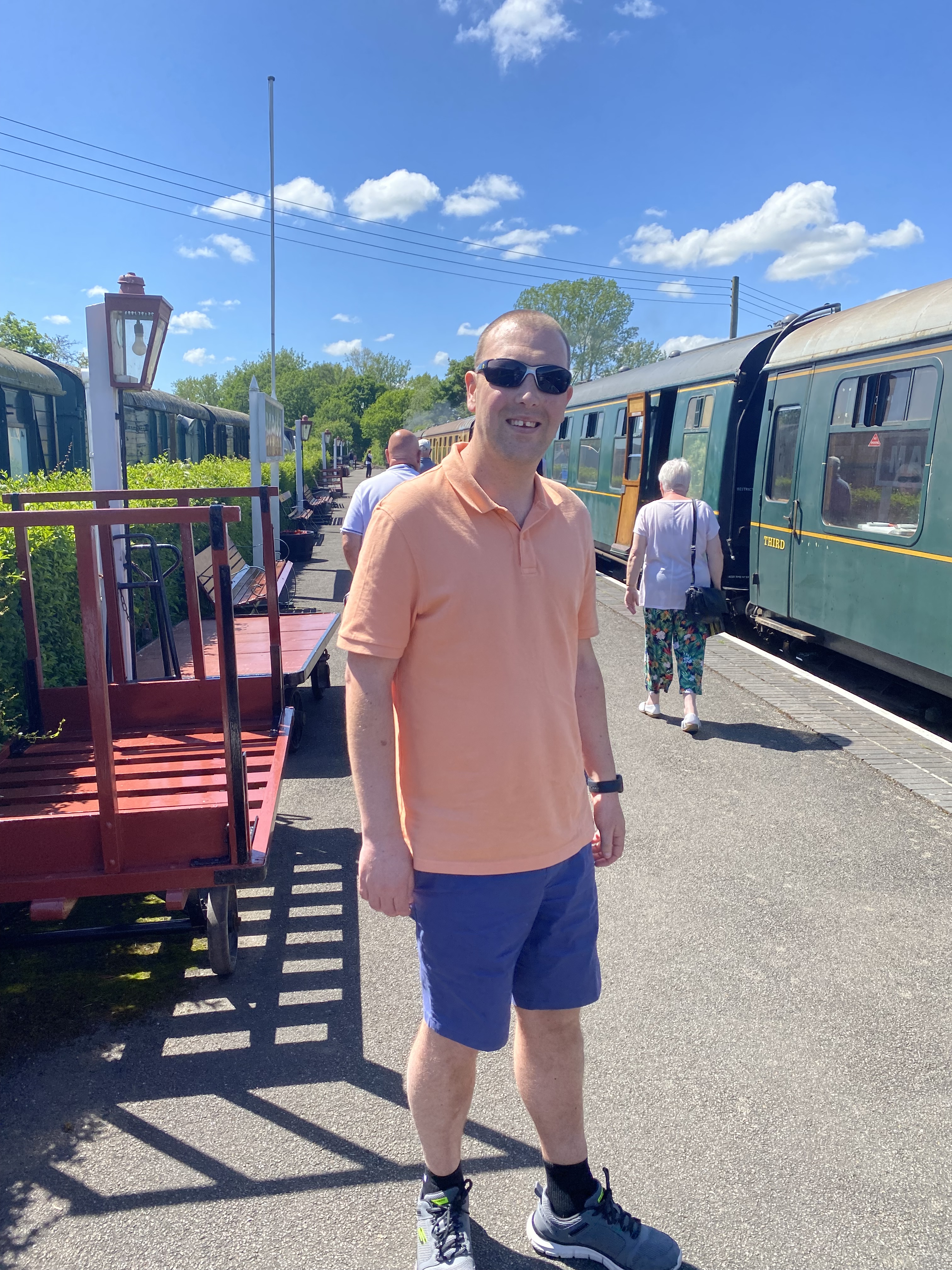
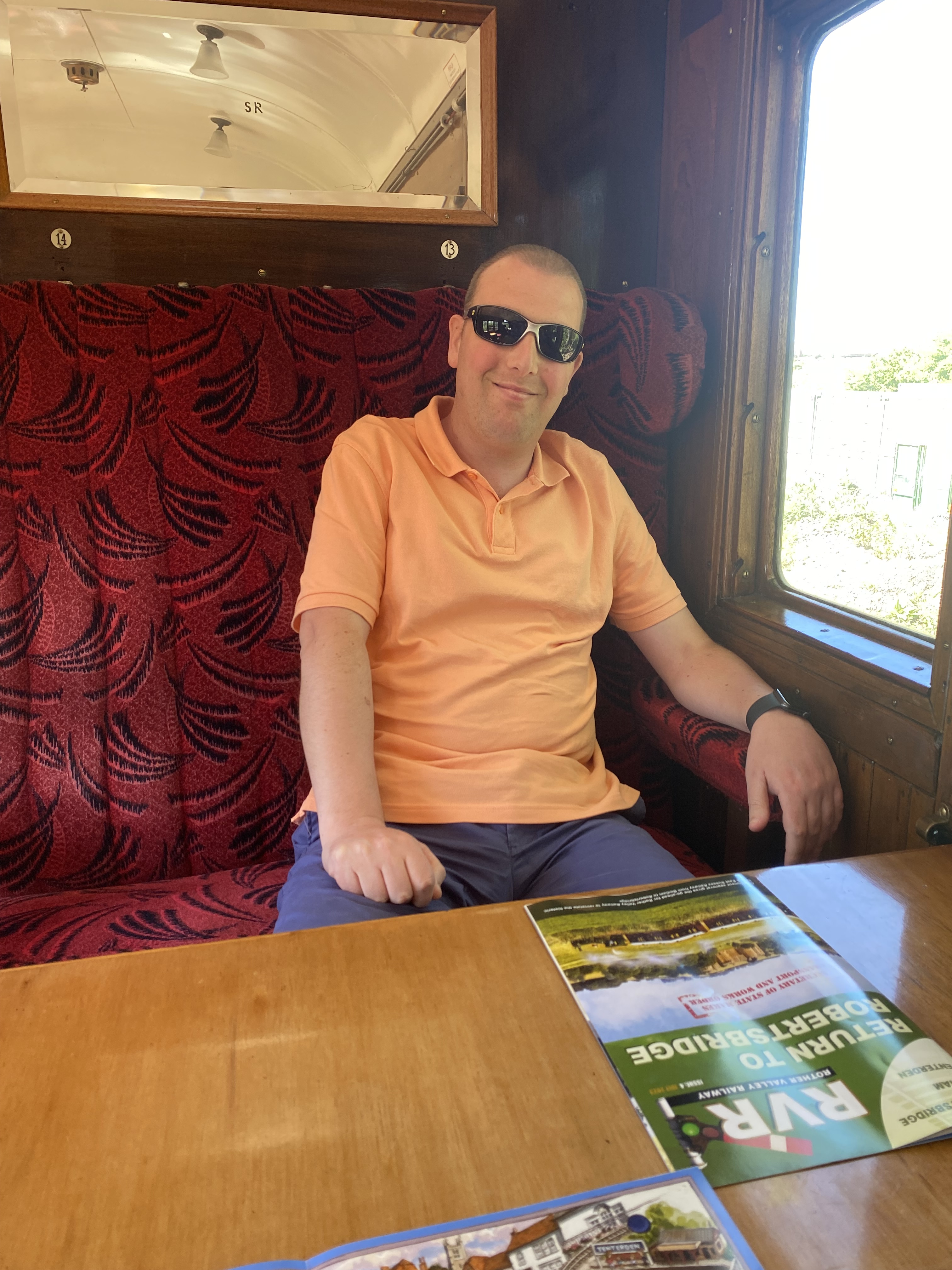
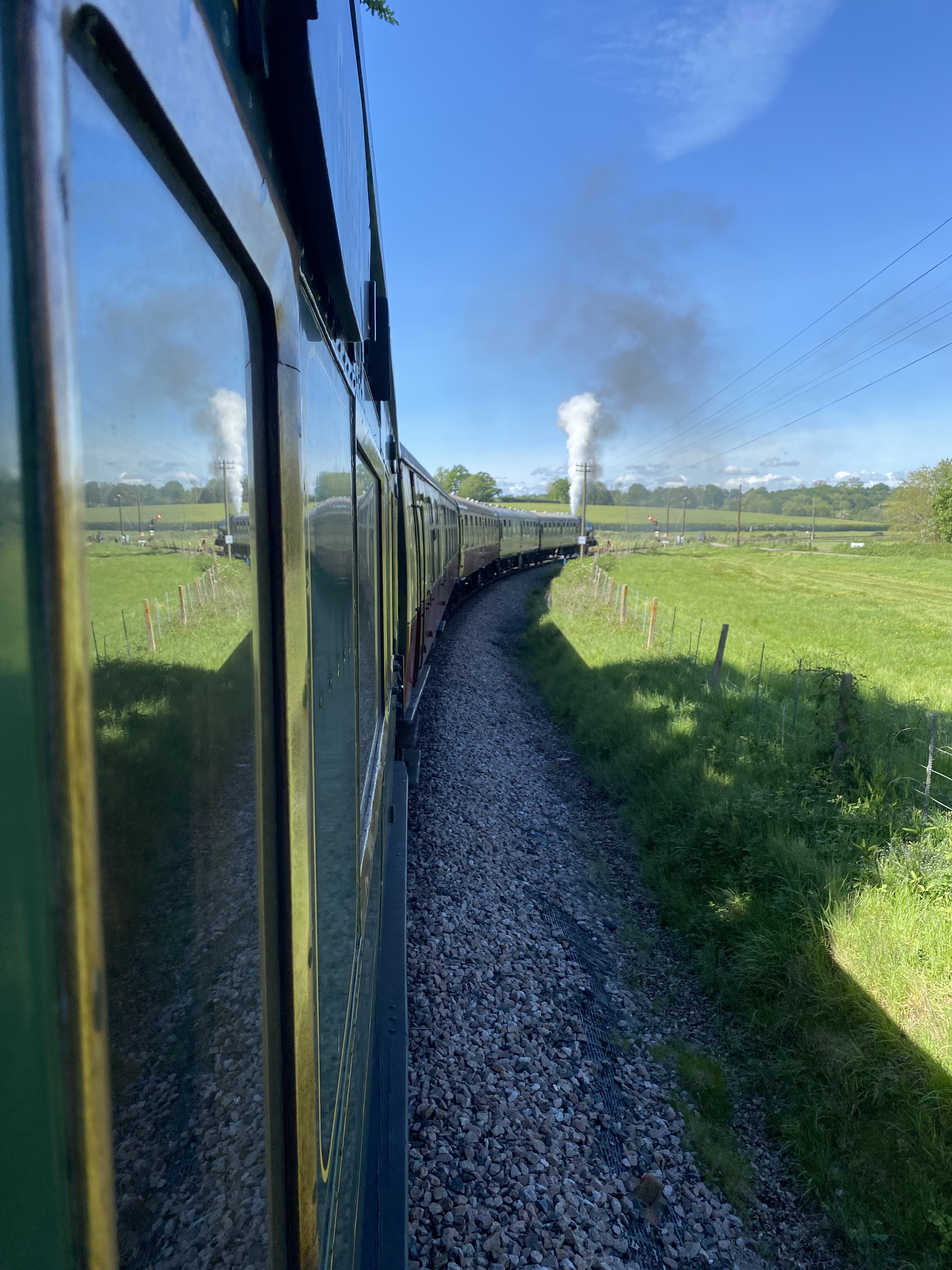
I really enjoyed going on The Train to Rye with my Dad and Bern to while we were in Kent. I thought it was nice and relaxing being on The Train and the seats were nice and comfortable to. I also really liked the big black cannon’s and also thought of Bob Dennis when I seen a Garage called Bob’s Garage which you can see on the blog and as you can see we had very nice weather to. We also got a Coach Bus to all the place’s we were going to through the day and back to our Hotel again when the trip was finished.
Heaver Castle And Garden’s May 2024.
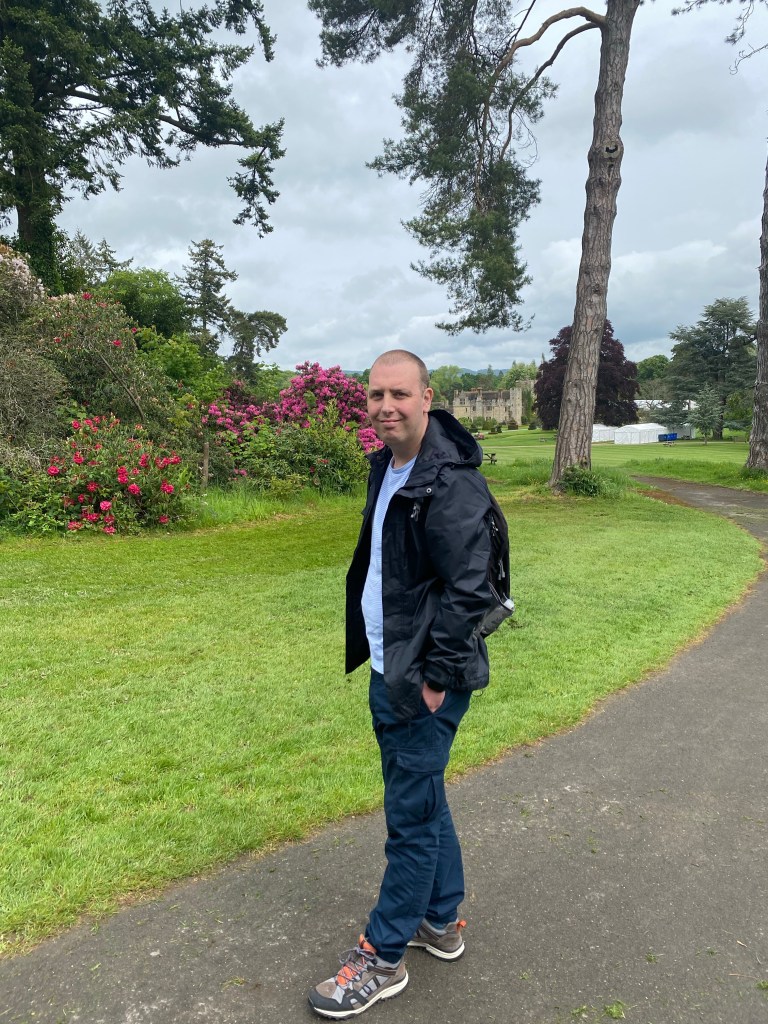
Mart in the castle gardens 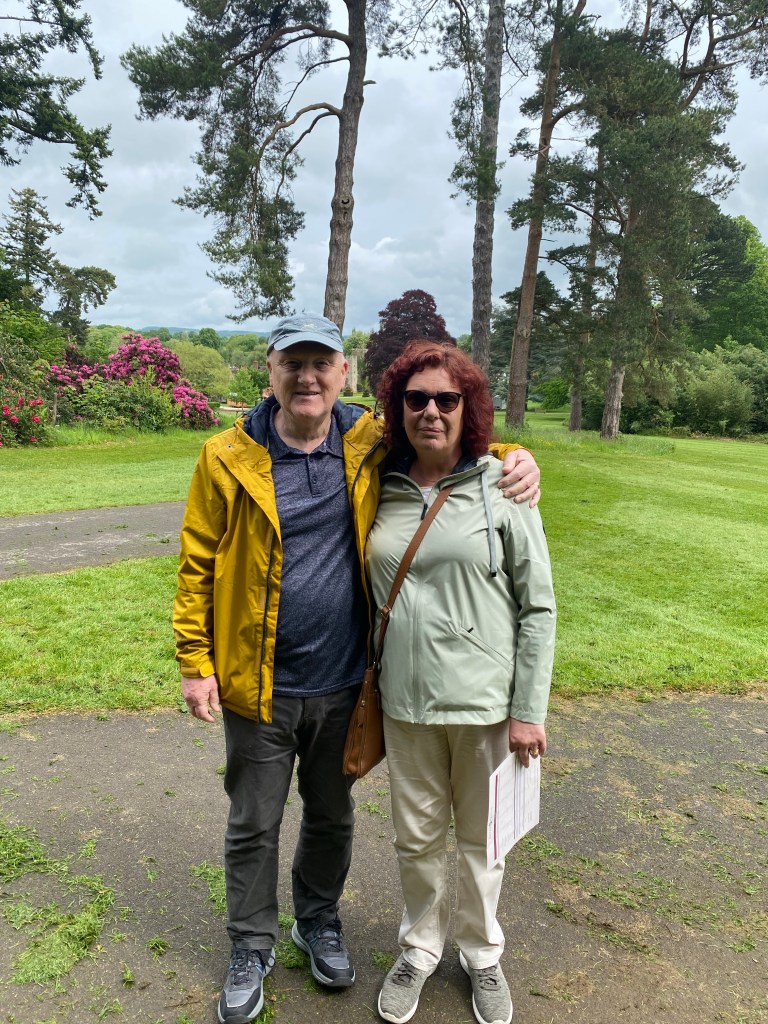
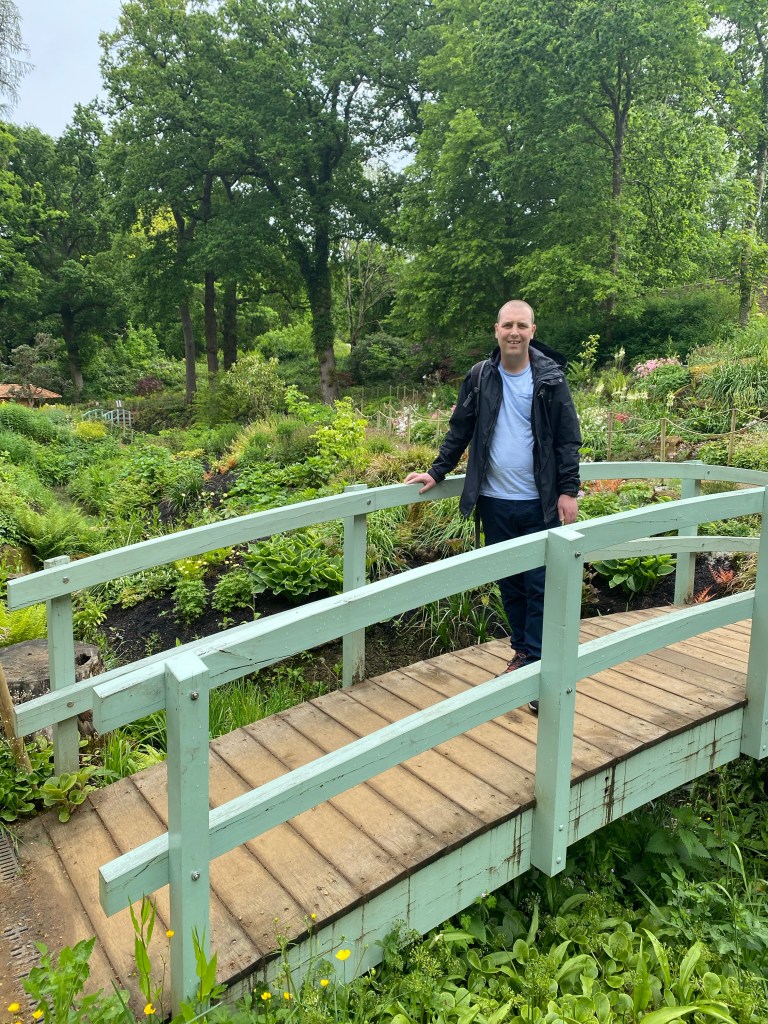
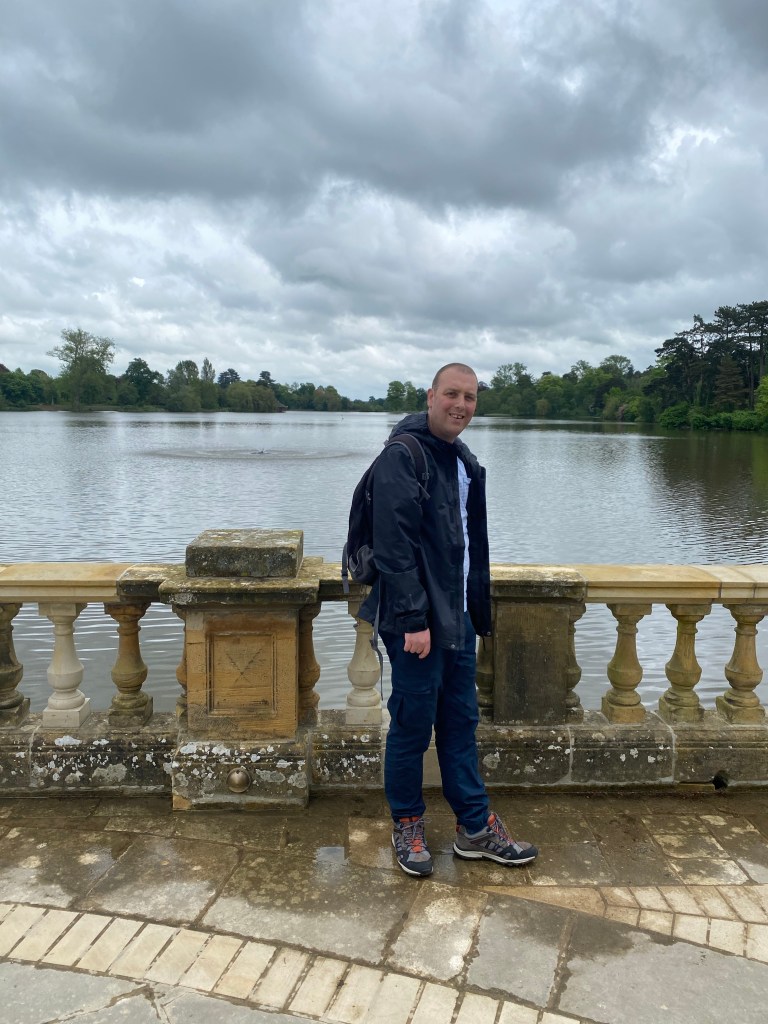
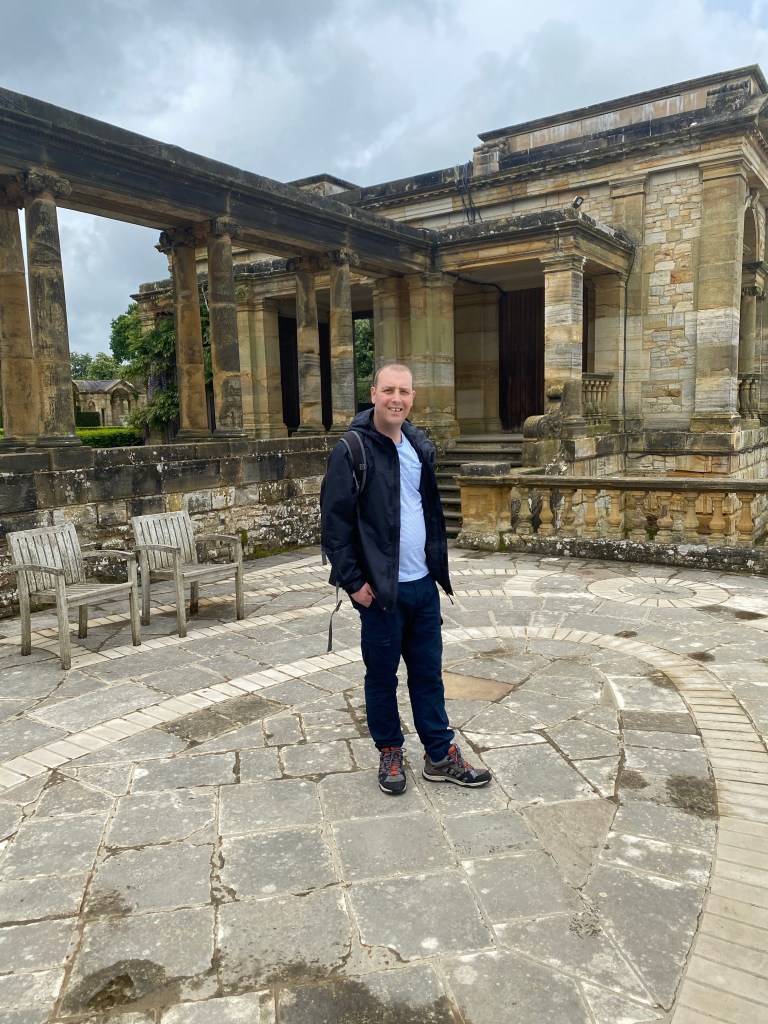
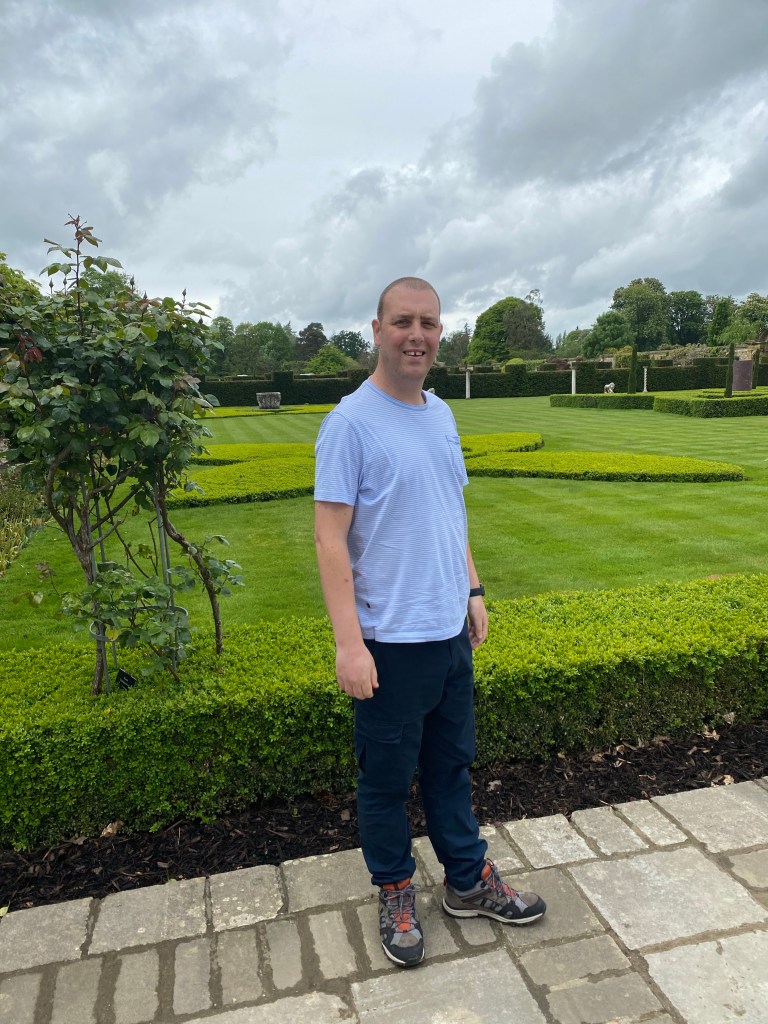
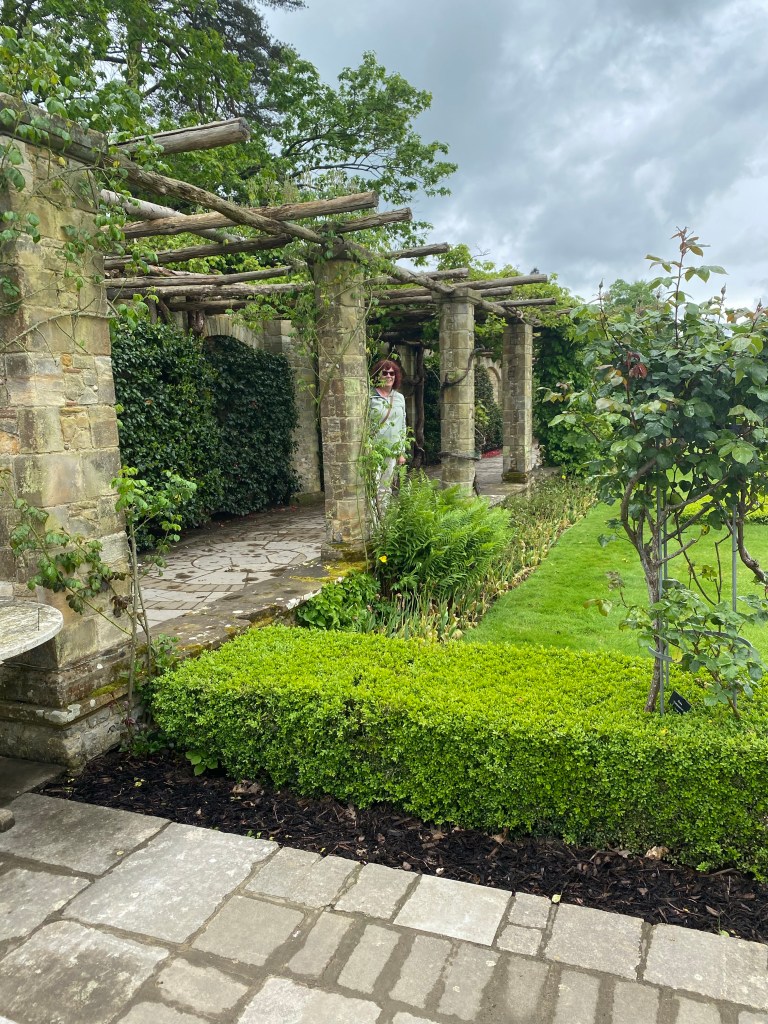
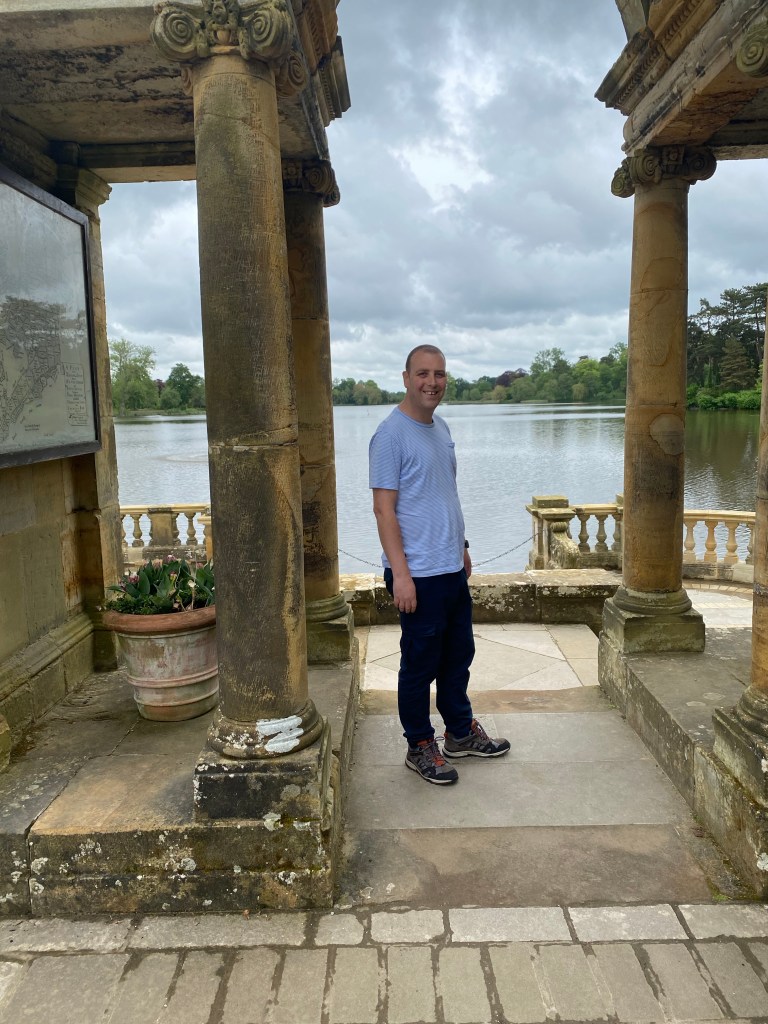
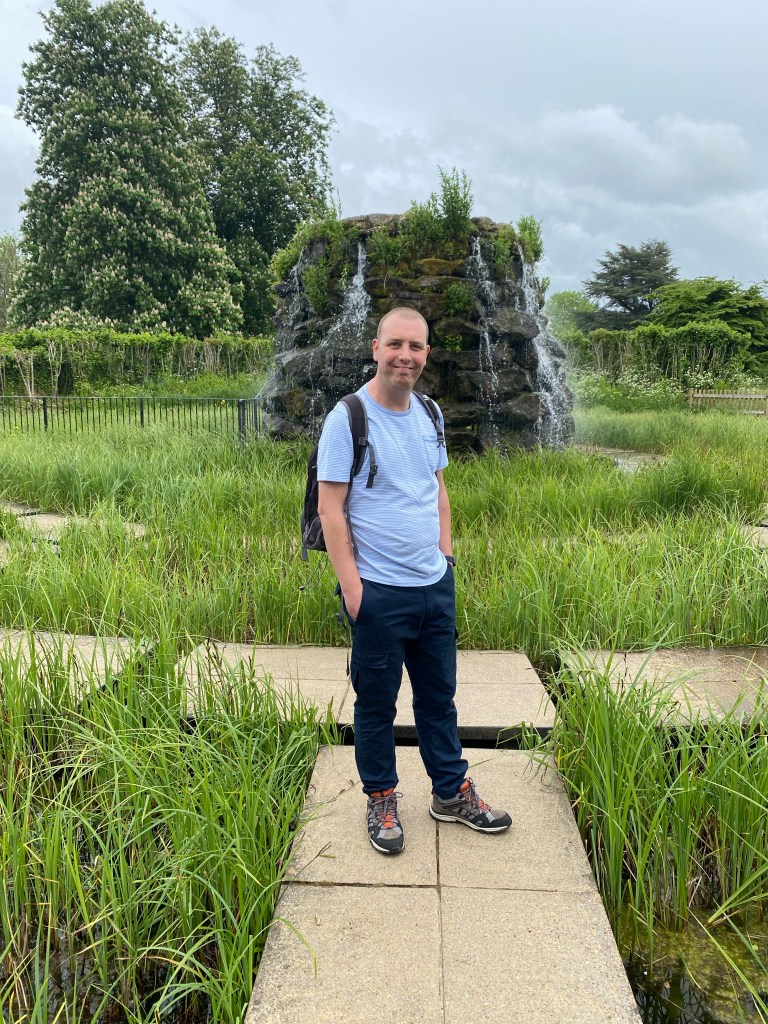
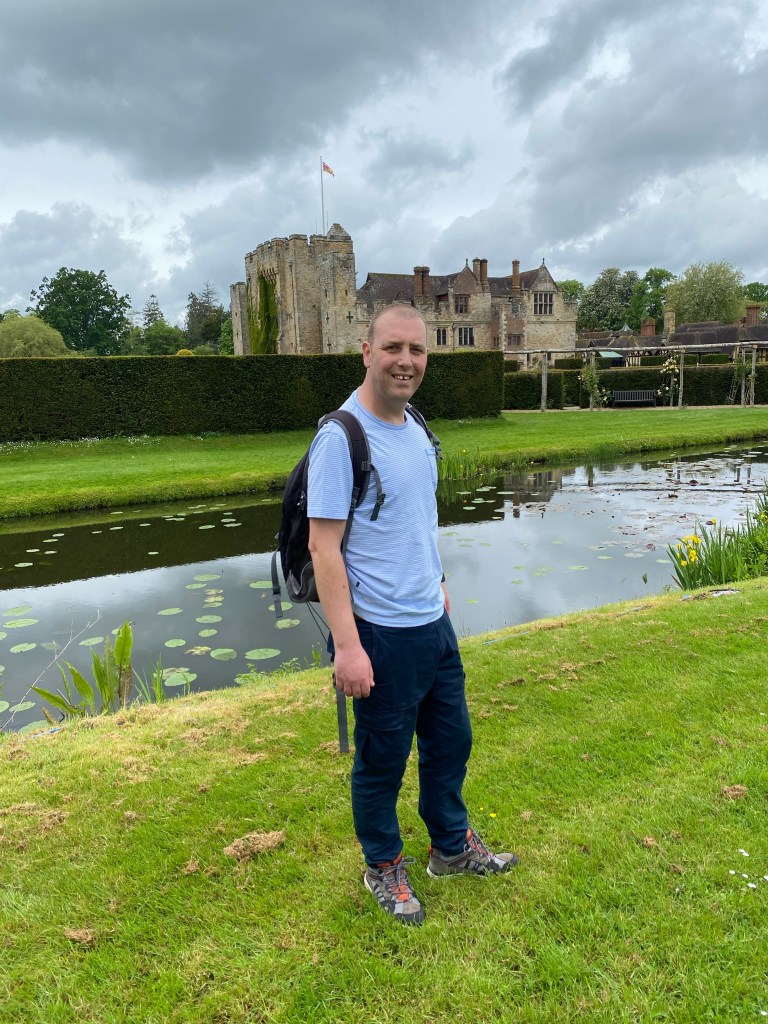
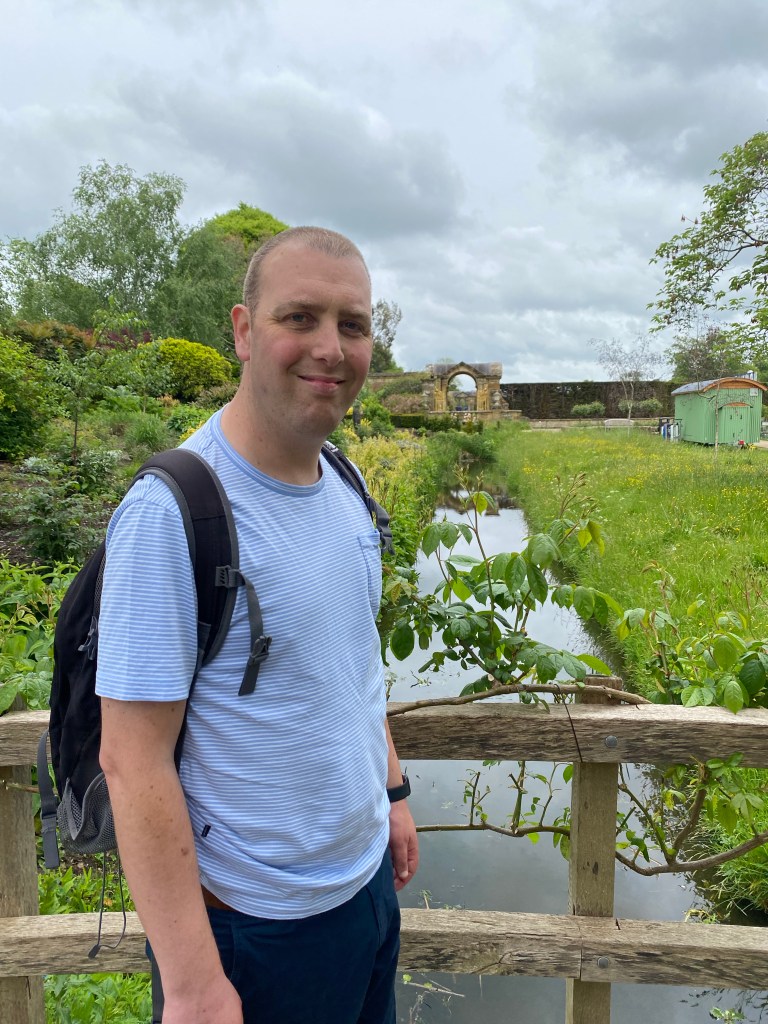
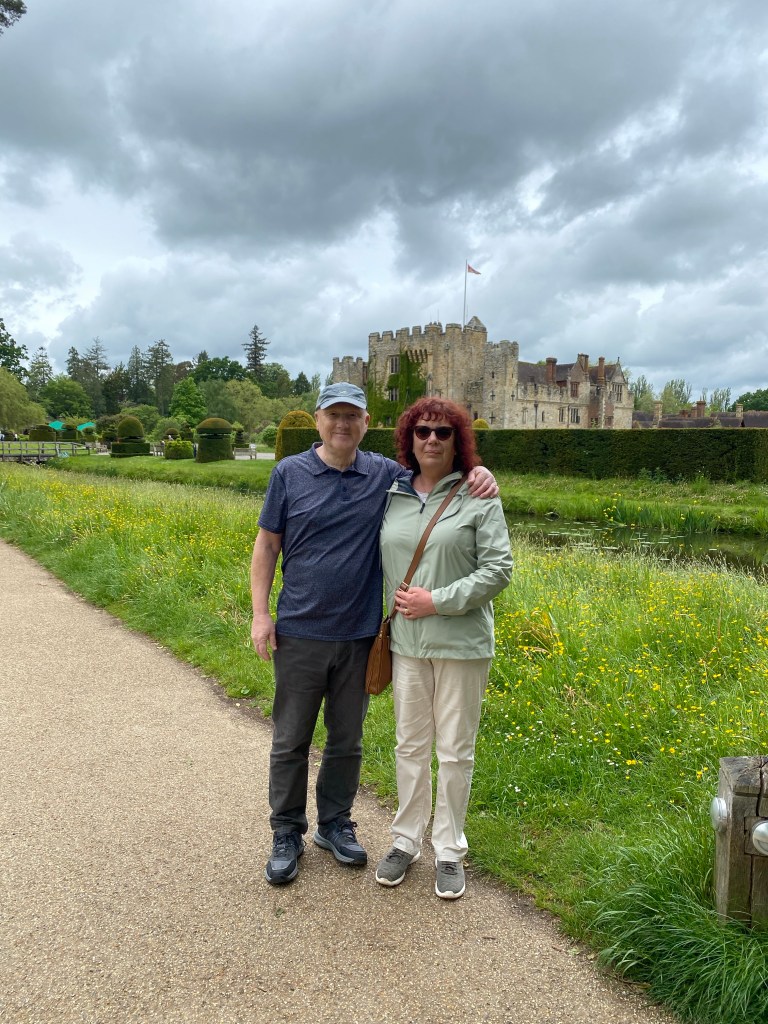
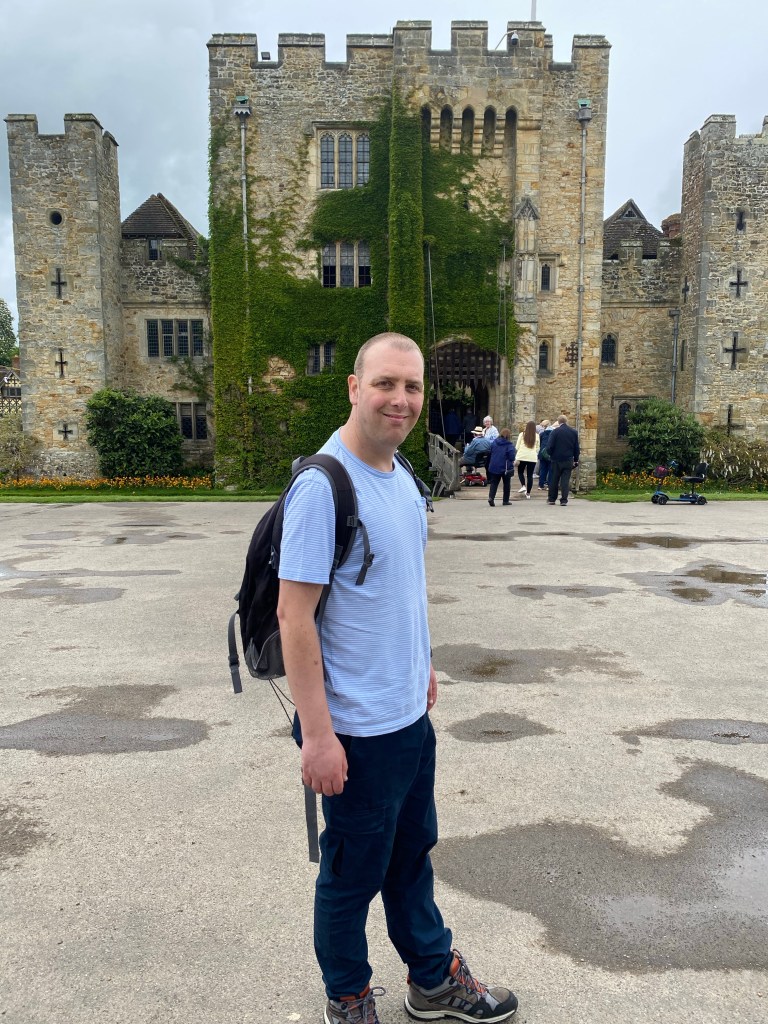
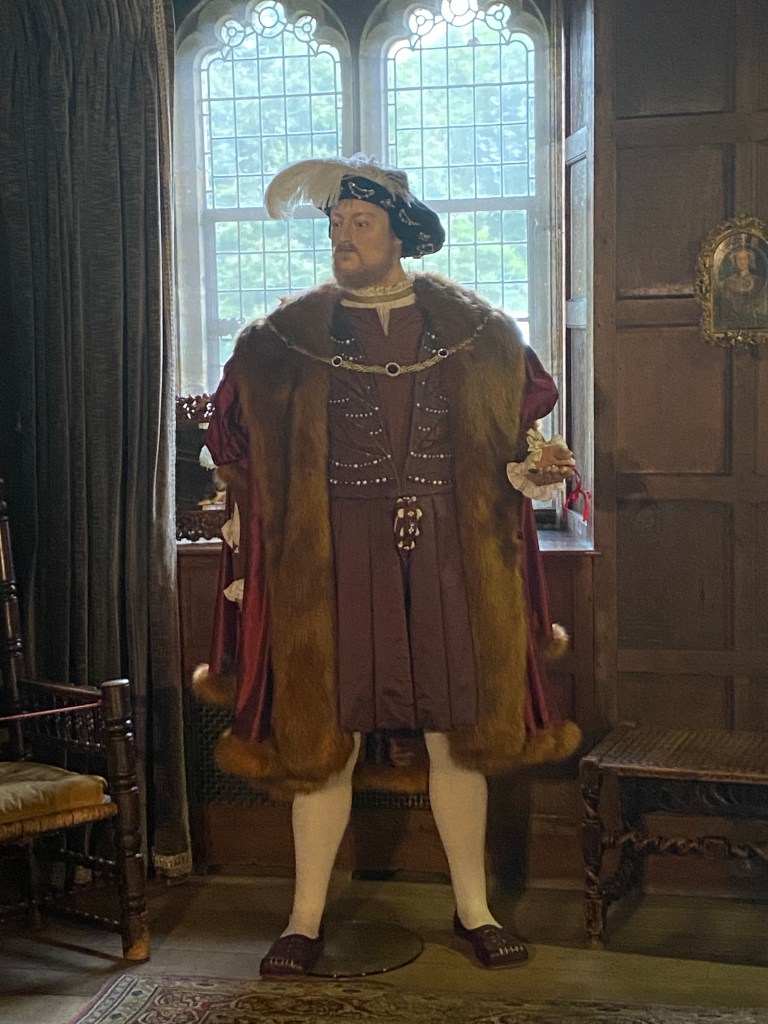
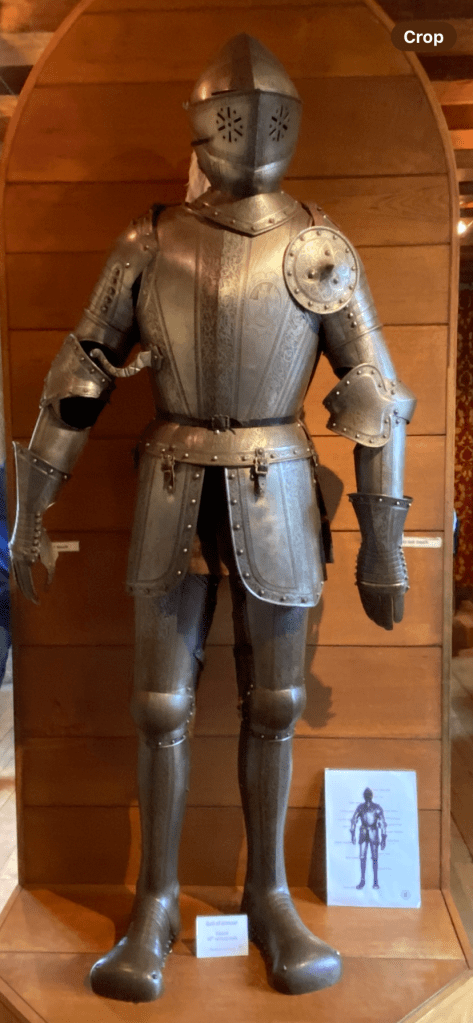
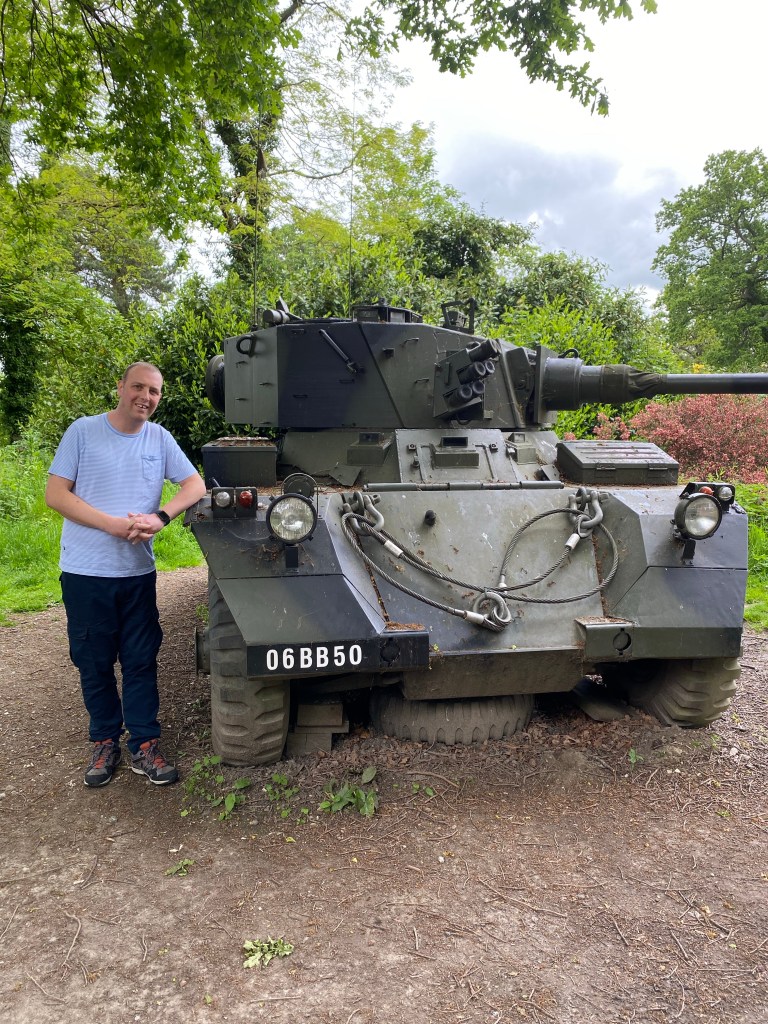
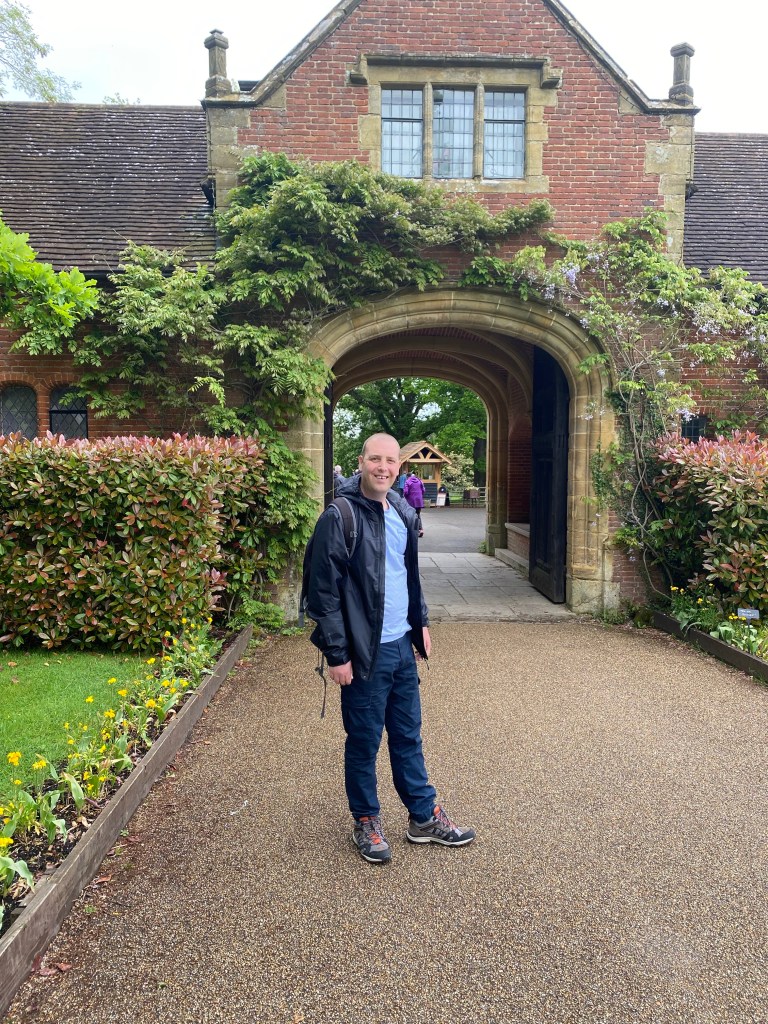
I really enjoyed going to Heaver Castle and Garden’s on my holiday in Kent with my Dad and Bern last week it was good fun. I really enjoyed going around The Castle inside The Castle and I thought it was cool seeing The Army Tank to.
A Tribute To Audrey Reynolds.

Liz in the picture presented Audrey with flowers to mark her retirement at the age of 90. Audrey had been a paid worker in Community Shop for many years.
All at Park View Project will miss Audrey lots.
It is also Audrey’s birthday.
Colin Briggs.
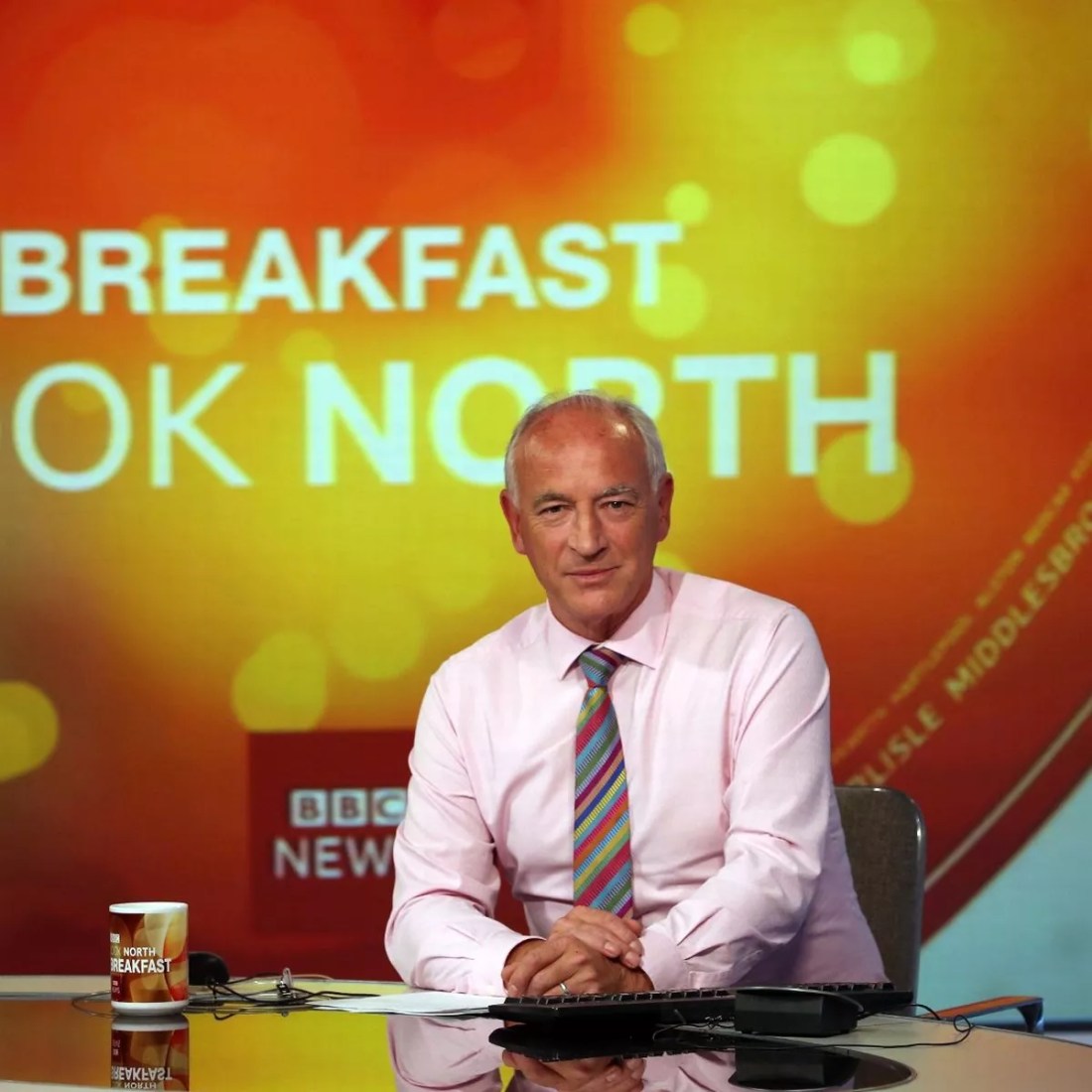

I think Colin Briggs is one of the best News Reporter’s on The BBC News on BBC One. I liked watching The BBC News when he was one and I thought he was very good.
Whitley Bay Swimming Pool In The 1960’s.

This is the old outdoor paddling pool at The Seafront in Whitley Bay in the 60’s before I was born. It use to be very popular back then back in those days and loads of people use to go down and stay all day in the summer holiday’s when it was really hot and sunny and warm weather.
Drama Queens.


I am looking forward to watching Drama Queens sometime on itvx catchup. It is the new series of Drama Queens. It shows you what the soap actresses are like in real life and shows you their real life personalities in real life to.
Women on the front line in WW1
At the start of the First World War many people harboured the view that war was ‘man’s business’. Front-line roles had, after all, always been undertaken by men.
Between 1914 and 1918 opinion changed when women – invigorated by years of struggle for female emancipation – stepped out from their traditional roles and placed themselves at the heart of the action.
Taking on key medical roles, they emerged from the conflict with newfound respect and observers heralded the war as ‘a revelation of woman’.
Trained nurses had been part of the military establishment since the 19th century. Thousands of untrained women now stepped forward to help support the care of the wounded.
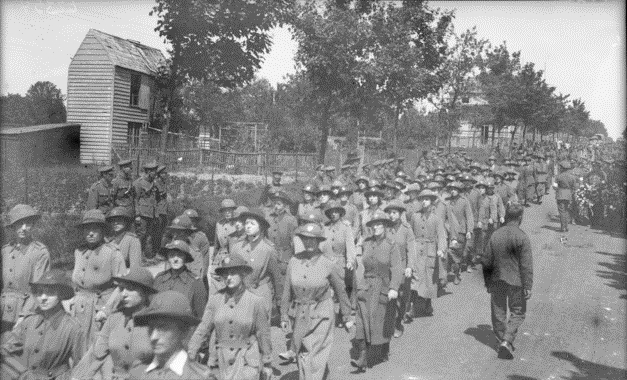
Within the Wounded exhibition we hear the voice of Sophie Hoerner, who was stationed at No. 1 Canadian general hospital near Étaples. She paints a vivid picture of the scale and severity of the task faced by nurses as they cared for the wounded at the Western Front.
In a letter home she wrote:
‘No one could imagine the horrors of a war like this unless they are here and could see for themselves. I have never seen such awful wounds.’
The job of the war nurse was both varied and hectic. Some administered pain relief and redressed wounds. Others assisted the surgical teams in the operating theatres of casualty clearing stations, acting as anaesthetists or carrying out minor procedures when surgeons were rushed off their feet.
Female surgeons found it far harder to offer their services. The army was initially reluctant to make use of their skills, telling them ‘to go home and sit still’.
Undeterred, they set up voluntary hospitals on the Western and Eastern fronts – many staffed exclusively by women. One such volunteer was Dr Phoebe Chapple, who became one of the first at the front line and the first to be awarded a medal for gallantry.
On 29 May 1918, while she was visiting the Queen Mary’s Army Auxiliary Corps near Abbeville, the camp came under enemy attack. One bomb hit a trench where 40 staff had taken cover. In near darkness and with further risk of attack, Chapple worked her way along the trench, tending to the wounded.
Women also provided a vital link between the battlefield and medical units. The First Aid Nursing Yeomanry (FANY) ran field hospitals and drove ambulances, often in extremely dangerous conditions.
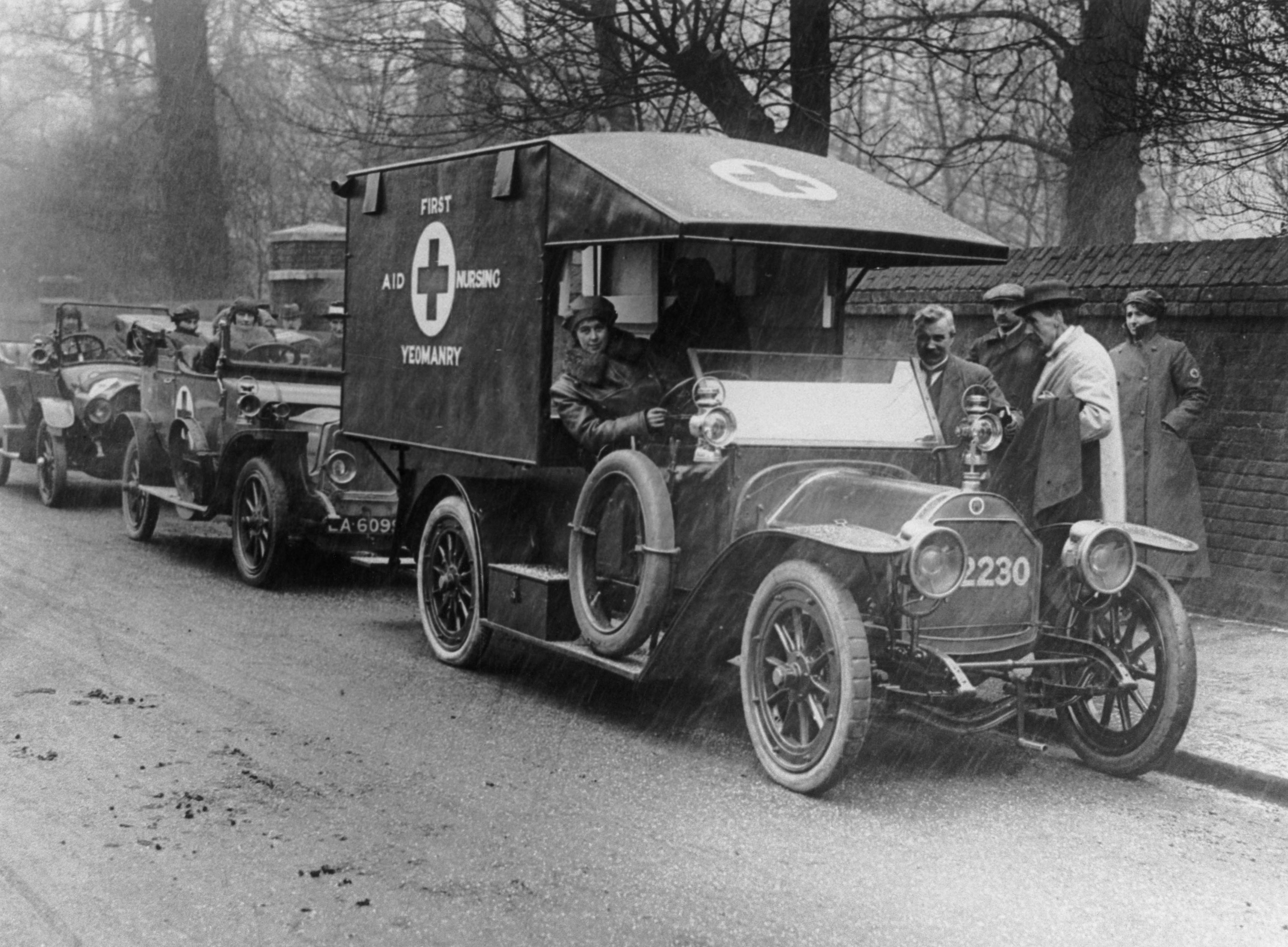
Pat Waddell, an accomplished violinist, acted as an ambulance driver from 1916 onwards, having learned to drive in London by cajoling taxi drivers to let her take control of their vehicles. The FANYs challenged the traditional view of women drivers. One sergeant wrote:
‘When the cars are full of wounded no-one could be more patient, gentle or considerate, but when the cars are empty they drive like bats out of hell.’
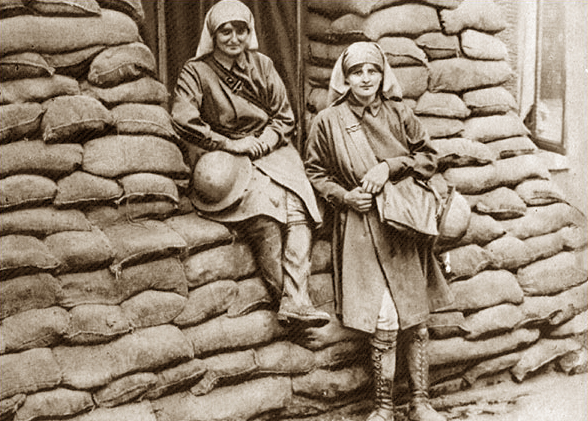
Mairi Chisholm and Elsie Knocker travelled to Belgium as part of the Munro Ambulance Corps designed to support the Belgian Red Cross and transport the injured to hospitals away from the battlefield. They quickly decided that they could be of greater help to the wounded by treating them closer to the front line.
They set up their own dressing station in Pervyse near Ypres – only 90 metres from the action. Earning 17 medals for their bravery they became celebrated in the press as the ‘Angels’ of Pervyse, having saved hundreds of soldiers’ lives.

Perhaps the most famous woman to work at the front line was Marie Curie. By the time war broke out she was already a double Nobel prizewinner – one for physics (the first Nobel Prize to be awarded to a women), the other for chemistry.
Curie was shocked to see how soldiers’ lives were being lost because they had to be transported long distances for examination.
So she set about bringing diagnostic equipment to the battlefield.
Twenty vehicles were fitted out with X-ray units, darkrooms and technical personnel. Curie learned to drive so she could operate one of the mobile cars herself.
She also set up 200 stationary X-ray stations, helping train 150 women as radiology technicians to help run them.
Over 1 million wounded soldiers were examined thanks to her efforts, with Curie herself declaring:
‘The use of X-rays during the war saved the lives of many wounded men and saved many more from long suffering and lasting infirmity.’
Women’s front-line activity did not end there.
They acted in many other important roles, from telegraphist and cook to war correspondent and spy. Added to the vital work being carried out by female workers back at home, these varied roles show that the First World War was not just a conflict that made heroes, but many heroines as well.
Wwe Wrestlemania 37 2021.

I am looking forward to watching Wwe Wrestlemania 37 2021 on the Wwe Network again sometime I think it was that good. It was on back on Saturday the 10th April and Sunday the 11th April 2021. Wrestlemania Night 1 is on for 3 hours and 9 minutes and Wrestlemania Night 2 is on for 3 hours and 12 minutes.
 Weevles Updates Disabled Bloggers Team