

Weevles Updates Disabled Bloggers Team
Weevl Bloggers Corner
For all blog posts without a category


The home front during World War I covers the domestic, economic, social and political histories of countries involved in that conflict. It covers the mobilization of armed forces and war supplies, lives of others, but does not include the military history. For nonmilitary interactions among the major players see diplomatic history of World War I.
About 10.9 million combatants and seven million civilians died during the entire war, including many weakened by years of malnutrition; they fell in the worldwide Spanish flu pandemic, which struck late in 1918, just as the war was ending.
The Allies had much more potential wealth that they could spend on the war. One estimate (using 1913 US dollars), is that the Allies spent $147 billion ($4.5tr in 2023 USD) on the war and the Central Powers only $61 billion ($1.88tr in 2023 USD). Among the Allies, Britain and its Empire spent $47 billion and the United States $27 billion; among the Central Powers, Germany spent $45 billion. The war demanded the total mobilization of all the nation’s resources for a common goal. Manpower had to be channeled into the front lines (all the powers except the United States and Britain had large trained reserves designed for just that). Behind the lines labor power had to be redirected away from less necessary activities that were luxuries during a total war. In particular, vast munitions industries had to be built up to provide shells, guns, warships, uniforms, airplanes, and a hundred other weapons, both old and new. Agriculture had to be mobilized as well, to provide food for both civilians and for soldiers (many of whom had been farmers and needed to be replaced by old men, boys and women) and for horses to move supplies. Transportation in general was a challenge, especially when Britain and Germany each tried to intercept merchant ships headed for the enemy. Finance was a special challenge. Germany financed the Central Powers. Britain financed the Allies until 1916, when it ran out of money and had to borrow from the United States. The US took over the financing of the Allies in 1917 with loans that it insisted be repaid after the war. The victorious Allies looked to defeated Germany in 1919 to pay “reparations” that would cover some of their costs. Above all, it was essential to conduct the mobilization in such a way that the short term confidence of the people was maintained, the long-term power of the political establishment was upheld, and the long-term economic health of the nation was preserved. For more details on economics see Economic history of World War I.
World War I had a profound impact on woman suffrage across the belligerents. Women played a major role on the homefronts and many countries recognized their sacrifices with the vote during or shortly after the war, including the United States, Britain, Canada (except Quebec), Denmark, Austria, the Netherlands, Germany, Russia, Sweden and Ireland. France almost did so but stopped short.
Further information: Economic history of World War I
The total direct cost of war, for all participants including those not listed here, was about $80 billion in 1913 US dollars. Since $1 billion in 1913 is approximately $46.32 billion in 2023 US dollars, the total cost comes to around $2.47 trillion in 2023 dollars. Direct cost is figured as actual expenditures during war minus normal prewar spending. It excludes postwar costs such as pensions, interest, and veteran hospitals. Loans to/from allies are not included in “direct cost”. Repayment of loans after 1918 is not included. The total direct cost of the war as a percent of wartime national income:
The amounts listed below are presented in terms of 1913 US dollars, where $1 billion then equals about $25 billion in 2017.
The two governments agreed that financially Britain would support the weaker Allies and that France would take care of itself. In August 1914, Henry Pomeroy Davison, a Morgan partner, traveled to London and made a deal with the Bank of England to make J.P. Morgan & Co. the sole underwriter of war bonds for Great Britain and France. The Bank of England became a fiscal agent of J.P. Morgan & Co., and vice versa. Over the course of the war, J.P. Morgan loaned about $1.5 billion (approximately $27 billion in today’s dollars) to the Allies to fight against the Germans. Morgan also invested in the suppliers of war equipment to Britain and France, thus profiting from the financing and purchasing activities of the two European governments.
Britain made heavy loans to Tsarist Russia; the Lenin government after 1920 refused to honor them, causing long-term issues.
At the outbreak of war, patriotic feelings spread throughout the country, and many of the class barriers of Edwardian era faded during the years of combat. However, the Catholics in southern Ireland moved overnight to demands for complete immediate independence after the failed Easter Rebellion of 1916. Northern Ireland remained loyal to the crown.
In 1914 Britain had by far the largest and most efficient financial system in the world.[11] Roger Lloyd-Jones and M. J. Lewis argue:To prosecute industrial war required the mobilization of economic resources for the mass production of weapons and munitions, which necessarily entitled fundamental changes in the relationship between the state (the procurer), business (the provider), labor (the key productive input), and the military (the consumer). In this context, the industrial battlefields of France and Flanders intertwined with the home front that produced the materials to sustain a war over four long and bloody years.
Economic sacrifices were made, however, in the name of defeating the enemy. In 1915 Liberal politician David Lloyd George took charge of the newly created Ministry of Munitions. He dramatically increased the output of artillery shells—the main weapon actually used in battle. In 1916 he became secretary for war. Prime Minister H. H. Asquith was a disappointment; he formed a coalition government in 1915 but it was also ineffective. Asquith was replaced by Lloyd George in late 1916. He had a strong hand in the managing of every affair, making many decisions himself. Historians credit Lloyd George with providing the driving energy and organisation that won the War.
Although Germans were using Zeppelins to bomb the cities, morale remained relatively high due in part to the propaganda churned out by the national newspapers. With a severe shortage of skilled workers, industry redesigned work so that it could be done by unskilled men and women (termed the “dilution of labour”) so that war-related industries grew rapidly. Lloyd George cut a deal with the trades unions—they approved the dilution (since it would be temporary) and threw their organizations into the war effort.
Historian Arthur Marwick saw a radical transformation of British society, a deluge that swept away many old attitudes and brought in a more equalitarian society. He also saw the famous literary pessimism of the 1920s as misplaced, for there were major positive long-term consequences of the war. He pointed to new job opportunities and self-consciousness among workers that quickly built up the Labour Party, to the coming of partial woman suffrage, and an acceleration of social reform and state control of the British economy. He found a decline of deference toward the aristocracy and established authority in general, and a weakening among youth of traditional restraints on individual moral behavior. Marwick concluded that class differentials softened, national cohesion increased, and British society became more equal.[17] During the conflict, the various elements of the British Left created the War Emergency Workers’ National Committee, which played a crucial role in supporting the most vulnerable people on the Home Front during the war, and in ensuring the British Labour remained united in the years after the Armistice.
Scotland played a major role in the British effort in the First World War. It especially provided manpower, ships, machinery, food (particularly fish) and money, engaging with the conflict with some enthusiasm.With a population of 4.8 million in 1911, Scotland sent 690,000 men to the war, of whom 74,000 died in combat or from disease, and 150,000 were seriously wounded.Scottish urban centres, with their poverty and unemployment were favourite recruiting grounds of the regular British army, and Dundee, where the female dominated jute industry limited male employment had one of the highest proportion of reservists and serving soldiers than almost any other British city. Concern for their families’ standard of living made men hesitate to enlist; voluntary enlistment rates went up after the government guaranteed a weekly stipend for life to the survivors of men who were killed or disabled.After the introduction of conscription from January 1916 every part of the country was affected. Occasionally Scottish troops made up large proportions of the active combatants, and suffered corresponding loses, as at the Battle of Loos, where there were three full Scots divisions and other Scottish units. Thus, although Scots were only 10 per cent of the British population, they made up 15 per cent of the national armed forces and eventually accounted for 20 per cent of the dead. Some areas, like the thinly populated Island of Lewis and Harris suffered some of the highest proportional losses of any part of Britain.[23] Clydeside shipyards and the nearby engineering shops were the major centers of war industry in Scotland. In Glasgow, radical agitation led to industrial and political unrest that continued after the war ended.
In Glasgow, the heavy demand for munitions and warships strengthened union power. There emerged a radical movement called “Red Clydeside” led by militant trades unionists. Formerly a Liberal Party stronghold, the industrial districts switched to Labour by 1922, with a base among the Irish Catholic working class districts. Women were especially active in solidarity on housing issues. However, the “Reds” operated within the Labour Party and had little influence in Parliament; the mood changed to passive despair by the late 1920s.
David Lloyd George became prime minister in December 1916 and immediately transformed the British war effort, taking firm control of both military and domestic policy.
In rapid succession in spring 1918 came a series of military and political crises. The Germans, having moved troops from the Eastern front and retrained them in new tactics, now had more soldiers on the Western Front than the Allies. Germany launched a full scale Spring Offensive (Operation Michael), starting March 21 against the British and French lines, with the hope of victory on the battlefield before the American troops arrived in numbers. The Allied armies fell back 40 miles in confusion, and facing defeat, London realized it needed more troops to fight a mobile war. Lloyd George found a half million soldiers and rushed them to France, asked American President Woodrow Wilson for immediate help, and agreed to the appointment of French General Foch as commander-in-chief on the Western Front so that Allied forces could be coordinated to handle the German offensive.
Despite strong warnings it was a bad idea, the War Cabinet decided to impose conscription on Ireland. The main reason was that labour in Britain demanded it as the price for cutting back on exemptions for certain workers. Labour wanted the principle established that no one was exempt, but it did not demand that the draft actually take place in Ireland. The proposal was enacted but never enforced. The Catholic bishops for the first time entered the fray and called for open resistance to a draft. Many Irish Catholics and nationalists moved into the intransigent Sinn Féin movement. This proved a decisive moment, marking the end of Irish willingness to stay inside the UK.
When on May 7, 1918, a senior army general on active duty, Major-General Sir Frederick Maurice went public with allegations that Lloyd George had lied to Parliament on military matters, a crisis was at hand. The German spring offensive had made unexpected major gains, and a scapegoat was needed. Asquith, the Liberal leader in the House, took up the allegations and attacked Lloyd George (also a Liberal), which further split the Liberal Party. While Asquith’s presentation was poorly done, Lloyd George vigorously defended his position, treating the debate as a vote of confidence. He won over the House with a powerful refutation of Maurice’s allegations. The main results were to strengthen Lloyd George, weaken Asquith, end public criticism of overall strategy, and strengthen civilian control of the military.
Meanwhile, the German offensive stalled. By summer the Americans were sending 10,000 fresh men a day to the Western Front, a more rapid response made possible by leaving their equipment behind and using British and French munitions. The German army had used up its last reserves and was steadily shrinking in number and weakening in resolve. Victory came with the Armistice on November 11, 1918.
Prime Minister David Lloyd George was clear about how important the women were:It would have been utterly impossible for us to have waged a successful war had it not been for the skill and ardour, enthusiasm and industry which the women of this country have thrown into the war.
The militant suffragette movement was suspended during the war, and at the time people credited the new patriotic roles women played as earning them the vote in 1918.However, British historians no longer emphasize the granting of woman suffrage as a reward for women’s participation in war work. Pugh (1974) argues that enfranchising soldiers primarily and women secondarily was decided by senior politicians in 1916. In the absence of major women’s groups demanding for equal suffrage, the government’s conference recommended limited, age-restricted women’s suffrage. The suffragettes had been weakened, Pugh argues, by repeated failures before 1914 and by the disorganizing effects of war mobilization; therefore they quietly accepted these restrictions, which were approved in 1918 by a majority of the War Ministry and each political party in Parliament. More generally, Searle (2004) argues that the British debate was essentially over by the 1890s, and that granting the suffrage in 1918 was mostly a byproduct of giving the vote to male soldiers. Women in Britain finally achieved suffrage on the same terms as men in 1928.[40]
The British Empire provided imports of food and raw material, worldwide network of naval bases, and a steady flow of soldiers and workers into Britain.[41]


Yiddish (top) and English versions of World War I recruitment posters directed at Canadian Jews.

Main article: Canada in the World Wars and Interwar Years § World War I
The 620,000 men in service were most notable for combat in the trenches of the Western Front; there were 67,000 war dead and 173,000 wounded. This total does not include the 2,000 deaths and 9,000 injuries in December 1917 when a munitions ship exploded in Halifax, Nova Scotia.
Volunteering provided enough soldiers at first, but high casualties soon required conscription, which was strongly opposed by Francophones (French speakers, based mostly in Quebec). The Conscription Crisis of 1917 saw the Liberal Party ripped apart, to the advantage of the Conservative‘s Prime Minister Robert Borden, who led a new Unionist coalition to a landslide victory in 1917.
Distrusting the loyalties of Canadians of German ethnicity and, especially, recent Ukrainian Canadian immigrants from Austria-Hungary, the government interned thousands of aliens.
The war validated Canada’s new world role, in an almost-equal partnership with Britain in the Commonwealth of Nations. Arguing that Canada had become a true nation on the battlefields of Europe, Borden demanded and received a separate seat for Canada at the Paris Peace Conference of 1919. Canada’s military and civilian participation in the First World War strengthened a sense of British-Canadian nationhood among the Anglophones (English speakers). The Francophones (French speakers) supported the war at first, but pulled back and stood aloof after 1915 because of language disputes at home. Heroic memories centered around the Battle of Vimy Ridge where the unified Canadian corps captured Vimy ridge, a position that the French and British armies had failed to capture and “Canada’s Hundred Days” battles of 1918 which saw the Canadian Corps of 100,000 defeat one fourth of the German Army on the Western Front.
As the period between the landing of 25 April and the truce of 24 May showed, the Anzacs had been unable to force their way inland across the peninsula. Likewise, the attempts of the Ottoman Army to drive them away had failed.
The war at Anzac soon settled into precisely what the Gallipoli planners had never envisaged – the stalemate of trench warfare. In one of his dispatches to Australia, official historian Charles Bean wrote:
… are the incidents in long, weary months, whose chief occupation is the digging of mile upon mile of endless sap [trench], of sunken road, through which troops and mules can pass safely … The carrying of biscuit boxes and building timbers for hours daily, the waiting in weary queues, at thirty half-dry wells, for the privilege of carrying water cans for half a mile uphill … the sweeping and disinfecting of trenches in the never ending fight against flies.
For Australians on Gallipoli from late May 1915 to the start of the August Offensive, their main problems revolved around:
Each problem had its own challenges. Together, they contributed to the more significant issue of maintaining the morale of the men during a relatively quiet period of operations when compared to the early battles and those to come in August.
The period between the final battles of May and the start of the August Offensive could be described as relatively quiet. But operations continued on the peninsula.
For example, the Third Battle of Krithia was fought at Helles by British and French forces on 4 June 1915.
At Anzac on 29 May 1915, the Ottomans launched an attack against Australian positions at Quinn’s Post by exploding a mine at 3:30am. While the attack was halted, operations in and around Quinn’s Post and other sections of the Anzac line were persistent during June and July.
Artillery duels, mining, sniping and the use of trench mortars became a daily feature of life for Anzacs at Gallipoli.
For example, the constant threat of snipers created much tension amongst soldiers. Private Frederick Muir of 1st Battalion AIF recalled the experience of Turkish sniper fire:
Ever since we have been here we have been greatly troubled by snipers. During the first few days there were many inside our lines, hidden among the scrub […] In some cases they dressed in Australian or New Zealand uniform, taken from our dead […] In addition to these snipers […] other Turkish marksmen took up positions in their trenches commanding the valley through which our road led and took daily toll on the passers-by.
Snipers took their toll.
In May 1915, Major-General Sir William Bridges, the commander of the 1st Australian Division died of wounds received at the hands of a sniper. His body was returned to Australia, and he was buried in Canberra in September 1915.
Until the reburial of the unknown soldier at the Australian War Memorial in 1993, Bridges was the only Australian service man who died overseas during World War I to be returned to Australia.
After the battles of late April and May 1915, Australian units faced a challenge to train the reinforcements sent to replace lost men.
Given the narrow Anzac positions, there was little room for training behind the line. Many replacements were trained on the front. Added to this was the problem that the commander of the 7th Battalion AIF, Lieutenant Colonel Harold ‘Pompey’ Elliot, noted in a letter to his wife in June 1915: ‘new troops arrived on Gallipoli with little training’.
Replacement troops needed time to adjust as they joined the units at Anzac.
Water was scarce and had to be carried up to the front.
To shave or wash, a man had to try to save enough from his small daily ration.
Clothes were soon riddled with lice, causing constant itching, and the creatures were difficult to get rid of.

An advantage of a cleansing swim at the beach was the opportunity to thoroughly soak a uniform. The salt water drowned unwanted insects. Colonel Joseph Beeston of 4th Australian Field Ambulance reported that this didn’t always work:
I saw one man fish his pants out; after examining the seams, he said to his pal: ‘They’re not dead yet.’ His pal replied: ‘Never mind, you gave them a … of a fright’
Swimming was a dangerous activity. At Anzac, the soldiers were never safe from hostile fire. Turkish artillery regularly shelled Anzac Cove, the main supply base for the whole Anzac position until after August.
While bathing at the cove on 23 June, eight men were hit by a shell. One of them came out of the water holding his severed arm.
At times, men simply disappeared – they were killed in the water.

Swimming helped with personal hygiene on the peninsula and became an essential form of recreation for those serving at Anzac.
As troops were rotated in and out of the front line, they looked for opportunities to relax from the pressures of war.
Private Thomas ‘Rusty’ Richards of 1st Australian Field Ambulance played rugby for Australia and the British Lions before the war. In his diary, he wrote on 31 May 1915 that:
There has been nothing but surfing and sun-bathing going on down here to-day. I have been sitting in my private dug-out reading and writing, also had two swims.
Richards also enjoyed photography when the opportunity arose.
Other activities included playing music and attending religious services. Music often accompanied church parades.
While serving on Gallipoli with the Royal Naval Division, Australian composer, Frederick Septimus Kelly wrote music for a string orchestra.
Listen to a sample of Kelly’s Elegy for String Orchestra “In Memoriam Rupert Brooke”
Kelly wrote this piece while wounded. It commemorates his friend, the poet Rupert Brooke who died on his way to Gallipoli. Kelly survived Gallipoli but died on the Western Front during the Battle of the Somme in 1916.
As for people back home, religion was important in the lives of many Australian soldiers.
Each AIF brigade had four chaplains:
Chaplains ran the weekly Sunday church parade, among other duties.
Some soldiers found comfort in religious services. As Rusty Richards recorded in his diary on 16 June 1915:
On the strength of Brother Andrews’ sermon on Sunday last…I have been looking up “Paul’s Epistle to the Corinthians” which I found very interesting. I wandered on through the Bible until coming to “Proverbs” where I was quite astonished at the variety and high- class wit, and even humour, yet wisdom reigned throughout…I will have to read this book further.

Soldiers regularly kept daily diaries and wrote letters home.
Maintaining a steady flow of mail to and from the front was very good for morale. This is why the AIF encouraged the men to write letters. But often the mail took a long time to arrive.
Corporal Hector McLarty of the 3rd Australian Field Artillery Brigade wrote in a letter on 10 July 1915 that:
The mail service is rotten, the least they could do, I think would be to see that our mails were delivered quickly and promptly, but no, the cold footed gentlemen who run the Post Office Corps and bask all day in the smiles of the ladies of Cairo, have no time to think of the poor devils who are doing the fighting.
Censorship was a real issue when writing home, as was the availability of paper. Some soldiers would post messages home on hardtack or record their thoughts on toilet paper.
Rusty Richards wrote on 23 June 1915 that he had:
finished a roll of toilet paper which makes good writing material
Despite these issues, soldiers regularly recorded their delight at receiving mail from home. As Bombardier Albert Orchard of the 3rd Australian Field Artillery Brigade wrote in his diary on 25 June 1915:
Mail to hand, biggest I’ve received since leaving home. 19 letters & some papers from Mrs. Biggs (thanks).
Orchard recalled writing letters the next day to be posted back home.
Local newspapers reproduced many of the soldiers’ letters to help boost morale at home.
Muir’s recollection of sniper fire formed part of a series of letters published in the South Coast Times and Wollongong Argus during 1915.
Without the modern convenience of refrigeration, supply ships coming from Greece or Egypt couldn’t bring nutritious fresh meat, vegetables or fruit.
The monotonous Anzac diet was mainly:
The biscuits were so hard that they often had to be soaked in water and then grated into a mush to make them edible. Many men broke a tooth on hardtack. In the early days, there were no army dentists.
Flies multiplied in the hot weather. Fed by half-buried and decomposing corpses, food scraps and other human material in the unhygienic trenches, they got into everything.
Trooper Ion Idriess of the 5th Light Horse (Queensland) recalled how the flies swarmed into a jam tin he had opened. Despite his best efforts to keep them away, they also swarmed all over his jam covered biscuit and got into his mouth. Eventually, Idriess gave up the struggle:
… I threw the tin over the parapet. I nearly howled with rage … Of all the bastards of places this is the greatest bastard in the world.
The heat of summer, bad diet and poor hygiene soon had its effect on general health at Gallipoli.
By August, doctors were reporting that most of the Anzacs were suffering from some form of dysentery or diarrhoea. Hundreds of men were being evacuated sick. Many more men were evacuated from Gallipoli sick than were killed or wounded.
In late August 1915, a newly arrived medical officer of the 15th Battalion summed up the effects of battle and daily life at Gallipoli on his unit:
The condition of the men of the battalion was awful. Thin, haggard, as weak as kittens and covered with suppurating sores. The total strength of the battalion was two officers and 170 men. If we had been in France, every man would have been sent to hospital.
Added to the gradual wearing down of the men, the Gallipoli Campaign had failed to achieve its objectives to:
As June and July wore on, a plan was devised to break out from the Anzac position. A plan that hopefully would see a successful end to the campaign. The ensuing battle to put this plan into operation began on 6 August 1915 — the start of the August Offensive.

The scene presented on this cigarette card is an artist’s impression of the hazards at Shrapnel Valley. In this scene, a man lies in a shallow trench holding his wounded thigh while his mates fire off volleys of shots with rifles and machine gun. On the back of the cigarette card, a description of the scene under the heading ‘WAR INCIDENTS: 2ND SERIES OF 50 SUBJECTS’ reads:
LIFE IN SHRAPNEL VALLEY
After lying flat on the ground, with the cover of earth, a brave Australian officer lifted his head to see how matters were going, and fell back shot by a Turkish sniper. For two days and a night he lay there, close to a Turkish gun section, but was eventually rescued and carried to safety

These are my brand new Blinds my Mum bought me for my Bedroom. I really like them I think they’re really good and very nice too.
Scientists from the Commonwealth War Graves Commission, based in northern France, are at the forefront of efforts to identify bodies that are still regularly found in northern France, along the former front lines.
Two unknown Scottish soldiers killed in World War One have been laid to rest in France after their bodies were found during work to build a hospital.
War detectives from the Ministry of Defence (MoD) were called in to try and trace the identities of the two men, who were thought to have died during the Battle of Loos in 1915.
They were among more than 40 soldiers whose remains were interred during a ceremony in the town, near the city of Lille, on Wednesday.
Hundreds of people, including Princess Anne, attended the burial service, organised by the MoD’s Joint Casualty and Compassionate Centre (JCCC) and the Commonwealth War Graves Commission (CWGC).
The battle, which saw British, Indian and French troops attempt to break through German defences in Artois, was the largest British attack of that year.
However, the attack was contained and repelled by German forces.
More than 59,000 soldiers from Britain and India died between 25 September and 8 October – an estimated 7,000 of whom were Scottish.
Ms Bowers said remains were being uncovered on a daily basis in Northern France and Belgium during construction projects.
The process of identifying the dead can take months, or even years.
The team start with the location their bodies were found, then look at any artefacts that have been found on them.
The team said it could offer families “closure” if they were aware of their relatives’ efforts during the conflict, or open a new strand to their family history if they did not know about their involvement. A representative said:
“We are looking for things like regimental shoulder titles, cap badges, bits of uniform, bits of kilt, boots to show they are British,”
“All of that narrows it down to hopefully the correct regiment. Then we look through war diaries to see that we had a regiment in that location at that time and then working out how many were missing from that regiment.
“Families either knew about that soldier and they have grown up knowing that their great-great grandfather was missing and killed in the war, or they knew absolutely nothing.
“But when they give us the DNA, they come on that journey with us for closure. I think they all become invested in the result.”
John Parr was born in 1898 in Barnet and grew up in North Finchley, in London. John joined a territorial unit of the Middlesex Regiment in 1912, lying about his age. He was only 14 at the time (five years younger than the legal age to fight), weighed 8.5 stone and was 5’3” tall. This evidence of his youth soon earned him the nickname ‘Ole Parr’ among his comrades.
Parr became a reconnaissance cyclist – a soldier who rode ahead to gather information on the advancing enemy. In August 1914, Parr’s battalion was stationed in the village of Bettignies, in northern France. Historians disagree about the cause of his death, but the most common account is that Parr was sent to find a missing unit and was killed by rifle fire on 21 August after encountering a German cavalry patrol.
His body was never identified. His mother wrote to Parr’s regiment repeatedly over the following years, asking to be informed of her son’s fate, but she received no information. The age given on Parr’s gravestone is 20. He was actually 17.
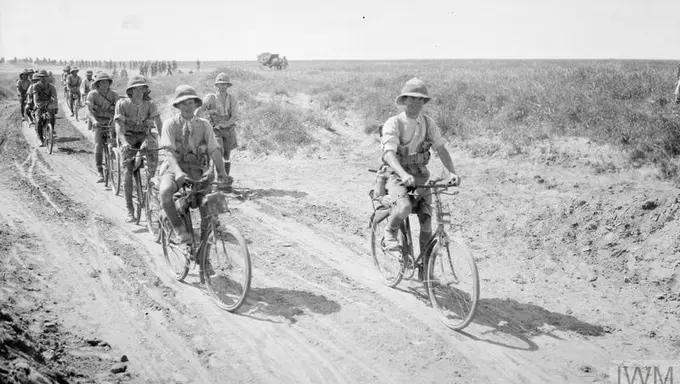
George Ellison, from Leeds, had been a member of the army as a young man before leaving to marry Hannah Maria Burgan and to become a coal miner. However, he was recalled to the army shortly before the outbreak of the war, serving with the 5th Royal Irish Lancers.
Ellison had survived four years of trench warfare, including fighting in the battles of Ypres and the Somme. However at 40 years old, he was shot while out on the outskirts of Mons and killed at 9.30am on 11 November 1918, a day we now mark as Remembrance Day.
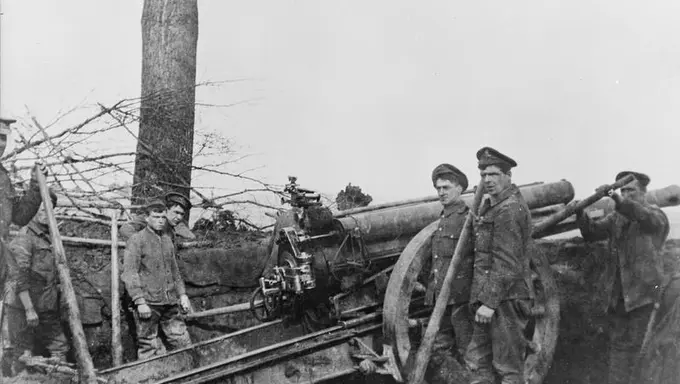
Private Ellison died just hours before the war ended.
Despite the armistice being signed at 5am that morning, orders on the field were to keep fighting, and Ellison tragically lost his life just 90 minutes before the official call for peace.
The place of his death was the same location he had seen action for the first time, as part of the British Expeditionary Force retreating from Mons in August 1914.
He left a wife and a four-year-old son James, who had his fifth birthday just a few days after his father’s death.

Following our research in conjunction with NHS England on digital transformation, there are further government plans to upskill social care staff to support beneficiaries to access social online.
The aims are:


We are starting to address data poverty throughout North Tyneside, with beneficiaries seizing the opportunity to enhance their access to vital online support. Let’s aim to maintain the momentum we’ve built, ensuring that 2025 becomes a year where we help even more people get connected.

 Weevles Updates Disabled Bloggers Team