Amy always brings me a cup of tea from The NTDF Cafe and I always get a free cup of tea from her. This is my cup of tea in this cup from the Amy from the NTDF Cafe and Paul also brings me food from the NTDF Cafe sometimes to I really appreciate it from both of them I always pay for my cup of tea or hot chocolate or whatever I buy off Amy or Paul and then give them the money for it.
Copland’s is the second largest bakery chain in the UK with over 160 outlets and 12 cafes located primarily across Yorkshire, County Durham and Lincolnshire in the United Kingdom. Copland’s produces takeaway food chiefly for the lunch-time trade, specialising in sandwiches, pasties, desserts, cakes, and bread.
Here is one of my tasty finds. I think it resembles a Megalsosaurus bucklandiis. Consisting of shortcake and party coated in chocolate. It is delicious and sumptuous and in just the thing for a summers afternoon.
The handmade product in produced by our local Baker Copelands Bakery, based in Wallsend, Tyne and wear.
Me in front of The Lighthouse at Seaton Sluice yesterday I am also pointing to The Lighthouse to. Their are also two Ships out at sea behind me to as you can see. It was also a nice warm hot day yesterday to.
I went for a walk around Seaton Sluice with my Mum yesterday and we seen this scarecrow on this swing attached to this big bar pole. It has probably been their for a long time now so I thought I might blog about it do this blog about it and write about it because I was very impressed with it. I also thought it would be an interesting blog to blog about it the second photo at the bottom is a close up picture that I took when I zoomed in on the scarecrow and took the photo.
I love watching This Week In Wwe on the Wwe Network every week I think it is really good. It is all the highlights of RAW and Smackdown on both shows and what happened on RAW and Smackdown to I really enjoy watching it every week on the Wwe Network.
These are more of the Airplanes from the 1990s from when I was little these were the planes in the 90s. I remember them from when I was younger back then and these were the Airplanes I remember from when I was younger and seeing at Newcastle Airport when I was a lot younger in the 90s to.
These are the Airplanes from the 90s from Newcastle Airport from when I was little. These are what the Airplanes were like back then in those days in the 1990s when I was younger. They are the British Airways Airplanes they had back in those day when I was really young.
This is what Newcastle Airport looked like in back in 1992 this is what it was like in 92 when I was five and six years old when I was little. Back then back in those days it was called Newcastle International Airport for years and for a long time when I was younger to.
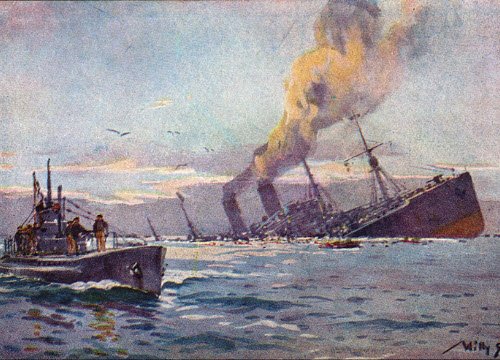
Since the beginning of the Great War, each of the warring sides tried to starve the other. To reach this objective, they focused their efforts to destroy the enemy supplies. Great part of them was transported by merchant ships: that’s why the control over the seas became extremely important.
Even if the sneaky U-Boats caused great destruction, the naval blockades imposed by the Allied forces proved decisive. It has been estimated that in 1915, the German Empire lost almost half of the materials that used to received before. The loss of fertilizers was particularly serious, causing in a few months a drastic decrease in agricultural production. The plan organized by Hindenburg (*1) to optimize resources, had no other effect than prolonging the agony. Malnutrition shattered the morale of the troops, lacking the strength needed to fight. The number of victims among the civilians was huge.
*1: Paul von Hindenberg, German military officer, statesman, and politician.
As any Soldier will tell you, food is critical to morale. Good food may not solve all of a Soldier’s problems, but bad food only adds to them. The importance of wholesome, appetizing food to the
morale and fighting ability of an Army is hard to underestimate. This reality once led Napoleon to remark: “C’est la soupe qui fait le soldat” (The soup makes the soldier).
The first Army field rations, authorized in 1775 by the Continental Congress, consisted of a pound of beef, pork, or fish; bread, beer, and milk, and were expected to feed a man for one day. By 1917 when the AEF arrived in Europe, the guidelines had changed little, with an increase in quantity and the addition of potatoes. In addition to basic foodstuffs, Doughboys also received luxuries such as milk, butter, candy, and cigarettes; luxuries their fellow allied Soldiers lacked. The Army often experienced shortages of fresh fruit, but in general, as one historian noted, “the dough-boys of the American Expeditionary Force were the best-fed army in World War I.”
As in all wars, however, feeding the troops was often a challenge. Simply getting food to the troops could be difficult, especially when the enemy tried to zero in and attack supply lines. During World War I, responsibility for food and supplies fell to the Quartermaster Corps, which implemented a number of innovations to address the particular situation in France in 1918. One of the more significant innovations was the creation of Field Bakeries that could provide fresh hot food to the Soldiers. Field Bakeries meant the end of reliance on that old staple of armies in the field: hard tack. American Soldiers relished the fresh bread that came from these bakeries.
One of Donald Kyler’s duties included leading food parties to the front. A fresh meal was always a welcomed luxury in the trenches, and whenever possible, Soldier received hot food delivered in food carts.
The exact origin of the term ‘Doughboys’, said to be in use since the 1840’s, is in dispute, but many believe the name came to be especially associated with the Soldiers in World War I because of their affinity for doughnuts and other baked goods made by Red Cross volunteers. Photo Courtesy of USAHEC.
As Kyler’s story illustrates, however, getting food and other supplies to the front is often difficult. Bad weather, poor organization, and especially enemy action (which often targets supply lines) can get in the way. A gas attack would ruin any exposed food in the trenches, and the trenches themselves were full of rats and other vermin. Well aware of the problems of resupply, the Army developed the first emergency ration in 1901. The idea behind the emergency ration was that Soldiers could carry food for use in the event that they were cut off from supply lines.
The reserve rations that doughboys carried contained over 3,000 calories worth of meat, bread, coffee, and sugar, and were designed to sustain them during assaults and periods when regular rations were unavailable. Emergency rations were tinned to preserve them until needed and to protect them from contamination during gas attacks as well as from mice, rats, and other scavengers. With these rations on hand, Soldiers were expected to survive seven days without resupply, if necessary.
As always, the cost of feeding the Army was an issue. Feeding a Soldier cost 26 cents a day during World War I, for a total of $727,092,430.44 (more than $11 billion in 2012 dollars) for the period of 1917-1918. Defending this high cost, Senator James Wadsworth of New York said “what we should remember at this time is that the American Army is being fed as well, if not better, than any other army on the face of the earth…”
All in all, Soldiers serving during the First World War had access to much better food than their predecessors, or even their contemporaries serving in allied armies. With access to the extra luxuries such as dairy products, candy, and freshly baked bread, and thanks to the efforts of men such as Donald Kyler, the Doughboys fought as well as they ate.
Mobile kitchens like this one helped bring hot food to the troops in forward areas. Photo Courtesy of USAHEC.




 Weevles Updates Disabled Bloggers Team
