The Social Model of Disability is the framework from which we look at the issues about accessing digital support. The model sates: “The social model of disability says that disability is caused by how society is organised, rather than by a person’s impairment or difference. It looks at ways of removing barriers that restrict life choices for disabled people”.
A third of people who are offline find that the NHS is one of the most difficult organisations to interact with (Lloyds, 2022). In addition, those who are offline are twice as likely to indicate a health condition compared to those who are online (Lloyds, 2023).
These statistics tell us that not only do those who are digitally excluded struggle to interact with health services, they are also more likely to need to.
This overlap between digital exclusion and access to health-care has been well researched by member organisations within the VCSE (Voluntary, Community and Social Enterprise) Health and Wellbeing Alliance, a partnership between voluntary sector representatives and the health and care system focused on improving services for communities. Our recent ‘Designing For Digital Inclusion in Healthcare’ seminar series was a project supported by the alliance, with the aim of drawing together this research and learning, to help reduce barriers to accessing health care.https://www.goodthingsfoundation.org/what-we-do/news/compounding-inequalities-in-accessing-digital-health-services/?fbclid=IwAR1jF9yfb9ziCsQ4XTuv0s8C43TVfMm8mBcFu-kc5zcnFw5804XrUbrKwr8
Patrick Sims, a freelance autism writer examines the risks and benefits of the internet for autistic people and their families. Patrick discusses issues such as cyberbullying and hacking, before exploring the value of the internet in developing friendships and support networks. It is difficult to know where to start with this article. The majority of people reading it will already have strong views regarding autism and the internet, social media and online gaming. Some may see the “mouse” as a friendly pet hamster offering comfort and security to otherwise, lonely and isolated people. Researchers such as Begley (2014) and Kranjc (2011) expound the virtues of social media as the favoured and least anxiety provoking means of social communication for many autistic people. However others envisage the internet as a dangerous rabid rat looking for an opportunity to wreak havoc and mayhem onto communities and ruin lives (Ledingham and Mills 2015; McCoogan 2016). This article will explore the middle ground by raising awareness of the risks that social media and IT in general can pose to autistic people, whilst highlighting the advantages that technology can bring to the socially isolated if used appropriately.
Hacking The names Gary McKinnon (Ledingham and Mills 2015) and Laurie Love (McCoogan 2016) most famously exemplify the difficulties that arise when autistic people get embroiled in accusations of hacking. Both men respectively faced, and are facing, very long prison sentences in the USA because of allegedly hacking into various secure computer systems e.g. Federal Reserve, US Army and NASA. In 2012, the then Home Secretary, Theresa May, intervened in the Gary McKinnon case stating he was a “suicide risk” and not to be extradited (McCoogan, 2016). Due to a change in law giving all extradition powers to the justice system, Laurie Love has to convince a judge that he is not fit enough to be extradited (not achieved as of 12/2016). As a consequence, Love faces extradition and a maximum of 99 years in an American jail (McCoogan 2016; Joseph 2016, b). McKinnon and Love have both been diagnosed as autistic whilst being investigated for computer criminal activity (Ledingham and Mills 2016). Kushner (2011) refers to the term “Autism Defence” in which an autism diagnosis is utilised as a means of escaping trial or receiving a lenient sentence. The American legal system have made it clear that they feel this tactic is being used by Loves Defence Team (Joseph, 2016, a). Alternatively, the process of McKinnon, Love and others going through the criminal justice process has highlighted an otherwise unrecognised and undiagnosed condition. Ledingham and Mills (2016) suggest financial gain is not the hackers motivation. It is: attention adulation self-satisfaction recognition. These factors suggest low confidence, something often found in young autistic adults (Howlin, 1997). One approach is to concentrate on building self-esteem through childhood, whilst another is to channel the person`s computer skills into something positive (Begeley, 2014, Batey and Comer, 2013).
Cyberbullying Being online can present a small risk to all of us; being autistic increases the risk of exploitation (Arora 2014): Underage autistic children being tricked into sharing pornographic images that are used to humiliate and bully (Levine 2013). Building friendships with who they think are teenagers with similar worries and interests, but who are in reality mature adults (Levine 2013).
Sending “personal and sexual photographs to a trusted and seemingly committed person who turns the images into a “sick joke” (Levine 2013). Cyber bullying is potentially a huge problem for some autistic people (Romano et al, Batey and Comer 2013), whether directly from on-line forums or from people using social media to increase the scale of bullying (Arora 2014).
Parental roles Initially the use of parental controls appears to solve many problems with regard to protecting children from content deemed “unpleasant” or “inappropriate”. However, does the “parental control” route work short-term or long-term? Levine (2013) gives an example of a 10 year old boy being able to bypass these safety measures. There is also a risk that parents become complacent and stop taking an interest in their child’s PC or phone activities. In the majority of cases the use of IT, video games and social media in moderation are positive activities, as long as sensible guidelines are set and enforced by responsible adults. Be clear about what is acceptable, and open about monitoring and checking websites (Arora (2014), Levine 2013). Most parents want to know what their child has been doing, and with whom, if they are out for the evening. They would often do safety checks beforehand e.g. “where, who, how long?” Have the same openness regarding computer friends and activities as you would with traditional socialisation (Levine 2013). Sudden interest, due to concern, can be misinterpreted as interference or a lack of trust. Levine (2013) broaches the issue of when is a person old enough to be trusted? This question can open up a can of worms regarding informed consent, particularly for parents who have autistic offspring who eighteen years are over. Should parents, in a position to do so, enforce this on adults because of a perceived need to protect them (Arora 2014)? Whilst not perfect there is sense to Levine`s (2013) suggestion of parents sharing internet experiences with their children and having regular open discussions with them about safety. As the internet means so much to many autistic children, parents taking an interest in it would appear natural, supportive and a way to develop the parent/child bond.
Addiction Another concern for parents of autistic children and adults is that of internet/gaming/social media dependency. Autistic people appear to be at higher risk than others of addiction to, and compulsive use of, social media (Finkenauer et.al. 2012). Clearly an autistic person facing daily challenges understanding and communicating in the “real world”, may find sanctuary in a world that appears safe and offers an opportunity to meet and communicate comfortably with people (Shane-Simpson et al 2016). Research suggests that a person with “autism traits” experiencing anxiety and/or depression are more prone to internet addiction (Ramano 2014). Mazurek and Wenstrup (2013) elaborate on this, warning that there is a risk that pathological use of internet games can lead to anxiety, social phobia and depression as well as impacting negatively on school attainment.
Benefits Many autistic people report feelings of loneliness and isolation due to difficulties in social interaction (Begley 2014). A number of autistic children and adults find communicating via a computer much less stressful and a more enjoyable experience than traditional ways of maintaining friendships (Begley 2014). No two friendships are the same so why negatively judge ones that occur on line? Levine (2013) argues that online friendships/relationships are hard for the pre-dawn internet era to understand. However, is it harder to comprehend thanfriendships/relationships maintained by letter often with weeks/months between each response. At least social media enables an almost instant response. If people who have been lonely and isolated suddenly find a way to have friends, what is the benefit of passing value judgements on the validity of those friendships? The internet is a vital tool in terms of communicating with autistic people and their families and carers. It enables people to realise that they are not alone, as well as offering support when no one else is able to (Begley 2014, Arora 2014). It enables organisations struggling with resources to reach more people in quicker timescales. Online support is available 24/7, not just office hours. Being able to send emails after the children are settled, when at a low ebb, and knowing that you will receive support from someone with similar experiences can enable you to cope!
Conclusion This article has highlighted both positive and negative impacts that the internet etc. can have on some autistic people and their families. It has discussed issues that may arise for parents with autistic children and has outlined some strategies. If used appropriately and in moderation computers can be of great benefit to autistic people in terms of offering one form of socialisation. It can be beneficial for parents and carers in terms of accessing information and support, and of being able to share their child`s interest. Yes negative things can happen, but there are risks in all aspects of life. Are social media risks actually harder to predict than being mugged in your street, attacked in town by a gang or bullied at school? If we stopped using all inventions because there are risks or because they are hijacked by people for crime or to hurt others, life would stagnate. The positive thing about computers is that serendipity has meant that theyare potentially the greatest ever asset for autistic people. They open up a new world of potential: friends, opportunity and employment. It is perhaps the non-autistic world who has concrete thinking and needs to accept change in terms of redefining friends and socialising to include social media. The internet will not disappear so everyone must work together to make it infinitely positive and beneficial for autistic people. This is their great opportunity for choice and a more level playing field!
Given our dependence on technology for just about all of our communication, EE don’t seam to get it. For many vulnerable folk, like me, I am now left with not being able to access socially essential services. What are we to do!
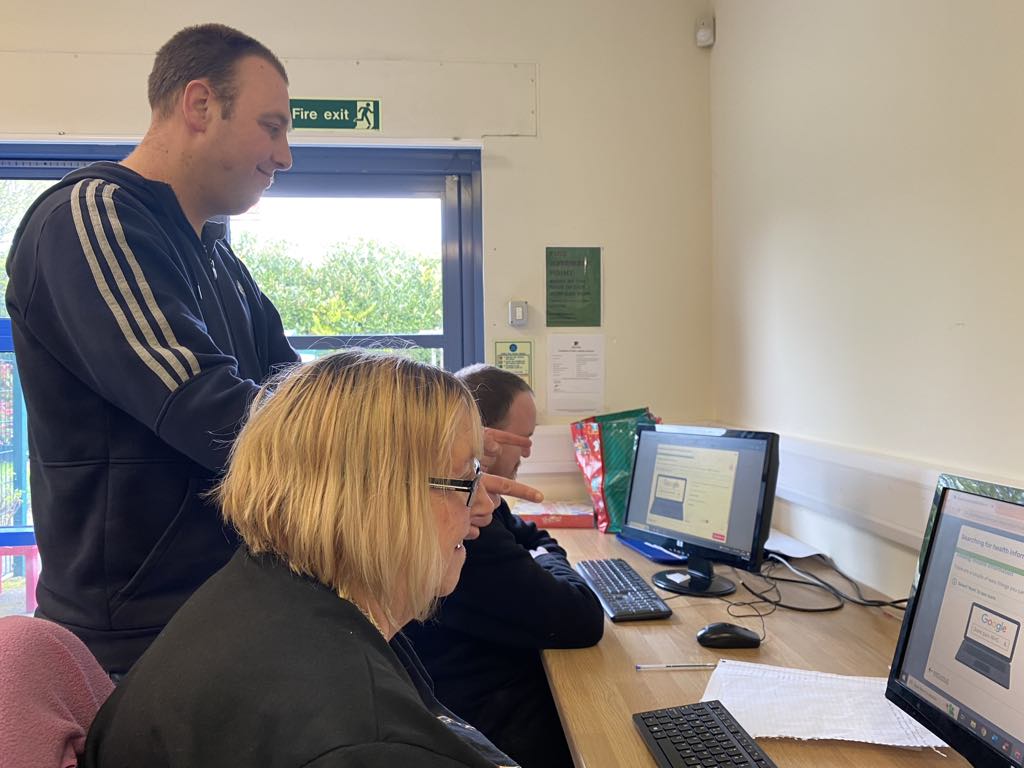
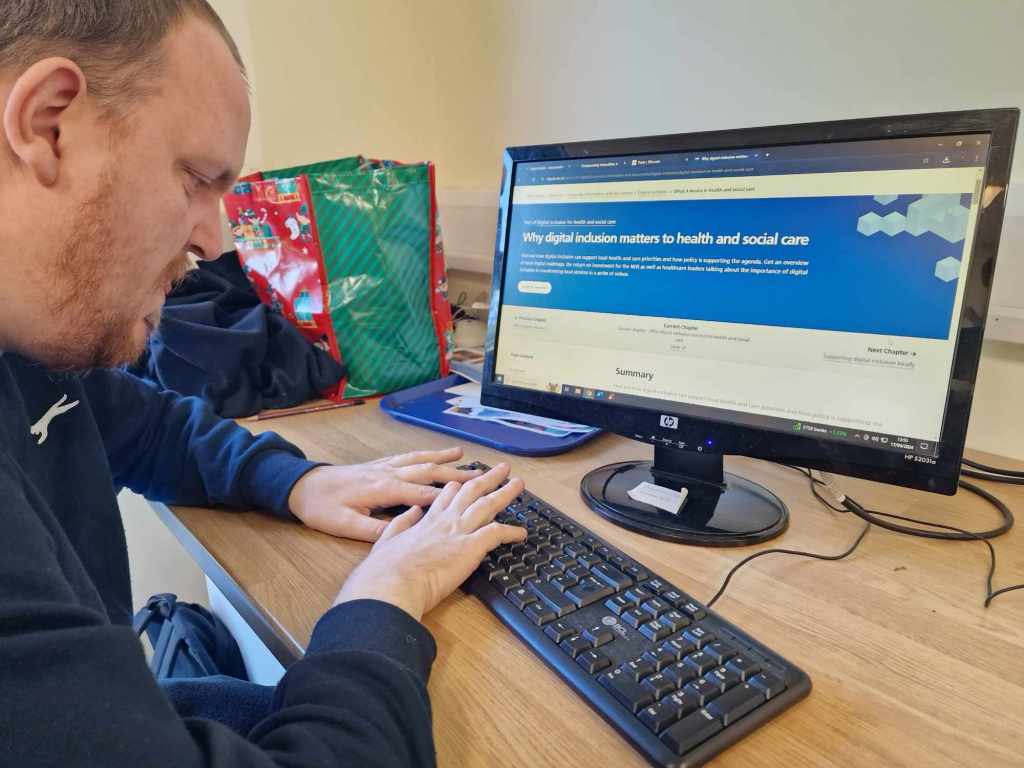
Universal Credit Digital Training is one of our themes we are exploring Internet Safety Day 2024. To get involved pop-into one of our sessions on Tuesday or Wednesday afternoons to take advantage of this trial teaching program.
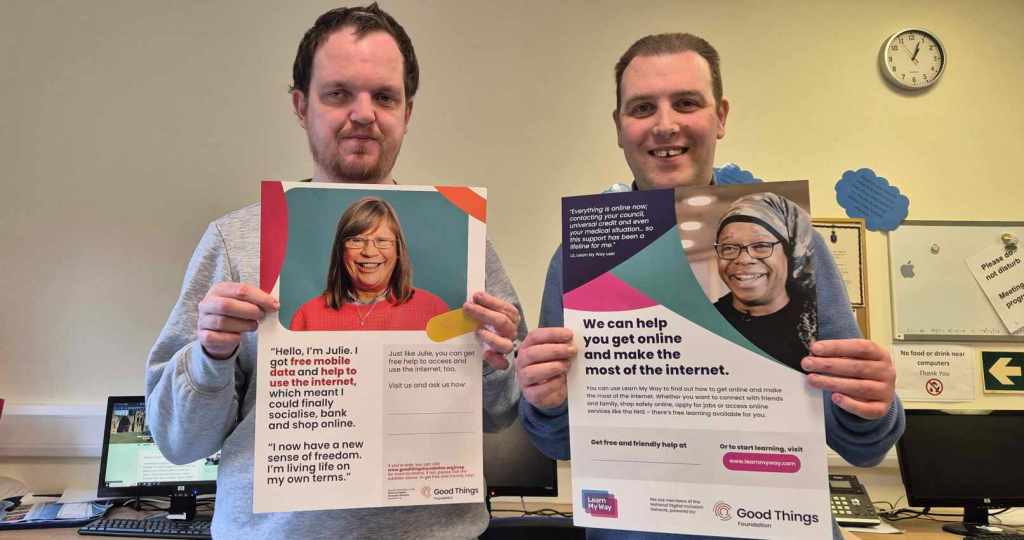
A massive thank you to the National Community Lottery who are supporting our project for a further two years. This will create opportunities for all our current and new volunteers to develop their digital skills.
Each year safety internet day covers a new theme. This year the theme is Inspiring Change”. which covers making a difference, managing influence and navigating change online.
Safer Internet Day 2024 will take place on the 6th of February 2024, with celebrations and learning based around the theme ‘Inspiring change? Making a difference, managing influence and navigating change online’.
Safer Internet Day is the UK’s biggest celebration of online safety. Each year we cover an online issue or theme that speaks to the things young people are seeing and experiencing online. Created in consultation with young people across the UK, this year Safer Internet Day will be focusing on change online, this includes covering:
Young people’s perspective on new and emerging technology
Using the internet to make change for the better
The changes young people want to see online
The things that can influence and change the way young people think, feel and act online and offline
Coordinated in the UK by the UK Safer Internet Centre, the celebration sees thousands of organisations get involved to promote the safe, responsible and positive use of digital technology for children and young people.
Helping someone learn how to use a new tablet should be fun and rewarding for both of you. Some older people think that technology is complicated, and worry that they won’t be able to learn how to use it. You can help them overcome these fears by following some simple steps.







 Weevles Updates Disabled Bloggers Team