On the Western Front of World War I, death did not discriminate.
Artillery screaming towards the trenches treated men of all color the same. But the soldiers of the 92nd and 93rd divisions lived segregated lives both in and out of war.
These all-Black units, which served under mostly white officers, readily took up arms with their fellow Americans, hopeful that their patriotism and service would lead to better treatment at home.
In the end, the Harlem Hellfighters, as they were likely first dubbed by their German adversaries, spent more time in continuous combat than any other American unit of its size, with 191 days in the front-line trenches, according to the National Museum of African American History and Culture.
The unit also suffered 1,400 total casualties, more than any other American regiment. Many of those soldiers are buried or memorialized at American military cemeteries overseas managed by the American Battle Monuments Commission (ABMC).
Members of the all-Black 369th, or Harlem Hellfighters, pose on the boat home from World War I after fighting valiantly, Feb. 10, 1919. Photo via National Archives, originally captured by Western Newspapers Union
More than 350,000 African Americans served in the Great War. The majority were assigned to labor and stevedore battalions—digging ditches, building roads and supplying the front lines.
Throughout the course of WWI, only about one in 10 African Americans in the U.S. military served in a combat role based on leadership decisions at the time.
The 369th Infantry Regiment of the 93rd Division, formerly the 15th New York National Guard Regiment, was unique.
The 369th landed at Brest, France, in December of 1917.
In March of 1918, the regiment began training under French command due to their need for replacements.
Despite the expectation that this arrangement would be temporary, members of the 369th never served under American command during the war.
By summer, they were fighting in the Champagne-Marne Defensive and the Aisne-Marne Offensive.
It would be then that the Harlem Hellfighters would see grisly combat during the Meuse-Argonne Offensive, which began on Sept. 26, 1918.
As the 369th advanced, capturing towns and a key railroad junction, the losses mounted. In a matter of days, these advances cost the regiment 851 men, and shortly after they were relieved from the front lines.
In recognition of their bravery during the offensive, 171 officers and men received medals and the entire regiment received the Croix de Guerre from France.
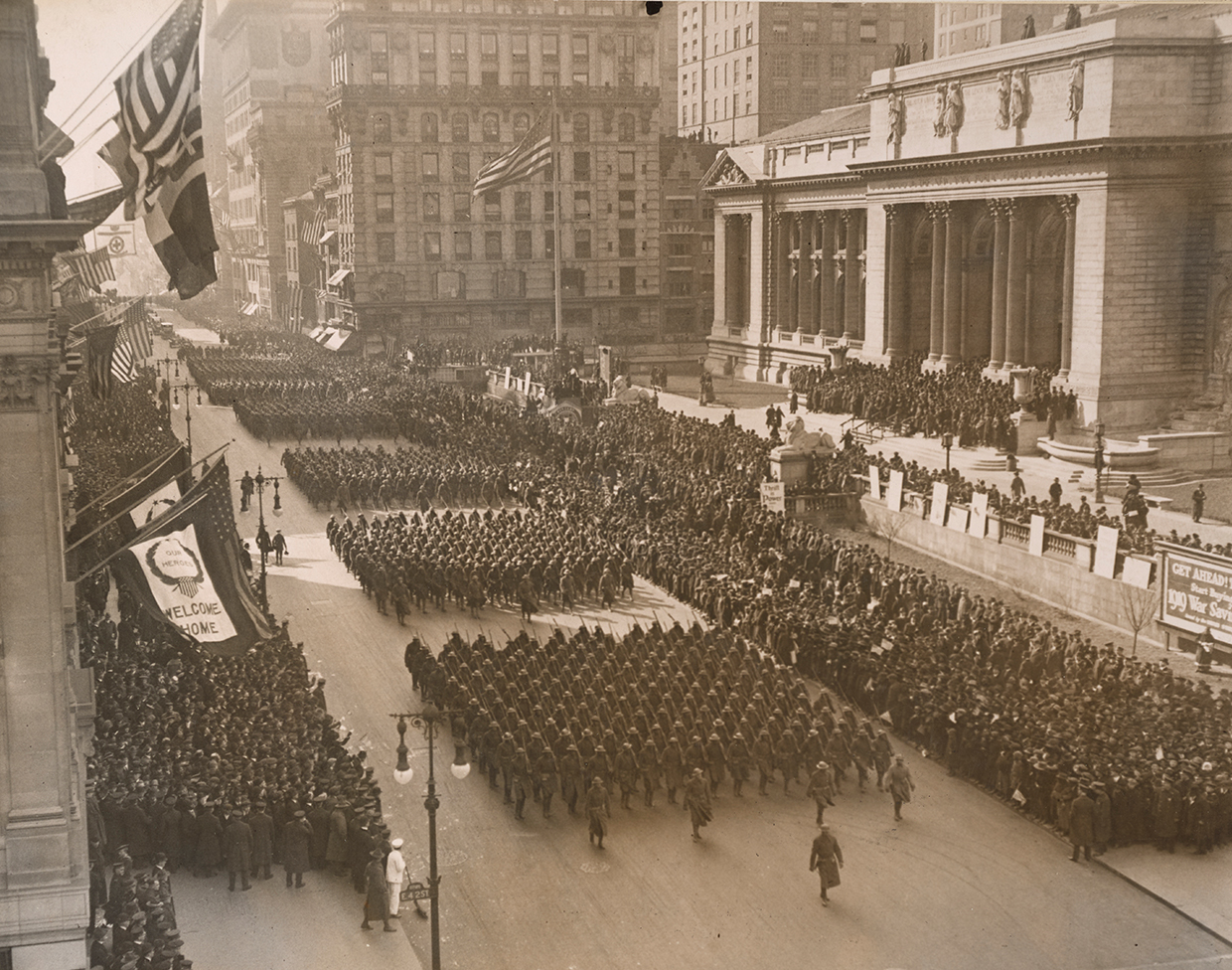
The all-Black 369th Division, or Harlem Hellfighters, return home to New York City for a victory parade after fighting valiantly in World War I, Feb. 18, 1919. Photo via National Archives, originally captured by Western Newspapers Union
The 369th returned to a huge victory parade in New York in February of 1919.
Thousands gathered along 5th Avenue and 42nd Street, outside the New York Public Library, welcoming home the brave soldiers. The division was even featured prominently on the cover of the Sunday New York Times.
But despite this celebration, little to nothing changed in their day-to-day lives. It would take another world war, and decades of civil rights activism before the hopes of these African American doughboys would start to be realized.
In fact, the inequalities experienced by these brave men are still being remedied today. Legislation passed by Congress in 2014 paved the way for Pvt. Henry Johnson, a Harlem Hellfighter with the 369th, to receive the Medal of Honor. And in 2020, the Army Center of Military History approved the official special designation of the Harlem Hellfighters.
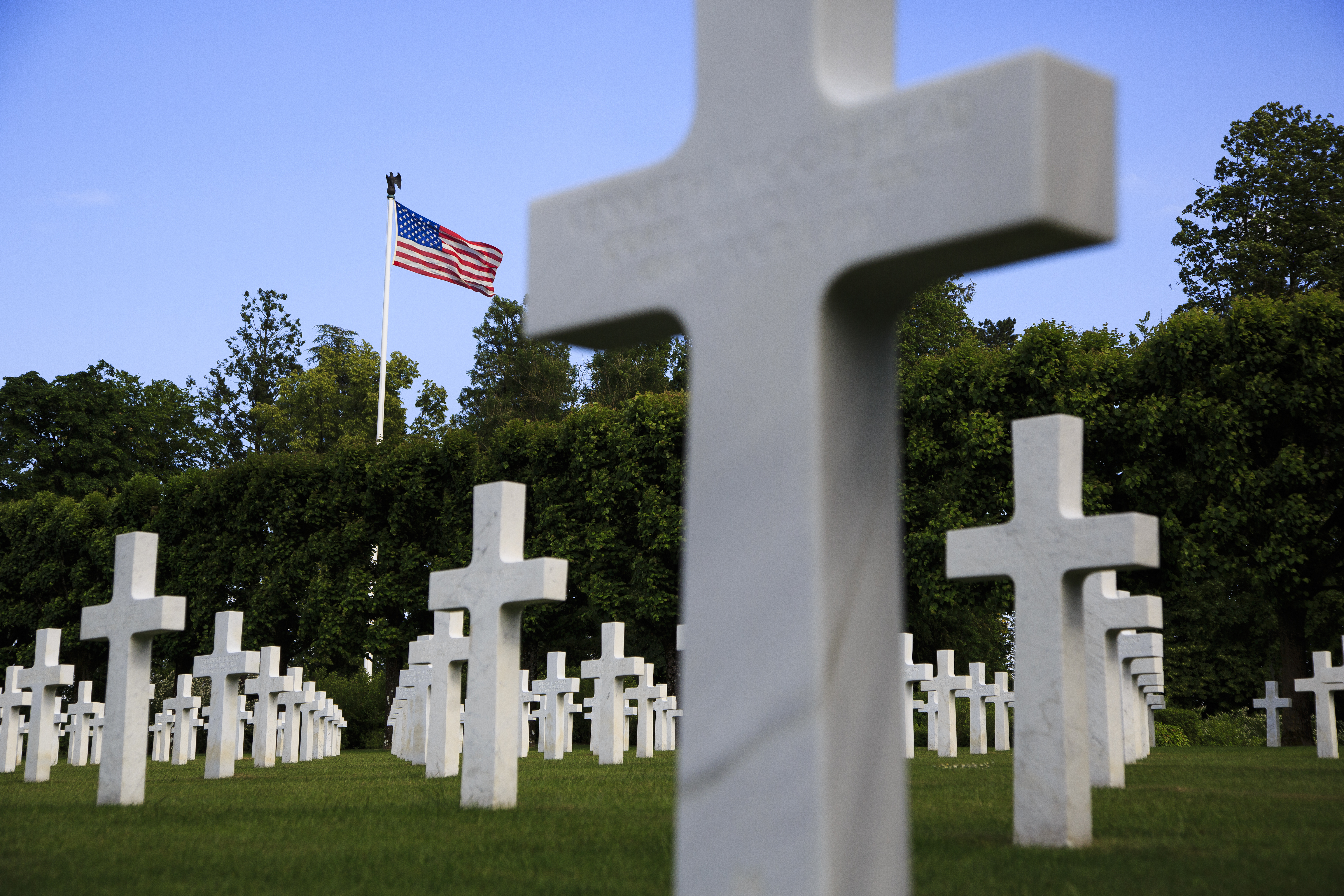
The Stars and Stripes in the background of the Meuse-Argonne American Cemetery in France, the final resting place for more than 14,000 Americans who gave their lives in World War I, June 16, 2015. ABMC photo
There are 169 members of the 369th Infantry Regiment, 93rd Division, buried or memorialized at ABMC cemeteries. The majority are at Meuse-Argonne, but also at Aisne-Marne, Oise-Aisne, St. Mihiel and Suresnes American cemeteries.
Among the more than 14,000 total American soldiers buried at Meuse-Argonne is Freddie Stowers, a member of the 93rd Division, 371st Infantry Regiment, and the first African American to receive the Medal of Honor from WWI.
As at all ABMC sites, the cemeteries are integrated. Race, rank, gender or creed had no determination on burial location and every day the fallen are remembered for their selfless sacrifice.
America sent almost 400,0000 black soldiers to Europe. In 1914 the barriers to black advancement were scarcely less formidable than they had been just after the abolition of slavery. They were hemmed in by complex legislation confirming their status as ‘ separate but equal’. In fact these laws based voting rights on property and education condemning the blacks to permanent inequality.
When war broke out black leaders hoped that service would dissolve prejudice and segregation. Far from it. In places such as Spartanburg, South Carolina there were riots at the presence of Black Yankees in training. The men and their black officers were allocated to labour battalions and given menials chores. There were no black artillary officers and no black pilots. On arrival in France segregation was imposed no black was allowed to speak to a French woman and French officers were told not to meet blacks ‘ outside the requirements of military service’
Yet the black soldiers fought as bravely as whites. Several hundred received the French Croix de Guerre but none received the Medal of Honour from their own country. At home their contribution to the war effort vanished utterly beneath renewed waves of oppression. Wilson had won the support of those few blacks with political influence in 1912, saying that he wished to see ‘Justice done to coloured people’. And in this Fourteen Points he asserted a right to self determination. It was one of the ironies of history that 10 per cent of his own population had to wait another 40 years before they had any hope of benefiting from those ideals.
Until 1917 America remained neutral, but many of her citizens did not. Over 100 of them joined the 10000 strong French Foreign Legion in 1914 some of the 32000 foreign volunteers who joined the French and British including 1000 Germans opposed to their own countrys aims.
In the ranks of the Legionnaires Fighting with the British on the Somme was the Havard graduate and poet Alan Seegar who wrote one of the best known poems.
I have a rendezvous with Death on some scarred slope or battered hill, when spring comes round again this year and the first meadow flowers appear.
Death kept that rendezvous. Seegar dies in a shell hole on the Somme on July 4th 1916.
Hundreds of American volunteers found a role whenever they could. Dillwyn Parish Starr from Philadelphia served as an ambulance driver with the French before transferring to armoured cars at Gallipoli. At 32 as a lieutenant in the British Guards regiment he was killed on the Western Front in September 1916. On November 23rd 1917 a plane was shot down over Bourlon Wood during the battle of Cambrai. The pilot was an American Lieutenant A. Griggs serving with an Australian Squadron that formed part of the Britains Royal Flying Corps. When Winston Churchill on a visit to the Ypres salient in 1918 came across Henry Butters from San Francisco who was a second Lieutenant with the royal artillary he asked him how he had managed to be enlisted. Buttere replied candidly ” I just lied to them and said I was British born”
Perhaps the most poignant losses of the war were of men who remained genuinely lost, those who simply vanished, for whom relatives and friends had no focal point. Of all war memorials, the most moving is that of the Unknown Warrior.
The driving force behind this was a British , lieutenant- colonel, Henry Williams. At the end of the war 5000 men were given the job of exhuming those buried on battlefields, identifying them if possible and then reburying then in cemeteries. As a member of the Imperial War Graves Commission which was established in 1917 to bury or commemorate the war dead of the British Empire, Williams was asked to command them.
He was struck by the numbers who were unidentifiable or missing presumed dead. The 3888 graveleaa British soldiers killed during the retreat fro9m the Marne, the 56,000 unknown dead at Ypres. the 20,763 men who died at Gallipoli with no graves.
Backed by Sir Fabian Ware the head of the Commision, he suggested that one unidentified body should be buried in Britain as a symbol of all those others who had no grave. It took a year for the War Office and Westminster Abbey to agree that there should be indeed a memorial to the unknown Warrior.
Once the decision was taken a body was chosen and the unknown warrior began his journey home in a coffin of oak cut from the grounds of Hampton Court Palace.
On November 11th 1920 2 years to the day after the war had ended the coffin carrying the soldier was carried down Whitehall at 11am was unveiled at the Cenotaph. After a ceremony the procession moved towards to Westminster Abbey where the body was interred.
The war was a terrible waste. The Allies lost 5 million men. Great Britain alone lost 743000 dead. France suffered almost twice as many under 1.4 million dead. In all more than 8 million soldiers died as a result of the conflict.
With the machinery of war which had never been used in previous conflicts the terrible effect left many men mutilated beyond recognition. This made the task of compiling accurate figures almost impossible. This task was further complicated by other destructive events which happened at the same time such as the Influenza pandemic of 1918 -1919.
According to some estimates this amounted to around £270 billion.
The hearts and minds bore a most terrible cost of the population left in villages all over the globe. To pick up the pieces of life after the loss of there loved ones.
1.5 million men were left wounded in body or mind or both. One in 8 who served.
From the start of the war it was opposed by those who objected to war in principle and their position coined a new term ‘pacifist’. A voice for them was found thought the Union of Democratic Control but there were many others who acted out of religious or political conviction. In March 1916 when compulsory military service came into affect the right of pacifists were acknowledged. Some 16500 tough minded idealists mostly inexperienced young men withstood the pressures to join up. Over half agreed to perform non combatant service re medical or agricultural work. Some 6000 refused to accept the authority of the tribunals set up to assess how much of a pacifist they actually were or if they were cowards. Some were detained and arrested. Some were given hard labour in Dartmoor. One of these prisoners was a Quaker called Stephen Hobhouse who was from a wealthy family who his inheritance and went to work for the poor in Londons East end. People who supported the pacifists or conscientious objectors as they came to be known were ridiculed and pressured. In 1918 the suffering did not end for 5 years the were ostracised from society and could not get work. Bertrand Russell was fined £100 in 1916 deprived of his lectureship at Trinity College Cambridge and in February 1918 he was sentenced to 6 months in prison for publicly advocating an offer of peace negotiations to the Germans.
By 1917 all the fighting countries were suffering as never before. The French had sustained 3.3 million casualties, the Germans 2.5 million and the British over 1 million. It had become clear that if Germany did not starve Britain then Britain would starve Germany.
Attrition on the German home front
In Mid 1916 Germant faced the grim consequences of prolonging the war. Verdun had failed to break Frances spirit and there had been no grate breakthrough to justify hopes for victory. The only other possibility was to break Britain who had assessed the people only had 12 weeks of food left. Ordinary people became experts on British weaknesses and the press demanded action. After the peace overture in December 1916 fell on stony ground the German government decided in January 1917 to return to unrestricted submarine warfare. However Britain did not collapse and USA came into the war bringing another industrialised power into the equation. This intensified the war instead of attaining victory for the Germans. It lead to its own destruction.
For German people liofe became a total misery. October 1916 30,000 people gathered in Frankfurt to demand peace. This became known as ‘ turnip winter’ as turnip flour was used in place of wheat flour. In 1917 a daily food ration 1,000 calories. The birth raye halved and infant mortality rose by 25 per cent. The average 3 year old weighed 2 pounds 3 ounces and also tuberculosis took its toll.
This suffering of the German people was mocked by the growth of the black market. Starvation was rife and they had to watch the wealthy get all their supplies ok cause they could afford it on the black market. All dairy and meat products cost 10 times as much. There was great unease and suspicion and unrest threatened to spread. The British were conceived as a lesser enemy. In April 1917 125,000 workers in Berlin and Leipzig went on strike in protest.
The Blockade of Britain
Britain acquired a dictator of their own Lloyd George who became Prime Minister in December 1916 He command through 6 cabinets ministers and introduced ration books and prices.The merchant ships he had arranged for delivery of the food many were sunk. The coal industry was about to collapse. Food and fuel ran very low. They restricted beer production and all the flor mills were put under Government control. Lots of queues ensued outside butchers, bakers, fish mongers etc. Rationing worked and the person who brought it in was Lord Rhondda but he dies 1918 with stress the toll of the job had taken his life.
As the war progressed Turkey joined the Central Powers, Germany and Austria – Hungary. Turkeys move stemmed partly from its failure to supress revolution of the Balkans, partly from its century old fear of Russian designs upon the Dardanelles, the gateway out of the Black Sea. In early 1914 the war minister Enver Pasha had invited General Liman von Sanders the head of the German military mission to Constantinople(Istanbul) to reorganise the Turkish army. Enver Pasha went onto conclude a secret pact with Germany just before the war.
Turkey waited for two months then declared war and sent a force to its frontier with Russia in the Caucasus. In brutal weather 100,000 Turks pushed back Russian troops. Russia appealed to France and Britain for help and as the new year dawned counterattacked defeating the Turks decisively at Sarikamis. The tsars appeal struck a chord in England. Lord Kitchener was nervous that the Suez Canal might be vulnerable to a Turkish assault and was looking for a way out of the deadlock on the Western front. He and Winstan Churchill the first lord of the admiralty were convinced that the way forward was to strike at Germanys ally Turkey and to get a supply route to Russia. Both ere sure that the navy could do this job without drawing any troops away from the Western front.
In March 1915 a Franco- British naval squadron tried to force its way through the Dardanelles into the sea of Marmara from where the allied war ships could bring their guns to bear on Constantinople. They failed to make it through. Three ships one French and 2 British were sunk and another three damaged by unsuspected mines. In London the War Council came to the conclusion that land forces were needed after all. There were troops already the area in Egypt- raw Australian and New Zealand soldiers soon to be known as Anzaks. Plans were hurriedly drawn up for a Mediterranean Expeditionary force assembled on the island of Lemnos. It included British Australian French and New Zealand troops and was put under the command of General Sir Ian Hamilton poet and novelist and hero of the North West Frontier.The Turks guessed a land assault was imminant and took positions on the cliffs and hills along the Gallipolli peninsula. The commander prayed for a weeks grace and he got a month.He bought up 6 divisions 84000 men. The Turks had a brilliant commander Mustafa Kemal who later founded the Turkish Republic.
The Mediterraen Expeditionary Force (MEF) was 75000 strong. The plan was to attempt a difficult operation in the sea on beaches backed in many places by cliffs. Battleships and cruisers would bring the troops from Lemnos to positions offshore from where towing boats each pulling three barges would take them to their beaches. The Anzacs would take the northern sector, a beach adjoining the headland called Gaba Tepe.
On the Gallipoli beaches the Anzacs and the British dug in. On 26th March the French were withdrawn from Kum Kale and redeployed on Cape Helles with the British.The conditions that developed rivalled anything in the trenches of the Western Fronts. In appalling heat, without shade and on iron hard land, the troups were destroyed by disease inaction and hopeless assaults. After three months did the British government attempt to break the deadlock by sending another five divisions.
In the autumn the rains set in and winter approached and the frost claimed their first victims, the allies ordered an evacuation. Trenches were booby trapped and rigged so that they appeared to be fully manned. Guns were fixed to fire automatically. This was the only success of the allies in a dismal campaign.In nine months 46000 had died on the allied side for nothing gained.
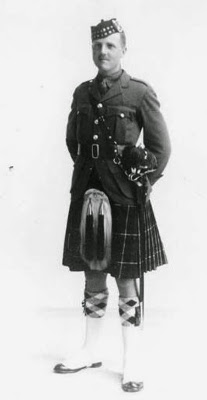
Norman Baillie-Stewart (15 January 1909 – 7 June 1966) was a British army officer who was arrested in 1933 for espionage, and subsequently convicted and imprisoned.
He was an active sympathiser of Nazi Germany, and moved there after his release from prison in 1937; he became a naturalised German citizen in 1940. Before and during World War 2 he made English-language propaganda radio broadcasts and became one of several broadcasters associated with the nickname Lord Haw-Haw. After Germany’s defeat, he was again imprisoned. He was released in 1949 and spent the remainder of his life in Ireland. He died in 1966.
In 1933, he became widely known as The Officer in the Tower as he was imprisoned in the Tower of London after his first arrest, becoming the last British subject to be held in the Tower as a proper prisoner.
Early life
Baillie-Stewart’s father was Lieutenant Colonel Cron Hope Baillie Wright (1875-1937) an officer in the British Indian Army who served in the 62nd Punjabis during the First World War. His mother was from a family with a long tradition of military service. His older brother, Eric Codrington Stewart Wright (1905-1987) also joined the army, and became a 2nd Lieutenant in the Loyal Regiment (North Lancashire) in 1925.
In January 1929, just before he graduated, he changed his surname from Wright to Baillie-Stewart, perhaps under the belief that he was looked down upon by more senior officers. He graduated tenth in the order of merit and in February 1929 received a commission as a subaltern in the Seaforth Highlanders although he soon grew to dislike army life.
In 1929, Baillie-Stewart was posted to the Seaforth’s Second Battalion in India. In 1930, he saw active service on the North West Frontier, where he was reprimanded by his company commander for removing a native banner from an Afridi tribal graveyard, which aggravated tensions with local tribesmen. He later replaced the banner on the orders of a senior officer.
A campaign medal was authorised for that campaign, but Baillie-Stewart did not receive it. He returned to England in early 1931 after he had applied for transfer to the Royal Army Service Corps.
Espionage career
In August 1932, the British Security service, MI5, became aware that a man in Berlin, who claimed to be a British army officer, had attempted to gain an interview at the German War Office. The British embassy in Berlin tentatively identified the man as Norman Baillie-Stuart. An investigation was begun, in the hands of Major William Hinchley-Cooke of MI5.
Hinchley-Cook searched Baillie-Stuart’s quarters and began intercepting his mail; this revealed his communications with a German contact. During the autumn of 1932, Baillie-Stuart made three weekend trips to the Netherlands, briefly meeting a German contact in Rotterdam each time, although MI5 was initially unaware of this as they confined their investigation to intercepting his mail. In November 1932, MI5 opened a letter to him containing £50 in £5 banknotes. Baillie-Stuart replied with a letter to “Herr Obst” in Berlin. A second letter to Baillie-Stuart in December contained £40 in £10 notes.
In January 1933, it was decided to confront Baillie-Stuart with the gathered evidence, and offer him the chance to quietly resign from the army in exchange for information about his contact in Germany. He refused to do this and so was charged with offences against the Official Secrets Act. He wrote a further letter to “Herr Obst” in Germany, describing he predicament, which he gave to his Adjutant to post. However the adjutant instead gave it to Major Hinchley-Cooke.
On 20 March 1933, Baillie-Stuart was taken to the Tower of London, the authorities believed this was the least-open military establishment in London, and holding him there would help keep the matter out of the public eye. He was the last British subject to be held in the Tower as a proper prisoner, rather than as one awaiting transfer. However this attempt at concealment backfired. The story of Baillie-Stuart’s arrest was revealed in the press by the well-known romance novelist Barbara Cartland (then working as a gossip columnist) who got the details from an acquaintance. The story of an officer from a prestigious regiment, facing the unprecedented charges of espionage and held in the famous Tower of London quickly became a press sensation.
Baillie-Stewart’s court-martial was held at Chelsea Barracks and began on 20 March. There were ten charges under the Official Secrets Act for selling military secrets to a foreign power. Baillie-West pleaded not-guilty to all charges.Because Britain was not at war, he was not in danger of execution, but the ten charges against him carried a maximum sentence of 140 years in jail.
The court was told that Baillie-Stewart began to offend in 1931 when he met and fell in love with a German woman while he was holidaying in Germany. He decided to become a German citizen and wrote a letter to the German Consul in London to offer his services. Receiving no answer, he travelled to Berlin without permission to take leave, where he telephoned the German Foreign Ministry and demanded to talk to an English-speaker. That resulted in him making contact with a Major Mueller under the Brandenburg Gate, where he agreed to spy for Germany.
The Vickers A1E1 Independent tank, the only example built, now preserved at the Bovington Tank Museum (2010)
Using the pretext of studying for Staff College examinations, he borrowed from the Aldershot Military Library specifications and photographs of an experimental tank, the Vickers A1E1 Independent, as well as a new automatic rifle and notes on the organisation of tank and armoured car units.
Baillie-Stewart was convicted of seven of the ten charge against him and was sentenced to cashiering and five-years in prison. Soon after, while held in Wormwood Scrubs, he was interviewed again by an MI5 officer and revealed that the Herr Obst he had addressed his letters to had been the cover-name of Major Muller (“Muller” was also likely a cover-name). Marie-Luise had been merely a figment of his controller’s imagination. Baillie-Stewart’s code-name was Poiret (little pear). That and Marie-Luise (a variety of pear) were names used to conceal the correspondence with Muller. Muller’s cover name, Obst, was the German word for “fruit”
Baillie-Stuart was released from Maidstone Prison on 20 January 1937.
German collaboration
In August 1937, eight months after his release from prison, Baillie-Stewart moved to Vienna, where he applied for Austrian citizenship, however, it was refused since he did not meet the residency qualification. In February 1938, the Austrian government, led by Kurt Schuschnigg, suspected him of being a Nazi agent and gave him three weeks to leave Austria. Officials at the British embassy in Vienna refused to help him once they learned who he was and Baillie-Stewart’s disenchantment with Britain was increased. Rather than return to Britain he went to Bratislava, which was then in Czechoslovakia.
Following the Anschluss, Baillie-Stewart was able to return to Austria, where he made a modest living by operating a trading company. He applied for naturalisation, but the application was delayed by bureaucracy at the ministry, and he did not become a German citizen until 1940. In July 1939, Baillie-Stewart attended a friend’s party in which he happened to hear some German English-language propaganda broadcasts. He criticised the broadcasts and was overheard by a guest at the party who happened to work at the Austrian radio station. He informed his superiors of Baillie-Stewart’s comments, and after a successful voice test in Berlin, Baillie-Stewart was ordered by the German Propaganda Ministry to report to the Reich Broadcasting Corporation (Reichsrundfunk) in Berlin, where he became a propaganda broadcaster in August 1939, taking over as chief broadcaster from Wolf Mittler. Baillie-Stewart made his first broadcast reading pro-Nazi news on the Germany Calling English-language service a week before the United Kingdom declared war on Germany.
It has been speculated that it was Baillie-Stewart who made the broadcast that led the pseudonymous Daily Express radio critic Jonah Barrington to coin the term “Haw-Haw“. The nickname possibly referenced Baillie-Stewart’s exaggeratedly aristocratic way of speaking, but Wolf Mittler is usually considered a more likely candidate. When William Joyce later became the most prominent Nazi propaganda broadcaster, Barrington appended the title and named Joyce “Lord Haw-Haw” since the true identity of the broadcaster was then unknown. Another nickname possibly applied to Baillie-Stewart was “Sinister Sam”.
By the end of September 1939, it had been clear to the radio authorities that Joyce, originally Baillie-Stewart’s backup man, was more effective. Baillie-Stewart, who had gradually become disenchanted with the material that he had to broadcast, was dismissed in December 1939, shortly after his last radio broadcast. He continued to work in Berlin as a translator for the German Foreign Ministry and lectured in English at Berlin University. In early 1940, he acquired German citizenship.
In early 1942, Baillie-Stewart made a brief return to radio under the alias of “Lancer”. He made several broadcasts for both the Reichsrundfunk and Radio Luxembourg. He spent much time avoiding the more blatant propaganda material he was asked to present. He translated to English the words of “Lili Marleen“, which were sung by Lale Andersen as a form of propaganda towards Allied soldiers but then taken up strongly by the Allies themselves.
In 1944, Baillie-Stewart had himself sent to Vienna for medical treatment, where he was arrested in 1945 in Altaussee, while he was wearing “chamois leather shorts, embroidered braces and a forester’s jacket”, and was sent to Britain to face charges of high treason.
Postwar
Baillie-Stewart avoided execution only because the Attorney-General, Hartley Shawcross, did not think he could successfully try him on charges of high treason since he had German citizenship and instead decided to try him on the lesser charge of “committing an act likely to assist the enemy”. The Security Service (MI5) reportedly lobbied for him to be sent to the Soviet occupation zone of Germany, where there would be no “namby-pamby legal hair-splitting”.
In January 1946, Baillie-Stewart was charged under the 1939 Defence Regulations with aiding the enemy; he pleaded guilty and was sentenced to five years in prison. He was released from HM Prison Parkhurst in May 1949. He moved to Ireland, where he lived under the pseudonyms of James Scott and Patrick Stuart.
In Ireland, he married and settled in the Dublin suburb of Raheny. He had two children before he died of a heart attack after collapsing at a pub in Harmonstown in June 1966. At the time of his death, he had just completed his autobiography, which he had co-written with John Murdock. This was posthumously published in 1967.
On 8 December 1941, the day after the attack on Pearl Harbor, Japanese forces launched an all-out assault on Hong Kong, then a British colony. Following 18 days of brutal fighting, the defending troops surrendered and Hong Kong fell. The Japanese military occupation began.
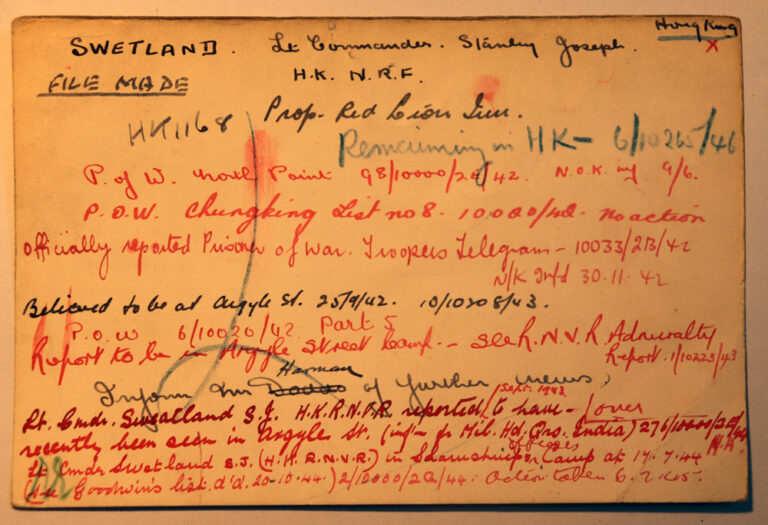
The stories and lives of those upended by the events in Hong Kong are detailed in Series CO 1070, recently catalogued by volunteers at The National Archives. The series comprises of nominal cards – or index cards used to record information – created by civilian internees and some prisoners of war who were seized following the invasion. Following the project, the cards are now catalogued by name of individual creating over 4,250 individual records. These include people like Joseph Swetland who took up arms against the invaders; Brenda Morgan who treated the wounded; and those interned, such as Dr Talbot who tried to get money for those in need. As the records show, their lives, and others, were forever changed.
Facing the horrors of war
The cards, handwritten, in pen, pencil and crayon, show that details of death or internment were often only discovered months or even years after the event. They show the desperate scramble for any information about survivors and are a testimony to the chaos that overwhelmed the island. Some cards bear good news: they are overwritten with scrawled details of survivors’ long journey home after the war, most by ship, some by air.
The cards include employment details. These read like a gazetteer of trades in Hong Kong before the war – all the businesses that you’d expect to find in a busy flourishing international port in 1940, such as dock workers; police and customs; a petroleum company; public bodies such as water works, the post office, the prison, schools and the university; food processing, such as a sugar refinery; and religious organisations such as missions, convents and a cathedral. There are some familiar names such as Thomas Cook and Sons, the Singer Sewing Machine Company, the Salvation Army, American Express, the Bata Shoe Company. As well as British and Chinese, there are people of many other nationalities.
Also listed are job titles: from brokers, tea traders, shipwrights, junk inspectors, accountants, shopkeepers and clerks to university lecturers, priests, nuns, teachers, doctors, and nurses.
The battle for Hong Kong
All these ordinary people were pitched into the full horrors of war when, just after the Japanese attack on Pearl Harbour, the Japanese launched their attack on the mainland defence lines around Hong Kong. These were held by British, Canadian and Indian Army Regiments, plus a few RAF planes. The waters around were protected by a few Navy vessels. These forces were supported by the Hong Kong Volunteer Defence Corps and Naval Volunteers, both young and old – some had served in the First World War.
Clerks, accountants, lawyers, and others left their day jobs and took up their guns to defend the Colony. People like Joseph Swetland, the proprietor of the Red Lion Inn, who was also a Lieutenant Commander in the Naval Reserve (CO 1070/7/351: pictured). They put up a brave fight, but the result was inevitable. Attacked by overwhelming forces, many paid with their lives, on the battlefield, or injured and then bayoneted by the Japanese who often did not take prisoners. Joseph’s card shows that he was captured and taken to a prisoner of war camp, and fortunately survived the war.
Nominal card, relating to Stanley Joseph Swetland. Catalogue reference: CO 1070/7/351
Caring for the injured
Many wives had enrolled as Voluntary Aid Detachment (VAD) Nurses. There were also military nurses: the elite Queen Alexandra Imperial Nursing Service (QAs), who were working at Bowen Road Military Hospital. As injured people flooded in, this hospital was soon under bombardment. Neighbouring buildings were pressed into service. One such was St Albert’s Convent under its New Zealand matron, Kathleen Thomson (CO 1070/7/468), where QA Brenda Morgan (CO 1070/5/463) was nursing. A direct hit killed Brenda and seriously injured Kathleen. Despite the dangers, nurses and doctors continued to work.
As the Japanese surged forward on Christmas Day, another hospital at St Stephen’s College, a former boys’ school, lay on the front line and witnessed terrible atrocities. Survivors gave an account after the war to the Tokyo War Crimes Trial. Nurses and doctors were attacked, some nurses raped, doctors and nurses murdered, patients bayonetted. Nurse Ida Andrews-Levinge (CO 1070/4/557) survived and gave testimony after the war: her testimony is in the Imperial War Museum.
The surrender
The surrender of Hong Kong on 25 December brought some small relief to the hospital. Surviving staff and wounded were rounded up to be interned. Elsewhere in the Colony, the cards show that surviving soldiers were taken as prisoners of war to terrible military camps across Japanese-held territory. Some died in transfer, including most of those shipped on the Lisbon Maru, which was sunk.
Most civilians were held at Stanley Road Camp. Although many families had been evacuated, usually to Australia, many, unaware of the danger, stayed too long. Whole families ended up in Stanley Road Internment Camp. Despite the conditions, there were even some marriages and births.
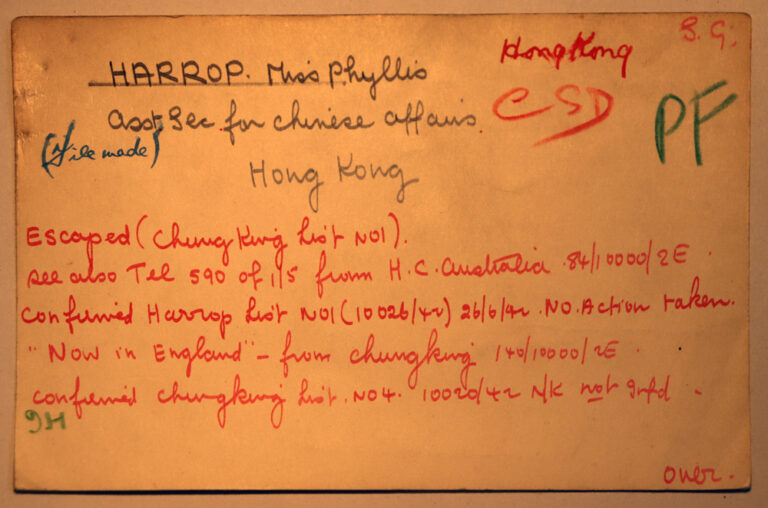
Few escaped – just surviving was challenge enough. However, for some their nationality protected them. Phyllis Harrop (CO 1070/3/438: pictured), a civil servant in Hong Kong, had been married to a German national. Like other government officials, she was not immediately interned but given administrative work by the Japanese. She did not tell the Germans she was now divorced and managed to get a pass, which enabled her to board a ferry and leave in January 1942. She went to Chungking, taking with her lists of the internees that she had been putting together under Japanese orders.
Nominal card, relating to Phyllis Harrop. Catalogue reference: CO 1070/3/438
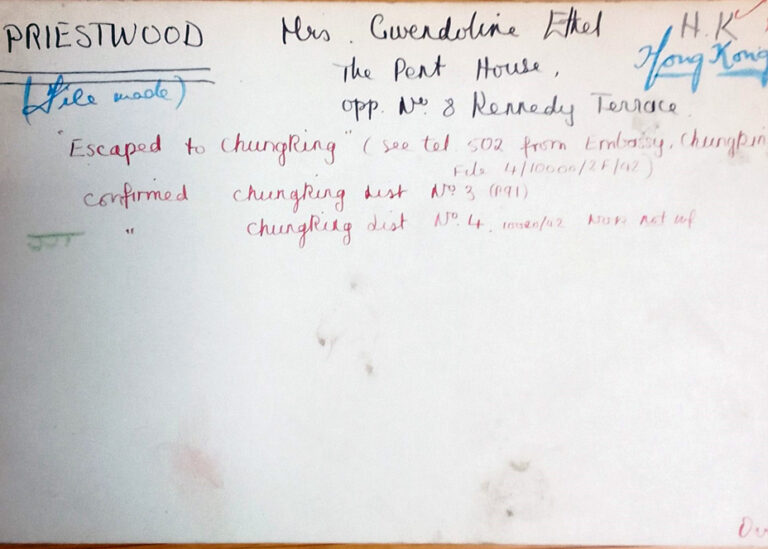
A few even escaped from internment. Police Superintendent Walter Thompson (CO 1070/7/455) and Gwendoline Ethel Priestwood, nee Fullbrook (CO 1070/6/398: pictured), a secretary and volunteer nurse, who met in Stanley Road internment camp and resolved to team up and escape. Thompson spoke Cantonese. Equipped with revolver, compass and map, they crawled under the barbed wire on 19 March 1942 and – helped by a fishing junk and the Chinese guerrillas – reached Free China. Hidden with her, Priestwood carried lists of the Stanley Camp internees to the British in Free China’s wartime capital, Chungking.
Nominal card, relating to Gwendoline Ethel Priestwood, nee Fullbrook. Catalogue reference: CO 1070/6/398
Getting supplies to Stanley
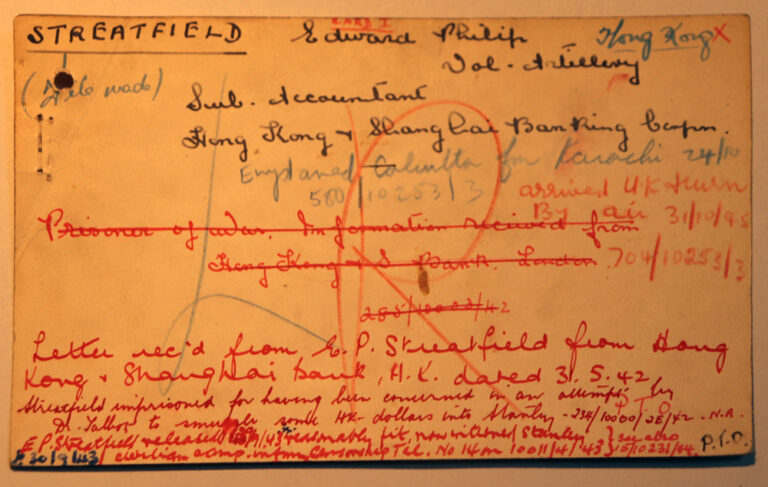
One group of civilians were not immediately interned. These were Hong Kong’s bankers, who were required by the Japanese to liquidate the banks. With enormous courage, several used the opportunity to get food and money to buy essential supplies into Stanley Road Camp. They included Sir Vandeleur Grayburn (CO 1070/3/221), Chief Manager of the Hong Kong and Shanghai Banking Corporation (HSBC), and Edward Streatfield, a senior accountant at HSBC (CO 1070/7/300 – pictured).
Some money was smuggled in by Dr Talbot via St Paul’s Hospital (CO 1070/7/365). Tragically Talbot was caught and with incredible courage, Grayburn and Streatfield approached the Japanese to say that they had given the money to Dr Talbot to improve conditions in the camp and that it was from American internees who had been repatriated in July 1942. Along with other brave souls they were imprisoned and tortured. Grayburn died but Talbot and Streatfield survived and were released to Stanley Camp in September 1943.
Nominal card, relating to Edward Streatfield. Catalogue reference: CO 1070/7/300
Further resistance
Others took resistance to the Japanese further. Charles Frederick Hyde (Ginger) (CO 1070/4/87) another banker, not only smuggled food but also listened to an illegal radio and was in touch with the Resistance. He was caught, imprisoned and beheaded by the Japanese on 29 October 1943. His wife Florence Eileen Hyde (nee Burgess) and their son Michael were interned but Florence died of cancer during her internment. Florence was friends with Lady Grayburn, wife of Sir Vandeleur, and she adopted Michael. They survived internment but Michael died in an accident in the 1950s.
Despite overcrowding, disease, malnutrition and the cruelty of their guards, most internees in Stanley Camp survived their grim ordeal. They found different ways to make their internment more bearable, some risking their lives to defy the Japanese.
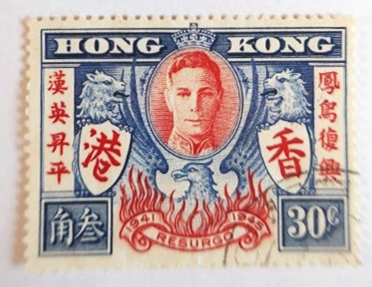
Edward Irvine Wynne-Jones’ victory stamp.
Edward Irvine Wynne-Jones, the Postmaster General (CO 1070/4/229), spent time secretly designing a victory stamp (pictured). He was helped in this by William Ernest Jones (CO 1070/4/243) – not a relation – but the chief draughtsman at the Public Works Department. After the war, Wynne-Jones took his hand-drawn stamp back to Britain and King George VI gave permission for this to be a special issue. The only change needed was the date: Wynne-Jones had over-optimistically put 1944 as the year of liberation.
Before the First World War began, the British Intelligence service was extremely small. On the outbreak of war, around 50 soldiers, police officers and civilians were called up by the War Office to form an intelligence team.
The Intelligence Corps was designed to develop strategies for the deployment of soldiers, fusing together information from a number of sources. This was intended to give the Army the upper hand on the battlefield, with increased knowledge of the enemy’s whereabouts.
The first operations saw members of the Intelligence Corps riding motorbikes onto desolate battlefields, into unused trenches and around areas where the enemy was suspected to have been.
One of the better-known spy-bikers was Second Lieutenant Rollerston West, who earned a Distinguished Service Order (DSO) for his exploits in 1914. Having ridden to the French village of Pontoise to retrieve maps left behind during the British Expeditionary Force’s (BEF) retreat, he discovered a bridge crossing the river Oise that had been prepared for demolition. The bridge was duly destroyed, delaying the German Army’s advance and safeguarding the BEF’s withdrawal.
The Intelligence Corps ran many other operations during the First World War, including placing soldiers behind enemy lines and protecting soldiers from enemy spies. Some parts of the Corps also worked with special psychology units, developing prisoner-of-war debriefing techniques in order to retrieve further information.
The First World War had a huge effect on the growth of the Intelligence Corps and it proved to be an essential formation for modern warfare. However, the Corps was not sustained during the inter-war era, and had to be rebuilt during the Second World War.



 Weevles Updates Disabled Bloggers Team