Every year, dozens of WWI soldiers’ bodies are found during building work of present day
Scientists from the Commonwealth War Graves Commission, based in northern France, are at the forefront of efforts to identify bodies that are still regularly found in northern France, along the former front lines.
Two unknown Scottish soldiers killed in World War One have been laid to rest in France after their bodies were found during work to build a hospital.
War detectives from the Ministry of Defence (MoD) were called in to try and trace the identities of the two men, who were thought to have died during the Battle of Loos in 1915.
They were among more than 40 soldiers whose remains were interred during a ceremony in the town, near the city of Lille, on Wednesday.
Hundreds of people, including Princess Anne, attended the burial service, organised by the MoD’s Joint Casualty and Compassionate Centre (JCCC) and the Commonwealth War Graves Commission (CWGC).
The battle, which saw British, Indian and French troops attempt to break through German defences in Artois, was the largest British attack of that year.
However, the attack was contained and repelled by German forces.
More than 59,000 soldiers from Britain and India died between 25 September and 8 October – an estimated 7,000 of whom were Scottish.
Ms Bowers said remains were being uncovered on a daily basis in Northern France and Belgium during construction projects.
The process of identifying the dead can take months, or even years.
The team start with the location their bodies were found, then look at any artefacts that have been found on them.
The team said it could offer families “closure” if they were aware of their relatives’ efforts during the conflict, or open a new strand to their family history if they did not know about their involvement. A representative said:
“We are looking for things like regimental shoulder titles, cap badges, bits of uniform, bits of kilt, boots to show they are British,”
“All of that narrows it down to hopefully the correct regiment. Then we look through war diaries to see that we had a regiment in that location at that time and then working out how many were missing from that regiment.
“Families either knew about that soldier and they have grown up knowing that their great-great grandfather was missing and killed in the war, or they knew absolutely nothing.
“But when they give us the DNA, they come on that journey with us for closure. I think they all become invested in the result.”
John Parr was born in 1898 in Barnet and grew up in North Finchley, in London. John joined a territorial unit of the Middlesex Regiment in 1912, lying about his age. He was only 14 at the time (five years younger than the legal age to fight), weighed 8.5 stone and was 5’3” tall. This evidence of his youth soon earned him the nickname ‘Ole Parr’ among his comrades.
Parr became a reconnaissance cyclist – a soldier who rode ahead to gather information on the advancing enemy. In August 1914, Parr’s battalion was stationed in the village of Bettignies, in northern France. Historians disagree about the cause of his death, but the most common account is that Parr was sent to find a missing unit and was killed by rifle fire on 21 August after encountering a German cavalry patrol.
His body was never identified. His mother wrote to Parr’s regiment repeatedly over the following years, asking to be informed of her son’s fate, but she received no information. The age given on Parr’s gravestone is 20. He was actually 17.
Private George Edwin Ellison
George Ellison, from Leeds, had been a member of the army as a young man before leaving to marry Hannah Maria Burgan and to become a coal miner. However, he was recalled to the army shortly before the outbreak of the war, serving with the 5th Royal Irish Lancers.
Ellison had survived four years of trench warfare, including fighting in the battles of Ypres and the Somme. However at 40 years old, he was shot while out on the outskirts of Mons and killed at 9.30am on 11 November 1918, a day we now mark as Remembrance Day.
Private Ellison died just hours before the war ended.
Despite the armistice being signed at 5am that morning, orders on the field were to keep fighting, and Ellison tragically lost his life just 90 minutes before the official call for peace.
The place of his death was the same location he had seen action for the first time, as part of the British Expeditionary Force retreating from Mons in August 1914.
He left a wife and a four-year-old son James, who had his fifth birthday just a few days after his father’s death.
Technically, Earl Kitchener was not a Great War General.
By the time of World War One, the former Field Marshal was serving in the government role of Secretary of State for War.
Prior to this, Kitchener had enjoyed one of the most distinguished careers in the British Army. He had served across the world, including in Egypt, Sudan, India, and South Africa.
By 1909, Kitchener had been appointed Field Marshal: the highest rank in the British Army.
Kitchener was one of the most famous men in the British Empire. His reputation as one of the finest soldiers of his era won him great renown. He even served as commanding officer of 55,000 or so troops stationed in London for the Coronation of King George V, acting as one of the swords tasked with guarding the new monarch during the ceremony.
While storm clouds were gathering over Europe, Kitchener was serving as the British Agent and Consul-General in Egypt. Prime Minister Herbert Asquith recalled the former Field Marshal in August 1914 and quickly appointed him Secretary of State for War.
Interestingly, Kitchener was one of the few who foresaw a long war. It wouldn’t be all over by Christmas as others were predicting.
He may not have been commanding soldiers in the field but Kitchener’s influence over the British Army during the war’s early stages was significant.
The small professional British Expeditionary Force had been obliterated during the war’s earliest campaigns. It was up to Kitchener, who predicted Britain would have to use all its manpower “to the last million”, to recruit and train new British armies from scratch.
The solution was the creation of “New Armies” drafted from civilian conscripts.
A wave of recruitment swept over the UK, spurred on by the now iconic “Lord Kitchener Wants You” poster designed by Alfred Leete.
Ordinary men and women signed up to either fight or support the war effort by the million.
While this allowed the British Empire to eventually field the largest armies it have wielded up to that stage, the “New Armies” were not without their drawbacks.
One problem was the Pals Battalions. These were units made up of young men from close local communities, be they towns, villages, or even streets.
They may have been good for morale and creating tight-knit bonds among soldiers, but Great War battlefields were brutal. Entire communities were tragically wiped out, sometimes within the space of several minutes.
Despite his enormous popularity with the public, Kitchener was not without criticism.
His running of the war effort came under fire following costly setbacks in the Dardanelles at Gallipoli and Loos, Belgium, and his handling of the munitions crisis. Gradually, his powers were reduced as others took up the burden of steering the course of the war, but he would be relied on for more diplomatic purposes.
In 1916, Kitchener was appointed to lead a delegation to Tsarist Russia to discuss armament supplies and support for the beleaguered Russian Army.
Together with France and Britain, Russia was one of the Entente Powers opposing Imperial Germany and its allies.
On the 5th of June 1916, Kitchener and his delegation left Scapa Flow naval base, Scotland, aboard HMS Hampshire. The ship and its passengers were headed for the Russian port of Arkhangelsk.
A misreading of weather reports, and intelligence indicating German submarine activity in the North Sea, spelled trouble for Hampshire from the off.
Conditions were harsh with Hampshire battling its way through a force 9 gale.
Suddenly, the steamship hit a mine laid by the newly launched U-75. Terrible damage was caused to the ship’s hull.
HMS Hampshire and 737 souls sank beneath the waves in rough seas west of the Orkney Islands. Earl Kitchener was one of Hampshire’s casualties. Only 12 men survived.
Eyewitnesses spotted Kitchener stoically standing on the ship’s quarterdeck for the 20 minutes it took Hampshire to sink. His body was never found.
Kitchener’s death rocked the British Empire. He was an exceptionally popular figure with the British public.
Upon hearing the news, one sergeant on the Western Front is recorded to have said: “Now we’ve lost the war.”
Field Marshal Douglas Haig, who would go on to become overall commander of the British Army, said: “How shall we get on without him?”
The Entente Powers would go on to win a costly victory, but the death of Kitchener was a massive blow to British morale.
Herbert Kitchener, 1st Earl Kitchener, is commemorated on the Hollybrook Memorial in Southampton, UK.
Brigadier-General John Gough VC
Upon his death on 22nd February 1915, many in British high command were absolutely devastated when John Gough, Johnnie to his friends, passed away.
Gough was known as a fighting general, a man of great determination and grit but also tempered by realism and pragmatism.
His contemporary General Sir George Barrow described Gough as “a twentieth-century Chevalier Bayard”, referencing the 15th-century French knight Pierre Terrail. Terrail was known as a paragon of virtue and duty, something which, according to his friends and colleagues, Gough embodied.
Gough is famous for a remark made in November 1914 during a German attack.
“As he watched the enemy swarming over a low ridge one of his staff said the fight was decided,” historian Ian F.W. Beckett reports in his book Johnnie Gough V.C. “Gough turned with his eyes ablaze and exclaimed: ‘God will never let those devils win’”.
It’s said this quote completely summed up Gough’s character and attitude.
Further reinforcing his reputation was how Gough earned the Victoria Cross as a 31-year-old Major in the Rifle Brigade while serving in Somaliland.
On 22nd April 1903, Gough and his column of troops were attacked during the Third Somaliland expedition.
The British managed to conduct a solid defence and a fighting withdrawal but some men were left behind. Gough returned to the front to aid Captains William George Walker and George Murray Rolland in transporting a mortally wounded officer out of the firing line.
The wounded man was hoisted aboard a camel but was tragically, fatally wounded and died.
Rolland and Walker were given Victoria Crosses for their actions. Gough downplayed his role in the incident, but it was later revealed the then Major was also worthy of the Commonwealth’s highest military honour.
The Brigadier-General was often used as a sounding board for Field Marshal Douglas Haig, having travelled to France with I Corps of the BEF of which Haig was commander. He continued to be Haig’s number two when Haig took up greater command responsibilities as the war progressed.
Gough was considered a constructive yet not uncritical voice and had a good understanding of how Haig’s mind worked.
Many of his contemporaries believed that if Gough had gone on to command a division, he would have reached even higher rank. Indeed, he was poised to take command of one of Kitchener’s New Armies in February 1915.
At this time, Gough was preparing for the attack on Neuve Chapelle. This action would result in small territorial gains for the Entente but incur just shy of 13,000 British and Indian casualties.
Gough was expected to take full command of one of the New Army divisions in March 1915. He would have achieved the rank of Major-General had this come to pass. Sadly, it was not to be.
On 20th February 1915, Gough headed to the front to visit the 2nd Battalion of the Rifle Brigade at Fauquissart, some 3 km north of Neuve Chappelle. His plan was to take lunch at the HQ Officers’ Mess there, before travelling back to the UK to take command of his new division.
While inspecting the line, Gough was hit in the chest by a ricocheting German bullet. The Brigadier-General was mortally wounded.
While it was not unusual for senior officers to get hit by sniper’s bullets, this particular incident was essentially down to massive bad luck. It’s thought that the bullet came from a single shot at a distance of 1,000 yards from the British front line, deep within German territory. It’s only by chance Gough was hit.
A field ambulance unit ferried Gough to Estaires, around 7 km from the frontline, where Gough succumbed to his wounds. He died on the morning of 22nd February 1915.
He was posthumously knighted and gazetted as a Knight Bachelor. This added to a long list of honours Gough had acquired over his highly distinguished military career.
Albert Ball was one of the United Kingdom’s highest-scoring air aces.
Albert Ball (1896-1917) was a British fighter pilot and, with 44 official victories, was one of the United Kingdom’s highest-scoring air aces. In 1914 Ball enlisted in the British Army before transferring to the Royal Flying Corps in 1915. Following an intense aerial fight over the Western Front in May 1917, Ball crashed and died. He was posthumously awarded the Victoria Cross, Britain’s highest military award for bravery in the face of the enemy.
Andrew Beauchamp-Proctor VC
Andrew Beauchamp-Proctor was South Africa’s top flying ace during the First World War.
Andrew Beauchamp-Proctor (1894-1921) was South Africa’s top flying ace during the First World War. Following the outbreak of war in 1914, Beauchamp-Proctor served with the Duke of Edinburgh’s Own Rifles in the German South-West Africa campaign. Following an honourable discharge in 1915, he returned to university before enlisting with the Royal Flying Corps in March 1917. He won all of his 54 victories in 1918 and was awarded the Victoria Cross the next year. He was killed in a flight training accident in 1921.
William ‘Billy’ Bishop VC
William ‘Billy’ Bishop was Canada’s highest-scoring fighter pilot and one of the war’s top flying aces.
William ‘Billy’ Bishop (1894-1956) was Canada’s highest-scoring fighter pilot and one of the war’s top flying aces. Bishop served with the Canadian Expeditionary Force before transferring to the Royal Flying Corps in December 1915. He is credited with 72 victories and was awarded the Victoria Cross for a solo attack on a German aerodrome on 2 June 1917. Bishop survived the war and went on to become an Air Marshal in charge of recruitment during the Second World War.
Georges Guynemer
Georges Guynemer was a French fighter pilot and air ace credited with over 50 victories over the course of his service.
Georges Guynemer (1894-1917, pictured in the car) was a French fighter pilot and air ace credited with over 50 victories over the course of his service. He started out as a mechanic before becoming a pilot in April 1915. He died on the Western Front in September 1917. Although not his country’s top flying ace, he became France’s most popular and revered ace of the First World War.
Max Immelmann
Max Immelmann was the first German air ace of the First World War.
Max Immelmann (1890-1916) was the first German air ace of the First World War. His death in June 1916 caused such shock that another German air ace, Oswald Boelcke, was temporarily grounded for fear of the effect successive pilots’ deaths would have on home morale. Immelmann developed an aerial loop-and-roll manoeuvre that allowed pilots to dive behind a pursuing fighter. This became a standard technique throughout the war and is still known as the ‘Immelmann Turn’.
Edward ‘Mick’ Mannock VC
Edward ‘Mick’ Mannock was Britain’s highest scoring fighter pilot of the First World War.
Edward ‘Mick’ Mannock (1887-1918) was Britain’s highest scoring fighter pilot of the First World War. He served in the Royal Engineers before transferring to the Royal Flying Corps. Mannock was killed over the Western Front in July 1918 and posthumously awarded the Victoria Cross the following year. He was originally credited with 73 victories, but this figure has since been debated. Regardless, Mannock was one of the most successful air aces of the First World War.
James McCudden VC
With 57 victories, James McCudden was one of the highest scoring British fighter pilots of the First World War.
James McCudden (1895-1918) joined the Royal Flying Corps as a mechanic in 1913. With 57 victories he went on to become one of the highest scoring British fighter pilots of the First World War. McCudden was awarded the Victoria Cross in the spring of 1918 and after a brief rest was posted back to the Western Front to take control of his own squadron. He was killed in a flying accident on 9 July.
Manfred von Richthofen aka ‘The Red Baron’
Manfred von Richthofen, also known as the ‘Red Baron’, is perhaps the most famous air ace of the First World War.
Manfred von Richthofen (1892-1918), also known as the ‘Red Baron’, is perhaps the most famous air ace of the First World War. He was the highest-scoring ace of the war with 80 official victories. After serving in the German Army on the Western Front, Richthofen transferred to the air service in May 1915 and was later given command of the ‘Flying Circus’, a unit comprised of Germany’s elite fighter pilots. He was killed in action in April 1918 and buried by the British with full military honours.
Albrecht, Duke and Crown Prince of Württemberg (Albrecht Maria Alexander Philipp Joseph; 23 December 1865 – 31 October 1939) was the last heir presumptive to the Kingdom of Württemberg, a German military commander of World War I, and the head of the House of Württemberg from 1921 to his death.
Albrecht entered the armies of the Kingdom of Württemberg and the German Empire in 1883, rose quickly through its ranks, and became the heir apparent to the throne of Württemberg.
Albrecht had become heir presumptive to the Kingdom of Württemberg following the death of his father in October 1917, but the German Empire‘s World War I defeat and the abdication of his cousin King Willhelm II of Württemberg following the German Revolution prevented him from ever succeeding to the throne. He became head of the House of Württemberg after the death of Wilhelm on 2 October 1921.
Erwin Rommel, called “the People’s Marshal” by his countrymen, was one of Adolf Hitler’s most successful generals and one of Germany’s most popular military leaders. However, after he was implicated in a plot to overthrow Hitler, Rommel took his life on October 14, 1944, at age 52, in Herrlingen, Germany.
Early Life and Military Career
Rommel was born in Heidenheim, Germany, on November 15, 1891. The son of a teacher, Rommel joined the German infantry in 1910, and fought as a lieutenant in World War I, in France, Romania and Italy. He rejected advancement through the regular channels, choosing to remain in the infantry after the war ended.
In February 1940, Rommel was named commander of the 7th Panzer division. The following year, he was appointed the commander of German troops (the Afrika Korps) in North Africa. Italian losses to the British in North Africa led Adolf Hitler to send Rommel to Libya, where he laid siege to the port city of Tobruk from April to December 1941. Repulsed by the British, he returned with the Afrika Korps in June 1942, and finally took the city; this attack became known as the Battle of Gazala. Not long after, Rommel was promoted to field marshal by Hitler.
Famed for leading his army from the front rather than the rear, as most generals did, for a time, Rommel enjoyed an unbroken string of successes, and earned the nickname the “Desert Fox” for his surprise attacks. He also became known among his countrymen as the “the People’s Marshal,” gained popularity in the Arab world as a liberator from British rule, and was regarded as one of Hitler’s most successful generals and one of Germany’s most popular military leaders.
Field Marshal and Defeat Near El Alamein
Field Marshal Rommel’s success would be short-lived, however. Only five months after the Battle of Gazala, in the fall of 1942, British forces recaptured Tobruk at the (Second) Battle of El Alamein, which took place near the Egyptian city of El Alamein. With North Africa lost, in 1943, Rommel was recalled to Europe to oversee the defense of the Atlantic coast.
In early 1944, Rommel was entrusted with the French Channel coast’s defense against a possible Allied invasion. Around this same time, Rommel began to express doubt about both Germany’s reasons for participating in the war and Hitler’s capability of peace-making, and the field marshal was told by a group of friends that he should lead the nation once Hitler was overthrown. Rommel dismissed the suggestion, unaware at the time that the men had been planning to assassinate the German leader.
Implicated in 1944 July Plot and Death
On D-Day—June 6, 1944—156,000 Allied troops landed in Normandy, and invading forces eventually reached 1 million. After the Allied invasion and the resulting push across France, Rommel knew that Germany would lose the war and discussed surrendering with other officers.
After the 1944 July Plot—an assassination attempt against Hitler that occurred on July 20, 1944—Rommel’s contact with the conspirators was revealed, implicating him in the plot to overthrow Hitler. Rommel was then offered the option of taking his own life to avoid a public trial and protect his family.
On October 14, 1944, German officers took Rommel from his home to a remote location. There he took his own life by biting into a cyanide capsule. He was 52 years old. Rommel was given a full military burial.
World War I and its aftermath produced a particularly vulnerable group of child victims: war orphans. This group included children whose fathers had fallen in battle, who had disappeared, or who had not (yet) returned home. Most of Europe’s war and postwar societies witnessed the massive presence of these child victims, and responded in various ways to rescue them and secure their future survival. This article offers an exploration of the ways in which the Hungarian part of the Austro-Hungarian monarchy, and then later the post-imperial Hungarian state, became invested in providing care and relief to Hungarian war orphans. In contrast to other groups of child victims, whose parents were blamed for neglecting their parental duties, war orphans as the offspring of ‘war heroes’ profited from the public appreciation of their fathers’ sacrifice for the war effort and the Hungarian nation. The public discourse in the contemporary Hungarian media offers a glimpse into the emergence of a new public visibility of these child victims and of a new recognition of the societal obligation to care for them. Exploring World War I and its aftermath as a telling example of political transformation in the 20th century, the article showcases how war orphans were taken to personify essential notions of war- and postwar destruction, while also capturing visions of postwar recovery. It furthermore examines how welfare discourses and relief practices for Hungary’s war orphans were embedded in contemporary gender norms, notions of proper Christian morality and ethnic nationalism. On this basis, the article assesses the ways in which the case of Hungary’s war orphans not only mirrors the professionalization but also the fundamental transformation of child welfare in the aftermath of World War I.
In 1916, a contemporary journal article drew attention to the cause of Hungary’s war orphans, whom it described as ‘defenceless souls, who are unable to advocate for their own destiny’. The state, the article insisted, had the duty ‘to provide for their lives, their education and their future just as much as a father who had lost his life on the battlefield for the future of the nation’. Although the Hungarian state had been involved in the care for orphans officially since 1898, it was the period of World War I and its aftermath which triggered a new scale of abrupt orphanhood. During this period of political rupture and transformation, the Austro-Hungarian Empire was not alone with facing the massive challenge of orphaned and unsupervised children. Most of Europe’s post-war societies were confronted with this particularly stressing social challenge: the need to care for hundreds of thousands of war orphans. Tammy Proctor for instance speaks of 1 million orphans in post-war France.
The reasons for children’s orphan state during and after the war were manifold. The most frequent cause was the death of soldiers in battle, their captivity as prisoners of war (POWs), or their disappearance in the turmoil of war. While the violent conflict killed soldiers, who were often fathers, in all combatant countries, also population displacement both during and after the war tore families apart and left children to be cast off from their birth families. In those tumultuous war and post-war years, it was rarely easy to identify the causes of children’s orphanhood. Furthermore, all those children were considered ‘war orphans’ (hadiárvák) in whose families the head of the family had died or disappeared and could no longer provide the family with an income. Even ‘temporarily abandoned families’ and their children, where the father had been drafted to the war, were often treated the same as those families and children where the father had died or disappeared permanently. This meant that the majority of the so-called war orphans were in fact either half-orphans, as most mothers were still alive and around, or just temporarily fatherless. Some war orphans were indeed full orphans, who had lost both parents during the war and post-war years.
In Central and Eastern Europe, it was not just warfare which caused the death and disappearance of fathers. More specifically, the abrupt and violent dissolution of the Austro-Hungarian, the Russian, and the Ottoman Empires in the postwar years produced masses of unsupervised and orphaned children.7 The dissolution of the multi-ethnic Austro-Hungarian Empire produced between 400,000 and 450,000 Hungarian refugees, who left the territories that Hungary lost to Austria, Slovakia, Romania, and Yugoslavia. Years before the signing of the Treaty of Trianon on 4 June 1920, the Hungarian authorities had already been challenged by the abrupt and massive migration of large parts of its population from the occupied territories, which was caused not only by the war but also by the threatened or real loss of one’s home, withdrawal of one’s citizenship, forced displacement, and the threat of unemployment. Hungary also went through several political crises: a Bolshevist Revolution led by Béla Kun in spring 1919 and a period of White (antisemitic) Terror between 1919 and 1921. On top of this, Hungarians had survived an economic blockade, which lasted until 1919 and a post-war hunger crisis. The combination of these events, together with Hungary’s defeat in the war, exacerbated children’s destitution. In addition, especially the civilian population of Budapest, Hungary’s capital city, had to cope with large unemployment, a housing crisis, and the Spanish flu in the post-war years. This historical constellation of events both triggered and laid bare children’s particular vulnerability in times of war and during fundamental political transformations.
In the midst of this global conflict, war orphans were essentially becoming the war’s ‘indirect victims’,as they were not directly involved in the violent conflict. It was due to the death, wounding, disappearance, or absence of their fathers that they had become victims at all. Abruptly orphaned or half-orphaned, these children were left to face major challenges, yet they also gained a new public visibility, which was essential for assigning increased and long-term responsibility to the Hungarian state to provide welfare for the war’s victims. Hungary’s war orphans furthermore gained a new symbolic value, as they testified to the fact that their fathers had sacrificed their lives for the national cause. The state saw it as its moral duty to care for the descendants of its ‘war heroes’. However, it was also driven by fears of the decline of the nation. If the state would not care for those orphaned children, pronatalist notions that were widely circulating at the time altered the way war orphans were perceived and incorporated into emerging welfare state’s considerations.
A Hungarian article from 1918 described the war as a ‘terrible storm [which] took its toll on the fittest and healthiest human material’. Although it was indeed an economic burden on the state, rescuing war orphans was considered to be both necessary and worth the effort. Count Pál Teleki, who served in 1919 as a Hungarian delegate to the Paris peace conference and who became in 1920 Prime Minister of Hungary, argued in 1918 for the rescue of ‘as many’ war orphans and children of war invalids, ‘as are necessary and useful to the country’. This new approach to orphans, which judged orphans as valuable and not detrimental to the state, was shared by many European states at the time. This shifting approach to orphans uncovers how the state was becoming increasingly involved with the care of those segments of its civilian population that had suffered from the direct and indirect effects of the war.
Engaging with contemporary notions of the war orphans’ particular ‘deservingness’ and the state’s obligation to provide relief, this article offers a case study of how World War I altered the way in which European societies dealt with their child victims.Through the lens of a study of war orphans in Hungary, this article contributes to research on the impact of war on children and on the role of the war’s victims for the expansion and professionalization of the modern welfare state in post-war Europe. In concrete terms, the article analyses why and how the Hungarian state (both imperial and post-imperial) shifted its attention to the country’s war orphans, a group of children to which it felt a special responsibility to offer relief and care in this period of political and social transformation. It asks how these children gained such particular social significance in contemporary public discourses. It argues that these orphaned children had great symbolic value in highlighting the destructive effects of war on Europe’s civilians.Furthermore, they were employed to envision the recovery of the harmed collective body of Hungary’s post-war population through the professionalization of welfare. To demonstrate how the orphans’ social value was publicly brought out and how their destitution was practically addressed, the article explores various relief measures for the orphaned children. Relying on contemporary Hungarian discourses, the article investigates the ways in which the destitution and relief of Hungary’s innocent ‘children of the war’s heroes’ was used to publicize the fragile constitution of Hungary’s civilian population.
1. Embodying the post-war
The condition of Europe’s war orphans is the quintessential representation of the war’s invasion into private lives and how it compromised futures. Contemporary eyewitness reports testified to the frailty and poverty of war orphans in Central and Eastern Europe. In his monograph War’s Aftermath (1940), the American soldier William R. Grove, who went to Poland as a relief worker, recalled the appalling fragility of children in the aftermath of World War I. He was incensed that ‘certain children should have to suffer as did those in the war-torn areas, while others should have all of the comforts in the world’, finding it hard to accept. And yet, he observed, ‘there they were, these orphans of the borderland, hungry and cold, with inadequate resources in their own country to save them’. He confessed that people like himself who made frequent inspection trips to the distressed regions—in particular to the borderlands—would ‘always be haunted, in our memories, by the pathetic sight of these children’.
As an example, he recalled an encounter with orphaned children in Central Europe:
They looked like little old men and women [. . .] Many of them seemed to carry the troubles of the years on their grave little faces. There were no smiles—only silence. [. . .] These little fellows had gone through more suffering in their short years than most men endure in a lifetime. That is what war did to the children. It was not through neglect by the parents. On the war’s borderland men starved to death that their wives might live a little longer and sustain a child or children. To have food for their children, women went so long with little or no food that they finally succumbed. Parents on that borderland struggled, suffered and died for their children. Imagine the feeling of a mother who sees her children wasting away without a morsel of food obtainable by any possible sacrifice.15
While the borderlands in Central and Eastern Europe especially saw a growing number of orphans, towns and cities in the region were also challenged by fatherless children roaming the streets. They witnessed the presence of children whose physical appearance captured the war’s and the post-war crises’ impact on civilians. In May 1919 ‘hordes of old-world children’, meaning those children whose families had once belonged to the great European empires, ‘dressed in the fragments of an old shirt, or a piece of gunny-sacking’, homeless, diseased, and hungry could be found on the streets in Serbia. Most post-imperial states shared this destiny. In Hungary, already by the end of May 1915, there were 13,395 war orphans registered, of whom 98% could remain with their families, while the others had to be institutionalized. In January 1916, the number was 24,644, of which approximately 93% could stay with their mothers and 3% came to be placed in institutions. By March 1917, one article speaks of 82,000 war orphans. In 1922, the National Military Welfare Office (Országos Hadigondozó Hivatal) registered more than 100,000 war orphans in Hungary.
As Hungary lost two-thirds of its territory, Hungary’s cities and especially its capital became the destination point for many uprooted and disrupted families. In the post-imperial Hungarian state of 1920/1921, there were ‘more than 50,000 young vagrants on the streets of Budapest’, who were considered a serious social problem.Many of these child vagrants were war orphans whose fathers had died in battle, while others had fled from lost Hungarian territories.23 The physical appearance of war orphans on the streets of Budapest was nothing particular in the Central and Eastern European region. Also in the Union of Soviet Socialist Republics (USSR), newly founded in 1922, one could encounter various types of homeless children out and about, ranging from ‘displaced children, abandoned youths, juvenile delinquents, [and] foundlings’ to ‘orphans, strays, hooligans, tramps, vagrants and vermin’.
Yet, these disadvantaged children did not go unnoticed. They played their part in altering the way care and welfare were newly conceived and implemented. Mischa Honeck and James Marten argue that both World Wars manifested the ‘complex and seemingly contradictory relationships between children and armed conflict’: as children, on the one hand, they were supposed to be sheltered from the war; on the other hand, they were actively drawn into the war effort and directly and indirectly affected by the violent conflict.
When it came to the impact of the war on children’s need for additional care, Lydia Murdoch argues in the case of Britain that the Great War ‘not only brought a different population of children into state and charitable institutions’, namely, orphaned children who had often belonged to the better-off families but also those who had lost (parts of) their families. It also ‘precipitated a transformation’ not only ‘in the public perception of all poor parents’, but also of disabled, displaced, disappeared, and absent parents, no longer demonizing them but instead recognizing their contribution to the war effort.26
Consequently, as Pierluigi Pironti argues, the Great War uncovered an emerging ‘nexus between the warfare state and the welfare state’, in so far as the ‘necessity to assure the efficiency of production and to safeguard the home front increased the public role in the field of social relief to include a much wider range of citizens’. Eve Colpus writes that the war had ‘diverted [. . .] a dormant spirit of social service into the causes of patriotism and peace’ while ‘expanding [. . .] professionalized approaches to social work’.Although prior to the ravages of war Hungary had been far from backward in the field of children’s protection, the war simultaneously triggered immense suffering among the child population, incapacitated the existing child protective institutions and triggered the creation of new welfare institutions for war-affected civilians, including child victims.
With the increasing visibility of war orphans’ daily suffering, a new awareness was spreading throughout Europe, which saw it necessary to care for Europe’s war orphans as an important part of the larger issue of providing for the ‘masses of individually affected war victims’ who were ‘the visible relics of destruction’.Not only were disabled veterans considered relics of destruction, but also Europe’s war orphans mirrored how the war had destroyed families and compromised children’s private lives. Unlike most other social groups, they could not fend for themselves, and so, as Michael Geyer argues, a new peace order had to be made in such a way that the victims of the war could feel welcomed home and cared for.Consequently, victim status was not only confined to the war-disabled veterans but also to all those widows who had become sole breadwinners for their families, and all those children who had lost their fathers or mothers, or both.
2. Envisioning relief
The war’s orphans as indirect war victims embodying the endangered future of most European states were considered worthy of rescue. On their behalf, widespread solidarity for these victims was shown through fundraising among most war and post-war populations. For instance, in 1917 the American Red Cross called upon the American people to help her French allies, claiming that ‘it is our first duty to help them rehabilitate themselves. We must help their orphans, their widows’.To help France’s orphans, in June 1918 each unit of the American army abroad ‘adopted’ one French orphan, ‘so to have a little French child as a mascot’, using the children as a means of ‘very slight restitution to France for all that we [the US] owe her’.
The junior division of the American Red Cross also raised money among school children in the United States to help feed and educate the thousands of children whom the war had left orphaned.The Swiss Red Cross delivered 200 kg of condensed milk and 100 pairs of winter shoes to Hungary’s orphans. Other European states felt obliged to replace the orphan’s fathers and families. This was not an entirely selfless endeavour because as Pierluigi Pironti writes, ‘securing adequate support for war orphans meant possibly providing them with the means to restart the national economy at the end of the conflict’. Helping Europe’s war orphans to physically recover mirrored the attempt of various states to help their economies and populations to recover from the war and its aftermath.
In Hungary, the care for the ‘orphaned and unsupported children of those fallen in the war’ and the ‘families of the more seriously injured invalids’ became one of the principal duties of child protection during and after the war. Already in 1915, Dr Béla Kun, a contemporary child welfare worker of the same name as the Hungarian revolutionary, had drawn attention to the condition of Hungary’s war orphans. Kun recommended that the state provide relief in three ways: first, it should see to the orphans’ material needs; second, it should invest in providing a moral and healthy upbringing for them; and third, it should help them become financially independent by training them for a profession. He argued that orphans should be entitled to child welfare benefits. If the state saw it as its duty to take over the care of waifs, then war orphans’ rights to governmental protection should be even more comprehensive.
Kun even differentiated between the waifs from the ‘questionable elements’ of Hungary’s society and the war orphans who had a background of ‘proper family circumstances’ that had only been ruined by the war. Provisions for war orphans should include ‘a healthy place to live, rich and nutritious food, adequate health care, schooling, religious-moral education and education for work’. From the ‘perspective of the future of the entire nation’, these provisions should ultimately be extended to all children, orphaned or not.Due to the material and economic suffering of the post-war state, the Hungarian government was not yet ready for such a large-scale undertaking. But it could start with care for the war orphans.This would establish institutions and social structures that would serve as a foundation for the extension of the peacetime welfare system.
By 1916, the ‘care for the war’s orphans’ was deemed a task of paramount importance that should be a central concern of the Hungarian state. It was argued that such a task could not be left to society.The rescue and care of orphans was turning into ‘one of the most important and most pressing issues for society’. In that same year Dr László Zombory, a Catholic priest, wrote a booklet on the question of ‘Child Protection during the War’ and concluded that the war had turned the protection of abandoned and orphaned children into a great social task that the state should urgently address. When fathers were absent on the front or had died from diseases or on the battlefield, state and society had a ‘moral duty’ to see to their children. By 1917, it had become clear that ‘the longer the war lasted’, the ‘more widows and orphans in the country’ and ‘the more the price of any food and other basic commodities [would] [. . .] rise’. Yet, it was criticized that Hungary’s ‘high society’ was ‘hardly concerned with the future of war orphans’, despite its great involvement in war-related charity. Still in 1918, a newspaper article insisted that the Hungarian state and society at large should make up for this great loss ‘by properly [. . .] caring for the abandoned’. They had a duty to rescue the neglected and impaired war orphans. In response to ‘the great loss of human life’, contemporaries held the state accountable for taking up the ‘double duty to ensure the physical and mental development of the younger generation’.Thus, the state was called on ‘to fill the gap which the fathers’ deaths had created’ lest ‘the moral and social development of a whole generation be damaged for good’.
3. Initiating relief
On 8 March 1917, the Hungarian government established the National Military Welfare Office. It was considered the ‘honorary duty of the nation’ to provide for those who had ‘sacrificed their physical integrity and lives on the battlefield’ and those they left behind, namely, all war invalids, widows, and war orphans.It was headed by Count Pál Teleki and was established to oversee the relief of invalids and their families, which also included the care of war orphans. Teleki was able to cooperate with the Ministry of the Interior and make use of social structures and institutions that had already been established for the care of waifs.57
While the care of orphans had been organized since the early nineteenth century through the orphanage system, the árvaszék, the war-related orphans were handled by the National Military Welfare Office. What remained important was the close cooperation between this new type of welfare organization, whose establishment had been triggered by the war, and charity organizations. An article from March 1917 claimed that the creation of such national public health, welfare, and charity institutions would also need to be widely supported and ‘deeply rooted in society’ if they were to function in the long run. This understanding of care for those in need was based on the conviction that it would remain ‘soulless’ if it was not supported by the personal and financial involvement of all those who had the means to do so.
In 1918, Pál Teleki explained in his book Social Politics and War Relief why the expansion and coordination of war-related welfare were so necessary. Such welfare, which included the relief of invalids, widows, and war orphans, had to become an urgent, untested ‘mass experiment’ that was absolutely essential due to the increasing numbers of war victims.As the war had ‘greatly increased the number of people in need’, Teleki wrote, and as ‘charitable aid had been largely unorganized’ before the war, the country needed a more centralized approach to war-related welfare which would organize relief countrywide. The reason for the need of a national welfare infrastructure was not that ‘the misery caused by war is no longer a charitable problem in its own right’, according to Teleki, but that it had become ‘a problem of the national economy’, which is why it would need to be solved by the state. This joint effort should utilize ‘all state or municipal institutions and agencies, all associations for various purposes’ to work together. And it was up to the state ‘to provide the big guidelines and solid foundations’ for this welfare institution, which would then divide its work into ‘a million smaller tasks’ that comprised infant care for war orphans, dairy kitchens, day care homes, kindergartens, cloth and shoe deliveries, employment for war widows [and] health care for the disabled’.
Due to the difficult economic situation of Hungary at the time, Teleki was also driven by the conviction to change the character of aid. Instead of just providing money, which would only help temporarily, he imagined war-related welfare to have longer lasting effects on the recipients.Pursuing these new notions, the National Military Welfare Office organized and coordinated war-related welfare. Still, this new, emerging type of welfare was closely intertwined with existent types of charity. When it came to the war’s victims, there was a widespread ‘affection for orphans in every section of society’ (but especially individuals of the better-off classes) and philanthropic associations were in a position to support in various ways. On 1 October 1920, for instance, a charity event was organized in Budapest’s English Park for the benefit of veterans, which Budapest’s orphans could attend as pupils Archduchess Magdolna, the youngest daughter of Archduke Joseph, attended the event and joined the orphaned children, thereby creating a direct connection between Hungary’s imperial elite and the country’s afflicted youngsters. Visuals of such events were printed in the contemporary media, publicly acknowledging the elite’s donations and encouraging further financial help from those who could afford it. Donations for Hungary’s war widows and war orphans were even collected in Austria. On 12 January 1918, a large concert was held in Vienna and 100,000 crowns were collected to be sent to the Hungarian Prime minister Sándor Wekerle for the benefit of Hungary’s war widows and orphans.
Figure 1. ‘The war orphans’ [‘A hadiárvák’], in: Tolnai Világlapja XX (October 1, 1920) 23, 4. Image is in the public domain.67
Another initiative came from the National Association of Veterans, Widows and War Orphans (Hadirokkantak, Hadiözvegyek és Hadiárvák Országos Nemzeti Szövetsége), which had been newly established in 1920 by the Minister of Interior. Serving as a new governmental body that represented the state’s effort to centralize and professionalize the relief of the war’s victims, this association still relied on private funding and called up on all ‘socially and financially qualified individuals’ who could help this association to achieve its major goals.National festivities in particular were seen as an ideal moment to raise funds for such relief endeavours. On 7 December 1920, it made a public appeal to all pupils and parents of one particular school, asking them to donate Christmas presents of ‘clothing, food, books, toys and money’ for the ‘sick war orphans and the children of disabled veterans’.
The Hungarian League of Child Protection (Országos Gyermekvédő Liga), one major child welfare organization at the time, also joined efforts with already existing philanthropic and child protection associations to explore ways of caring for the war orphans. By 1920, the League was providing financial support, foodstuffs, and clothes for 1400 war orphans living with their mothers. Relief for war orphans was often combined with relief for war widows and war invalids. Joint relief collections were also organized for these groups. Contributions also came from individuals. In 1922, Endre Liber, the metropolitan governmental refugee commissioner in Budapest, personally arranged a 25,000-crown grant to Budapest’s József boys’ orphanage to support orphaned children of refugees from the cut-off regions.The League was prepared to invest much of its own effort and the effort of its various associations into the care of war orphans, support which was welcomed by Hungary’s prime minister at the time.
4. Healing bodies
As it was a time of warfare, destitution, and the spreading of epidemic diseases, war orphans were particularly prone to physical destitution and illnesses due to their often precarious living standards. Assisting the children’s immediate physical recovery was typically the first concern of their relief. Pál Teleki considered it in 1918 an essential task of the National Military Welfare Office to ‘take care of the treatment of war widows and especially war orphans by trying to provide them with places in existing medical institutions’, paying for their care and increasing the number of beds in institutions. Sanatoriums were established and were judged as ‘perhaps more important, [and] more human than educational institutions’ because they rescued the ‘thin and diseased children’ who only after recovery could ‘be guided towards their future life path’ and ‘become useful to society and the country’. Even years later, in 1930s Poland, ‘war orphans and widows were patients on equal terms with disabled ex-servicemen’, indicating how important the physical recovery of orphans was to the post-war states and how instrumental in pushing for the institutionalization of public welfare.
Back in September 1917, the Sophia National Sanatorium Association (Zsófia Szanatórium Egylete) opened the first children’s sanatorium for war orphans in Balatonszabadi by Lake Balaton . It cared for 225 sick war orphans. Its financial appeal stressed how these orphans ‘surely deserve[d]’ public backing to ‘whiten the dark bread of their orphanhood’ and relieve them of feeling ‘the war’s horrors’.
Submarines played a significant military role for the first time during the First World War. Both the British and German navies made use of their submarines against enemy warships from the outset. Franz Becker commanded German submarines – known as U-boats – from 1915. He recalled an encounter with a British ship.
We were off Portugal, off Lisbon, and during the afternoon we met a very, very big tugboat of the British navy which had a barge and tug. Exchanged some fire shots and then it was finished. The people of the British tugboat left the ship and we had to sink these two ships. Now it came very rough weather and we were too long from the coast and I took on board the crew of these ships – in all 30 sailors – and we had our own crew, also 30 men, so we were equal on board and that was very nice. We gave them food. In the morning the weather was better and the captain and two commissioned officers I had to make prisoner. Then I took the two boats of the crew to the shore and then I left them. And in this moment these two boats made three cheers for the German submarine and that was, I can tell you, the nicest moment of my submarine war.
Initially, when U-boats met merchant ships, they surfaced before they attacked and allowed those on board time to escape. However, from February 1915, the Germans changed their tactics. U-boats began to fire on ships without warning – including neutral and passenger vessels. German naval officer Martin Niemöller described how U-boats stalked merchant ships.
We came to become aware of some vessels either by smoke or by the mast tops coming across and above the horizon. Then we had to see as best we could what was the course the steamer was continuing and we had to try with our reduced speed to get well enough in front of this ship so that we could approach it to the range of about, at most 600, at least 300 metres, in order to fire our torpedoes. That practically was all we had to know and certainly we ought to know how to deal with torpedoes and how to find the right angle, guessing the speed of the ship and the speed of the torpedoes and where they would really meet, so that the torpedoes would hit the target.
The U-boat threat was taken seriously by the British Admiralty. Thomas Elmhirst of the Royal Naval Air Service was selected in 1915 for an early initiative to counter it.
When we got to the Admiralty we saw the great Sea Lord, Lord Fisher, who’s opening remarks were, ‘You young gentlemen are going to fly, you’ll probably be dead in a year or you may get the VC. But you’ve been selected for this service and you’re going to start a new airship service which will be the counter to the U-boat menace, which looks to be the biggest menace we have in this war.’ And then he said, ‘If you don’t want to fly, or your parents don’t want you to fly, you can come and tell me in 48 hours’ time.’ Then he offered us some bait of ten shillings a day extra pay from that day – my pay then was only one and sixpence, of which I only saw sixpence – and six week’s training in London. So the bait really, with London training and some money, was a bait really that none of us shut our eyes to.
The new German tactic – known as ‘unrestricted submarine warfare’ – caused great resentment in neutral countries, particularly America. For many, the sinking of the passenger liner RMS Lusitania by U-boat U-20 in May 1915 was the most shocking act of the campaign so far. English nanny Alice Drury was travelling in the Lusitania when it was torpedoed. She described the panic on board as she tried to keep the children she was looking after safe from harm.
I was on the port side and I had to climb to get to the boat. The people that were falling in were on the opposite side. And a sailor came and grabbed Stewart, and I followed. He threw Stewart into the lifeboat and the lifeboat was just ready to go; it was full. Now I went to jump into the lifeboat and the sailor grabbed me back. He said, ‘It’s full; there’s plenty of room in the next one.’ I’m afraid I did get a bit hysterical. I yelled and, to be quite honest, I bit his hand and he let go. I jumped, thinking I was only going to jump naturally into the lifeboat, but I jumped as the lifeboat was going down and I went to the side of it. The lifeboat landed in the water almost as I did. A man who was in the lifeboat leaned forwards and grabbed me by my hair and I tippled over like that into the lifeboat. So I always say that my hair saved my life!
Alice’s lifeboat desperately tried to get away from the sinking ship, but at first it didn’t look as if it was going to make it.
The suction of the liner was pulling us back. Every time the oars went forward, we were going as if we were going to be drawn under. Eventually, we got away and I saw the funnels one by one disappearing. I saw all those lifeboats – the lifeboat I was in was the only one saved on that side. There was a submarine on the surface watching us. I saw those sailors watching all those bodies of people and wreckage. The sea was as calm as a pond. I don’t think anybody would be alive now if it hadn’t been a lovely calm day.
The outrage following the sinking – in which over 1,000 lives were lost – resulted in Germany abandoning unrestricted submarine warfare in September 1915. But a number of factors – including the British naval blockade of German ports and a desire to seize control of the seas from Britain – meant that the policy was resumed in earnest in February 1917. The troopship SS Transylvania was torpedoed in the Mediterranean three months later. Walter Williams of the Army Service Corps was one of those on board.
The whistle had just gone for parade, I remember, when before we could get up on deck the first torpedo hit the ship on the rear port side. There was much consternation because, of course, just at that moment no one knew which boat to go to, or which raft to go to. Officers were going around shooting revolvers up in the air and all kinds of things. Then a cry went out, ‘Save the women first,’ and we saw the boats being launched. There were 66 nurses on board and they got away safely.
Those who served in U-boats struggled with the ethical question of attacking non-military ships. But for Franz Becker, the issue became simpler when he learned of conditions back home in Germany.
The war with the submarines was a serious matter. At the beginning of the war, it was not easy for us to sink merchant ships, because we would have preferred to make the war against warships. Because every merchant ship we had some personal contact with them. I remember, especially, one day I met a very fine one of the last big sailing ships and to sink it, it was very, very heavy for me. But then we went home on leave to Germany and we could see how Germany was blockaded; our people in Germany had hunger. And then we had new forces to make the war with submarines against merchant ships. We needed to know this; why we did this war against merchant ships.
The U-boats were a deadly opponent for Royal Navy warships. While serving as leading stoker aboard HMS Chester in August 1916, Bert Stevens witnessed the sinking of HMS Falmouth by a U-boat.
I’d just come off the first dogwatch to go in the mess deck to have a basin of tea. I’d just picked this basin of tea up and I was just going to drink it when all of a sudden [makes explosion noise] What’s that?! Bosun comes along, he says, ‘Ship’s struck a mine!’ So he goes up top, the ship hadn’t hit anything. The Falmouth was stopped, flames coming out of her funnel and smoke. The U-boat had hit her with two torpedoes; one in the engine room and one in the stokehold. And she was stopped dead. And we see her firing at something so we went round her and we saw this periscope and we dropped these depth charges. We come right round her again and we saw that she was firing again at something, the Falmouth, so we went round her again and we dropped some more depth charges. We come round again and then our steering gear went out of order.
The threat posed by German U-boats necessitated a series of British countermeasures, the foremost of these being convoys. This system – whereby groups of merchant vessels were escorted by warships – was first introduced in April 1917. W Fry of HMS Drake sailed in one of the early convoys the following month.
We moved out and tried to assemble outside. There was some confusion and the merchant captains hadn’t got used to assembling. In due course the convoy was formed and I realised that we should be sailing in convoy. I hadn’t heard of convoys before, of merchant ships, but we travelled in line ahead, three columns about 200 cables apart. It took us until May the 20th – we arrived.
Brian De Courcy-Ireland of HMS Relentless also worked on convoy escort duty.
We were based on Lerwick in the Shetlands and we ran the convoys to Norway and back. We went from Lerwick to rather in the north, well, halfway up Norway. And we had these convoys to take over. Anything in numbers up to a dozen in the convoy and we took them over. They were awful old crocks. Every now and then – I think about once a month – we got what they call slow convoy. Well that was four knots in fine weather. We used to find that if you really wanted them to get a bit of a move on, we used to drop a depth charge which they thought was a submarine in the vicinity, you see, and up would go the smoke from their funnels and they’d belt on for a bit!
Escorting convoys in rough seas was hard-going, as George Wainford of HMS Onslaught found out.
We did convoy duties, that was a rotten job. We used to go halfway across to the States, pick the ships up, then the American destroyers used to turn round and go back and we used to come back with them. And what was rotten about it was I was always seasick – always – I never got used to it. I never ate anything, I just had drinks of water and ate a few dry biscuits. I never, never got used to being seasick. Mind you I wasn’t the only one, but some of the chaps never got sick and they was always pulling your leg about it, you know. They didn’t realise how bad it was to be sick.
The convoy system was effective but not fool-proof, and U-boats continued to attack British ships. Karl Doenitz – who later became Hitler’s naval chief and his named successor – was a U-boat captain in 1918. He described an attack on a British convoy in his malfunctioning submarine, UB 68.
In October 1918, I was the captain of a submarine. And in the Mediterranean, near Malta, in a dark night I met a British convoy with cruisers and destroyers and I attacked and I sank a ship. But after this I had to dive. And then, by a fault in the construction of my submarine, my boat was sinking in the depths of the water – the water was very deep, three or four thousand meters deep. But I made it possible to come to the surface again, but then I had to go out of the boat with the whole crew. A British destroyer stopped and we came on board of this destroyer.
Another innovation for combating U-boats was the introduction of secret ‘Q ships’. Henley Claxton explained what these were.
A Q boat was a merchant ship or a sea-going trawler that was disguised. Seeing it through binoculars it looked just an ordinary merchant ship or an ordinary sailing ship. But behind all the façade were guns hidden up out of sight. Well, when a U-boat spotted this, they were wary of what it was and that. And directly the U-boat made itself known, a panic party used to leave this ship, as though they were deserting the ship. But left onboard was the remainder of the crew hidden away there, out of sight, and there’s the ship – to all intents and purposes – deserted. And the U-boat would gradually come nearer and when she was within range, say 100 or 200 yards, and directly the skipper on board thought the time was right, down flaps. And before the U-boat could get away she’s had her chips.
U-boats were also occasionally challenged by their British counterparts. Reginald Ashley served in the submarine D4 in 1918.
Well we were both coming up to recharge our batteries, we were one side of the moon and UB 72 was the other side. There was only the skipper and myself and some other – three of us – on the bridge. And all of a sudden, I said to the skipper, I said, ‘What’s that over there?’ And he said, ‘Oh it’s a U-boat doing the same as we are, to recharge their batteries.’ He signalled down action stations. We fired a torpedo and missed and with that I immediately took off my sea boots. He said, ‘What are you doing that for?’ I said, ‘Well we missed, he’s not going to miss us.’ Actually, she did miss us; then we fired the next one and hit her. And that was in Lyme Bay. And she sank and it went down with all hands.
When Robert Fagg’s battleship, HMS Warspite, came across a U-boat near the Shetland Islands in 1918, tempers ran high.
We sighted a German submarine off Lerwick and, although she was flying a disabled white flag, we approached the whole thing very gingerly. We crept up towards this submarine flying the white flag and she’d been damaged, because there was rafts about with German sailors in. And one of our gunlayers, Gunlayer Blow, swung his after-gun round and fired in the middle of a crowd of these chaps. I being an LTO [Leading Torpedo Operator] was sitting on the tubes, you see, so I saw the whole thing, I saw what happened. And of course the captain was most furious over this and he ordered this gunlayer to come up on the bridge and explain his conduct. And apparently, you see, what he did this Blow, when he fired he said, ‘That’s for my brother, you bastards.’ You see, he’d lost his brother in France.
In the atmosphere of fear engendered by the U-boats, a range of anti-submarine patrols were introduced. Robert Picton was a British petty officer who served with the Royal Yacht Patrol searching for U-boats in 1917-1918.
There was a barrage from Dover to within about three-quarters of a mile of Dunkirk, I should say. We used to have to do this patrol between the edge of the barrage and the coast back and forth without any lights and go very quiet: we had special silencers on so that we couldn’t be heard. And we were there to see if any German submarines or destroyers tried to come through in the dark. Because, of course, all the shipping was going across and one of their big targets was the sea ferry from New Haven to Dieppe.
U-boats were also monitored from the air. RAF officer Gordon Hyams flew patrols and escorted troop convoys in 1918.
Our job was to escort troop convoys from Alexandria across to Salonika. Also, we had to go out before the convoy sailed and reconnoiter the swept channel – which took you out to sea – and then to come back and escort the convoy out as far as we could. That was probably, I think, we could do up to four hours – and then leave them and come back. But any rate we never saw anything.
Airships, too, were used for this work – but with little real success. Leslie Murton was a coxswain on Airship SST3.
We was spotting to see whether there was any German submarines up there and that was how we kept the channel clear, you see. We used to spot for submarines. And if you thought you saw one, you’d drop a mine on ‘em and, if you got oil, you knew you’d struck one. But we never struck any oil – we never struck any – though we were flying all that time!
Merchant ships were painted in dazzle camouflage to make them harder for U-boats to see. But this did not always guarantee protection, as Sid Bell – who served with the Norwegian Convoy Flotilla in 1918 – observed.
It was quiet sometimes and sometimes you were… once or twice we lost a couple of merchant ships. I can remember I was on watch one afternoon and we were coming up the east coast and I said to the signalman, ‘Hey, I said, look at that ship over yonder.’ And I says, it was the first ship we saw with the dazzle paint on. And lo and behold, not a couple minutes after, we heard a bang and a flash and we look across and it was this ship that was dazzled – sunk.
Throughout the submarine war, the members of the Merchant Navy earned admiration for continuing to work in such dangerous conditions.They suffered heavy casualties: by the end of the war around 15,000 merchant sailors had died. William Argent of the Royal Naval Air Service had great respect for their dedication.
I take my hat off to those merchant sailors, those merchantmen. What they’d been through and to be torpedoed two or three times and they’d still sign on to take another ship on. In the conversations afterwards with chaps I met at Portland there, they’d been on two or three ships, merchantmen and fisherman. I mean they’d been torpedoed more than once. I mean, I suppose it was their livelihood, really, but they didn’t have to do this, I mean, it was quite voluntary. They’d just sign on for another ship. I reckon I take my hat off to those chaps…
Britain’s blockade across the North Sea and the English Channel cut the flow of war supplies, food, and fuel to Germany during World War I. Germany retaliated by using its submarines to destroy neutral ships that were supplying the Allies. The formidable U-boats (unterseeboots) prowled the Atlantic armed with torpedoes. They were Germany’s only weapon of advantage as Britain effectively blocked German ports to supplies. The goal was to starve Britain before the British blockade defeated Germany.
On May 7, 1915, German submarine U-20 torpedoed the Lusitania, a Cunard passenger liner, off the coast of Ireland. Nearly 1,200 men, women, and children, including 128 Americans, lost their lives. The Allies and Americans considered the sinking an act of indiscriminate warfare. The Germans asserted the Lusitania was carrying war matériel and was therefore a legitimate target.
Faced with the possibility that the U.S. might go to war over the incident, Germany backed down and ordered its U-boat fleet to spare passenger vessels. The order, however, was temporary.
Germany built new and larger U-boats to punch holes in the British blockade, which was threatening to starve Germany out of the war. In 1914, Germany had just 20 U-boats. By 1917, it had 140 and the U-boats had destroyed about 30 percent of the world’s merchant ships.
At the dawn of 1917, the German high command forced a return to the policy of unrestricted submarine warfare, engineering the dismissal of opponents of the policy that aimed to sink more than 600,000 tons of shipping a month. Germany was already experiencing food shortages and had imposed unpopular compulsory service either in armed forces or war industries. They hoped to break the British stranglehold blockade of crucial German supply ports and knock Britain out of the war within the year.
U-boats resumed unrestricted attacks against all ships in the Atlantic, including civilian passenger carriers. Although concerned the U.S. might react with intervention, German military leaders calculated they could defeat the allies before the U.S. could mobilize and arm troops to land in Europe.
Although President Wilson formally broke diplomatic relations in February 1917 when the unrestricted submarine warfare resumed, he was still unsure how far public support had moved. He declined to ask Congress for a declaration of war at that time, arguing that Germany had still not committed any “actual overt acts” warranting a military response.
Karl Eduard Wilhelm Groener (German pronunciation: 22 November 1867 – 3 May 1939) was a German general and politician. His organisational and logistical abilities resulted in a successful military career before and during World War I.
After a confrontation with Erich Ludendorff the Quartermaster general (Erster Generalquartiermeister) of the German Army, Groener was reassigned to a field command. When Ludendorff was dismissed in October 1918, Groener succeeded him. Groener worked with the new Social Democratic president Friedrich Ebert to foil a left-wing take-over during the German Revolution of 1918–19. Under his command, the army bloodily suppressed popular uprisings throughout Germany.
Groener tried to integrate the military, which was dominated by an aristocratic and monarchistic officer corps, into the new republic. After resigning from the army in the summer of 1919, Groener served in several governments of the Weimar Republic as minister of transportation, interior and defence. He was pushed out of the government in 1932 by Kurt von Schleicher, who was working on a pact with the Nazis.
Early life
Wilhelm Groener was born in Ludwigsburg in the Kingdom of Württemberg as the son of Karl Eduard Groener (1837–1893), regimental paymaster, and his wife Auguste (née Boleg, 1825–1907) on 22 November 1867. After attending gymnasium at Ulm and Ludwigsburg, where his father had been stationed, Groener entered the 3. Württembergische Infanterie Regiment Nummer 121 of the Württemberg Army in 1884. In 1890, he was promoted to Bataillonsadjutant and from 1893 to 1896 attended the War Academy at Berlin, where he finished top of his class. In 1899, Groener married Helene Geyer (1864–1926) in Schwäbisch Gmünd. They had a daughter, Dorothea Groener-Geyer (b.1900).
Military career
Pre-war
As a captain, he won appointment to the General Staff in 1899 and was attached to the railway section, where he worked for the next 17 years. This was only interrupted for the usual assignments to other locations, from 1902 to 1904 he was Kompaniechef of Infantry Regiment 98 at Metz, from 1908 to 1910 he was with the XIII Army Corps and in 1910 he became a battalion commander in Infantry Regiment 125 at Stuttgart. In 1912, as a lieutenant-colonel, Groener became head of the railway section at the General Staff. His plans for the extension of the railway network and for deployment routes were based the deployment plans of Alfred von Schlieffen, the Chief of the General Staff of the German Army from 1891 to 1906.
World War I
Groener as deputy war minister of Prussia in 1917 (with his first wife on the left)
The deployment of millions of troops to the frontier by rail boosted Groener’s reputation and he received numerous decorations in 1914. In June 1915, he was promoted to Generalmajor. Due to his organisational skills, in December 1915 Groener was put in charge of food deliveries from Romania. In May 1916, he joined the leadership of the newly created Kriegsernährungsministerium (War Food Ministry). In November 1916, as a Generalleutnant he became head of the Kriegsamt (War Office) the department that managed the war economy and deputy of the Prussian Minister of War.
With Erich Ludendorff, Groener worked on the draft for the Hilfsdienstgesetz (Auxiliary Services Act, 1916), which laid down the conscription of men (Arbeitszwang) for the war economy. Groener negotiated with the civilian bureaucracy, unions and representatives of the employers. Despite his efforts to appear neutral to maximise output, he became the target of criticism. Factory owners resented him for accepting the unions as partners. Revolutionary groups used his strict admonishments against those who went on strike while soldiers died at the front to undermine his standing with the workers. The negotiations made the limits of Germany military power obvious to Groener and he began to doubt that Germany could win the war. This caused confrontations with the third Oberste Heeresleitung (OHL, the supreme command of the German army), led by Paul Hindenburg and Ludendorff. During the change at the Reichskanzlei in July 1917, when Georg Michaelis replaced Theobald von Bethmann Hollweg as Chancellor, Groener suggested that the state should intervene to limit corporate profits and the wage growth that resulted from booming war-related public demand. On 16 August 1917 he was recalled from his post and reassigned to an operational command. This was seen by the public as a response to his views on social policy.
Groener served for six months at the western front first as the commander of the 33rd Division, and then of the XXV Reserve Corps, where he was able to observe trench warfare and the mood of the troops. In March 1918, he commanded the I Corps during the occupation of Ukraine. On 28 March, he was appointed chief of staff of the army groupHeeresgruppe Eichhorn-Kiew. This task required him to deal with organisational and political challenges, in particular confrontations with the army high command of Austria-Hungary and supervising, then reshuffling, the Ukrainian government which needed help against Bolshevik revolutionaries.
After the dismissal of Erich Ludendorff on 26 October 1918, Groener was recalled and on 29 October appointed as Ludendorff’s successor as First Quartermaster General (Deputy Chief of the General Staff) under Field Marshal Paul von Hindenburg. The military situation was becoming untenable and social unrest and rebellion in the German armed forces and the civilian population threatened to break out into revolution. Groener started to prepare the withdrawal and demobilisation of the army. As the revolution spread through Germany in early November, Groener began to see the Emperor, Wilhelm II, as an impediment to saving the monarchy and the integrity of the army. Privately, he felt the Kaiser should sacrifice himself in a hero’s death at the front.
On 6 November, Groener reacted indignantly when the Social DemocratFriedrich Ebert suggested that the Kaiser should abdicate. On 9 November, when the Kaiser suggested using the army to crush the revolution at home, Groener advised him to abdicate, because he had lost the confidence of the armed forces. Groener’s goal was to preserve the monarchy, but under a different ruler. He was also in favour of accepting the armistice conditions put to the German government, despite their severe nature.
On the evening of 10 November, Groener contacted the new chancellor, Friedrich Ebert, and concluded the Ebert-Groener pact, which was to remain secret for a number of years. Ebert agreed to suppress the Bolshevik revolutionaries and to maintain the traditional role of the armed forces as a pillar of the German state; Groener promised that the army would support the new government. For this act, Groener earned the enmity of many other military leaders, many of whom sought the retention of the monarchy.
Groener oversaw the retreat and demobilisation of the defeated German army after the signing of the armistice on 11 November 1918. Despite a very tight schedule, the withdrawal was effected without problems. Groener organised the defence of the eastern borders of the Reich until a peace treaty could be signed. The headquarters of OHL, at Schloss Wilhelmshöhe from 14 November 1918 to 13 February 1919, was moved to Kolberg. Groener also planned for and expected the German peacetime army to be built up to 300,000 in the coming years, a plan that would be ruined by the Treaty of Versailles.
On 23 June 1919, Ebert asked OHL for an opinion on whether the Reich should sign the Treaty of Versailles. Groener supported signing as he was worried that the unity of the Reich would be in danger if fighting was resumed, contradicting the officer corps and the views of Walther Reinhardt, the Prussian Minister of War. Hindenburg followed Groener on this issue and when Hindenburg resigned, Groener succeeded him. Groener, who expected to be made a scapegoat, began actively cooperating in this process to save the popular von Hindenburg’s reputation, something Ebert immediately noticed. OHL was dissolved as a condition of the treaty, and Groener temporarily took over command at Kolberg. He started to organise the establishment of the new peacetime (Reichswehr), arguing in favour of a high share of former general staff officers among the new leadership, including in the Reichswehrministerium. He also supported a senior position for Hans von Seeckt. On 30 September, Groener resigned from the army, against the wishes of Ebert; Groener felt that his pact with the Social Democrats had cost him the trust of many of his fellow officers.
Political career
After his resignation from the army, Groener moved in and out of retirement during the 1920s. Not a member of any party, at Ebert’s request he served as Minister of Transport between 1920 and 1923. His main achievement was the rebuilding of the Reichsbahn. In 1923, when the Cuno government resigned, Groener left politics and wrote military and political treatises, such as Das Testament des Grafen Schlieffen (1927). Hindenburg, Ebert’s successor as Reichspräsident, appointed Groener as the successor of Otto Geßler as Minister of Defence on 20 January 1928, a post he held until 1932. Besides expanding the Reichswehr, Groener made an effort to integrate it into the society of the Weimar Republic.In 1930, Groener married Ruth Naeher-Glück (born 1894) in Berlin and had a son. This second marriage and the early birth date of his son undermined Groener’s relationship with the conservative Hindenburg.
On 8 October 1931 he became acting Interior Minister in the government of Heinrich Brüning and favoured the banning of the NaziSturmabteilung (SA storm troops).[1] As Interior Minister he was asked to outlaw the SA, whilst his goal as Defence Minister was to integrate it into a national, non-partisan paramilitary force. In April 1932, under pressure from several German states, Groener outlawed the SA and Schutzstaffel (SS). Kurt von Schleicher, his subordinate at the Reichswehrministerium wanted to set up a cooperation with the two groups and worked on Hindenburg, to have Groener dismissed. He also allied himself with the NSDAP. After a rhetorical defeat in the Reichstag, Groener resigned on 13 May as Defence Minister, urged by Schleicher who told Groener that he had lost the trust of the Reichswehr. When the Brüning government fell on 30 May, Groener also lost his position as Innenminister and left politics for good.
Groener moved to Potsdam–Bornstedt in 1934, where he wrote his memoirs, Lebenserinnerungen. Groener died of natural causes in Bornstedt on 3 May 1939. He is buried in the Stahnsdorf South-Western Cemetery, located between Potsdam and Berlin.
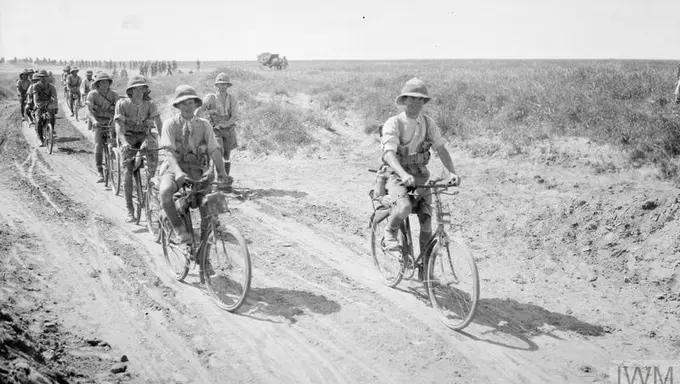
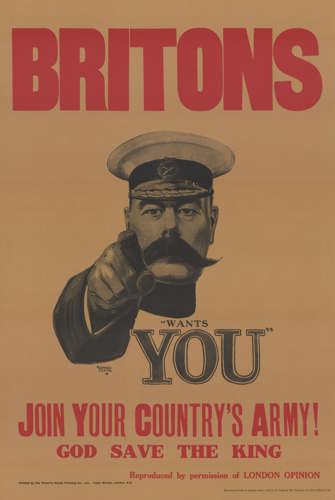


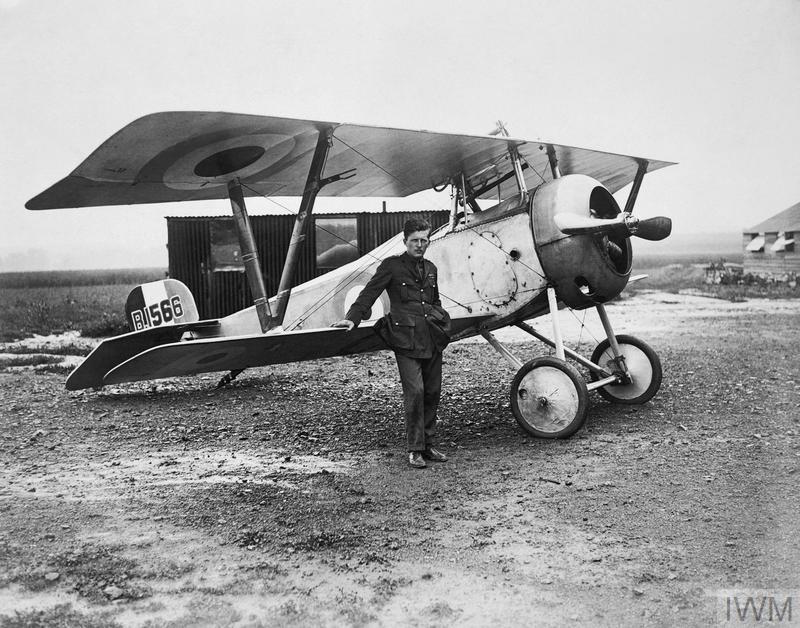


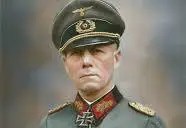


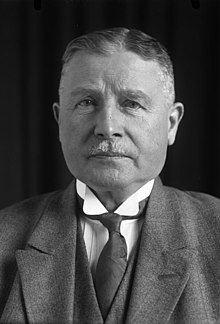
 Weevles Updates Disabled Bloggers Team