Associate Professor Richard Fogarty stated how World War One was influenced by different races fighting together in a global war.
Race and racism were important aspects of World War One for two reasons. First, ideas about race had developed over the course of the 19th century to make the concept one of the most prominent preoccupations of modern Europeans. Second, several of the major belligerents at war between 1914 and 1918 possessed large colonial empires, where white Europeans ruled over Africans, Asians, and Pacific Islanders. These two factors came together because a large part of the justification for the possession of colonial territories was the supposed right of superior whites to rule over allegedly inferior non-whites. This in turn led several European combatant nations to make use of their colonial resources, both materials and men, to wage war. Thus, while purely military and political considerations often shaped strategy during the war, ideologies of race and racism also played a role, helping in particular to make the war a genuinely global one.
Race and nationalism
By the early 20th century, thinking about race was moving toward a more biological understanding of human difference and its significance, with an emphasis on physical features such as colour. But earlier conceptions of racial difference had not disappeared completely, and it was common during World War One for Europeans to speak of national or ethnic differences in terms of race. For instance, many believed that the war pitted the English and French ‘races’ against the Germanic, or Teutonic, ‘race’. Another area where this kind of national or ethnic understanding of race played a role was in the Balkans, where the war began. Despite numerous similarities and centuries of mixing that created many commonalities among the peoples of the region, ethnic differences loomed large in the self-understandings of many. Ethnic tension and nationalist aspirations helped ignite the war in 1914, when Serbian nationalists assassinated the heir to the throne of the Austro-Hungarian Empire, and these same factors were paramount in American President Woodrow Wilson’s calls for national self-determination during the war and at the Paris Peace Conference in 1919.
Race and colonialism
European colonial possessions, particularly in Africa and Asia, played the most important role in injecting race and racism into World War One strategy. The race factor was most visible in the use of millions of colonial subjects as workers and soldiers. Many Africans and Asians laboured and fought in their home territories, as they had done before the war. But hundreds of thousands travelled to new lands to contribute to the war efforts of their colonial masters. Some even travelled to Europe itself.
France was the colonial power most enthusiastic about deploying its colonial populations, especially in Europe. Some 200,000 came to France to work in war industries, but even more, some 500,000, wore the uniform of the French army and manned the trenches of the Western Front. Even before the war, military officers like Charles Mangin (an important general during the war) advocated recruiting from the vast ‘reservoirs of men’ in Africa to strengthen the French army in the face of a larger and more populous Germany. When the war began in 1914, soldiers from North and West Africa began arriving in France and played an active role in the fighting. Eventually, soldiers from Indochina and Madagascar also served in France. These men were often very popular among the French people, although many in France regarded non-Europeans through a haze of racial stereotypes. For instance, black West Africans were popular and celebrated for their courage and loyalty, but also denigrated for their primitive savagery and mental inferiority.
The British army also deployed colonial soldiers. A force of nearly 140,000 Indians served on the Western Front in 1914, but they departed from the Front, and from Europe altogether, in 1915. British authorities were concerned about the effect of pitting non-whites against white Europeans in battle. Indians with such experience might be more difficult to rule after the war. So, in the end, the bulk of Indian soldiers who fought in World War One, some one million in all, fought in the Middle East against the Germans’ ally, the Ottoman Empire. West Indians also fought in the British army, in France and other theatres. Racial politics precluded arming South African blacks for combat in Europe, though more than 20,000 came to France as labourers. As was the case with France’s use of troops from its colonies, the participation of these men in the British war effort was visible to the public, reinforcing racial stereotypes in some cases, but also enhancing the awareness of the conflict as a world war.
Other combatant nations with extensive colonial possessions, such as Belgium and Portugal, did not make use of their colonial subjects in Europe, but they joined Great Britain and France in deploying indigenous people as both soldiers and workers within the colonies. Hundreds of thousands participated as porters carrying supplies and soldiers fighting to gain control over German colonies in Africa. The Germans did the same with their African subjects, though the Kaiser’s government complained loudly and publicly about the Allies’ introduction of ‘uncivilized’ warfare and racially inferior warriors into the conflict at home in Europe.
Race, religion, and global strategy
The most obvious case of colonial considerations helping to shape strategy in the war was the attempt of Germany to exploit the Muslim religious faith of some of its enemies’ colonial populations. This attempt took many forms, but one particularly active site of German activity was in prisoner of war camps. The German army made much of the ‘exotic’ soldiers it captured from among enemy troops, often subjecting Africans and Asians to anthropological study in the camps and using images of the prisoners in propaganda. The Germans also gathered together in one special camp, near Berlin, all the Muslim prisoners of war captured from the Russian, French, and British armies. This ‘Halfmoon Camp’, named for the Muslim symbol of the crescent moon, was the site of an aggressive propaganda campaign to convince these men to switch sides and fight against their colonial masters. After all, Germany was allied with the Muslim Ottoman Empire, and the Sultan in Constantinople had declared jihad, calling all the faithful to fight the Ottomans’ enemies. These efforts mostly failed, as did other German attempts to encourage the Muslim populations of the Russian Caucasus, British India, and French North Africa to rise up en masse in the name of Islam. But the effort was a serious one, and demonstrated the important role non-European peoples and lands played in geostrategy during the conflict.
Conclusion
Race and racism helped shape both the approaches of combatant nations to waging World War One, and the experience of the war for millions of people among the European public and in European colonies in Africa and Asia. From the colour of their skins, to the content of their religious beliefs, colonized peoples’ attributes were of major concern to those making decisions about how and where to wage war. In fact, the very racial and cultural differences of non-European peoples gave European colonial powers a sense of entitlement to their colonial possessions in the first place. Then, during the war, these differences justified making use of Africans and Asians as workers, soldiers, and objects .
Two days after Germany invaded Poland in September 1939, Britain and France declared war on Germany, and World War II erupted. Dozens of countries, still recovering from the horrors of World War I, tried to remain neutral to avoid invasion and more bloodshed.
But a declaration of neutrality did little to insulate countries from the conflict if they were geographically desirable. “The fact that the coast of Norway straddled the North Sea made it an area of critical importance to both Great Britain and Germany,” says Dr. David Woolner, Marist college professor and author of The Last 100 Days: FDR at War and Peace. “It was this fact that led to the German invasion of Denmark and Norway in April 1940, and to the British decision to intervene in the neutral Danish territory of Iceland shortly thereafter.”
It was true for other countries as well—including Belgium and the Netherlands, both of which had declared their neutrality prior to the war. Their neutral status made little impression on Adolf Hitler, who ordered his forces to invade both states as part of his attack on France in May 1940. Meanwhile, the Soviet Union invaded Lithuania, Estonia and Latvia in June. This enabled Soviet leader Joseph Stalin to expand power, Woolner explains, and create a buffer between the USSR and Germany.
“In short, staying neutral in an ever-expanding war proved virtually impossible for these nations,” he says.
The United States, protected by two vast oceans, however, stayed neutral for more than two years despite finding ways to help the Allies. It officially entered the war after the Japanese attacked Pearl Harbor on December 7, 1941.
Countries That Claimed Neutrality Throughout the War
Only 14 countries remained officially neutral throughout the entire war. They included Sweden, Switzerland, Spain, Portugal, Ireland, Turkey, Yemen, Saudi Arabia and Afghanistan as well as the microstates of Andorra, Monaco, Liechtenstein, San Marino and Vatican City.
But even those states that managed to stay out of the war, such as Sweden and Switzerland, found their ability to maintain strict neutrality hampered by the intensity of the conflict, Woolner says. The result, he adds, is “they played a somewhat ambiguous—and still controversial—role in the war.”
A seminal 1998 U.S. State Department report helped dispel the myth that there was any standard form of neutrality, citing that the neutral countries continued trading with the Allied and Axis forces, sent troops to offer military assistance, and allowed one side or the other access to its territory.
Nazis Traded Looted Gold for Swiss Francs
Perhaps the largest finding from the report was that the Nazis purchased critical war material from neutral countries using Swiss francs gained in exchange for gold looted by the Nazis from occupied countries and from individual victims of concentration camps. These materials included tungsten from Portugal and Spain; ball-bearings and iron ore from Sweden; and chromite ore from Turkey— all critical to the German war effort.
Although the neutral countries often cited fear of German reprisals as their motivation for maintaining trade with Germany, the report found that many continued well into 1944, while Switzerland continued to trade until the end of the war in 1945.
The report also noted the military assistance offered by neutral countries. Spain, whose civil war had just ended at the beginning of World War II, sent troops to the Russian front to help German armed forces. Portugal granted access to the British to its bases in the Azores. Sweden allowed German troops across its territory to reach Finland in order to fight against Soviet occupation forces, as well as to facilitate the occupation of Norway. It also protected German shipping in the Baltic.
Decisions and actions even of a single country were often inconsistent. Argentina traded more with the Allies than the Axis powers, yet its wartime leaders leaned toward fascism; it was a center for Axis espionage, smuggling and propaganda; and it was long suspected for being the destination for Nazi looted assets.
Despite these conflicting actions, the neutral countries offered refuge to 250,000 Jews fleeing the Holocaust, though each country’s response was unique. The authors wrote, “Acts of humanity and even heroism rose above the harshness or insensitivity of wartime refugee policies and reflected well on their governments and peoples.”
The report concluded that the neutral countries were able to maintain their status because of their distinctive history, geography, previous relationships with wartime belligerents and, with Sweden and Switzerland, historical traditions of neutrality. They all faced similar pressures from both the Allied and Axis power, but their responses varied considerably. As the report concludes, “There was, in short, no such thing as uniform or absolute neutrality during World War II.”
The consent of the United Kingdom was obtained for the bombing, as was required by the Quebec Agreement, and orders were issued on 25 July by GeneralThomas Handy, the acting chief of staff of the United States Army, for atomic bombs to be used against Hiroshima, Kokura, Niigata, and Nagasaki. These targets were chosen because they were large urban areas that also held militarily significant facilities. On 6 August, a Little Boy was dropped on Hiroshima. Three days later, a Fat Man was dropped on Nagasaki. Over the next two to four months, the effects of the atomic bombings killed between 90,000 and 146,000 people in Hiroshima and 60,000 and 80,000 people in Nagasaki; roughly half occurred on the first day. For months afterward, many people continued to die from the effects of burns, radiation sickness, and injuries, compounded by illness and malnutrition. Though Hiroshima had a sizable military garrison, most of the dead were civilians.
Scholars have extensively studied the effects of the bombings on the social and political character of subsequent world history and popular culture, and there is still much debate concerning the ethical and legal justification for the bombings. Supporters claim that the atomic bombings were necessary to bring an end to the war with minimal casualties; critics believe that the bombings were unnecessary for the war’s end and a war crime, and highlight the moral and ethical implications of the intentional nuclear attack on civilians.
Background
Pacific War
Situation of the Pacific War on 1 August 1945. White and green: Areas still controlled by Japan included Korea, Taiwan, Indochina, and much of China, including most of the main cities, and the Dutch East Indies Red: Allied-held areas Grey: Neutral Soviet Union
In 1945, the Pacific War between the Empire of Japan and the Allies entered its fourth year. Most Japanese military units fought fiercely, ensuring that the Allied victory would come at an enormous cost. The 1.25 million battle casualties incurred in total by the United States in World War II included both military personnelkilled in action and wounded in action. Nearly one million of the casualties occurred during the last year of the war, from June 1944 to June 1945. In December 1944, American battle casualties hit an all-time monthly high of 88,000 as a result of the German Ardennes Offensive. Worried by the losses sustained, President Roosevelt suggested the use of atomic bombs on Germany as soon as possible, but was informed the first usable atomic weapons were still months away.America’s reserves of manpower were running out. Deferments for groups such as agricultural workers were tightened, and there was consideration of drafting women. At the same time, the public was becoming war-weary, and demanding that long-serving servicemen be sent home.
In the Pacific, the Allies returned to the Philippines, recaptured Burma, and invaded Borneo. Offensives were undertaken to reduce the Japanese forces remaining in Bougainville, New Guinea and the Philippines. In April 1945, American forces landed on Okinawa, where heavy fighting continued until June. Along the way, the ratio of Japanese to American casualties dropped from five to one in the Philippines to two to one on Okinawa. Although some Japanese soldiers were taken prisoner, most fought until they were killed or committed suicide. Nearly 99 percent of the 21,000 defenders of Iwo Jima were killed. Of the 117,000 Okinawan and Japanese troops defending Okinawa in April to June 1945, 94 percent were killed; 7,401 Japanese soldiers surrendered, an unprecedentedly large number.
As the Allies advanced towards Japan, conditions became steadily worse for the Japanese people. Japan’s merchant fleet declined from 5,250,000 gross tons in 1941 to 1,560,000 tons in March 1945, and 557,000 tons in August 1945. Lack of raw materials forced the Japanese war economy into a steep decline after the middle of 1944. The civilian economy, which had slowly deteriorated throughout the war, reached disastrous levels by the middle of 1945. The loss of shipping also affected the fishing fleet, and the 1945 catch was only 22 percent of that in 1941. The 1945 rice harvest was the worst since 1909, and hunger and malnutrition became widespread. U.S. industrial production was overwhelmingly superior to Japan’s. By 1943, the U.S. produced almost 100,000 aircraft a year, compared to Japan’s production of 70,000 for the entire war. In February 1945, Prince Fumimaro Konoe advised EmperorHirohito that defeat was inevitable, and urged him to abdicate.
Even before the surrender of Nazi Germany on 8 May 1945, plans were underway for the largest operation of the Pacific War, Operation Downfall, the Allied invasion of Japan. The operation had two parts: set to begin in October 1945, Operation Olympic involved a series of landings by the U.S. Sixth Army intended to capture the southern third of the southernmost main Japanese island, Kyūshū. This was to be followed in March 1946 by Operation Coronet, the capture of the Kantō Plain, near Tokyo on the main Japanese island of Honshū by the U.S. First, Eighth and Tenth Armies, as well as a Commonwealth Corps made up of Australian, British and Canadian divisions. The target date was chosen to allow for Olympic to complete its objectives, for troops to be redeployed from Europe, and the Japanese winter to pass.
Japan’s geography made this invasion plan obvious to the Japanese; they were able to predict the Allied invasion plans accurately and thus adjust their defensive plan, Operation Ketsugō, accordingly. The Japanese planned an all-out defense of Kyūshū, with little left in reserve. In all, there were 2.3 million Japanese Army troops prepared to defend the home islands, backed by a civilian militia of 28 million. Casualty predictions varied widely, but were extremely high. The Vice Chief of the Imperial Japanese Navy General Staff, Vice AdmiralTakijirō Ōnishi, predicted up to 20 million Japanese deaths.
The Americans were alarmed by the Japanese buildup, which was accurately tracked through Ultra intelligence.On 15 June 1945, a study by the Joint War Plans Committee, who provided planning information to the Joint Chiefs of Staff, estimated that Olympic would result in 130,000 to 220,000 U.S. casualties, with U.S. dead in the range from 25,000 to 46,000. Secretary of WarHenry L. Stimson commissioned his own study by Quincy Wright and William Shockley, who estimated the invading Allies would suffer between 1.7 and 4 million casualties, of whom between 400,000 and 800,000 would be dead, while Japanese fatalities would have been around 5 to 10 million.
Marshall began contemplating the use of a weapon that was “readily available and which assuredly can decrease the cost in American lives”: poison gas. Quantities of phosgene, mustard gas, tear gas and cyanogen chloride were moved to Luzon from stockpiles in Australia and New Guinea in preparation for Operation Olympic, and MacArthur ensured that Chemical Warfare Service units were trained in their use. Consideration was also given to using biological weapons.
While the United States had developed plans for an air campaign against Japan prior to the Pacific War, the capture of Allied bases in the western Pacific in the first weeks of the conflict meant that this offensive did not begin until mid-1944 when the long-ranged Boeing B-29 Superfortress became ready for use in combat. Operation Matterhorn involved India-based B-29s staging through bases around Chengdu in China to make a series of raids on strategic targets in Japan. This effort failed to achieve the strategic objectives that its planners had intended, largely because of logistical problems, the bomber’s mechanical difficulties, the vulnerability of Chinese staging bases, and the extreme range required to reach key Japanese cities.[24]
Brigadier GeneralHaywood S. Hansell determined that Guam, Tinian, and Saipan in the Mariana Islands would better serve as B-29 bases, but they were in Japanese hands. Strategies were shifted to accommodate the air war, and the islands were captured between June and August 1944. Air bases were developed, and B-29 operations commenced from the Marianas in October 1944. The XXI Bomber Command began missions against Japan on 18 November 1944. The early attempts to bomb Japan from the Marianas proved just as ineffective as the China-based B-29s had been. Hansell continued the practice of conducting so-called high-altitude precision bombing, aimed at key industries and transportation networks, even after these tactics had not produced acceptable results. These efforts proved unsuccessful due to logistical difficulties with the remote location, technical problems with the new and advanced aircraft, unfavorable weather conditions, and enemy action.
The Operation Meetinghousefirebombing of Tokyo on the night of 9–10 March 1945, was the single deadliest air raid in history,[33] with a greater area of fire damage and loss of life than either of the atomic bombings of Hiroshima or Nagasaki.[34][35]
Hansell’s successor, Major GeneralCurtis LeMay, assumed command in January 1945 and initially continued to use the same precision bombing tactics, with equally unsatisfactory results. The attacks initially targeted key industrial facilities but much of the Japanese manufacturing process was carried out in small workshops and private homes. Under pressure from United States Army Air Forces (USAAF) headquarters in Washington, LeMay changed tactics and decided that low-level incendiary raids against Japanese cities were the only way to destroy their production capabilities, shifting from precision bombing to area bombardment with incendiaries. Like most strategic bombing during World War II, the aim of the air offensive against Japan was to destroy the enemy’s war industries, kill or disable civilian employees of these industries, and undermine civilian morale.
Over the next six months, the XXI Bomber Command under LeMay firebombed 64 Japanese cities. The firebombing of Tokyo, codenamed Operation Meetinghouse, on 9–10 March killed an estimated 100,000 people and destroyed 41 km2 (16 sq mi) of the city and 267,000 buildings in a single night. It was the deadliest bombing raid of the war, at a cost of 20 B-29s shot down by flak and fighters. By May, 75 percent of bombs dropped were incendiaries designed to burn down Japan’s “paper cities”. By mid-June, Japan’s six largest cities had been devastated. The end of the fighting on Okinawa that month provided airfields even closer to the Japanese mainland, allowing the bombing campaign to be further escalated. Aircraft flying from Allied aircraft carriers and the Ryukyu Islands also regularly struck targets in Japan during 1945 in preparation for Operation Downfall. Firebombing switched to smaller cities, with populations ranging from 60,000 to 350,000. According to Yuki Tanaka, the U.S. fire-bombed over a hundred Japanese towns and cities.
The Japanese military was unable to stop the Allied attacks and the country’s civil defense preparations proved inadequate. Japanese fighters and anti-aircraft guns had difficulty engaging bombers flying at high altitude. From April 1945, the Japanese interceptors also had to face American fighter escorts based on Iwo Jima and Okinawa. That month, the Imperial Japanese Army Air Service and Imperial Japanese Navy Air Service stopped attempting to intercept the air raids to preserve fighter aircraft to counter the expected invasion. By mid-1945 the Japanese only occasionally scrambled aircraft to intercept individual B-29s conducting reconnaissance sorties over the country, to conserve supplies of fuel. In July 1945, the Japanese had 137,800,000 litres (1,156,000 US bbl) of avgas stockpiled for the invasion of Japan. About 72,000,000 litres (604,000 US bbl) had been consumed in the home islands area in April, May and June 1945. While the Japanese military decided to resume attacks on Allied bombers from late June, by this time there were too few operational fighters available for this change of tactics to hinder the Allied air raids.
At the time of its bombing, Hiroshima was a city of industrial and military significance. A number of military units were located nearby, the most important of which was the headquarters of Field MarshalShunroku Hata‘s Second General Army, which commanded the defense of all of southern Japan, and was located in Hiroshima Castle. Hata’s command consisted of some 400,000 men, most of whom were on Kyushu where an Allied invasion was correctly anticipated. Also present in Hiroshima were the headquarters of the 59th Army, the 5th Division and the 224th Division, a recently formed mobile unit. The city was defended by five batteries of 70 mm and 80 mm (2.8 and 3.1 inch) anti-aircraft guns of the 3rd Anti-Aircraft Division, including units from the 121st and 122nd Anti-Aircraft Regiments and the 22nd and 45th Separate Anti-Aircraft Battalions. In total, an estimated 40,000 Japanese military personnel were stationed in the city.
Hiroshima was a supply and logistics base for the Japanese military.] The city was a communications center, a key port for shipping, and an assembly area for troops. It supported a large war industry, manufacturing parts for planes and boats, for bombs, rifles, and handguns. The center of the city contained several reinforced concrete buildings. Outside the center, the area was congested by a dense collection of small timber workshops set among Japanese houses. A few larger industrial plants lay near the outskirts of the city. The houses were constructed of timber with tile roofs, and many of the industrial buildings were also built around timber frames. The city as a whole was highly susceptible to fire damage. It was the second largest city in Japan after Kyoto that was still undamaged by air raids, primarily because it lacked the aircraft manufacturing industry that was the XXI Bomber Command’s priority target. On 3 July, the Joint Chiefs of Staff placed it off limits to bombers, along with Kokura, Niigata and Kyoto.
The population of Hiroshima had reached a peak of over 381,000 earlier in the war but prior to the atomic bombing, the population had steadily decreased because of a systematic evacuation ordered by the Japanese government. At the time of the attack, the population was approximately 340,000–350,000. Residents wondered why Hiroshima had been spared destruction by firebombing. Some speculated that the city was to be saved for U.S. occupation headquarters, others thought perhaps their relatives in Hawaii and California had petitioned the U.S. government to avoid bombing Hiroshima. More realistic city officials had ordered buildings torn down to create long, straight firebreaks. These continued to be expanded and extended up to the morning of 6 August 1945.
Bombing of Hiroshima
Hiroshima was the primary target of the first atomic bombing mission on 6 August, with Kokura and Nagasaki as alternative targets. The 393d Bombardment Squadron B-29 Enola Gay, named after Tibbets’s mother and piloted by Tibbets, took off from North Field, Tinian, about six hours’ flight time from Japan. Enola Gay was accompanied by two other B-29s: The Great Artiste, commanded by Major Charles Sweeney, which carried instrumentation, and a then-nameless aircraft later called Necessary Evil, commanded by Captain George Marquardt. Necessary Evil was the photography aircraft.
Strike order for the Hiroshima bombing as posted on 5 August 1945
After leaving Tinian, the aircraft made their way separately to Iwo Jima to rendezvous with Sweeney and Marquardt at 05:55 at 2,800 meters (9,200 ft), and set course for Japan. The aircraft arrived over the target in clear visibility at 9,470 meters (31,060 ft). Parsons, who was in command of the mission, armed the bomb in flight to minimize the risks during takeoff. He had witnessed four B-29s crash and burn at takeoff, and feared that a nuclear explosion would occur if a B-29 crashed with an armed Little Boy on board. His assistant, Second LieutenantMorris R. Jeppson, removed the safety devices 30 minutes before reaching the target area.
The Hiroshima atom bomb cloud 2–5 minutes after detonation[132]
During the night of 5–6 August, Japanese early warning radar detected the approach of numerous American aircraft headed for the southern part of Japan. Radar detected 65 bombers headed for Saga, 102 bound for Maebashi, 261 en route to Nishinomiya, 111 headed for Ube and 66 bound for Imabari. An alert was given and radio broadcasting stopped in many cities, among them Hiroshima. The all-clear was sounded in Hiroshima at 00:05. About an hour before the bombing, the air raid alert was sounded again, as Straight Flush flew over the city. It broadcast a short message which was picked up by Enola Gay. It read: “Cloud cover less than 3/10th at all altitudes. Advice: bomb primary.” The all-clear was sounded over Hiroshima again at 07:09.
At 08:09, Tibbets started his bomb run and handed control over to his bombardier, Major Thomas Ferebee. The release at 08:15 (Hiroshima time) went as planned, and the Little Boy containing about 64 kg (141 lb) of uranium-235 took 44.4 seconds to fall from the aircraft flying at about 9,400 meters (31,000 ft) to a detonation height of about 580 meters (1,900 ft) above the city. Enola Gay was 18.5 km (11.5 mi) away before it felt the shock waves from the blast.
Due to crosswind, the bomb missed the aiming point, the Aioi Bridge, by approximately 240 m (800 ft) and detonated directly over Shima Surgical Clinic. It released the equivalent energy of 16 ± 2 kilotons of TNT (66.9 ± 8.4 TJ). The weapon was considered very inefficient, with only 1.7 percent of its material fissioning. The radius of total destruction was about 1.6 kilometers (1 mi), with resulting fires across 11 km2 (4.4 sq mi).
Enola Gay stayed over the target area for two minutes and was 16 kilometers (10 mi) away when the bomb detonated. Only Tibbets, Parsons, and Ferebee knew of the nature of the weapon; the others on the bomber were only told to expect a blinding flash and given black goggles. “It was hard to believe what we saw”, Tibbets told reporters, while Parsons said “the whole thing was tremendous and awe-inspiring … the men aboard with me gasped ‘My God’.” He and Tibbets compared the shockwave to “a close burst of ack-ack fire”.
This is one of my favourite wrestling pay per views from when I was little it was on January 30th 1993 when I was six years old when I was younger. I am going to watch it on the Wwe Network sometime it is Wwe Wrestlefest 93.
The theoretical daily rations for a British soldier were:
20 ounces of bread.
16 ounces of flour instead of above.
3 ounces of cheese.
4 ounces of jam.
4 ounces of oatmeal instead of bread.
1 pint of porter instead of rum.
4 ounces of dried fruit instead of jam.
4 ounces of butter/margarine.
This British Army issue biscuit was a key component of a soldier’s rations. The biscuits were produced under government contract by Huntley & Palmers, which in 1914 was the world’s largest biscuit manufacturer. The notoriously hard biscuits could crack teeth if not first soaked in tea or water. Tea was also part of the British soldier’s rations. It was a familiar comfort and concealed the taste of water, which was often transported to the front line in petrol tins.
An Australian NCO used to check a batch of bread before it is transferred to the bread store at an Australian Field Bakery in Rouen, France, September 1918.
Soldiers on and behind the front line ate their meals out of a British Army issue mess tin. It was an essential part of every soldier’s kit. If you lost it you had nothing to collect your food rations in.
Many soldiers said if it had not been for the Salvation Army giving them tins of corned beef they would have actually starved, as getting supplies through to the trenches was very difficult. German soldiers used to use dogs with special harnesses to carry the large tins of stew to be dished out to soldiers. as each had a tin to eat out of, whatever it was that day.
Hard tack
After the Crimean War, Army dietary reforms were undertaken. These focused on providing a high-energy diet for soldiers, but one that was often lacking in variety and sometimes almost indigestible.
Biscuits became a staple of soldiers’ diets during the Boer War (1899-1902) and were universally loathed. The notoriously hard biscuits could crack teeth if not first soaked in tea or water!
Tinned goods continued to be used to feed soldiers en masse at meal times. But the South African conflict also saw them used as ’emergency rations’, given to each soldier as part of their field kit. A typical emergency ration tin consisted of a meat ‘dinner’ in one end and cocoa in the other. It was designed to sustain a soldier for 36 hours while on active service.
By the First World War (1914-18), Army food was basic, but filling. Each soldier could expect around 4,000 calories a day, with tinned rations and hard biscuits staples once again. But their diet also included vegetables, bread and jam, and boiled plum puddings. This was all washed down by copious amounts of tea.
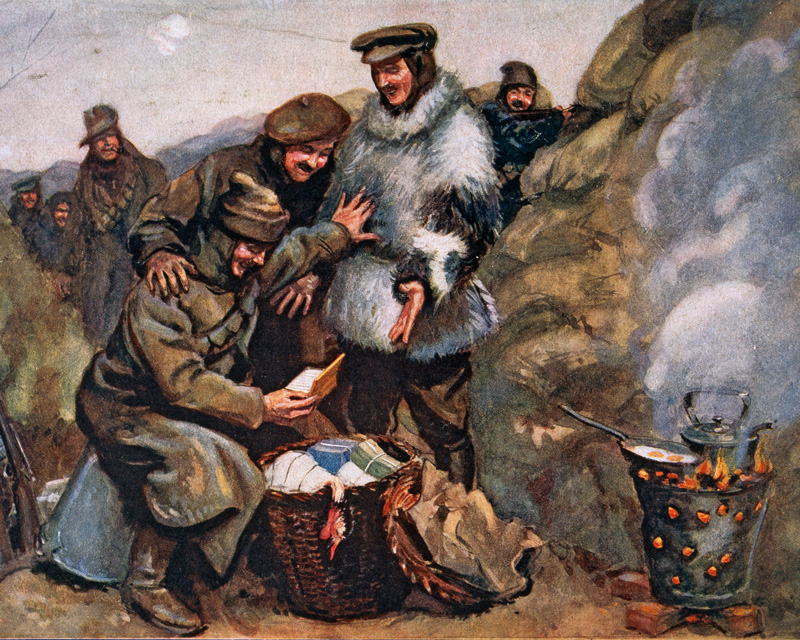
The mostly static nature of the war meant food supplies were generally reliable. And soldiers were able to supplement their rations with food parcels from home, with hot meals served behind the lines in canteens and kitchens, and with food obtained from local people.
Cooking in the front-line trenches was very difficult, so soldiers ate most of their rations cold. If cooking did occur, it was done on a small folding solid-fuel stove, known universally as a ‘Tommy Cooker’, that many men carried in their packs. Soldiers also cooked in pots over charcoal or wood.
Usually, the men would create a stew by adding tinned meat and biscuits into the pot. When the food was ready, it would be dished out individually for men to eat from their mess tins.
As well as the endless supply of ‘bully beef’, soldiers grew to hate another tinned item, Maconochie’s stew. Made with beef – or gristle, more commonly – and sliced vegetables, such as turnips and carrots, Maconochie was deemed edible warmed up, but revolting served cold.
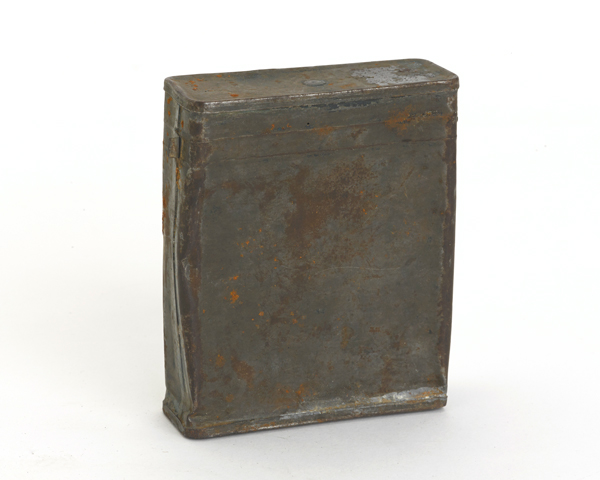
On top of his regular ration issue of food, each soldier was given an emergency ration. This comprised a tin of beef, along with some biscuits and a tin of sugar and tea. This ‘iron ration’ was only supposed to be eaten as a last resort, when normal supplies were unavailable.
The British Army has long employed overseas recruits and soldiers of every faith, so its rations have had to take these factors into consideration.
The multi-faith British Indian Army also had strict dietary guidelines when it came to feeding its troops. Two cooks, or langris, were normally maintained in each company of a battalion. The composition of the company would determine if a cook was a Muslim, Sikh or Hindu, and of what caste if the latter. This ensured that the correct food was prepared for troops of different religions and in the right way.
The Army also provided stackable cooking pots for Indian soldiers for use on campaign. Each soldier could then cook their own food if necessary. For high-caste brahmins, these cooking pots were of considerable importance, since it was necessary for them to prepare their own food in order to preserve caste.
Kitchens
During the First World War, separate kitchens were set up so that the dietary requirements of Muslim, Sikh and Hindu soldiers were met. This happened on the Western Front, as well as back in Britain.
In particular, the Indian hospital at Brighton made an effort to cater for patients’ religious and cultural needs. Muslims and Hindus were provided with separate water supplies and nine different kitchens.
Today’s British Army rations continue this tradition and have a wide range of menus with halal and kosher options now available for soldiers.
The limited diet of the British soldier in the front line included Tickler’s Plum and Apple Jam, known as ‘pozzy’ (possibly from a South African word for ‘preserved food’), ‘biscuit’, a hard-baked bread that had seen service for many years in Britain’s armies and navies, and ‘bully beef’, whose name may have come from the French boeuf bouillé (boiled beef) or possibly from the picture of a bull’s head on many tin designs. ‘Gippo’, stew or thick gravy, probably derived from a term used in the 17th and 18th centuries to denote a kitchen servant. Rum was delivered to the front in jars labelled SRD, interpreted as ‘seldom reaches destination’.
Available behind the lines in French bars were ‘Bombardier Fritz’ (pommes de terre frites – chips) with ‘oofs’ and ‘pang’, and ‘plonk’ (vin blanc – white wine).
Experiences common to European armies at the time – poor food and the logistics of transport – provided similar terms for poor quality butter or margarine: ‘axlegrease’ and the German Wagenschmiere (wagongrease).
Soldiers grew adept at getting hold of food by various means; terms included ‘mumping’, ‘winning’, ‘cadging’, ‘humming’, ‘making’, ‘boning’, ‘souveniring’ and ‘hot-stuffing’. Some of these terms were invented at the time while others dated back centuries.
Materiel
Many of the terms for weapons and artillery were remarkably similar on both sides of no man’s land, indicating a similarity of attitude, that the soldier had two enemies, the opposing forces and the war itself. Germans and British used the same terms for the German stick-grenade – a potato-masher – both sides had a ‘Black Maria’, and both sides used a German name for an aeroplane – a ‘Taube’.
Some of these terms became indelibly associated with the war: ‘whizz-bangs’ speaks explicitly of the soldier’s experience of knowing how to identify a particular kind of incoming shell, and what action might be worth taking. ‘Jack Johnson’, referencing the black heavyweight champion boxer, was for a shell which created a large amount of black smoke. ‘Moaning Minnie’ referred to the German trench mortar or Minenwerfer, the term carrying overtones of familiarity and humour.
Names for troops: ‘Tommy’ and ‘Foot Slogger’
Documentation of ‘Tommy Atkins’, the archetypical name for the British soldier, dates back to 1815. ‘Tommy’ became immortalised in the first of Rudyard Kipling’s Barrack Room Ballads, published in 1892:
O it’s Tommy this, an’ Tommy that, an’ “Tommy, go away”; But it’s “Thank you, Mister Atkins,” when the band begins to play, The band begins to play, my boys, the band begins to play, O it’s “Thank you, Mr. Atkins,” when the band begins to play.
The name ‘Tommy’ was used universally throughout the First World War, by both sides. Some correspondence to The Times in 1914 indicates that not everyone felt well-disposed towards the name. ‘An Ensign of 1848’ wrote on 23 October: ‘May I … suggest that the time has now come … to put a period to the use of the nickname ‘Tommies’? … To hear these British soldiers referred to in depreciatory patronage as ‘Tommies’ by those who stay at home … is unseemly and exasperating.’ Three days later another reader wrote that if you were to ask ‘a company of Garrison Artillery what they think of the name and of the verses in which it was first enshrined the reply was startling and anything but complimentary to the author of the verses.’ It is possible that this was a matter of opinion which differed between individuals, regiments, platoons, and any groupings of soldiers. Certainly there are clear indications of its being used by soldiers: the trench paper The Salient for Christmas 1915 advertises The Buzzer, the paper of the 49th (West Riding) Division, ‘written by Tommies for Tommies’. But many ‘Tommies’ preferred the terms PBI (poor bloody infantry) and ‘something to hang things on’, referring to the amount of kit they had to carry.
‘Foot-slogger’ – ‘Foot slogging over Belgian ways’ was noted in the article The Route March, in the 5th Gloucester Gazette 5 May 1915 – was originally ‘foot-wabler’ or foot-wobbler’ in Grose’s The Vulgar Tongue (1785), a term of contempt for the infantryman much used by the cavalry. Related names were ‘gravel-grinder’, and ‘mud-crusher’. There were similar terms in French and German, German terms being particularly graphic – Dreckfresser (mud-glutton), Kilometerfresser (kilometre-glutton), Fusslatscher (foot-shuffler), Lakenpatscher (mud-crusher). According to Partridge only the Germans were resigned to the term Kanonenfutter, ‘cannon-fodder’.[1] German soldiers also called themselves Schweissfussindianer – ‘Indians with sweaty feet’ – which had an interesting counterpart in a term for British soldiers: 1000 Worte Front-Deutsch (1925) states that after ‘Tommy’ the main German epithet for British soldiers was Fussballindianer – ‘football Indians’.
Allies and enemies
A healthy cynicism typifies the self-parody to be found in the extended ‘alternative abbreviations’ of English, such as Rob All My Comrades (RAMC, Royal Army Medical Corps) or Rotten Fiddling About (RFA, Royal Field Artillery). It had counterparts in the German Fährt Alles Kaput (Everything goes kaput) for FAK (Freiwilliges Automobil Korps, the Volunteer Automobile Corps), or Mord-Gesellschaft Klub (Murder Company Club) for MGK (Maschinen-Gewehr Kompagnie or Machine-gun Company).
For the British soldier there were several terms used to describe the soldier opposing him. Turkish soldiers were referred to as ‘Jacko’, ‘Jacky’, ‘Johnny Turk’ or simply ‘Abdul’, while Austrians, if encountered, qualified for ‘Fritz’. ‘Johnny Bulgar’ was the enemy faced in Salonika. The Portuguese were known as ‘Pork and Cheese’ and ‘Tony’, but more often as ‘Pork and Beans’, the name of a meal soldiers at the Front recognised all too well. ‘Sammy’ was used for American soldiers, who often called themselves ‘guys’; Italians were referred to as ‘Macaroni.’
The term poilu was used widely for the French soldier both amongst the French, and occasionally by their British and American allies – French soldiers themselves preferred les hommes or les bonhommes, according to Brophy and Partridge. Meaning ‘hairy’, poilu is supposed to have originated in a story by Honoré de Balzac, Le Médecin de Campagne (1834), in which a group of French soldiers are required for a deed requiring particular courage. In this story only 40 soldiers in one regiment are deemed to be assez poilu, hairy enough.
Reports of the ruthlessness of the German army in China in 1900 refer to the use of the ‘Hun’ by the German Emperor as a symbolic ideal of military force, and thus the word was in place to be applied in 1914, especially in association with concepts such as ‘atrocities’. ‘Who’s afraid of a few dashed Huns?’ shouted Francis Grenfell, just before his death in 1915 during the Second Battle of Ypres.
‘The Hun’ and ‘the Boche’ (or ‘Bosche’) stayed in use throughout the war, though Fraser and Gibbons claimed that only the Royal Flying Corps used ‘Hun’ regularly.[2] ‘The boche’ or ‘boches’ (or ‘bosch/bosches’), with or without a capital B, was a French word, which arrived through contact with French forces in 1914, and is said to have derived from French slang caboche, meaning ‘rascal’ or ‘German’, or from Alboche, a variant on Alleman. A writer in the Western Daily Press, 15 October 1915, claimed that les Alboches developed into les sales Boches (‘the dirty Boches’), which provided the word Boches.
The British also used ‘Alleyman’ adopted from the French word for German, Allemand: ‘I got up toot sweet and off I ranAnd nearly stopped a bullet from an Alleyman’. [3]
‘Fritz’ was used throughout the war. From 1917 it was the only term used by Corporal FR Ingrey, in his diary, while the variation ‘Fritzies’ was a popular term among American soldiers.[4]
By 1916 the term ‘Jerry’ was in general use. Though the Daily Express had quoted the word on 3 March 1916, on 12 September 1916 it was clearly necessary to explain it further: ‘“Jerries” – that is the “official” Irish designation of the enemy.’ By 1918 it was used frequently, as in ‘Jerry had a machine-gun on us’[5]. The term carried more familiarity and weariness than hate; in Kipling’s A Madonna of the Trenches (1923), portraying something of the reality of being shelled, the enemy is ‘Jerry’ rather than ‘the Boche’.
From 1916 the term ‘German’ was common. Battery Flashes by ‘Wagger’ (CW Langley) 1916, reports the use of ‘Germings’ for Germans, while the diary of Lieutenant AB Scott uses ‘Hun’ in 1916, ‘Boches’ and ‘Huns’ until Spring 1918, but ‘Germans’ from Summer 1918. Among American soldiers the term ‘Heinie’, from Heinz (Heinrich), was common. According to Eric Partridge, the Germans had their own names for specific branches of the armed forces: Ernst or Ernest for artillerymen, Fritz or Otto for infantryman, and Franz for an airman.[6] The helmet finally adopted by the German infantry reinforced the use of the term ‘squareheads’, which had been in use to describe German soldiers since at least 1906. On 9 October 1914 The Manchester Guardian in a discussion on German national characteristics stated that ‘It is the shortness of the German head that gets him the nickname “squarehead” in England and America and “Têtecarrée” in France. Germans themselves, by the way, say that it is the Austrian Germans who are the “squareheads”.’ But the correspondent dismissed the generalisation as unhelpful.
Given our understanding of the horrors of war, it is often difficult to understand how men coped with life at the Front during the First World War. Many, of course, did not: it is during this period that shell shock and what we now know as post-traumatic stress disorder were first described and diagnosed . Hundreds, across all the armies involved in the war, deserted, and both sides faced large mutinies – among the French in 1917 and by the German navy in 1918, as well the Russian Revolution in 1917. But these aside, the majority of those serving followed orders and often acted with enormous courage and bravery, as well as killing their fellow men. What allowed them to do this?
Ideology
The ability for both sides to place so many men in the field for so long is testament not just to the power and control the military could exert but also to the strength of belief of those involved in the fighting. It is impossible to understand how men volunteered, accepted conscription and continued to fight without taking into account their beliefs about the war.
While individuals varied greatly, there are some common themes that run through soldiers’ diaries and letters and point to how they saw the call to arms and the nature of battle. The military was also especially interested in morale, and took pains to measure what the troops were feeling and thinking.
Many British volunteers, and later conscripts, saw the German threat as very real. Belgian soldiers were fighting for their homeland (although linguistic allegiances complicated their sympathies) and France knew it faced a repeat of the German invasion of 1870. For Austro-Hungarians, the Archduke had been assassinated, and Germans could believe that they were fighting for an equal place with the other European empires and were resisting Russian aggression. For soldiers, these patriotic notions were also mixed with other emotions, as well as a good dose of realism. Few really thought that the war would be over quickly, at least after the first few months had passed. Many served out of thought for their families and friends as much as through loyalty to their country. For others, the promise of regular pay and help for their families might have influenced their decision and motivation to serve. Later in the war, rumours of peace or victory repeatedly spread along the Fronts, giving men an illusion that the end of the conflict was near (the hope of leave also served a similar purpose).
Given the size of the army and the presence of a large number of either recent volunteers or conscripts, something about the nature of the society from which the men were drawn no doubt influenced attitudes towards military service. Britain’s high-levels of industrialisation, and workers’ adaptation to the rigours and boredom of often-harsh factory life, may have prepared men for the Front, while the social cohesion (and acceptance of paternalism) evident in British society was reflected in good officer-ranks relations. In contrast, the hierarchy and militarism of the German army and the ‘war-enthusiasm’ of many volunteers led to disillusionment and eventually radicalisation of the ranks.
Rest and recreation played some part in the resilience of British troops, who were able to enjoy some of the leisure activities they enjoyed in civilian life during regular times away from the Front: music hall, cinema and organised sports offered some form of respite.
Friends and enemies
Despite the famous (but by no means ubiquitous) truces of the first winter of the war, hatred of the enemy – and even the desire to kill – fuelled many soldiers’ ability to keep fighting. Revenge for friends and companions killed, and the experience of being shot at or bombarded, combined with pervasive propaganda and helped to instil national hatred as the war continued.
In parallel to these feelings, the military unit could provide an alternative set of communal bonds. Soldiers often wrote about their sense of comradeship and friendship with their fellow men. Many fought for each other as much as for remoter loyalties such as to king and country.
Coping with war
Men responded differently under fire. For many, the helplessness of suffering artillery bombardment was the hardest thing to deal with. Many could not stay hunkered down but could only cope with the noise and danger of death by walking around, thereby increasing their risk of becoming a casualty. Group panic could break out during an attack, as could more serious breaches of discipline, particularly when troops were especially exhausted or bore grievances against the officers. Those immediately thrown into heavy action tended to cope less well than novices who were gradually exposed to conflict.
As soldiers spent more time under fire, they tended to develop what among German troops was termed ‘Dickfelligkeit’ (‘thick-skinnedness’) and became hardened to the rigours of the Front. Veteran soldiers learned to pay attention to their environment, taking advantage of cover and working better under fire. In general, older hands did better with managing the intense feeling of terror that inflicted itself on those under fire.
Soldiers also had to cope with long stretches of anxious waiting, or even boredom, as well as responding to or participating in attacks. To counteract this, busy routines were put in place, ensuring that trenches were repaired, men supplied, and all was ready for the long, wakeful nights (daytime was usually too dangerous for major activity). Soldiers could also comfort themselves with the knowledge of the inefficiency of most First World War weaponry. Men often resorted to black or gallows humour, as well as a bitter fatalism and superstition, as a means of dealing with everyday reality; doses of rum may also have played their part in steadying nerves.
Mental breakdown
Many, of course, did not cope with the stresses of the war. This manifested itself in a number of ways, including the reporting of physical ailments, such as trench foot, which, in the British army, was tracked as a marker of morale. Recognising that a rise in certain diseases was linked to problems with morale, the British army recorded the incidence of trench foot and asked officers to produce a report if the number rose. Others responded to the strains with what was called ‘shirking’, a general lassitude and lack of aggression in combat.
Medical opinion, and the rates of psychological breakdown after returning to the field, suggested that those who temporarily left their post (that is, were convicted of the charge of ‘Absence without Leave’) were suffering from the mental effects of war.
Suicide offered another way out. It was much underreported, as at least 3,828 German soldiers killed themselves; a figure that does not reflect the numbers who simply walked into enemy fire or whose death was ambiguous.
Those that returned also had to readjust to civilian life, often during periods of great political and social upheaval. Millions also had to cope with physical trauma or the loss of family members and friends. Many men found it difficult to talk about their experiences, or found it hard to relate their sense of service with a society that increasingly came to lament the loss. The psychological consequences of the war continued to be felt for a generation or more.
The conventional idea of a First World War battlefield immediately brings to mind an endless flat waterlogged landscape criss-crossed with muddy trenches. But for many soldiers, the battlefield looked quite different: they faced not only enemy troops but also the daunting challenges of mountain warfare, dealing with high altitude, rocky slopes, snow, ice and even avalanches. In Galicia (on the border of modern day Poland and Ukraine), millions of Russian and Austro-Hungarian men fought in the Carpathian Mountains, while Russian forces were also engaged in mountain warfare against the Ottoman Empire in the Caucasus. But perhaps the best known mountain theatre in the First World War was in Italy, where from May 1915 until November 1918 Italy fought Austria-Hungary in the high Alps and Dolomites. Around 80% of the Italian Front ran through mountainous terrain, where the nature of combat was very different from that experienced in other landscapes.
New infrastructure at 2000m
The Alpine landscape was incredibly challenging: mountain peaks in the combat zone were up to 2000m above sea level, with some slopes of up to 80° steepness. Fast-flowing rivers ran through glacial troughs and there were minimal road and rail connections to the area. In order to make the landscape more suitable for warfare, intensive road-building programmes took place; both armies also had to build bridges across mountain ravines, and to construct forts, barracks and huts to serve as accommodation, as well as digging trenches (where possible) or using high explosive to create networks of underground caves and tunnels for protection, accommodation and storage. The Italians used cable cars and mules to transport food and munitions up to the mountain-top front lines – and to take the wounded back down to the plains, where hospitals were situated.
Fighting in sub-zero temperatures
Temperatures remained below freezing for at least four months of each year and snow was a constant presence in winter, with improvised ‘snow trenches’ being used for defence. Both armies trained specialist ski units as well as equipping soldiers with ice-picks, ropes, snow suits, cold weather clothing and goggles for use on glaciers. Cold and frostbite were real problems for all men in the high Alps, especially when it came to treating the wounded, who suffered terribly from the extreme conditions. ‘Dear Brother,’ wrote an Italian infantryman in April 1916,
let me tell you that it’s nearly two months now that I have been here in the front line and we suffer so I can hardly tell you, I’m in the high Cadore if you could see the snow there is still some 8 meters of snow but now the days are beginning to improve a little we have to advance… who knows how many poor Italians will have to die because they have this passion to slaughter us like sheep.[1]
Unsurprisingly, combat was very difficult under these circumstances. Artillery could not accurately identify enemy targets due to the uneven terrain, and without effective artillery fire it was extremely difficult to launch a successful attack. Meanwhile infantrymen carrying heavy packs and weapons struggled to attack up steep slopes, since defending troops held the high ground wherever possible, placing the assailants in the face of enemy fire. Units quickly became separated as they scrambled over rough terrain, while the impact of shells exploding on the rocky surface often led to landslides and falling stones, which had devastating effects.
Specialist mountain troops
Both the Italian and the Austro-Hungarian armies had dedicated mountain troops, the Alpini and the Gebirgstruppe respectively; these expert units had special training and equipment to prepare them for service in the mountains. They were renowned for their courage and skill, fighting fiercely under the most challenging circumstances. But there were not enough of these specialists, and it would have been impossible to limit mountain operations to these troops alone. Instead the vast majority of men in both armies would have served in mountainous terrain at some stage in the war, including many – such as soldiers from southern Italy or Sicily – who had no experience of such extreme temperatures.
Brutal mountain conditions
On the Alpine front First World War soldiers endured all the strain and terror of combat with the added challenge of brutal mountain conditions. Unique solutions to the problems of fighting in the Alps were developed to try to tackle these conditions, but with only limited success. For the millions of men who served in the Italian and Austro-Hungarian armies, it was mountain warfare above all else which would come to symbolise the horrors of the First World War.
The Battle of the Somme, also known as the Somme offensive, was a battle of the First World War fought by the armies of the British Empire and French Third Republic against the German Empire. It took place between 1 July and 18 November 1916 on both sides of the upper reaches of the Somme, a river in France. The battle was intended to hasten a victory for the Allies. More than three million men fought in the battle and one million men were wounded or killed, making it one of the deadliest battles in human history.
The French and British had committed themselves to an offensive on the Somme during the Chantilly Conference in December 1915. The Allies agreed upon a strategy of combined offensives against the Central Powers in 1916 by the French, Russian, British and Italian armies, with the Somme offensive as the Franco-British contribution. Initial plans called for the French army to undertake the main part of the Somme offensive, supported on the northern flank by the Fourth Army of the British Expeditionary Force (BEF). When the Imperial German Army began the Battle of Verdun on the Meuse on 21 February 1916, French commanders diverted many of the divisions intended for the Somme and the “supporting” attack by the British became the principal effort. The British troops on the Somme comprised a mixture of the remains of the pre-war army, the Territorial Force and Kitchener’s Army, a force of wartime volunteers.
On the first day on the Somme (1 July) the German 2nd Army suffered a serious defeat opposite the French Sixth Army, from Foucaucourt-en-Santerre south of the Somme to Maricourt on the north bank and by the Fourth Army from Maricourt to the vicinity of the Albert–Bapaume road. The 57,470 casualties suffered by the British, including 19,240 killed, were the worst in the history of the British Army. Most of the British casualties were suffered on the front between the Albert–Bapaume road and Gommecourt to the north, which was the area where the principal German defensive effort (Schwerpunkt) was made. The battle became notable for the importance of air power and the first use of the tank in September but these were a product of new technology and exceedingly unreliable.
The Battle of the Somme lasted 141 days and was the opening day of the Battle of Albert. The attack was made by five divisions of the French Sixth Army on the east side of the Somme, eleven British divisions of the Fourth Army north of the Somme to Serre and two divisions of the Third Army opposite Gommecourt, against the German Second Army of General Fritz von Below. The German defence south of the Albert–Bapaume road mostly collapsed and the French had “complete success” on both banks of the Somme, as did the British from the army boundary at Maricourt to the Albert–Bapaume road. On the south bank the German defence was made incapable of resisting another attack and a substantial retreat began; on the north bank the abandonment of Fricourt was ordered. The defenders on the commanding ground north of the road inflicted a huge defeat on the British infantry, who had an unprecedented number of casualties. Several truces were negotiated, to recover wounded from no man’s land north of the road. The Fourth Army took 57,470 casualties, of which 19,240 men were killed, the French Sixth Army had 1,590 casualties and the German 2nd Army had 10,000–12,000 losses.
At the end of the battle, British and French forces had penetrated 6 mi (10 km) into German-occupied territory along the majority of the front, their largest territorial gain since the First Battle of the Marne in 1914. The operational objectives of the Anglo-French armies were unfulfilled, as they failed to capture Péronne and Bapaume, where the German armies maintained their positions over the winter. British attacks in the Ancre valley resumed in January 1917 and forced the Germans into local withdrawals to reserve lines in February before the scheduled retirement by about 25 mi (40 km) in Operation Alberich to the Siegfriedstellung (Hindenburg Line) in March 1917. Debate continues over the necessity and significance of the battle.




 Weevles Updates Disabled Bloggers Team