During World War I, Newcastle upon Tyne was a global hub for armament production, primarily through the industrial giant Armstrong Whitworth. The company’s massive Elswick and Scotswood works produced a vast array of war materiel, making it the largest munitions company in the world at the time.
Key Armaments and Production
The factories along the River Tyne manufactured a wide variety of armaments and related equipment:
Guns and Artillery: The Elswick works had a long history of making naval and field guns. During the war, the Scotswood factory alone produced 13,000 guns.
Ammunition: Production included 14.5 million shells, 18,000 fuses, and 21,000 cartridge cases.
Warships and Shipbuilding: Armstrong Whitworth built complete warships and their armaments at their Elswick and Walker naval shipyards, playing a major role in the naval arms race.
Aircraft: The company also built aircraft on Newcastle’s Town Moor.
Other Equipment: This included searchlights, hydraulic machinery, and components like trench periscopes and clinometers produced by smaller local firms such as N.F. Ramsay & Co..
The Industrial Landscape
Elswick and Scotswood Works: These were the primary sites of production, stretching for over a mile along the River Tyne. By the end of the war, Armstrong Whitworth employed 78,000 people, with 60,000 working on the Tyne.
Lemington Munitions Factory: Known locally as “Canary Island,” this isolated factory at Lemington Point produced cordite, a yellow-coloured explosive, traces of which often remained on workers’ skin and hair.
Birtley National Projectile Factory: Due to a national shell shortage and a lack of skilled workers, the government established a National Projectile Factory in Birtley, South Tyneside (then County Durham), specifically recruiting skilled Belgian armament workers who lived in a purpose-built village called Elisabethville.
The vast scale of the Newcastle armaments industry meant the region had a disproportionately large impact on the war effort and its eventual outcome.
First, the Allies charged 24 top Nazi leaders for their crimes. The judges found most of them guilty of war crimes, starting wars of aggression, crimes against humanity, and conspiracy. Evidence about the Holocaust played a major role in the trial. The judges called the Holocaust one of the worst crimes in history.
After the first trial, the Allies held 12 additional trials. These included separate trials for Nazi physicians, members of the Einsatzgruppen, and German judges.
The Nuremberg Trials weren’t just about punishment. They were also about showing the world what happened during the war and making sure people understood how serious these crimes were.
These trials were important because they created new rules to prevent such crimes in the future. They also showed that even powerful leaders would face justice if they broke international laws.
The main trial
Göring and Hess during trials
The International Military Tribunal was opened on October 18, 1945, in the Supreme Court Building in Berlin.
Nazi leaders
Judge Nikitchenko from the Soviet Union presided over the first session. The prosecution brought criminal charges against 24 Nazi leaders. The indictments were for:
Working with other people to commit a crime against peace (legally called “taking part in a conspiracy”)
Commander of the Luftwaffe (1935–1945), Chief of the 4-Year Plan (1936–1945), leader of several departments of the SS, and Prime Minister of Prussia. Committed suicide the night before his execution.[12]
Hitler’s deputy, flew to Scotland in 1941 to try to make peace with Great Britain. After trial he was sent to Spandau Prison and died there in 1987.[13]
Major Nazi industrialist. CEO of Krupp AG 1912–45. Medically unfit for trial. The prosecutors attempted to substitute his son Alfried (who ran Krupp for his father during most of the war) in the indictment, but the judges ruled it was too close to trial. Alfried was tried in a separate Nuremberg trial for his use of slave labor, thus escaping the worst notoriety and possibly death.
Chancellor of Germany in 1932 and Vice-Chancellor under Hitler in 1933–1934. Ambassador to Austria 1934–38 and ambassador to Turkey 1939–1944. Although acquitted at Nuremberg, von Papen was classed as a war criminal in 1947 by a German de-Nazification court, and sentenced to eight years’ hard labour. He was acquitted following appeal after serving two years.[18]
Commander-in-Chief of the Kriegsmarine from 1928 until his retirement in 1943, succeeded by Dönitz. Released because of ill health on September 26, 1955.[19]
Prominent banker and economist. President of the Reichsbank 1923–1930 and 1933–1938 and Economics Minister 1934–1937. Admitted breaking the Treaty of Versailles.[23]
Helped the Anschluß (joining Germany and Austria). Was briefly the Austrian Chancellor 1938. Deputy to Frank in Poland 1939–1940. Later, Reich Commissioner of the occupied Netherlands 1940–1945. Expressed sorrow.[25]
Hitler’s favourite architect, personal friend, and Minister of Armaments from 1942. As Minister of Armaments, he used slave labour from the occupied territories in weapons production. Expressed sorrow.[26]
The Sturmabteilung, also called the SA, Storm Troopers, or Brownshirts (the Nazi Party’s militia)
Oberkommando and Generalstab der Wehrmacht (the High Command and General Staff of the Armed Forces)The judges ruled that the Leadership Corps, the Gestapo, the SS, and the SD were criminal organizations.[29]
Sentences
The death sentences were carried out on 16 October 1946 by hanging using the inefficient American “standard” drop method instead of the long drop.[30][31] The executioner was John C. Woods. The French judges suggested the use of a firing squad for the convicted military officials, as is standard for military courts-martial. However, Biddle and the Soviet judges did not agree. They said that the military officers acted so badly that they did not deserve to be treated as soldiers.
The prisoners sentenced to imprisonment were transferred to Spandau Prison in 1947.
Legacy
Nuremberg principles is a document created as a result of the trial. It defines what a war crime is.
The medical experiments conducted by German doctors and prosecuted in the so-called Doctors’ Trial led to the creation of the Nuremberg Code to control future trials involving human subjects.
For their last meal, the condemned men were served sausage and cold cuts, along with potato salad and black bread, and were given tea to drink. Starting at approximately 1:10 am, they were led one at a time to the execution chamber to be hanged. The death sentences were carried out in the gymnasium of Nuremberg Prison by the United States Army using the standard drop method (instead of the long drop method favored by British executioners). Three temporary gallows had been erected in the gymnasium, with the execution team using two in alternating order and reserving the remaining gallows as a spare.
The executioners were Master Sergeant John C. Woods and his assistant, military policemanJoseph Malta. Woods’s use of standard drops for the executions meant that some of the men did not die quickly of an intended broken neck but instead strangled to death slowly. Some reports indicated some executions took from 14 to 28 minutes. The Army denied claims that the drop length was too short or that the condemned died from strangulation instead of a broken neck. Additionally, the trapdoor was too small, such that several of the condemned suffered bleeding head injuries when they hit the sides of the trapdoor while dropping through. The bodies were rumored to have been taken to Dachau for cremation but were incinerated in a crematorium in Munich and the ashes scattered over the river Isar.
Kingsbury Smith of the International News Service wrote an eyewitness account of the hangings. His account, accompanied by photos, appeared in newspapers.
Footnote
Do not miss Russell Crowe new film about these trials. He plays the part of Hermann Goering who cheated the hangman by taking cyanide pill on hearing his sentence. The film comes out on Saturday 15th November 2025.
During World War I, the German Empire was one of the Central Powers. It began participation in the conflict after the declaration of war against Serbia by its ally, Austria-Hungary. German forces fought the Allies on both the eastern and western fronts, although German territory itself remained relatively safe from widespread invasion for most of the war, except for a brief period in 1914 when East Prussia was invaded. A tight blockade imposed by the Royal Navy caused severe food shortages in the cities, especially in the winter of 1916–17, known as the Turnip Winter. At the end of the war, Germany’s defeat and widespread popular discontent triggered the German Revolution of 1918–1919 which overthrew the monarchy and established the Weimar Republic.
Germany’s population had already responded to the outbreak of war in 1914 with a complex mix of emotions, in a similar way to the emotions of the population in the United Kingdom; notions of universal enthusiasm known as the Spirit of 1914 have been challenged by more recent scholarship. The German government, dominated by the Junkers, saw the war as a way to end being surrounded by hostile powers France, Russia and Britain. The war was presented inside Germany as the chance for the nation to secure “our place under the sun,” as the Foreign Minister Bernhard von Bülow had put it, which was readily supported by prevalent nationalism among the public. The German establishment hoped the war would unite the public behind the monarchy, and lessen the threat posed by the dramatic growth of the Social Democratic Party of Germany, which had been the most vocal critic of the Kaiser in the Reichstag before the war. Despite its membership in the Second International, the Social Democratic Party of Germany ended its differences with the Imperial government and abandoned its principles of internationalism to support the war effort. The German state spent 170 billion Marks during the war. The money was raised by borrowing from banks and from public bond drives. Symbolic purchasing of nails which were driven into public wooden crosses spurred the aristocracy and middle class to buy bonds. These bonds became worthless with the 1923 hyperinflation.
It soon became apparent that Germany was not prepared for a war lasting more than a few months. At first, little was done to regulate the economy on a wartime footing, and the German war economy would remain badly organized throughout the war. The country depended on imports of food and raw materials, which were stopped by the British blockade of Germany. First food prices were limited, then rationing was introduced. The winter of 1916/17 was called the “turnip winter” because the potato harvest was poor and people ate animal food, including vile-tasting turnips. From August 1914 to mid-1919, excess deaths compared to peacetime caused by malnutrition and high rates of exhaustion and disease and despair came to about 474,000 civilians excluding “Alsace-Lorraine and the Polish provinces”.
Bethmann Hollweg in uniform. He never served in the army, but after the war started, he was appointed to an honorary rank with a general’s uniform.[4]
According to the biographer, Konrad H. Jarausch, a primary concern for Bethmann Hollweg in July 1914 was the steady growth of Russian power and the growth of British and French military collaboration. Under these circumstances he decided to run what he considered a calculated risk to back Vienna in a local war against Serbia, while risking a big war with Russia. He calculated that France would not support Russia. It failed when Russia decided on general mobilization. By rushing through Belgium, Germany expanded the war to include England. Bethmann Hollweg thus failed to keep France and Britain out of the conflict.
The crisis came to a head on 5 July 1914 when Count Hoyos Mission arrived in Berlin in response to Austro-Hungarian Foreign Minister Leopold Berchtold‘s plea for friendship. Bethmann Hollweg was assured that Britain would not intervene in the frantic diplomatic rounds across the European powers. Reliance on that assumption encouraged Austria to demand Serbian concessions. His main concern was Russian border manoeuvres, conveyed by his ambassadors at a time when Raymond Poincaré himself was preparing a secret mission to St Petersburg. He wrote to Count Sergey Sazonov, “Russian mobilisation measures would compel us to mobilise and that then European war could scarcely be prevented.”
Following the assassination of Archduke Franz Ferdinand in Sarajevo on 28 June 1914, Bethmann Hollweg and his foreign minister, Gottlieb von Jagow, were instrumental in assuring Austria-Hungary of Germany’s unconditional support, regardless of Austria’s actions against Serbia. While Grey was suggesting mediation between Austria-Hungary and Serbia, Bethmann Hollweg wanted Austria-Hungary to attack Serbia and so he tampered with the British message and deleted the last line of the letter: “Also, the whole world here is convinced, and I hear from my colleagues that the key to the situation lies in Berlin, and that if Berlin seriously wants peace, it will prevent Vienna from following a foolhardy policy.
When the Austro-Hungarian ultimatum was presented to Serbia, Kaiser Wilhelm II ended his vacation and hurried back to Berlin.
When Wilhelm arrived at the Potsdam station late in the evening of July 26, he was met by a pale, agitated, and somewhat fearful Chancellor. Bethmann Hollweg’s apprehension stemmed not from the dangers of the looming war, but rather from his fear of the Kaiser’s wrath when the extent of his deceptions were revealed. The Kaiser’s first words to him were suitably brusque: “How did it all happen?” Rather than attempt to explain, the Chancellor offered his resignation by way of apology. Wilhelm refused to accept it, muttering furiously, “You’ve made this stew, now you’re going to eat it!”
Mobilization order is read out in Berlin, 1 August 1914
Bethmann Hollweg, much of whose foreign policy before the war had been guided by his desire to establish good relations with Britain, was particularly upset by Britain’s declaration of war following the German violation of Belgium’s neutrality during its invasion of France. He reportedly asked the departing British Ambassador Edward Goschen how Britain could go to war over a “scrap of paper” (“ein Fetzen Papier“), which was the 1839 Treaty of London guaranteeing Belgium’s neutrality.
Bethmann Hollweg sought public approval from a declaration of war. His civilian colleagues pleaded for him to register some febrile protest, but he was frequently outflanked by the military leaders, who played an increasingly important role in the direction of all German policy.[9] However, according to historian Fritz Fischer, writing in the 1960s, Bethmann Hollweg made more concessions to the nationalist right than had previously been thought. He supported the ethnic cleansing of Poles from the Polish Border Strip as well as Germanisation of Polish territories by settlement of German colonists.
A few weeks after the war began Bethmann presented the Septemberprogramm, which was a survey of ideas from the elite should Germany win the war. Bethmann Hollweg, with all credibility and power now lost, conspired over Falkenhayn’s head with Paul von Hindenburg and Erich Ludendorff (respectively commander-in-chief and chief of staff for the Eastern Front) for an Eastern Offensive. They then succeeded, in August 1916 in securing Falkenhayn’s replacement by Hindenburg as Chief of the General Staff, with Ludendorff as First Quartermaster-General (Hindenburg’s deputy). Thereafter, Bethmann Hollweg’s hopes for US President Woodrow Wilson‘s mediation at the end of 1916 came to nothing. Over Bethmann Hollweg’s objections, Hindenburg and Ludendorff forced the adoption of unrestricted submarine warfare in March 1917, adopted as a result of Henning von Holtzendorff‘s memorandum. Bethmann Hollweg had been a reluctant participant and opposed it in cabinet. The US entered the war in April 1917.
According to Wolfgang J. Mommsen, Bethmann Hollweg weakened his position by failing to establish good control over public relations. To avoid highly intensive negative publicity, he conducted much of his diplomacy in secret, thereby failing to build strong support for it. In 1914 he was willing to risk a world war to win public support. Bethmann Hollweg remained in office until July 1917, when a Reichstag revolt resulted in the passage of Matthias Erzberger‘s Peace Resolution by an alliance of the Social Democratic, Progressive, and Centre parties. Opposition to him from high-level military leaders, including Hindenburg and Ludendorff, who both threatened to resign was exacerbated when Bethmann Hollweg convinced the Emperor to agree publicly to the introduction of equal male suffrage in Prussian state elections. The combination of political and military opposition forced Bethmann Hollweg’s resignation and replacement by Georg Michaelis.
1914–1915
German soldiers on the way to the front in 1914. A message on the freight car spells out “Trip to Paris”; early in the war, all sides expected the conflict to be a short one.In this contemporary drawing by Heinrich Zille, the German soldiers bound westwards to France and those bound eastwards to Russia smilingly salute each other.
The German army opened the war on the Western Front with a modified version of the Schlieffen Plan, designed to quickly attack France through neutral Belgium before turning southwards to encircle the French army on the German border. The Belgians fought back, and sabotaged their rail system to delay the Germans. The Germans did not expect this and were delayed, and responded with systematic reprisals on civilians, killing nearly 6,000 Belgian noncombatants, including women and children, and burning 25,000 houses and buildings. The plan called for the right flank of the German advance to converge on Paris and initially, the Germans were very successful, particularly in the Battle of the Frontiers (14–24 August). By 12 September, the French with assistance from the British forces halted the German advance east of Paris at the First Battle of the Marne (5–12 September). The last days of this battle signified the end of mobile warfare in the west. The French offensive into Germany launched on 7 August with the Battle of Mulhouse had limited success.
In the east, only one Field Army defended East Prussia and when Russia attacked in this region it diverted German forces intended for the Western Front. Germany defeated Russia in a series of battles collectively known as the First Battle of Tannenberg (17 August – 2 September), but this diversion exacerbated problems of insufficient speed of advance from rail-heads not foreseen by the German General Staff. The Central Powers were thereby denied a quick victory and forced to fight a war on two fronts. The German army had fought its way into a good defensive position inside France and had permanently incapacitated 230,000 more French and British troops than it had lost itself. Despite this, communications problems and questionable command decisions cost Germany the chance of obtaining an early victory.
1916
German soldiers digging trenches
1916 was characterized by two great battles on the Western front, at Verdun and the Somme. They each lasted most of the year, achieved minimal gains, and drained away the best soldiers of both sides. Verdun became the iconic symbol of the murderous power of modern defensive weapons, with 280,000 German casualties, and 315,000 French. At the Somme, there were over 400,000 German casualties, against over 600,000 Allied casualties. At Verdun, the Germans attacked what they considered to be a weak French salient which nevertheless the French would defend for reasons of national pride. The Somme was part of a multinational plan of the Allies to attack on different fronts simultaneously. German woes were also compounded by Russia’s grand “Brusilov offensive”, which diverted more soldiers and resources. Although the Eastern front was held to a standoff and Germany suffered fewer casualties than their allies with ~150,000 of the ~770,000 Central powers casualties, the simultaneous Verdun offensive stretched the German forces committed to the Somme offensive. German experts are divided in their interpretation of the Somme. Some say it was a stand-off, but most see it as a British victory and argue it marked the point at which German morale began a permanent decline and the strategic initiative was lost, along with irreplaceable veterans and confidence.
In early 1917 the SPD leadership became concerned about the activity of its anti-war left-wing which had been organising as the Sozialdemokratische Arbeitsgemeinschaft (SAG, “Social Democratic Working Group”). On 17 January they expelled them, and in April 1917 the left wing went on to form the Independent Social Democratic Party of Germany (German: Unabhängige Sozialdemokratische Partei Deutschlands). The remaining faction was then known as the Majority Social Democratic Party of Germany. This happened as the enthusiasm for war was fading in light of the enormous numbers of casualties, the dwindling supply of manpower, the mounting difficulties on the home front, and the never-ending flow of casualty reports. A grimmer and grimmer attitude began to prevail amongst the general population. The only highlight was the first use of mustard gas in warfare, in the Battle of Ypres.
Subsequently, morale was helped by victories against Serbia, Greece, Italy and Russia, which constituted great gains for the Central Powers. Morale was at its greatest since 1914 at the end of 1917 and beginning of 1918, with the defeat of Russia following her uprising in revolution, and the German people braced themselves for what General Erich Ludendorff said would be the “Peace Offensive” in the west.
In spring 1918, Germany realized that time was running out. It prepared for the decisive strike with new armies and new tactics, hoping to win the war on the Western front before millions of American soldiers appeared in battle. General Erich Ludendorff and Field Marshal Paul von Hindenburg had full control of the army, they had a large supply of reinforcements moved from the Eastern front, and they trained storm troopers with new tactics to race through the trenches and attack the enemy’s command and communications centers. The new tactics would indeed restore mobility to the Western front, but the German army was over-optimistic.
During the winter of 1917-18 it was “quiet” on the Western Front—British casualties averaged “only” 3,000 a week. Serious attacks were impossible in the winter because of the deep caramel-thick mud. Quietly the Germans brought in their best soldiers from the eastern front, selected elite storm troops, and trained them all winter long in the new tactics. With stopwatch timing, the German artillery would lay down a sudden, fearsome barrage just ahead of its advancing infantry. Moving in small units, firing light machine guns, the stormtroopers would bypass enemy strong points, and head directly for critical bridges, command posts, supply dumps and, above all, artillery batteries. By cutting enemy communications they would paralyze response in the critical first half hour. By silencing the artillery they would break the enemy’s firepower. Rigid schedules sent in two more waves of infantry to mop up the strong points that had been bypassed. The shock troops frightened and disoriented the first line of defenders, who would flee in panic. In one instance an easy-going Allied regiment broke and fled; reinforcements rushed in on bicycles. The panicky soldiers seized the bikes and beat an even faster retreat. The stormtrooper tactics provided mobility, but not increased firepower. Eventually—in 1939 and 1940—the formula would be perfected with the aid of dive bombers and tanks, but in 1918 the Germans as yet lacked both.
Ludendorff erred by attacking the British first in 1918, instead of the French. He mistakenly thought the British to be too uninspired to respond rapidly to the new tactics. The exhausted, dispirited French perhaps might have folded. The German assaults on the British were ferocious—the most extensive of the entire war. At the Somme River in March, 63 divisions attacked in a blinding fog. No matter, the German lieutenants had memorized their maps and their orders. The British lost 270,000 men, fell back 40 miles, and then held. They quickly learned how to handle the new German tactics: fall back, abandon the trenches, let the attackers overextend themselves, and then counterattack. They gained an advantage in firepower from their artillery and from tanks used as mobile pillboxes that could retreat and counterattack at will. In April Ludendorff hit the British again, inflicting 305,000 casualties—but he lacked the reserves to follow up. In total, Ludendorff launched five major attacks between March and July, inflicting a million British and French casualties. The Western Front now had opened up—the trenches were still there but the importance of mobility now reasserted itself. The Allies held. The Germans suffered twice as many casualties as they inflicted, including most of their precious stormtroopers. The new German replacements were under-aged youth or embittered middle-aged family men in poor condition. They were not inspired by the enthusiasm of 1914, nor thrilled with battle—they hated it, and some began talking of revolution. Ludendorff could not replace his losses, nor could he devise a new brainstorm that might somehow snatch victory from the jaws of defeat. The British likewise were bringing in reinforcements from the whole Empire, but since their home front was in good condition and they could sight inevitable victory, their morale was higher. The great German spring offensive was a race against time, for everyone could see the Americans were training millions of fresh soldiers who would eventually arrive on the Western Front.
The attrition warfare now caught up to both sides. Germany had used up all the best soldiers they had, and still had not conquered much territory. The British likewise were bringing in youths of 18 and unfit and middle-aged men, but they could see the Americans arriving steadily. The French had also nearly exhausted their manpower. Berlin had calculated it would take months for the Americans to ship all their soldiers and equipment—but the U.S. troops arrived much sooner, as they left their heavy equipment behind, and relied on British and French artillery, tanks, airplanes, trucks and equipment. Berlin also assumed that Americans were fat, undisciplined and unaccustomed to hardship and severe fighting. They soon realized their mistake. The Germans reported that “[t]he qualities of the [Americans] individually may be described as remarkable. They are physically well set up, their attitude is good… They lack at present only training and experience to make formidable adversaries. The men are in fine spirits and are filled with naive assurance.”
By September 1918, the Central Powers were exhausted from fighting, the American forces were pouring into France at a rate of 10,000 a day, the British Empire was mobilised for war peaking at 4.5 million soldiers and 4,000 tanks on the Western Front. The decisive Allied counteroffensive, known as the Hundred Days Offensive, began on 8 August 1918—what Ludendorff called the “Black Day of the German army.” The Allied armies advanced steadily as German defenses faltered.
Although German armies were still on enemy soil as the war ended, the generals, the civilian leadership—and indeed the soldiers and the people—knew all was hopeless. They started looking for scapegoats. The hunger and popular dissatisfaction with the war precipitated revolution throughout Germany. By 11 November Germany had virtually surrendered, the Kaiser and all the royal families had abdicated, and the German Empire fell.
Home front
War fever
Military propaganda postcard: Wounded soldiers cheer the German Emperor Wilhelm II, who is in a car.
The “spirit of 1914” was the enthusiastic support of mostly the educated middle- and upper-class elements of the population for the war when it first broke out in 1914. In the Reichstag, the vote for credits was unanimous, including from the Social Democrats. One professor testified to a “great single feeling of moral elevation or soaring of religious sentiment, in short, the ascent of a whole people to the heights.” At the same time, there was a level of anxiety; most commentators predicted a short victorious war – but that hope was dashed in a matter of weeks, as the invasion of Belgium bogged down and the French Army held before Paris. The Western Front became a killing machine, as neither army moved more than a few hundred yards at a time. Industry in late 1914 was in chaos, unemployment soared while it took months to reconvert to munitions productions. In 1916, the Hindenburg Program called for the mobilization of all economic resources to produce artillery, shells, and machine guns. Church bells and copper roofs were ripped out and melted down.
According to historian William H. MacNeil:By 1917, after three years of war, the various groups and bureaucratic hierarchies which had been operating more or less independently of one another in peacetime (and not infrequently had worked at cross-purposes) were subordinated to one (and perhaps the most effective) of their number: the General Staff. Military officers controlled civilian government officials, the staffs of banks, cartels, firms, and factories, engineers and scientists, working men, farmers – indeed almost every element in German society; and all efforts were directed in theory, and in large degree also in practice, to forwarding the war effort.
Economy
Germany had no plans for mobilizing its civilian economy for the war effort, and no stockpiles of food or critical supplies had been made. Germany had to improvise rapidly. All major political sectors initially supported the war, including the Socialists.
Early in the war industrialist Walther Rathenau held senior posts in the Raw Materials Department of the War Ministry, while becoming chairman of AEG upon his father’s death in 1915. Rathenau played the key role in convincing the War Ministry to set up the War Raw Materials Department (Kriegsrohstoffabteilung – ‘KRA’); he was in charge of it from August 1914 to March 1915 and established the basic policies and procedures. His senior staff were on loan from industry. KRA focused on raw materials threatened by the British blockade, as well as supplies from occupied Belgium and France. It set prices and regulated the distribution to vital war industries. It began the development of ersatz raw materials. KRA suffered many inefficiencies caused by the complexity and selfishness KRA encountered from commerce, industry, and the government.
Collecting scrap metal for the war effort, 1916
While the KRA handled critical raw materials, the crisis over food supplies grew worse. The mobilization of so many farmers and horses, and the shortages of fertilizer, steadily reduced the food supply. Prisoners of war were sent to work on farms, and many women and elderly men took on work roles. Supplies that had once come in from Russia and Austria were cut off.
The concept of “total war” in World War I, meant that food supplies had to be redirected towards the armed forces and, with German commerce being stopped by the British blockade, German civilians were forced to live in increasingly meagre conditions. Food prices were first controlled. Bread rationing was introduced in 1915 and worked well; the cost of bread fell. Keith Allen says there were no signs of starvation and states, “the sense of domestic catastrophe one gains from most accounts of food rationing in Germany is exaggerated.” However, Howard argues that hundreds of thousands of civilians died from malnutrition—usually from typhus or a disease that their weakened body could not resist. (Starvation itself rarely caused death.) A 2014 study, derived from a recently discovered dataset on the heights and weights of German children between 1914 and 1924, found evidence that German children suffered from severe malnutrition during the blockade, with working-class children suffering the most. The study furthermore found that German children quickly recovered after the war due to a massive international food aid program.
Conditions deteriorated rapidly on the home front, with severe food shortages reported in all urban areas. The causes involved the transfer of so many farmers and food workers into the military, combined with the overburdened railroad system, shortages of coal, and the British blockade, which cut off imports from abroad. The winter of 1916–1917 was known as the “turnip winter,” because that hardly-edible vegetable, usually fed to livestock, was used by people as a substitute for potatoes and meat, which were increasingly scarce. Thousands of soup kitchens were opened to feed the hungry people, who grumbled that the farmers were keeping the food for themselves. Even the army had to cut the rations for soldiers. Morale of both civilians and soldiers continued to sink.
Wartime ration stamps in Bavaria
The drafting of miners reduced the main energy source, coal. The textile factories produced army uniforms, and warm clothing for civilians ran short. The device of using ersatz materials, such as paper and cardboard for cloth and leather proved unsatisfactory. Soap was in short supply, as was hot water. All cities reduced tram services, cut back on street lighting, and closed down theaters and cabarets.
The food supply increasingly focused on potatoes and bread, it was harder and harder to buy meat. The meat ration in late 1916 was only 31% of peacetime, and it fell to 12% in late 1918. The fish ration was 51% in 1916, and none at all by late 1917. The rations for cheese, butter, rice, cereals, eggs and lard were less than 20% of peacetime levels. In 1917 the harvest was poor all across Europe, and the potato supply ran short, and Germans substituted almost inedible turnips; the “Turnip Winter” of 1916–17 was remembered with bitter distaste for generations. Early in the war bread rationing was introduced, and the system worked fairly well, albeit with shortfalls during the Turnip Winter and summer of 1918. White bread used imported flour and became unavailable, but there was enough rye or rye-potato flour to provide a minimal diet for all civilians.
German women were not employed in the Army, but large numbers took paid employment in industry and factories, and even larger numbers engaged in volunteer services. Housewives were taught how to cook without milk, eggs or fat; agencies helped widows find work. Banks, insurance companies and government offices for the first time hired women for clerical positions. Factories hired them for unskilled labor – by December 1917, half the workers in chemicals, metals, and machine tools were women. Laws protecting women in the workplace were relaxed, and factories set up canteens to provide food for their workers, lest their productivity fall off. The food situation in 1918 was better, because the harvest was better, but serious shortages continued, with high prices, and a complete lack of condiments and fresh fruit. Many migrants had flocked into cities to work in industry, which made for overcrowded housing. Reduced coal supplies left everyone in the cold. Daily life involved long working hours, poor health, and little or no recreation, and increasing fears for the safety of loved ones in the Army and in prisoner-of-war camps. The men who returned from the front were those who had been permanently disabled; wounded soldiers who had recovered were sent back to the trenches.
Many Germans wanted an end to the war and increasing numbers of Germans began to associate with the political left, such as the Social Democratic Party and the more radical Independent Social Democratic Party which demanded an end to the war. The third reason was the entry of the United States into the war in April 1917, which tipped the long-run balance of power even more to the Allies. The end of October 1918, in Kiel, in northern Germany, saw the beginning of the German Revolution of 1918–19. Sailors mutinied at the prospect of a final battle against the British Navy, and by means of workers’ and soldiers’ councils, they quickly spread the revolt across Germany. Meanwhile, Hindenburg and the senior generals lost confidence in the Kaiser and his government.
In November 1918, with internal revolution, a stalemated war, Bulgaria and the Ottoman Empire suing for peace, Austria-Hungary falling apart from multiple ethnic tensions, and pressure from the German High Command and the workers’ and soldiers’ councils, the Kaiser and all German ruling princes abdicated. On 9 November 1918, the Social Democrat Philipp Scheidemannproclaimed a Republic. The new government led by the German Social Democrats called for and received an armistice on 11 November 1918; in practice it was a surrender, and the Allies kept up the food blockade to guarantee an upper hand in negotiations. The now defunct German Empire had gotten so defunct that it fell and France took all of the empire.
7 million soldiers and sailors were quickly demobilized. Some joined right-wing organizations such as the Freikorps; radicals or the far Left helped form the Communist Party of Germany.
Due to German military forces still occupying portions of France on the day of the armistice, various nationalist groups and those angered by the defeat in the war shifted blame to civilians; accusing them of betraying the army and surrendering. This contributed to the “Stab-in-the-back myth” that dominated the French occupied German government.
German trench destroyed by a mine explosion, 1917German workshop creating artificial limbs
Out of a population of 65 million, Germany suffered 1.7 million military deaths and 430,000 civilian deaths due to wartime causes (especially the food blockade), plus about 17,000 killed in Africa and the other overseas colonies.
The Allied blockade continued until July 1919, causing severe additional hardships.
Soldiers’ experiences
Despite the often ruthless conduct of the German military machine, in the air and at sea as well as on land, individual German and soldiers could view the enemy with respect and empathy and the war with contempt. Some examples from letters homeward:
“A terrible picture presented itself to me. A French and a German soldier on their knees were leaning against each other. They had pierced each other with the bayonet and had dropped like this to the ground…Courage, heroism, does it really exist? I am about to doubt it, since I haven’t seen anything else than fear, anxiety, and despair in every face during the battle. There was nothing at all like courage, bravery, or the like. In reality, there is nothing else than texting discipline and coercion propelling the soldiers forward”Dominik Richert, 1914.
“Our men have reached an agreement with the French to cease fire. They bring us bread, wine, sardines etc., we bring them schnapps. The masters make war, they have a quarrel, and the workers, the little men…have to stand there fighting against each other. Is that not a great stupidity?…If this were to be decided according to the number of votes, we would have been long home by now” Hermann Baur, 1915.
“I have no idea what we are still fighting for anyway, maybe because the newspapers portray everything about the war in a false light which has nothing to do with the reality…..There could be no greater misery in the enemy country and at home. The people who still support the war haven’t got a clue about anything…If I stay alive, I will make these things public…We all want peace…What is the point of conquering half of the world, when we have to sacrifice all our strength?..You out there, just champion peace! … We give away all our worldly possessions and even our freedom. Our only goal is to be with our wife and children again,” Anonymous Bavarian soldier, 17 October 1914.
In brokering the appointment of Hitler as Reich Chancellor, Papen had sought to control Hitler by limiting the number of Nazi ministers in the cabinet; initially Hermann Göring (without portfolio) and Wilhelm Frick (Interior) were the only Nazi ministers. Further, Alfred Hugenberg, the head of the DNVP, was enticed into joining the cabinet by being given the Economic and Agricultural portfolios for both the Reich and Prussia, with the expectation that Hugenberg would be a counterweight to Hitler and would be useful in controlling him. Of the other significant ministers in the initial cabinet, Foreign Minister Konstantin von Neurath was a holdover from the previous administration, as were Finance Minister Lutz Graf Schwerin von Krosigk, Post and Transport Minister Paul Freiherr von Eltz-Rübenach, and Justice Minister Franz Gürtner.
The cabinet was “presidential” and not “parliamentary”, in that it governed on the basis of emergency powers granted to the President in Article 48 of the Weimar Constitution rather than through a majority vote in the Reichstag. This had been the basis for Weimar cabinets since Hindenburg’s appointment of Heinrich Brüning as Chancellor in March 1930. Hindenburg specifically wanted a cabinet of the nationalist right, without participation by the Catholic Centre Party or the Social Democratic Party, which had been the mainstays of earlier parliamentary cabinets. Hindenburg turned to Papen, a former Chancellor himself, to bring such a body together, but blanched at appointing Hitler as Chancellor. Papen was certain that Hitler and the Nazi Party had to be included, but Hitler had previously turned down the position of Vice Chancellor. So Papen, with the help of Hindenburg’s son Oskar, persuaded Hindenburg to appoint Hitler Chancellor.
Initially, the Hitler cabinet, like its immediate predecessors, ruled through Presidential decrees written by the cabinet and signed by Hindenburg. However, the Enabling Act of 1933, passed two months after Hitler took office, gave the cabinet the power to make laws without legislative consent or Hindenburg’s signature. In effect, the power to rule by decree was vested in Hitler, and for all intents and purposes it made him a dictator. After the Enabling Act’s passage, serious deliberations more or less ended at cabinet meetings. It met only sporadically after 1934, and last met in full on 5 February 1938.
When Hitler came to power, the cabinet consisted of the Chancellor, the Vice-Chancellor and the heads of 10 Reich Ministries. Between 1933 and 1941 six new Reichsministries were established, but the War Ministry was abolished and replaced by the OKW. The cabinet was further enlarged by the addition of several Reichsministers without Portfolio and by other officials, such as the commanders-in-chief of the armed services, who were granted the rank and authority of Reichsministers but without the title. In addition, various officials – though not formally Reichsministers – such as Reich Youth Leader Baldur von Schirach, Prussian Finance Minister Johannes Popitz, and Chief of the Organisation for Germans Abroad, Ernst Wilhelm Bohle, were authorised to participate in Reich cabinet meetings when issues within their area of jurisdiction were under discussion.
As the Nazis consolidated political power, other parties were outlawed or dissolved themselves. Of the three original DNVP ministers, Franz Seldte joined the Nazi Party in April 1933, Hugenberg departed the cabinet in June when the DNVP was dissolved and Gürtner stayed on without a party designation. There were originally several other independent politicians in the cabinet, mainly holdovers from previous governments. Gereke was the first of these to be dismissed when he was arrested for embezzlement on 23 March 1933. Papen was then dismissed in early August 1934. Then, on 30 January 1937, Hitler presented the Golden Party Badge to all remaining non-Nazi members of the cabinet (Blomberg, Eltz-Rübenach, Fritsch, Gürtner, Neurath, Raeder & Schacht) and enrolled them in the Party. Only Eltz-Rübenach, a devout Roman Catholic, refused and resigned. Similarly, on 20 April 1939, Brauchitsh and Keitel were presented with the Golden Party Badge. Dorpmüller received it in December 1940 and formally joined the Party on 1 February 1941. Dönitz followed on 30 January 1944. Thus, no independent politicians or military leaders were left in the cabinet.
The actual power of the cabinet as a body was minimised when it stopped meeting in person and decrees were worked out between the ministries by sharing and marking-up draft proposals, which only went to Hitler for rejection, revision or signing when that process was completed. The cabinet was also overshadowed by the numerous ad hoc agencies – both of the state and of the Nazi Party – such as Supreme Reich Authorities and plenipotentiaries – that Hitler caused to be created to deal with specific problems and situations. Individual ministers, however, especially Göring, Goebbels, Himmler, Speer, and Bormann, held extensive power, at least until, in the case of Göring and Speer, Hitler came to distrust them.
By the final years of World War II, Bormann had emerged as the most powerful minister, not because he was head of the Party Chancellery, which was the basis of his position in the cabinet, but because of his control of access to Hitler in his role as Secretary to the Führer.
Paul Joseph Goebbels (German: 29 October 1897 – 1 May 1945) was a German Nazi politician and philologist who was the Gauleiter (district leader) of Berlin, chief propagandist for the Nazi Party, and then Reich Minister of Propaganda from 1933 to 1945. He was one of Adolf Hitler‘s closest and most devoted followers, known for his skills in public speaking and his virulent antisemitism which was evident in his publicly voiced views. He advocated progressively harsher discrimination, including the extermination of Jews and other groups in the Holocaust.
Goebbels, who aspired to be an author, obtained a doctorate in philology from the University of Heidelberg in 1922. He joined the Nazi Party in 1924 and worked with Gregor Strasser in its northern branch. He was appointed Gauleiter of Berlin in 1926, where he began to take an interest in the use of propaganda to promote the party and its programme. After the Nazis came to power in 1933, Goebbels’s Propaganda Ministry quickly gained control over the news media, arts and information in Nazi Germany. He was particularly adept at using the relatively new media of radio and film for propaganda purposes. Topics for party propaganda included antisemitism, attacks on Christian churches, and (after the start of the Second World War) attempts to shape morale.
In 1943, Goebbels began to pressure Hitler to introduce measures that would produce “total war“, including closing businesses not essential to the war effort, conscripting women into the labour force, and enlisting men in previously exempt occupations into the Wehrmacht. Hitler finally appointed him as Reich Plenipotentiary for Total War on 23 July 1944, whereby Goebbels undertook largely unsuccessful measures to increase the number of people available for armaments manufacture and the Wehrmacht.
As the war drew to a close and Nazi Germany faced defeat, Magda Goebbels and the Goebbels children joined Hitler in Berlin. They moved into the underground Vorbunker, part of Hitler’s underground bunker complex, on 22 April 1945. Hitler committed suicide on 30 April. In accordance with Hitler’s will, Goebbels succeeded him as Chancellor of Germany; he served one day in this post. The following day, Goebbels and his wife, Magda, committed suicide, after having poisoned their six children with a cyanide compound.
Early life, education, and relationships
Paul Joseph Goebbels was born on 29 October 1897 in Rheydt, an industrial town south of Mönchengladbach near Düsseldorf, Germany. Both of his parents were Roman Catholics with modest family backgrounds. His father, Fritz, was a German factory clerk; his mother, Katharina Maria (née Odenhausen), was born to Dutch and German parents in a Dutch village close to the border with Germany. Goebbels had five siblings: Konrad (1893–1949), Hans (1895–1947), Maria (1896–1896), Elisabeth (1901–1915) and Maria (1910–1949), who married the German filmmaker Max W. Kimmich in 1938. In 1932 Goebbels commissioned the publication of a pamphlet of his family tree to refute the rumours that his maternal grandmother was of Jewish ancestry.
During childhood Goebbels experienced ill health, which included a long bout of inflammation of the lungs. He had a deformed right foot, which turned inwards due to a congenital disorder or an infection in the bone. It was thicker and shorter than his left foot. Just prior to starting grammar school he underwent an operation, which failed to correct the problem. Goebbels wore a metal brace and a special shoe because of his shortened leg and walked with a limp. He was rejected for military service in World War I because of this condition.
Goebbels in 1916
Goebbels was educated at a Gymnasium, where he completed his Abitur (university entrance examination) in 1917. He was the top student of his class and was given the traditional honour of speaking at the awards ceremony. His parents initially hoped that he would become a Catholic priest, which Goebbels seriously considered. He studied literature and history at the universities of Bonn, Würzburg, Freiburg and Munich, aided by a scholarship from the Albertus Magnus Society. By this time Goebbels had begun to distance himself from the church.
Historians, including Richard J. Evans and Roger Manvell, speculate that Goebbels’ lifelong pursuit of women may have been in compensation for his physical disability. At Freiburg he met and fell in love with Anka Stalherm, who was three years his senior. She went on to Würzburg to continue studying, as did Goebbels By 1920 the relationship with Anka was over; the break-up filled Goebbels with thoughts of suicide. In 1921 he wrote a semi-autobiographical novel, Michael, a three-part work of which only Parts I and III have survived. Goebbels felt he was writing his “own story”. Antisemitic content and material about a charismatic leader may have been added by Goebbels shortly before the book was published in 1929 by Eher-Verlag, the publishing house of the Nazi Party (National Socialist German Workers’ Party; NSDAP).
At the University of Heidelberg Goebbels wrote his doctoral thesis on Wilhelm von Schütz, a minor 19th-century romantic dramatist. He had hoped to write his thesis under the supervision of Friedrich Gundolf, a literary historian. It did not seem to bother Goebbels that Gundolf was Jewish. As he was no longer teaching, Gundolf directed Goebbels to associate professor Max Freiherr von Waldberg. Waldberg, who was also Jewish, recommended Goebbels write his thesis on Wilhelm von Schütz. After submitting the thesis and passing his oral examination, Goebbels received his PhD on 21 April 1922. By 1940 he had written 14 books.
Goebbels returned home and worked as a private tutor. He also found work as a journalist and was published in the local newspaper. His writing during that time reflected his growing antisemitism and dislike for modern culture. In the summer of 1922 he met and began a love affair with Else Janke, a schoolteacher. After she revealed to him that she was half-Jewish, Goebbels stated the “enchantment [was] ruined.” Nevertheless he continued to see her on and off until 1927.
He continued for several years to try to become a published author. His diaries, which he began in 1923 and continued for the rest of his life, provided an outlet for his desire to write. The lack of income from his literary works – he wrote two plays in 1923, neither of which sold – forced him to take employment as a caller on the stock exchange and as a bank clerk in Cologne, a job he detested. He was dismissed from the bank in August 1923 and returned to Rheydt. During this period he read avidly and was influenced by the works of Oswald Spengler, Fyodor Dostoyevsky and Houston Stewart Chamberlain, the British-born German writer whose book The Foundations of the Nineteenth Century (1899) was one of the standard works of the extreme right in Germany. He also began to study the social question and read the works of Karl Marx, Friedrich Engels, Rosa Luxemburg, August Bebel and Gustav Noske. According to German historian Peter Longerich, Goebbels’s diary entries from late 1923 to early 1924 reflected the writings of a man who was isolated, preoccupied with “religious-philosophical” issues and lacked a sense of direction. Diary entries from mid-December 1923 onwards show Goebbels was moving towards the Völkisch nationalist movement.
Nazi activist
Goebbels first took an interest in Adolf Hitler and Nazism in 1924. In February 1924, Hitler’s trial for treason began in the wake of his failed attempt to seize power in the Beer Hall Putsch of 8–9 November 1923. The trial attracted widespread press coverage and gave Hitler a platform for propaganda. Hitler was sentenced to five years in prison, but was released on 20 December 1924, after serving just over a year, including pre-trial detention. Goebbels was drawn to the Nazi Party mostly because of Hitler’s charisma and commitment to his beliefs. He joined the Nazi Party around this time, becoming member number 8762. In late 1924, Goebbels offered his services to Karl Kaufmann, who was Gauleiter (Nazi Party district leader) for the Rhine-Ruhr District. Kaufmann put him in touch with Gregor Strasser, a leading Nazi organiser in northern Germany, who hired him to work on their weekly newspaper and undertake secretarial work for the regional party offices. He was also put to work as party speaker and representative for Rhineland–Westphalia.Strasser founded the National Socialist Working Association on 10 September 1925, a short-lived group of about a dozen northern and western German Gauleiter; Goebbels became its business manager and the editor of its biweekly journal, NS-Briefe.[45] Members of Strasser’s northern branch of the Nazi Party, including Goebbels, had a more socialist outlook than the rival Hitler group in Munich. Strasser disagreed with Hitler on many parts of the party platform, and in November 1926 began working on a revision.
Hitler viewed Strasser’s actions as a threat to his authority, and summoned 60 Gauleiters and party leaders, including Goebbels, to a special conference in Bamberg, in Streicher’sGau of Franconia, where he gave a two-hour speech repudiating Strasser’s new political programme.Hitler was opposed to the socialist leanings of the northern wing, stating it would mean “political bolshevization of Germany.” Further, there would be “no princes, only Germans,” and a legal system with no “Jewish system of exploitation … for plundering of our people.” The future would be secured by acquiring land, not through expropriation of the estates of the former nobility, but through colonising territories to the east. Goebbels was horrified by Hitler’s characterisation of socialism as “a Jewish creation” and his assertion that a Nazi government would not expropriate private property. He wrote in his diary: “I no longer fully believe in Hitler. That’s the terrible thing: my inner support has been taken away.”
After reading Hitler’s book Mein Kampf, Goebbels found himself agreeing with Hitler’s assertion of a “Jewish doctrine of Marxism“. In February 1926, Goebbels gave a speech titled “Bolshevism or National-socialism? Lenin or Hitler?” in which he asserted that communism or Marxism could not save the German people, but he believed it would cause a “socialist nationalist state” to arise in Russia.[51] In 1926, Goebbels published a pamphlet titled Nazi-Sozi which attempted to explain how National Socialism differed from Marxism.
In hopes of winning over the opposition, Hitler arranged meetings in Munich with the three Greater Ruhr Gau leaders, including Goebbels. Goebbels was impressed when Hitler sent his own car to meet them at the railway station. That evening, Hitler and Goebbels both gave speeches at a beer hall rally. The following day, Hitler offered his hand in reconciliation to the three men, encouraging them to put their differences behind them. Goebbels capitulated completely, offering Hitler his total loyalty. He wrote in his diary: “I love him … He has thought through everything,” “Such a sparkling mind can be my leader. I bow to the greater one, the political genius.” He later wrote: “Adolf Hitler, I love you because you are both great and simple at the same time. What one calls a genius.” As a result of the Bamberg and Munich meetings, the National Socialist Working Association was disbanded. Strasser’s new draft of the party programme was discarded, the original National Socialist Program of 1920 was retained unchanged, and Hitler’s position as party leader was greatly strengthened.
Propagandist in Berlin
At Hitler’s invitation, Goebbels spoke at party meetings in Munich and at the annual Party Congress, held in Weimar in 1926. For the following year’s event, Goebbels was involved in the planning for the first time. He and Hitler arranged for the rally to be filmed. Receiving praise for doing well at these events led Goebbels to shape his political ideas to match Hitler’s, and to admire and idolise him even more.
Gauleiter
Goebbels was first offered the position of party Gauleiter for the Berlin section in August 1926. He travelled to Berlin in mid-September and by the middle of October accepted the position. Thus Hitler’s plan to divide and dissolve the northwestern Gauleiters group that Goebbels had served in under Strasser was successful. Hitler gave Goebbels great authority over the area, allowing him to determine the course for organisation and leadership for the Gau. Goebbels was given control over the local Sturmabteilung (SA) and Schutzstaffel (SS) and answered only to Hitler. The party membership numbered about 1,000 when Goebbels arrived, and he reduced it to a core of 600 of the most active and promising members. To raise money, he instituted membership fees and began charging admission to party meetings. Aware of the value of publicity (both positive and negative), he deliberately provoked beer-hall battles and street brawls, including violent attacks on the Communist Party of Germany (KPD). Goebbels adapted recent developments in commercial advertising to the political sphere, including the use of catchy slogans and subliminal cues. His new ideas for poster design included using large type, red ink, and cryptic headers that encouraged the reader to examine the fine print to determine the meaning.
Goebbels speaks at a political rally (1932). This body position, with arms akimbo, was intended to show the speaker as being in a position of authority.
Goebbels giving a speech in Lustgarten, Berlin, August 1934. This hand gesture was used while delivering a warning or threat.
Like Hitler, Goebbels practised his public speaking skills in front of a mirror. Meetings were preceded by ceremonial marches and singing, and the venues were decorated with party banners. His entrance (almost always late) was timed for maximum emotional impact. Goebbels usually meticulously planned his speeches ahead of time, using pre-planned and choreographed inflection and gestures, but he was also able to improvise and adapt his presentation to make a good connection with his audience. He used loudspeakers, decorative flames, uniforms, and marches to attract attention to speeches.
Goebbels’ tactic of using provocation to bring attention to the Nazi Party, along with violence at the public party meetings and demonstrations, led the Berlin police to ban the Nazi Party from the city on 5 May 1927. Violent incidents continued, including young Nazis randomly attacking Jews in the streets. Goebbels was subjected to a public speaking ban until the end of October. During this period, he founded the newspaper Der Angriff (The Attack) as a propaganda vehicle for the Berlin area, where few supported the party. It was a modern-style newspaper with an aggressive tone; 126 libel suits were pending against Goebbels at one point.To his disappointment, circulation was initially only 2,000. Material in the paper was highly anti-communist and antisemitic. Among the paper’s favourite targets was the Jewish Deputy Chief of the Berlin Police Bernhard Weiß. Goebbels gave him the derogatory nickname “Isidore” and subjected him to a relentless campaign of Jew-baiting in the hope of provoking a crackdown he could then exploit. Goebbels continued to try to break into the literary world, with a revised version of his book Michael finally being published, and the unsuccessful production of two of his plays (Der Wanderer and Die Saat (The Seed)). The latter was his final attempt at playwriting.[75] During this period in Berlin he had relationships with many women, including his old flame Anka Stalherm, who was now married and had a small child. He was quick to fall in love, but easily tired of a relationship and moved on to someone new. He worried too about how a committed personal relationship might interfere with his career.
1928 election
The ban on the Nazi Party was lifted before the Reichstag elections on 20 May 1928. The Nazi Party lost nearly 100,000 voters and earned only 2.6 per cent of the vote nationwide. Results in Berlin were even worse, where they attained only 1.4 per cent of the vote. Goebbels was one of the first 12 Nazi Party members to gain election to the Reichstag. This gave him immunity from prosecution for a long list of outstanding charges, including a three-week jail sentence he received in April for insulting the deputy police chief Weiß. The Reichstag changed the immunity regulations in February 1931, and Goebbels was forced to pay fines for libellous material he had placed in Der Angriff over the course of the previous year. Goebbels continued to be elected to the Reichstag at every subsequent election during the Weimar and Nazi regimes.
In his newspaper Berliner Arbeiterzeitung (Berlin Workers Newspaper), Gregor Strasser was highly critical of Goebbels’ failure to attract the urban vote. However, the party as a whole did much better in rural areas, attracting as much as 18 per cent of the vote in some regions.This was partly because Hitler had publicly stated just prior to the election that Point 17 of the party programme, which mandated the expropriation of land without compensation, would apply only to Jewish speculators and not private landholders.After the election, the party refocused their efforts to try to attract still more votes in the agricultural sector. In May, shortly after the election, Hitler considered appointing Goebbels as party propaganda chief. But he hesitated, as he worried that the removal of Gregor Strasser from the post would lead to a split in the party. Goebbels considered himself well suited to the position, and began to formulate ideas about how propaganda could be used in schools and the media.
Goebbels used the death of Horst Wessel (pictured) in 1930 as a propaganda tool[86] against “Communist subhumans”.[87]
By 1930 Berlin was the party’s second-strongest base of support after Munich.That year the violence between the Nazis and communists led to local SA troop leader Horst Wessel being shot by two members of the KPD. He later died in hospital. Exploiting Wessel’s death, Goebbels turned him into a martyr for the Nazi movement. He officially declared Wessel’s march Die Fahne hoch (Raise the flag), renamed as the Horst-Wessel-Lied, to be the Nazi Party anthem.
Great Depression
The Great Depression greatly impacted Germany and by 1930 there was a dramatic increase in unemployment. During this time, the Strasser brothers started publishing a new daily newspaper in Berlin, the Nationaler Sozialist Like their other publications, it conveyed the brothers’ own brand of Nazism, including nationalism, anti-capitalism, social reform, and anti-Westernism. Goebbels complained vehemently about the rival Strasser newspapers to Hitler and admitted that their success was causing his own Berlin newspapers to be “pushed to the wall”. In late April 1930, Hitler publicly and firmly announced his opposition to Gregor Strasser and appointed Goebbels to replace him as Reich leader of Nazi Party propaganda. One of Goebbels’ first acts was to ban the evening edition of the Nationaler Sozialist. Goebbels was also given control of other Nazi papers across the country, including the party’s national newspaper, the Völkischer Beobachter (People’s Observer). He still had to wait until 3 July for Otto Strasser and his supporters to announce they were leaving the Nazi Party. Upon receiving the news, Goebbels was relieved the “crisis” with the Strassers was finally over and glad that Otto Strasser had lost all power.
The rapid deterioration of the economy led to the resignation on 27 March 1930 of the coalition government that had been elected in 1928. Paul von Hindenburg appointed Heinrich Brüning as chancellor. A new cabinet was formed, and Hindenburg used his power as president to govern via emergency decrees. Goebbels took charge of the Nazi Party’s national campaign for Reichstag elections called for 14 September 1930. Campaigning was undertaken on a huge scale, with thousands of meetings and speeches held all over the country. Hitler’s speeches focused on blaming the country’s economic woes on the Weimar Republic, particularly its adherence to the terms of the Treaty of Versailles, which required war reparations that had proven devastating to the German economy. He proposed a new German society based on race and national unity. The resulting success took even Hitler and Goebbels by surprise: the party received 6.5 million votes nationwide and took 107 seats in the Reichstag, making it the second-largest party in the country.
In late 1930 Goebbels met Magda Quandt, a divorcée who had joined the party a few months earlier. She worked as a volunteer in the party offices in Berlin, helping Goebbels organise his private papers. Her flat on Reichskanzlerplatz soon became a favourite meeting place for Hitler and other Nazi Party officials. Goebbels and Quandt married on 19 December 1931 at a Protestant church. Hitler was his best man.
At the 24 April 1932 Prussian state election, Goebbels won a seat in the Landtag of Prussia. For the two Reichstag elections held in 1932, Goebbels organised massive campaigns that included rallies, parades, speeches, and Hitler travelling around the country by aeroplane with the slogan “the Führer over Germany”. Goebbels wrote in his diary that the Nazis must gain power and exterminate Marxism.He undertook numerous speaking tours during these election campaigns and had some of their speeches published on gramophone records and as pamphlets. Goebbels was also involved in the production of a small collection of silent films that could be shown at party meetings, though they did not yet have enough equipment to widely use this medium. Many of Goebbels’ campaign posters used violent imagery such as a giant half-clad male destroying political opponents or other perceived enemies such as “International High Finance”. His propaganda characterised the opposition as “November criminals“, “Jewish wire-pullers”, or a communist threat.
Role in Hitler’s government
Support for the party continued to grow, but neither of these elections led to a majority government. In an effort to stabilise the country and improve economic conditions, Hindenburg appointed Hitler as Reich chancellor on 30 January 1933.
To celebrate Hitler’s appointment as chancellor, Goebbels organised a torchlight parade in Berlin on the night of 30 January of an estimated 60,000 men, many in the uniforms of the SA and SS. The spectacle was covered by a live state radio broadcast, with commentary by longtime party member and future Minister of Aviation Hermann Göring. Goebbels was disappointed not to be given a post in Hitler’s new cabinet. Bernhard Rust was appointed as Minister of Culture, the post that Goebbels was expecting to receive.Like other Nazi Party officials, Goebbels had to deal with Hitler’s leadership style of giving contradictory orders to his subordinates, while placing them into positions where their duties and responsibilities overlapped. In this way, Hitler fostered distrust, competition, and infighting among his subordinates to consolidate and maximise his own power. The Nazi Party took advantage of the Reichstag fire of 27 February 1933, with Hindenburg passing the Reichstag Fire Decree the following day at Hitler’s urging. This was the first of several pieces of legislation that dismantled democracy in Germany and put a totalitarian dictatorship—headed by Hitler—in its place. On 5 March, yet another Reichstag election took place, the last to be held before the defeat of the Nazis at the end of the Second World War. While the Nazi Party increased their number of seats and percentage of the vote, it was not the landslide expected by the party leadership. Goebbels received Hitler’s appointment to the cabinet, becoming head of the newly created Reich Ministry of Public Enlightenment and Propaganda in March 1933.
The role of the new ministry, which set up its offices in the 18th-century Ordenspalais across from the Reich Chancellery, was to centralise Nazi control of all aspects of German cultural and intellectual life. On 25 March 1933, Goebbels said that he hoped to increase popular support of the party from the 37 per cent achieved at the last free election held in Germany to 100 per cent support. An unstated goal was to present to other nations the impression that the Nazi Party had the full and enthusiastic backing of the entire population. One of Goebbels’ first productions was staging the Day of Potsdam, a ceremonial passing of power from Hindenburg to Hitler, held in Potsdam on 21 March. He composed the text of Hitler’s decree authorising the Nazi boycott of Jewish businesses, held on 1 April. Later that month, Goebbels travelled back to Rheydt, where he was given a triumphal reception. The townsfolk lined the main street, which had been renamed in his honour. On the following day, Goebbels was declared a local hero.
Goebbels converted the 1 May holiday from a celebration of workers’ rights (observed as such especially by the communists) into a day celebrating the Nazi Party. In place of the usual ad hoc labour celebrations, he organised a huge party rally held at Tempelhof Field in Berlin. The following day, all trade union offices in the country were forcibly disbanded by the SA and SS, and the Nazi-run German Labour Front was created to take their place. “We are the masters of Germany,” he commented in his diary entry of 3 May. Less than two weeks later, he gave a speech at the Nazi book burning in Berlin on 10 May, a ceremony he suggested.
Meanwhile, the Nazi Party began passing laws to marginalise Jews and remove them from German society. The Law for the Restoration of the Professional Civil Service, passed on 7 April 1933, forced all non-Aryans to retire from the legal profession and civil service.[126] Similar legislation soon deprived Jewish members of other professions of their right to practise.[126] The first Nazi concentration camps (initially created to house political dissenters) were founded shortly after Hitler seized power. In a process termed Gleichschaltung (coordination), the Nazi Party proceeded to rapidly bring all aspects of life under control of the party. All civilian organisations, including agricultural groups, volunteer organisations, and sports clubs, had their leadership replaced with Nazi sympathisers or party members. By June 1933, virtually the only organisations not in the control of the Nazi Party were the army and the churches. On 2 June 1933, Hitler appointed Goebbels a Reichsleiter, the second highest political rank in the Nazi Party. On 3 October 1933, on the formation of the Academy for German Law, Goebbels was made a member and given a seat on its executive committee. In a move to manipulate Germany’s middle class and shape popular opinion, the regime passed on 4 October 1933 the Schriftleitergesetz (Editor’s Law), which became the cornerstone of the Nazi Party’s control of the popular press.Modelled to some extent on the system in Benito Mussolini‘s Fascist Italy, the law defined a Schriftleiter as anyone who wrote, edited, or selected texts and illustrated material for serial publication. Individuals selected for this position were chosen based on experiential, educational, and racial criteria. The law required journalists to “regulate their work in accordance with National Socialism as a philosophy of life and as a conception of government.”[
In 1934, Goebbels published Vom Kaiserhof zur Reichskanzlei (lit. ’From the Kaiserhof to the Reich Chancellery’), his account of Hitler’s seizure of power, which he based on his diary from 1 January 1932 to 1 May 1933. The book sought to glorify both Hitler and the author. It sold around 660,000 copies, making it Goebbels’s best-selling publication during his lifetime. An English translation was published in 1935 under the title My Part in Germany’s Fight.
At the end of June 1934, top officials of the SA and opponents of the regime, including Gregor Strasser, were arrested and killed in a purge later called the Night of Long Knives. Goebbels was present at the arrest of SA leader Ernst Röhm in Munich. On 2 August 1934, President von Hindenburg died. In a radio broadcast, Goebbels announced that the offices of president and chancellor had been combined, and Hitler had been formally named as Führer und Reichskanzler (leader and chancellor).
Workings of the Ministry
The propaganda ministry was organised into seven departments: administration and legal; mass rallies, public health, youth, and race; radio; national and foreign press; films and film censorship; art, music, and theatre; and protection against counter-propaganda, both foreign and domestic. Goebbels’s style of leadership was tempestuous and unpredictable. He would suddenly change direction and shift his support between senior associates; he was a difficult boss and liked to berate his staff in public. Goebbels was successful at his job, however; Life wrote in 1938 that “[p]ersonally he likes nobody, is liked by nobody, and runs the most efficient Nazi department.” John Gunther wrote in 1940 that Goebbels “is the cleverest of all the Nazis”, but could not succeed Hitler because “everybody hates him”.
The Reich Film Chamber, which all members of the film industry were required to join, was created in June 1933. Goebbels promoted the development of films with a Nazi slant, and ones that contained subliminal or overt propaganda messages. Under the auspices of the Reichskulturkammer (Reich Chamber of Culture), created in September, Goebbels added additional sub-chambers for the fields of broadcasting, fine arts, literature, music, the press, and the theatre. As in the film industry, anyone wishing to pursue a career in these fields had to be a member of the corresponding chamber. In this way anyone whose views were contrary to the regime could be excluded from working in their chosen field and thus silenced. In addition, journalists (now considered employees of the state) were required to prove Aryan descent back to the year 1800, and if married, the same requirement applied to the spouse. Members of any chamber were not allowed to leave the country for their work without prior permission of their chamber. A committee was established to censor books, and works could not be re-published unless they were on the list of approved works. Similar regulations applied to other fine arts and entertainment; even cabaret performances were censored. Many German artists and intellectuals left Germany in the pre-war years rather than work under these restrictions.
Free radios were distributed in Berlin on Goebbels’ birthday in 1938.
Goebbels was particularly interested in controlling the radio, which was then still a fairly new mass medium. Sometimes under protest from individual states (particularly Prussia, headed by Göring), Goebbels gained control of radio stations nationwide, and placed them under the Reichs-Rundfunk-Gesellschaft (German National Broadcasting Corporation) in July 1934. Manufacturers were urged by Goebbels to produce inexpensive home receivers, called Volksempfänger (people’s receiver), and by 1938 nearly ten million sets had been sold. Loudspeakers were placed in public areas, factories, and schools, so that important party broadcasts would be heard live by nearly all Germans. On 2 September 1939 (the day after the start of the war), Goebbels and the Council of Ministers proclaimed it illegal to listen to foreign radio stations. Disseminating news from foreign broadcasts could result in the death penalty. Albert Speer, Hitler’s architect and later Minister for Armaments and War Production, later said the regime “made the complete use of all technical means for domination of its own country. Through technical devices like the radio and loudspeaker, 80 million people were deprived of independent thought.”
A major focus of Nazi propaganda was Hitler himself, who was glorified as a heroic and infallible leader and became the focus of a cult of personality. Much of this was spontaneous, but some was stage-managed as part of Goebbels’ propaganda work. Adulation of Hitler was the focus of the 1934 Nuremberg Rally, where his moves were carefully choreographed. The rally was the subject of the film Triumph of the Will, one of several Nazi propaganda films directed by Leni Riefenstahl. It won the gold medal at the 1935 Venice Film Festival. At the 1935 Nazi party congress rally at Nuremberg, Goebbels declared that “Bolshevism is the declaration of war by Jewish-led international subhumans against culture itself.”
Goebbels was involved in planning the staging of the 1936 Summer Olympics, held in Berlin. It was around this time that he met and started having an affair with the actress Lída Baarová, whom he continued to see until 1938. A major project in 1937 was the Degenerate Art Exhibition, organised by Goebbels, which ran in Munich from July to November. The exhibition proved wildly popular, attracting over two million visitors. A degenerate music exhibition took place the following year. Meanwhile, Goebbels was disappointed by the lack of quality in the National Socialist artwork, films, and literature.
Werner Eduard Fritz von Blomberg (2 September 1878 – 13 March 1946) was a German general and politician who served as the first Minister of War in Nazi Germany from 1933 to 1938. Blomberg had served as Chief of the Truppenamt, equivalent to the German General Staff, during the Weimar Republic from 1927 to 1929.
Blomberg served on the Western Front during World War I and rose through the ranks of the Reichswehr until he was appointed chief of the Truppenamt. Despite being dismissed from the Truppenamt, he was later appointed Defence Minister by President Paul von Hindenburg in January 1933.
Following the Nazis’ rise to power in Germany, Blomberg was named Minister of War and Commander-in-Chief of the German Armed Forces. In this capacity, he played a central role in Germany’s rearmament as well as purging the military of dissidents to the new regime. However, as Blomberg grew increasingly critical of the Nazis’ foreign policy, he was ultimately forced to resign in the Blomberg-Fritsch affair in 1938 orchestrated by his political rivals, Hermann Göring and Heinrich Himmler. Thereafter, Blomberg spent World War II in obscurity until he served as a witness in the Nuremberg trials shortly before his death.
Blomberg married Charlotte Hellmich in April 1904. The couple had five children.
In 1920, Blomberg was appointed chief of staff of the Döberitz Brigade; in 1921, he was appointed chief of staff of the Stuttgart Army Area. In 1925, General Hans von Seeckt appointed him chief of army training. By 1927, Blomberg was a major-general and chief of the Troop Office (German: Truppenamt), the thin disguise for the German General Staff, which had been forbidden by the Treaty of Versailles.
In the Weimar Republic
In 1928, Blomberg visited the Soviet Union, where he was much impressed by the high status of the Red Army, and left a convinced believer in the value of totalitarian dictatorship as the prerequisite for military power.
This was part of a broader shift on the part of the German military to the idea of a totalitarianWehrstaat (transl. Defence State) which, beginning in the mid-1920s, became increasingly popular with military officers. The German historian Eberhard Kolb wrote that:
from the mid-1920s onwards the Army leaders had developed and propagated new social conceptions of a militarist kind, tending towards a fusion of the military and civilian sectors and ultimately a totalitarian military state (Wehrstaat).
Blomberg’s visit to the Soviet Union in 1928 confirmed his view that totalitarian power fosters the greatest military power. Blomberg believed the next world war, as the previous one, would become a total war, requiring full mobilization of German society and economy by the state, and that a totalitarian state would best prepare society in peacetime, militarily and economically, for war. As most of Nazi Germany’s military elite, Blomberg took for granted that, for Germany to achieve the world power that it had unsuccessfully sought in the First World War would require another war, and that such a war would be total war of a highly mechanized, industrial type.
In 1929, Blomberg came into conflict with General Kurt von Schleicher at the Truppenamt and was removed from his post and appointed military commander in East Prussia. Early that year, Schleicher had started a policy of “frontier defense” (Grenzschutz) under which the Reichswehr would stockpile arms in secret depots and begin training volunteers beyond the limits imposed by the Treaty of Versailles in the eastern parts of Germany bordering Poland; in order to avoid incidents with France, there was to be no such Grenzschutz in western Germany.
The French planned to withdraw from the Rhineland in June 1930 – five years earlier than specified by the Treaty of Versailles – and Schleicher wanted no violations of the Treaty that might seem to threaten France before French troops left the Rhineland. When Blomberg, whom Schleicher personally disliked, insisted on extending Grenzschutz to areas bordering France, Schleicher in August 1929 leaked to the press that Blomberg had attended armed maneuvers by volunteers in Westphalia. Defence Minister General Wilhelm Groener called Blomberg to Berlin to explain himself. Blomberg expected Schleicher to stick to the traditional Reichswehr policy of denying everything, and was shocked to see Schleicher instead attack him in front of Groener as a man who had recklessly exposed Germany to the risk of providing the French with an excuse to remain in the Rhineland until 1935.
As a result, Blomberg was demoted from command of the Truppenamt and sent to command a division in East Prussia. Since East Prussia was cut off from the rest of Germany and had only one infantry division stationed there, Blomberg—to increase the number of fighting men in the event of a war with Poland—started to make lists of all the men fit for military service, which further increased the attraction of a totalitarian state able to mobilize an entire society for war to him, and of an ideologically motivated levée en masse as the best way to fight the next war. During his time as commander of Wehrkreis I, the military district which comprised East Prussia, Blomberg fell under the influence of a Nazi-sympathizing Lutheran chaplain, Ludwig Müller, who introduced Blomberg to Nazism. Blomberg cared little for Nazi doctrines per se, his support for the Nazis being motivated by his belief that only a dictatorship could make Germany a great military power again, and that the Nazis were the best party to establish a dictatorship in Germany.
Because he had the command of only one infantry division in East Prussia, Blomberg depended very strongly on Grenzschutz to increase the number of fighting men available. This led him to co-operate closely with the SA as a source of volunteers for Grenzschutz forces. Blomberg had excellent relations with the SA at this time, which led to the SA serving by 1931 as an unofficial militia backing up the Reichswehr. Many generals saw East Prussia as a model for future Army-Nazi co-operation all over Germany.
Blomberg’s interactions with the SA in East Prussia led him to the conclusion that Nazis made for excellent soldiers, which further increased the appeal of Nazism for him. But at the same time, Blomberg saw the SA only as a junior partner to the Army, and utterly opposed the SA’s ambitions to replace the Reichswehr as Germany’s main military force. Blomberg, like almost all German generals, envisioned a future Nazi-Army relationship where the Nazis would indoctrinate ordinary people with the right sort of ultra-nationalist, militarist values so that when young German men joined the Reichswehr they would be already half-converted into soldiers while at the same time making it clear that control of military matters would rest solely with the generals. In 1931, he visited the US, where he openly proclaimed his belief in the certainty and the benefits of a Nazi government for Germany. Blomberg’s first wife Charlotte died on 11 May 1932, leaving him with two sons and three daughters.
In 1932, Blomberg served as part of the German delegation to the World Disarmament Conference in Geneva where, during his time as the German chief military delegate, he not only continued his pro-Nazi remarks to the press, but used his status as Germany’s chief military delegate to communicate his views to Paul von Hindenburg, whose position as President of Germany made him German Supreme Commander in Chief.
In his reports to Hindenburg, Blomberg wrote that his arch-rival Schleicher’s attempts to create the Wehrstaat had clearly failed, and that Germany needed a new approach to forming the Wehrstaat. By late January 1933, it was clear that the Schleicher government could only stay in power by proclaiming martial law and by authorizing the Reichswehr to crush popular opposition. In doing so, the military would have to kill hundreds, if not thousands of German civilians; any régime established in this way could never expect to build the national consensus necessary to create the Wehrstaat. The military had decided that Hitler alone was capable of peacefully creating the national consensus that would allow the creation of the Wehrstaat, and thus the military successfully brought pressure on Hindenburg to appoint Hitler as Chancellor.
In late January 1933, President Hindenburg—without informing the chancellor, Schleicher, or the army commander, General Kurt von Hammerstein—recalled Blomberg from the World Disarmament Conference to return to Berlin. Upon learning of this, Schleicher guessed correctly that the order to recall Blomberg to Berlin meant his own government was doomed. When Blomberg arrived at the railroad station in Berlin on 28 January 1933, he was met by two officers, Adolf-Friedrich Kuntzen and Oskar von Hindenburg, adjutant and son of President Hindenburg. Kuntzen had orders from Hammerstein for Blomberg to report at once to the Defense Ministry, while Oskar von Hindenburg had orders for Blomberg to report directly to the Palace of the Reich President.
Over and despite Kuntzen’s protests, Blomberg chose to go with Hindenburg to meet the president, who swore him in as defense minister. This was done in a manner contrary to the Weimar constitution, under which the president could only swear in a minister after receiving the advice of the chancellor. Hindenburg had not consulted Schleicher about his wish to see Blomberg replace him as defense minister because in late January 1933, there were wild (and untrue) rumors circulating in Berlin that Schleicher was planning to stage a putsch. To counter alleged plans of a putsch by Schleicher, Hindenburg wanted to remove Schleicher as defense minister as soon as possible.
Two days later, on 30 January 1933, Hindenburg swore in Adolf Hitler as Chancellor, after telling him that Blomberg was to be his defense minister regardless of his wishes. Hitler for his part welcomed and accepted Blomberg.
Minister of Defense
In 1933, Blomberg rose to national prominence when he was appointed Minister of Defense in Hitler’s government. Blomberg became one of Hitler’s most devoted followers and worked feverishly to expand the size and the power of the army. Blomberg was made a colonel general for his services in 1933. Although Blomberg and his predecessor, Kurt von Schleicher, loathed each other, their feud was purely personal, not political, and in all essentials, Blomberg and Schleicher had identical views on foreign and defense policies. Their dispute was simply over who was best qualified to carry out the policies, not the policies themselves.
Blomberg was chosen personally by Hindenburg as a man he trusted to safeguard the interests of the Defense Ministry and could be expected to work well with Hitler. Above all, Hindenburg saw Blomberg as a man who would safeguard the German military’s traditional “state within the state” status dating back to Prussian times under which the military did not take orders from the civilian government, headed by the chancellor, but co-existed as an equal alongside the civilian government because of its allegiance only to the head of state, not the chancellor, who was the head of government. Until 1918, the head of state had been the emperor, and since 1925, it had been Hindenburg himself. Defending the military “state within the state” and trying to reconcile the military to the Nazis was to be one of Blomberg’s major concerns as a defense minister.
Blomberg was an ardent supporter of the Nazi regime and cooperated with it in many capacities, including serving on the Academy for German Law. On 20 July 1933, Blomberg had a new Army Law passed, which ended the jurisdiction of civil courts over the military and extinguished the theoretical right for the military to elect councils, although that right, despite being guaranteed by the Weimar Constitution in 1919, had never been put into practice.
Blomberg’s first act as defense minister was to carry out a purge of the officers associated with his hated archenemy, Schleicher. Blomberg sacked Ferdinand von Bredow as chief of the Ministeramt and replaced him with General Walter von Reichenau, Eugen Ott was dismissed as chief of the Wehramt and sent to Japan as a military attaché and General Wilhelm Adam was sacked as chief of the Truppenamt (the disguised General Staff) and replaced with Ludwig Beck. The British historian Sir John Wheeler-Bennett wrote about the “ruthless” way that Blomberg set about isolating and undermining the power of the army commander-in-chief, a close associate of Schleicher, General Kurt von Hammerstein-Equord, to the point that in February 1934 Hammerstein finally resigned in despair, as his powers had become more nominal than real. With Hammerstein’s resignation, the entire Schleicher faction that had dominated the army since 1926 had been removed from their positions within the High Command. Wheeler-Bennett commented that as a military politician Blomberg was every bit as ruthless as Schleicher had been. The resignation of Hammerstein caused a crisis in military-civil relations when Hitler attempted to appoint as his successor Reichenau, a man who was not acceptable to the majority of the Reichswehr. Blomberg supported the attempt to appoint Reichenau, but reflecting the power of the “state within the state”, certain Army officers appealed to Hindenburg, which led to Werner von Fritsch being appointed instead.
Far more serious than dealing with the followers of Schleicher was Blomberg’s relations with the SA. He was resolutely opposed to any effort to subject the military to the control of the Nazi Party or that of any of its affiliated organizations such as the SA or the SS, and throughout his time as a minister, he fought fiercely to protect the institutional autonomy of the military.
By the autumn of 1933, Blomberg had come into conflict with Ernst Röhm, who made it clear that he wanted to see the SA absorb the Reichswehr, a prospect that Blomberg was determined to prevent at all costs. In December 1933, he made clear to Hitler his displeasure about Röhm being appointed to the Cabinet. In February 1934, when Röhm penned a memo about the SA absorbing the Reichswehr to become the new military force, Blomberg informed Hitler that the Army would never accept it under any conditions. On 28 February 1934, Hitler ruled the Reichswehr would be the main military force, and the SA was to remain a political organization. Despite the ruling, Röhm continued to press for a greater role for the SA. In March 1934, Blomberg and Röhm began openly fighting each other at cabinet meetings and exchanging insults and threats. As a result of his increasingly-heated feud with Röhm, Blomberg warned Hitler that he must curb the ambitions of the SA, or the Army would do so itself.
To defend the military “state within the state”, Blomberg followed a strategy of Nazifying the military more and more in a paradoxical effort to persuade Hitler that it was not necessary to end the traditional “state within the state” to prevent Gleichschaltung being imposed by engaging in what can be called a process of “self-Gleichschaltung”.
War minister and OKW commander Werner von Blomberg followed by the three armed forces chiefs inspects a parade in honor of the 40th anniversary of his joining the army.
In February 1934, Blomberg, on his own initiative, had all of the men considered to be Jews serving in the Reichswehr given an automatic and immediate dishonorable discharge. As a result, 74 soldiers lost their jobs for having “Jewish blood”. The Law for the Restoration of the Professional Civil Service, enacted in April 1933, had excluded Jews who were First World War veterans and did not apply to the military. Thereby, Blomberg’s discharge order was his way of circumventing the law and went beyond what even the Nazis then wanted. The German historian Wolfram Wette called the order “an act of proactive obedience”.
The German historian Klaus-Jürgen Müller [de] wrote that Blomberg’s anti-Semitic purge in early 1934 was part of his increasingly-savage feud with Röhm, who since the summer of 1933 had been drawing unfavorable comparisons between the “racial purity” of his SA, which had no members with “Jewish” blood, and the Reichswehr, which had some. Müller wrote that Blomberg wanted to show Hitler that the Reichswehr was even more loyal and ideologically sound than was the SA and that purging Reichswehr members who could be considered Jewish without being ordered to do so was an excellent way to demonstrate loyalty within the Nazi regime. As both the Army and the Navy had longstanding policies of refusing to accept Jews, there were no Jews to purge within the military. Instead, Blomberg used the Nazi racial definition of a Jew in his purge. None of the men given dishonorable discharges themselves practiced Judaism, but they were the sons or grandsons of Jews who had converted to Christianity and thus were considered to be “racially” Jewish.
Blomberg ordered every member of the Reichswehr to submit documents to their officers and that anyone who was a “non-Aryan” or refused to submit documents would be dishonorably discharged. As a result, seven officers, eight officer cadets, 13 NCOs and 28 privates from the Army, and three officers, four officer candidates, three NCOs and four sailors from the Navy were dishonorably discharged, together with four civilian employees of the Defense Ministry. With the exception of Erich von Manstein, who complained that Blomberg had ruined the careers of 70 men for something that was not their fault, there were no objections.Again, on his own initiative as part of “self-Gleichschaltung”, Blomberg had the Reichswehr in May 1934 adopt Nazi symbols into their uniforms. In 1935, Blomberg worked hard to ensure that the Wehrmacht complied with the Nuremberg Laws by preventing any so-called Mischling from serving.
Blomberg had a reputation as something of a lackey to Hitler. As such, he was nicknamed “Rubber Lion” by some of his critics in the army who were less than enthusiastic about Hitler.[1] One of the few notable exceptions was during the run-up to the Night of the Long Knives from 30 June to 2 July 1934. In early June, Hindenburg decided that unless Hitler did something to end the growing political tension in Germany, he would declare martial law and turn over control of the government to the army. Blomberg, who had been known to oppose the growing power of the SA, was chosen to inform Hitler of that decision on the president’s behalf. When Hitler arrived at Hindenburg’s estate at Neudeck on 21 June 1934, he was greeted by Blomberg on the steps leading into the estate. Wheeler-Bennett wrote that Hitler was faced with “a von Blomberg no longer the affable ‘Rubber Lion’ or the adoring ‘Hitler-Junge Quex‘, but embodying all the stern ruthlessness of the Prussian military caste”.
Blomberg bluntly informed Hitler that Hindenburg was highly displeased with the recent developments and was seriously considering dismissing Hitler as chancellor if he did not rein in the SA at once. When Hitler met Hindenburg, the latter insisted for Blomberg to attend the meeting as a sign of his confidence in the Defense Minister. The meeting lasted half-an-hour, and Hindenburg repeated the threat to dismiss Hitler.
Blomberg was aware of least in general of the purge that Hitler began planning after the Neudeck meeting. The conversations between Blomberg and Hitler in late June 1934 were generally not recorded, which makes it difficult to determine how much Blomberg knew, but he was definitely aware of what Hitler had decided to do. On 25 June 1934, the military was placed in a state of alert, and on 28 June, Röhm was expelled from the League of German Officers.[41] The decision to expel Röhm was part of Blomberg’s effort to maintain the “honor” of the German military. Röhm being executed as a traitor from the League would besmirch the honor of the reputation of the League in general. The same thinking later led to those officers involved in the putsch attempt of 20 July 1944 to be dishonorably discharged before they were tried for treason as a way of upholding military “honor.”
Wheeler-Bennett wrote that the fact that Blomberg instigated the expulsion of Röhm from the League just two days before Röhm was arrested on charges of high treason proved he knew what was coming. Röhm had been quite open about his homosexuality ever since he had been outed in 1925 after the publication in a newspaper of his love letters to a former boyfriend. Wheeler-Bennett found highly implausible Blomberg’s claim that a homosexual would not be allowed to be a member of the League of German Officers. On 29 June 1934, an article by Blomberg appeared in the official newspaper of the Nazi Party, the Völkischer Beobachter, stating that the military was behind Hitler and would support him whatever he did.
In the same year, after Hindenburg’s death on 2 August, as part of his “self-Gleichschaltung” strategy, Blomberg personally ordered all soldiers in the army and all sailors in the Navy to pledge the oath of allegiance to Adolf Hitler[44][page needed] not to People and Fatherland but to the new Führer, which is thought to have limited later opposition to Hitler. The oath was the initiative of Blomberg and the Ministeramt chief General Walther von Reichenau. The entire military took the oath to Hitler, who was most surprised at the offer. Thus, the popular view that Hitler imposed the oath on the military is incorrect.
On the other hand, Hitler had long expected Hindenburg’s death and had planned on taking power anyhow and so could he have very well convinced von Blomberg to implement such an oath long before the actual implementation took place.
The intention of Blomberg and Reichenau in having the military swear an oath to Hitler was to create a personal special bond between Hitler and the military, which was intended to tie Hitler more tightly towards the military and away from the Nazi Party. Blomberg later admitted that he had not thought the full implications of the oath at the time. As part of his defense of the military “state within the state”, Blomberg fought against the attempts of the SS to create a military wing.
Heinrich Himmler repeatedly insisted that the SS needed a military wing to crush any attempt at a communist revolution before Blomberg conceded in the idea, which eventually become the Waffen-SS.Blomberg’s relations with the SS were badly strained in late 1934 to early 1935 when it was discovered that the SS had bugged the offices of the Abwehr chief, Admiral Wilhelm Canaris. That led Blomberg to warn Hitler the military would not tolerate being spied upon. In response to Blomberg’s protests, Hitler gave orders that the SS could not spy upon the military, no member of the military could be arrested by the police, and cases of suspected “political unreliability” in the military were to be investigated solely by the military police.
Commander-in-Chief of the Armed Forces and Minister of War
On 21 May 1935, the Ministry of Defense was renamed the Ministry of War (Reichskriegsministerium); Blomberg also was given the title of Commander-in-Chief of the armed forces (Wehrmacht), a title no other German officer had ever held. Hitler remained the Supreme Commander of the military in his capacity as Head of State, the Führer of Germany. On 20 April 1936, the loyal Blomberg became the first Generalfeldmarschall appointed by Hitler. On 30 January 1937 to mark the fourth anniversary of the Nazi regime, Hitler personally presented the Golden Party Badge to the remaining non-Nazi members of the cabinet, including Blomberg, and enrolled him in the Party (membership number 3,805,226).
In December 1936, a crisis was created within the German decision-making machinery when General Wilhelm Faupel, the chief German officer in Spain, started to demand the dispatch of three German divisions to fight in the Spanish Civil War as the only way for victory. That was strongly opposed by the Foreign Minister Baron Konstantin von Neurath, who wanted to limit the German involvement in Spain.
At a conference held at the Reich Chancellery on 21 December 1936 attended by Hitler, Hermann Göring, Blomberg, Neurath, General Werner von Fritsch, General Walter Warlimont and Faupel, Blomberg argued against Faupel that an all-out German drive for victory in Spain would be too likely to cause a general war before Germany had rearmed properly. He stated that even if otherwise, it would consume money better spent on military modernization. Blomberg prevailed against Faupel.
Unfortunately for Blomberg, his position as the ranking officer of Nazi Germany alienated Hermann Göring, Hitler’s second-in-command and Commander-in-Chief of the Luftwaffe, Germany’s air force, and Heinrich Himmler, the head of the SS, the security organization of the Nazi Party, and concurrently the chief of all police forces of Germany, who conspired to oust him from power. Göring, in particular, had ambitions of becoming Commander-in-Chief himself of the entire military.
On 5 November 1937, the conference between the Reich’s top military–foreign policy leadership and Hitler recorded in the so-called Hossbach Memorandum occurred. At the conference, Hitler stated that it was the time for war or, more accurately wars, as what Hitler envisioned would be a series of localized wars in Central and Eastern Europe in the near future. Hitler argued that because the wars were necessary to provide Germany with Lebensraum, autarky and the arms race with France and the United Kingdom made it imperative to act before the Western powers developed an insurmountable lead in the arms race.
Of those invited to the conference, objections arose from Foreign Minister Konstantin von Neurath, Blomberg and the Army Commander-in-Chief, General Werner von Fritsch, that any German aggression in Eastern Europe was bound to trigger a war against France because of the French alliance system in Eastern Europe, the so-called cordon sanitaire, and if a Franco–German war broke out, Britain was almost certain to intervene rather than risk the prospect of France’s defeat. Moreover, it was objected that Hitler’s assumption was flawed that Britain and France would just ignore the projected wars because they had started their rearmament later than Germany had.
Accordingly, Fritsch, Blomberg and Neurath advised Hitler to wait until Germany had more time to rearm before pursuing a high-risk strategy of localized wars that was likely to trigger a general war before Germany was ready. None of those present at the conference had any moral objections to Hitler’s strategy with which they basically agreed; only the question of timing divided them.
Göring and Himmler found an opportunity to strike against Blomberg in January 1938, when the 59-year-old general married his second wife, Erna Gruhn (1913–1978, sometimes referred to as “Eva” or “Margarete”). Blomberg had been a widower since the death of his first wife, Charlotte, in 1932. Gruhn was a 24-year-old typist and secretary, but the Berlin police had a long criminal file on her and her mother, a former prostitute. Among the reports was information that Erna Gruhn had posed for pornographic photos around Christmas 1931,and had been accused by a customer of stealing his gold watch in December 1934.
This information was reported to the Berlin police chief, Wolf-Heinrich von Helldorf, who went to Wilhelm Keitel with the file on the new Mrs. Blomberg. Helldorff said he was uncertain about what to do. Keitel told Helldorf to take the file to Göring, which he did.
Göring, who had served as best man to Blomberg at the wedding, used the file to argue Blomberg was unfit to serve as a war minister. Göring then informed Hitler, who had been present at the wedding. Hitler ordered Blomberg to annul the marriage to avoid a scandal and to preserve the integrity of the army. The upcoming wedding of one of Blomberg’s daughters, Dorothea, would have been threatened by scandal. She was engaged to Karl-Heinz Keitel, the eldest son of Wilhelm Keitel. Blomberg refused to end his marriage but when Göring threatened to make public the pasts of Erna Gruhn and her mother, Blomberg was forced to resign his posts to prevent that, which he did on 27 January 1938. His daughter was married in May the same year.
Keitel, who would be promoted to the rank of field marshal in 1940, and Blomberg’s former right-hand man would be appointed by Hitler as the Chief of the OKW of the Armed Forces.
A few days later, Göring and Himmler accused GeneraloberstWerner von Fritsch, the Commander-in-Chief of the Army, of being a homosexual. Hitler used these opportunities for a major reorganization of the Wehrmacht. Fritsch was later acquitted; together, the events became known as the Blomberg–Fritsch Affair.
Generalfeldmarschall von Blomberg and his wife went on a honeymoon for a year to the island of Capri. Admiral Erich Raeder decided that Blomberg needed to commit suicide to atone for his marriage, and dispatched an officer to Italy, who followed the Blombergs around on their honeymoon and persistently and unsuccessfully tried to force Blomberg to commit suicide. The officer at one point even tried to force a gun into Blomberg’s hands, but he declined to end his life. Spending World War II in obscurity, Blomberg was arrested by the Allies in 1945 and later gave evidence at the Nuremberg trials.
Imprisonment and death
Grave in Bad Wiessee
Blomberg’s health declined rapidly while he was in detention at Nuremberg. He faced the contempt of his former colleagues and the intention of his young wife to abandon him. It is possible that he manifested symptoms of cancer as early as 1939. On 12 October 1945, he noted in his diary that he weighed slightly over 72 kilograms (159 lb). He was diagnosed with colorectal cancer on 20 February 1946. Resigned to his fate and gripped by depression, he spent the final weeks of his life refusing to eat.
Blomberg died on 13 March 1946. His body was buried without ceremony in an unmarked grave. His remains were later cremated and interred in his residence in Bad Wiessee.
Martin Ludwig Bormann (17 June 1900 – 2 May 1945) was a German Nazi Party official and head of the Nazi Party Chancellery, private secretary to Adolf Hitler, and a war criminal. Bormann gained immense power by using his position as Hitler’s private secretary to control the flow of information and access to Hitler. He used his position to create an extensive bureaucracy and involve himself as much as possible in the decision-making.
Bormann joined a paramilitary Freikorps organisation in 1922 while working as manager of a large estate. He served nearly a year in prison as an accomplice to his friend Rudolf Höss (later commandant of Auschwitz concentration camp) in the murder of Walther Kadow. Bormann joined the Nazi Party in 1927 and the Schutzstaffel (SS) in 1937. He initially worked in the party’s insurance service, and transferred in July 1933 to the office of Deputy FührerRudolf Hess, where he served as chief of staff.
Bormann gained acceptance into Hitler’s inner circle and accompanied him everywhere, providing briefings and summaries of events and requests. He was appointed as Hitler’s personal secretary on 12 April 1943. After Hess’s solo flight to Britain on 10 May 1941 to seek peace negotiations with the British government, Bormann assumed Hess’s former duties, with the title of Head of the Parteikanzlei (Party Chancellery). He had final approval over civil service appointments, reviewed and approved legislation, and by 1943 had de facto control over all domestic matters. Bormann was one of the leading proponents of the ongoing persecution of the Christian churches and favoured harsh treatment of Jews and Slavs in the areas conquered by Germany during World War II.
Bormann returned with Hitler to the Führerbunker in Berlin on 16 January 1945 as the Red Army approached the city. After Hitler committed suicide, Bormann and others attempted to flee Berlin on 2 May to avoid capture by the Soviets. Bormann probably committed suicide on a bridge near Lehrter station. His body was buried nearby on 8 May 1945, but was not found and confirmed as Bormann’s until 1973; the identification was reaffirmed in 1998 by DNA tests. The missing Bormann was tried in absentia by the International Military Tribunal in the Nuremberg trials of 1945 and 1946. He was convicted of war crimes and crimes against humanity and sentenced to death by hanging.
Early life and education
Born in Wegeleben (now in Saxony-Anhalt) in the Kingdom of Prussia in the German Empire, Bormann was the son of Theodor Bormann (1862–1903), a post office employee, and his second wife, Antonie Bernhardine Mennong. The family was Lutheran. He had two half-siblings (Else and Walter Bormann) from his father’s earlier marriage to Louise Grobler, who died in 1898. Antonie Bormann gave birth to three sons, one of whom died in infancy. Martin and Albert (1902–89) survived to adulthood. Theodor died when Bormann was three, and his mother soon remarried.
Bormann’s studies at an agricultural trade high school were interrupted when he joined the 55th Field Artillery Regiment as a gunner in June 1918, in the final months of World War I. He never saw action, but served garrison duty until February 1919. After working a short time in a cattle feed mill, Bormann became estate manager of a large farm in Mecklenburg. Shortly after starting work at the estate, Bormann joined an antisemitic landowners association. While hyperinflation in the Weimar Republic meant that money was worthless, foodstuffs stored on farms and estates became ever more valuable. Many estates, including Bormann’s, had Freikorps units stationed on site to guard the crops from pillaging. Bormann joined the Freikorps organisation headed by Gerhard Roßbach in 1922, acting as section leader and treasurer.
On 17 March 1924 Bormann was sentenced to a year in Elisabethstrasse Prison as an accomplice to his friend Rudolf Höss in the murder of Walther Kadow.The perpetrators believed Kadow had tipped off the French occupation authorities in the Ruhr District that fellow Freikorps member Albert Leo Schlageter was carrying out sabotage operations against French industries. Schlageter was arrested and was executed on 26 May 1923. On the night of 31 May, Höss, Bormann and several others took Kadow into a meadow out of town, where he was beaten and had his throat cut. After one of the perpetrators confessed, police dug up the body and laid charges in July. Bormann was released from prison in February 1925. He joined the Frontbann, a short-lived Nazi Party paramilitary organisation created to replace the Sturmabteilung (SA; storm detachment or assault division), which had been banned in the aftermath of the failed Munich Putsch. Bormann returned to his job at Mecklenburg and remained there until May 1926, when he moved in with his mother in Oberweimar.
Career in the Nazi Party
In 1927, Bormann joined the Nazi Party. His membership number was 60,508. He joined the Schutzstaffel (SS) on 1 January 1937 with number 278,267. By special order of Heinrich Himmler in 1938, Bormann was granted SS number 555 to reflect his Alter Kämpfer (Old Fighter) status.
Early career
Bormann took a job with Der Nationalsozialist, a weekly paper edited by Nazi Party member Hans Severus Ziegler, who was deputy Gauleiter (party leader) for Thuringia. After joining the Nazi Party in 1927, Bormann began duties as regional press officer, but his lack of public-speaking skills made him ill-suited to this position. He soon put his organisational skills to use as business manager for the Gau (region).
In October 1928, Bormann moved to Munich where he worked in the SA insurance office. Initially the Nazi Party provided coverage through insurance companies for members who were hurt or killed in the frequent violent skirmishes with members of other political parties. As insurance companies were unwilling to pay out claims for such activities, in 1930 Bormann set up the Hilfskasse der NSDAP (Nazi Party Auxiliary Fund), a benefits and relief fund directly administered by the party. Each party member was required to pay premiums and might receive compensation for injuries sustained while conducting party business. Payments out of the fund were made solely at Bormann’s discretion. He began to gain a reputation as a financial expert, and many party members felt personally indebted to him after receiving benefits from the fund. In addition to its stated purpose, the fund was used as a last-resort source of funding for the Nazi Party, which was chronically short of money at that time. After the Nazi Party’s success in the 1930 general election, where they won 107 seats, party membership grew dramatically. By 1932 the fund was collecting 3 million ℛ︁ℳ︁ per year.
Bormann also worked on the staff of the SA from 1928 to 1930, and while there he founded the National Socialist Automobile Corps, precursor to the National Socialist Motor Corps. The organisation was responsible for co-ordinating the donated use of motor vehicles belonging to party members, and later expanded to training members in automotive skills.
Reichsleiter and head of the party chancellery
After the Machtergreifung (Nazi Party seizure of power) in January 1933, the relief fund was repurposed to provide general accident and property insurance, so Bormann resigned from its administration. He applied for a transfer and was accepted as chief of staff in the office of Rudolf Hess, the Deputy Führer, on 1 July 1933. Bormann also served as personal secretary to Hess from July 1933 until 12 May 1941. Hess’s department was responsible for settling disputes within the party and acted as an intermediary between the party and the state regarding policy decisions and legislation. Bormann used his position to create an extensive bureaucracy and involve himself in as much of the decision-making as possible. On 10 October 1933 Hitler named Bormann Reichsleiter (national leader – the second highest political rank) of the Nazi Party. At the November 1933 parliamentary election, Bormann was elected as a Reichstag deputy from electoral constituency 5 (Frankfurt an der Oder); he was reelected in 1936 and 1938. By June 1934, Bormann was gaining acceptance into Hitler’s inner circle and accompanied him everywhere, providing briefings and summaries of events and requests.
Bormann in 1939
In 1935, Bormann was appointed as overseer of renovations at the Berghof, Hitler’s property at Obersalzberg. In the early 1930s, Hitler bought the property, which he had been renting since 1925 as a vacation retreat. After he became chancellor, Hitler drew up plans for expansion and remodelling of the main house and put Bormann in charge of construction. Bormann commissioned the construction of barracks for the SS guards, roads and footpaths, garages for motor vehicles, a guesthouse, accommodation for staff, and other amenities. Retaining title in his own name, Bormann bought up adjacent farms until the entire complex covered 10 square kilometres (3.9 sq mi). Members of the inner circle built houses within the perimeter, beginning with Hermann Göring, Albert Speer, and Bormann himself. Bormann commissioned the building of the Kehlsteinhaus (Eagle’s Nest), a tea house high above the Berghof, as a gift to Hitler on his fiftieth birthday (20 April 1939). Hitler seldom used the building, but Bormann liked to impress guests by taking them there.
While Hitler was in residence at the Berghof, Bormann was constantly in attendance and acted as Hitler’s personal secretary. In this capacity, he began to control the flow of information and access to Hitler. During this period, Hitler gave Bormann control of his personal finances. In addition to salaries as chancellor and president, Hitler’s income included money raised through royalties collected on his book Mein Kampf and the use of his image on postage stamps. Bormann set up the Adolf Hitler Fund of German Trade and Industry, which collected money from German industrialists on Hitler’s behalf. Some of the funds received through this programme were disbursed to various party leaders, but Bormann retained most of it for Hitler’s personal use. Bormann and others took notes of Hitler’s thoughts expressed over dinner and in monologues late into the night and preserved them. The material was published after the war as Hitler’s Table Talk. Historian Mikael Nilsson contends that Bormann (along with Henry Picker and Heinrich Heim, who transcribed the material) distorted the table talks so that the content would be useful to help him win disagreements within the Nazi leadership. Picker noted Bormann would make him insert fictitious statements, and that Bormann wanted their notes to fit in with his own fight against the churches. Nilsson notes that Bormann seemed willing to pursue his anti-Christian stance behind Hitler’s back.
The office of the Deputy Führer had final approval over civil service appointments, and Bormann reviewed the personnel files and made the decisions regarding appointments. This power impinged on the purview of Minister of the Interior Wilhelm Frick, and was an example of the overlapping responsibilities typical of the Nazi regime. Bormann travelled everywhere with Hitler, including trips to Austria in 1938 after the Anschluss (the annexation of Austria into Nazi Germany), and to the Sudetenland after the signing of the Munich Agreement later that year. Bormann was placed in charge of organising the 1938 Nuremberg Rally, a major annual party event.
Bormann (in front beside Hitler) in Paris, June 1940
Hitler intentionally played top party members against one another and the Nazi Party against the civil service. In this way, he fostered distrust, competition, and infighting among his subordinates to consolidate and maximise his own power. He typically did not give written orders; instead he communicated with them verbally or had them conveyed through Bormann. Falling out of favour with Bormann meant that access to Hitler was cut off. Bormann proved to be a master of intricate political infighting. Along with his ability to control access to Hitler, this enabled him to curtail the power of Joseph Goebbels, Göring, Himmler, Alfred Rosenberg, Robert Ley, Hans Frank, Speer, and other high-ranking officials, many of whom became his enemies. This ruthless and continuous infighting for power, influence, and Hitler’s favour came to characterise the inner workings of the Third Reich.
As World War II progressed, Hitler’s attention became focused on foreign affairs and the conduct of the war to the exclusion of all else. Hess, not directly engaged in either of these endeavours, became increasingly sidelined from the affairs of the nation and from Hitler’s attention; Bormann had successfully supplanted Hess in many of his duties and usurped his position at Hitler’s side. Hess was concerned that Germany would face a war on two fronts as plans progressed for Operation Barbarossa, the invasion of the Soviet Union scheduled to take place later that year. He flew solo to Britain on 10 May 1941 to seek peace negotiations with the British government. He was arrested on arrival and spent the rest of the war as a British prisoner, eventually receiving a life sentence – for crimes against peace (planning and preparing a war of aggression), and conspiracy with other German leaders to commit crimes – at the Nuremberg trials in 1946.Speer later said Hitler described Hess’s departure as one of the worst blows of his life, as he considered it a personal betrayal. Hitler ordered Hess to be shot should he return to Germany and abolished the post of Deputy Führer on 12 May 1941, assigning Hess’s former duties to Bormann, with the title of Head of the Parteikanzlei (Party Chancellery). In this position he was responsible for all Nazi Party appointments, and was answerable only to Hitler. By a Führer decree (Führererlass) on 29 May, Bormann also succeeded Hess on the six-member Council of Ministers for Defense of the Reich, which operated as a war cabinet. He simultaneously was awarded cabinet rank equivalent to a Reichsministerwithout portfolio. Associates began to refer to him as the “BrownEminence“, although never to his face.
Bormann’s power and effective reach broadened considerably during the war. By early 1943, the war produced a labour crisis for the regime. Hitler created a three-man committee with representatives of the State, the army, and the Party in an attempt to centralise control of the war economy. The committee members were Hans Lammers (head of the Reich Chancellery), Field Marshal Wilhelm Keitel, chief of the Oberkommando der Wehrmacht (Armed Forces High Command; OKW), and Bormann, who controlled the Party. The committee was intended to independently propose measures regardless of the wishes of various ministries, with Hitler reserving most final decisions to himself. The committee, soon known as the Dreierausschuß (Committee of Three), met eleven times between January and August 1943. However, they ran up against resistance from Hitler’s cabinet ministers, who headed deeply entrenched spheres of influence and were excluded from the committee. Seeing it as a threat to their power, Goebbels, Göring, and Speer worked together to bring it down. The result was that nothing changed, and the Committee of Three declined into irrelevance.
Role in Kirchenkampf
While Article 24 of the National Socialist Program called for conditional toleration of Christian denominations and a Reichskonkordat (Reich Concordat) treaty with the Vatican was signed in 1933, purporting to guarantee religious freedom for Catholics, many Nazis believed that Christianity was fundamentally incompatible with Nazism. Bormann, who was strongly anti-Christian, agreed; he stated publicly in 1941 that “National Socialism and Christianity are irreconcilable.” Historian Alan Bullock comments that out of political expediency, Hitler intended to postpone the elimination of the Christian churches until after the war, but his repeated hostile statements against the church indicated to his subordinates that a continuation of the Kirchenkampf (church struggle) would be tolerated and even encouraged. Richard Steigmann-Gall disagrees with this view.
Bormann was one of the leading proponents of the ongoing persecution of the Christian churches. In February 1937, he decreed that members of the clergy should not be admitted to the Nazi Party. The following year he ruled that any members of the clergy who were holding party offices should be dismissed, and that any party member who was considering entering the clergy had to give up his party membership. While Bormann’s push to force the closure of theological departments at Reich universities was unsuccessful, he was able to reduce the amount of religious instruction provided in public schools to two hours per week and mandated the removal of crucifixes from classrooms. Speer notes in his memoirs that while drafting plans for Welthauptstadt Germania, the planned rebuilding of Berlin, he was told by Bormann that churches were not to be allocated any building sites.
As part of the campaign against the Catholic Church, hundreds of monasteries in Germany and Austria were confiscated by the Gestapo and their occupants were expelled. In 1941 the Catholic Bishop of Münster, Clemens August Graf von Galen, publicly protested against this persecution and against Action T4, the Nazi involuntary euthanasia programme under which the mentally ill, physically deformed, and incurably sick were to be killed. In a series of sermons that received international attention, he criticised the programme as illegal and immoral. His sermons led to a widespread protest movement among church leaders, the strongest protest against a Nazi policy up until that point. Bormann and others called for Galen to be hanged, but Hitler and Goebbels concluded that Galen’s death would only be viewed as a martyrdom and lead to further unrest. Hitler decided to deal with the issue when the war was over.
[He believed that] God is present, but as a world-force which presides over the laws of life which the Nazis alone have understood. This non-Christian theism, tied to Nordic blood, was current in Germany long before Bormann wrote down his own thoughts on the matter. It must now be restored, and the catastrophic mistakes of the past centuries, which had put the power of the state into the hands of the Church, must be avoided. The Gauleiters are advised to conquer the influence of the Christian Churches by keeping them divided, encouraging particularism among them…
Preoccupied with military matters and spending most of his time at his military headquarters on the eastern front, Hitler came to rely more and more on Bormann to handle the domestic policies of the country. On 12 April 1943, Hitler officially appointed Bormann as Personal Secretary to the Führer. By this time Bormann had de facto control over all domestic matters, and this new appointment gave him the power to act in an official capacity in any matter.
Bormann (behind and to Hitler’s right) on the Old Bridge, Maribor, Yugoslavia, April 1941 (now Maribor, Slovenia)
Bormann was invariably the advocate of extremely harsh, radical measures when it came to the treatment of Jews, the conquered eastern peoples, and prisoners of war. He signed the decree of 31 May 1941 extending the 1935 Nuremberg Laws to the annexed territories of the East. Thereafter, he signed the decree of 9 October 1942 prescribing that the permanent Final Solution in Greater Germany could no longer be solved by emigration, but only by the use of “ruthless force in the special camps of the East”, that is, extermination in Nazi death camps. A further decree, signed by Bormann on 1 July 1943, gave Adolf Eichmann absolute powers over Jews, who now came under the exclusive jurisdiction of the Gestapo. Historian Richard J. Evans estimates that 5.5 to 6 million Jews, representing two-thirds of the Jewish population of Europe, were exterminated by the Nazi regime in the course of The Holocaust.
Knowing Hitler viewed the Slavs as inferior, Bormann opposed the introduction of German criminal law into the conquered eastern territories. He lobbied for and eventually achieved a strict separate penal code that implemented martial law for the Polish and Jewish inhabitants of these areas. The “Edict on Criminal Law Practices against Poles and Jews in the Incorporated Eastern Territories”, promulgated 4 December 1941, permitted corporal punishment and death sentences for even the most trivial of offences.
Bormann supported the hard-line approach of Erich Koch, Reichskommissar in Reichskommissariat Ukraine, in his brutal treatment of Slavic people. Alfred Rosenberg, serving as head of the Reich Ministry for the Occupied Eastern Territories, favoured a more moderate policy. After touring collective farms around Vinnytsia, Ukraine, Bormann was concerned about the health and good physical constitution of the population, as he was concerned that they could constitute a danger to the regime. After discussion with Hitler, he issued a policy directive to Rosenberg that read in part:
The Slavs are to work for us. In so far as we don’t need them, they may die. The fertility of the Slavs is undesirable. As to food, they are to not get more than necessary. We are the masters; we come first.
Bormann and Himmler shared responsibility for the Volkssturm (people’s militia), which drafted all remaining able-bodied men aged 16 to 60 into a last-ditch militia founded on 18 October 1944. Poorly equipped and trained, the men were sent to fight on the eastern front, where nearly 175,000 of them were killed without having any discernible impact on the Soviet advance.
In early 1945, Bormann edited the Bormann dictations of supposed remarks made by Hitler to Bormann; the authenticity as well as the degree of editing applied by Bormann to Hitler’s original remarks are disputed among historians.
Last days in Berlin
On 16 January 1945, Hitler transferred his headquarters to the Führerbunker (“Leader’s bunker”) in Berlin, where he (along with Bormann, Bormann’s secretary Else Krüger, and others) remained until the end of April. The Führerbunker was located under the Reich Chancellery garden in the government district of the city centre. The Battle of Berlin, the final major Soviet offensive of the war, began on 16 April 1945. By 19 April, the Red Army started to encircle the city. On 20 April, his 56th birthday, Hitler made his last trip above ground. In the ruined garden of the Reich Chancellery, he awarded Iron Crosses to boy soldiers of the Hitler Youth. That afternoon, Berlin was bombarded by Soviet artillery for the first time. On 23 April, Albert Bormann left the bunker complex and flew to the Obersalzberg. He and several others had been ordered by Hitler to leave Berlin.
In the early morning hours of 29 April 1945, Wilhelm Burgdorf, Goebbels, Hans Krebs and Bormann witnessed and signed Hitler’s last will and testament. In the will, Hitler described Bormann as “my most faithful Party comrade” and named him executor of the estate. That same night Hitler married Eva Braun in a civil ceremony.
As Soviet forces continued to fight their way into the centre of Berlin, Hitler and Braun committed suicide on the afternoon of 30 April. Braun took cyanide and Hitler shot himself. Pursuant to Hitler’s instructions, their bodies were carried up to the Reich Chancellery garden and burned. In accordance with Hitler’s last wishes, Bormann was named as Party Minister,thus officially confirming that he held the top position in the Party. Grand Admiral Karl Dönitz was appointed as the new Reichspräsident (President of Germany) and Goebbels became head of government and Chancellor of Germany. Hitler did not name any successor to the title Führer. Goebbels and his wife Magda committed suicide the next day.
The Battle in Berlin ended when General der Artillerie Helmuth Weidling, commander of the Berlin Defence Area, unconditionally surrendered the city to General Vasily Chuikov, commander of the Soviet 8th Guards Army on 2 May, rumours of survival and discovery of remains
Axmann’s account of Bormann’s death
At around 11:00 pm on 1 May, Bormann left the Führerbunker with SS doctor Ludwig Stumpfegger, Hitler Youth leader Artur Axmann, and Hitler’s pilot Hans Baur, part of one of the groups attempting to break out of the Soviet encirclement.[98][99] Bormann carried with him a copy of Hitler’s last will and testament.[100] The group left the Führerbunker and travelled on foot via an U-Bahn subway tunnel to the Friedrichstraße station, where they surfaced.[101] Several members of the party attempted to cross the Spree River at the Weidendammer Bridge while crouching behind a Tiger tank. The tank was hit by an anti-tank round and Bormann and Stumpfegger were knocked to the ground.[98] Bormann, Stumpfegger, and several others eventually crossed the river on their third attempt.[98] Bormann, Stumpfegger, and Axmann walked along the railway tracks to Lehrter station, where Axmann decided to leave the others and go in the opposite direction.[102] When he encountered a Red Army patrol, Axmann doubled back. He saw two bodies, which he later identified as Bormann and Stumpfegger, on a bridge near the railway shunting yard.[102][103] He did not have time to check thoroughly, so he did not know how they died.[104] Since the Soviets never admitted to finding Bormann’s body, his fate remained in doubt for many years.[105]
Tried at Nuremberg in absentia
During the chaotic days after the war, contradictory reports arose as to Bormann’s whereabouts. Sightings were reported in Argentina, Spain, and elsewhere.[106] Bormann’s wife was placed under surveillance in case he tried to contact her.[107] Jakob Glas, Bormann’s long-time chauffeur, insisted that he saw Bormann in Munich in July 1946.[108] In case Bormann was still alive, multiple public notices about the upcoming Nuremberg trials were placed in newspapers and on the radio in October and November 1945 to notify him of the proceedings against him.[109]
The trial got under way on 20 November 1945. Lacking evidence confirming Bormann’s death, the International Military Tribunal tried him in absentia, as permitted under article 12 of their charter.[110] He was charged with three counts: conspiracy to wage a war of aggression, war crimes, and crimes against humanity.[111] His prosecution was assigned to Lieutenant Thomas F. Lambert Jr. and his defence to Friedrich Bergold.[112] The prosecution stated that Bormann participated in planning and co-signed virtually all of the antisemitic legislation put forward by the regime.[113] Bergold unsuccessfully proposed that the court could not convict Bormann because he was already dead. Due to the shadowy nature of Bormann’s activities, Bergold was unable to refute the prosecution’s assertions as to the extent of his involvement in decision making.[108] Bormann was convicted of war crimes and crimes against humanity and acquitted of conspiracy to wage a war of aggression. On 1 October 1946, he was sentenced to death by hanging, with the provision that if he were later found alive, any new facts brought to light by that time could be taken into consideration to reduce or overturn the sentence.[111]
Discovery of remains
Over the following decades, several organisations, including the CIA and West German government, attempted to locate Bormann without success.[114] In 1964, the West German government offered a reward of 100,000 Deutsche Marks (~€248,000 or ~US$270,000 in 2023 terms[115]) for information leading to Bormann’s capture.[116] Sightings were reported all over the world, including Australia, Denmark, Italy, and South America.[59][117] In his autobiography, army intelligence officer Reinhard Gehlen claimed that Bormann had been a Soviet spy and had escaped to Moscow.[118]Nazi hunterSimon Wiesenthal believed that Bormann was living in South America.[119] The West German government declared that its hunt for Bormann was over in 1971.[120]
In 1963, a retired postal worker named Albert Krumnow told police that around 8 May 1945, the Soviets had ordered him and his colleagues to bury two bodies found near a railway bridge near Lehrter station (now Berlin Hauptbahnhof). One was dressed in a Wehrmacht uniform and the other was clad only in his underwear.[121] On the second body, Krumnow’s colleague, a man named Wagenpfohl, found an SS doctor’s paybook identifying him as Ludwig Stumpfegger.[122] Wagenpfohl gave the paybook to his boss, postal chief Berndt, who turned it over to the Soviets. They in turn destroyed it. Wagenpfohl wrote to Stumpfegger’s wife on 14 August 1945, informing her that her husband’s body was “interred with the bodies of several other dead soldiers in the grounds of the Alpendorf in Berlin NW 40, Invalidenstrasse 63.”[123]
Excavations on 20–21 July 1965 at the site specified by Axmann and Krumnow failed to locate the bodies.[124] However, on 7 December 1972, construction workers uncovered human remains near Lehrter station in West Berlin, only 12 m (39 ft) from the spot where Krumnow claimed to have buried them.[125] At the subsequent autopsies, fragments of glass were found in the jaws of both skeletons, suggesting that the men had committed suicide[126][127] by biting cyanide capsules to avoid capture.[128] Dental records reconstructed from memory in 1945 by Hugo Blaschke identified one skeleton as Bormann’s, and damage to the collarbone was consistent with injuries that Bormann’s sons reported he had sustained in a riding accident in 1939.[125] Forensic examiners determined that the size of the skeleton and shape of the skull were identical to Bormann’s.[128] Likewise, the second skeleton was deemed to be Stumpfegger’s, since it was of similar height to his last known proportions.[125] Composite photographs, in which images of the skulls were overlaid on photographs of the men’s faces, were completely congruent.[128] Facial reconstruction was undertaken in early 1973 on both skulls to confirm the identities of the bodies.[129] Soon afterward, the West German government declared Bormann dead. Bormann’s family was not permitted to cremate the body, in case further forensic examination later proved necessary. The family refused burial and refused to take possession of the remains. The bones were placed in a vault at the Public Prosecutor’s Office in Karlsruhe, which was at the time being shared with the Federal Court of Justice.[130]
After being released to his family, Bormann’s remains were cremated and his ashes were scattered over the Baltic Sea on 16 August 1999.[132] This was done in part to prevent Neo Nazis from using any potential tomb containing Bormann’s remains to create a Neo-Nazi monument.[134][135]
Personal life
On 2 September 1929, Bormann married 19-year-old Gerda Buch [de] (23 October 1909 – 23 March 1946),[136] whose father, Major Walter Buch, served as a chairman of the Untersuchung und Schlichtungs-Ausschuss (USCHLA; Investigation and Settlement Committee), which was responsible for settling disputes within the party. Hitler was a frequent visitor to the Buch house, and it was here that Bormann met him. Hess and Hitler served as witnesses at his wedding.[137][138] Bormann also had a series of mistresses, including Manja Behrens, an actress.[139]
Martin and Gerda Bormann had ten children:
Martin Adolf Bormann (14 April 1930 – 11 March 2013);[132][140] called Krönzi (short for Kronprinz, “crown prince”);[141] born “Adolf Martin Bormann”, named after Hitler, his godfather.[142]
Ilse Bormann (9 July 1931 – 1958);[132] Her twin sister, Ehrengard, died shortly after birth.[143] Since Ilse was named after her godmother, Ilse Hess, her name was changed to “Eike” after Rudolf Hess’s flight to Britain in 1941.[144]
Irmgard Bormann (born 25 or 28 July 1933)[132][145]
Rudolf Gerhard Bormann (born 31 August 1934);[132] named after his godfather Rudolf Hess. His name was changed to “Helmut” after Hess’s flight to Scotland.[143]
Heinrich Hugo Bormann (born 13 June 1936); named after his godfather Heinrich Himmler.[132]
Gerda Bormann and the children fled Obersalzberg for Italy on 25 April 1945 after an Allied air attack. She died of cancer on 23 March 1946 in Merano, Italy.[136][146] Bormann’s nine remaining children survived the war and were cared for in foster homes.[142][147] The eldest son, Martin, was ordained a Roman Catholic priest and worked in Africa as a missionary. He later left the priesthood and married.[148]
Jewish property was looted beginning in 1933 in Germany and was a key part of the Holocaust. Nazis also plundered occupied countries, sometimes with direct seizures, and sometimes under the guise of protecting art through Kunstschutz units. In addition to gold, silver, and currency, cultural items of great significance were stolen, including paintings, ceramics, books, and religious treasures.
Many of the artworks looted by the Nazis were recovered by the Allies‘ Monuments, Fine Arts, and Archives program (MFAA, also known as the Monuments Men and Women), following the war; however many of them are still missing or were returned to countries but not to their original owners. An international effort to identify Nazi plunder which still remains unaccounted for is underway, with the ultimate aim of returning the items to their rightful owners, their families, or their respective countries.
Background
Jean Metzinger, 1913, En Canot (Im Boot), oil on canvas, 146 cm × 114 cm (57 in × 45 in), exhibited at Moderni Umeni, S.V.U. Mánes, Prague, 1914, acquired in 1916 by Georg Muche at the Galerie Der Sturm, confiscated by the Nazis c. 1936, displayed at the Degenerate Art show in Munich, and missing ever sinceAlbert Gleizes, 1912, Landschaft bei Paris, Paysage près de Paris, Paysage de Courbevoie, oil on canvas, 72.8 cm × 87.1 cm (28.7 in × 34.3 in), missing from Hannover since 1937
Adolf Hitler, an unsuccessful artist denied admission to the Vienna Academy of Fine Arts, thought of himself as a connoisseur of the arts, and in Mein Kampf, he ferociously attacked modern art as degenerate. He considered Cubism, Futurism, and Dadaism products of a decadent 20th-century society. When Hitler became chancellor of Germany in 1933, he enforced his aesthetics. The Nazis favored classical portraits and landscapes by Old Masters, particularly those of Germanic origin. Modern art was dubbed degenerate art by the Third Reich. All such art found in Germany’s state museums was sold or destroyed. With the funds raised, the Führer’s objective was to establish a European Art Museum in Linz. Other Nazi dignitaries like ReichsmarschallHermann Göring and Foreign Affairs minister Joachim von Ribbentrop, also took advantage of German military conquests to grow their private art collections.
Plunder of Jews
The systematic dispossession of Jewish people and the transfer of their homes, businesses, artworks, financial assets, musical instruments, books, and even home furnishings to the Reich was an integral component of the Holocaust. In every country controlled by Nazis, Jews were stripped of their assets through a wide array of mechanisms and Nazi looting organizations.
Public auctions and private sales in Switzerland
The most notorious auction of Nazi looted art was the “degenerate art” auction organized by Theodor Fischer on 30 June 1939 at the Grand Hotel National in Lucerne, Switzerland. The artworks on offer had been deaccessioned from German museums by the Nazis, yet many well known art dealers participated alongside proxies for major collectors and museums. In addition to public auctions, there were many private sales by art dealers. The Commission for Art Recovery has characterized Switzerland as “a magnet” for assets from the rise of Hitler until the end of World War II. Researching and documenting Switzerland’s role “as an art-dealing centre and conduit for cultural assets in the Nazi period and in the immediate post-war period” was one of the missions of the Bergier Commission, under the directorship of Professor Georg Kreis.
The Nazis plundered cultural property from Germany and every occupied territory, targeting Jewish property in particular in a systematic manner with organizations specifically created for the purpose, to determine which public and private collections were most valuable. Some were earmarked for Hitler’s never realized Führermuseum, some went to other high-ranking officials such as Hermann Göring, and others were traded to fund Nazi activities.
In 1940, an organization known as the Einsatzstab Reichsleiter Rosenberg für die Besetzten Gebiete (Reichsleiter Rosenberg Taskforce), or ERR, was formed, headed for Alfred Rosenberg by Gerhard Utikal [de]. The first operating unit, the western branch for France, Belgium, and the Netherlands, called the Dienststelle Westen (Western Agency), was located in Paris. The chief of this Dienststelle was Kurt von Behr. Its original purpose was to collect Jewish and Freemasonic books and documents, either for destruction or for removal to Germany for further “study”. However, late in 1940, Hermann Göring, who in fact controlled the ERR, issued an order that effectively changed the mission of the ERR, mandating it to seize “Jewish” art collections and other objects. The war loot had to be collected in a central place in Paris, the Museum Jeu de Paume. At this collection point worked art historians and other personnel who inventoried the loot before sending it to Germany. Göring also commanded that the loot would first be divided between Hitler and himself. Hitler later ordered that all confiscated works of art were to be made directly available to him. From the end of 1940 to the end of 1942, Göring traveled 20 times to Paris. In the Jeu de Paume museum, art dealer Bruno Lohse staged 20 expositions of the newly looted art objects, especially for Göring, from which Göring selected at least 594 pieces for his own collection.[16] Göring made Lohse his liaison-officer and installed him in the ERR in March 1941 as the deputy leader of this unit. Items which Hitler and Göring did not want were made available to other Nazi leaders. Under Rosenberg and Göring’s leadership, the ERR seized 21,903 art objects from German-occupied countries.
Albert Gleizes, 1911, Stilleben, Nature Morte, Der Sturm postcard, Sammlung Walden, Berlin. Collection Paul Citroen, sold 1928 to Kunstausstellung Der Sturm, requisition by the Nazis in 1937, and missing since
Other Nazi looting organizations included the Führermuseum, the organization run by the art historian Hans Posse, which was particularly in charge of assembling the works for the Führermuseum, the Dienststelle Mühlmann, operated by Kajetan Mühlmann which operated primarily in the Netherlands and in Belgium, and a Sonderkommando Kuensberg connected to the minister of foreign affairs Joachim von Ribbentrop, which operated first in France, then in Russia and North Africa. In Western Europe, with the advancing German troops, were elements of the “von Ribbentrop Battalion”, named after Joachim von Ribbentrop. These men were responsible for entering private and institutional libraries in the occupied countries and removing any materials of interest to the Germans, especially items of scientific, technical, or other informational value.
Art collections from prominent Jewish families, including the Rothschilds, the Rosenbergs, the Wildensteins, and the Schloss Family, were the targets of confiscations because of their significant value. Also, Jewish art dealers sold art to German organizations—often under duress, e.g., the art dealerships of Jacques Goudstikker, Benjamin and Nathan Katz, and Kurt Walter Bachstitz. Also, non-Jewish art dealers sold art to the Germans, e.g., the art dealers De Boer and Hoogendijk in the Netherlands.
By the end of the war, the Third Reich amassed hundreds of thousands of cultural objects.
Art Looting Investigation Unit
On 21 November 1944, at the request of Owen Roberts, William J. Donovan created the Art Looting Investigation Unit (ALIU) within the OSS to collect information on the looting, confiscation, and transfer of cultural objects by Nazi Germany, its allies and the various individuals and organizations involved; to prosecute war criminals and to restitute property. The ALIU compiled information on individuals believed to have participated in art looting, identifying a group of key suspects for capture and interrogation about their roles in carrying out Nazi policy. Interrogations were conducted in Bad Aussee, Austria.
ALIU reports and index
The ALIU Reports detail the networks of Nazi officials, art dealers, and individuals involved in the Hitler’s policy of spoliation of Jews in Nazi-occupied Europe. The ALIU’s final report included 175 pages divided into three parts: Detailed Interrogation Reports (DIRs), which focused individuals who played pivotal roles in German spoliation; Consolidated Interrogations Reports (CIRs); and a “Red Flag list” of people involved in Nazi spoliation. The ALIU Reports form one of the key records in the US Government Archives of Nazi Era Assets.
A second set of reports detail the art looting activities of Göring (The Goering Collection), the art looting activities of the Einsatzstab Reichsleiter Rosenberg (ERR), and Hitler’s Linz Museum.
ALIU List of Red Flag Names
The Art Looting Intelligence Unit published a list of “Red Flag Names”, organizing them by country: Germany, France, Switzerland, The Netherlands, Belgium, Italy, Spain, Portugal, Sweden, and Luxembourg. Each name is followed by a description of the person’s activities, their relations with other people in the spoliation network and, in many cases, information concerning their arrest or imprisonment by Allied forces.
After the initiation of Operation Barbarossa, Eastern Europe was relentlessly plundered by Nazi German forces. In 1943 alone, 9,000,000 tons of cereals, 2,000,000 t (2,000,000 long tons; 2,200,000 short tons) of fodder, 3,000,000 t (3,000,000 long tons; 3,300,000 short tons) of potatoes, and 662,000 t (652,000 long tons; 730,000 short tons) of meats were sent back to Germany. During the course of the German occupation, some 12 million pigs and 13 million sheep were seized by Nazi forces. The value of this plunder is estimated at 4 billion Reichsmarks. This relatively low number in comparison to the German-occupied nations of Western Europe can be attributed to the indiscriminate scorched-earth policy pursued by Nazi Germany and the retreating Soviet Union forces in the Eastern Front.
After the dissolution of the USSR, the Government of the Russian Federation formed the State Commission for the Restitution of Cultural Valuables to replace the Soviet Commission. Experts from this Russian institution originally consulted the work of the Soviet Commission, yet continue to catalog artworks lost during the war museum by museum. As of 2008, lost artworks of 14 museums and the libraries of Voronezh Oblast, Kursk Oblast, Pskov Oblast, Rostov Oblast, Smolensk Oblast, Northern Caucasus, Gatchina, Peterhof Palace, Tsarskoye Selo (Pushkin), Novgorod, and Novgorod Oblast, as well as the bodies of the Russian State Archives and CPSU Archives, were cataloged in 15 volumes, all of which were made available online. They contain detailed information on 1,148,908 items of lost artworks. The total number of lost items is unknown so far, because cataloging work for other damaged Russian museums is ongoing.
Alfred Rosenberg commanded the so-called ERR, which was responsible for collecting art, books, and cultural objects from invaded countries, and also transferred their captured library collections back to Berlin during the retreat from Russia. “In their search for ‘research materials’ ERR teams and the Wehrmacht visited 375 archival institutions, 402 museums, 531 institutes, and 957 libraries in Eastern Europe alone”. The ERR also operated in the early days of the blitzkrieg of the Low Countries. This caused some confusion about authority, priority, and the chain of command among the German Army, the von Ribbentrop Battalion and the Gestapo, and as a result of personal looting among the Army officers and troops. These ERR teams were, however, very effective. One account estimates that from the Soviet Union alone: “one hundred thousand geographical maps were taken on ideological grounds, for academic research, as means for political, geographical and economic information on Soviet cities and regions, or as collector’s items”.
After the occupation of Poland by German forces in September 1939, the Nazi regime committed genocide against Polish Jew and attempted to exterminate the Polish upper classes as well as its culture. Thousands of art objects were looted, as the Nazis systematically carried out a plan of looting prepared even before the start of hostilities. Twenty-five museums and many other facilities were destroyed. The total cost of German Nazi theft and destruction of Polish art is estimated at 20 billion dollars, or an estimated 43 percent of Polish cultural heritage; over 516,000 individual art pieces were looted, including 2,800 paintings by European painters; 11,000 paintings by Polish painters; 1,400 sculptures; 75,000 manuscripts; 25,000 maps; 90,000 books, including over 20,000 printed before 1800; and hundreds of thousands of other items of artistic and historical value. Germany still has much Polish material looted during World War II. For decades, there have been negotiations between Poland and Germany concerning the return of the looted Polish property.
The Anschluss (joining) of Austria and Germany began on 12 March 1938. Looting of Jewish properties began immediately. Churches, monasteries, and museums were home to many pieces of art before the Nazis came but after, the majority of the artwork was taken. Ringstrasse, which was a residence for many people but as well as a community center, was confiscated and all of the art inside as well. Between the years 1943 and 1945, salt mines in Altaussee held the majority of Nazi looted art. Some from Austria and others from all around Europe. In 1944, around 4,700 pieces of art were then stored in the salt mines.
After Hitler became Chancellor, he made plans to transform his home city of Linz, Austria, into the Third Reich’s capital city for the arts. Hitler hired architects to work from his own designs to build several galleries and museums, which would collectively be known as the Führermuseum. Hitler wanted to fill his museum with the greatest art treasures in the world and believed that most of the world’s finest art belonged to Germany after having been looted during the Napoleonic and First World wars.
The Hermann Göring collection, a personal collection of ReichsmarschallHermann Göring, was another large collection, approximately 50% of which was property confiscated from the enemies of the Reich. Assembled in large measure by art dealer Bruno Lohse, Göring’s adviser, and ERR representative in Paris, in 1945, the collection included over 2,000 individual pieces including more than 300 paintings. The US National Archives and Records Administration‘s Consolidated Interrogation Report No. 2 states that Göring never crudely looted, instead he always managed “to find a way of giving at least the appearance of honesty, by a token payment or promise thereof to the confiscation authorities. Although he and his agents never had an official connection with the German confiscation organizations, they nevertheless used them to the fullest extent possible.”
The Third Reich amassed hundreds of thousands of objects from occupied nations and stored them in several key locations, such as Musée Jeu de Paume in Paris and the Nazi headquarters in Munich. As the Allied forces gained advantage in the war and bombed Germany’s cities and historic institutions, Germany “began storing the artworks in salt mines and caves for protection from Allied bombing raids. These mines and caves offered the appropriate humidity and temperature conditions for artworks.” Well known repositories of this kind were mines in Merkers, Altaussee, and Siegen. These mines were not only used for the storage of looted art but also of art that had been in Germany and Austria before the beginning of the Nazi rule.[41]
Modern art, denigrated as degenerate, was legally banned by the Nazis from entering Germany. Artworks designated as such were held in what was called the Martyr’s Room at the Jeu de Paume. Much of Paul Rosenberg’s professional dealership and personal collection were so subsequently designated by the Nazis. Following Joseph Goebbels‘s earlier private decree to sell these degenerate works for foreign currency to fund the building of the Führermuseum and the wider war effort, Hermann Göring personally appointed a series of ERR-approved dealers to liquidate these assets and then pass the funds to swell his personal art collection, including Hildebrand Gurlitt. With the looted degenerate art sold onward via Switzerland, Rosenberg’s collection was scattered across Europe. Today, some 70 of his paintings are missing, including: the large Picasso watercolor Naked Woman on the Beach, painted in Provence in 1923; seven works by Matisse; and the Portrait of Gabrielle Diot by Degas
One of the things Nazis sought after during their invasion of European countries was Jewish books and writings. Their goal was to collect all of Europe’s Jewish books and burn them. One of the first countries to be raided was France, where the Nazis took 50,000 books from the Alliance Israélite Universelle; 10,000 from L’Ecole Rabbinique, one of Paris’s most significant rabbinic seminaries; and 4,000 volumes from the Federation of Jewish Societies of France, an umbrella group. From there, they went on to take a total of 20,000 books from the Lipschuetz Bookstore and another 28,000 from the Rothschild family’s personal collection, before scouring the private homes of Paris and coming up with thousands of more books. After sweeping France for every Jewish book they could find, the Nazis moved on to the Netherlands where they would take millions more. They raided the house of Hans Furstenberg, a wealthy Jewish banker and stole his 16,000 volume collection; in Amsterdam, they took 25,000 volumes from the Bibliotheek van het Portugeesch Israelietisch Seminarium; 4,000 from Ashkenazic Beth ha- Midrasch Ets Haim; and 100,000 from Bibliotheca Rosenthaliana. In Italy, the central synagogue of Rome contained two libraries, one was owned by the Italian Rabbinic College and the other one was the Jewish community Library. In 1943, the Nazis came through Italy, packaged up every book from the synagogue, and sent them back to Germany.
Keitel’s rise to the Wehrmacht high command began with his appointment as the head of the Armed Forces Office at the Reich Ministry of War in 1935. Having taken command of the Wehrmacht in 1938, Adolf Hitler replaced the ministry with the OKW and Keitel became its chief. He was reviled among his military colleagues as Hitler’s habitual “yes-man“.
Wilhelm Keitel was born in the village of Helmscherode near Gandersheim in the Duchy of Brunswick, Germany. He was the eldest son of Carl Keitel (1854–1934), a middle-class landowner, and his wife Apollonia Vissering (1855–1888). As a youngster his main interests were hunting and riding horses, hobbies which he pursued also later in life. He was also interested in farming and wanted to take over his family’s estates after completing his education at a gymnasium. This plan failed as his father did not want to retire. Instead, he embarked on a military career in 1901, becoming an officer cadet of the Prussian Army. As a commoner, he did not join the cavalry, but a field artillery regiment in Wolfenbüttel, serving as adjutant from 1908. On 18 April 1909, Keitel married Lisa Fontaine, a wealthy landowner’s daughter at Wülfel near Hanover.
Keitel was 1.85 metres (6 feet 1 inch) tall, later described as a solidly built and square-jawed Prussian.
During World War I, Keitel served on the Western Front and took part in the fighting in Flanders, where he was severely wounded. After being promoted to captain, Keitel was posted to the staff of an infantry division in 1915.After the war, Keitel was retained in the newly created Reichswehr of the Weimar Republic and played a part in organizing the paramilitary Freikorps units on the Polish border. In 1924, Keitel was transferred to the Ministry of the Reichswehr in Berlin, serving with the Truppenamt (‘Troop Office’), the post-Versailles disguised German General Staff. Three years later, he returned to field command.
Now a lieutenant-colonel, Keitel was again assigned to the war ministry in 1929 and was soon promoted to Head of the Organizational Department (“T-2”), a post he held until Adolf Hitler took power in 1933. Playing a vital role in the German rearmament, he traveled at least once to the Soviet Union to inspect secret Reichswehr training camps. In the autumn of 1932, he suffered a heart attack and double pneumonia . Shortly after his recovery, in October 1933, Keitel was appointed as deputy commander of the 3rd Infantry Division; in 1934, he was given command of the 22nd Infantry Division at Bremen.
Rise to the Wehrmacht High Command
Keitel (seated far right) with Hitler in the Sudetenland in 1938.
In 1935, at the recommendation of General Werner von Fritsch, Keitel was promoted to the rank of major general and appointed chief of the Reich Ministry of War’s Armed Forces Office (Wehrmachtsamt), which oversaw the army, navy, and air force. After assuming office, Keitel was promoted to lieutenant general on 1 January 1936.
On 21 January 1938, Keitel received evidence revealing that the wife of his superior, War Minister Werner von Blomberg, was a former prostitute. Upon reviewing this information, Keitel suggested that the dossier be forwarded to Hitler’s deputy, Hermann Göring, who used it to bring about Blomberg’s resignation.
Hitler took command of the Wehrmacht in 1938 and replaced the war ministry with the Supreme Command of the Armed Forces (Oberkommando der Wehrmacht), with Keitel as its chief. As a result of his appointment, Keitel assumed the responsibilities of Germany’s war minister. Although not officially appointed a Reichsminister, Keitel was granted cabinet-level rank. When von Blomberg was asked by Hitler (out of respect for him, after his dismissal in 1938) who he would recommend to replace him, he had said that Hitler himself should take over the job. He told Hitler that Keitel (who was his son-in-law’s father) “is just the man who runs my office”. Hitler snapped his fingers and exclaimed “That’s exactly the man I’m looking for”. So on 4 February 1938 when Hitler became Commander-in-Chief of the Wehrmacht, Keitel (to the astonishment of the General Staff, including himself) became chief of staff.
Soon after his promotion, Keitel convinced Hitler to appoint Walther von Brauchitsch as Commander-in-Chief of the Army, replacing von Fritsch. Keitel was promoted to Generaloberst (Colonel General) in November 1938, and in April 1939 he was awarded the Golden Party Badge by Hitler.
Criticism of capabilities
Field Marshal Ewald von Kleist labelled Keitel nothing more than a “stupid follower of Hitler” because of his servile “yes man” attitude toward Hitler. His sycophancy was well known in the army, and he acquired the nickname ‘Lakeitel’, a pun derived from Lakai (“lackey“) and his surname. Hermann Göring’s description of Keitel as having “a sergeant’s mind inside a field marshal’s body” was a feeling often expressed by his peers. He had been promoted because of his willingness to function as Hitler’s mouthpiece. He was known by his peers as a “blindingly loyal toady” of Hitler, nicknamed “Nickgeselle”, after a popular metal toy nodding donkey, the “Nickesel”. During the war he was subject to verbal abuse from Hitler, who said to other officers (according to Gerd von Rundstedt) that “you know he has the brains of a movie usher … (but he was made the highest ranking officer in the Army) … because the man’s as loyal as a dog” (said by Hitler with a sly smile).
Keitel was predisposed to manipulation because of his limited intellect and nervous disposition; Hitler valued his diligence and obedience.On one occasion, GeneralleutnantBurkhart Müller-Hillebrand [de] asked who Keitel was: upon finding out he became horrified at his own failure to salute his superior. Franz Halder, however, told him: “Don’t worry, it’s only Keitel”.[25] German officers consistently bypassed him and went directly to Hitler.
World War II
Keitel (far left) and other members of the German high command with Adolf Hitler at a military briefing, (c. 1940)
On 30 August 1939, immediately prior to the outbreak of the Second World War, Keitel was appointed by Hitler to the six-person Council of Ministers for the Defense of the Reich which was set up to operate as a “war cabinet”. After Germany defeated France in the Battle of France in six weeks, Keitel described Hitler as “the greatest warlord of all time”. Keitel conducted the negotiations of the French armistice, and on 19 July 1940 was promoted to Generalfeldmarschall (field marshal).
The planning for Operation Barbarossa, the 1941 invasion of the Soviet Union, was begun tentatively by Halder with the redeployment of the 18th Army into an offensive position against the Soviet Union. On 31 July 1940, Hitler held a major conference that included Keitel, Halder, Alfred Jodl, Erich Raeder, Brauchitsch, and Hans Jeschonnek which further discussed the invasion. The participants did not object to the invasion. Hitler asked for war studies to be completed and Georg Thomas was given the task of completing two studies on economic matters. The first study by Thomas detailed serious problems with fuel and rubber supplies. Keitel bluntly dismissed the problems, telling Thomas that Hitler would not want to see it. This influenced Thomas’ second study which offered a glowing recommendation for the invasion based upon fabricated economic benefits.[32]
In January 1943, just before the final surrender at Stalingrad, Hitler agreed to the creation of a three-man committee with representatives of the State, the Armed Forces High Command, and the Party in an attempt to centralize control of the war economy and over the home front. The committee members were Keitel, (Chief of OKW) Hans Lammers (Chief of the Reich Chancellery), and Martin Bormann (Chief of the Party Chancellery). The committee, soon known as the Dreierausschuß (Committee of Three), met eleven times between January and August 1943. However, it had little autonomy, with Hitler reserving most of the final decisions to himself. In addition, it ran up against resistance from cabinet ministers, who headed deeply entrenched spheres of influence and, seeing it as a threat to their power, worked together to undermine it. The result was that nothing changed, and the Committee declined into irrelevance.
Keitel signing the ratified surrender terms for the German Army in Berlin, 8 May 1945
Keitel played an important role after the failed 20 July plot in 1944. He sat on the army “court of honour” that handed over many officers who were involved, including Field Marshal Erwin von Witzleben, to Roland Freisler‘s notorious People’s Court. Around 7,000 people were arrested, many of whom were tortured by the Gestapo, and around 5,000 were executed.
In April and May 1945, during the Battle of Berlin, Keitel called for counterattacks to drive back the Soviet forces and relieve Berlin. However, there were insufficient German forces to carry out such counterattacks. After Hitler’s suicide on 30 April, Keitel stayed on as a member of the short-lived Flensburg Government under Grand AdmiralKarl Dönitz. Upon arriving in Flensburg, Albert Speer, the Minister of Armaments and War Production, said that Keitel grovelled to Dönitz in the same way as he had done to Hitler. On 7 May 1945, Alfred Jodl, on behalf of Dönitz, signed Germany’s unconditional surrender on all fronts. Joseph Stalin considered this an affront, so a second signing was arranged at the Berlin suburb of Karlshorst on 8 May. There, Keitel signed the German Instrument of Surrender on 8 May 1945. Five days later on 13 May, he was arrested at the request of the United States and interned at Camp Ashcan in Mondorf-les-Bains. Jodl succeeded him as Chief of OKW until the final dissolution of the Flensburg Government on 23 May.
Keitel had full knowledge of the criminal nature of the planning and the subsequent invasion of Poland, agreeing to its aims in principle. The Nazi plans included mass arrests, population transfers, and mass murder. Keitel did not contest the regime’s assault upon basic human rights or counter the role of the Einsatzgruppen in the murders. The criminal nature of the invasion was now obvious; local commanders continued to express shock and protest over the events they were witnessing. Keitel continued to ignore the protests among the officer corps while they became morally numbed to the atrocities.
Keitel issued a series of criminal orders from April 1941. The orders went beyond established codes of conduct for the military and broadly allowed the execution of Jews, civilians, and non-combatants for any reason. Those carrying out the murders were exempted from court-martial or later being tried for war crimes. The orders were signed by Keitel; however, other members of the OKW and the OKH, including Halder, wrote or changed the wording of his orders. Commanders in the field interpreted and carried out the orders.
In the summer and autumn of 1941, German military lawyers unsuccessfully argued that Soviet prisoners of war should be treated in accordance with the Geneva Conventions. Keitel rebuffed them, writing: “These doubts correspond to military ideas about wars of chivalry. Our job is to suppress a way of life.” In September 1941, concerned that some field commanders on the Eastern Front did not exhibit sufficient harshness in implementing the May 1941 order on the “Guidelines for the Conduct of the Troops in Russia“, Keitel issued a new order, writing: “[The] struggle against Bolshevism demands ruthless and energetic action especially also against the Jews, the main carriers of Bolshevism”. Also in September, Keitel issued an order to all commanders, not just those in the occupied Soviet Union, instructing them to use “unusual severity” to stamp out resistance. In this context, the guideline stated that execution of 50 to 100 “Communists” was an appropriate response to a loss of a German soldier. Such orders and directives further radicalised the army’s occupational policies and enmeshed it in the genocide of the Jews.
Plaque commemorating French victims at the Hinzert concentration camp, using the expressions “Nacht und Nebel” and “NN-Deported.” The inscription translates to: “No hate, but also no forgetting.”
In December 1941, Hitler instructed the OKW to subject, with the exception of Denmark, Western Europe (which was under military occupation) to the Night and Fog Decree. Signed by Keitel, the decree made it possible for foreign nationals to be transferred to Germany for trial by special courts, or simply handed to the Gestapo for deportation to concentration camps. The OKW further imposed a blackout on any information concerning the fate of the accused. At the same time, Keitel increased pressure on Otto von Stülpnagel, the military commander in France, for a more ruthless reprisal policy in the country. In October 1942, Keitel signed the Commando Order that authorized the killing of enemy special operations troops even when captured in uniform.[45]
In the spring and summer of 1942, as the deportations of the Jews to extermination camps progressed, the military initially protested when it came to the Jews that laboured for the benefit of the Wehrmacht. The army lost control over the matter when the SS assumed command of all Jewish forced labour in July 1942. Keitel formally endorsed the state of affairs in September, reiterating for the armed forces that “evacuation of the Jews must be carried out thoroughly and its consequences endured, despite any trouble it may cause over the next three or four months”.
Trial, conviction, and execution
Keitel’s detention report from June 1945
Duration: 4 minutes and 47 seconds.4:47Subtitles available.CC17 October 1946 newsreel of the Nuremberg trials sentencing
After the war, Keitel faced the International Military Tribunal (IMT), where he was examined by Chief Medical Officer Lt. Col. Rene Juchli who reported that Keitel was suffering from “high blood pressure, varicose veins, and dysentery”. He was indicted on all four counts before the IMT: conspiracy to commit crimes against peace, planning, initiating and waging wars of aggression, war crimes, and crimes against humanity. Most of the case against him was based on his signature being present on dozens of orders that called for soldiers and political prisoners to be killed or ‘disappeared‘. In court, Keitel admitted that he knew many of Hitler’s orders were illegal. His defence relied almost entirely on the argument that he was merely following orders in conformity to “the leader principle” (Führerprinzip) and his personal oath of loyalty to Hitler.
Keitel’s body after his execution, showing injuries caused from hitting his head on the trap door
The IMT rejected this defence and convicted him on all charges. Although the tribunal’s charter allowed “superior orders” to be considered a mitigating factor, it found Keitel’s crimes were so egregious that “there is nothing in mitigation”. In its judgment against him, the IMT wrote, “Superior orders, even to a soldier, cannot be considered in mitigation where crimes as shocking and extensive have been committed consciously, ruthlessly and without military excuse or justification.” It also noted several instances where he issued illegal orders on his own authority.
In his statement before the Tribunal, Keitel said: “As these atrocities developed, one from the other, step by step, and without any foreknowledge of the consequences, destiny took its tragic course, with its fateful consequences.” To underscore the criminal rather than military nature of Keitel’s acts, the Allies denied his request to be shot by firing squad. Instead, he was executed at Nuremberg Prison by hanging.[51]
On the day of the execution, Keitel told prison chaplain Henry F. Gerecke “You have helped me more than you know. May Christ, my saviour, stand by me all the way. I shall need him so much.” He then received Communion and was executed later that day. Keitel was executed by US ArmyMaster SergeantJohn C. Woods. His last words were: “I call on God Almighty to have mercy on the German people. More than two million German soldiers went to their death for the fatherland before me. I follow now my sons – all for Germany.” The trap door was small, causing head injuries to Keitel and several other condemned men as they dropped. Many of the executed Nazis fell from the gallows with insufficient force to snap their necks, resulting in convulsions that in Keitel’s case lasted 24 minutes. The corpses of Keitel and the other nine executed men were, like Hermann Göring’s, cremated at Ostfriedhof (Munich) and the ashes were scattered in the river Isar.
Joachim Peiper (30 January 1915–14 July 1976) was a German Schutzstaffel (SS) colonel, convicted war criminal and car salesman. During the Second World War in Europe, Peiper served as personal adjutant to Heinrich Himmler, leader of the SS, and as a tank commander in the Waffen-SS. German historian Jens Westemeier writes that Peiper personified Nazi ideology, as a purportedly ruthless glory-hound commander who was indifferent to the combat casualties of Battle Group Peiper, and who tolerated, expected, and indeed encouraged war crimes by his Waffen-SS soldiers.
Upon release from prison, Peiper worked for the Porsche and Volkswagen automobile companies and later moved to France, where he worked as a freelance translator. Throughout his post-war life, Peiper was very active in the social network of ex-SS men centred upon the right-wing organisation HIAG (Mutual Aid Association of Former Members of the Waffen-SS). In 1976, Peiper died from asphyxiation after communist arsonists discovered his identity and set his house on fire.
His father, Woldemar Peiper, had served as an officer in the Imperial German Army and fought in the 1904 campaign in German South West Africa. He later contracted malaria and received a severe wound which demobilised him from active duty in German Africa. In 1907, Woldemar resumed active duty in the Prussian army. He rejoined the colours in the First World War and was for a time deployed to Ottoman Turkey, where he suffered chronic cardiac problems consequent to the previous malarial infection. Poor health then demobilised Woldemar from active duty in Asia Minor.
Two of Woldemar’s sons, Horst and Joachim, followed the same life path of nationalist ideology and military service to Germany. In 1926, the 11-year-old Joachim followed his middle brother, 14-year-old Horst Peiper, to become a boy scout; eventually, Joachim became interested in becoming a military officer.
Peiper’s eldest brother, Hans-Hasso (b. 1910) had a mental illness, and his suicide attempt resulted in cerebral damage that reduced him to a persistent vegetative state. Interned to a hospital in 1931, Hans died of tuberculosis in 1942.
Pre-War Germany
SS career
Joachim Peiper was 18 years old when he joined the Hitler Youth in the company of Horst, his middle brother. In October 1933, Peiper volunteered for the Schutzstaffel (SS) and joined the Cavalry SS, where his first superior officer was Gustav Lombard, a zealous Nazi, and later a regimental commander in the SS Cavalry Brigade, who were notoriously efficient at the mass murder of Jews in the occupied Soviet Union,[ notably in punitive operations such as the Pripyat Marshes massacres (July–August 1941) in Byelorussia.
On 23 January 1934, he was promoted to SS-Mann (SS Identity Card Nr. 132.496), which made Peiper an “SS Man” before the Schutzstaffel was independent of the Sturmabteilung (SA) within the Nazi Party. Later that year, Peiper was promoted to SS-Sturmmann at the 1934 Nuremberg Rally, where his reputation attracted the notice of Reichsführer-SSHeinrich Himmler, for whom Peiper personified Aryanism, the master-race concept promoted by the Nazism taught at the SS officer school. Despite not being as tall, blond, and muscular as the Nordic recruits to the SS, Peiper compensated by being a handsome, personable, and self-confident SS officer.
The SS formally employed Peiper in January 1935, and later sent him to a military leadership course. As an SS leadership student, Peiper received favourable and approving reviews from the SS instructors, yet received only conditional approval from the military psychologists, who noted Peiper’s egocentricity, negative attitude, and continual attempts to impress them with his personal connection to Reichsführer-SS Himmler. The military psychologists concluded that Peiper might become either a “difficult subordinate” or an “arrogant superior” in the course of his career in the SS.
In the April 1935–March 1936 period, Peiper trained as a military officer in the SS-Junker School, from which institution the director, Paul Hausser, graduated ideologically complicit Nazi leaders for the Waffen-SS. Besides military fieldcraft, the SS-Junker School taught the Nazi worldview that centred upon anti-Semitism.
The Nazi Party issued Peiper his NSDAP Identity Card Nr. 5.508.134 on 1 March 1938, two years after he became an SS man. In the post-war period, Peiper continually denied having been a member of the Nazi Party, because that fact contradicted his self-promoted image of a common man who was “merely a soldier” in the Second World War.
Himmler’s Adjutant
In June 1938, Peiper became an adjutant to Reichsführer-SS Himmler, which tour of duty Himmler considered necessary administrative training for a promotable SS leader. In that time, the officers working within the Personal Staff Reichsführer-SS were under the command of SS functionary Karl Wolff. As a staff officer, Peiper worked in the anteroom of the SS Main Office in Berlin and became a favourite adjutant of Himmler. Peiper returned the admiration and by 1939, Peiper always was the adjutant of the Reichsführer-SS at every official function.
Invasion of Poland, 1939
The senior officers of the SS inspecting Nazi-occupied France: (left-right) SS General Sepp Dietrich, Reichsführer-SS Heinrich Himmler, and his adjutant, Joachim Peiper, at Metz, in September 1940.
On 1 September 1939, Nazi Germany’s invasion of Poland started the Second World War in Europe. Adjutant Peiper travelled in the personal train of Reichsführer-SS Himmler. Peiper occasionally was the liaison officer to Hitler, when the Führer travelled by train with Erwin Rommel, and when the Führer met with Wehrmacht and Waffen-SS generals near the front lines of the Eastern Front.
On 20 September, in the northern Polish city of Bydgoszcz, Himmler and Peiper witnessed the public executions of twenty Polish social leaders who might lead partisan resistance to Nazi occupation. That demonstration of the mechanics of the Holocaust—of ethnic cleansing—was realised by the paramilitary Volksdeutscher Selbstschutz an ethnic-German, self-defence militia commanded by Ludolf von Alvensleben, the local SS and Police leader. In later conversation with the explorer Ernst Schäfer, Peiper rationalised the actions of the SS to hunt and kill the Polish intelligentsia by ascribing sole command responsibility to Hitler and his superior orders to Himmler.
As a participant in the Nazi conquest of Poland for German Lebensraum, Peiper witnessed the administrative refinement of SS policies for more effective methods of killing during ethnic cleansing, designed to depopulate Polish lands for German colonists. On 13 December 1939, in west-central Poland, at the village of Owińska, near Poznań, Himmler and Peiper witnessed the Aktion T4 poison-gas mass killing of mentally ill patients in a psychiatric hospital. In post-war interrogations by US Army JAG and military intelligence interrogators, Peiper was factual and emotionally detached in describing his eye-witness experience of mass murder:
The [gassing] action was done before a circle of invited guests … The insane were led into a prepared casemate, the door of which had a Plexiglas window. After the door was closed, one could see how, in the beginning, the insane still laughed and talked to each other. But, soon they sat down on the straw, obviously under the influence of the gas … Very soon, they no longer moved.
In April 1940, Himmler and Peiper continued their camp inspection tour at the Buchenwald concentration camp and the Flossenbürg concentration camp. The SS and Police Leader Wilhelm Rediess and the SS official Otto Rasch strove to develop quicker methods for killing civilians in order to depopulate Poland for German colonisation. In May 1940, Globocnik demonstrated for Himmler and Peiper the efficacy of the Aktion T4 programme for the involuntary euthanasia of disabled and crippled people and also discussed Globocnik’s work in the Lublin Reservation programme for the control and confinement of the Jewish populations of the Greater Germanic Reich.
Battle of France, 1940
The Spanish Head of State, Generalíssimo Francisco Franco, is host to the Third Reich officials Karl Wolff (lt.), Joachim Peiper (ctr.), and Reichsführer-SSHeinrich Himmler (rt.) in October 1940.
In May 1940, Himmler and Peiper followed the Waffen-SS throughout the Battle of France. On 18 May, Peiper became a platoon leader in a unit of the LSSAH motorised regiment. For audacious soldiering in his platoon’s capture of a French artillery battery atop the hills of Wattenberg, south of Valenciennes, Peiper was awarded the Iron Cross 2nd class, and promoted to SS-Hauptsturmführer (captain). On 19 June 1940, Peiper was awarded the Iron Cross 1st class for audacious soldiering. As a further reward and remuneration, Peiper took back to Germany a French sports car for his personal use; Himmler ordered the car be included in the motor-pool inventory of his personal staff. On 21 June 1940, Peiper returned to his role of personal adjutant to Himmler.
On 7 September 1940, Himmler thanked the commanders of the LSSAH motorised regiment: “We had to have the toughness—this should be said and soon forgotten—to shoot thousands of leading Poles”, and stressed the psychological problems suffered by Waffen-SS soldiers when they are “carrying out executions”, “hauling away people”, and “evicting crying and hysterical women” in order to clear the lands of Poland for German colonisation. After an official visit to Francoist Spain to meet Generalíssimo Francisco Franco in October 1940, Peiper was promoted to First Adjutant on 1 November 1940.
Operation Barbarossa, 1941
In February 1941, Reichsführer-SS Himmler informed adjutant Peiper about the upcoming Operation Barbarossa (22 June–5 December 1941), for the invasion, conquest, and German colonisation of the Soviet Union. Moreover, Himmler and his staff travelled to occupied Poland, occupied Norway, Nazi Austria, and occupied Greece to see the progress of the Wehrmacht and Waffen-SS operations there, including the depopulation of Poland for German colonisation.
About his visit to the Łódź ghetto, Peiper wrote that “it was a macabre image: we saw how the Jewish Ghetto police, who wore hats without rims, and were armed with wooden clubs, inconsiderately made room for us.” The episode in the Łódź ghetto indicates Peiper’s awareness of the criminality of the Nazi occupations, yet the anecdotes he wrote—about the Jewish Ghetto Police abusing the Jews—were meant to lessen the degree of his complicity in the war crimes of the Waffen-SS and of the Wehrmacht.
In the 11–15 June 1941 period, adjutant Peiper participated in the SS conference wherein Himmler presented plans for killing of 30 million Slavs in Eastern Europe, especially Russia and Ukraine; present were Kurt Wolff; Kurt Daluege (head of the Order Police), Erich von dem Bach-Zelewski (SS and Police Leader in Byelorussia); and Reinhard Heydrich (head of the Reich Security Main Office). When Nazi Germany invaded the Soviet Union on 22 June 1941, Himmler used a headquarters-train to tour the conquered Soviet lands; Himmler and Peiper inspected the work of the Einsatzkommando units who were depopulating the conquered lands. In Augustów, Poland, the Einsatzkommando Tilsit killed approximately 200 people; and in Grodno, Byelorussia, before Himmler and Peiper, Heydrich berated the leader of the local death squad for having shot only 96 Jews in a day.
In July 1941, Himmler and Peiper were in Białystok to witness the progress of the depopulation of that city and of Poland by the Order Police battalions, and met with Bach-Zalewski to discuss the deployment of units of the Kommandostab Reichsführer-SS (“Command Staff Reichsführer-SS”), which comprised 25,000 Waffen-SS soldiers tasked to execute racial and ideological war against the peoples of Russia.The Kommandostab units were under the authority of the local Higher SS and Police Leaders, who identified the local populations of Jews and “undesirables” to be killed.
As the first and second adjutants, Peiper and Werner Grothmann were aware of and handled all of Himmler’s orders and communications.Peiper delivered the Kommandostab‘s daily body-count reports to Himmler. The 30 July 1941 report from Gustav Lombard’s SS cavalry indicated that they had shot 800 Jews; the 11 August 1941 report from Lombard indicated that they had shot 6,526 looters (Jews). Peiper likewise delivered to Himmler the daily Einsatzgruppen murder statistics that compared the numbers of people killed against the pre-war projections of the timetable for depopulating the Soviet Union.
Peiper’s adjutancy to Himmler ended in the summer of 1941, and Peiper was reassigned to the LSSAH motorised regiment in October 1941. Peiper rejoined the 1st SS Panzer Division Leibstandarte SS Adolf Hitler (LSSAH) whilst they fought in the Eastern Front, in the vicinity of the Black Sea. As the replacement for an injured company commander, Peiper assumed command of the 11th Company and fought the Red Army at Mariupol in Ukraine and Rostov-on-Don in southern Russia. Noted for his fighting spirit and aggressive leadership in battle, tank commander Peiper’s victories came at the cost of many German tanks and casualties among Waffen-SS infantry.
The division was followed by Einsatzgruppe D, who were responsible for killing the local Jews, other civilians, Commissars, Red Army soldiers, and partisans. To facilitate the depopulation of the western Soviet Union, SS-General Sepp Dietrich, commander of the LSSAH, volunteered his Waffen-SS infantry to assist the Einsatzgruppe in the massacre of 1,800 people at the Gully of Petrushino. In May 1942, the LSSAH was sent to Vichy France for rest, recuperation, and refitting, and were subsequently reorganized into a Panzergrenadier division. Peiper was promoted to commander of the 3rd Battalion.
Blowtorch Battalion
Peiper’s battalion left France in January 1943 for the Eastern Front, where the Wehrmacht had begun to lose the initiative, especially in the Battle of Stalingrad. During the Third Battle of Kharkov, the battalion became known for an audacious rescue of the encircled 320th Infantry Division. In a letter home, Peiper described hand-to-hand fighting with a Soviet ski battalion in an effort to lead the division, including its sick and wounded, to safety.
The rescue culminated in a fierce battle with the Soviet forces at the village of Krasnaya Polyana. Upon entering the village, Peiper’s troops made a terrible discovery. All the men in his small rearguard medical detachment who had been left there had been killed and then mutilated. An SS sergeant in Peiper’s ration supply company later stated that Peiper responded in kind: “In the village, the two petrol trucks were burnt and 25 Germans killed by partisans and Soviet soldiers. As revenge, Peiper ordered the burning down of the whole village and the shooting of its inhabitants”. (The testimony was obtained in November 1944 by the Western Allies.)
On 6 May 1943, Peiper was awarded the German Cross in Gold for his achievements in February 1943 around Kharkov, where his unit gained the nickname the “Blowtorch Battalion”. Reportedly, the nickname derived from the torching and slaughter of two Soviet villages where their inhabitants were either shot or burned.
Ukrainian sources, including surviving witness Ivan Kiselev, who was 14 at the time of the massacre, described the killings at the villages of Yefremovka and Semyonovka on 17 February 1943. On 12 February, troops of the LSSAH occupied the two villages, where retreating Soviet forces had wounded two SS officers. Five days later, LSSAH troops killed 872 men, women, and children in retaliation. Some 240 of these were burned alive in the church of Yefremovka.
In August 1944, when an SS commander, formerly of LSSAH, was captured south of Falaise in France and interrogated by the Allies, he stated that Peiper was “particularly eager to execute the order to burn villages”. Peiper wrote to Potthast in March 1943: “Our reputation precedes us as a wave of terror and is one of our best weapons. Even old Genghis Khan would gladly have hired us as assistants.”
On 9 March 1943, Peiper was awarded the Knight’s Cross of the Iron Cross, the most prestigious military decoration of the Third Reich, for which Reichsführer-SS Himmler congratulated him in a live radio broadcast: “Heartfelt congratulations for the Knight’s Cross, my dear Jochen! I am proud of you!” In that stage of the Second World War, Nazi propaganda portrayed tank commander Peiper as an exemplary military leader. The official SS newspaper, Das Schwarze Korps (The Black Corps) reported that Peiper’s actions in Kharkov demonstrated that he is a Waffen-SS tank commander who always is “the master of the situation, in all its phases”, that Peiper’s “quick decision-making” assured victory in the field through his “bold and unorthodox orders” and that he is “a born leader, one filled with the highest sense of responsibility for the life of every one of his men, but who [was] also able to be hard, if necessary” to complete the mission.
In the post-war period, such hyperbolic descriptions of the tactical prowess of the tank commander Peiper glamourised the Waffen-SS man into a war hero of Germany. In the SS hierarchy, Peiper was an SS man and military officer who received, obeyed, and executed orders with minimal discussion, and expected that his soldiers receive, obey, and execute his orders without question.
In July 1943, the Panzergrenadier Division LSSAH participated in Operation Citadel in the area of Kursk, in which Kampfgruppe Peiper fought well against the Red Army. After Operation Citadel failed, the Panzergrenadier Division LSSAH was redeployed from the Eastern Front in Russia to the north of Fascist Italy.
Italy, 1943
In August 1943, Kampfgruppe Peiper was stationed in the Italian city of Cuneo, six kilometres north of the village of Boves in the commune of Boves. Fascist Italy ceased being a belligerent power of the Rome-Berlin Axis on 3 September 1943 with the signing of the Armistice of Cassibile between the Kingdom of Italy and the Allied Powers. Consequently, Nazi Germany responded on 8 September with Operation Achse, wherein Wehrmacht forces, including the LSSAH, invaded and occupied the north of Italy, in order to forcibly disarm the Italian army in situ.
On 19 September 1943, in a firefight with the Waffen-SS occupiers, partisan guerrillas of the Italian Resistance Movement killed one soldier and captured two others in the vicinity of Boves, in the Piedmont region of north-west Italy. In a later firefight with the partisans, a Waffen-SS infantry company failed to rescue their comrades from the partisans. After this, the armoured units of Kampfgruppe Peiper assumed strategic control of the streets and the roads into and out of the village of Boves, and Peiper then threatened to destroy the village if the partisans did not release their Waffen-SS prisoners.
In an effort to avoid the Nazis’ destruction of the Boves village, the local spokesmen of the Boves commune, the parish priest Giuseppe Bernardi and the businessman Alessandro Vasallo, successfully negotiated the partisans’ release of their Waffen-SS prisoners and of the body of the SS soldier killed earlier.Despite the successfully negotiated release of the body and prisoners, Peiper ordered the soldiers of Kampfgruppe Peiper to summarily kill 24 men of the Boves village in retaliation for the resistance of the villagers. They also killed a woman when they looted and burned her house.
In the after action report to the LSSAH headquarters, Kampfgruppe Peiper described the Boves massacre as Peiper’s heroic defence against anti-German attacks by Communist partisans in which Waffen-SS soldiers battled, defeated, and killed 17 bandits and partisans, and that “during the fights [with partisans] the villages of Boves and Costellar were burned down. [That] in nearly all [the] burning houses [stores of] ammunition exploded. Some bandits were shot.”
Ukraine, 1943
In November 1943, the LSSAH fought in battles at Zhytomyr, in Ukraine. In the course of battle, although lacking experience in leading tanks, Peiper replaced the regiment’s dead commander, and so assumed command of the 1st SS Panzer Regiment. In early December, Peiper was nominated for a medal for the successes of the 1st Regiment: the destruction of some Red Army artillery batteries and a division headquarters, having killed 2,280 Red Army soldiers in just two days of action (5-6 December), and delivering only three Red Army Prisoners of War (PoWs) to military intelligence. The recommendation for awarding the medal to Peiper described the scorched-earth attacks of the 1st SS Panzer Regiment, wherein tank commander Peiper “attacked with all weapons and flame-throwers from his SPW” armoured fighting vehicle to defeat the Red Army defenders, and then “completely destroyed” the village of Pekartchina.
Peiper’s over-aggressive style of leadership caused him to disregard tactical common sense in deploying the tanks and infantry forces of the 1st SS Panzer Regiment in battle against the Red Army. Peiper’s battlefield victories cost more Waffen-SS casualties (soldiers killed and soldiers wounded) than would have been lost with textbook tactics to achieve the same victory. Attacking without the benefit of prior reconnaissance by scout units, Peiper’s tank-and-infantry frontal assaults against entrenched Red Army units killed too many infantry and cost too much lost matériel for an essentially Pyrrhic victory; thus, after a month of Peiper’s command, the 1st SS Panzer Regiment had only twelve working tanks.
In December 1943, because of his destructive leadership of the 1st SS Panzer Regiment in the Soviet Union, the division command of the LSSAH relieved Peiper of combat duty and transferred him to staff-officer duty at the division headquarters. Despite his uneven battlefield performance on the Eastern Front, his political value for Nazi propaganda was greater than his shortcomings as a military officer; thus, on 27 January 1944, Hitler presented the Oak Leaves to Peiper.[75]
Western Front, 1944
In March 1944, the LSSAH was withdrawn from the Eastern Front and sent to be reformed in Nazi-occupied Belgium. New and replacement soldiers were integrated into their ranks; most were adolescent boys, unlike the Nazi ideologue, fanatical soldiers from the 1930s. The difficult training and the brutal hazing-and-initiation rituals to which the new soldiers were subjected resulted in five soldiers being executed for not meeting the standards of Kampfgruppe Peiper; SS-Obersturmbannführer Peiper then ordered the new soldiers to look at the corpses of the failed soldiers. In 1956, the judicial authorities of the Federal Republic of Germany opened a war crime case to investigate the accusation that Peiper deliberately killed some of his own Waffen-SS soldiers as a point of unit discipline. In 1966, Peiper claimed he knew nothing of it, and the lack of contradictory evidence and witnesses closed the case.
As the Allied invasion (Operation Overlord, 6 June 1944) began, the LSSAH were deployed to the coast of the English Channel to confront the expected Allied invasion at Pas de Calais in northern France; transport to the frontlines was limited, and the Allied air forces controlled the skies. From 18 July 1944, the Kampfgruppe Peiper regiment saw action, but Peiper rarely was at the frontlines, because of the uneven terrain and the requisite radio silence. As with the other Waffen-SS and Wehrmacht units in the area, Kampfgruppe Peiper fought defensively until Operation Cobra (25–31 July 1944) collapsed the German front when the US Army destroyed every tank of the LSSAH and killed 25 per cent of their force of 19,618 soldiers.
After suffering a nervous breakdown during the fighting around Caen, Peiper was relieved of command on 2 August 1944. In September–October 1944 he was hospitalized; initially in Paris, and then to Tegernsee Reserve Hospital in Bavaria near his wife Sigi and children.
So Peiper was not in command of the 1st SS Panzer Regiment during Operation Luttich (7–13 August 1944), the series of failed counter-attacks at Avranches.
He rejoined his regiment in October 1944. In November, the 1st SS Panzer Corps was moved to the Cologne area to assist cleanup after Allied bombing. The new recruits were appalled by having to retrieve mashed and mangled bodies. Peiper remarked, “Their hatred for the enemy was such … I swear it. I could not always keep it under control.” After going to Duren after a raid he confessed that he “wanted to castrate the swine who did this with a broken glass bottle” Peiper and his men wanted revenge.
Battle of the Bulge
The route of Kampfgruppe Peiper: The black circle indicates the Baugnez crossroads where the Waffen-SS committed the Malmedy massacre on 17 December 1944.
In the autumn of 1944, the Wehrmacht continually repelled Allied assaults to breach, penetrate, and cross the Siegfried Line, whilst Hitler sought the opportunity to seize the initiative on the Western Front. The result was Nazi Germany’s Ardennes Offensive, a desperate, strategic gambit whereby the German armies were intended to break through the US lines in the Ardennes forest, cross the River Meuse, and then seize the city of Antwerp in order to break and divide the Allied front.
The 6th Panzer Army was to penetrate the American lines between Aachen and the Schnee Eifel, in order to seize the bridges over the Meuse, on both sides of the city of Liège. The 6th Panzer Army designated the LSSAH as the mobile-strike force, under the command of SS-OberführerWilhelm Mohnke. Four combined-arms battle groups composed the 6th Panzer Division; Peiper commanded Kampfgruppe Peiper, the best-equipped battle group, which included the 501st Heavy Panzer Battalion equipped with seventy-ton Tiger II tanks. Kampfgruppe Peiper was to seize the bridges on the Meuse river between the cities of Liège and Huy. To address the shortage of fuel, headquarters provided Peiper with a map indicating the locations of US Army fuel depots, where he intended to seize the fuel stores from the few US Army soldiers manning those fuel dumps.
The 6th Panzer Army assigned Kampfgruppe Peiper to routes that included narrow and single-lane roads, which compelled the infantry, armoured vehicles, and tanks to travel as a convoy approximately 25 kilometres (16 mi) long. Peiper complained that the roads assigned were suitable for bicycles, but not for tanks; yet the chief of staff Fritz Krämer told Peiper: “I don’t care how and what you do. Just make it to the Meuse. Even if you’ve only one tank left when you get there.”
Peiper’s vehicles reached the point of departure at midnight, which delayed the attack by Kampfgruppe Peiper by almost twenty-four hours. The plan was to advance through Losheimergraben, but the two infantry divisions tasked to open the route for Kampfgruppe Peiper had failed to do so on the first day of battle. In the morning of 17 December, Kampfgruppe Peiper captured Honsfeld and the US Army’s stores of fuel. Peiper continued west until the road became impassable, a short distance from the town of Ligneuville; that detour compelled Peiper’s units towards the Baugnez crossroads, near the city of Malmedy, Belgium.
US soldiers remove the corpse of a soldier killed by the Waffen-SS in the Malmedy massacre (17 December 1944).
During Peiper’s advance on 17 December 1944, his armoured units and half-tracks confronted a lightly armed convoy of about thirty American vehicles at the Baugnez crossroads near Malmedy. The troops, mainly elements of the American 285th Field Artillery Observation Battalion, were quickly overcome and captured. Along with other American prisoners of war captured earlier, they were ordered to stand in a meadow before the Germans opened fire on them with machine guns, killing 84 soldiers, and leaving their bodies in the snow. The survivors were able to reach American lines later that day, and their story spread rapidly throughout the American front lines.[citation needed]
In Honsfeld, Peiper’s men murdered several other American prisoners. Other murders of POWs and civilians were reported in Büllingen, Ligneuville and Stavelot,[91] Cheneux, La Gleize, and Stoumont on 17, 18, 19 and 20, 21 December.[citation needed] On 19 December, in the area between Stavelot and Trois-Ponts, while the Germans were trying to regain control of the bridge over the Amblève River (crucial for allowing reinforcements and supplies to reach them), men from Kampfgruppe Peiper raped and killed a number of Belgian civilians. The battle group was eventually declared responsible for the deaths of 362 prisoners of war and 111 civilians.
Defeat and retreat
The war correspondent Jean Marin observes the corpses of Belgian civilians killed by the Waffen-SS SG Knittel, at the Legaye maison in Stavelot.
Peiper crossed Ligneuville and reached the heights of Stavelot on the left bank of the Amblève River at nightfall of the second day of the operation. The battle group paused for the night, allowing the Americans to reorganize. After heavy fighting, Peiper’s armour crossed the bridge on the Amblève. The spearhead continued on, without having fully secured Stavelot. By then, the surprise factor had been lost. The US forces regrouped and blew up several bridges ahead of Peiper’s advance, trapping the battle group in the deep valley of the Amblève, downstream from Trois-Ponts. The weather also improved, permitting the Allied air forces to operate. Airstrikes destroyed or heavily damaged numerous German vehicles. Peiper’s command was in disarray: some units had lost their way among difficult terrain or in the dark, while company commanders preferred to stay with Peiper at the head of the column and thus were unable to provide guidance to their own units.
Peiper attacked Stoumont on 19 December and took the town amid heavy fighting. He was unable to protect his rear, which enabled American troops to cut him off from the only possible supply road for ammunition and fuel at Stavelot. Without supplies, and with no contact with other German units behind him, Peiper could advance no further. American attacks on Stoumont forced the remnants of the battle group to retreat to La Gleize. On 24 December, Peiper abandoned his vehicles and retreated with the remaining men. German wounded and American prisoners were also left behind.According to Peiper, 717 men returned to the German lines out of 3,000 at the beginning of the operation.
Despite the failure of Peiper’s battle group and the loss of all tanks, Mohnke recommended Peiper for a further award. The events at the Baugnez crossroads were described in glowing terms: “Without regard for threats from the flanks and only inspired by the thought of a deep breakthrough, the Kampfgruppe proceeded … to Ligneuville and destroyed at Baugnez an enemy supply column and after the annihilation of the units blocking their advance, succeeded in causing the staff of the 49th Anti-Aircraft Brigade to flee.” Rather than a stain on Peiper’s honour, the killing of POWs was celebrated in official records. In January 1945, the Swords were added to his Knight’s Cross. The great fame of Peiper as a Waffen-SS commander during the Battle of the Bulge was born.
Hungary, 1945
In early 1945, in Hungary, Kampfgruppe Peiper fought in Operation Southwind (17–24 February 1945) and in Operation Spring Awakening (6–15 March 1945) in the battles of which, despite killing many enemy soldiers, Peiper’s aggressive style of command cost many more wounded and dead Waffen-SS soldiers than were necessary to win the battle. On 1 May 1945, as the Leibstandarte SS Adolf Hitler was forced into Austria, Peiper’s men learned of the death of the Führer the previous day. On 8 May, the German high command ordered the units of the Division Leibstandarte SS Adolf Hitler to surrender to the US Army that was across the River Enns.
Capture and arrest
Flouting the high command’s order to surrender, Col. Peiper trekked home to Germany where American forces captured him on 22 May 1945.In late June 1945, US Army war crime investigators began the forensic investigation of the Malmedy massacre that the Waffen-SS committed on 17 December 1944. The war crimes committed during the Battle of the Bulge were attributed to Battle Group Peiper, so the US Army searched PoW camps for the Waffen-SS soldiers assigned to Peiper’s command.Moreover, as the battle-group commander, Peiper headed the list of war criminals sought by the US Army from among four million prisoners of war. On 21 August 1945, Waffen-SS Standartenführer Peiper was found and identified as the suspected author of the war crime massacre of 84 US soldiers in a farmer’s field near the town of Malmédy, Belgium.
In July 1945, during his interrogations by JAG and military intelligence officers, Peiper revealed his commitment to Nazism; when the Army interrogators asked his opinion about the plight of the Poles and the Jews, Peiper agitatedly replied that: “All Jews are bad and all Poles are bad. We have just cleansed our society and moved these people into camps, and you let them loose!” Moreover, as a Waffen-SS officer, Peiper also lamented to the Army interrogators that the US government was wrong in having refused to incorporate the Waffen-SS into the US Army to “prepare to fight the Russians” in defence of Western civilisation.
In Upper Bavaria, at the US military jail in Freising, the judicial and military intelligence interrogators soon learned that, although Peiper and his Waffen-SS troops were hardened soldiers, they had not been trained to withstand interrogation as prisoners of war. Being psychologically unsophisticated men, some SS PoWs readily answered the questions asked of them by the interrogators; other SS PoWs claimed they only spoke to interrogators after having endured threats, beatings, and mock trials.[107]
In the course of his interrogations, Peiper assumed command responsibility for the actions of his soldiers. In December 1945, the Army transferred him to the prison at Schwäbisch Hall, and there integrated Peiper to a group of approximately 1,000 Waffen-SS soldiers and officers of the LSSAH who also awaited judicial processing for their war crimes. On 16 April 1946, the prison transferred 300 Wehrmacht and Waffen-SS POWs to the Dachau Concentration Camp, where a military tribunal would hear their war crime cases.
In the 16 May–16 July 1946 period, at the Dachau Concentration Camp, a military tribunal heard the Malmedy Massacre Trial of 74 defendants, which featured Waffen-SS Lt. Col. Joachim Peiper (Cmdr. 1st SS Panzer Regiment) who committed the war crimes; Sepp Dietrich (Cmdr. 6th SS Panzer Army); Fritz Krämer (Dietrich’s chief of staff); and Hermann Prieß (Cmdr. I SS Panzer Corps).The US Army’s bill of war crime charges was based upon the facts reported in the sworn statements given by the Party, Wehrmacht, and Waffen-SS PoWs in the Schwäbisch Hall prison.
To counter the evidence in the sworn statements of the Nazi defendants and the prosecution witnesses, the lead defence attorney, Lt. Col. Willis M. Everett, tried to show that the sworn statements had been obtained by inappropriate interrogation. Defence counsel Everett then called Lt. Col. Hal D. McCown, commander 2nd Battalion, 119th Infantry Regiment, to give testimony about his captivity—as a prisoner of war—of the Waffen-SS who captured him and his unit on 21 December 1944, in the vicinity of La Gleize, Belgium. In his trial testimony, Lt. Col. McCown said that he had not witnessed Col. Peiper’s Waffen-SS soldiers mistreating their American prisoners of war.
Waffen-SS Lt. Col. Joachim Peiper in the Malmedy massacre trial (16 May – 16 July 1946) held at the Dachau Concentration Camp.
The prosecutor countered that, by the time Lt. Col. McCown and his soldiers had been captured on 21 December, battle group commander Peiper already was aware that the tactical situation of being out-numbered, out-gunned, and out-manoeuvred placed Kampfgruppe Peiper in danger of imminent capture by the US Army. While on 17 December 1944, the units of the Battle Group Peiper at Malmédy, Belgium were advancing to their objectives, by 21 December 1944, continual firefights with the US Army had divided and dispersed scattered Battle Group Peiper, and thus almost trapped Peiper’s unit, and Peiper, at La Gleize. By that point, Peiper’s vehicles had little fuel and his soldiers had suffered 80 per cent casualty rates.
Defence counsel Everett called only Peiper to testify. In his testimony, Peiper communicated only calculation about the usefulness of his American prisoners of war, testifying that when the Peiper Battle Group fled afoot from the town of La Gleize, Col. Peiper made hostages of Lt. Col. McCown and some of his soldiers in order to protect his Waffen-SS soldiers from capture by the US Army.[111]
Despite the damning and incriminating facts that Peiper testified to the military tribunal, the other defendant SS-men, supported by their German lawyers, unwisely asked for the opportunity to testify. The prosecutor’s cross-examinations compelled the SS men to behave like “a bunch of drowning rats … turning on each other” to survive; thus did the Nazi PoW testimonies—of soldiers and officers—about the Malmedy war crimes provide the military tribunal with reasons to condemn to death several of the Waffen-SS defendants.
The military tribunal were unconvinced by Peiper’s testimony that, as the commanding officer of the Battle Group Peiper, he, Col. Peiper, had no command responsibility for the summary execution of American PoWs by his Waffen-SS soldiers. When asked about having ordered his soldiers to summarily murder Belgian civilians, Peiper said that the dead people were partisan guerrillas—not civilians.
Two witnesses testified to having heard Peiper on two occasions order the summary execution of US PoWs; yet, when the prosecutor asked whether or not he gave the orders for the summary executions, Peiper denied the veracity of the eyewitness testimony, claiming that the testimony had been coerced from men under mental duress and physical torture.
Commuted death sentence
On 16 July 1946, the military tribunal for the Malmedy Massacre Trial convicted Joachim Peiper of the war crimes of which he was accused and sentenced him to be hanged. In the judicial system of the US Army, a sentence of death is automatically reviewed by the US Army Review Board, and, in October 1947, death-sentence reviewers commuted some verdicts into long imprisonment for Nazi war criminals. In March 1948, Gen. Lucius D. Clay, the US military governor of Occupied Germany, reviewed 43 death sentences, and confirmed the legality of only 12 death sentences, including the death sentence of Waffen-SS Col. Peiper.
In 1951, about politicking for the political rehabilitation of Waffen-SS Colonel Joachim Peiper, ex-general Heinz Guderian said to a correspondent:
At the moment, I’m negotiating with General Handy [in Heidelberg], because [he] wants to hang the unfortunate Peiper. McCloy is powerless, because the Malmedy trial is being handled by Eucom, and is not subordinate to McCloy. As a result, I have decided to cable President Truman and ask him if he is familiar with this idiocy.
In 1948, the judicial reviewers of the trial verdicts of the military tribunal commuted the war crime death sentences of some Waffen-SS defendants in the Malmedy massacre trial to life imprisonment. In 1951, Peiper’s death sentence was commuted to life imprisonment. In 1954, it was further commuted to 35 years imprisonment. He was released on parole on 22 December 1956. When Peiper was told he was being released by two US soldiers, he was so shocked that he stared at them silently. The political lobbying of the network of SS men arranged and realised Peiper’s early release from prison and his finding employment; the Mutual Aid Community of Former Members of the Waffen SS (HIAG) already had found employment for Frau Peiper near the Landsberg Prison wherein her husband resided. Thanks to the political influence of Albert Prinzing, an ex-functionary in the Sicherheitsdienst (SD) security service, Peiper was employed at the Porsche automobile company.
Post-war revisionist
On release from Landsberg Prison, Joachim Peiper acted discreetly and did not associate with known Nazis in public, especially with ex-Waffen-SS soldiers and the Mutual Aid Association of Former Waffen-SS Members (HIAG); privately, Peiper remained a true-believer Nazi and member of the secret community of Waffen-SS in the Federal Republic of Germany.
In 1959, Peiper attended the national meeting of the Association of Knight’s Cross Recipients. He travelled with Walter Harzer, the HIAG historian, and reunited with Sepp Dietrich and Heinz Lammerding, who had also been formally identified as Nazi war criminals. His active social life in the Waffen-SS community included Peiper’s public participation in the funerals of dead Nazis such as those of Kurt Meyer, Paul Hausser, and Dietrich. Collaborating with the HIAG, Peiper secretly worked for the political rehabilitation of Waffen-SS soldiers and officers, by suppressing their war crime records and misrepresenting them as war veterans of the Wehrmacht. Nevertheless, self-awareness of his legalistic chicanery allowed Peiper to tell a friend: “I, personally, think that every attempt at rehabilitation during our lifetime is unrealistic, but one can still collect material.”
On 17 January 1957, the Porsche automobile company employed Peiper in Stuttgart. In the course of his employment, Italian trade union workers formally complained that Peiper was unacceptable as a co-worker because he remained a Nazi and because of the wartime Boves massacre committed by his command, the Kampfgruppe Peiper, in Italy. An owner of the car company, Ferry Porsche, personally intervened to promote Peiper into a management job, but the trade unions legally refused to work with Peiper; despite the friendship with Porsche, and because of lost sales of cars in the US—for employing a Nazi war criminal—the Porsche automobile company dismissed Peiper from his employment.
On 30 December 1960, Peiper filed a lawsuit against the Porsche car company, wherein the attorney claimed that Joachim Peiper was not a Nazi war criminal because the Allies had used the Malmedy massacre trial (1946) as propaganda to defame the German people; likewise the Nuremberg trials (20 November 1945–1 October 1946) and the Malmedy massacre trial were anti-German propaganda. Peiper’s attorney cited documents by Freda Utley, a Holocaust denier academic, which said that the US Army had tortured the Waffen-SS defendants in the Malmedy massacre trial.
The court ordered that Porsche void the employment contract and indemnify Peiper for the dismissal. Moreover, that lost job allowed Der Freiwillige, the official newspaper of the HIAG, to misrepresent Peiper as having been “unfairly sentenced” for war crimes committed by other Nazis.The HIAG then found Peiper employment as a trainer of car salesmen at the Volkswagen automobile company.
Further prosecutions
In the early 1960s, Cold War geopolitics in western Europe required transforming Germany from enemy (Nazi Germany) to ally (Federal Republic of Germany) for consequent integration into NATO. Consequent to the relative de-Nazification of German society, the economy of the Federal Republic of Germany (FRG) disallowed ex-Nazis to hide among the educated staff of a business company in post-war Germany; a Nazi diploma was unacceptable for employment. The Adolf Eichmann trial (1961) and the Frankfurt Auschwitz trials (1963–1965) informed the world of the true, racist nature of Nazi Germany and their politics of official antisemitism and the Final Solution in order to realise the Holocaust—the purpose of Nazism.
Unlike in the aftermath of the Second World War (1939–1945) in Europe, when the Allies prosecuted war crimes under a limited remit (1945–1947), the Federal Republic of Germany continually extended the statute of limitations for the prosecution of war crimes in order to successfully hunt, capture, and prosecute the war criminals of the Nazi party, the Wehrmacht, the Waffen-SS, and the Gestapo. In their testimonies at the war crime trials in the FRG, the Nazi war criminals repeatedly named SS-Obersturmbannführer Joachim Peiper as an active participant in the massacres of civilians and PoWs at the Eastern front and at the Western front of the War; among the fellow Nazis who betrayed Peiper in court were Karl Wolff (senior adjutant to Himmler) and Werner Grothmann (Peiper’s successor as adjutant to Himmler). At trial, the court heard Erich von dem Bach-Zelewski (Bandenbekämpfung chief for occupied Europe) speak of Himmler’s plans to “rid Russia of thirty million Slavic people” and Himmler’s pronouncements, at Minsk, that he was “determined to eliminate the Jews”.
In 1964, the village of Boves, Italy erected a monument commemorating the victims of the Boves Massacre committed by the Kampfgruppe Peiper on 13 September 1943. Offended by that explicit, public identification as a war criminal, Peiper asked the Mutual Aid Association of Former Members of the Waffen-SS (HIAG) to legally defend him against that war-criminal label. Peiper’s defence attorney said that Italian Communists had fabricated evidence to substantiate false Nazi war crime accusations; Peiper again repeated that Battle Group Peiper had to destroy the village of Boves in the course of the Waffen-SS defence against Communist partisans.
On 23 June 1964, the Central Office of the State Justice Administration for the Investigation of National Socialist Crimes formally accused Peiper of perpetrating the Boves Massacre in 1943. The formal accusation was based upon statements of two ex-partisans who recognized SS Lt. Col. Joachim Peiper from two published photographs in a picture book about the Battle of the Bulge and from a photograph of SS-Obersturmbannführer Peiper observing the incineration of the village of Boves. In 1968, the German District Court in Stuttgart determined that Battle Group Peiper had set houses afire and that “a portion of the victims killed was from rioting that was committed by [the Waffen-SS soldiers]”. Nevertheless, despite the battle group’s collective culpability for the war crime at Boves, there was no evidence of the individual command responsibility that SS-Obersturmbannführer Joachim Peiper, himself, had directly ordered the massacre of villagers at Boves, Italy.
Personal life
In 1938, Peiper met and courted Sigurd Hinrichsen, a secretary who was a friend of Lina Heydrich (wife of Reinhard Heydrich) and a friend of Hedwig Potthast, secretary and mistress to Himmler. On 26 June 1939, Peiper married Sigurd in an SS ceremony; Himmler was the guest of honour. The Peipers lived in Berlin until its bombing in 1940; Sigurd Peiper then went to live in Rottach-Egern, Upper Bavaria, near Himmler’s second residence. They had three children.
Final years
In 1972, Joachim and Sigurd Peiper moved to Traves, Haute-Saône, in eastern France, where he owned a house. Under the pseudonym “Rainer Buschmann”, Peiper worked as a self-employed English-to-German translator for the German publisher Stuttgarter MotorBuch Verlag, translating books of military history. Despite his biography and working pseudonymously, they lived under his true, German name, “Joachim Peiper”, and soon attracted the notice of anti-fascists.[135]
In 1974, a former member of the French Resistance recognised Peiper and reported his presence in metropolitan France to the French Communist Party. In 1976, the historian of the French Communist Party searched the Gestapo files for the personnel file of SS-Oberststurmbannführer Joachim Peiper to determine his whereabouts. On 21 June 1976, anti-Nazi political activists distributed informational flyers to the Traves community informing them that Peiper was a Nazi war criminal residing among them. On 22 June 1976, an article in the L’Humanité newspaper confirmed that Peiper was living in the village.
The confirmation of Peiper’s Nazi identity and presence in France attracted journalists to whom Peiper readily gave interviews, wherein he claimed that he was a victim of Communist harassment due to his role in the war. In an interview (J’ai payé “I Already Have Paid”), Peiper said he was an innocent man who had paid for his war crimes (referring to the Malmedy massacre) with twelve years of prison. He said he was innocent of the earlier Boves massacre war crime in Italy. He also said, “In 1940, French people weren’t brave, that’s why I’m here”. These insulting remarks angered the press and residents. It was reported that he and his wife left France and moved to West Germany due to death threats.
Death
On Bastille Day, 14 July 1976, French communists attacked and set fire to Peiper’s house in Traves. When the fire was extinguished, firefighters found the charred remains of a man holding a pistol and a .22 calibre rifle, as if defending himself. The arson investigators determined that person had died from smoke inhalation. The anti-Nazi political group The Avengers claimed responsibility for the arson that killed Peiper; nonetheless, because of the destruction caused by the arson, some French police authorities remained unconvinced that Joachim Peiper was the person found.
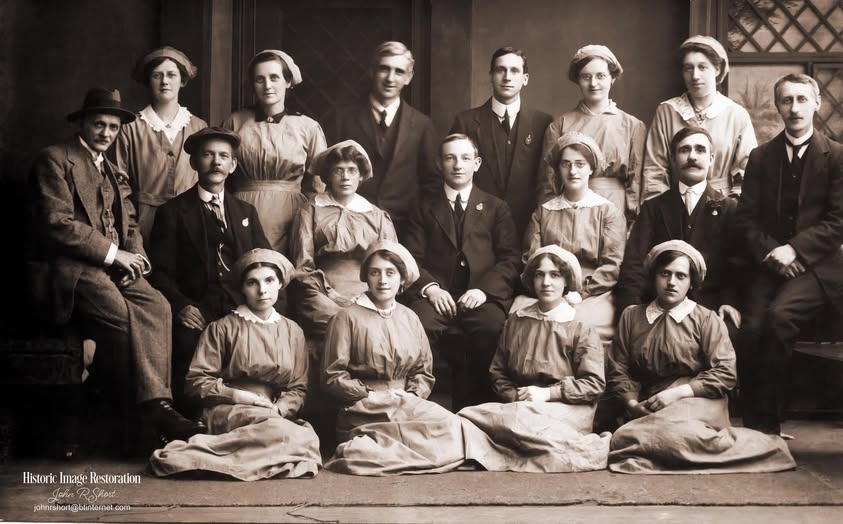


.jpg)


.jpg)


 Weevles Updates Disabled Bloggers Team


.svg)