WW2 German Scientists and Operation Paperclip ran by USA

In a move that stirs up some controversy, as part of “Operation Paperclip,” the United States ships 88 German scientists to America to assist the nation in its production of rocket technology. Most of these men had served under the Nazi regime and critics in the United States questioned the morality of placing them in the service of America. Nevertheless, the U.S. government, desperate to acquire the scientific know-how that had produced the terrifying and destructive V-1 missiles and V-2 rockets for Germany during WWII, and fearful that the Russians were also utilizing captured German scientists for the same end, welcomed the men with open arms.

READ MORE: What Was Operation Paperclip?

Realizing that the importation of scientists who had so recently worked for the Nazi regime so hated by Americans was a delicate public relations situation, the U.S. military cloaked the operation in secrecy. In announcing the plan, a military spokesman merely indicated that some German scientists who had worked on rocket development had “volunteered” to come to the United States and work for a “very moderate salary.” The voluntary nature of the scheme was somewhat undercut by the admission that the scientists were in “protective custody.” 

Upon their arrival in the United States on November 16, newsmen and photographers were not allowed to interview or photograph the newcomers. A few days later, a source in Sweden claimed that the scientists were members of the Nazi team at Peenemeunde where the V-weapons had been produced. The U.S. government continued to remain somewhat vague about the situation, stating only that “certain outstanding German scientists and technicians” were being imported in order to “take full advantage of these significant developments, which are deemed vital to our national security.” The situation pointed out one of the many ironies connected with the Cold War. The United States and the Soviet Union, once allies against Germany and the Nazi regime during World War II, were now in a fierce contest to acquire the best and brightest scientists who had helped arm the German forces in order to construct weapons systems to threaten each other.

Nazi Germany and its Scientists

Beginning in 1933, hundreds of physicists and other academics fled the country, transforming their lives and the global scientific landscape.

Physicists at the Kaiser Wilhelm Institute in Berlin
Left to right: Hertha Sponer, Albert Einstein, Hugo Grotrian, Ingrid Franck, Wilhelm Westphal, James Franck, Otto von Bayer, Lise Meitner, Peter Pringsheim, Fritz Haber, Gustav Hertz, and Otto Hahn gather at the Kaiser Wilhelm Institute in Berlin in 1921. Half of the people in the photo were listed as displaced in the 1930s. Credit: AIP Emilio Segrè Visual Archives, Aristid V. Grosse Collection

Two months after Adolf Hitler was appointed chancellor, the German government issued the Gesetz zur Wiederherstellung des Berufsbeamtentums—the Law for the Restoration of the Professional Civil Service. With some exceptions, none of which lasted for long, the 7 April 1933 law ordered that those in government positions who had at least one Jewish grandparent or were political opponents of the Nazi Party be immediately dismissed. Thousands of people lost their jobs as teachers, judges, police officers—and academics at the country’s top universities.

Over the next several years, hundreds of German scientists and other intellectuals would flee to the UK, the US, and dozens of other countries to protect their livelihoods and their lives. The Nazi regime pushed out leading researchers such as Albert Einstein, Hans Krebs, and even national hero Fritz Haber, who had helped develop chemical weapons during World War I. The extraordinary intellectual exodus would have tremendous implications for not only Germany but also the countries that took in the refugees.

Read the rest of our series on displaced German scientists.

  1. The scientific exodus from Nazi Germany
  2. The unlikely haven for 1930s German scientists
  3. The tragic story of Hans Hellmann

See also a map of the career paths of every physics Nobel laureate.

To capture a snapshot of the scientific exodus from 1930s Germany, we’ve tracked the movements of 129 physicists included in the 1936 List of Displaced German Scholars. The Notgemeinschaft Deutscher Wissenschaftler im Ausland (Emergency Association of German Scholars in Exile), founded by German neuropathologist and refugee Philipp Schwartz in 1933, compiled the document to help dismissed academics find positions in other countries. The association disseminated the list discreetly to minimize the risk of harm to the scholars who were still in Germany. The list contains nearly 1800 names in various fields. Many of the people on the list were Jewish, but not all—some had Jewish spouses or other family members, some supported communism, and others had spoken out against the government.

Displaced German Scholars classifies academics by their fields of study and details their work history in Germany. Each entry ends with the position the person held as of 1936. Some fortunate scholars were already safe with permanent employment abroad; others had the short-term security of a position lasting a few months or a year. But a sizable portion of entries, particularly for scientists early in their careers, end with the abbreviation Unpl—unplaced.

The names in the physics section read like a who’s who of early 20th-century physics: Hans Bethe, Felix Bloch, Max Born, Albert Einstein, James Franck, Otto Frisch, Fritz London, Lise Meitner, Erwin Schrödinger, Otto Stern, Leo Szilard, Edward Teller, Victor Weisskopf, Eugene Wigner. Three of the displaced scientists—Einstein, Franck, and Schrödinger—were already physics Nobel laureates; five more would eventually receive the prize. A 2016 study found that the 15% of physicists who were dismissed from German universities accounted for 64% of all German physics citations.

Fortunately for those physicists and other displaced scholars, colleagues from outside Germany acted quickly to provide assistance. In April 1933, British economist William Beveridge founded the Academic Assistance Council, later renamed the Society for the Protection of Science and Learning. The group’s first president was physicist Ernest Rutherford. Ultimately SPSL would help more than 2500 scholars from Germany and occupied countries flee to the UK. A similar organization in the US, the Emergency Committee in Aid of Displaced German (later Foreign) Scholars, rescued more than 300 academics. The Notgemeinschaft kept detailed records of the scholars at risk and, working with organizations like SPSL, helped find jobs abroad for many of them.

Thanks to such efforts, the vast majority of physicists on the list survived past World War II. One notable exception is Hans Hellmann, a pioneering quantum chemist who fled Nazi Germany only to be executed four years later in the Soviet Union’s Great Purge (see the accompanying article). In general, displaced German academics fared far better than other displaced citizens in Germany and occupied countries. “Would that shiploads of scholars, of artists, or ordinary men, women, and children might have sought and found the sanctuary that these men and women were helped to find,” Nathan Kravetz wrote in a foreword to a 1993 reprinting of the displaced scholar list.ESCAPING GERMANY. Hover over the arrows to see the physicists who fled from Germany to a given country. The more refugees to a country, the thicker the arrow. Credit: Greg Stasiewicz

The map above shows where displaced German physicists found new employment in their first move to escape their home country for good. Much of the data comes from Displaced German Scholars; for physicists who were unplaced in 1936, we performed our own research to chart their destinations. We obtained information for 126 of the 129 physicists. (Please contact the author if you have information about any of the remaining three: Heinrich Goldschmidt, Hans Kohn, or Emanuel Wasser.)

Unsurprisingly, the UK and the US were the most popular destinations. Einstein and Franck headlined the 30 German physicists who relocated to American institutions such as the Institute for Advanced Study, Harvard, and Stanford. Teller, Schrödinger, and 34 others headed to Cambridge, Oxford, and other UK destinations. (Schrödinger eventually made an ill-fated decision to accept a position in Austria, where he wrote a fawning letter to Hitler before changing his mind and again retreating to England.) Many of those physicists eventually became key contributors to the Manhattan Project.

Other countries gained from Germany’s brain drain too. Ernst Alexander and Günther Wolfsohn helped jump-start the fledgling experimental physics department at the Hebrew University of Jerusalem. Gerhard Herzberg landed a job at the University of Saskatchewan in Canada, where he would perform work on the spectra of free radicals that would garner the 1971 Nobel Prize in Chemistry. The young republic of Turkey eagerly courted German astronomers, experimental physicists, and other academics to bolster its educational institutions (see the accompanying article).

After the war, some academics returned to Germany (East and West). But many stayed in their adopted country or found new opportunities abroad—with long-term consequences for scholarly output in Germany. For physics, one way to trace the effects is through German-born recipients of the Nobel Prize in Physics. Following Hitler’s rise to power, two of the next three Germans to win the physics prize had fled the country. Even decades later, the impact of the intellectual exodus is clear: Physics laureates Arno Penzias (1978), Jack Steinberger (1988), and Rainer Weiss (2017) were born in prewar Germany but emigrated to the US as children, and Michael Kosterlitz (2016) is the son of German refugees.

Weapons of World War One

World War I is often considered the first true ‘modern war’, a conflict fought between industrialised countries equipped with modern weapons. It saw the rise of powerful weapons such as heavy artillery, machine guns and aeroplanes – and the decline of 19th-century weapons like sabres and bayonets. This page contains brief summaries of the most significant weapons of World War I.

Bayonets

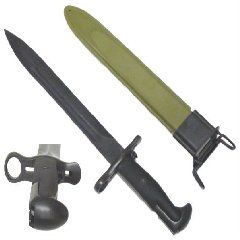
The bayonet was a comparatively simple weapon: a bracketed dagger attached to the end of a rifle barrel. Its primary function was to turn the rifle into a thrusting weapon, allowing its owner to attack the enemy without drawing too close.

Bayonets are believed to have originated in medieval China but by the late 17th century they were widely used in Europe. The shape, size and design of bayonets evolved alongside changes in firearms.

The ‘bayonet charge’ was also an important tactic in modern warfare. Bayonet charges were designed for psychological impact: men were trained to advance in rows, with faces contorted, lungs blaring and bayonets thrusting.

Though effective in the 19th century, these charges were thwarted by rapid-firing small arms and machine-guns. Lengthy bayonets attached to even longer rifles also made close-quarters fighting difficult and ungainly. As a consequence, bayonets quickly lost their effectiveness as weapons during World War I.

When not employed in battle, bayonets were often detached from rifles and used as all-purpose tools, for anything from digging to opening canned food rations.

“Bayonet injuries were cruel, particularly since British soldiers were trained to ‘thrust the bayonet home then give it a sharp twist to the left, thus making the wound fatal’. Perhaps the shock-and-awe value of the bayonet is what made those 19th-century generals so enamoured of it.”
Jonathan Bastable, historian

Rifles

The rifle was standard issue for infantrymen from each country. Rifles were relatively cheap to produce, reasonably accurate and easy to carry.

Almost all British and British imperial soldiers were issued with the Lee-Enfield 303, German troops received a 7.92mm Mauser and French soldiers the 8mm Lebel and Berthier. All were bolt-action repeating rifles, meaning that each round was fed into the chamber manually before firing (unlike modern automatic and semi-automatic weapons).

These rifles were known for their durability, long range and reliability in difficult conditions. All could fire accurately over a distance of around 500 metres, while the Enfield could potentially kill a man two kilometres away. This long range was largely wasted on the Western Front, however, where distances between trenches could be as low as 40 metres.

Rifle cleaning, maintenance and drilling occupied a good deal of an infantry soldier’s daily routine. More than 40 million rifles were used on the battlefields of World War I.

“The Lee-Enfield was not as effective as a semi-automatic, but with a ten-round magazine and a quick bolt action, it was far better for rapid-fire than the German Kar 98K Mauser… Unfortunately, British rifle training emphasised pinpoint accuracy rather than volume of fire.”
Allan Converse, historian

Revolvers

In World War I, hand-held pistols or revolvers were issued mainly to officers. Enlisted soldiers only received pistols if they were required for specialist duties, such as military police work or in tank crews where rifles would be too unwieldy.

The most famous pistol of the war was the German-made Luger P08, with its distinctive shape, narrow barrel and seven-shot magazine. British officers were issued with the Webley Mark V or Mark VI, which fired a .455 bullet from a six-round magazine.

The Webleys were reliable if somewhat ‘clunky’ weapons. Many accounts suggest the Webleys could fire even when caked with mud or dust – but they were also heavy and difficult to fire accurately. One officer wrote of his Webley that “after assiduous practice, I am at last able to hit the side of a fairly large house at a distance of five paces – with luck”. Many British officers resorted to using much lighter Lugers captured from German officers.

Pistols were not usually a significant weapon during World War I, though they were sometimes important as concealed weapons or for close combat in the trenches.

“About 1.6 million Luger pistols of all types were made by the end of the Great War, and they earned the affection of the troops. They fired rapidly, pointed easily and were superb pistols for their time, giving excellent service if properly cared for.”
Stephen Bull, historian

Machine Guns

The image of infantrymen charging pointlessly into machine-gun fire is a common motif of the Great War. World War I machine-guns were not as common, portable or manageable as modern weapons – but their impact was deadly nevertheless.
At the outbreak of war, Germany had the upper hand in both the quality and quantity of machine-guns. The Maschinengewehr 08 or MG08 was capable of firing hundreds of 7.92mm rounds a minute at ranges in excess of two kilometres. More than 130,000 MG08s were manufactured during the war and deployed on the battlefield or mounted on German aircraft.
British forces used the older Hotchkiss Mk I and the heavy and unwieldy Vickers Mk I, before adopting the more efficient Lewis gun in 1915. These guns were capable of firing up to 500 rounds per minute – but they were cumbersome, very heavy (often more than 50 kilograms) and required at least three well-trained men to set up and operate effectively. Their rapid rate of fire caused machine-guns to quickly overheat, requiring elaborate water and air-based cooling systems to prevent them from jamming or exploding.

Combatant nations quickly recognised the value of machine-guns on the battlefield, installing placements that allowed them to repel charges with sweeping and interlocking fire.
“Few technical developments had quite the impact of the machine gun on the Western Front during the First World War. The German army’s Maxim guns effectively ended an entire, attrition-based, strategy of military campaigning, although it took the best part of the war for the allied generals to realise this.”
Peter Squires, writer

Grenades

Grenades are small bombs thrown by hand or launched from a rifle attachment. They are either detonated by a percussion cap on impact with the ground or after the expiration of a timer.

World War I grenades varied significantly in size, shape and weight. Germany led the way in grenade development. Developed in 1913, the Kugelhandgranate was a light, ball-shaped grenade; it was armed by pulling a friction wire and detonated after a delay of five to seven seconds. More common was the heavier Stielhandgranate or ‘stick grenade’, sometimes dubbed the ‘potato masher’.

Early British models like the Mark I had a similar design but were awkward to use and prone to accidental detonation. These were superseded by the pineapple-shaped Mills bomb, the design of which continues today.

Mills bombs had a safety pin and firing lever and were designed to fragment on detonation, causing shrapnel injuries to the enemy. They were produced with four and seven-second fuses. The weight of these grenades (in excess of 750 grams or one-and-a-half pounds) made lengthy throws difficult; they were designed to be hurled from behind cover to protect the thrower from shrapnel.

“The Mills bomb was a simple, rugged and effective hand grenade… At the start of the war, Britain lacked an effective grenade and troops often resorted to the use of home-made ‘jam tin’ bombs.”
Roger Lee, historian

“Even after the appearance during World War I of machine guns, tanks and attack aircraft, artillery remained the major source of firepower on the battlefield… World War I is an example of a period in which firepower technology got far ahead of mobility technology, and the result was trench warfare.”
Spencer Tucker, historian

Artillary

No weaponry had a greater impact on the battlefields of World War I than artillery. These large and powerful guns fired explosive shells against enemy positions, causing enormous damage to men, equipment and the landscape.

Artillery had been a feature of warfare since the days of heavy cannon. Technical improvements brought about improvements in size, range, accuracy, rates of fire and mobility. Light artillery or field artillery referred to small to medium calibre guns that could be transported by men, horses or vehicles. Heavy artillery fired much larger shells, often over a distance of several miles, but was much less portable and was moved by specialised trucks or trains.

There was no denying the deadly impact of artillery. More than one billion artillery shells were fired during World War I and more soldiers were killed by exploding shells and shrapnel than any other weapon.

At the Battle of the Somme in 1916, almost 1.8 million shells were fired on German lines in the space of just one week. The largest single artillery piece was the German-built ‘Paris gun’, used to shell the French capital from 120 kilometres away.

Mortar

mortar is essentially a miniature artillery piece, capable of launching small-calibre explosives over short distances. They were either transported on their own wheels or installed on special mounts and operated by one or two men.

Mortars launched grenades, small bombs or shells of calibres from 75 to 250 millimetres. These explosives were launched with high trajectories so that they fell on enemy positions from above. This made mortars an important weapon on the Western Front, where they could lob shells into enemy trenches, machine-gun nests or sniper positions. Mortars made a distinctive ‘whoomp’ sound when launched and a whistling sound when falling to earth; these noses were often a signal to take cover.

The German army deployed several types and sizes of mortar while the British relied chiefly on the Stokes mortar, developed in 1915. The Stokes mortar launched improvised grenades and could fire one every few seconds at distances in excess of one kilometre.

“The Stokes mortar… was little more than an ‘educated drain-pipe’, without wheels and divisible into man-portable loads. Its bomb was detonated by a firing pin as it fell to the bottom of the tube, and it could fire quickly enough to have three rounds in the air simultaneously.”
Hew Strachan, historian

Tanks

Tanks were another of World War I’s legacies to modern warfare. The idea of large armoured carriers, impervious to rifle and machine-gun fire, was developed by a British military committee in 1915. Their official name was “landships” but the British government’s cover story – that it was developing mobile water tanks – led to their more accepted name.

Britain became the first nation to deploy tanks in battle at Flers-Courclette in September 1916, with mixed results. The first British tank, the Mark I, moved only at walking pace and was susceptible to breakdown and immobility.

Designers and operators quickly learned from these problems, leading to the development of the Mark IV in 1917. More than 1,200 of these tanks were built and played an important part in some of the war’s final battles.

The French also designed and constructed their own tanks, first using them in battle in April 1917. The Germans, in contrast, focused mainly on anti-tank weapons and built only a handful of their own tanks.

“The effectiveness of the tank was severely curtailed, even into 1918, by the evolving nature of its technology, its limited speed and its mechanical unreliability. The British Mark V… was the first that could be controlled by one man, but carbon monoxide fumes could poison its crew.

Mines

Mines are large bombs or explosive charges, planted underground and detonated remotely or when triggered by passing soldiers or vehicles.

The use of underground mines was embraced by combatants during the stalemate on the Western Front. Specialist units would dig tunnels under ‘no man’s land’ to plant huge mines under enemy trenches and positions. These mines would be remotely detonated, usually in coordination with an attack on the surface.

Tunnelling and mine-laying were used extensively on the Somme, Messines Ridge and at Verdun. One notable use of mines occurred at Hill 60 during the Battle of Messines (June 1917), when Australian tunnelling specialists detonated 450,000 kilograms of underground explosives and killed thousands of German troops.

Laying underground mines was dangerous work: tunnellers sometimes veered off-course and ended up emerging in enemy trenches, while both sides installed special equipment and sentries to listen out for underground digging. Sea mines, or floating bombs that exploded on contact with ships, were also deployed by naval forces.

“The Flanders campaign of 1917 opened June 7th. Nineteen underground mines were exploded by the British at different points in the German front line, causing panic among the German troops… A million pounds of explosives were detonated and the sound was heard in London, 130 miles away.”
Martin Gilbert, historian

Barbed Wire

Barbed wire is fencing wire containing sharp edges or spikes at various intervals. It was developed in the United States in the 1870s for the purpose of containing cattle. It was adopted for military purposes in the Boer War (1899-1902) and Russo-Japanese War (1904-5) and used by all combatant nations in World War I.

Barbed wire and caltrops (single iron spikes scattered on the ground) were used extensively on the Western Front, mainly to halt or slow enemy charges against one’s own trench.

Barbed wire was installed as screens, ‘aprons’ or entanglements, installed by wiring parties who usually worked at night. Advancing infantry often found large these defences impossible to penetrate; many died slow lingering deaths entangled in the wire.

The positioning of wire entanglements was done strategically: it could keep the enemy out of grenade range or funnel them toward machine-gun positions. More than one million kilometres of barbed wire was used on the Western Front.

“If you want to find the old battalion / I know where they are, I know where they are, I know where they are / If you want to find the old battalion, I know where they are / They’re hanging on the old barbed wire.”
British trench song

Flame Throwers

Flamethrowers are devices for spreading fire over significant distances. Usually wielded by one or two soldiers carrying a backpack or tank, flamethrowers used pressurised gas to spurt burning oil or gasoline up to 40 metres.

The military function of flamethrowers was trench-clearing: the burning fuel filled trenches, landing on equipment and soldiers and forcing them to withdraw. Like chemical weapons, flamethrowers were also psychological weapons: not frequently used but designed to strike terror into the enemy.

The first Flammenwerfer was developed by the German military and used in battle in late 1914. They were used more extensively in Flanders in 1915, causing terror among British soldiers and claims of wartime atrocities in the British press. Flamethrowers were so feared and despised that soldiers using them became targets for rifle and sniper fire.

The French developed their own small one-man flamethrower and used it in the final months of the war. The British experimented with a larger fixed-position flamethrower at the Somme, using it to hurl fire at German positions 60 metres away.

“The psychological effects were comparable to those of gas, and that was not all the two had in common. Just as many soldiers became the victims of their own gas, the flame-thrower gave a new slant to the term ‘friendly fire’… The weapon became extremely hazardous for those using it.”
Leo van Bergen, historian

Torpedoes

Torpedoes are self-propelled missiles capable of being launched from submarines and ships or dropped into the sea from the undercarriage of planes.

The first torpedoes, produced in the 1870s, ran on compressed air and were slow and inaccurate. The German navy pioneered the diesel-powered motorised torpedo. By 1914, German torpedoes could travel at up to 75 kilometres per hour over ranges up to 10 kilometres. They were not particularly accurate, though this mattered little when delivered by U-boats (submarines) at close quarters.

Each torpedo contained several hundred pounds of explosive, usually TNT, that detonated on contact with the hull of its target. As the war progressed, the British made rapid advances in underwater torpedoes and managed to sink at least 18 German U-boats with them.

“The Germans’ combination of submarine and torpedo technology came close to winning the First World War for the German navy in 1917. The Allies were terror-stricken by the invisible enemy. By World War I, German models weighed almost 2,500 pounds and cruised at speeds close to 40 miles per hour.”
Jason Richie, historian

List of Northumberland Fusiliers battalions in WW1

This is a list of Northumberland Fusiliers battalions in World War I. When the First World War broke out in August 1914, the Northumberland Fusiliers, a fusilier infantry regiment of the British Army, consisted of 7 battalions, eventually expanding to 52 battalions, although not all existed at the same time, of which 29 served overseas. It was the second largest infantry regiment of the British Army during World War I, surpassed only by the 88 battalions of the London Regiment.

The Northumberland Fusiliers earned 67 battle honours and was awarded five Victoria Crosses but at the cost of over 16,000 soldiers killed in action, and many thousands wounded.The Northumberland Fusiliers mostly saw action in the main theatre of war, engaged in static trench warfare on the Western Front in Belgium and France, but also participated in fighting on the Macedonian front, the Gallipoli Campaign, the Sinai and Palestine Campaign and the Italian Front.

Pre-war

At the outbreak of the First World War, the Northumberland Fusiliers consisted of seven battalions.

Expansion

The expansion in battalions mostly came through two sources: the duplication of the Territorial Force battalions and the formation of Kitchener’s New Armies. Of the 45 battalions raised during the war, 10 were Territorial Force and 27 were New Army.

Territorial Force

In accordance with the Territorial and Reserve Forces Act 1907  which brought the Territorial Force into being, the TF was intended to be a home defence force for service during wartime and members could not be compelled to serve outside the country. However, on the outbreak of war on 4 August 1914, many members volunteered for Imperial Service. Therefore, TF units were split into 1st Line (liable for overseas service) and 2nd Line (home service for those unable or unwilling to serve overseas) units. 2nd Line units performed the home defence role, although in fact most of these were also posted abroad in due course. Later, a 3rd Line was formed to act as a reserve, providing trained replacements for the 1st and 2nd Line units. When 2nd Line battalions were formed, the 1st Line took on a fractional designation so, for example, 4th Battalion became 1/4th Battalion (first fourth) and its 2nd Line was designated 2/4th Battalion (second fourth); in due course the 3rd Line was formed as the 3/4th Battalion (third fourth).

In the summer of 1915, personnel of 2nd and 3rd line battalions who had not volunteered for overseas service were formed into Provisional Battalions. They were used to form Provisional Brigades and later Home Service divisions (71st72nd, and 73rd Divisions); on 1 January 1917 they became numbered battalions of line infantry regiments. In the case of the Northumberland Fusiliers, the 21st and 22nd Provisional Battalions became the 35th and 36th Battalions (T.F.) of the regiment

New Army

Kitchener was one of the few people in 1914 to realize that the war was not going to be a short one; he believed that it would last three years and would require an army of 70 divisions. He eschewed the Territorial Force – partly due to the limitations imposed by its terms of service but also due to the poor impression he formed when observing the French Territorials in the Franco-Prussian War – and did not make use of the framework envisioned by Haldane. He launched his appeal for 100,000 volunteers on 7 August 1914 to form a New Army of six divisions (and support units) and within a few days this target had been reached; by the end of September, half a million volunteers had come forward to form the New Armies

Each of the 69 line infantry regiments raised one battalion for the First (K1) and for the Second New Armies (K2) designated as Service battalions and numbered after the existing Territorial Force battalions (so 8th and 9th (Service) Battalions for the Northumberland Fusiliers). This rigid structure did not take account of the differing ability of regiments to raise troops based upon the population of their recruiting areas. Therefore, the Third New Army (K3) had a much higher proportion of battalions from the more populous north of England, notably Cheshire, Lancashire, Yorkshire, Durham and Northumberland (10th11th12th13th and 14th (Service) Battalions). The Fourth New Army (K4) was formed from men of the Reserve and Special Reserve battalions which were over establishment. Originally formed into the 30th – 35th Divisions, these were broken up so the battalions could train recruits and send drafts to the first three New Armies. The regiment raised the 15th (Reserve) Battalion in this manner.

While the first four New Armies were being raised, a number of units were also being raised by committees in cities and towns, and by other organizations and individuals – the Pals battalions. These were housed, clothed and fed by their committees until the War Office took them over in 1915 and the raisers’ expenses were refunded. These units formed the Fifth and Sixth New Armies (later called the new Fourth and Fifth New Armies when the original Fourth New Army was broken up). The Northumberland Fusiliers raised the largest number of pals battalions of any regiment, notably including the Tyneside Scottish and Tyneside Irish Brigades: 16th (Newcastle)17th (NER Pioneers)18th (1st Tyneside Pioneers)19th (2nd Tyneside Pioneers)20th (1st Tyneside Scottish)21st (2nd Tyneside Scottish)22nd (3rd Tyneside Scottish)23rd (4th Tyneside Scottish)24th (1st Tyneside Irish)25th (2nd Tyneside Irish)26th (3rd Tyneside Irish), and 27th (4th Tyneside Irish) battalions.

The locally recruited – pals – battalions formed depot companies and in 1915 these were grouped into local reserve battalions to provide reinforcements for their parents. The regiment formed 28th29th (Tyneside Scottish)30th (Tyneside Irish)31st32nd33rd (Tyneside Scottish), and 34th (Tyneside Irish) Reserve Battalions.

Others[edit]

The regiment formed eight other battalions. The 37th (Home Service) Battalion was formed in April 1918 to replace the 36th Battalion when it moved to the Western Front. The 38th Battalion was formed in June 1918, but was absorbed into the 22nd Battalion before the end of the month.

The regiment raised three Garrison Battalions (1st2nd, and 3rd) of officers and men unfit for active service but considered fit for garrison duty at home and overseas, thereby releasing fitter troops for front line service.

In May 1917, the Training Reserve was reorganized with the battalions becoming more specialized in their training. Young Soldier Battalions took in recruits aged 18 years and one month and, after basic training, posted them to one of two linked Graduated Battalions. Eventually, 23 Young Soldier Battalions and 46 Graduated Battalions were formed. On 27 October 1917, these were allocated to 23 infantry regiments and thereby the Northumberland Fusiliers gained the 51st (Graduated)52nd (Graduated) and 53rd (Young Soldier) Battalions.

Reserve battalions

A number of reserve battalions served during the war. They recruited and trained drafts for the active service units and were designated by use of (Reserve) after the battalion number. These had a number of different origins and had a variety of fates.

Special Reserve battalions

The Childers Reforms of 1881 created regimental districts, each allocated a two-battalion regiment, usually bearing a “county” title. Existing two-battalion regiments of foot (1st to 25th inclusive) were redesignated, whereas the single-battalion foot regiments were paired to become the 1st or 2nd battalions of the new regiments. At the same time the existing militia and rifle volunteer units of the district became battalions of their regiments, the militia numbered after the regulars – thus 3rd (Millitia) Battalion, 4th (Millitia) Battalion, etc. – and the volunteers in a separate sequence – 1st Volunteer Battalion, 2nd Volunteer Battalion, etc. As the 5th (Northumberland) (Fusiliers) Regiment of Foot already had two battalions, it simply became the Northumberland Fusiliers as the county regiment of Northumberland. The Northumberland Light Infantry Militia became the 3rd (Militia) Battalion and the rifle volunteers formed the 1st, 2nd and 3rd Volunteer Battalions of the regiment.

Further reforms by Haldane in 1908 saw the militia transferred to a new “Special Reserve” as “Reserve” – 3rd battalions – or “Extra Reserve” – 4th and subsequent – battalions. The volunteer battalions were renumbered in the same sequence as the regulars and millitia. Hence, the 3rd (Millitia) Battalion became the 3rd (Reserve) Battalion and the volunteers became the 4th, 5th and 6th Battalions of the Northumberland Fusiliers.

Almost all of the Special Reserve battalions remained in the United Kingdom throughout the war, training replacements and providing drafts to the regular battalions. The 3rd (Reserve) Battalion remained part of the regiment as a training unit until the end of the war.

2nd Reserve battalions[edit]

On 8 October 1914, each Reserve and Extra Reserve battalion of the line infantry regiments were instructed to form a Service battalion. The battalions thus raised, including the 15th (Service) Battalion, were used to form the divisions of Kitchener’s Fourth New Army. The divisions were never fully formed; the need for trained reinforcements for the first three New Armies meant that they were broken up and the infantry battalions were used to provide and train reinforcements. On 10 April 1915, the infantry battalions became reserve formations to be known as 2nd Reserve battalions (in the sense that they were second to the original Reserve and Extra Reserve battalions). The 15th Battalion became the 15th (Reserve) Battalion and provided replacements for the 8th – 14th battalions.

The introduction of conscription caused a reorganisation of the reserve battalions as the regimental system could not cope with the number of new recruits. A new, centralized, system was put in place, called The Training Reserve. On 1 September 1916, the 15th Battalion became part of the new organisation.

Local Reserve battalions[edit]

The locally recruited Service battalions of the Fifth and Sixth New Armies – the Pals battalions – formed depot companies and in 1915 these were grouped into Local Reserve battalions to provide reinforcements for their parents. Like the 2nd Reserve battalions, they became part of the Training Reserve on 1 September 1916.

Territorial Force Reserve battalions

Almost all Territorial Force battalions had formed a 3rd Line – designated with the fractional 3/ – by June 1915; they supplied reinforcements to their parent 1st and 2nd Lines. In the autumn of 1915 they were brought together in 14 Third Line Groups, one for each of the pre-war T.F. divisions– those of the Northumberland Fusiliers joining the Northumbrian Third Line Group, along with those of the East Yorkshire Regiment then Green Howards,and the Durham Light Infantry.

In April 1916 they dropped the fractional designation and became Reserve Battalions T.F. On 1 September 1916 the reserve territorial battalions of each regiment were amalgamated into a single unit (or two units in certain large regiments, for example the Manchester Regiment’s 5th and 8th Reserve Battalions). At the same time, the Third Line Groups were renamed as Reserve Brigades T.F. The Northumbrian Reserve Brigade T.F. commanded 4th (Reserve) Battalion, Northumberland Fusiliers, 4th (Reserve) Battalion, East Yorkshire Regiment,4th (Reserve) Battalion, Green Howards, and 5th (Reserve) Battalion, Durham Light Infantry in the Hornsea area as part of the Humber Garrison.

Along with the Special Reserve battalions, the T.F. Reserve battalions remained as regimental reserves. New recruits were posted to them first until they were up to strength, then to the Training Reserve. When drafts were needed for the overseas units, they were taken first from the regimental reserves; if there were insufficient trained replacements then recourse was made to the Training Reserve.

Battalions

1st Battalion

The 1st Battalion was a regular army battalion, stationed in Portsmouth at the outbreak of World War I. It was assigned to the 9th Brigade3rd Infantry Division and remained with it throughout the war. It landed at Le Havre on 14 August 1914 and remained on the Western Front until the Armistice with Germany. It fought in the following major battles:Battle of MonsFirst Battle of the AisneFirst Battle of YpresBattle of the Somme (1916)Battle of Arras (1917)Third Battle of YpresFirst Battle of the Somme (1918)Battle of the Lys (1918)Second Battle of the Somme (1918)Battles of the Hindenburg LineFinal Advance in Picardy

2nd Battalion

The 2nd Battalion was a regular army battalion, stationed in SabathuIndia as part of the 9th (Sirhind) Brigade, 3rd (Lahore) Division at the outbreak of World War I.It departed Karachi on 20 November 1914, arrived at Plymouth on 22 December and proceeded to Winchester where it joined the 84th Brigade28th Division. It moved to the Western Front in January 1915 and on to the Salonika front in November. In June 1918, it left 28th Division and was transferred to France where it joined the 150th Brigade50th (Northumbrian) Division for the rest of the war. During the war, it fought in the following battles with 28th Division:Second Battle of YpresBattle of LoosStruma

and with 50th Division:Battles of the Hindenburg LineFinal Advance in Picardy

3rd (Reserve) Battalion

The 3rd Battalion was a Special Reserve battalion based in Newcastle upon Tyne at the outbreak of war. In August 1914 it moved to East Boldon (near Sunderland) where it remained throughout the war as part of the Tyne Garrison and provided drafts to the regular (1st and 2nd) battalions.The battalion was disembodied on 29 July 1919 (personnel transferred to the 1st Battalion on 12 July) but was not formally disbanded until April 1953.

4th Battalion (T.F.)

In peacetime, the 4th, 5th, 6th and 7th Battalions formed the Northumberland BrigadeNorthumbrian Division. They were mobilised on the outbreak of the war and were posted to the Tyne Defences. The 4th Battalion was redesignated as 1/4th Battalion with the formation of the 2nd Line battalion in November 1914. In April 1915, the brigade was posted to France and on 14 May was redesignated as 149th (Northumberland) Brigade in 50th (Northumbrian) Division. On 15 July 1918, the battalion was reduced in strength to a cadre and transferred to Lines of Communication duties. On 16 August 1918, it was assigned to the 118th Brigade39th Division. It was disbanded on 10 November 1918.[8] It took part in the following battles with 50th Division:Second Battle of YpresBattle of the Somme (1916)Battle of Arras (1917)Third Battle of YpresFirst Battle of the Somme (1918)Battle of the Lys (1918)

5th Battalion (T.F.)

This history of the 5th Battalion – redesignated as 1/5th Battalion with the formation of the 2nd Line battalion in November 1914 – was identical to that of the 4th Battalion.

6th Battalion (T.F.)

This history of the 6th Battalion – redesignated as 1/6th Battalion with the formation of the 2nd Line battalion in December 1914 – was identical to that of the 4th Battalion.

7th Battalion (T.F.)

This history of the 7th Battalion – redesignated as 1/7th Battalion with the formation of the 2nd Line battalion in September 1914 – was identical to that of the 4th Battalion until February 1918. British divisions on the Western Front were reduced from a 12-battalion to a 9-battalion basis in February 1918 (brigades from four to three battalions) and the 1/7th Battalion was transferred to 42nd (East Lancashire) Division as Pioneers on 12 February 1918 where it remained for the rest of the war.[8] It took part in the following battles with 50th Division:Second Battle of YpresBattle of the Somme (1916)Battle of Arras (1917)Third Battle of YpresFirst Battle of the Somme (1918)Second Battle of the Somme (1918)

and with the 42nd Division:Battles of the Hindenburg LineFinal Advance in Picardy

2/4th, 2/5th and 2/6th Battalions (T.F.)

The 2/4th and 2/5th Battalions were formed at Blyth in November 1914 and the 2/6th Battalion at Newcastle on 28 December 1914. In January 1915 they were assigned to the 188th (2/1st Northumberland) Brigade63rd (2nd Northumbrian) Divisionat Swalwell Camp near Newcastle. In November 1915, the brigade moved to York and in July 1916 the Division was broken up; the battalions remained with the brigade at York. In November 1916, the battalions were assigned to the 217th Brigade72nd Division at Clevedon. They moved to Northampton in January 1917 and to Ipswich in May.The 2/5th and 2/6th Battalions were disbanded on 6 and 5 December 1917 and the 2/4th Battalion on 8 April 1918 at Ipswich.

2/7th Battalion (T.F.)

The 2/7th Battalion was formed at Alnwick on 26 September 1914 and assigned to the 188th (2/1st Northumberland) Brigade, 63rd (2nd Northumbrian) Division in January 1915. In January 1917 the battalion moved to Egypt as a garrison battalion. It was disbanded on 15 September 1919.

3/4th, 3/5th, 3/6th and 3/7th Battalions (T.F.)

The 3rd Line battalions were formed in June 1915 at Hexham (3/4th), Newcastle (3/5th and 3/6th) and Alnwick (3/7th). On 8 April 1916 they became Reserve Battalions at Catterick: the 3/4th Battalion was redesignated as 4th (Reserve) Battalion, 3/5th as 5th (Reserve), 3/6th as 6th (Reserve), and 3/7th as 7th (Reserve). On 1 September 1916, the 4th (Reserve) Battalion absorbed the other three. After March 1917 it was at AtwickHornsea, to South Dalton in early 1918 and by July 1918 was at Rowlston (near Hornsea) where it remained in the Northumbrian Reserve Infantry Brigade until the end of the war. It was disbanded on 17 April 1919 at Rowlston.

8th (Service) Battalion

The 8th (Service) Battalion was formed at Newcastle on 19 August 1914. as part of Kitchener’s First New Army – K1 – and was assigned to the 34th Brigade11th (Northern) Division at Grantham. In July 1915 it departed for the Mediterranean and landed at Gallipoli on 7 August. In January 1916 it moved to Egypt where it formed part of the Suez Canal Defences, and in July to France where it spent the rest of the war (still in 34th Brigade, 11th Division) It was disbanded on 27 June 1919 at Newcastle. It fought in the following battles:Battles of Suvla including the Landing at Suvla Bay and the Battle of Scimitar HillBattle of the Somme (1916)Battle of Messines (1917)Third Battle of YpresBattle of Arras (1918)Battles of the Hindenburg LineFinal Advance in Picardy

9th (Northumberland Hussars) Battalion

The 9th (Service) Battalion was formed at Newcastle on 8 September 1914 as part of Kitchener’s Second New Army – K2 – and was assigned to the 52nd Brigade17th (Northern) Division at Wareham. In July 1915 it moved to the Western Front where it was to remain until the end of the war. On 3 August 1917, it was transferred to the 103rd Brigade34th Division.On 25 September 1917, it absorbed the 2/1st Northumberland Hussars and became the 9th (Northumberland Hussars) Battalion. On 26 May 1918, it was transferred to the 183rd Brigade61st (2nd South Midland) Division. It was disbanded on 1 November 1919 in France. It fought in the following battles with 17th Division:Battle of the Somme (1916)Battle of Arras (1917)

with the 34th Division:Third Battle of YpresFirst Battle of the Somme (1918)Battle of the Lys (1918)

and with the 61st Division:Final Advance in Picardy

10th and 11th (Service) Battalions

The 10th and 11th (Service) Battalions were formed at Newcastle on 22 September 1914 as part of Kitchener’s Third New Army – K3 – and were assigned to the 68th Brigade23rd Division at Bullswater, near Frensham. In August 1915 they moved to the Western Front and in November 1917 to the Italian Front, where they remained, still in 68th Brigade, 23rd Division. The 10th Battalion was reduced to cadre in Italy in 1918. They were disbanded in Newcastle on 11 and 25 June 1919. They fought in the following major battles:Battle of the Somme (1916)Battle of Messines (1917)Third Battle of YpresBattle of the PiaveBattle of Vittorio Veneto

12th and 13th (Service) Battalions

The 12th and 13th (Service) Battalions were formed at Newcastle on 22 September 1914, also as part of Kitchener’s Third New Army – K3 – and were assigned to the 62nd Brigade21st Division at Halton Park. They moved to France in September 1915. They were amalgamated on 1 August 1917 as the 12th/13th (Service) Battalion.The combined battalion remained in 62nd Brigade, 21st Division on the Western Front for the rest of the war.The 12th/13th Battalion was disbanded at Catterick on 1 May 1919. They fought in the following battles:Battle of LoosBattle of the Somme (1916)Battle of Arras (1917)Third Battle of YpresBattle of Cambrai (1917)First Battle of the Somme (1918)Battle of the Lys (1918)Second Battle of the Somme (1918)Battles of the Hindenburg LineFinal Advance in Picardy

14th (Service) Battalion (Pioneers)

The 14th (Service) Battalion was formed at Newcastle on 22 September 1914, also as part of Kitchener’s Third New Army – K3 – and was assigned to the 21st Division at Halton Park, initially as Army Troops, but from February 1915 as a Pioneer Battalion.It moved to France in September 1915 where it remained with 21st Division on the Western Front for the rest of the war. The 14th Battalion was disbanded on 16 July 1919 in France. It took part in the following battles:Battle of LoosBattle of the Somme (1916)Battle of Arras (1917)Third Battle of YpresBattle of Cambrai (1917)First Battle of the Somme (1918)Battle of the Lys (1918)Second Battle of the Somme (1918)Battles of the Hindenburg LineFinal Advance in Picardy

15th (Reserve) Battalion

The 15th (Service) Battalion was formed at Darlington in October 1914, as part of Kitchener’s original Fourth New Army – K4 – and was assigned to the 89th Brigade30th Division. The Fourth New Army was not fully formed when the decision was made to use it to provide replacements for the first three New Armies (K1, K2 and K3). The divisions were broken up on 10 April 1915; the infantry brigades and battalions became reserve formations and the other divisional troops were transferred to the divisions of the Fifth and Sixth New Armies.15th (Service) Battalion became a 2nd Reserve battalion and was redesignated as 15th (Reserve) Battalion. It remained in 89th Brigade which now became 1st Reserve Brigade. It provided replacements for the 8th – 14th battalions In September 1916, it was absorbed by the other Training Reserve battalions of the 1st Reserve Brigade.[8][39]

16th (Service) Battalion (Newcastle)

The 16th was a Pals battalion, raised in Newcastle in September 1914 by the Newcastle and Gateshead Chamber of Commerce. It was taken over be the War Office in April 1915 and in June 1915, the 16th (Newcastle) Battalion was assigned to the 96th Brigade32nd Division at Catterick. On 22 November 1915, it landed at Boulogne and remained on the Western Front until 7 February 1918 when it was disbanded at Elverdinghe. Its personnel were transferred to the T.F. battalions: A Company to 1/4th, B Company to 1/5th and C Company to 1/6th in 50th Division, D Company to 1/7th in 42nd Division and the remainder to the 13th Entrenching Battalion. The battalion fought in the following battles:Battle of the Somme (1916) (including the battles of AlbertBazentin RidgeAncre Heights and Ancre)

17th (Service) Battalion (N.E.R. Pioneers)

The 17th Battalion was also a Pals battalion, raised by the North Eastern Railway at Hull in September 1914. It became a pioneer battalion on 11 January 1915 and was assigned to the 32nd Division at Catterick in June. It was taken over by the War Office on 1 September 1915, and landed at Havre on 21 November with 32nd Division. On 19 October 1916 it moved to GHQ Railway Construction Troops, 2 September 1917 back to 32nd Division, 15 November back to GHQ Railway Construction Troops and finally on 31 May 1918 to 52nd (Lowland) Division as Pioneer Battalion where it remained until the end of the war It was disbanded at Newcastle on 27 June 1919. The battalion took part in the following battles with 32nd Division:Battle of the Somme (1916) (including the battles of AlbertBazentin RidgeAncre Heights and Ancre)

and with 52nd Division:Second Battle of the Somme (1918)Battle of Arras (1918)Battles of the Hindenburg LineFinal Advance in Artois

18th (Service) Battalion (1st Tyneside Pioneers)

The 18th Battalion was a Pals battalion raised in Newcastle on 15 October 1914 by the Lord Mayor and City. On 8 February 1915 it became a Pioneer Battalion and in July joined 34th Division at Kirkby Malzeard. It was taken over by the War Office on 15 August 1915, and landed at Havre on 8 January 1916 with 34th Division. It was reduced to cadre strength on 18 May 1918. On 17 June 1918, it was transferred to the infantry and assigned to the 116th Brigade39th Division. It moved again on 29 July 1918, when it was assigned to the 118th Brigade, 39th Division. On 16 August 1918, it was assigned as Divisional Troops to the 66th Division. Its last move was on 20 September 1918, when it was assigned to the 197th Brigade as Lines of Communication troops. It was disbanded in France in June 1919.While attached to 34th Division, it saw action at:Battle of the Somme (1916)Battle of Arras (1917)Third Battle of Ypres First Battle of the Somme (1918)Battle of the Lys (1918)

19th (Service) Battalion (2nd Tyneside Pioneers)

The 19th Battalion was a Pals battalion raised in Newcastle on 16 November 1914 by the Lord Mayor and City. On 8 February 1915 it became a Pioneer Battalion and in July joined 35th Division at Masham. It was taken over by the War Office in August 1915, and landed at Havre on 29 January 1916 with 35th Division. It remained with the 35th Division as Pioneers on the Western Front for the rest of the war. 19th Battalion was disbanded on 30 April 1919 at Ripon. The 35th Division was involved in the following battles:Battle of the Somme (1916)Third Battle of YpresFirst Battle of the Somme (1918)Final Advance in Flanders

20th, 21st, 22nd and 23rd (Service) Battalions (Tyneside Scottish)

The 1st – 4th Tyneside Scottish Battalions were Pals battalions raised in Newcastle by the Lord Mayor and City on 14 October (1st), 26 September (2nd), 5 November (3rd) and 16 November 1914 (4th). In March 1915 they moved to Alnwick and together they formed 102nd (Tyneside Scottish) Brigade34th Division in June 1915. They were taken over by the War Office on 15 August 1915, moved to Salisbury Plain at the end of the month and crossed to France in January 1916.Due to extremely heavy casualties suffered during the attack at La Boiselle on 1 July 1916,[n] the Brigade was attached to the 37th Division between 6 July and 22 August 1916 in exchange for 111th Brigade.

British divisions on the Western Front were reduced from a 12-battalion to a 9-battalion basis in February 1918 (brigades from four to three battalions): the 20th and 21st Battalions were disbanded on 3 February and the 25th Battalion joined from the 103rd (Tyneside Irish) Brigade on the same date. As a result of the losses suffered in the Ludendorf Offensive (First Battle of the Somme and Battle of the Lys), 102nd Brigade had to be extensively reorganized. On 16 May 1918, the 23rd Battalion was reduced to cadre and transferred to Lines of Communication duties; it joined 116th Brigade39th Division on 17 June, to 66th Division on 16 August and to 197th Brigade on 20 September where it remained for the rest of the war. The 22nd Battalion was likewise reduced to cadre on 17 May; it returned to England on 18 June with 16th Division. It absorbed the new 38th Battalion at Margate and was posted to 48th Brigade, 16th Division at Aldershot. It returned to France in July where it remained for the rest of the war.The 22nd Battalion was disbanded on 14 June 1919 at Catterick, and the 23rd Battalion in June 1919 in France.

While part of the 34th Division, the Tyneside Scottish took part in the following major actions:Battle of the Somme (1916) (Battle of Albert only)Battle of Arras (1917)Third Battle of YpresFirst Battle of the Somme (1918)Battle of the Lys (1918)

While part of the 16th Division, the 22nd Battalion also took part in the Final Advance in Artois and Flanders.

24th, 25th, 26th and 27th (Service) Battalions (Tyneside Irish)

A support company of the Tyneside Irish Brigade advancing on 1 July 1916.

The 1st – 4th Tyneside Irish Battalions were Pals battalions raised in Newcastle by the Lord Mayor and City on 14 November (1st), 9 November (2nd), 23 November 1914 (3rd) and 5 January 1915 (4th). In March 1915 they moved to Woolsington and together they formed 103rd (Tyneside Irish) Brigade34th Division in June 1915. They were taken over by the War Office on 27 August 1915, moved to Salisbury Plain at the end of the month and crossed to France in January 1916.Due to extremely heavy casualties suffered during the attack at La Boiselle on 1 July 1916, the Brigade was attached to the 37th Division between 6 July and 22 August 1916 in exchange for 112th Brigade.

On 10 August 1917, the 24th and 27th Battalions were amalgamated as the 24th/27th Battalion. British divisions on the Western Front were reduced from a 12-battalion to a 9-battalion basis in February 1918 (brigades from four to three battalions): the 25th Battalion joined the 102nd (Tyneside Scottish) Brigade on 3 February and the 24th/27th and 26th Battalions were disbanded on 26 February.[3] As a result of the losses suffered in the Ludendorf Offensive (First Battle of the Somme and Battle of the Lys), 102nd Brigade had to be extensively reorganized. On 16 May 1918, the 25th Battalion was reduced to cadre and transferred to Lines of Communication duties; it joined 39th Division on 17 June, to 66th Division on 16 August and to 197th Brigade on 20 September where it remained for the rest of the war. 25th Battalion was disbanded in France in June 1919.

While part of the 34th Division, the Tyneside Irish took part in the following major actions:Battle of the Somme (1916) – Battle of Albert Battle of Arras (1917)Third Battle of YpresFirst Battle of the Somme (1918)Battle of the Lys (1918)

28th (Reserve) Battalion)

The 28th Battalion was formed at Cramlington in July 1915 from the depot companies of the 18th and 19th Battalions as a Local Reserve battalion. In November 1915 it was at Ripon in the 19th Reserve Brigade, and in December to Harrogate. On 1 September 1916, it was absorbed by the Training Reserve Battalions of 19th Reserve Brigade.

29th (Reserve) Battalion (Tyneside Scottish)

The 29th Battalion was formed at Alnwick in July 1915 from the depot companies of the 20th21st22nd and 23rd Battalions as a Local Reserve battalion In January 1916 it was at Barnards Castle in the 20th Reserve Brigade, and in April to Hornsea. On 1 September 1916, it became 84th Training Reserve Battalion, 20th Reserve Brigade at Hornsea.

30th (Reserve) Battalion (Tyneside Irish)

The 30th Battalion was formed at Woolsington in July 1915 from the depot companies of the 24th25th26th and 27th Battalions as a Local Reserve battalion.In November 1915 it was at Richmond in the 20th Reserve Brigade, and in December to Catterick. On 1 September 1916, it became 85th Training Reserve Battalion, 20th Reserve Brigade at Hornsea.

31st (Reserve) Battalion[edit]

The 31st Battalion was formed at Catterick in November 1915 from the depot companies of the 16th Battalion as a Local Reserve battalion in the 20th Reserve Brigade. In April 1916 it moved to Hornsea and on 1 September 1916, it became 86th Training Reserve Battalion, 20th Reserve Brigade at Hornsea.

32nd (Reserve) Battalion[edit]

The 32nd Battalion was formed at Ripon in November 1915 from the depot companies of the 17th Battalion as a Local Reserve battalion in the 19th Reserve Brigade. In December 1915 it moved to Harrogate and in June 1916 to UsworthWashington. On 1 September 1916, it became 80th Training Reserve Battalion, 19th Reserve Brigade at Newcastle.

33rd (Reserve) Battalion (Tyneside Scottish)

The 33rd Battalion was formed at Hornsea in June 1916 from the 29th Battalion as a Local Reserve battalion. On 1 September 1916, it was absorbed into the Training Reserve Battalions of 20th Reserve Brigade at Hornsea.

34th (Reserve) Battalion (Tyneside Irish)

The 34th Battalion was formed at Hornsea in June 1916 from the 30th Battalion as a Local Reserve battalion.On 1 September 1916, it was absorbed into the Training Reserve Battalions of 20th Reserve Brigade at Hornsea.

35th Battalion (T.F.)

The 21st Provisional Battalion (T.F.) was formed about June 1915 from the Home Service personnel of the T.F. Battalions. On 1 January 1917 it became the 35th Battalion (T.F.) of the regiment at Herne Bay in 227th Brigade. It remained at Herne Bay until early 1918 when it moved to Westleton where it remained until the end of the war[3] with 227th Brigade. The 35th Battalion was disbanded on 4 September 1919 at Saxmundham.

36th Battalion (T.F.)

The 22nd Provisional Battalion (T.F.) was formed about June 1915 from the Home Service personnel of the T.F. Battalions. On 1 January 1917 it became the 36th Battalion (T.F.) of the regiment at St. Osyth in 222nd Brigade. It moved to Ramsgate in March 1917 and to Margate in April 1918. On 27 April it became a Garrison Guard battalion and went to France in May where it joined 178th Brigade59th (2nd North Midland) Division. The “Garrison Guard” title was dropped by July. It was still with 178th Brigade, 59th Division at the end of the war.It was reduced to cadre on 5 November 1919 in France and disbanded on 28 November in Northern Command. It took part in the following battles:Second Battle of the Somme (1918)Final Advance in Artois and Flanders

37th (Home Service) Battalion

The 37th (Home Service) Battalion was formed on 27 April 1918 at Margate to replace the 36th Battalion (T.F.) in 222nd Brigade. It remained at Margate in 222nd Brigade until the end of the war. It was disbanded on 25 June 1919 at Canterbury.

38th Battalion[edit]

The short-lived 38th Battalion was formed at Margate on 1 June 1918. It was absorbed by the 22nd Battalion (3rd Tyneside Scottish) on 18 June.

1st Garrison Battalion

The 1st Garrison Battalion was formed in August 1915 and then sent to the island of Malta on Garrison duties. It was disbanded in India on 4 March 1920.

2nd Garrison Battalion

The 2nd Garrison Battalion was formed at Newcastle in October 1915, it was then sent to India in February 1916. It joined Sialkot Brigade, 2nd (Rawalpindi) Division, moved to Poona Brigade, Poona Divisional Area in March 1917and to Ahmednager Brigade in October where it remained until the end of the war. It was disbanded in the UK on 19 January 1920.

3rd (Home Service) Garrison Battalion

The 3rd (Home Service) Garrison Battalion was formed at Sunderland about March 1916. It sent to Ireland in 1917 and was at Belfast in 1918. It was disbanded in Ireland on 24 June 1919.

51st (Graduated) Battalion

The 51st (Graduated) Battalion was formed on 27 October 1917 by the redesignation of the 238th Graduated Battalion, Training Reserve. It originated as the new 4th Training Reserve Battalion. It was in 206th (2nd Essex) Brigade69th (2nd East Anglian) Division at Welbeck. Early in 1918 it moved to Middlesbrough and later to Guisborough where it remained until the end of the war. The battalion was converted to a service battalion as 51st (Service) Battalion on 8 February 1919. It was reduced to cadre in 1919 before being disbanded on the Rhine on 28 March 1920.

52nd (Graduated) Battalion

The 52nd (Graduated) Battalion was formed on 27 October 1917 by the redesignation of the 276th Graduated Battalion, Training Reserve. It originated as the 3rd Training Reserve Battalion (formerly 10th (Reserve) Battalion, North Staffordshire Regiment). It was in 200th (2/1st Surrey) Brigade67th (2nd Home Counties) Division at Canterbury. On 5 March 1918 it joined 206th Brigade, 69th Division at Barnards Castle and in June to Guisborough where it remained until the end of the war.The battalion was converted to a service battalion as 52nd (Service) Battalion on 8 February 1919. It was disbanded on the Rhine on 28 March 1920.

53rd (Young Soldier) Battalion

The 53rd (Young Soldier) Battalion was formed on 27 October 1917 by the redesignation of the 5th Young Soldier Battalion, Training Reserve. It originated as the 5th Training Reserve Battalion (formerly 10th (Reserve) Battalion, Leicestershire Regiment) at RugeleyCannock Chase. It remained in the United Kingdom throughout the war.[84] The battalion was converted to a service battalion as 53rd (Service) Battalion on 8 February 1919. It was disbanded on the Rhine on 26 October 1919.

Post-war

The Northumberland Fusiliers continued to raise new battalions after the end of the war: the 39th (Service) Battalion on 10 May 1919 and the 40th (Service) Battalion in September 1919. They were disbanded in France on 5 March 1920 and 19 September 1919, respectively.

All of the war-raised battalions had been disbanded by the end of March 1920. The 1st Line Territorial Force battalions were reconstituted on 7 February 1920 as part of the new Territorial Armywhere they once again formed the Northumberland Brigade in the Northumbrian Division. Therefore, the Northumberland Fusiliers entered the inter-war period with

  • 1st Battalion
  • 2nd Battalion
  • 3rd Battalion (Militia)
  • 4th Battalion (T.A.)
  • 5th Battalion (T.A.)
  • 6th Battalion (T.A.)
  • 7th Battalion (T.A.)

How gas became a terror weapon in the WW1

The trench warfare of the Western Front encouraged the development of new weaponry to break the stalemate. Poison gas was one such development.

The first significant gas attack occurred at Ypres in April 1915, when the Germans released clouds of poisonous chlorine. The gas inflicted significant casualties among the British and Canadian forces at Ypres and caused widespread panic and confusion amongst the French colonial troops.

The chlorine was a strong irritant on the lungs, with prolonged exposure proving fatal. The immediate public outcry for retaliation resulted in quick adoption of defensive anti-gas measures including new companies of Royal Engineers responsible for offensive gas warfare.

Poison gas was initially released from cylinders, but this required ideal weather conditions and could be very risky. In the first British gas attack, at Loos in September 1915, much of the gas was blown back into the faces of the British troops. From 1916, gas was employed in shells instead, which allowed attacks from a much greater range.

Gases used included chlorine, mustard gas, bromine and phosgene, and the German Army was the most prolific user of gas warfare.

Gas did not prove as decisive a weapon as was anticipated but it was effective in clearing enemy forward positions. As a result, anti-gas measures became increasingly sophisticated. Primitive cotton face pads soaked in bicarbonate of soda were issued to troops in 1915, but by 1918 filter respirators using charcoal or chemicals to neutralise the gas were common.

The physical effects of gas were agonising and it remained a pervasive psychological weapon. Although only 3 per cent of gas casualties proved immediately fatal, hundreds of thousands of ex-soldiers continued to suffer for years after the war.

IN THE LATE AFTERNOON OF April 22, 1915, members of a special unit of the German Army opened the valves on more than 6000 steel cylinders arrayed in trenches along their defensive perimeter at Ypres, Belgium. Within 10 minutes, 160 tons of chlorine gas drifted over the opposing French trenches, engulfing all those downwind. Filled with pressurized liquid chlorine, the cylinders had been clandestinely installed by the Germans more than 3 weeks earlier. The order to release the gas was entrusted to German military meteorologists, who had carefully studied the area’s prevailing wind patterns. Disregarding intelligence reports about the strange cylinders prior to the attack, the French troops were totally unprepared for this new and horrifying weapon.1

The surprise use of chlorine gas allowed the Germans to rupture the French line along a 6-kilometer (3.7-mile) front, causing terror and forcing a panicked and chaotic retreat. Within a matter of minutes, this slow moving wall of gas killed more than 1000 French and Algerian soldiers, while wounding approximately 4000 more.2 A British soldier described the pandemonium that flowed from the front lines to the rear.

[I watched] figures running wildly in confusion over the fields. Greenish-gray clouds swept down upon them, turning yellow as they traveled over the country blasting everything they touched and shriveling up the vegetation. . . . Then there staggered into our midst French soldiers, blinded, coughing, chests heaving, faces an ugly purple color, lips speechless with agony, and behind them in the gas soaked trenches, we learned that they had left hundreds of dead and dying comrades.3

The German High Command sanctioned the use of gas in the hope that this new weapon would bring a decisive victory, breaking the enduring stalemate of trench warfare. However, their faith in this wonder weapon was limited. Surprised by the apparent success of the attack, and having no plan to send a large offensive force in after the gas, the Germans were unable to take advantage of the situation. Within days, both armies once again faced each other from the same opposing fortifications. The attack that spring day, nonetheless, marked a turning point in military history, as it is recognized as the first successful use of lethal chemical weapons on the battlefield.

Here, I offer a window into the first weapon of mass destruction (WMD) by charting the development and use of gas warfare during World War I. Defined today as “man-made, supertoxic chemicals that can be dispersed as a gas, vapor, liquid, aerosol (a suspension of microscopic droplets), or adsorbed onto a fine talcum-like powder to create ‘dusty’ agents,” chemical weapons remain a viable public health threat for civilians and soldiers across the globe.4 If, in the world since the attacks of September 11, 2001, the threat of terror weapons seems a ubiquitous part of the daily news and the term WMD is now as familiar to soccer moms as to beltway defense planners, it is important to remember that the medical and public health consequences of chemical weapons use are as real today as they were in 1915.5

Although chemical weapons killed proportionally few soldiers in World War I (1914–1918), the psychological damage from “gas fright” and the exposure of large numbers of soldiers, munitions workers, and civilians to chemical agents had significant public health consequences. Understanding the origins of chemical warfare during World War I and its emergence during that conflict as a physical and psychological threat to both military and civilian populations can provide historical insight into possible contemporary medical responses to this enduring and technologically pervasive threat.

THE MILITARIZATION OF ACADEMIC AND INDUSTRIAL CHEMISTRY

World War I had numerous causes, including colonial competition, economic rivalry, and various ideological and cultural clashes among the rising nation states of Europe. A complex and binding system of alliances among the Central Powers (Germany, Austria-Hungary, and Turkey) and the Allied Powers (Britain, France, Russia, and beginning in 1917, the United States) placed peace in a delicate balance. The tipping point came on June 28, 1914, with the assassination of Archduke Franz Ferdinand of Austria-Hungary by a Serbian national. This single act set off a chain of events that quickly plunged the world into a global war that eventually claimed between 9 million and 10 million lives and lasted 4 years.

The economic and industrial forces that altered the face of Europe during the first decade of the 20th century were also instrumental in creating many of the technological innovations driving the war. In time, tanks, submarines, and aircraft revolutionized how World War I was waged on land, sea, and in the air. Chemical weapons were another new marvel of the war, and their successful research, development, and deployment reflected the increasing sophistication of scientific and engineering practice. At the same time, physicians and medical researchers (some of whom worked to create these weapons) struggled to create adequate defensive systems and medical procedures to limit casualties. By the time of the armistice on November 11, 1918, the use of chemical weapons such as chlorine, phosgene, and mustard gas had resulted in more than 1.3 million casualties and approximately 90 000 deaths 

British Red Cross in WW1

Following the start of the ‘Great War’ in 1914, the British Red Cross joined forces with the Order of St. John Ambulance to form the Joint War committee. They pooled resources and formed Voluntary Aid Detachments (or VADs) with members trained in First Aid, Nursing, Cookery, Hygiene and Sanitation. These detachments all worked under the protection of the Red Cross, working in hospitals, rest stations, work parties and supply centres. The Joint War committee also provided assistance at the front line, supplying the first motorised ambulances to the battlefields, which were significantly more efficient then the horse drawn ambulances they replaced. The Joint War Committee was also active in setting up centres for recording the wounded and missing in action. Red Cross volunteers searched towns, villages and hospitals where fighting had occurred, noting names of the missing, the injured and the dead. This formed the basis of the international Message and Tracing service, still running today. Voluntary Aid Detachment The Voluntary Aid Detachment (VAD) was a voluntary organisation providing field nursing services, mainly in hospitals, in the United Kingdom and various other countries in the British Empire. The organisation’s most important periods of operation were during World War I and World War II. The organisation was founded in 1909 with the help of the Red Cross and Order of St. John. By the summer of 1914 there were over 2,500 Voluntary Aid Detachments in Britain. Each individual volunteer was called a detachment, or simply a VAD. Of the 74,000 VADs in 1914, two-thirds were women and girls. At the outbreak of the First World War VADs eagerly offered their service to the war effort. The British Red Cross was reluctant allowing civilian women a role in overseas hospitals: most VADs were of the middle and upper classes and unaccustomed to hardship and traditional hospital discipline. Military authorities would not accept VADs at the front line. Katharine Furse took two VADs to France in October 1914, restricting them to serve as canteen workers and cooks. Caught under fire in a sudden battle the VADs were pressed into emergency hospital service and acquitted themselves well. The growing shortage of trained nurses opened the door for VADs in overseas military hospitals. Furse was appointed Commander-in-Chief of the VAD and restrictions were removed. Female volunteers over the age of twenty-three and with more than three months’ hospital experience were accepted for overseas service. VADs were an uneasy addition to military hospitals’ rank and order. They lacked the advanced skill and discipline of professional trained nurses and were often critical of the nursing profession. Relations improved as the war stretched on: VADs increased their skill and efficiency and trained nurses were more accepting of the VADs’ contributions. During four years of war 38,000 VADs worked in hospitals and served as ambulance drivers and cooks. VADs served near the Western Front and in Mesopotamia and Gallipoli. VAD hospitals were also opened in most large towns in Britain. Later, VADs were also sent to the Eastern Front. They provided an invaluable source of bedside aid in the war effort. Many were decorated for distinguished service.

On a personal note my Grandfather served in WW1 Northumberland Fusiliers and he told my Mum if the Red Cross parcels had not arrived the soldiers would have starved. No food was getting through as Merchant ships travelling to Europe to feed the allied soldiers were being sunk by German torpedoes and war ships. Even if they got the supplies to land then they had the problems of relaying the food in trucks which were being attacked on the roads.

Medical Services during WW1

Medical care throughout the First World War was largely the responsibility of the Royal Army Medical Corps (RAMC). The RAMC’s job was both to maintain the health and fighting strength of the forces in the field and ensure that in the event of sickness or wounding they were treated and evacuated as quickly as possible.

Every battalion had a medical officer, assisted by at least 16 stretcher-bearers. The medical officer was tasked with establishing a Regimental Aid Post near the front line. From here, the wounded were evacuated and cared for by men of a Field Ambulance in an Advanced Dressing Station.

The hospitals set up immediately behind the lines were often housed in tents during the First World War, including wards and operating theatres.

This was particularly true of Casualty Clearing Stations, with base hospitals further away from the fighting sometimes making use of existing or more permanent buildings.

A casualty then travelled by motor or horse ambulance to a Casualty Clearing Station. These were basic hospitals and were the closest point to the front where female nurses were allowed to serve. Patients were usually transferred to a stationary or general hospital at a base for further treatment. A network of ambulance trains and hospital barges provided transport between these facilities, while hospital ships carried casualties evacuated back home to ‘Blighty’.

As well as battle injuries inflicted by shells and bullets, the First World War saw the first use of poison gas. It also saw the first recognition of psychological trauma, initially known as shell shock. In terms of physical injury, the heavily manured soil of the Western Front encouraged the growth of tetanus and gas gangrene, causing medical complications. Disease also flourished in unhygienic conditions, and the influenza epidemic of 1918 claimed many lives.

Understanding shell shock and its treatments

Post-traumatic stress disorder (PTSD) is an important health risk factor for military personnel deployed in modern warfare. In World War I this condition (then known as shell shock or ‘neurasthenia’) was such a problem that ‘forward psychiatry’ was begun by French doctors in 1915. Some British doctors tried general anaesthesia as a treatment (ether and chloroform), while others preferred application of electricity. Four British ‘forward psychiatric units’ were set up in 1917. Hospitals for shell shocked soldiers were also established in Britain, including (for officers) Craiglockhart War Hospital in Edinburgh; patients diagnosed to have more serious psychiatric conditions were transferred to the Royal Edinburgh Asylum. Towards the end of 1918 anaesthetic and electrical treatments of shell shock were gradually displaced by modified Freudian methods psychodynamic intervention. The efficacy of ‘forward psychiatry’ was controversial. In 1922 the War Office produced a report on shell shock with recommendations for prevention of war neurosis. However, when World War II broke out in 1939, this seemed to have been ignored. The term ‘combat fatigue’ was introduced as breakdown rates became alarming, and then the value of pre-selection was recognised. At the Maudsley Hospital in London in 1940 barbiturate abreaction was advocated for quick relief from severe anxiety and hysteria, using i.v. anaesthetics: Somnifaine, paraldehyde, Sodium Amytal. ‘Pentothal narcosis’ and ‘narco-analysis’ were adopted by British and American military psychiatrists. However, by 1945 medical thinking gradually settled on the same approaches that had seemed to be effective in 1918. The term PTSD was introduced in 1980. In the UK the National Institute for Health and Clinical Excellence (NICE) guidelines for management (2005) recommend trauma-focussed Cognitive Behavioural Therapy and consideration of antidepressants.

WW2 The Macabre Story Of Josef Mengele, The Nazi ‘Angel Of Death’

A notorious SS officer and physician, Josef Mengele sent over 400,000 people to their deaths at Auschwitz during World War II — and never faced justice.

One of the most notorious Nazi doctors of World War II, Josef Mengele performed gruesome medical experiments on thousands of prisoners at the Auschwitz concentration camp. Guided by an unwavering belief in the unscientific Nazi racial theory, Mengele justified countless inhumane tests and procedures on Jewish and Romani people.

From 1943 to 1945, Mengele built up a reputation as the “Angel of Death” at Auschwitz. Like other Nazi doctors on-site, Mengele was tasked with choosing which prisoners would be murdered immediately and which ones would be kept alive for grueling labor — or for human experiments. But many prisoners remembered Mengele as being particularly cruel.

Not only was Mengele known for his cold demeanor on the arrival platform of Auschwitz — where he sent about 400,000 people to their deaths in the gas chambers — but he was also infamous for his brutality during his human experiments. He saw his victims as mere “test subjects,” and gleefully embarked on some of the most monstrous “research” of the war.

But as World War II came to a close and it became clearer that Nazi Germany was losing, Mengele fled the camp, was briefly captured by American soldiers, attempted to take up work as a farmhand in Bavaria, and eventually escaped to South America — never facing justice for his crimes.

On June 6, 1985, Brazilian police in São Paulo dug up the grave of a man named “Wolfgang Gerhard.” Forensic and later genetic evidence conclusively proved that the remains actually belonged to Josef Mengele, who had apparently died in a swimming accident in Brazil a few years prior.

This is the horrific true story of Josef Mengele, the Nazi doctor who terrorized thousands of Holocaust victims — and got away with everything.

Josef Mengele lacks a terrible backstory to which one can point a finger when attempting to explain his vile acts. Born on March 16, 1911, in Günzburg, Germany, Mengele was a popular and rich child whose father ran a successful business at a time when the national economy was cratering.

Everybody at school seemed to like Mengele and he earned excellent grades. Upon graduating, it seemed natural that he would go on to university and that he would succeed at anything he put his mind to.

Mengele earned his first doctorate in anthropology from the University of Munich in 1935. According to the New York Times, he did his post-doctoral work at the Frankfurt Institute for Hereditary Biology and Racial Hygiene under Dr. Otmar Freiherr von Verschuer, who was a Nazi eugenicist.

The ideology of National Socialism had always held that individuals were the product of their heredity, and von Verschuer was one of the Nazi-aligned scientists whose work attempted to legitimize that assertion.

Von Verschuer’s work revolved around hereditary influences on congenital defects such as cleft palates. Mengele was an enthusiastic assistant to von Verschuer, and he left the lab in 1938 with both a glowing recommendation and a second doctorate in medicine. For his dissertation topic, Mengele wrote about racial influences on the formation of the lower jaw.

But before long, Josef Mengele would be doing far more than simply writing about topics like eugenics and Nazi racial theory.

According to the United States Holocaust Memorial Museum, Josef Mengele had joined the Nazi Party in 1937, at the age of 26, while working under his mentor in Frankfurt. In 1938, he joined the SS and a reserve unit of the Wehrmacht. His unit was called up in 1940, and he seems to have served willingly, even volunteering for the Waffen-SS medical service.

Between the fall of France and the invasion of the Soviet Union, Mengele practiced eugenics in Poland by evaluating Polish nationals for potential “Germanization,” or race-based citizenship in the Third Reich.

In 1941, his unit was deployed to Ukraine in a combat role. There, Josef Mengele quickly distinguished himself on the Eastern Front. He was decorated several times, once for dragging wounded men out of a burning tank, and was repeatedly commended for his dedication to service.

But then, in January 1943, a German army surrendered at Stalingrad. And that summer, another German army was eviscerated at Kursk. Between the two battles, during the meatgrinder offensive at Rostov, Mengele was severely wounded and rendered unfit for further action in a combat role.

Mengele was shipped back home to Germany, where he connected with his old mentor von Verschuer and received a wound badge, a promotion to captain, and the assignment that would make him infamous: In May 1943, Mengele reported for duty to the concentration camp at Auschwitz.

Mengele got to Auschwitz during a transitional period. The camp had long been the site of forced labor and POW internment, but the winter of 1942-1943 had seen the camp ramp up its killing machine, centered on the Birkenau sub-camp, where Mengele was assigned as a medical officer.

With the uprisings and shutdowns in the Treblinka and Sobibor camps, and with the increased tempo of the killing program across the East, Auschwitz was about to get very busy, and Mengele was going to be in the thick of it.

Accounts given later by both survivors and guards describe Josef Mengele as an enthusiastic member of the staff who volunteered for extra duties, managed operations that were technically above his pay grade, and seemed to be almost everywhere at the camp at once. There’s no question that Mengele was in his element in Auschwitz. His uniform was always pressed and neat, and he always seemed to have a faint smile on his face.

Every doctor in his part of the camp was required to take a turn as the selection officer — dividing incoming shipments of prisoners between those who were to work and those who were to be immediately gassed — and many found the work depressing. But Josef Mengele adored this task, and he was always willing to take other doctors’ shifts on the arrival ramp.

Other than determining who would be gassed, Mengele also managed an infirmary where the sick were executed, assisted other German doctors with their tasks, supervised inmate medical staff, and conducted his own research among the thousands of inmates whom he had personally selected for the human experiment program that he also started and managed.

The experiments Josef Mengele devised were ghoulish beyond belief. Motivated and energized by the seemingly bottomless pool of condemned human beings placed at his disposal, Mengele continued the work he had started at Frankfurt by studying the influence of heredity on various physical traits. According to the History Channel, he used thousands of prisoners — many of whom were still children — as fodder for his human experiments.

He favored identical twin children for his genetics research because they, of course, had identical genes. Any differences between them, therefore, must have been the result of environmental factors. In Mengele’s eyes, this made sets of twins the perfect “test subjects” for isolating genetic factors by comparing and contrasting their bodies and their behavior.

Mengele assembled hundreds of pairs of twins and sometimes spent hours measuring various parts of their bodies and taking careful notes on them. He often injected one twin with mysterious substances and monitored the illness that ensued. Mengele also applied painful clamps to children’s limbs to induce gangrene, injected dye into their eyes — which were then shipped back to a pathology lab in Germany — and gave them spinal taps.

Whenever a test subject died, the child’s twin would be immediately killed with an injection of chloroform to the heart and both would be dissected for comparison. On one occasion, Josef Mengele killed 14 pairs of twins this way and spent a sleepless night performing autopsies on his victims.

For all of his methodical work habits, Mengele could be impulsive. During one selection — between work and death — on the arrival platform, a middle-aged woman who had been selected for work refused to be separated from her 14-year-old daughter, who had been assigned death.

A guard who tried to pry them apart got a nasty scratch on the face and had to fall back. Mengele stepped in to resolve the matter by shooting both the girl and her mother right on the spot. After murdering them, he then cut short the selection process and sent everybody to the gas chamber.

On another occasion, the Birkenau doctors argued over whether a boy they had all grown fond of had tuberculosis. Mengele left the room and came back an hour or two later, apologizing for the argument and admitting that he had been wrong. During his absence, he had shot the boy and then dissected him for signs of the disease, which he hadn’t found.

In 1944, Mengele’s zest and enthusiasm for his gruesome work earned him a management position at the camp. In this capacity, he was responsible for public health measures at the camp in addition to his own personal research at Birkenau. Again, his impulsive streak surfaced when he made decisions for the tens of thousands of vulnerable inmates.

When typhus broke out among the women’s barracks, for example, Mengele solved the problem in his characteristic way: He ordered one block of 600 women gassed and their barracks fumigated, then he moved the next block of women over and fumigated their barracks. This was repeated for each women’s block until the last one was clean and ready for a new shipment of workers. He did it again a few months later during a scarlet fever outbreak.

And through it all, Josef Mengele’s experiments continued, becoming more and more barbaric as time went on. Mengele stitched pairs of twins together at the back, gouged out the eyes of people with different-colored irises, and vivisected children who once knew him as the kindly old “Uncle Papi.”

When a form of gangrene called noma broke out in a Romani camp, Mengele’s absurd focus on race led him to investigate the genetic causes he was sure were behind the epidemic. To study this, he sawed off the heads of infected prisoners and sent the preserved samples to Germany for study.

After most of the Hungarian prisoners were killed off during the summer of 1944, the transports of new prisoners to Auschwitz slowed down during the autumn and the winter and eventually stopped altogether.

By January 1945, the camp complex at Auschwitz had been mostly dismantled and the starving prisoners force-marched to — of all places — Dresden (which was about to be bombed by the Allies). Josef Mengele packed up his research notes and specimens, dropped them off with a trusted friend, and headed west to avoid capture by the Soviets.

Josef Mengele managed to avoid the victorious Allies until June — when he was picked up by an American patrol. He was traveling under his own name at the time, but the wanted criminal list hadn’t been efficiently distributed and so the Americans let him go. Mengele spent some time working as a farmhand in Bavaria before deciding to escape Germany in 1949.

Using a variety of aliases, and sometimes his own name again, Mengele managed to avoid capture for decades. It helps that almost nobody was looking for him and that the governments of Brazil, Argentina, and Paraguay were all highly sympathetic to the escaping Nazis who sought refuge there.

Even in exile, and with the world to lose if he got caught, Mengele just couldn’t lay low. In the 1950s, he opened an unlicensed medical practice in Buenos Aires, where he specialized in performing illegal abortions.

This actually got him arrested when one of his patients died, but according to one witness, a friend of his showed up in court with a bulging envelope full of cash for the judge, who subsequently dismissed the case.

Israeli efforts to capture him were diverted, first by the chance to capture SS lieutenant colonel Adolf Eichmann, then by the looming threat of war with Egypt, which drew the Mossad’s attention away from fugitive Nazis.

Finally, on February 7, 1979, the 67-year-old Josef Mengele went out for a swim in the Atlantic Ocean, near São Paulo, Brazil. He suffered a sudden stroke in the water and drowned. After Mengele’s death, his friends and family members gradually admitted that they had known all along where he had been hiding and that they had sheltered him from facing justice.

In March 2016, a Brazilian court awarded control over Mengele’s exhumed remains to the University of São Paulo. It was then decided that his remains would be used by student doctors for medical research.

WW2 Nazi women guards in the Concentration camps

A point of fascination for many people and historians alike has been the role of women in the Holocaust, specifically female members of the SS and the Nazi party. Due to the stereotyping of women throughout history, many have been utterly shocked by the actions of female Nazi guards because, other than the actions being unspeakable, they were simply female. This, of course, is a pretty outdated view as evil has no gender and it is perfectly plausible for the perpetrators to be male or female.

Nevertheless, in this guide, we will be shedding light on some of the most notorious female Nazi guards and what role they played in the Holocaust.

Female Nazi Guards tended to be from lower to middle-class backgrounds and usually had no relevant work experience under their belt upon recruitment. It was also common for their professional backgrounds to heavily vary since there were no requirements other than simply being willing to carry out orders.

There was a feeder organisation known as The League of German Girls which acted as a means of indoctrination of young women to then push them into wanting to become part of the SS.

It has been documented that the SS men were told by Himmler to regard any female SS members as their equals and their comrades.

Female Nazi Guards tended to be from lower to middle-class backgrounds and usually had no relevant work experience under their belt upon recruitment. It was also common for their professional backgrounds to heavily vary since there were no requirements other than simply being willing to carry out orders.

There was a feeder organisation known as The League of German Girls which acted as a means of indoctrination of young women to then push them into wanting to become part of the SS.

It has been documented that the SS men were told by Himmler to regard any female SS members as their equals and their comrades.

Irma Grese

Irma-Grese
Irma Grese

Irma Ida Ilse Grese was an SS guard serving at the concentration camps of Auschwitz and Ravensbrück. She also served as a warden on the women’s section of Bergen-Belsen.

After the liberation of the camps, Grese was convicted of crimes involving murder and ill-treatment of prisoners and was consequently sentenced to death at the age of 22 during the Belsen trial. She was famous for being the youngest woman to die under British Law in the 20th Century.

Grese is particularly notorious for her sexual violence against inmates and her frequent sexual relationships with other SS guards – she was regarded as a nymphomaniac.

One of her lovers was none only than Josef Mengele, Angel of Death.  She was part of the gas chamber selection and often chose women based on whether she believed them to be more beautiful than she was. Grese had a thing for personal-grooming, expensive custom clothing and the overuse of perfume – which was believed to be a deliberate act of sadism against them female inmates who obviously had nothing.

During World War II Irma Grese was the most notorious of the female Nazi war criminals. She was born on October 7, 1923, to a agricultural family and left school in 1938 at the age of 15. She worked on a farm for six months, then in a shop and later for two years in a hospital. Then she was sent to work at the Ravensbrück Concentration Camp.

She became a camp guard at the age of 19, and, in March 1943, she was transferred to Auschwitz. She rose to the rank of Senior SS-Supervisor in the autumn of 1943, in charge of approximately 30,000 women prisoners, mainly Polish and Hungarian Jews. This was the second highest rank that SS female concentration camp pesonnel could attain.

After the war, survivors provided extensive details of murders, tortures, cruelties and sexual excesses engaged in by Irma Grese during her years at Auschwitz and Bergen-Belsen. They testified to her acts of pure sadism, beatings and arbitrary shooting of prisoners, savaging of prisoners by her trained and half starved dogs, to her selecting prisoners for the gas chambers.

She habitually wore heavy boots and carried a whip and a pistol. She used both physical and emotional methods to torture the camp’s inmates and enjoyed shooting prisoners in cold blood. She beat some of the women to death and whipped others mercilessly using a plaited whip.

The skins of three inmates that she had had made into lamp shades were found in her hut.

In January 1945, she returned to Ravensbrück Concentration Camp before being transferred to Bergen-Belsen in March.

After the Kommandant of Bergen-Belsen, Josef Kramer, Irma Grese was the most notorious defendant in the Belsen Trial, held between September 17 and November 17, 1945. Grese was convicted and sentenced to be hanged. She was executed on December 13, 1945.

Maria Mandl

Maria-Mandel

Maria Mandl was an Austrian SS guard working at Auschwitz, where she is believed to have been responsible for over 500,000 deaths of female inmates.

At the start of her career, Mandl oversaw things like daily roll calls as well as punishments such as beatings. She later progressed to being the top Female ranked guard with full control and say over the female Auschwitz camps and female subcamps.

Mandl earned herself the nickname “The Beast” after she was regularly known for partaking in the selection for the gas chambers and other forms of mass murder.

Mandl created the Women’s Orchestra of Auschwitz which was for the purposes of accompanying executions, selections, transportations and daily roll call. According to a Holocaust survivor, Lucia Adelsberger, the female inmates were made to march in time to the music, even after coming back exhausted from forced labour.

For her crimes against humanity, Mandl was executed at the age of 36

Herta Bothe

herta-bothe

Herta Bothe was a Nazi concentration camp guard at Ravensbrück-stutthof and Bergen-Belsen. She was recorded to have been 6ft 3 and known as the “Sadist of Stutthof” due to her merciless beatings of female prisoners.

At the age of 24, she accompanied a death march of women from central Poland to Bergen-Belsen. At the Belsen trial, she claimed that she had stuck prisoners with her hand as a means of discipline but never used an instrument to do so, nor did she claim to have killed anyone.  She was sentenced to ten years in prison and is still alive today. In a rare interview she said:

“Did I make a mistake? No. The mistake was that it was a concentration camp, but I had to go to it, otherwise, I would have been put into it myself. That was my mistake.”

She also outlined that when the camps were liberated, she was forced to bury rotting corpses in mass graves. She stated that those forces were not allowed to wear gloves and had to carry them themselves with no aid whatsoever.

Elizabeth Volkenrath

Elisabeth-Volkenrath

Elizabeth Volkenrath was a supervisor as a variety of Nazi Concentration camps during World War II. Volkenrath was in charge of selecting prisoners for the gas chambers and later became in charge of all camp selections for female prisoners.

She stood trial in the Belsen trial and was eventually sentenced to death after being found guilty of crimes against humanity.

Ilse Koch

ilse-koch

Strictly speaking, IIse was not an SS guard herself but her husband Karl Koch was the commander of Buchenwald. Using his power, he granted her a position in the camp where she earned a reputation and was called the “Witch of Buchenwald”.-

She was known to have often inspected prisoners upon arrival to see if they had any interesting tattoos on their skin. If she ever saw anything she liked, she would have the prisoners killed and use their skin to make items like lampshades or book covers.

Koch was actually acquitted in 1944 after the lack of evidence, whereas her husband was executed. Later, she was sentenced to life imprisonment and later committed suicide in 1967 at the age of 60 out of shame and desperation. It has been reported that she suffered from severe delusions where she became convinced that any concentration camp survivors would come and attack her in her cell.

The use of Dogs and animals in WW1

Here in Britain we are a nation of animal lovers so it’s probably not that hard for most of us to understand how dogs could have provided comfort, companionship, and a positive effect on morale for soldiers at war who were missing home comforts. On the Western Front, a dog would have provided a great psychological comfort to the men enduring the cold, wet and bleak horrors of trench warfare.

But, many of these furry friends were also there for very practical reasons and dogs, like horses and pigeons, had an important role to play in World War One. Field communication systems were slow and crude in the trenches and sending messages posed a problem — there was always a possibility that vital information couldn’t be shared between the front and HQ. The use of vehicles in transporting messages was a pain as they could break down and also eat up the mud making the environment even more difficult to traverse. Human runners were large, easy targets for the enemy. Trained dogs solved this communication problem — a pooch could travel over almost any terrain and was faster and more discreet than a human runner. Messages were put in tins around the necks of dogs and they were identified by a scarlet collar or tally. Dogs were extremely dependable and faithful if they were trained properly and as well as being very quick and reliable messengers, dogs proved also to be a great asset when it came to tracking the enemy, detecting explosives and finding wounded soldiers on the battlefield. Dogs used during WWI included Border Collies, Lurchers, English Sheepdogs, Retrievers and mongrels. The Airedale Terrier was probably the most common breed used by the British in World War One though. The Red Cross also commonly used them to find wounded soldiers.

An Airedale called Jack One story that stood out to me while I was researching this subject was that of an Airedale named Jack, who apparently helped save a British battalion in 1918. Jack went to France as a messenger and guard with the Sherwood Foresters, who were sent to man an advance post. There was an intense barrage four miles behind the lines, cutting off every line of communication with HQ. Unless HQ could be informed that reinforcements were needed pronto, the entire battalion risked being killed by the advancing enemy. It was impossible for any man to dodge the fire, but Airedale Jack provided a small chance and a glimmer of hope. The vital message was slipped into the a pouch attached to the dog’s collar, and this loyal and courageous canine, keeping low to the ground, ran through a barrage of enemy fire for half a mile to deliver the message to HQ. When he got there he was badly injured – his jaw was broken, and one leg was severely splintered. He did his duty, delivered the message, then dropped dead at the receiver’s feet. This sad story really sums up the dedication and determination that some of these dogs showed in battle. The ‘Dickin Medal’, awarded to animals that have performed heroic deeds, was not around during WWI, but if it had been Airedale Jack would have surely earned one. Dogs and animals in general are often among the forgotten forces of World War I, but many died or were injured helping the forces of all sides. Pigeons were important messengers too.