I love this really old pay per view this is my other favourite Wwe pay per view from when I was little. It is Wwe King Of The Ring. I am looking forward to watching all of the really old Wwe King Of The Ring’s on Netflix soon again from when I was younger.
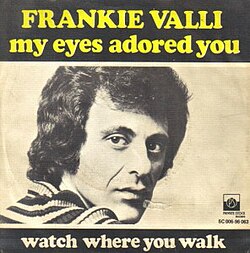
I love this song I have just been singing it on the karaoke in Neil’s Art Session in The Hall from 74. It is Frankie Valli And The Four Seasons My Eyes Adored You From 1974. It came out and was released in October 1974 before I was born. I love listening to the song in my music library on my iPhone with my Sony Headphones on when I am out and about walking.
I love this song I have just been singing it on the karaoke in Neil’s Art Session in The Hall it is from 67. It is Frankie Valli And The Four Seasons Beggin it came out and was released in February 1967 before I was born. I love listening to the song in my music library on my iPhone with my Sony Headphones on when I am out and about walking.
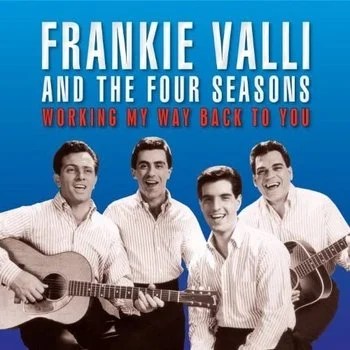
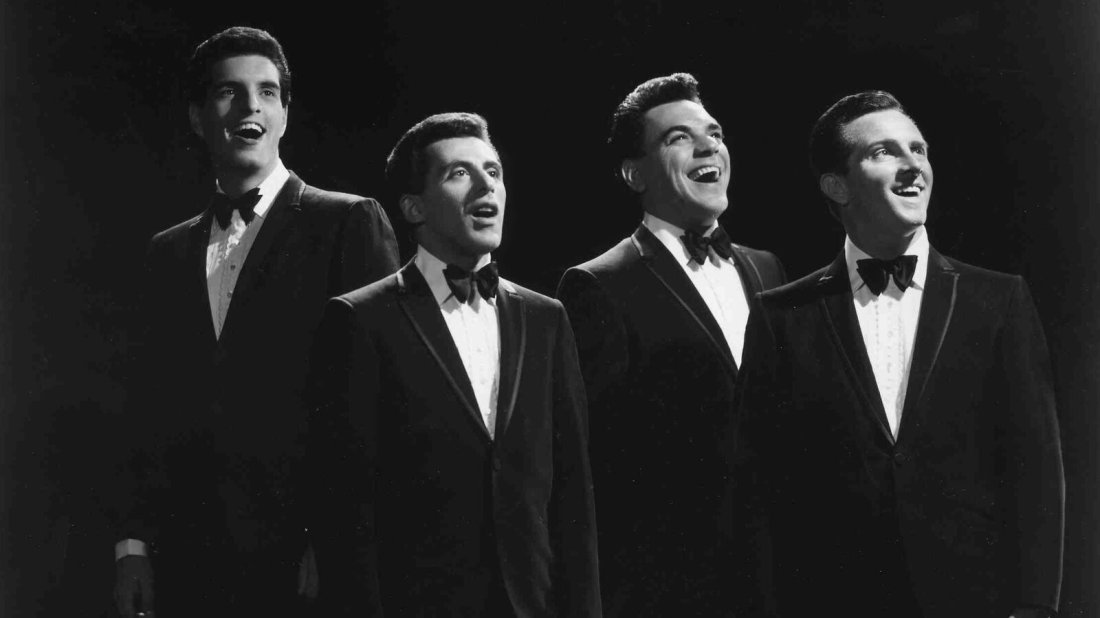
I love listening to Frankie Valli And The Four Seasons. I love listening to they music and songs from the 60’s and early 1970’s from before I was born on my iPhone from this album. I have it in my music library. I love listening to it with my Sony Headphones on when I am out and about walking.
First, the Allies charged 24 top Nazi leaders for their crimes. The judges found most of them guilty of war crimes, starting wars of aggression, crimes against humanity, and conspiracy. Evidence about the Holocaust played a major role in the trial. The judges called the Holocaust one of the worst crimes in history.
After the first trial, the Allies held 12 additional trials. These included separate trials for Nazi physicians, members of the Einsatzgruppen, and German judges.
The Nuremberg Trials weren’t just about punishment. They were also about showing the world what happened during the war and making sure people understood how serious these crimes were.
These trials were important because they created new rules to prevent such crimes in the future. They also showed that even powerful leaders would face justice if they broke international laws.
The main trial
Göring and Hess during trials
The International Military Tribunal was opened on October 18, 1945, in the Supreme Court Building in Berlin.
Nazi leaders
Judge Nikitchenko from the Soviet Union presided over the first session. The prosecution brought criminal charges against 24 Nazi leaders. The indictments were for:
Working with other people to commit a crime against peace (legally called “taking part in a conspiracy”)
Commander of the Luftwaffe (1935–1945), Chief of the 4-Year Plan (1936–1945), leader of several departments of the SS, and Prime Minister of Prussia. Committed suicide the night before his execution.[12]
Hitler’s deputy, flew to Scotland in 1941 to try to make peace with Great Britain. After trial he was sent to Spandau Prison and died there in 1987.[13]
Major Nazi industrialist. CEO of Krupp AG 1912–45. Medically unfit for trial. The prosecutors attempted to substitute his son Alfried (who ran Krupp for his father during most of the war) in the indictment, but the judges ruled it was too close to trial. Alfried was tried in a separate Nuremberg trial for his use of slave labor, thus escaping the worst notoriety and possibly death.
Chancellor of Germany in 1932 and Vice-Chancellor under Hitler in 1933–1934. Ambassador to Austria 1934–38 and ambassador to Turkey 1939–1944. Although acquitted at Nuremberg, von Papen was classed as a war criminal in 1947 by a German de-Nazification court, and sentenced to eight years’ hard labour. He was acquitted following appeal after serving two years.[18]
Commander-in-Chief of the Kriegsmarine from 1928 until his retirement in 1943, succeeded by Dönitz. Released because of ill health on September 26, 1955.[19]
Prominent banker and economist. President of the Reichsbank 1923–1930 and 1933–1938 and Economics Minister 1934–1937. Admitted breaking the Treaty of Versailles.[23]
Helped the Anschluß (joining Germany and Austria). Was briefly the Austrian Chancellor 1938. Deputy to Frank in Poland 1939–1940. Later, Reich Commissioner of the occupied Netherlands 1940–1945. Expressed sorrow.[25]
Hitler’s favourite architect, personal friend, and Minister of Armaments from 1942. As Minister of Armaments, he used slave labour from the occupied territories in weapons production. Expressed sorrow.[26]
The Sturmabteilung, also called the SA, Storm Troopers, or Brownshirts (the Nazi Party’s militia)
Oberkommando and Generalstab der Wehrmacht (the High Command and General Staff of the Armed Forces)The judges ruled that the Leadership Corps, the Gestapo, the SS, and the SD were criminal organizations.[29]
Sentences
The death sentences were carried out on 16 October 1946 by hanging using the inefficient American “standard” drop method instead of the long drop.[30][31] The executioner was John C. Woods. The French judges suggested the use of a firing squad for the convicted military officials, as is standard for military courts-martial. However, Biddle and the Soviet judges did not agree. They said that the military officers acted so badly that they did not deserve to be treated as soldiers.
The prisoners sentenced to imprisonment were transferred to Spandau Prison in 1947.
Legacy
Nuremberg principles is a document created as a result of the trial. It defines what a war crime is.
The medical experiments conducted by German doctors and prosecuted in the so-called Doctors’ Trial led to the creation of the Nuremberg Code to control future trials involving human subjects.
For their last meal, the condemned men were served sausage and cold cuts, along with potato salad and black bread, and were given tea to drink. Starting at approximately 1:10 am, they were led one at a time to the execution chamber to be hanged. The death sentences were carried out in the gymnasium of Nuremberg Prison by the United States Army using the standard drop method (instead of the long drop method favored by British executioners). Three temporary gallows had been erected in the gymnasium, with the execution team using two in alternating order and reserving the remaining gallows as a spare.
The executioners were Master Sergeant John C. Woods and his assistant, military policemanJoseph Malta. Woods’s use of standard drops for the executions meant that some of the men did not die quickly of an intended broken neck but instead strangled to death slowly. Some reports indicated some executions took from 14 to 28 minutes. The Army denied claims that the drop length was too short or that the condemned died from strangulation instead of a broken neck. Additionally, the trapdoor was too small, such that several of the condemned suffered bleeding head injuries when they hit the sides of the trapdoor while dropping through. The bodies were rumored to have been taken to Dachau for cremation but were incinerated in a crematorium in Munich and the ashes scattered over the river Isar.
Kingsbury Smith of the International News Service wrote an eyewitness account of the hangings. His account, accompanied by photos, appeared in newspapers.
Footnote
Do not miss Russell Crowe new film about these trials. He plays the part of Hermann Goering who cheated the hangman by taking cyanide pill on hearing his sentence. The film comes out on Saturday 15th November 2025.
“I recently used my new washing machine for the first time and have now familiarized myself with its operation. To access the user instructions, it is necessary to scan the code located on the machine.” I am really pleased with myself given I have a Learning Disability. This is all about promoting that we can lead constructive lives and manage day-to-day activities.





 Weevles Updates Disabled Bloggers Team


