This is one of my favourite really old Wwe pay per views from when I was younger it is Wwe One Night Stand Extreme Rules 2007. I am looking forward to watching it on Netflix sometime it was on Sunday the 3rd June 07 when I was twenty years old it is on for 2 hours and 37 minutes just over 2 and a half hours.
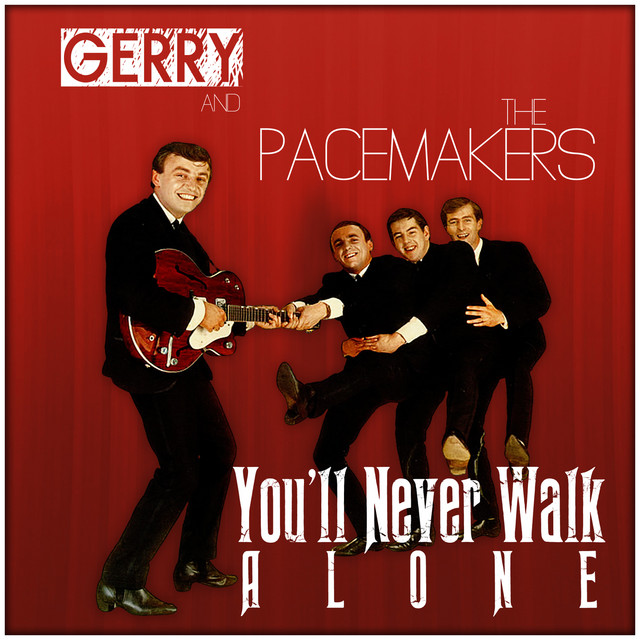
I love this song by Gerry And The Pacemakers it is one of my favourite songs from the 60’s. I have just been singing it on the karaoke in The Hall in Neil’s Art Session it’s called You’ll Never Walk Alone. The song was released and came out in July 1963 before I was born. I love listening to the song in my music library on me iPhone with my Sony Headphones on when I am out and about walking.
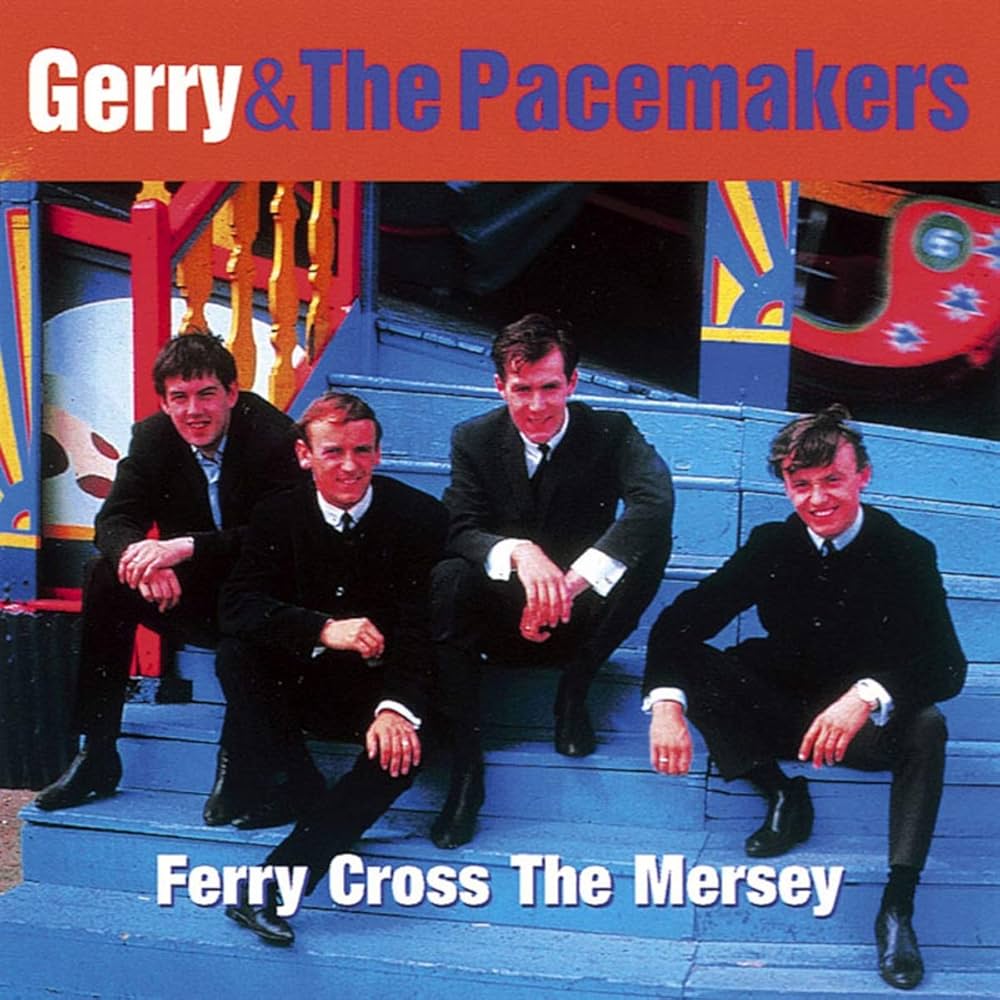
I love this song by Gerry And The Pacemakers it is one of my favourite songs from the 60’s. I have just been singing it on the karaoke in The Hall in Neil’s Art Session it’s called Ferry Cross The Mersey. The song was released and came out in May 1964 before I was born. I love listening to the song in my music library on my iPhone with my Sony Headphones on when I am out and about walking.
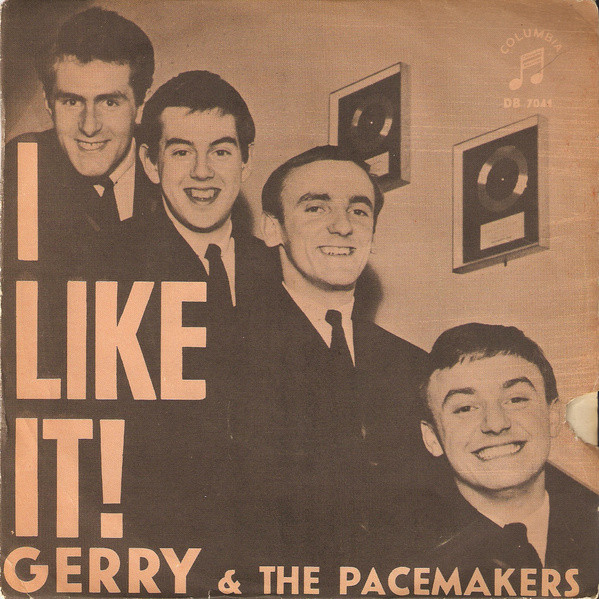
I love this song by Gerry And The Pacemakers it is one of my favourite songs from the 60’s. I have just been singing it on the karaoke in The Hall in Neil’s Art Session it’s called I Like It. The song was released and came out in May 1963 before I was born. I love listening to the song in my music library on my iPhone with my Sony Headphones on when I am out and about walking.
Jewish property was looted beginning in 1933 in Germany and was a key part of the Holocaust. Nazis also plundered occupied countries, sometimes with direct seizures, and sometimes under the guise of protecting art through Kunstschutz units. In addition to gold, silver, and currency, cultural items of great significance were stolen, including paintings, ceramics, books, and religious treasures.
Many of the artworks looted by the Nazis were recovered by the Allies‘ Monuments, Fine Arts, and Archives program (MFAA, also known as the Monuments Men and Women), following the war; however many of them are still missing or were returned to countries but not to their original owners. An international effort to identify Nazi plunder which still remains unaccounted for is underway, with the ultimate aim of returning the items to their rightful owners, their families, or their respective countries.
Background
Jean Metzinger, 1913, En Canot (Im Boot), oil on canvas, 146 cm × 114 cm (57 in × 45 in), exhibited at Moderni Umeni, S.V.U. Mánes, Prague, 1914, acquired in 1916 by Georg Muche at the Galerie Der Sturm, confiscated by the Nazis c. 1936, displayed at the Degenerate Art show in Munich, and missing ever sinceAlbert Gleizes, 1912, Landschaft bei Paris, Paysage près de Paris, Paysage de Courbevoie, oil on canvas, 72.8 cm × 87.1 cm (28.7 in × 34.3 in), missing from Hannover since 1937
Adolf Hitler, an unsuccessful artist denied admission to the Vienna Academy of Fine Arts, thought of himself as a connoisseur of the arts, and in Mein Kampf, he ferociously attacked modern art as degenerate. He considered Cubism, Futurism, and Dadaism products of a decadent 20th-century society. When Hitler became chancellor of Germany in 1933, he enforced his aesthetics. The Nazis favored classical portraits and landscapes by Old Masters, particularly those of Germanic origin. Modern art was dubbed degenerate art by the Third Reich. All such art found in Germany’s state museums was sold or destroyed. With the funds raised, the Führer’s objective was to establish a European Art Museum in Linz. Other Nazi dignitaries like ReichsmarschallHermann Göring and Foreign Affairs minister Joachim von Ribbentrop, also took advantage of German military conquests to grow their private art collections.
Plunder of Jews
The systematic dispossession of Jewish people and the transfer of their homes, businesses, artworks, financial assets, musical instruments, books, and even home furnishings to the Reich was an integral component of the Holocaust. In every country controlled by Nazis, Jews were stripped of their assets through a wide array of mechanisms and Nazi looting organizations.
Public auctions and private sales in Switzerland
The most notorious auction of Nazi looted art was the “degenerate art” auction organized by Theodor Fischer on 30 June 1939 at the Grand Hotel National in Lucerne, Switzerland. The artworks on offer had been deaccessioned from German museums by the Nazis, yet many well known art dealers participated alongside proxies for major collectors and museums. In addition to public auctions, there were many private sales by art dealers. The Commission for Art Recovery has characterized Switzerland as “a magnet” for assets from the rise of Hitler until the end of World War II. Researching and documenting Switzerland’s role “as an art-dealing centre and conduit for cultural assets in the Nazi period and in the immediate post-war period” was one of the missions of the Bergier Commission, under the directorship of Professor Georg Kreis.
The Nazis plundered cultural property from Germany and every occupied territory, targeting Jewish property in particular in a systematic manner with organizations specifically created for the purpose, to determine which public and private collections were most valuable. Some were earmarked for Hitler’s never realized Führermuseum, some went to other high-ranking officials such as Hermann Göring, and others were traded to fund Nazi activities.
In 1940, an organization known as the Einsatzstab Reichsleiter Rosenberg für die Besetzten Gebiete (Reichsleiter Rosenberg Taskforce), or ERR, was formed, headed for Alfred Rosenberg by Gerhard Utikal [de]. The first operating unit, the western branch for France, Belgium, and the Netherlands, called the Dienststelle Westen (Western Agency), was located in Paris. The chief of this Dienststelle was Kurt von Behr. Its original purpose was to collect Jewish and Freemasonic books and documents, either for destruction or for removal to Germany for further “study”. However, late in 1940, Hermann Göring, who in fact controlled the ERR, issued an order that effectively changed the mission of the ERR, mandating it to seize “Jewish” art collections and other objects. The war loot had to be collected in a central place in Paris, the Museum Jeu de Paume. At this collection point worked art historians and other personnel who inventoried the loot before sending it to Germany. Göring also commanded that the loot would first be divided between Hitler and himself. Hitler later ordered that all confiscated works of art were to be made directly available to him. From the end of 1940 to the end of 1942, Göring traveled 20 times to Paris. In the Jeu de Paume museum, art dealer Bruno Lohse staged 20 expositions of the newly looted art objects, especially for Göring, from which Göring selected at least 594 pieces for his own collection.[16] Göring made Lohse his liaison-officer and installed him in the ERR in March 1941 as the deputy leader of this unit. Items which Hitler and Göring did not want were made available to other Nazi leaders. Under Rosenberg and Göring’s leadership, the ERR seized 21,903 art objects from German-occupied countries.
Albert Gleizes, 1911, Stilleben, Nature Morte, Der Sturm postcard, Sammlung Walden, Berlin. Collection Paul Citroen, sold 1928 to Kunstausstellung Der Sturm, requisition by the Nazis in 1937, and missing since
Other Nazi looting organizations included the Führermuseum, the organization run by the art historian Hans Posse, which was particularly in charge of assembling the works for the Führermuseum, the Dienststelle Mühlmann, operated by Kajetan Mühlmann which operated primarily in the Netherlands and in Belgium, and a Sonderkommando Kuensberg connected to the minister of foreign affairs Joachim von Ribbentrop, which operated first in France, then in Russia and North Africa. In Western Europe, with the advancing German troops, were elements of the “von Ribbentrop Battalion”, named after Joachim von Ribbentrop. These men were responsible for entering private and institutional libraries in the occupied countries and removing any materials of interest to the Germans, especially items of scientific, technical, or other informational value.
Art collections from prominent Jewish families, including the Rothschilds, the Rosenbergs, the Wildensteins, and the Schloss Family, were the targets of confiscations because of their significant value. Also, Jewish art dealers sold art to German organizations—often under duress, e.g., the art dealerships of Jacques Goudstikker, Benjamin and Nathan Katz, and Kurt Walter Bachstitz. Also, non-Jewish art dealers sold art to the Germans, e.g., the art dealers De Boer and Hoogendijk in the Netherlands.
By the end of the war, the Third Reich amassed hundreds of thousands of cultural objects.
Art Looting Investigation Unit
On 21 November 1944, at the request of Owen Roberts, William J. Donovan created the Art Looting Investigation Unit (ALIU) within the OSS to collect information on the looting, confiscation, and transfer of cultural objects by Nazi Germany, its allies and the various individuals and organizations involved; to prosecute war criminals and to restitute property. The ALIU compiled information on individuals believed to have participated in art looting, identifying a group of key suspects for capture and interrogation about their roles in carrying out Nazi policy. Interrogations were conducted in Bad Aussee, Austria.
ALIU reports and index
The ALIU Reports detail the networks of Nazi officials, art dealers, and individuals involved in the Hitler’s policy of spoliation of Jews in Nazi-occupied Europe. The ALIU’s final report included 175 pages divided into three parts: Detailed Interrogation Reports (DIRs), which focused individuals who played pivotal roles in German spoliation; Consolidated Interrogations Reports (CIRs); and a “Red Flag list” of people involved in Nazi spoliation. The ALIU Reports form one of the key records in the US Government Archives of Nazi Era Assets.
A second set of reports detail the art looting activities of Göring (The Goering Collection), the art looting activities of the Einsatzstab Reichsleiter Rosenberg (ERR), and Hitler’s Linz Museum.
ALIU List of Red Flag Names
The Art Looting Intelligence Unit published a list of “Red Flag Names”, organizing them by country: Germany, France, Switzerland, The Netherlands, Belgium, Italy, Spain, Portugal, Sweden, and Luxembourg. Each name is followed by a description of the person’s activities, their relations with other people in the spoliation network and, in many cases, information concerning their arrest or imprisonment by Allied forces.
After the initiation of Operation Barbarossa, Eastern Europe was relentlessly plundered by Nazi German forces. In 1943 alone, 9,000,000 tons of cereals, 2,000,000 t (2,000,000 long tons; 2,200,000 short tons) of fodder, 3,000,000 t (3,000,000 long tons; 3,300,000 short tons) of potatoes, and 662,000 t (652,000 long tons; 730,000 short tons) of meats were sent back to Germany. During the course of the German occupation, some 12 million pigs and 13 million sheep were seized by Nazi forces. The value of this plunder is estimated at 4 billion Reichsmarks. This relatively low number in comparison to the German-occupied nations of Western Europe can be attributed to the indiscriminate scorched-earth policy pursued by Nazi Germany and the retreating Soviet Union forces in the Eastern Front.
After the dissolution of the USSR, the Government of the Russian Federation formed the State Commission for the Restitution of Cultural Valuables to replace the Soviet Commission. Experts from this Russian institution originally consulted the work of the Soviet Commission, yet continue to catalog artworks lost during the war museum by museum. As of 2008, lost artworks of 14 museums and the libraries of Voronezh Oblast, Kursk Oblast, Pskov Oblast, Rostov Oblast, Smolensk Oblast, Northern Caucasus, Gatchina, Peterhof Palace, Tsarskoye Selo (Pushkin), Novgorod, and Novgorod Oblast, as well as the bodies of the Russian State Archives and CPSU Archives, were cataloged in 15 volumes, all of which were made available online. They contain detailed information on 1,148,908 items of lost artworks. The total number of lost items is unknown so far, because cataloging work for other damaged Russian museums is ongoing.
Alfred Rosenberg commanded the so-called ERR, which was responsible for collecting art, books, and cultural objects from invaded countries, and also transferred their captured library collections back to Berlin during the retreat from Russia. “In their search for ‘research materials’ ERR teams and the Wehrmacht visited 375 archival institutions, 402 museums, 531 institutes, and 957 libraries in Eastern Europe alone”. The ERR also operated in the early days of the blitzkrieg of the Low Countries. This caused some confusion about authority, priority, and the chain of command among the German Army, the von Ribbentrop Battalion and the Gestapo, and as a result of personal looting among the Army officers and troops. These ERR teams were, however, very effective. One account estimates that from the Soviet Union alone: “one hundred thousand geographical maps were taken on ideological grounds, for academic research, as means for political, geographical and economic information on Soviet cities and regions, or as collector’s items”.
After the occupation of Poland by German forces in September 1939, the Nazi regime committed genocide against Polish Jew and attempted to exterminate the Polish upper classes as well as its culture. Thousands of art objects were looted, as the Nazis systematically carried out a plan of looting prepared even before the start of hostilities. Twenty-five museums and many other facilities were destroyed. The total cost of German Nazi theft and destruction of Polish art is estimated at 20 billion dollars, or an estimated 43 percent of Polish cultural heritage; over 516,000 individual art pieces were looted, including 2,800 paintings by European painters; 11,000 paintings by Polish painters; 1,400 sculptures; 75,000 manuscripts; 25,000 maps; 90,000 books, including over 20,000 printed before 1800; and hundreds of thousands of other items of artistic and historical value. Germany still has much Polish material looted during World War II. For decades, there have been negotiations between Poland and Germany concerning the return of the looted Polish property.
The Anschluss (joining) of Austria and Germany began on 12 March 1938. Looting of Jewish properties began immediately. Churches, monasteries, and museums were home to many pieces of art before the Nazis came but after, the majority of the artwork was taken. Ringstrasse, which was a residence for many people but as well as a community center, was confiscated and all of the art inside as well. Between the years 1943 and 1945, salt mines in Altaussee held the majority of Nazi looted art. Some from Austria and others from all around Europe. In 1944, around 4,700 pieces of art were then stored in the salt mines.
After Hitler became Chancellor, he made plans to transform his home city of Linz, Austria, into the Third Reich’s capital city for the arts. Hitler hired architects to work from his own designs to build several galleries and museums, which would collectively be known as the Führermuseum. Hitler wanted to fill his museum with the greatest art treasures in the world and believed that most of the world’s finest art belonged to Germany after having been looted during the Napoleonic and First World wars.
The Hermann Göring collection, a personal collection of ReichsmarschallHermann Göring, was another large collection, approximately 50% of which was property confiscated from the enemies of the Reich. Assembled in large measure by art dealer Bruno Lohse, Göring’s adviser, and ERR representative in Paris, in 1945, the collection included over 2,000 individual pieces including more than 300 paintings. The US National Archives and Records Administration‘s Consolidated Interrogation Report No. 2 states that Göring never crudely looted, instead he always managed “to find a way of giving at least the appearance of honesty, by a token payment or promise thereof to the confiscation authorities. Although he and his agents never had an official connection with the German confiscation organizations, they nevertheless used them to the fullest extent possible.”
The Third Reich amassed hundreds of thousands of objects from occupied nations and stored them in several key locations, such as Musée Jeu de Paume in Paris and the Nazi headquarters in Munich. As the Allied forces gained advantage in the war and bombed Germany’s cities and historic institutions, Germany “began storing the artworks in salt mines and caves for protection from Allied bombing raids. These mines and caves offered the appropriate humidity and temperature conditions for artworks.” Well known repositories of this kind were mines in Merkers, Altaussee, and Siegen. These mines were not only used for the storage of looted art but also of art that had been in Germany and Austria before the beginning of the Nazi rule.[41]
Modern art, denigrated as degenerate, was legally banned by the Nazis from entering Germany. Artworks designated as such were held in what was called the Martyr’s Room at the Jeu de Paume. Much of Paul Rosenberg’s professional dealership and personal collection were so subsequently designated by the Nazis. Following Joseph Goebbels‘s earlier private decree to sell these degenerate works for foreign currency to fund the building of the Führermuseum and the wider war effort, Hermann Göring personally appointed a series of ERR-approved dealers to liquidate these assets and then pass the funds to swell his personal art collection, including Hildebrand Gurlitt. With the looted degenerate art sold onward via Switzerland, Rosenberg’s collection was scattered across Europe. Today, some 70 of his paintings are missing, including: the large Picasso watercolor Naked Woman on the Beach, painted in Provence in 1923; seven works by Matisse; and the Portrait of Gabrielle Diot by Degas
One of the things Nazis sought after during their invasion of European countries was Jewish books and writings. Their goal was to collect all of Europe’s Jewish books and burn them. One of the first countries to be raided was France, where the Nazis took 50,000 books from the Alliance Israélite Universelle; 10,000 from L’Ecole Rabbinique, one of Paris’s most significant rabbinic seminaries; and 4,000 volumes from the Federation of Jewish Societies of France, an umbrella group. From there, they went on to take a total of 20,000 books from the Lipschuetz Bookstore and another 28,000 from the Rothschild family’s personal collection, before scouring the private homes of Paris and coming up with thousands of more books. After sweeping France for every Jewish book they could find, the Nazis moved on to the Netherlands where they would take millions more. They raided the house of Hans Furstenberg, a wealthy Jewish banker and stole his 16,000 volume collection; in Amsterdam, they took 25,000 volumes from the Bibliotheek van het Portugeesch Israelietisch Seminarium; 4,000 from Ashkenazic Beth ha- Midrasch Ets Haim; and 100,000 from Bibliotheca Rosenthaliana. In Italy, the central synagogue of Rome contained two libraries, one was owned by the Italian Rabbinic College and the other one was the Jewish community Library. In 1943, the Nazis came through Italy, packaged up every book from the synagogue, and sent them back to Germany.
Keitel’s rise to the Wehrmacht high command began with his appointment as the head of the Armed Forces Office at the Reich Ministry of War in 1935. Having taken command of the Wehrmacht in 1938, Adolf Hitler replaced the ministry with the OKW and Keitel became its chief. He was reviled among his military colleagues as Hitler’s habitual “yes-man“.
Wilhelm Keitel was born in the village of Helmscherode near Gandersheim in the Duchy of Brunswick, Germany. He was the eldest son of Carl Keitel (1854–1934), a middle-class landowner, and his wife Apollonia Vissering (1855–1888). As a youngster his main interests were hunting and riding horses, hobbies which he pursued also later in life. He was also interested in farming and wanted to take over his family’s estates after completing his education at a gymnasium. This plan failed as his father did not want to retire. Instead, he embarked on a military career in 1901, becoming an officer cadet of the Prussian Army. As a commoner, he did not join the cavalry, but a field artillery regiment in Wolfenbüttel, serving as adjutant from 1908. On 18 April 1909, Keitel married Lisa Fontaine, a wealthy landowner’s daughter at Wülfel near Hanover.
Keitel was 1.85 metres (6 feet 1 inch) tall, later described as a solidly built and square-jawed Prussian.
During World War I, Keitel served on the Western Front and took part in the fighting in Flanders, where he was severely wounded. After being promoted to captain, Keitel was posted to the staff of an infantry division in 1915.After the war, Keitel was retained in the newly created Reichswehr of the Weimar Republic and played a part in organizing the paramilitary Freikorps units on the Polish border. In 1924, Keitel was transferred to the Ministry of the Reichswehr in Berlin, serving with the Truppenamt (‘Troop Office’), the post-Versailles disguised German General Staff. Three years later, he returned to field command.
Now a lieutenant-colonel, Keitel was again assigned to the war ministry in 1929 and was soon promoted to Head of the Organizational Department (“T-2”), a post he held until Adolf Hitler took power in 1933. Playing a vital role in the German rearmament, he traveled at least once to the Soviet Union to inspect secret Reichswehr training camps. In the autumn of 1932, he suffered a heart attack and double pneumonia . Shortly after his recovery, in October 1933, Keitel was appointed as deputy commander of the 3rd Infantry Division; in 1934, he was given command of the 22nd Infantry Division at Bremen.
Rise to the Wehrmacht High Command
Keitel (seated far right) with Hitler in the Sudetenland in 1938.
In 1935, at the recommendation of General Werner von Fritsch, Keitel was promoted to the rank of major general and appointed chief of the Reich Ministry of War’s Armed Forces Office (Wehrmachtsamt), which oversaw the army, navy, and air force. After assuming office, Keitel was promoted to lieutenant general on 1 January 1936.
On 21 January 1938, Keitel received evidence revealing that the wife of his superior, War Minister Werner von Blomberg, was a former prostitute. Upon reviewing this information, Keitel suggested that the dossier be forwarded to Hitler’s deputy, Hermann Göring, who used it to bring about Blomberg’s resignation.
Hitler took command of the Wehrmacht in 1938 and replaced the war ministry with the Supreme Command of the Armed Forces (Oberkommando der Wehrmacht), with Keitel as its chief. As a result of his appointment, Keitel assumed the responsibilities of Germany’s war minister. Although not officially appointed a Reichsminister, Keitel was granted cabinet-level rank. When von Blomberg was asked by Hitler (out of respect for him, after his dismissal in 1938) who he would recommend to replace him, he had said that Hitler himself should take over the job. He told Hitler that Keitel (who was his son-in-law’s father) “is just the man who runs my office”. Hitler snapped his fingers and exclaimed “That’s exactly the man I’m looking for”. So on 4 February 1938 when Hitler became Commander-in-Chief of the Wehrmacht, Keitel (to the astonishment of the General Staff, including himself) became chief of staff.
Soon after his promotion, Keitel convinced Hitler to appoint Walther von Brauchitsch as Commander-in-Chief of the Army, replacing von Fritsch. Keitel was promoted to Generaloberst (Colonel General) in November 1938, and in April 1939 he was awarded the Golden Party Badge by Hitler.
Criticism of capabilities
Field Marshal Ewald von Kleist labelled Keitel nothing more than a “stupid follower of Hitler” because of his servile “yes man” attitude toward Hitler. His sycophancy was well known in the army, and he acquired the nickname ‘Lakeitel’, a pun derived from Lakai (“lackey“) and his surname. Hermann Göring’s description of Keitel as having “a sergeant’s mind inside a field marshal’s body” was a feeling often expressed by his peers. He had been promoted because of his willingness to function as Hitler’s mouthpiece. He was known by his peers as a “blindingly loyal toady” of Hitler, nicknamed “Nickgeselle”, after a popular metal toy nodding donkey, the “Nickesel”. During the war he was subject to verbal abuse from Hitler, who said to other officers (according to Gerd von Rundstedt) that “you know he has the brains of a movie usher … (but he was made the highest ranking officer in the Army) … because the man’s as loyal as a dog” (said by Hitler with a sly smile).
Keitel was predisposed to manipulation because of his limited intellect and nervous disposition; Hitler valued his diligence and obedience.On one occasion, GeneralleutnantBurkhart Müller-Hillebrand [de] asked who Keitel was: upon finding out he became horrified at his own failure to salute his superior. Franz Halder, however, told him: “Don’t worry, it’s only Keitel”.[25] German officers consistently bypassed him and went directly to Hitler.
World War II
Keitel (far left) and other members of the German high command with Adolf Hitler at a military briefing, (c. 1940)
On 30 August 1939, immediately prior to the outbreak of the Second World War, Keitel was appointed by Hitler to the six-person Council of Ministers for the Defense of the Reich which was set up to operate as a “war cabinet”. After Germany defeated France in the Battle of France in six weeks, Keitel described Hitler as “the greatest warlord of all time”. Keitel conducted the negotiations of the French armistice, and on 19 July 1940 was promoted to Generalfeldmarschall (field marshal).
The planning for Operation Barbarossa, the 1941 invasion of the Soviet Union, was begun tentatively by Halder with the redeployment of the 18th Army into an offensive position against the Soviet Union. On 31 July 1940, Hitler held a major conference that included Keitel, Halder, Alfred Jodl, Erich Raeder, Brauchitsch, and Hans Jeschonnek which further discussed the invasion. The participants did not object to the invasion. Hitler asked for war studies to be completed and Georg Thomas was given the task of completing two studies on economic matters. The first study by Thomas detailed serious problems with fuel and rubber supplies. Keitel bluntly dismissed the problems, telling Thomas that Hitler would not want to see it. This influenced Thomas’ second study which offered a glowing recommendation for the invasion based upon fabricated economic benefits.[32]
In January 1943, just before the final surrender at Stalingrad, Hitler agreed to the creation of a three-man committee with representatives of the State, the Armed Forces High Command, and the Party in an attempt to centralize control of the war economy and over the home front. The committee members were Keitel, (Chief of OKW) Hans Lammers (Chief of the Reich Chancellery), and Martin Bormann (Chief of the Party Chancellery). The committee, soon known as the Dreierausschuß (Committee of Three), met eleven times between January and August 1943. However, it had little autonomy, with Hitler reserving most of the final decisions to himself. In addition, it ran up against resistance from cabinet ministers, who headed deeply entrenched spheres of influence and, seeing it as a threat to their power, worked together to undermine it. The result was that nothing changed, and the Committee declined into irrelevance.
Keitel signing the ratified surrender terms for the German Army in Berlin, 8 May 1945
Keitel played an important role after the failed 20 July plot in 1944. He sat on the army “court of honour” that handed over many officers who were involved, including Field Marshal Erwin von Witzleben, to Roland Freisler‘s notorious People’s Court. Around 7,000 people were arrested, many of whom were tortured by the Gestapo, and around 5,000 were executed.
In April and May 1945, during the Battle of Berlin, Keitel called for counterattacks to drive back the Soviet forces and relieve Berlin. However, there were insufficient German forces to carry out such counterattacks. After Hitler’s suicide on 30 April, Keitel stayed on as a member of the short-lived Flensburg Government under Grand AdmiralKarl Dönitz. Upon arriving in Flensburg, Albert Speer, the Minister of Armaments and War Production, said that Keitel grovelled to Dönitz in the same way as he had done to Hitler. On 7 May 1945, Alfred Jodl, on behalf of Dönitz, signed Germany’s unconditional surrender on all fronts. Joseph Stalin considered this an affront, so a second signing was arranged at the Berlin suburb of Karlshorst on 8 May. There, Keitel signed the German Instrument of Surrender on 8 May 1945. Five days later on 13 May, he was arrested at the request of the United States and interned at Camp Ashcan in Mondorf-les-Bains. Jodl succeeded him as Chief of OKW until the final dissolution of the Flensburg Government on 23 May.
Keitel had full knowledge of the criminal nature of the planning and the subsequent invasion of Poland, agreeing to its aims in principle. The Nazi plans included mass arrests, population transfers, and mass murder. Keitel did not contest the regime’s assault upon basic human rights or counter the role of the Einsatzgruppen in the murders. The criminal nature of the invasion was now obvious; local commanders continued to express shock and protest over the events they were witnessing. Keitel continued to ignore the protests among the officer corps while they became morally numbed to the atrocities.
Keitel issued a series of criminal orders from April 1941. The orders went beyond established codes of conduct for the military and broadly allowed the execution of Jews, civilians, and non-combatants for any reason. Those carrying out the murders were exempted from court-martial or later being tried for war crimes. The orders were signed by Keitel; however, other members of the OKW and the OKH, including Halder, wrote or changed the wording of his orders. Commanders in the field interpreted and carried out the orders.
In the summer and autumn of 1941, German military lawyers unsuccessfully argued that Soviet prisoners of war should be treated in accordance with the Geneva Conventions. Keitel rebuffed them, writing: “These doubts correspond to military ideas about wars of chivalry. Our job is to suppress a way of life.” In September 1941, concerned that some field commanders on the Eastern Front did not exhibit sufficient harshness in implementing the May 1941 order on the “Guidelines for the Conduct of the Troops in Russia“, Keitel issued a new order, writing: “[The] struggle against Bolshevism demands ruthless and energetic action especially also against the Jews, the main carriers of Bolshevism”. Also in September, Keitel issued an order to all commanders, not just those in the occupied Soviet Union, instructing them to use “unusual severity” to stamp out resistance. In this context, the guideline stated that execution of 50 to 100 “Communists” was an appropriate response to a loss of a German soldier. Such orders and directives further radicalised the army’s occupational policies and enmeshed it in the genocide of the Jews.
Plaque commemorating French victims at the Hinzert concentration camp, using the expressions “Nacht und Nebel” and “NN-Deported.” The inscription translates to: “No hate, but also no forgetting.”
In December 1941, Hitler instructed the OKW to subject, with the exception of Denmark, Western Europe (which was under military occupation) to the Night and Fog Decree. Signed by Keitel, the decree made it possible for foreign nationals to be transferred to Germany for trial by special courts, or simply handed to the Gestapo for deportation to concentration camps. The OKW further imposed a blackout on any information concerning the fate of the accused. At the same time, Keitel increased pressure on Otto von Stülpnagel, the military commander in France, for a more ruthless reprisal policy in the country. In October 1942, Keitel signed the Commando Order that authorized the killing of enemy special operations troops even when captured in uniform.[45]
In the spring and summer of 1942, as the deportations of the Jews to extermination camps progressed, the military initially protested when it came to the Jews that laboured for the benefit of the Wehrmacht. The army lost control over the matter when the SS assumed command of all Jewish forced labour in July 1942. Keitel formally endorsed the state of affairs in September, reiterating for the armed forces that “evacuation of the Jews must be carried out thoroughly and its consequences endured, despite any trouble it may cause over the next three or four months”.
Trial, conviction, and execution
Keitel’s detention report from June 1945
Duration: 4 minutes and 47 seconds.4:47Subtitles available.CC17 October 1946 newsreel of the Nuremberg trials sentencing
After the war, Keitel faced the International Military Tribunal (IMT), where he was examined by Chief Medical Officer Lt. Col. Rene Juchli who reported that Keitel was suffering from “high blood pressure, varicose veins, and dysentery”. He was indicted on all four counts before the IMT: conspiracy to commit crimes against peace, planning, initiating and waging wars of aggression, war crimes, and crimes against humanity. Most of the case against him was based on his signature being present on dozens of orders that called for soldiers and political prisoners to be killed or ‘disappeared‘. In court, Keitel admitted that he knew many of Hitler’s orders were illegal. His defence relied almost entirely on the argument that he was merely following orders in conformity to “the leader principle” (Führerprinzip) and his personal oath of loyalty to Hitler.
Keitel’s body after his execution, showing injuries caused from hitting his head on the trap door
The IMT rejected this defence and convicted him on all charges. Although the tribunal’s charter allowed “superior orders” to be considered a mitigating factor, it found Keitel’s crimes were so egregious that “there is nothing in mitigation”. In its judgment against him, the IMT wrote, “Superior orders, even to a soldier, cannot be considered in mitigation where crimes as shocking and extensive have been committed consciously, ruthlessly and without military excuse or justification.” It also noted several instances where he issued illegal orders on his own authority.
In his statement before the Tribunal, Keitel said: “As these atrocities developed, one from the other, step by step, and without any foreknowledge of the consequences, destiny took its tragic course, with its fateful consequences.” To underscore the criminal rather than military nature of Keitel’s acts, the Allies denied his request to be shot by firing squad. Instead, he was executed at Nuremberg Prison by hanging.[51]
On the day of the execution, Keitel told prison chaplain Henry F. Gerecke “You have helped me more than you know. May Christ, my saviour, stand by me all the way. I shall need him so much.” He then received Communion and was executed later that day. Keitel was executed by US ArmyMaster SergeantJohn C. Woods. His last words were: “I call on God Almighty to have mercy on the German people. More than two million German soldiers went to their death for the fatherland before me. I follow now my sons – all for Germany.” The trap door was small, causing head injuries to Keitel and several other condemned men as they dropped. Many of the executed Nazis fell from the gallows with insufficient force to snap their necks, resulting in convulsions that in Keitel’s case lasted 24 minutes. The corpses of Keitel and the other nine executed men were, like Hermann Göring’s, cremated at Ostfriedhof (Munich) and the ashes were scattered in the river Isar.
I am looking forward to watching Wwe Crown Jewel on Netflix soon and catching up with that. It was Live in Perth in Australia it is on for 3 hours and 5 minutes just over 3 hours.
Construction of the Tunnels began in 1947. Two shafts were sunk, one on each bank, before the connecting Tunnels were excavated by miners operating in compressed air.
The Tunnels were opened on 24th July 1951 by Transport Minister Alfred Barnes.
They were part of the North East’s contribution to the Festival of Britain, and built at a cost of £833,000. the Tyne Pedestrian and Cyclist Tunnels for years provided a safe and reliable way for thousands of workers to cross the river to work in the shipyards and factories that then lined the Tyne.
At their peak, around 20,000 people used the Tunnels every day. By the time the Tunnels closed for refurbishment in 2013, that had dropped to 20,000 per month.
The number of users declined as Tyneside’s industrial profile changed and the first vehicle Tyne Tunnel opened nearby in 1967, car ownership grew and lifestyles changed.
By the early 2000s, the Pedestrian and Cyclist Tunnels were in a poor state of repair. The harsh underground conditions and general wear and tear led to frequent breakdowns of the escalators and vertical lifts. The costs of repairs spiralled.
In an effort to guarantee the future of the Tunnels, there was a successful application to have them listed as a structure of special historical interest. They were granted Grade II listed status in May 2000.
The then Tunnels’ owner, the Tyne and Wear Integrated Transport Authority, decided that to revive the Tunnels as a safe, reliable means of crossing the river, a complete refurbishment was necessary. The Tunnels closed in May 2013 and re-opened on 7th August 2019.





.jpg)





 Weevles Updates Disabled Bloggers Team