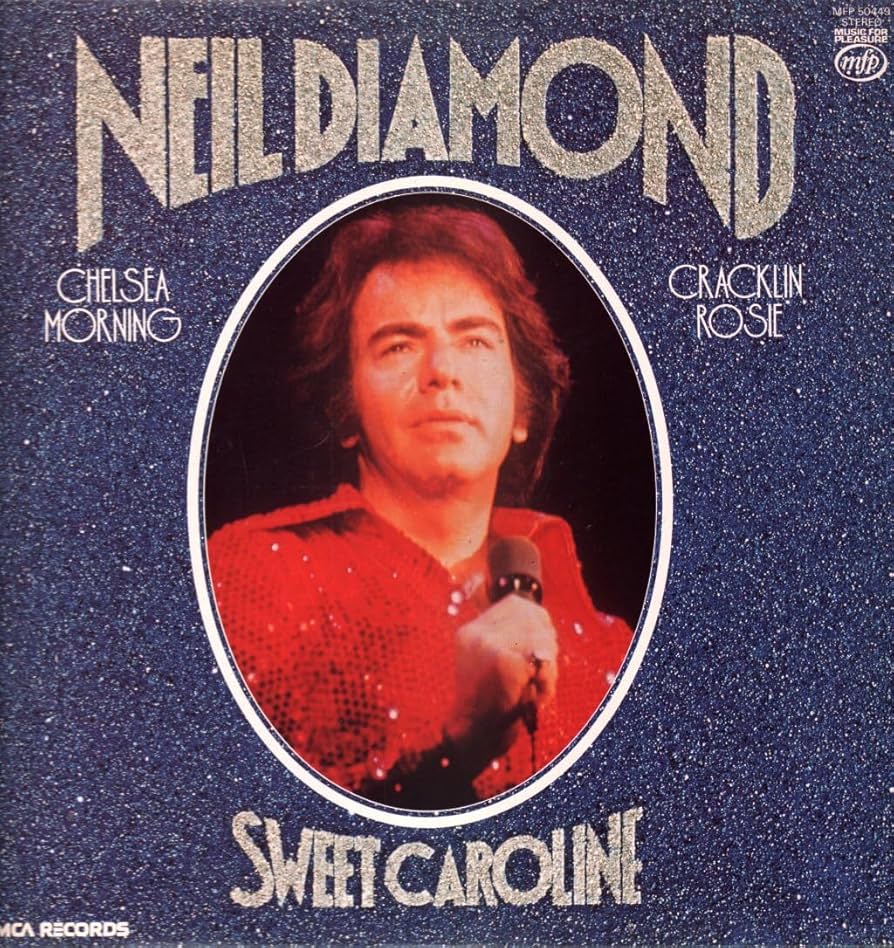
I love this song I have just been singing it on the karaoke in The Hall in Neil’s Art Session. It is one of my favourite songs it came out and was released in May 1969 in the late 60s before I was born. It always makes me think of Eric and how close I was to Eric for years when I was very young because it was played at Eric’s Funeral in August 2013 twelve years ago when I was twenty six when I was younger. I am looking forward to buying it and downloading it on my iTunes on my iPhone and putting in my music library next month when I do my downloading.
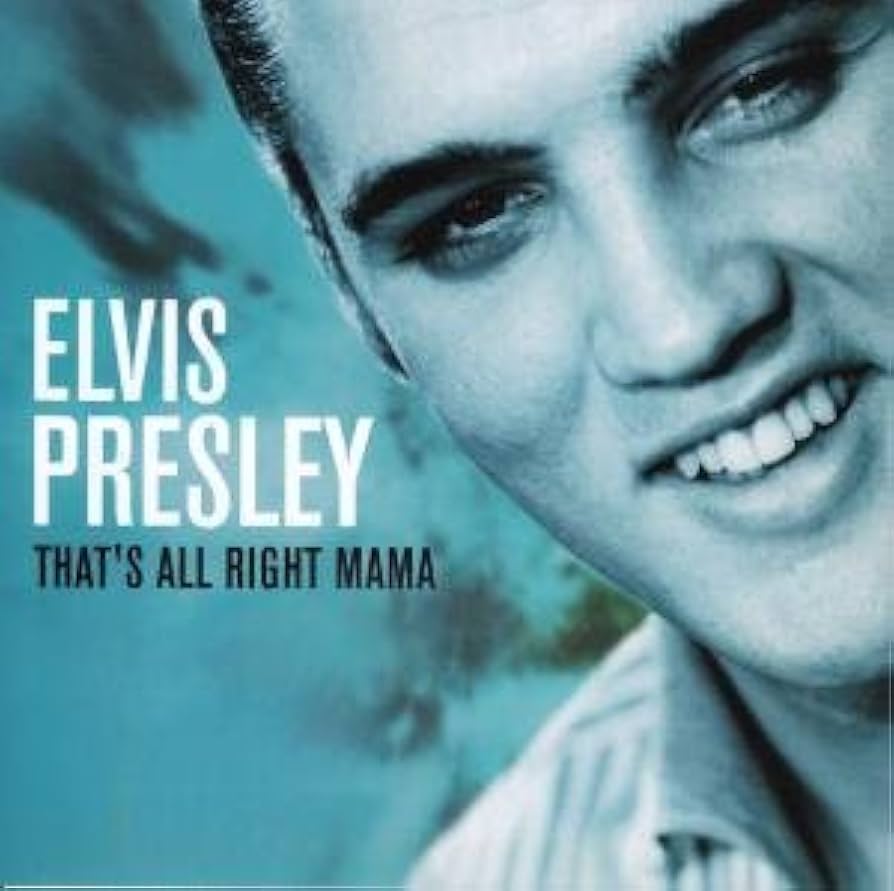
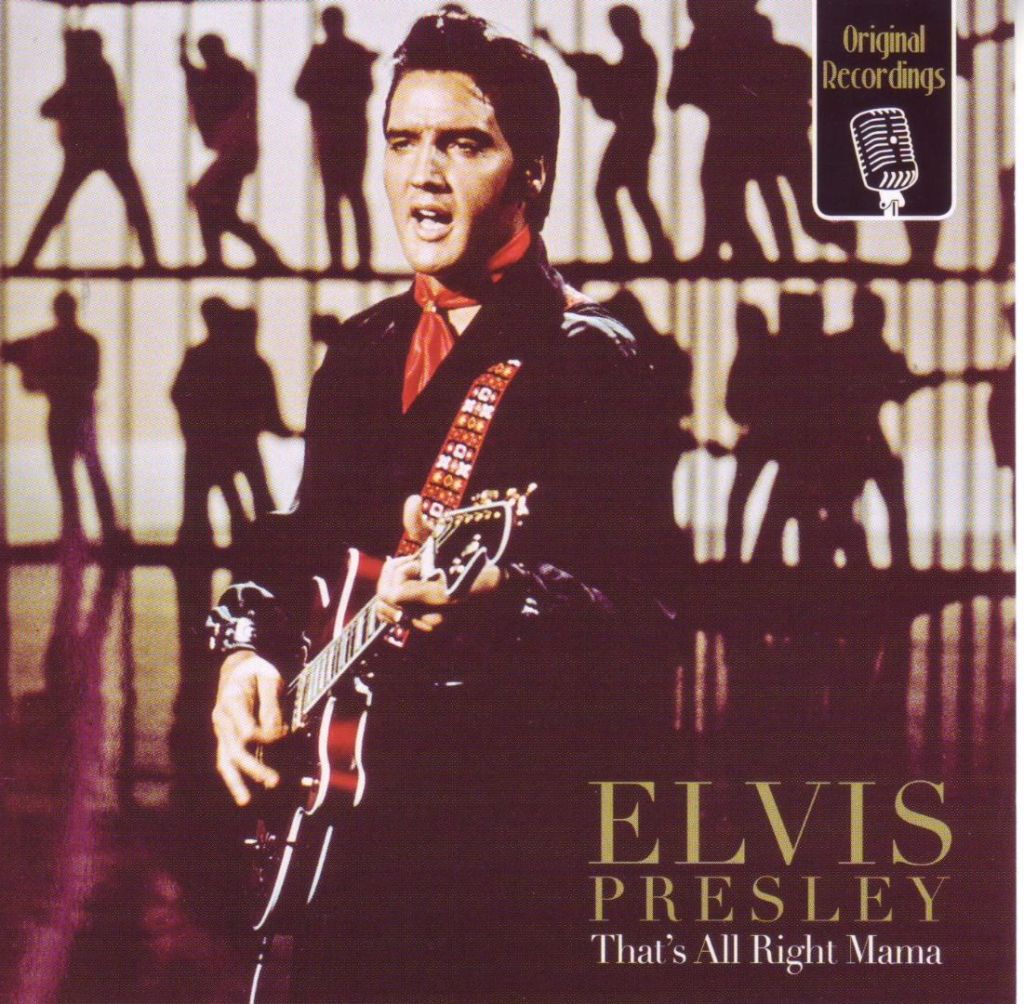
I love this Elvis Presley song from 1947 it came out and was released on the 4th September 47 before I was born. It is Elvis Presley That’s All Right I have just been singing it on the karaoke in The Hall in Neil’s Art Session. I love listening to the song on my iPhone on my music library when I am out and about walking with my Sony Headphones on.
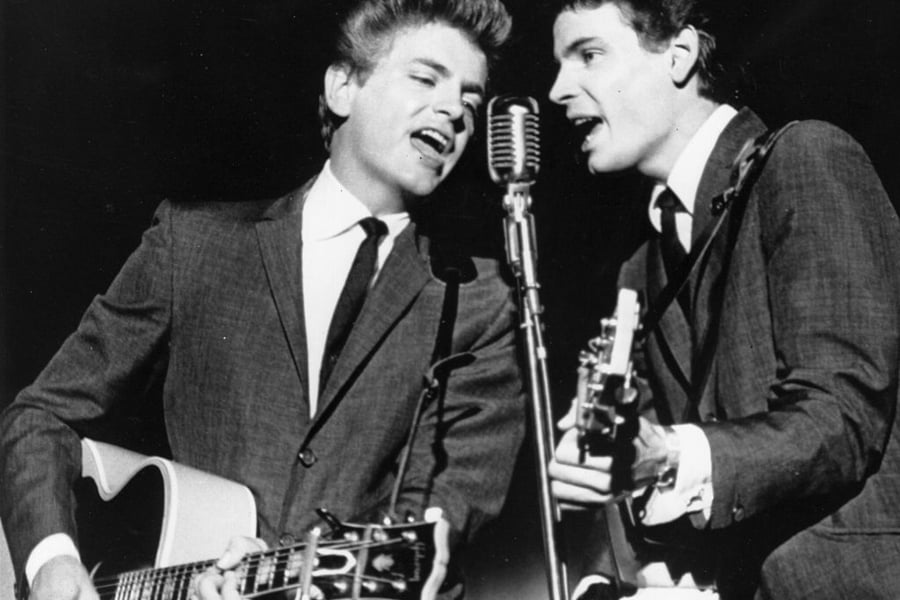
I love this song from 1958 it came out and was released in April 58 before I was born it is one of my favourite songs and I have just been singing it on the karaoke in Neil’s Art Session in The Hall. It is The Everly Brothers All I Have To Do Is Dream I love listening to the song on my iPhone on my music library when I am out and about walking with my Sony Headphones on.
Paul Joseph Goebbels (German: 29 October 1897 – 1 May 1945) was a German Nazi politician and philologist who was the Gauleiter (district leader) of Berlin, chief propagandist for the Nazi Party, and then Reich Minister of Propaganda from 1933 to 1945. He was one of Adolf Hitler‘s closest and most devoted followers, known for his skills in public speaking and his virulent antisemitism which was evident in his publicly voiced views. He advocated progressively harsher discrimination, including the extermination of Jews and other groups in the Holocaust.
Goebbels, who aspired to be an author, obtained a doctorate in philology from the University of Heidelberg in 1922. He joined the Nazi Party in 1924 and worked with Gregor Strasser in its northern branch. He was appointed Gauleiter of Berlin in 1926, where he began to take an interest in the use of propaganda to promote the party and its programme. After the Nazis came to power in 1933, Goebbels’s Propaganda Ministry quickly gained control over the news media, arts and information in Nazi Germany. He was particularly adept at using the relatively new media of radio and film for propaganda purposes. Topics for party propaganda included antisemitism, attacks on Christian churches, and (after the start of the Second World War) attempts to shape morale.
In 1943, Goebbels began to pressure Hitler to introduce measures that would produce “total war“, including closing businesses not essential to the war effort, conscripting women into the labour force, and enlisting men in previously exempt occupations into the Wehrmacht. Hitler finally appointed him as Reich Plenipotentiary for Total War on 23 July 1944, whereby Goebbels undertook largely unsuccessful measures to increase the number of people available for armaments manufacture and the Wehrmacht.
As the war drew to a close and Nazi Germany faced defeat, Magda Goebbels and the Goebbels children joined Hitler in Berlin. They moved into the underground Vorbunker, part of Hitler’s underground bunker complex, on 22 April 1945. Hitler committed suicide on 30 April. In accordance with Hitler’s will, Goebbels succeeded him as Chancellor of Germany; he served one day in this post. The following day, Goebbels and his wife, Magda, committed suicide, after having poisoned their six children with a cyanide compound.
Early life, education, and relationships
Paul Joseph Goebbels was born on 29 October 1897 in Rheydt, an industrial town south of Mönchengladbach near Düsseldorf, Germany. Both of his parents were Roman Catholics with modest family backgrounds. His father, Fritz, was a German factory clerk; his mother, Katharina Maria (née Odenhausen), was born to Dutch and German parents in a Dutch village close to the border with Germany. Goebbels had five siblings: Konrad (1893–1949), Hans (1895–1947), Maria (1896–1896), Elisabeth (1901–1915) and Maria (1910–1949), who married the German filmmaker Max W. Kimmich in 1938. In 1932 Goebbels commissioned the publication of a pamphlet of his family tree to refute the rumours that his maternal grandmother was of Jewish ancestry.
During childhood Goebbels experienced ill health, which included a long bout of inflammation of the lungs. He had a deformed right foot, which turned inwards due to a congenital disorder or an infection in the bone. It was thicker and shorter than his left foot. Just prior to starting grammar school he underwent an operation, which failed to correct the problem. Goebbels wore a metal brace and a special shoe because of his shortened leg and walked with a limp. He was rejected for military service in World War I because of this condition.
Goebbels in 1916
Goebbels was educated at a Gymnasium, where he completed his Abitur (university entrance examination) in 1917. He was the top student of his class and was given the traditional honour of speaking at the awards ceremony. His parents initially hoped that he would become a Catholic priest, which Goebbels seriously considered. He studied literature and history at the universities of Bonn, Würzburg, Freiburg and Munich, aided by a scholarship from the Albertus Magnus Society. By this time Goebbels had begun to distance himself from the church.
Historians, including Richard J. Evans and Roger Manvell, speculate that Goebbels’ lifelong pursuit of women may have been in compensation for his physical disability. At Freiburg he met and fell in love with Anka Stalherm, who was three years his senior. She went on to Würzburg to continue studying, as did Goebbels By 1920 the relationship with Anka was over; the break-up filled Goebbels with thoughts of suicide. In 1921 he wrote a semi-autobiographical novel, Michael, a three-part work of which only Parts I and III have survived. Goebbels felt he was writing his “own story”. Antisemitic content and material about a charismatic leader may have been added by Goebbels shortly before the book was published in 1929 by Eher-Verlag, the publishing house of the Nazi Party (National Socialist German Workers’ Party; NSDAP).
At the University of Heidelberg Goebbels wrote his doctoral thesis on Wilhelm von Schütz, a minor 19th-century romantic dramatist. He had hoped to write his thesis under the supervision of Friedrich Gundolf, a literary historian. It did not seem to bother Goebbels that Gundolf was Jewish. As he was no longer teaching, Gundolf directed Goebbels to associate professor Max Freiherr von Waldberg. Waldberg, who was also Jewish, recommended Goebbels write his thesis on Wilhelm von Schütz. After submitting the thesis and passing his oral examination, Goebbels received his PhD on 21 April 1922. By 1940 he had written 14 books.
Goebbels returned home and worked as a private tutor. He also found work as a journalist and was published in the local newspaper. His writing during that time reflected his growing antisemitism and dislike for modern culture. In the summer of 1922 he met and began a love affair with Else Janke, a schoolteacher. After she revealed to him that she was half-Jewish, Goebbels stated the “enchantment [was] ruined.” Nevertheless he continued to see her on and off until 1927.
He continued for several years to try to become a published author. His diaries, which he began in 1923 and continued for the rest of his life, provided an outlet for his desire to write. The lack of income from his literary works – he wrote two plays in 1923, neither of which sold – forced him to take employment as a caller on the stock exchange and as a bank clerk in Cologne, a job he detested. He was dismissed from the bank in August 1923 and returned to Rheydt. During this period he read avidly and was influenced by the works of Oswald Spengler, Fyodor Dostoyevsky and Houston Stewart Chamberlain, the British-born German writer whose book The Foundations of the Nineteenth Century (1899) was one of the standard works of the extreme right in Germany. He also began to study the social question and read the works of Karl Marx, Friedrich Engels, Rosa Luxemburg, August Bebel and Gustav Noske. According to German historian Peter Longerich, Goebbels’s diary entries from late 1923 to early 1924 reflected the writings of a man who was isolated, preoccupied with “religious-philosophical” issues and lacked a sense of direction. Diary entries from mid-December 1923 onwards show Goebbels was moving towards the Völkisch nationalist movement.
Nazi activist
Goebbels first took an interest in Adolf Hitler and Nazism in 1924. In February 1924, Hitler’s trial for treason began in the wake of his failed attempt to seize power in the Beer Hall Putsch of 8–9 November 1923. The trial attracted widespread press coverage and gave Hitler a platform for propaganda. Hitler was sentenced to five years in prison, but was released on 20 December 1924, after serving just over a year, including pre-trial detention. Goebbels was drawn to the Nazi Party mostly because of Hitler’s charisma and commitment to his beliefs. He joined the Nazi Party around this time, becoming member number 8762. In late 1924, Goebbels offered his services to Karl Kaufmann, who was Gauleiter (Nazi Party district leader) for the Rhine-Ruhr District. Kaufmann put him in touch with Gregor Strasser, a leading Nazi organiser in northern Germany, who hired him to work on their weekly newspaper and undertake secretarial work for the regional party offices. He was also put to work as party speaker and representative for Rhineland–Westphalia.Strasser founded the National Socialist Working Association on 10 September 1925, a short-lived group of about a dozen northern and western German Gauleiter; Goebbels became its business manager and the editor of its biweekly journal, NS-Briefe.[45] Members of Strasser’s northern branch of the Nazi Party, including Goebbels, had a more socialist outlook than the rival Hitler group in Munich. Strasser disagreed with Hitler on many parts of the party platform, and in November 1926 began working on a revision.
Hitler viewed Strasser’s actions as a threat to his authority, and summoned 60 Gauleiters and party leaders, including Goebbels, to a special conference in Bamberg, in Streicher’sGau of Franconia, where he gave a two-hour speech repudiating Strasser’s new political programme.Hitler was opposed to the socialist leanings of the northern wing, stating it would mean “political bolshevization of Germany.” Further, there would be “no princes, only Germans,” and a legal system with no “Jewish system of exploitation … for plundering of our people.” The future would be secured by acquiring land, not through expropriation of the estates of the former nobility, but through colonising territories to the east. Goebbels was horrified by Hitler’s characterisation of socialism as “a Jewish creation” and his assertion that a Nazi government would not expropriate private property. He wrote in his diary: “I no longer fully believe in Hitler. That’s the terrible thing: my inner support has been taken away.”
After reading Hitler’s book Mein Kampf, Goebbels found himself agreeing with Hitler’s assertion of a “Jewish doctrine of Marxism“. In February 1926, Goebbels gave a speech titled “Bolshevism or National-socialism? Lenin or Hitler?” in which he asserted that communism or Marxism could not save the German people, but he believed it would cause a “socialist nationalist state” to arise in Russia.[51] In 1926, Goebbels published a pamphlet titled Nazi-Sozi which attempted to explain how National Socialism differed from Marxism.
In hopes of winning over the opposition, Hitler arranged meetings in Munich with the three Greater Ruhr Gau leaders, including Goebbels. Goebbels was impressed when Hitler sent his own car to meet them at the railway station. That evening, Hitler and Goebbels both gave speeches at a beer hall rally. The following day, Hitler offered his hand in reconciliation to the three men, encouraging them to put their differences behind them. Goebbels capitulated completely, offering Hitler his total loyalty. He wrote in his diary: “I love him … He has thought through everything,” “Such a sparkling mind can be my leader. I bow to the greater one, the political genius.” He later wrote: “Adolf Hitler, I love you because you are both great and simple at the same time. What one calls a genius.” As a result of the Bamberg and Munich meetings, the National Socialist Working Association was disbanded. Strasser’s new draft of the party programme was discarded, the original National Socialist Program of 1920 was retained unchanged, and Hitler’s position as party leader was greatly strengthened.
Propagandist in Berlin
At Hitler’s invitation, Goebbels spoke at party meetings in Munich and at the annual Party Congress, held in Weimar in 1926. For the following year’s event, Goebbels was involved in the planning for the first time. He and Hitler arranged for the rally to be filmed. Receiving praise for doing well at these events led Goebbels to shape his political ideas to match Hitler’s, and to admire and idolise him even more.
Gauleiter
Goebbels was first offered the position of party Gauleiter for the Berlin section in August 1926. He travelled to Berlin in mid-September and by the middle of October accepted the position. Thus Hitler’s plan to divide and dissolve the northwestern Gauleiters group that Goebbels had served in under Strasser was successful. Hitler gave Goebbels great authority over the area, allowing him to determine the course for organisation and leadership for the Gau. Goebbels was given control over the local Sturmabteilung (SA) and Schutzstaffel (SS) and answered only to Hitler. The party membership numbered about 1,000 when Goebbels arrived, and he reduced it to a core of 600 of the most active and promising members. To raise money, he instituted membership fees and began charging admission to party meetings. Aware of the value of publicity (both positive and negative), he deliberately provoked beer-hall battles and street brawls, including violent attacks on the Communist Party of Germany (KPD). Goebbels adapted recent developments in commercial advertising to the political sphere, including the use of catchy slogans and subliminal cues. His new ideas for poster design included using large type, red ink, and cryptic headers that encouraged the reader to examine the fine print to determine the meaning.
Goebbels speaks at a political rally (1932). This body position, with arms akimbo, was intended to show the speaker as being in a position of authority.
Goebbels giving a speech in Lustgarten, Berlin, August 1934. This hand gesture was used while delivering a warning or threat.
Like Hitler, Goebbels practised his public speaking skills in front of a mirror. Meetings were preceded by ceremonial marches and singing, and the venues were decorated with party banners. His entrance (almost always late) was timed for maximum emotional impact. Goebbels usually meticulously planned his speeches ahead of time, using pre-planned and choreographed inflection and gestures, but he was also able to improvise and adapt his presentation to make a good connection with his audience. He used loudspeakers, decorative flames, uniforms, and marches to attract attention to speeches.
Goebbels’ tactic of using provocation to bring attention to the Nazi Party, along with violence at the public party meetings and demonstrations, led the Berlin police to ban the Nazi Party from the city on 5 May 1927. Violent incidents continued, including young Nazis randomly attacking Jews in the streets. Goebbels was subjected to a public speaking ban until the end of October. During this period, he founded the newspaper Der Angriff (The Attack) as a propaganda vehicle for the Berlin area, where few supported the party. It was a modern-style newspaper with an aggressive tone; 126 libel suits were pending against Goebbels at one point.To his disappointment, circulation was initially only 2,000. Material in the paper was highly anti-communist and antisemitic. Among the paper’s favourite targets was the Jewish Deputy Chief of the Berlin Police Bernhard Weiß. Goebbels gave him the derogatory nickname “Isidore” and subjected him to a relentless campaign of Jew-baiting in the hope of provoking a crackdown he could then exploit. Goebbels continued to try to break into the literary world, with a revised version of his book Michael finally being published, and the unsuccessful production of two of his plays (Der Wanderer and Die Saat (The Seed)). The latter was his final attempt at playwriting.[75] During this period in Berlin he had relationships with many women, including his old flame Anka Stalherm, who was now married and had a small child. He was quick to fall in love, but easily tired of a relationship and moved on to someone new. He worried too about how a committed personal relationship might interfere with his career.
1928 election
The ban on the Nazi Party was lifted before the Reichstag elections on 20 May 1928. The Nazi Party lost nearly 100,000 voters and earned only 2.6 per cent of the vote nationwide. Results in Berlin were even worse, where they attained only 1.4 per cent of the vote. Goebbels was one of the first 12 Nazi Party members to gain election to the Reichstag. This gave him immunity from prosecution for a long list of outstanding charges, including a three-week jail sentence he received in April for insulting the deputy police chief Weiß. The Reichstag changed the immunity regulations in February 1931, and Goebbels was forced to pay fines for libellous material he had placed in Der Angriff over the course of the previous year. Goebbels continued to be elected to the Reichstag at every subsequent election during the Weimar and Nazi regimes.
In his newspaper Berliner Arbeiterzeitung (Berlin Workers Newspaper), Gregor Strasser was highly critical of Goebbels’ failure to attract the urban vote. However, the party as a whole did much better in rural areas, attracting as much as 18 per cent of the vote in some regions.This was partly because Hitler had publicly stated just prior to the election that Point 17 of the party programme, which mandated the expropriation of land without compensation, would apply only to Jewish speculators and not private landholders.After the election, the party refocused their efforts to try to attract still more votes in the agricultural sector. In May, shortly after the election, Hitler considered appointing Goebbels as party propaganda chief. But he hesitated, as he worried that the removal of Gregor Strasser from the post would lead to a split in the party. Goebbels considered himself well suited to the position, and began to formulate ideas about how propaganda could be used in schools and the media.
Goebbels used the death of Horst Wessel (pictured) in 1930 as a propaganda tool[86] against “Communist subhumans”.[87]
By 1930 Berlin was the party’s second-strongest base of support after Munich.That year the violence between the Nazis and communists led to local SA troop leader Horst Wessel being shot by two members of the KPD. He later died in hospital. Exploiting Wessel’s death, Goebbels turned him into a martyr for the Nazi movement. He officially declared Wessel’s march Die Fahne hoch (Raise the flag), renamed as the Horst-Wessel-Lied, to be the Nazi Party anthem.
Great Depression
The Great Depression greatly impacted Germany and by 1930 there was a dramatic increase in unemployment. During this time, the Strasser brothers started publishing a new daily newspaper in Berlin, the Nationaler Sozialist Like their other publications, it conveyed the brothers’ own brand of Nazism, including nationalism, anti-capitalism, social reform, and anti-Westernism. Goebbels complained vehemently about the rival Strasser newspapers to Hitler and admitted that their success was causing his own Berlin newspapers to be “pushed to the wall”. In late April 1930, Hitler publicly and firmly announced his opposition to Gregor Strasser and appointed Goebbels to replace him as Reich leader of Nazi Party propaganda. One of Goebbels’ first acts was to ban the evening edition of the Nationaler Sozialist. Goebbels was also given control of other Nazi papers across the country, including the party’s national newspaper, the Völkischer Beobachter (People’s Observer). He still had to wait until 3 July for Otto Strasser and his supporters to announce they were leaving the Nazi Party. Upon receiving the news, Goebbels was relieved the “crisis” with the Strassers was finally over and glad that Otto Strasser had lost all power.
The rapid deterioration of the economy led to the resignation on 27 March 1930 of the coalition government that had been elected in 1928. Paul von Hindenburg appointed Heinrich Brüning as chancellor. A new cabinet was formed, and Hindenburg used his power as president to govern via emergency decrees. Goebbels took charge of the Nazi Party’s national campaign for Reichstag elections called for 14 September 1930. Campaigning was undertaken on a huge scale, with thousands of meetings and speeches held all over the country. Hitler’s speeches focused on blaming the country’s economic woes on the Weimar Republic, particularly its adherence to the terms of the Treaty of Versailles, which required war reparations that had proven devastating to the German economy. He proposed a new German society based on race and national unity. The resulting success took even Hitler and Goebbels by surprise: the party received 6.5 million votes nationwide and took 107 seats in the Reichstag, making it the second-largest party in the country.
In late 1930 Goebbels met Magda Quandt, a divorcée who had joined the party a few months earlier. She worked as a volunteer in the party offices in Berlin, helping Goebbels organise his private papers. Her flat on Reichskanzlerplatz soon became a favourite meeting place for Hitler and other Nazi Party officials. Goebbels and Quandt married on 19 December 1931 at a Protestant church. Hitler was his best man.
At the 24 April 1932 Prussian state election, Goebbels won a seat in the Landtag of Prussia. For the two Reichstag elections held in 1932, Goebbels organised massive campaigns that included rallies, parades, speeches, and Hitler travelling around the country by aeroplane with the slogan “the Führer over Germany”. Goebbels wrote in his diary that the Nazis must gain power and exterminate Marxism.He undertook numerous speaking tours during these election campaigns and had some of their speeches published on gramophone records and as pamphlets. Goebbels was also involved in the production of a small collection of silent films that could be shown at party meetings, though they did not yet have enough equipment to widely use this medium. Many of Goebbels’ campaign posters used violent imagery such as a giant half-clad male destroying political opponents or other perceived enemies such as “International High Finance”. His propaganda characterised the opposition as “November criminals“, “Jewish wire-pullers”, or a communist threat.
Role in Hitler’s government
Support for the party continued to grow, but neither of these elections led to a majority government. In an effort to stabilise the country and improve economic conditions, Hindenburg appointed Hitler as Reich chancellor on 30 January 1933.
To celebrate Hitler’s appointment as chancellor, Goebbels organised a torchlight parade in Berlin on the night of 30 January of an estimated 60,000 men, many in the uniforms of the SA and SS. The spectacle was covered by a live state radio broadcast, with commentary by longtime party member and future Minister of Aviation Hermann Göring. Goebbels was disappointed not to be given a post in Hitler’s new cabinet. Bernhard Rust was appointed as Minister of Culture, the post that Goebbels was expecting to receive.Like other Nazi Party officials, Goebbels had to deal with Hitler’s leadership style of giving contradictory orders to his subordinates, while placing them into positions where their duties and responsibilities overlapped. In this way, Hitler fostered distrust, competition, and infighting among his subordinates to consolidate and maximise his own power. The Nazi Party took advantage of the Reichstag fire of 27 February 1933, with Hindenburg passing the Reichstag Fire Decree the following day at Hitler’s urging. This was the first of several pieces of legislation that dismantled democracy in Germany and put a totalitarian dictatorship—headed by Hitler—in its place. On 5 March, yet another Reichstag election took place, the last to be held before the defeat of the Nazis at the end of the Second World War. While the Nazi Party increased their number of seats and percentage of the vote, it was not the landslide expected by the party leadership. Goebbels received Hitler’s appointment to the cabinet, becoming head of the newly created Reich Ministry of Public Enlightenment and Propaganda in March 1933.
The role of the new ministry, which set up its offices in the 18th-century Ordenspalais across from the Reich Chancellery, was to centralise Nazi control of all aspects of German cultural and intellectual life. On 25 March 1933, Goebbels said that he hoped to increase popular support of the party from the 37 per cent achieved at the last free election held in Germany to 100 per cent support. An unstated goal was to present to other nations the impression that the Nazi Party had the full and enthusiastic backing of the entire population. One of Goebbels’ first productions was staging the Day of Potsdam, a ceremonial passing of power from Hindenburg to Hitler, held in Potsdam on 21 March. He composed the text of Hitler’s decree authorising the Nazi boycott of Jewish businesses, held on 1 April. Later that month, Goebbels travelled back to Rheydt, where he was given a triumphal reception. The townsfolk lined the main street, which had been renamed in his honour. On the following day, Goebbels was declared a local hero.
Goebbels converted the 1 May holiday from a celebration of workers’ rights (observed as such especially by the communists) into a day celebrating the Nazi Party. In place of the usual ad hoc labour celebrations, he organised a huge party rally held at Tempelhof Field in Berlin. The following day, all trade union offices in the country were forcibly disbanded by the SA and SS, and the Nazi-run German Labour Front was created to take their place. “We are the masters of Germany,” he commented in his diary entry of 3 May. Less than two weeks later, he gave a speech at the Nazi book burning in Berlin on 10 May, a ceremony he suggested.
Meanwhile, the Nazi Party began passing laws to marginalise Jews and remove them from German society. The Law for the Restoration of the Professional Civil Service, passed on 7 April 1933, forced all non-Aryans to retire from the legal profession and civil service.[126] Similar legislation soon deprived Jewish members of other professions of their right to practise.[126] The first Nazi concentration camps (initially created to house political dissenters) were founded shortly after Hitler seized power. In a process termed Gleichschaltung (coordination), the Nazi Party proceeded to rapidly bring all aspects of life under control of the party. All civilian organisations, including agricultural groups, volunteer organisations, and sports clubs, had their leadership replaced with Nazi sympathisers or party members. By June 1933, virtually the only organisations not in the control of the Nazi Party were the army and the churches. On 2 June 1933, Hitler appointed Goebbels a Reichsleiter, the second highest political rank in the Nazi Party. On 3 October 1933, on the formation of the Academy for German Law, Goebbels was made a member and given a seat on its executive committee. In a move to manipulate Germany’s middle class and shape popular opinion, the regime passed on 4 October 1933 the Schriftleitergesetz (Editor’s Law), which became the cornerstone of the Nazi Party’s control of the popular press.Modelled to some extent on the system in Benito Mussolini‘s Fascist Italy, the law defined a Schriftleiter as anyone who wrote, edited, or selected texts and illustrated material for serial publication. Individuals selected for this position were chosen based on experiential, educational, and racial criteria. The law required journalists to “regulate their work in accordance with National Socialism as a philosophy of life and as a conception of government.”[
In 1934, Goebbels published Vom Kaiserhof zur Reichskanzlei (lit. ’From the Kaiserhof to the Reich Chancellery’), his account of Hitler’s seizure of power, which he based on his diary from 1 January 1932 to 1 May 1933. The book sought to glorify both Hitler and the author. It sold around 660,000 copies, making it Goebbels’s best-selling publication during his lifetime. An English translation was published in 1935 under the title My Part in Germany’s Fight.
At the end of June 1934, top officials of the SA and opponents of the regime, including Gregor Strasser, were arrested and killed in a purge later called the Night of Long Knives. Goebbels was present at the arrest of SA leader Ernst Röhm in Munich. On 2 August 1934, President von Hindenburg died. In a radio broadcast, Goebbels announced that the offices of president and chancellor had been combined, and Hitler had been formally named as Führer und Reichskanzler (leader and chancellor).
Workings of the Ministry
The propaganda ministry was organised into seven departments: administration and legal; mass rallies, public health, youth, and race; radio; national and foreign press; films and film censorship; art, music, and theatre; and protection against counter-propaganda, both foreign and domestic. Goebbels’s style of leadership was tempestuous and unpredictable. He would suddenly change direction and shift his support between senior associates; he was a difficult boss and liked to berate his staff in public. Goebbels was successful at his job, however; Life wrote in 1938 that “[p]ersonally he likes nobody, is liked by nobody, and runs the most efficient Nazi department.” John Gunther wrote in 1940 that Goebbels “is the cleverest of all the Nazis”, but could not succeed Hitler because “everybody hates him”.
The Reich Film Chamber, which all members of the film industry were required to join, was created in June 1933. Goebbels promoted the development of films with a Nazi slant, and ones that contained subliminal or overt propaganda messages. Under the auspices of the Reichskulturkammer (Reich Chamber of Culture), created in September, Goebbels added additional sub-chambers for the fields of broadcasting, fine arts, literature, music, the press, and the theatre. As in the film industry, anyone wishing to pursue a career in these fields had to be a member of the corresponding chamber. In this way anyone whose views were contrary to the regime could be excluded from working in their chosen field and thus silenced. In addition, journalists (now considered employees of the state) were required to prove Aryan descent back to the year 1800, and if married, the same requirement applied to the spouse. Members of any chamber were not allowed to leave the country for their work without prior permission of their chamber. A committee was established to censor books, and works could not be re-published unless they were on the list of approved works. Similar regulations applied to other fine arts and entertainment; even cabaret performances were censored. Many German artists and intellectuals left Germany in the pre-war years rather than work under these restrictions.
Free radios were distributed in Berlin on Goebbels’ birthday in 1938.
Goebbels was particularly interested in controlling the radio, which was then still a fairly new mass medium. Sometimes under protest from individual states (particularly Prussia, headed by Göring), Goebbels gained control of radio stations nationwide, and placed them under the Reichs-Rundfunk-Gesellschaft (German National Broadcasting Corporation) in July 1934. Manufacturers were urged by Goebbels to produce inexpensive home receivers, called Volksempfänger (people’s receiver), and by 1938 nearly ten million sets had been sold. Loudspeakers were placed in public areas, factories, and schools, so that important party broadcasts would be heard live by nearly all Germans. On 2 September 1939 (the day after the start of the war), Goebbels and the Council of Ministers proclaimed it illegal to listen to foreign radio stations. Disseminating news from foreign broadcasts could result in the death penalty. Albert Speer, Hitler’s architect and later Minister for Armaments and War Production, later said the regime “made the complete use of all technical means for domination of its own country. Through technical devices like the radio and loudspeaker, 80 million people were deprived of independent thought.”
A major focus of Nazi propaganda was Hitler himself, who was glorified as a heroic and infallible leader and became the focus of a cult of personality. Much of this was spontaneous, but some was stage-managed as part of Goebbels’ propaganda work. Adulation of Hitler was the focus of the 1934 Nuremberg Rally, where his moves were carefully choreographed. The rally was the subject of the film Triumph of the Will, one of several Nazi propaganda films directed by Leni Riefenstahl. It won the gold medal at the 1935 Venice Film Festival. At the 1935 Nazi party congress rally at Nuremberg, Goebbels declared that “Bolshevism is the declaration of war by Jewish-led international subhumans against culture itself.”
Goebbels was involved in planning the staging of the 1936 Summer Olympics, held in Berlin. It was around this time that he met and started having an affair with the actress Lída Baarová, whom he continued to see until 1938. A major project in 1937 was the Degenerate Art Exhibition, organised by Goebbels, which ran in Munich from July to November. The exhibition proved wildly popular, attracting over two million visitors. A degenerate music exhibition took place the following year. Meanwhile, Goebbels was disappointed by the lack of quality in the National Socialist artwork, films, and literature.
I am looking forward to watching Wwe NXT Halloween Havoc from last Saturday night on Netflix and catching up with that sometime I haven’t even seen it yet. It is on for 2 hours and 45 minutes just under 3 hours.
Werner Eduard Fritz von Blomberg (2 September 1878 – 13 March 1946) was a German general and politician who served as the first Minister of War in Nazi Germany from 1933 to 1938. Blomberg had served as Chief of the Truppenamt, equivalent to the German General Staff, during the Weimar Republic from 1927 to 1929.
Blomberg served on the Western Front during World War I and rose through the ranks of the Reichswehr until he was appointed chief of the Truppenamt. Despite being dismissed from the Truppenamt, he was later appointed Defence Minister by President Paul von Hindenburg in January 1933.
Following the Nazis’ rise to power in Germany, Blomberg was named Minister of War and Commander-in-Chief of the German Armed Forces. In this capacity, he played a central role in Germany’s rearmament as well as purging the military of dissidents to the new regime. However, as Blomberg grew increasingly critical of the Nazis’ foreign policy, he was ultimately forced to resign in the Blomberg-Fritsch affair in 1938 orchestrated by his political rivals, Hermann Göring and Heinrich Himmler. Thereafter, Blomberg spent World War II in obscurity until he served as a witness in the Nuremberg trials shortly before his death.
Blomberg married Charlotte Hellmich in April 1904. The couple had five children.
In 1920, Blomberg was appointed chief of staff of the Döberitz Brigade; in 1921, he was appointed chief of staff of the Stuttgart Army Area. In 1925, General Hans von Seeckt appointed him chief of army training. By 1927, Blomberg was a major-general and chief of the Troop Office (German: Truppenamt), the thin disguise for the German General Staff, which had been forbidden by the Treaty of Versailles.
In the Weimar Republic
In 1928, Blomberg visited the Soviet Union, where he was much impressed by the high status of the Red Army, and left a convinced believer in the value of totalitarian dictatorship as the prerequisite for military power.
This was part of a broader shift on the part of the German military to the idea of a totalitarianWehrstaat (transl. Defence State) which, beginning in the mid-1920s, became increasingly popular with military officers. The German historian Eberhard Kolb wrote that:
from the mid-1920s onwards the Army leaders had developed and propagated new social conceptions of a militarist kind, tending towards a fusion of the military and civilian sectors and ultimately a totalitarian military state (Wehrstaat).
Blomberg’s visit to the Soviet Union in 1928 confirmed his view that totalitarian power fosters the greatest military power. Blomberg believed the next world war, as the previous one, would become a total war, requiring full mobilization of German society and economy by the state, and that a totalitarian state would best prepare society in peacetime, militarily and economically, for war. As most of Nazi Germany’s military elite, Blomberg took for granted that, for Germany to achieve the world power that it had unsuccessfully sought in the First World War would require another war, and that such a war would be total war of a highly mechanized, industrial type.
In 1929, Blomberg came into conflict with General Kurt von Schleicher at the Truppenamt and was removed from his post and appointed military commander in East Prussia. Early that year, Schleicher had started a policy of “frontier defense” (Grenzschutz) under which the Reichswehr would stockpile arms in secret depots and begin training volunteers beyond the limits imposed by the Treaty of Versailles in the eastern parts of Germany bordering Poland; in order to avoid incidents with France, there was to be no such Grenzschutz in western Germany.
The French planned to withdraw from the Rhineland in June 1930 – five years earlier than specified by the Treaty of Versailles – and Schleicher wanted no violations of the Treaty that might seem to threaten France before French troops left the Rhineland. When Blomberg, whom Schleicher personally disliked, insisted on extending Grenzschutz to areas bordering France, Schleicher in August 1929 leaked to the press that Blomberg had attended armed maneuvers by volunteers in Westphalia. Defence Minister General Wilhelm Groener called Blomberg to Berlin to explain himself. Blomberg expected Schleicher to stick to the traditional Reichswehr policy of denying everything, and was shocked to see Schleicher instead attack him in front of Groener as a man who had recklessly exposed Germany to the risk of providing the French with an excuse to remain in the Rhineland until 1935.
As a result, Blomberg was demoted from command of the Truppenamt and sent to command a division in East Prussia. Since East Prussia was cut off from the rest of Germany and had only one infantry division stationed there, Blomberg—to increase the number of fighting men in the event of a war with Poland—started to make lists of all the men fit for military service, which further increased the attraction of a totalitarian state able to mobilize an entire society for war to him, and of an ideologically motivated levée en masse as the best way to fight the next war. During his time as commander of Wehrkreis I, the military district which comprised East Prussia, Blomberg fell under the influence of a Nazi-sympathizing Lutheran chaplain, Ludwig Müller, who introduced Blomberg to Nazism. Blomberg cared little for Nazi doctrines per se, his support for the Nazis being motivated by his belief that only a dictatorship could make Germany a great military power again, and that the Nazis were the best party to establish a dictatorship in Germany.
Because he had the command of only one infantry division in East Prussia, Blomberg depended very strongly on Grenzschutz to increase the number of fighting men available. This led him to co-operate closely with the SA as a source of volunteers for Grenzschutz forces. Blomberg had excellent relations with the SA at this time, which led to the SA serving by 1931 as an unofficial militia backing up the Reichswehr. Many generals saw East Prussia as a model for future Army-Nazi co-operation all over Germany.
Blomberg’s interactions with the SA in East Prussia led him to the conclusion that Nazis made for excellent soldiers, which further increased the appeal of Nazism for him. But at the same time, Blomberg saw the SA only as a junior partner to the Army, and utterly opposed the SA’s ambitions to replace the Reichswehr as Germany’s main military force. Blomberg, like almost all German generals, envisioned a future Nazi-Army relationship where the Nazis would indoctrinate ordinary people with the right sort of ultra-nationalist, militarist values so that when young German men joined the Reichswehr they would be already half-converted into soldiers while at the same time making it clear that control of military matters would rest solely with the generals. In 1931, he visited the US, where he openly proclaimed his belief in the certainty and the benefits of a Nazi government for Germany. Blomberg’s first wife Charlotte died on 11 May 1932, leaving him with two sons and three daughters.
In 1932, Blomberg served as part of the German delegation to the World Disarmament Conference in Geneva where, during his time as the German chief military delegate, he not only continued his pro-Nazi remarks to the press, but used his status as Germany’s chief military delegate to communicate his views to Paul von Hindenburg, whose position as President of Germany made him German Supreme Commander in Chief.
In his reports to Hindenburg, Blomberg wrote that his arch-rival Schleicher’s attempts to create the Wehrstaat had clearly failed, and that Germany needed a new approach to forming the Wehrstaat. By late January 1933, it was clear that the Schleicher government could only stay in power by proclaiming martial law and by authorizing the Reichswehr to crush popular opposition. In doing so, the military would have to kill hundreds, if not thousands of German civilians; any régime established in this way could never expect to build the national consensus necessary to create the Wehrstaat. The military had decided that Hitler alone was capable of peacefully creating the national consensus that would allow the creation of the Wehrstaat, and thus the military successfully brought pressure on Hindenburg to appoint Hitler as Chancellor.
In late January 1933, President Hindenburg—without informing the chancellor, Schleicher, or the army commander, General Kurt von Hammerstein—recalled Blomberg from the World Disarmament Conference to return to Berlin. Upon learning of this, Schleicher guessed correctly that the order to recall Blomberg to Berlin meant his own government was doomed. When Blomberg arrived at the railroad station in Berlin on 28 January 1933, he was met by two officers, Adolf-Friedrich Kuntzen and Oskar von Hindenburg, adjutant and son of President Hindenburg. Kuntzen had orders from Hammerstein for Blomberg to report at once to the Defense Ministry, while Oskar von Hindenburg had orders for Blomberg to report directly to the Palace of the Reich President.
Over and despite Kuntzen’s protests, Blomberg chose to go with Hindenburg to meet the president, who swore him in as defense minister. This was done in a manner contrary to the Weimar constitution, under which the president could only swear in a minister after receiving the advice of the chancellor. Hindenburg had not consulted Schleicher about his wish to see Blomberg replace him as defense minister because in late January 1933, there were wild (and untrue) rumors circulating in Berlin that Schleicher was planning to stage a putsch. To counter alleged plans of a putsch by Schleicher, Hindenburg wanted to remove Schleicher as defense minister as soon as possible.
Two days later, on 30 January 1933, Hindenburg swore in Adolf Hitler as Chancellor, after telling him that Blomberg was to be his defense minister regardless of his wishes. Hitler for his part welcomed and accepted Blomberg.
Minister of Defense
In 1933, Blomberg rose to national prominence when he was appointed Minister of Defense in Hitler’s government. Blomberg became one of Hitler’s most devoted followers and worked feverishly to expand the size and the power of the army. Blomberg was made a colonel general for his services in 1933. Although Blomberg and his predecessor, Kurt von Schleicher, loathed each other, their feud was purely personal, not political, and in all essentials, Blomberg and Schleicher had identical views on foreign and defense policies. Their dispute was simply over who was best qualified to carry out the policies, not the policies themselves.
Blomberg was chosen personally by Hindenburg as a man he trusted to safeguard the interests of the Defense Ministry and could be expected to work well with Hitler. Above all, Hindenburg saw Blomberg as a man who would safeguard the German military’s traditional “state within the state” status dating back to Prussian times under which the military did not take orders from the civilian government, headed by the chancellor, but co-existed as an equal alongside the civilian government because of its allegiance only to the head of state, not the chancellor, who was the head of government. Until 1918, the head of state had been the emperor, and since 1925, it had been Hindenburg himself. Defending the military “state within the state” and trying to reconcile the military to the Nazis was to be one of Blomberg’s major concerns as a defense minister.
Blomberg was an ardent supporter of the Nazi regime and cooperated with it in many capacities, including serving on the Academy for German Law. On 20 July 1933, Blomberg had a new Army Law passed, which ended the jurisdiction of civil courts over the military and extinguished the theoretical right for the military to elect councils, although that right, despite being guaranteed by the Weimar Constitution in 1919, had never been put into practice.
Blomberg’s first act as defense minister was to carry out a purge of the officers associated with his hated archenemy, Schleicher. Blomberg sacked Ferdinand von Bredow as chief of the Ministeramt and replaced him with General Walter von Reichenau, Eugen Ott was dismissed as chief of the Wehramt and sent to Japan as a military attaché and General Wilhelm Adam was sacked as chief of the Truppenamt (the disguised General Staff) and replaced with Ludwig Beck. The British historian Sir John Wheeler-Bennett wrote about the “ruthless” way that Blomberg set about isolating and undermining the power of the army commander-in-chief, a close associate of Schleicher, General Kurt von Hammerstein-Equord, to the point that in February 1934 Hammerstein finally resigned in despair, as his powers had become more nominal than real. With Hammerstein’s resignation, the entire Schleicher faction that had dominated the army since 1926 had been removed from their positions within the High Command. Wheeler-Bennett commented that as a military politician Blomberg was every bit as ruthless as Schleicher had been. The resignation of Hammerstein caused a crisis in military-civil relations when Hitler attempted to appoint as his successor Reichenau, a man who was not acceptable to the majority of the Reichswehr. Blomberg supported the attempt to appoint Reichenau, but reflecting the power of the “state within the state”, certain Army officers appealed to Hindenburg, which led to Werner von Fritsch being appointed instead.
Far more serious than dealing with the followers of Schleicher was Blomberg’s relations with the SA. He was resolutely opposed to any effort to subject the military to the control of the Nazi Party or that of any of its affiliated organizations such as the SA or the SS, and throughout his time as a minister, he fought fiercely to protect the institutional autonomy of the military.
By the autumn of 1933, Blomberg had come into conflict with Ernst Röhm, who made it clear that he wanted to see the SA absorb the Reichswehr, a prospect that Blomberg was determined to prevent at all costs. In December 1933, he made clear to Hitler his displeasure about Röhm being appointed to the Cabinet. In February 1934, when Röhm penned a memo about the SA absorbing the Reichswehr to become the new military force, Blomberg informed Hitler that the Army would never accept it under any conditions. On 28 February 1934, Hitler ruled the Reichswehr would be the main military force, and the SA was to remain a political organization. Despite the ruling, Röhm continued to press for a greater role for the SA. In March 1934, Blomberg and Röhm began openly fighting each other at cabinet meetings and exchanging insults and threats. As a result of his increasingly-heated feud with Röhm, Blomberg warned Hitler that he must curb the ambitions of the SA, or the Army would do so itself.
To defend the military “state within the state”, Blomberg followed a strategy of Nazifying the military more and more in a paradoxical effort to persuade Hitler that it was not necessary to end the traditional “state within the state” to prevent Gleichschaltung being imposed by engaging in what can be called a process of “self-Gleichschaltung”.
War minister and OKW commander Werner von Blomberg followed by the three armed forces chiefs inspects a parade in honor of the 40th anniversary of his joining the army.
In February 1934, Blomberg, on his own initiative, had all of the men considered to be Jews serving in the Reichswehr given an automatic and immediate dishonorable discharge. As a result, 74 soldiers lost their jobs for having “Jewish blood”. The Law for the Restoration of the Professional Civil Service, enacted in April 1933, had excluded Jews who were First World War veterans and did not apply to the military. Thereby, Blomberg’s discharge order was his way of circumventing the law and went beyond what even the Nazis then wanted. The German historian Wolfram Wette called the order “an act of proactive obedience”.
The German historian Klaus-Jürgen Müller [de] wrote that Blomberg’s anti-Semitic purge in early 1934 was part of his increasingly-savage feud with Röhm, who since the summer of 1933 had been drawing unfavorable comparisons between the “racial purity” of his SA, which had no members with “Jewish” blood, and the Reichswehr, which had some. Müller wrote that Blomberg wanted to show Hitler that the Reichswehr was even more loyal and ideologically sound than was the SA and that purging Reichswehr members who could be considered Jewish without being ordered to do so was an excellent way to demonstrate loyalty within the Nazi regime. As both the Army and the Navy had longstanding policies of refusing to accept Jews, there were no Jews to purge within the military. Instead, Blomberg used the Nazi racial definition of a Jew in his purge. None of the men given dishonorable discharges themselves practiced Judaism, but they were the sons or grandsons of Jews who had converted to Christianity and thus were considered to be “racially” Jewish.
Blomberg ordered every member of the Reichswehr to submit documents to their officers and that anyone who was a “non-Aryan” or refused to submit documents would be dishonorably discharged. As a result, seven officers, eight officer cadets, 13 NCOs and 28 privates from the Army, and three officers, four officer candidates, three NCOs and four sailors from the Navy were dishonorably discharged, together with four civilian employees of the Defense Ministry. With the exception of Erich von Manstein, who complained that Blomberg had ruined the careers of 70 men for something that was not their fault, there were no objections.Again, on his own initiative as part of “self-Gleichschaltung”, Blomberg had the Reichswehr in May 1934 adopt Nazi symbols into their uniforms. In 1935, Blomberg worked hard to ensure that the Wehrmacht complied with the Nuremberg Laws by preventing any so-called Mischling from serving.
Blomberg had a reputation as something of a lackey to Hitler. As such, he was nicknamed “Rubber Lion” by some of his critics in the army who were less than enthusiastic about Hitler.[1] One of the few notable exceptions was during the run-up to the Night of the Long Knives from 30 June to 2 July 1934. In early June, Hindenburg decided that unless Hitler did something to end the growing political tension in Germany, he would declare martial law and turn over control of the government to the army. Blomberg, who had been known to oppose the growing power of the SA, was chosen to inform Hitler of that decision on the president’s behalf. When Hitler arrived at Hindenburg’s estate at Neudeck on 21 June 1934, he was greeted by Blomberg on the steps leading into the estate. Wheeler-Bennett wrote that Hitler was faced with “a von Blomberg no longer the affable ‘Rubber Lion’ or the adoring ‘Hitler-Junge Quex‘, but embodying all the stern ruthlessness of the Prussian military caste”.
Blomberg bluntly informed Hitler that Hindenburg was highly displeased with the recent developments and was seriously considering dismissing Hitler as chancellor if he did not rein in the SA at once. When Hitler met Hindenburg, the latter insisted for Blomberg to attend the meeting as a sign of his confidence in the Defense Minister. The meeting lasted half-an-hour, and Hindenburg repeated the threat to dismiss Hitler.
Blomberg was aware of least in general of the purge that Hitler began planning after the Neudeck meeting. The conversations between Blomberg and Hitler in late June 1934 were generally not recorded, which makes it difficult to determine how much Blomberg knew, but he was definitely aware of what Hitler had decided to do. On 25 June 1934, the military was placed in a state of alert, and on 28 June, Röhm was expelled from the League of German Officers.[41] The decision to expel Röhm was part of Blomberg’s effort to maintain the “honor” of the German military. Röhm being executed as a traitor from the League would besmirch the honor of the reputation of the League in general. The same thinking later led to those officers involved in the putsch attempt of 20 July 1944 to be dishonorably discharged before they were tried for treason as a way of upholding military “honor.”
Wheeler-Bennett wrote that the fact that Blomberg instigated the expulsion of Röhm from the League just two days before Röhm was arrested on charges of high treason proved he knew what was coming. Röhm had been quite open about his homosexuality ever since he had been outed in 1925 after the publication in a newspaper of his love letters to a former boyfriend. Wheeler-Bennett found highly implausible Blomberg’s claim that a homosexual would not be allowed to be a member of the League of German Officers. On 29 June 1934, an article by Blomberg appeared in the official newspaper of the Nazi Party, the Völkischer Beobachter, stating that the military was behind Hitler and would support him whatever he did.
In the same year, after Hindenburg’s death on 2 August, as part of his “self-Gleichschaltung” strategy, Blomberg personally ordered all soldiers in the army and all sailors in the Navy to pledge the oath of allegiance to Adolf Hitler[44][page needed] not to People and Fatherland but to the new Führer, which is thought to have limited later opposition to Hitler. The oath was the initiative of Blomberg and the Ministeramt chief General Walther von Reichenau. The entire military took the oath to Hitler, who was most surprised at the offer. Thus, the popular view that Hitler imposed the oath on the military is incorrect.
On the other hand, Hitler had long expected Hindenburg’s death and had planned on taking power anyhow and so could he have very well convinced von Blomberg to implement such an oath long before the actual implementation took place.
The intention of Blomberg and Reichenau in having the military swear an oath to Hitler was to create a personal special bond between Hitler and the military, which was intended to tie Hitler more tightly towards the military and away from the Nazi Party. Blomberg later admitted that he had not thought the full implications of the oath at the time. As part of his defense of the military “state within the state”, Blomberg fought against the attempts of the SS to create a military wing.
Heinrich Himmler repeatedly insisted that the SS needed a military wing to crush any attempt at a communist revolution before Blomberg conceded in the idea, which eventually become the Waffen-SS.Blomberg’s relations with the SS were badly strained in late 1934 to early 1935 when it was discovered that the SS had bugged the offices of the Abwehr chief, Admiral Wilhelm Canaris. That led Blomberg to warn Hitler the military would not tolerate being spied upon. In response to Blomberg’s protests, Hitler gave orders that the SS could not spy upon the military, no member of the military could be arrested by the police, and cases of suspected “political unreliability” in the military were to be investigated solely by the military police.
Commander-in-Chief of the Armed Forces and Minister of War
On 21 May 1935, the Ministry of Defense was renamed the Ministry of War (Reichskriegsministerium); Blomberg also was given the title of Commander-in-Chief of the armed forces (Wehrmacht), a title no other German officer had ever held. Hitler remained the Supreme Commander of the military in his capacity as Head of State, the Führer of Germany. On 20 April 1936, the loyal Blomberg became the first Generalfeldmarschall appointed by Hitler. On 30 January 1937 to mark the fourth anniversary of the Nazi regime, Hitler personally presented the Golden Party Badge to the remaining non-Nazi members of the cabinet, including Blomberg, and enrolled him in the Party (membership number 3,805,226).
In December 1936, a crisis was created within the German decision-making machinery when General Wilhelm Faupel, the chief German officer in Spain, started to demand the dispatch of three German divisions to fight in the Spanish Civil War as the only way for victory. That was strongly opposed by the Foreign Minister Baron Konstantin von Neurath, who wanted to limit the German involvement in Spain.
At a conference held at the Reich Chancellery on 21 December 1936 attended by Hitler, Hermann Göring, Blomberg, Neurath, General Werner von Fritsch, General Walter Warlimont and Faupel, Blomberg argued against Faupel that an all-out German drive for victory in Spain would be too likely to cause a general war before Germany had rearmed properly. He stated that even if otherwise, it would consume money better spent on military modernization. Blomberg prevailed against Faupel.
Unfortunately for Blomberg, his position as the ranking officer of Nazi Germany alienated Hermann Göring, Hitler’s second-in-command and Commander-in-Chief of the Luftwaffe, Germany’s air force, and Heinrich Himmler, the head of the SS, the security organization of the Nazi Party, and concurrently the chief of all police forces of Germany, who conspired to oust him from power. Göring, in particular, had ambitions of becoming Commander-in-Chief himself of the entire military.
On 5 November 1937, the conference between the Reich’s top military–foreign policy leadership and Hitler recorded in the so-called Hossbach Memorandum occurred. At the conference, Hitler stated that it was the time for war or, more accurately wars, as what Hitler envisioned would be a series of localized wars in Central and Eastern Europe in the near future. Hitler argued that because the wars were necessary to provide Germany with Lebensraum, autarky and the arms race with France and the United Kingdom made it imperative to act before the Western powers developed an insurmountable lead in the arms race.
Of those invited to the conference, objections arose from Foreign Minister Konstantin von Neurath, Blomberg and the Army Commander-in-Chief, General Werner von Fritsch, that any German aggression in Eastern Europe was bound to trigger a war against France because of the French alliance system in Eastern Europe, the so-called cordon sanitaire, and if a Franco–German war broke out, Britain was almost certain to intervene rather than risk the prospect of France’s defeat. Moreover, it was objected that Hitler’s assumption was flawed that Britain and France would just ignore the projected wars because they had started their rearmament later than Germany had.
Accordingly, Fritsch, Blomberg and Neurath advised Hitler to wait until Germany had more time to rearm before pursuing a high-risk strategy of localized wars that was likely to trigger a general war before Germany was ready. None of those present at the conference had any moral objections to Hitler’s strategy with which they basically agreed; only the question of timing divided them.
Göring and Himmler found an opportunity to strike against Blomberg in January 1938, when the 59-year-old general married his second wife, Erna Gruhn (1913–1978, sometimes referred to as “Eva” or “Margarete”). Blomberg had been a widower since the death of his first wife, Charlotte, in 1932. Gruhn was a 24-year-old typist and secretary, but the Berlin police had a long criminal file on her and her mother, a former prostitute. Among the reports was information that Erna Gruhn had posed for pornographic photos around Christmas 1931,and had been accused by a customer of stealing his gold watch in December 1934.
This information was reported to the Berlin police chief, Wolf-Heinrich von Helldorf, who went to Wilhelm Keitel with the file on the new Mrs. Blomberg. Helldorff said he was uncertain about what to do. Keitel told Helldorf to take the file to Göring, which he did.
Göring, who had served as best man to Blomberg at the wedding, used the file to argue Blomberg was unfit to serve as a war minister. Göring then informed Hitler, who had been present at the wedding. Hitler ordered Blomberg to annul the marriage to avoid a scandal and to preserve the integrity of the army. The upcoming wedding of one of Blomberg’s daughters, Dorothea, would have been threatened by scandal. She was engaged to Karl-Heinz Keitel, the eldest son of Wilhelm Keitel. Blomberg refused to end his marriage but when Göring threatened to make public the pasts of Erna Gruhn and her mother, Blomberg was forced to resign his posts to prevent that, which he did on 27 January 1938. His daughter was married in May the same year.
Keitel, who would be promoted to the rank of field marshal in 1940, and Blomberg’s former right-hand man would be appointed by Hitler as the Chief of the OKW of the Armed Forces.
A few days later, Göring and Himmler accused GeneraloberstWerner von Fritsch, the Commander-in-Chief of the Army, of being a homosexual. Hitler used these opportunities for a major reorganization of the Wehrmacht. Fritsch was later acquitted; together, the events became known as the Blomberg–Fritsch Affair.
Generalfeldmarschall von Blomberg and his wife went on a honeymoon for a year to the island of Capri. Admiral Erich Raeder decided that Blomberg needed to commit suicide to atone for his marriage, and dispatched an officer to Italy, who followed the Blombergs around on their honeymoon and persistently and unsuccessfully tried to force Blomberg to commit suicide. The officer at one point even tried to force a gun into Blomberg’s hands, but he declined to end his life. Spending World War II in obscurity, Blomberg was arrested by the Allies in 1945 and later gave evidence at the Nuremberg trials.
Imprisonment and death
Grave in Bad Wiessee
Blomberg’s health declined rapidly while he was in detention at Nuremberg. He faced the contempt of his former colleagues and the intention of his young wife to abandon him. It is possible that he manifested symptoms of cancer as early as 1939. On 12 October 1945, he noted in his diary that he weighed slightly over 72 kilograms (159 lb). He was diagnosed with colorectal cancer on 20 February 1946. Resigned to his fate and gripped by depression, he spent the final weeks of his life refusing to eat.
Blomberg died on 13 March 1946. His body was buried without ceremony in an unmarked grave. His remains were later cremated and interred in his residence in Bad Wiessee.
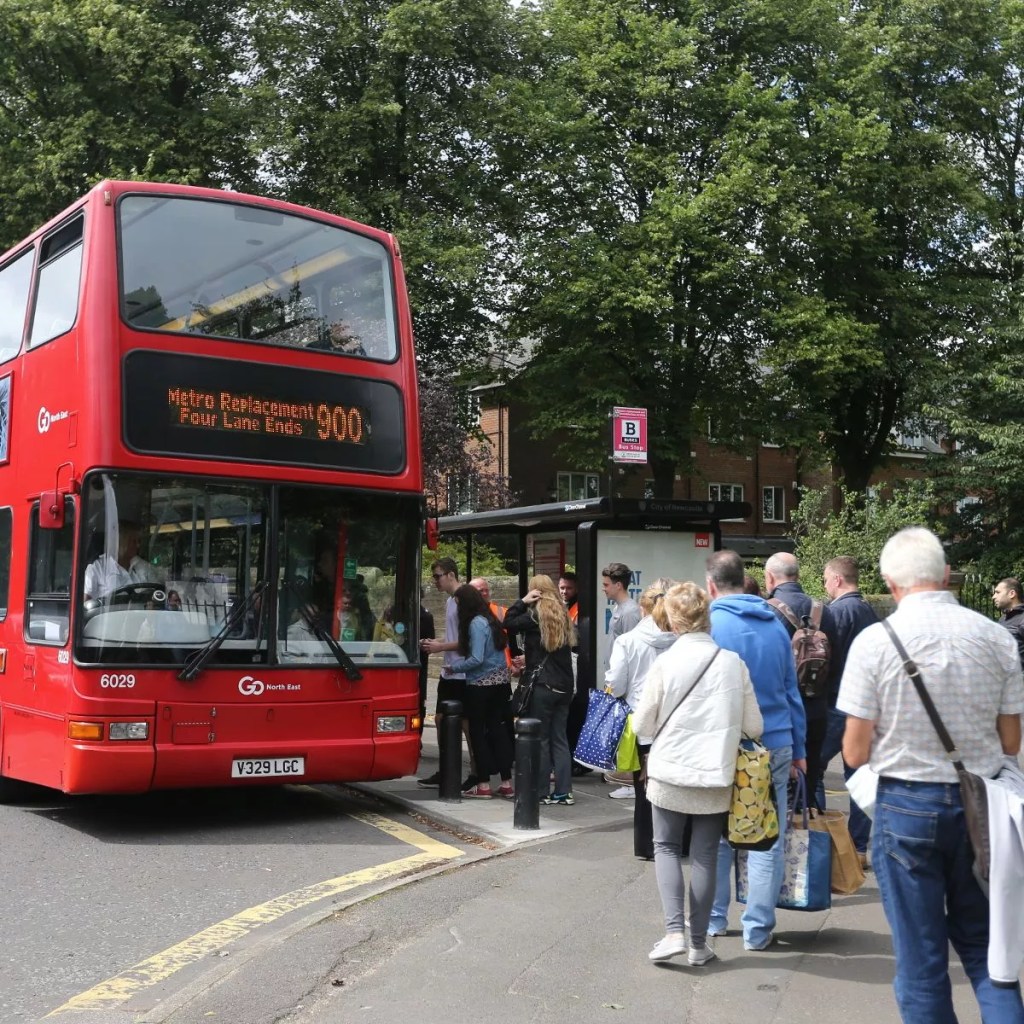
It is a load of cobblers The Bus Replacement it is a proper carry It is causing loads of traffic and it took Bob an hour and 15 minutes and 7 and a half miles to travel to NTDF today. I cant wait for The Metro’s to come back on and work again.
These’re some of the Christmas decorations I made and designed Saturday in The Arts and Crafts Session at NTDF. These and The Snowman Block are for The NTDF Christmas Market in December in a couple of month just in two months time.
This is my Snowman I made and designed in The Arts and Crafts Session here at NTDF on Saturday. We were selling them last Friday at The NTDF Market too. I painted The Snowman white with white spray paint.




.jpg)








 Weevles Updates Disabled Bloggers Team