How were people persuaded to join the army?
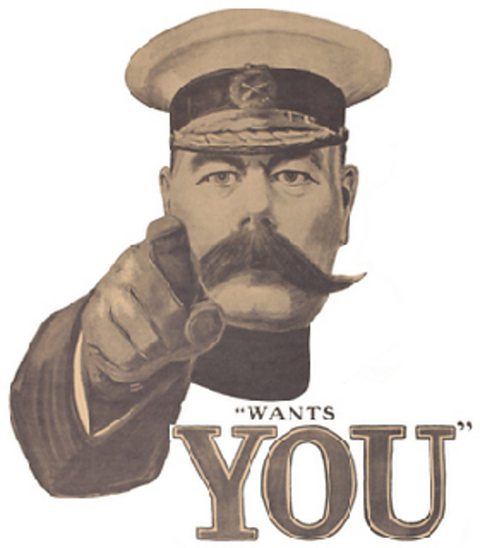
In August 1914, Lord Kitchener, the Secretary of State for War, realised Britain needed a bigger army.
He made a direct appeal to the men of Britain. Posters showed him pointing his finger at anyone passing by.
Men felt proud to fight for their country.
- 54 million posters were issued.
- 8 million letters were sent.
- 12,000 meetings were held.
- 20,000 speeches were given by military spokesmen.
In the first weekend of the war, 100 men an hour (3,000 a day) signed up to join the armed forces.
By the end of 1914 1,186,337 men had enlisted.
Who could join the army?
Image gallerySkip image gallery
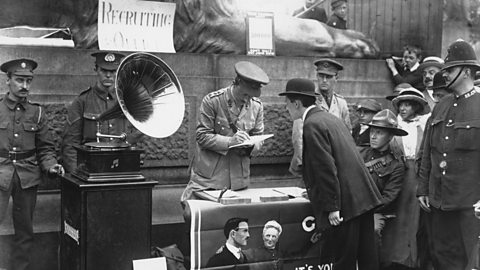
- Image caption,Recruitment drives were held in places like Trafalgar SquareOnly men aged between 18 and 41 could become soldiers. (The age limit was increased to 51 in April 1918.)
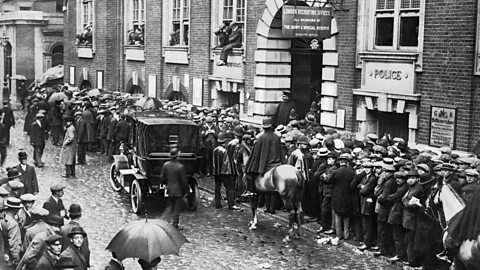
- Image caption,Men queued outside recruitment offices to join the armySome men failed the medical test. Others had ‘reserved occupations’, like working in coal mines, shipyards, munitions factories and farms, which meant they stayed in Britain.
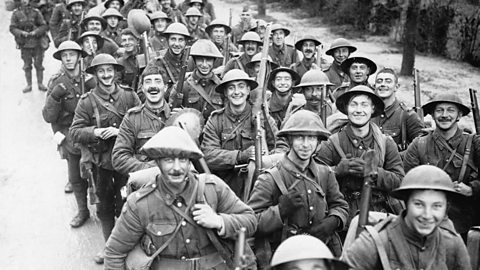
- Image caption,Younger teenagers tried to join tooThey wanted to be treated like men and thought war would be exciting. Many lied about their age. Some boys as young as 13 or 14 went to war.
1. Photograph of a man giving his name to an officer at a recruitment drive in Trafalgar Square during World War One, 3.Recruitment drives were held in places like Trafalgar Square Only men aged between 18 and 41 could become soldiers. (The age limit was increased to 51 in April 1918.)
The Government wanted as many men as possible to join the forces willingly.
But in 1916 a law was passed to say men had to join whether they wanted to or not. This was called conscription.
 Weevles Updates Disabled Bloggers Team