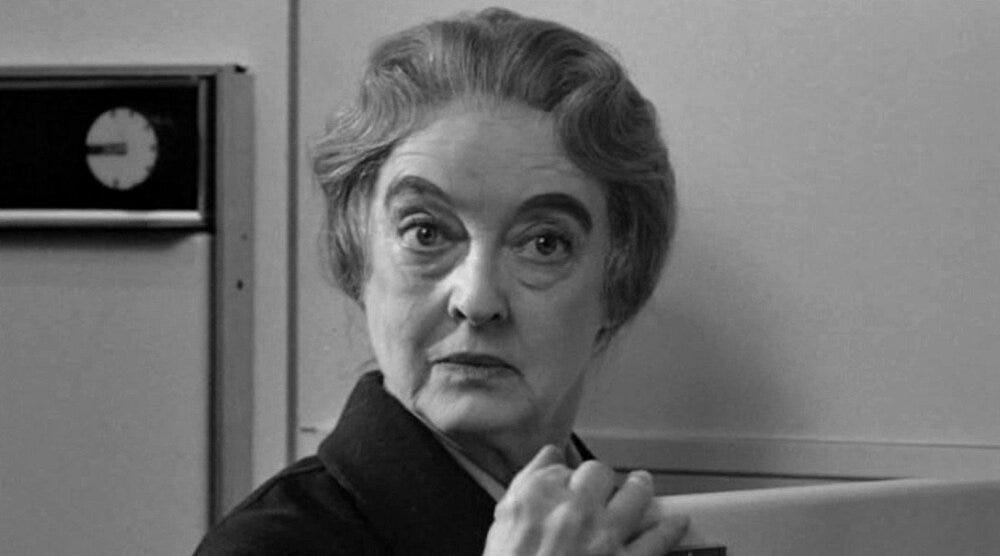
This is one of my favourite Hammer Horror film’s I have on dvd. Bette Davis is the main star in the movie it is The Nanny it is from 65. I am looking forward to watching it sometime it is on for 93 minutes 1 hour and 33 minutes just over an hour and a half. It came out and was released on the 7th October 1965 before I was born.
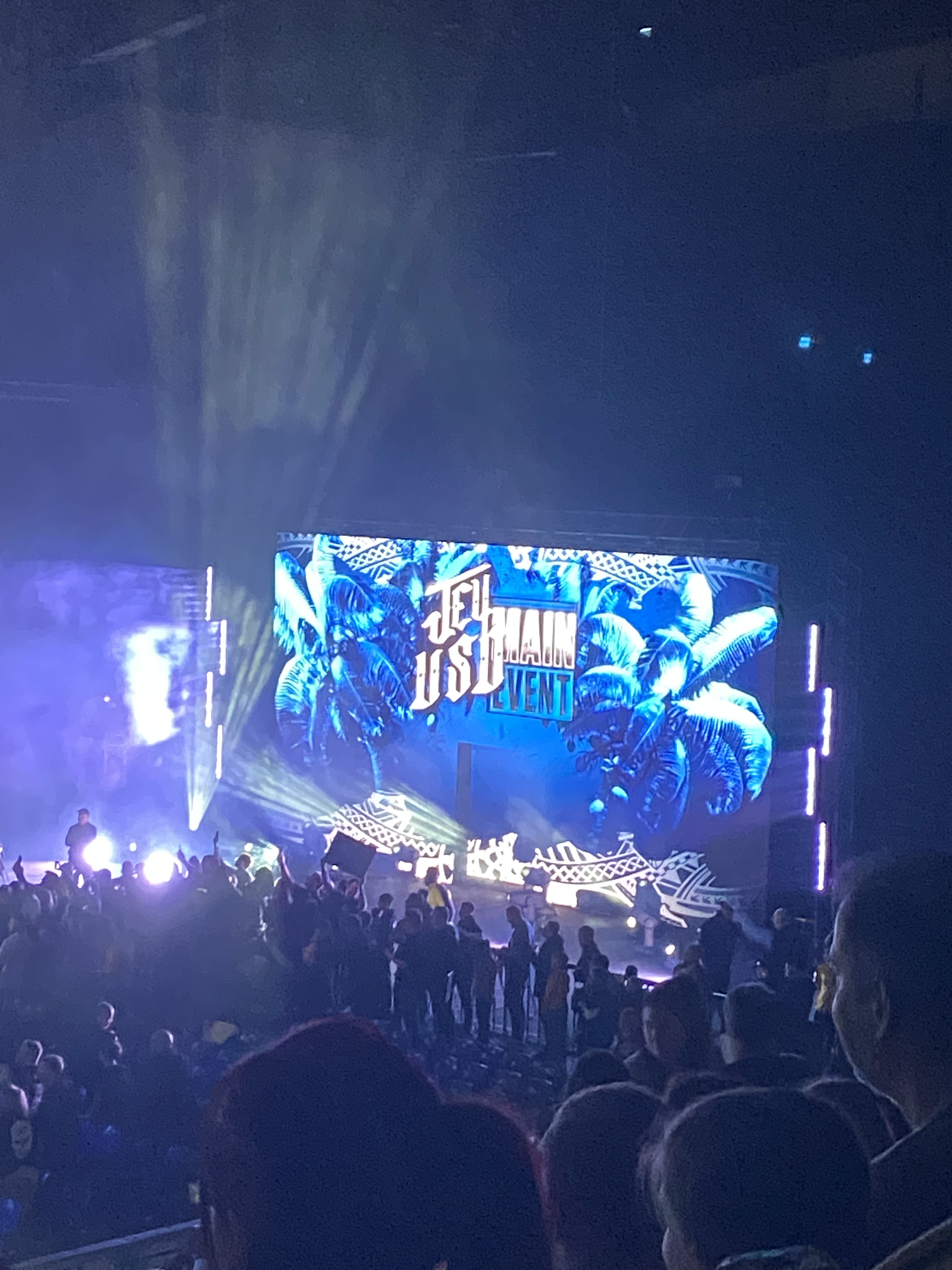
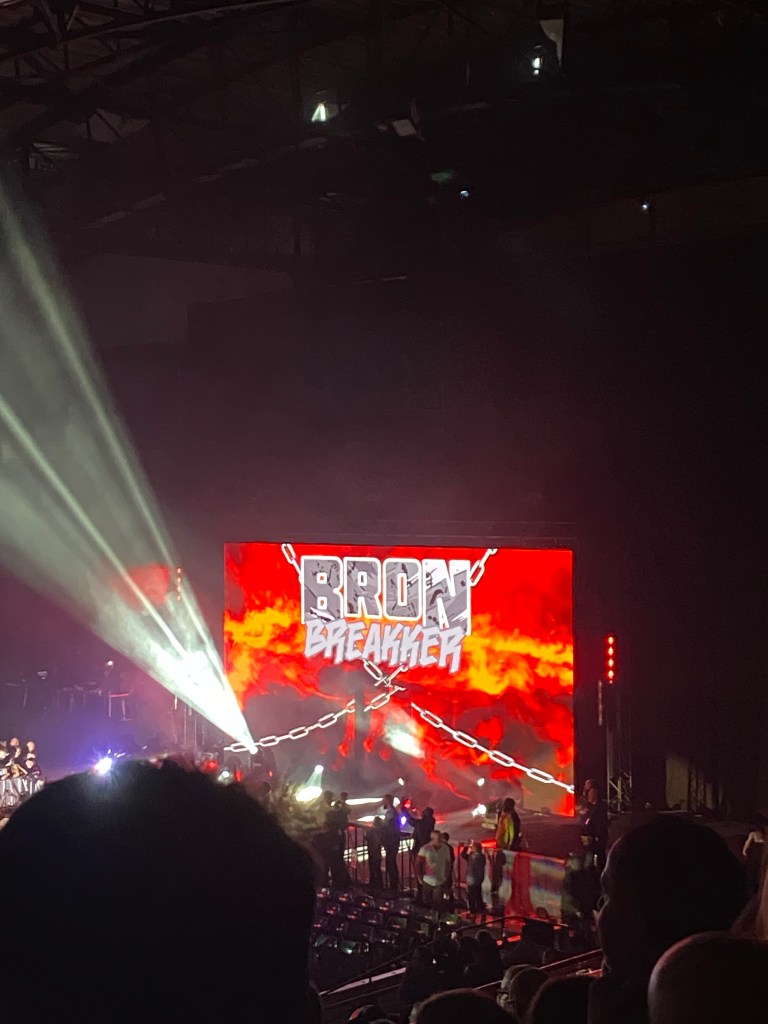
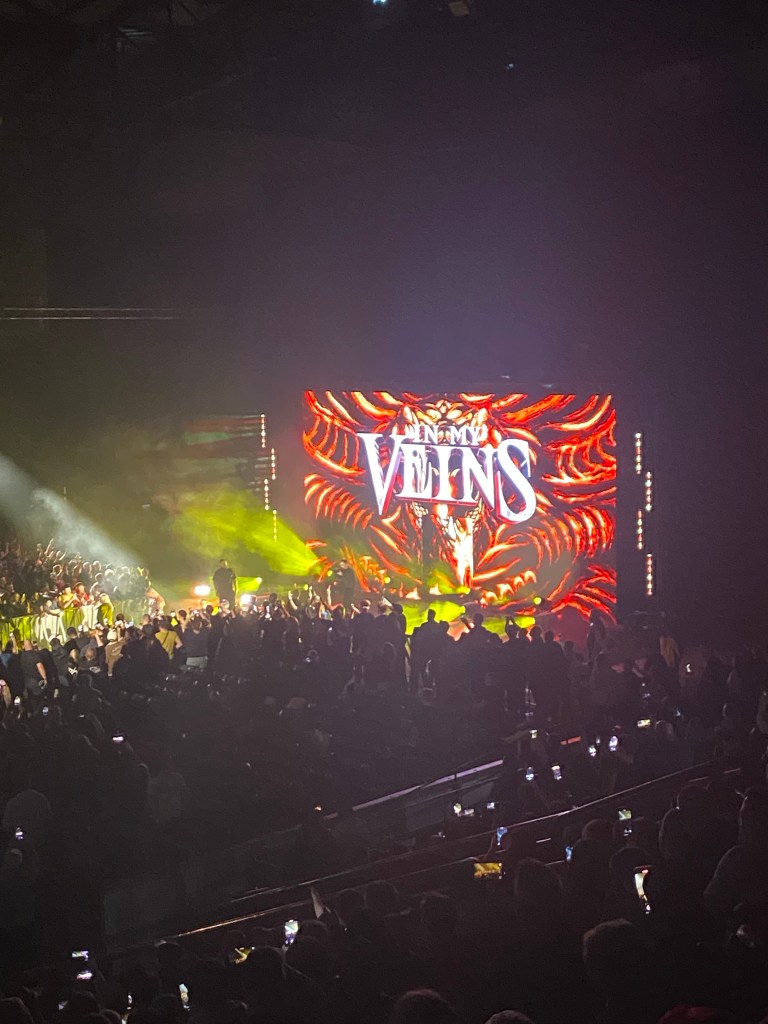
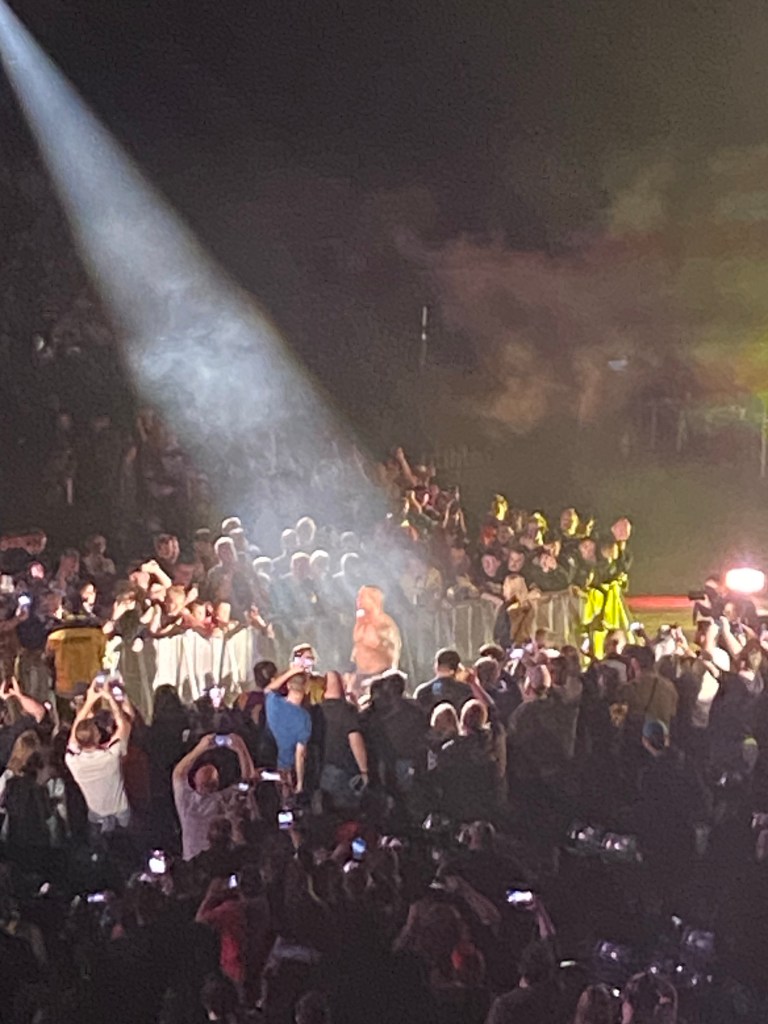
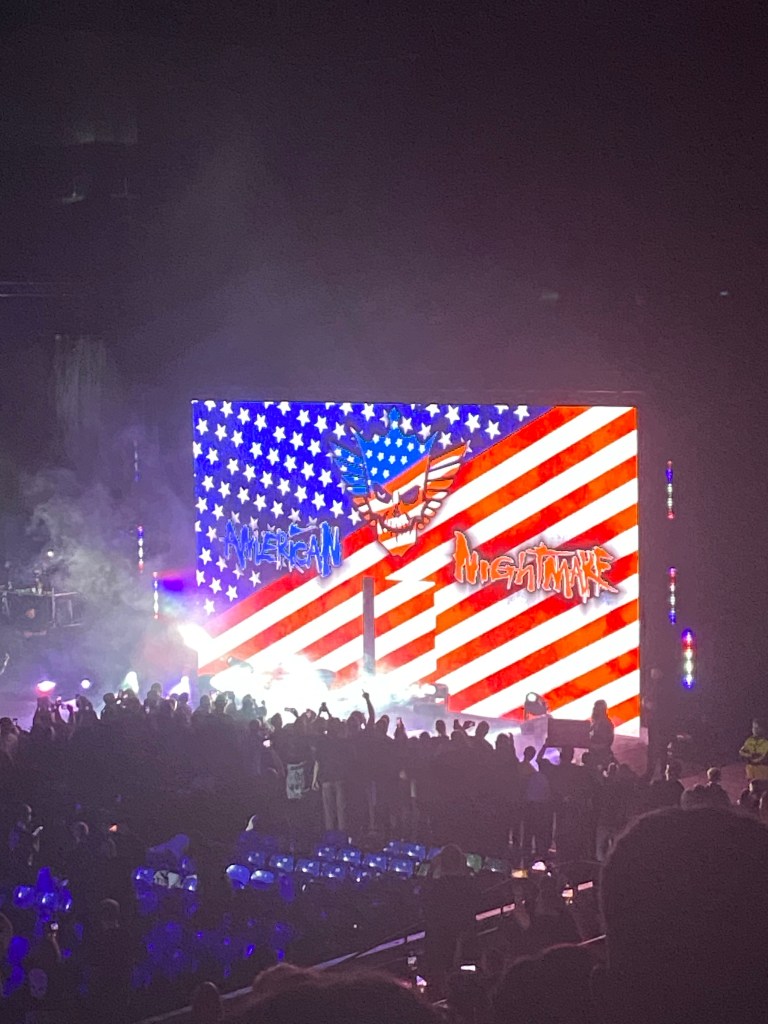
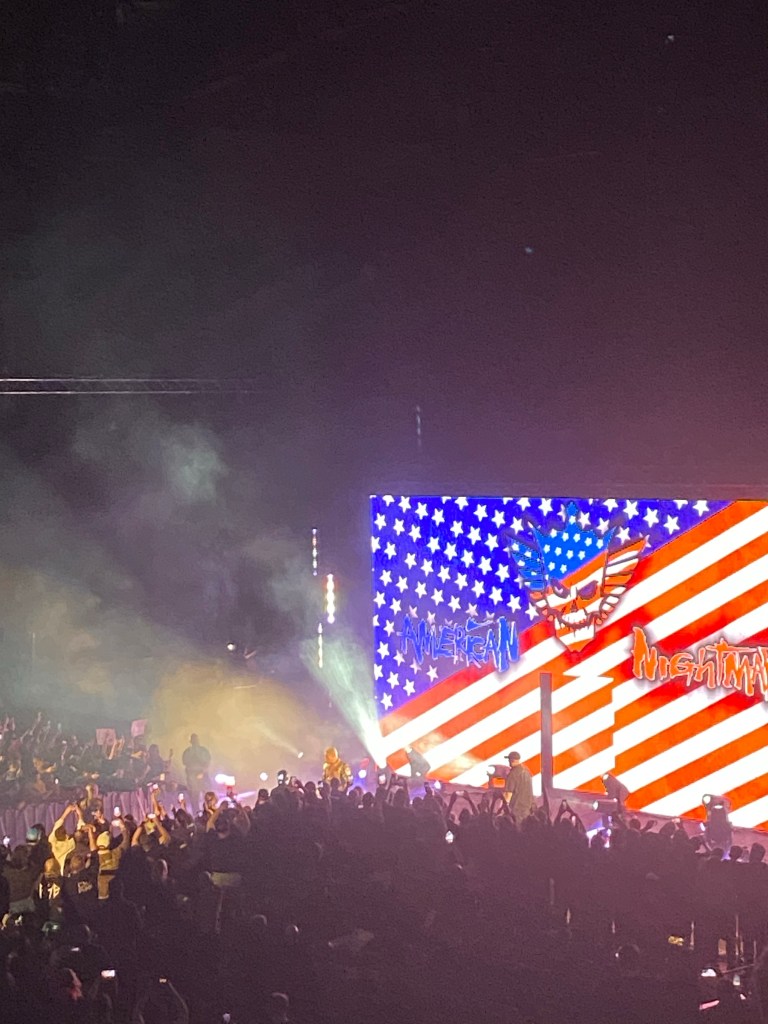
This is Main Event Jey Uso’s entrance from last night at The wrestling when he came out to wrestle Bron Breaker. Jey Uso’s entrance was really good I really enjoyed seeing it in real life it was the first time ever I seen it in real life.
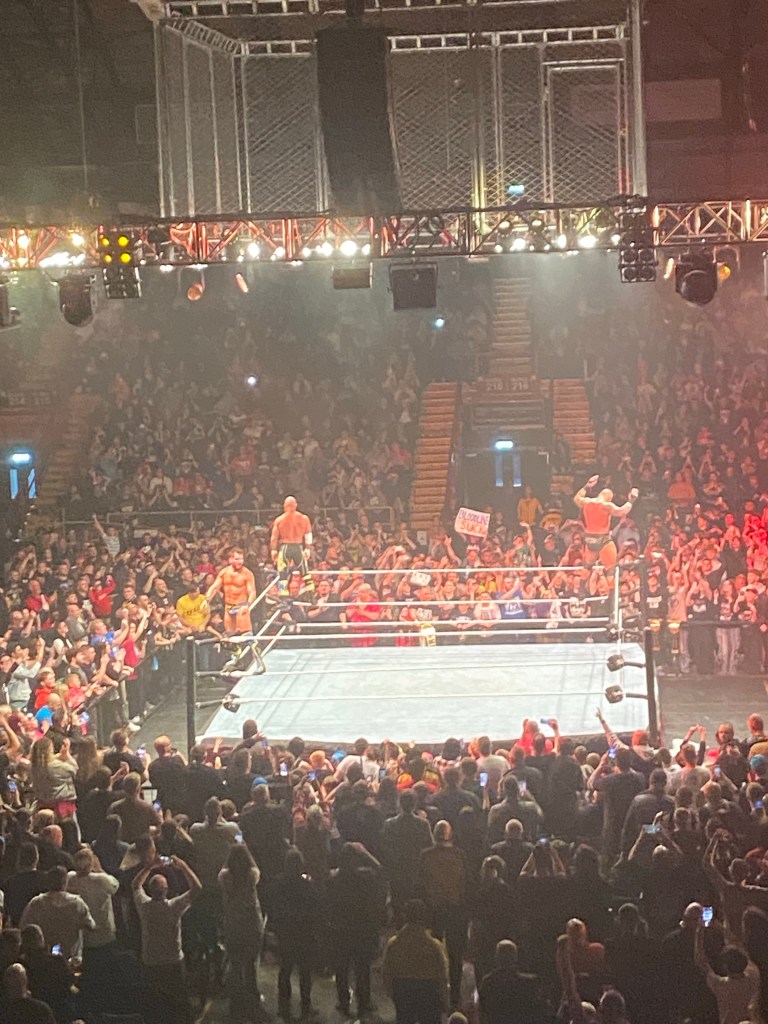
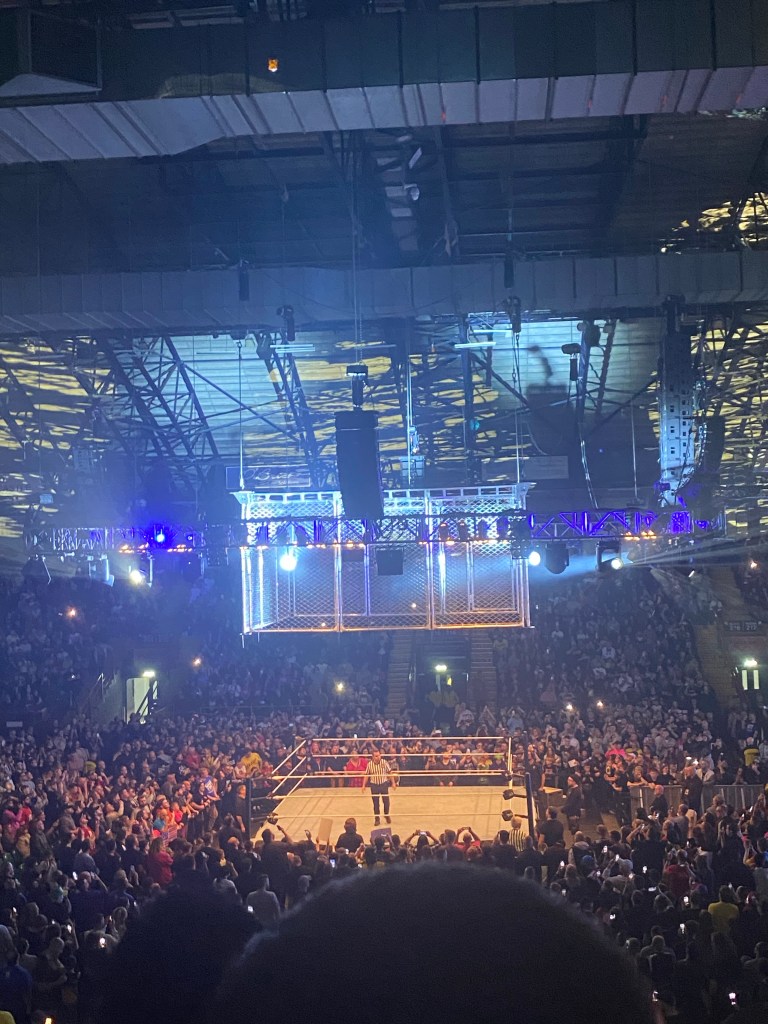
This was the main event last night it was Wwe Champion Cody Rhodes vs Solo Sikoa in a steel cage match. Cody Rhodes defeated Solo Sikoa and retained the Wwe Championship it was a really good main event it was the first time I seen a Wwe cage match in real life and the first time I seen a steel cage match at The Arena in Newcastle at a Wwe Live Event.
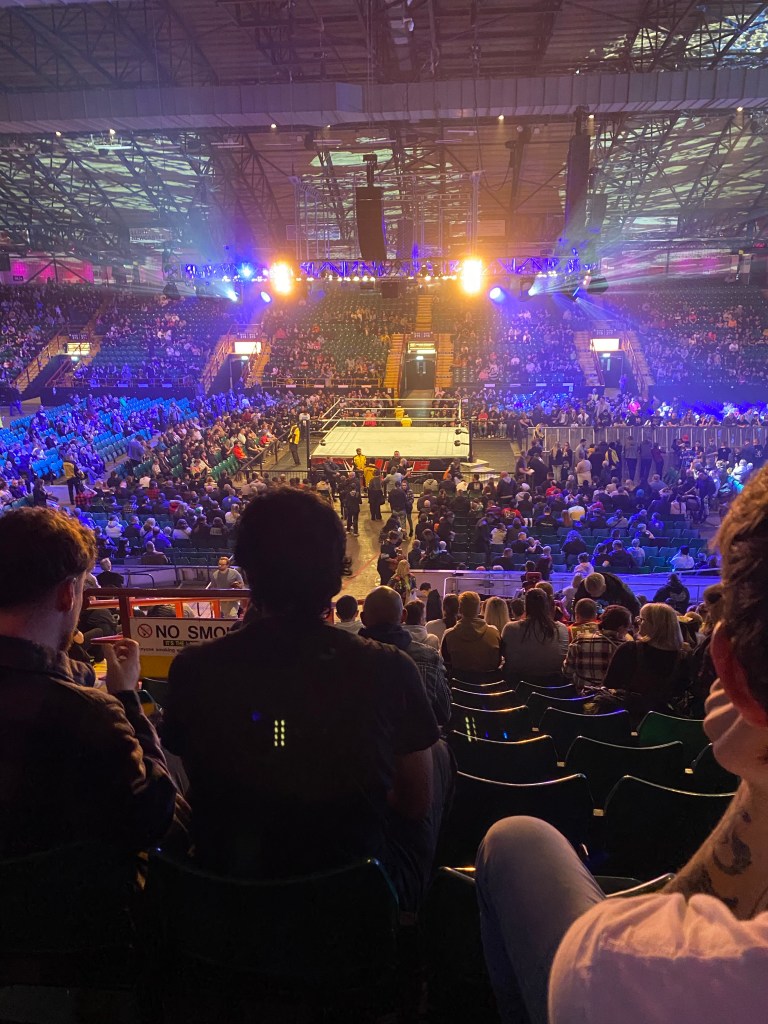
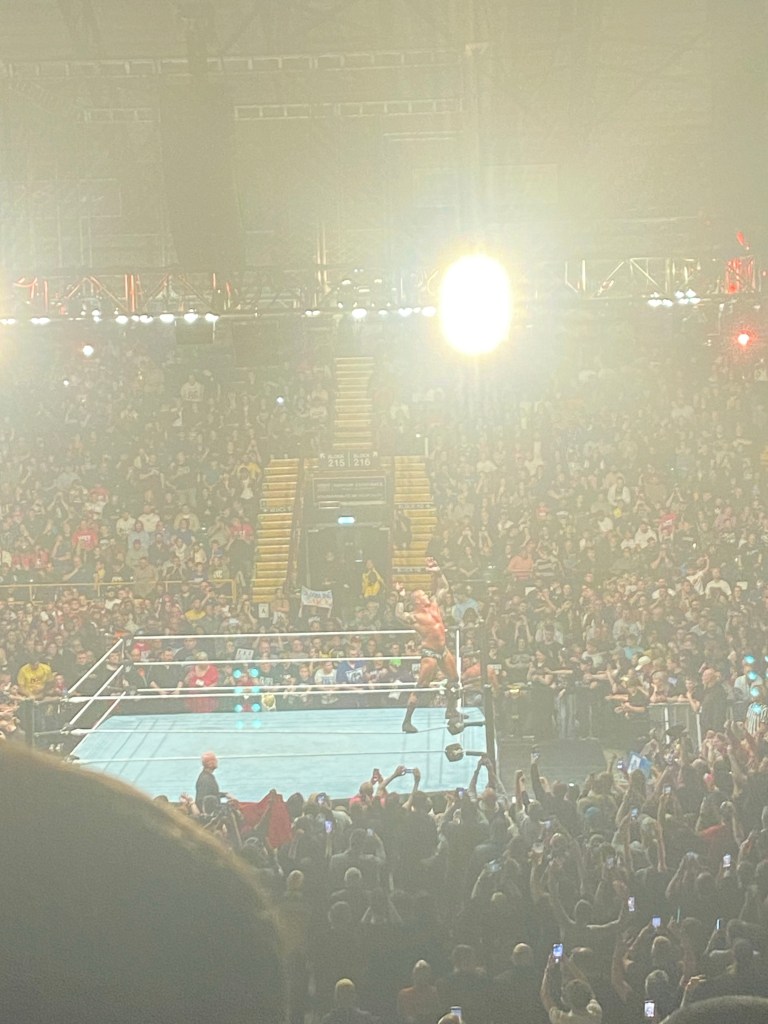
I had a really good time with my Dad last night see WWE Smackdown at The Utilita Arena in Newcastle it was lots of fun. We had really good seats on top up the steps looking down on to the ring so we could see the whole ring and the whole entrance. The main event was WWE champion Cody Rhodes vs Solo Sikoa for the WWE championship in a steel cage match Cody Rhodes defeated Solo Sikoa and retained the WWE championship.
World War I and its aftermath produced a particularly vulnerable group of child victims: war orphans. This group included children whose fathers had fallen in battle, who had disappeared, or who had not (yet) returned home. Most of Europe’s war and postwar societies witnessed the massive presence of these child victims, and responded in various ways to rescue them and secure their future survival. This article offers an exploration of the ways in which the Hungarian part of the Austro-Hungarian monarchy, and then later the post-imperial Hungarian state, became invested in providing care and relief to Hungarian war orphans. In contrast to other groups of child victims, whose parents were blamed for neglecting their parental duties, war orphans as the offspring of ‘war heroes’ profited from the public appreciation of their fathers’ sacrifice for the war effort and the Hungarian nation. The public discourse in the contemporary Hungarian media offers a glimpse into the emergence of a new public visibility of these child victims and of a new recognition of the societal obligation to care for them. Exploring World War I and its aftermath as a telling example of political transformation in the 20th century, the article showcases how war orphans were taken to personify essential notions of war- and postwar destruction, while also capturing visions of postwar recovery. It furthermore examines how welfare discourses and relief practices for Hungary’s war orphans were embedded in contemporary gender norms, notions of proper Christian morality and ethnic nationalism. On this basis, the article assesses the ways in which the case of Hungary’s war orphans not only mirrors the professionalization but also the fundamental transformation of child welfare in the aftermath of World War I.
In 1916, a contemporary journal article drew attention to the cause of Hungary’s war orphans, whom it described as ‘defenceless souls, who are unable to advocate for their own destiny’. The state, the article insisted, had the duty ‘to provide for their lives, their education and their future just as much as a father who had lost his life on the battlefield for the future of the nation’. Although the Hungarian state had been involved in the care for orphans officially since 1898, it was the period of World War I and its aftermath which triggered a new scale of abrupt orphanhood. During this period of political rupture and transformation, the Austro-Hungarian Empire was not alone with facing the massive challenge of orphaned and unsupervised children. Most of Europe’s post-war societies were confronted with this particularly stressing social challenge: the need to care for hundreds of thousands of war orphans. Tammy Proctor for instance speaks of 1 million orphans in post-war France.
The reasons for children’s orphan state during and after the war were manifold. The most frequent cause was the death of soldiers in battle, their captivity as prisoners of war (POWs), or their disappearance in the turmoil of war. While the violent conflict killed soldiers, who were often fathers, in all combatant countries, also population displacement both during and after the war tore families apart and left children to be cast off from their birth families. In those tumultuous war and post-war years, it was rarely easy to identify the causes of children’s orphanhood. Furthermore, all those children were considered ‘war orphans’ (hadiárvák) in whose families the head of the family had died or disappeared and could no longer provide the family with an income. Even ‘temporarily abandoned families’ and their children, where the father had been drafted to the war, were often treated the same as those families and children where the father had died or disappeared permanently. This meant that the majority of the so-called war orphans were in fact either half-orphans, as most mothers were still alive and around, or just temporarily fatherless. Some war orphans were indeed full orphans, who had lost both parents during the war and post-war years.
In Central and Eastern Europe, it was not just warfare which caused the death and disappearance of fathers. More specifically, the abrupt and violent dissolution of the Austro-Hungarian, the Russian, and the Ottoman Empires in the postwar years produced masses of unsupervised and orphaned children.7 The dissolution of the multi-ethnic Austro-Hungarian Empire produced between 400,000 and 450,000 Hungarian refugees, who left the territories that Hungary lost to Austria, Slovakia, Romania, and Yugoslavia. Years before the signing of the Treaty of Trianon on 4 June 1920, the Hungarian authorities had already been challenged by the abrupt and massive migration of large parts of its population from the occupied territories, which was caused not only by the war but also by the threatened or real loss of one’s home, withdrawal of one’s citizenship, forced displacement, and the threat of unemployment. Hungary also went through several political crises: a Bolshevist Revolution led by Béla Kun in spring 1919 and a period of White (antisemitic) Terror between 1919 and 1921. On top of this, Hungarians had survived an economic blockade, which lasted until 1919 and a post-war hunger crisis. The combination of these events, together with Hungary’s defeat in the war, exacerbated children’s destitution. In addition, especially the civilian population of Budapest, Hungary’s capital city, had to cope with large unemployment, a housing crisis, and the Spanish flu in the post-war years. This historical constellation of events both triggered and laid bare children’s particular vulnerability in times of war and during fundamental political transformations.
In the midst of this global conflict, war orphans were essentially becoming the war’s ‘indirect victims’,as they were not directly involved in the violent conflict. It was due to the death, wounding, disappearance, or absence of their fathers that they had become victims at all. Abruptly orphaned or half-orphaned, these children were left to face major challenges, yet they also gained a new public visibility, which was essential for assigning increased and long-term responsibility to the Hungarian state to provide welfare for the war’s victims. Hungary’s war orphans furthermore gained a new symbolic value, as they testified to the fact that their fathers had sacrificed their lives for the national cause. The state saw it as its moral duty to care for the descendants of its ‘war heroes’. However, it was also driven by fears of the decline of the nation. If the state would not care for those orphaned children, pronatalist notions that were widely circulating at the time altered the way war orphans were perceived and incorporated into emerging welfare state’s considerations.
A Hungarian article from 1918 described the war as a ‘terrible storm [which] took its toll on the fittest and healthiest human material’. Although it was indeed an economic burden on the state, rescuing war orphans was considered to be both necessary and worth the effort. Count Pál Teleki, who served in 1919 as a Hungarian delegate to the Paris peace conference and who became in 1920 Prime Minister of Hungary, argued in 1918 for the rescue of ‘as many’ war orphans and children of war invalids, ‘as are necessary and useful to the country’. This new approach to orphans, which judged orphans as valuable and not detrimental to the state, was shared by many European states at the time. This shifting approach to orphans uncovers how the state was becoming increasingly involved with the care of those segments of its civilian population that had suffered from the direct and indirect effects of the war.
Engaging with contemporary notions of the war orphans’ particular ‘deservingness’ and the state’s obligation to provide relief, this article offers a case study of how World War I altered the way in which European societies dealt with their child victims.Through the lens of a study of war orphans in Hungary, this article contributes to research on the impact of war on children and on the role of the war’s victims for the expansion and professionalization of the modern welfare state in post-war Europe. In concrete terms, the article analyses why and how the Hungarian state (both imperial and post-imperial) shifted its attention to the country’s war orphans, a group of children to which it felt a special responsibility to offer relief and care in this period of political and social transformation. It asks how these children gained such particular social significance in contemporary public discourses. It argues that these orphaned children had great symbolic value in highlighting the destructive effects of war on Europe’s civilians.Furthermore, they were employed to envision the recovery of the harmed collective body of Hungary’s post-war population through the professionalization of welfare. To demonstrate how the orphans’ social value was publicly brought out and how their destitution was practically addressed, the article explores various relief measures for the orphaned children. Relying on contemporary Hungarian discourses, the article investigates the ways in which the destitution and relief of Hungary’s innocent ‘children of the war’s heroes’ was used to publicize the fragile constitution of Hungary’s civilian population.
1. Embodying the post-war
The condition of Europe’s war orphans is the quintessential representation of the war’s invasion into private lives and how it compromised futures. Contemporary eyewitness reports testified to the frailty and poverty of war orphans in Central and Eastern Europe. In his monograph War’s Aftermath (1940), the American soldier William R. Grove, who went to Poland as a relief worker, recalled the appalling fragility of children in the aftermath of World War I. He was incensed that ‘certain children should have to suffer as did those in the war-torn areas, while others should have all of the comforts in the world’, finding it hard to accept. And yet, he observed, ‘there they were, these orphans of the borderland, hungry and cold, with inadequate resources in their own country to save them’. He confessed that people like himself who made frequent inspection trips to the distressed regions—in particular to the borderlands—would ‘always be haunted, in our memories, by the pathetic sight of these children’.
As an example, he recalled an encounter with orphaned children in Central Europe:
They looked like little old men and women [. . .] Many of them seemed to carry the troubles of the years on their grave little faces. There were no smiles—only silence. [. . .] These little fellows had gone through more suffering in their short years than most men endure in a lifetime. That is what war did to the children. It was not through neglect by the parents. On the war’s borderland men starved to death that their wives might live a little longer and sustain a child or children. To have food for their children, women went so long with little or no food that they finally succumbed. Parents on that borderland struggled, suffered and died for their children. Imagine the feeling of a mother who sees her children wasting away without a morsel of food obtainable by any possible sacrifice.15
While the borderlands in Central and Eastern Europe especially saw a growing number of orphans, towns and cities in the region were also challenged by fatherless children roaming the streets. They witnessed the presence of children whose physical appearance captured the war’s and the post-war crises’ impact on civilians. In May 1919 ‘hordes of old-world children’, meaning those children whose families had once belonged to the great European empires, ‘dressed in the fragments of an old shirt, or a piece of gunny-sacking’, homeless, diseased, and hungry could be found on the streets in Serbia. Most post-imperial states shared this destiny. In Hungary, already by the end of May 1915, there were 13,395 war orphans registered, of whom 98% could remain with their families, while the others had to be institutionalized. In January 1916, the number was 24,644, of which approximately 93% could stay with their mothers and 3% came to be placed in institutions. By March 1917, one article speaks of 82,000 war orphans. In 1922, the National Military Welfare Office (Országos Hadigondozó Hivatal) registered more than 100,000 war orphans in Hungary.
As Hungary lost two-thirds of its territory, Hungary’s cities and especially its capital became the destination point for many uprooted and disrupted families. In the post-imperial Hungarian state of 1920/1921, there were ‘more than 50,000 young vagrants on the streets of Budapest’, who were considered a serious social problem.Many of these child vagrants were war orphans whose fathers had died in battle, while others had fled from lost Hungarian territories.23 The physical appearance of war orphans on the streets of Budapest was nothing particular in the Central and Eastern European region. Also in the Union of Soviet Socialist Republics (USSR), newly founded in 1922, one could encounter various types of homeless children out and about, ranging from ‘displaced children, abandoned youths, juvenile delinquents, [and] foundlings’ to ‘orphans, strays, hooligans, tramps, vagrants and vermin’.
Yet, these disadvantaged children did not go unnoticed. They played their part in altering the way care and welfare were newly conceived and implemented. Mischa Honeck and James Marten argue that both World Wars manifested the ‘complex and seemingly contradictory relationships between children and armed conflict’: as children, on the one hand, they were supposed to be sheltered from the war; on the other hand, they were actively drawn into the war effort and directly and indirectly affected by the violent conflict.
When it came to the impact of the war on children’s need for additional care, Lydia Murdoch argues in the case of Britain that the Great War ‘not only brought a different population of children into state and charitable institutions’, namely, orphaned children who had often belonged to the better-off families but also those who had lost (parts of) their families. It also ‘precipitated a transformation’ not only ‘in the public perception of all poor parents’, but also of disabled, displaced, disappeared, and absent parents, no longer demonizing them but instead recognizing their contribution to the war effort.26
Consequently, as Pierluigi Pironti argues, the Great War uncovered an emerging ‘nexus between the warfare state and the welfare state’, in so far as the ‘necessity to assure the efficiency of production and to safeguard the home front increased the public role in the field of social relief to include a much wider range of citizens’. Eve Colpus writes that the war had ‘diverted [. . .] a dormant spirit of social service into the causes of patriotism and peace’ while ‘expanding [. . .] professionalized approaches to social work’.Although prior to the ravages of war Hungary had been far from backward in the field of children’s protection, the war simultaneously triggered immense suffering among the child population, incapacitated the existing child protective institutions and triggered the creation of new welfare institutions for war-affected civilians, including child victims.
With the increasing visibility of war orphans’ daily suffering, a new awareness was spreading throughout Europe, which saw it necessary to care for Europe’s war orphans as an important part of the larger issue of providing for the ‘masses of individually affected war victims’ who were ‘the visible relics of destruction’.Not only were disabled veterans considered relics of destruction, but also Europe’s war orphans mirrored how the war had destroyed families and compromised children’s private lives. Unlike most other social groups, they could not fend for themselves, and so, as Michael Geyer argues, a new peace order had to be made in such a way that the victims of the war could feel welcomed home and cared for.Consequently, victim status was not only confined to the war-disabled veterans but also to all those widows who had become sole breadwinners for their families, and all those children who had lost their fathers or mothers, or both.
2. Envisioning relief
The war’s orphans as indirect war victims embodying the endangered future of most European states were considered worthy of rescue. On their behalf, widespread solidarity for these victims was shown through fundraising among most war and post-war populations. For instance, in 1917 the American Red Cross called upon the American people to help her French allies, claiming that ‘it is our first duty to help them rehabilitate themselves. We must help their orphans, their widows’.To help France’s orphans, in June 1918 each unit of the American army abroad ‘adopted’ one French orphan, ‘so to have a little French child as a mascot’, using the children as a means of ‘very slight restitution to France for all that we [the US] owe her’.
The junior division of the American Red Cross also raised money among school children in the United States to help feed and educate the thousands of children whom the war had left orphaned.The Swiss Red Cross delivered 200 kg of condensed milk and 100 pairs of winter shoes to Hungary’s orphans. Other European states felt obliged to replace the orphan’s fathers and families. This was not an entirely selfless endeavour because as Pierluigi Pironti writes, ‘securing adequate support for war orphans meant possibly providing them with the means to restart the national economy at the end of the conflict’. Helping Europe’s war orphans to physically recover mirrored the attempt of various states to help their economies and populations to recover from the war and its aftermath.
In Hungary, the care for the ‘orphaned and unsupported children of those fallen in the war’ and the ‘families of the more seriously injured invalids’ became one of the principal duties of child protection during and after the war. Already in 1915, Dr Béla Kun, a contemporary child welfare worker of the same name as the Hungarian revolutionary, had drawn attention to the condition of Hungary’s war orphans. Kun recommended that the state provide relief in three ways: first, it should see to the orphans’ material needs; second, it should invest in providing a moral and healthy upbringing for them; and third, it should help them become financially independent by training them for a profession. He argued that orphans should be entitled to child welfare benefits. If the state saw it as its duty to take over the care of waifs, then war orphans’ rights to governmental protection should be even more comprehensive.
Kun even differentiated between the waifs from the ‘questionable elements’ of Hungary’s society and the war orphans who had a background of ‘proper family circumstances’ that had only been ruined by the war. Provisions for war orphans should include ‘a healthy place to live, rich and nutritious food, adequate health care, schooling, religious-moral education and education for work’. From the ‘perspective of the future of the entire nation’, these provisions should ultimately be extended to all children, orphaned or not.Due to the material and economic suffering of the post-war state, the Hungarian government was not yet ready for such a large-scale undertaking. But it could start with care for the war orphans.This would establish institutions and social structures that would serve as a foundation for the extension of the peacetime welfare system.
By 1916, the ‘care for the war’s orphans’ was deemed a task of paramount importance that should be a central concern of the Hungarian state. It was argued that such a task could not be left to society.The rescue and care of orphans was turning into ‘one of the most important and most pressing issues for society’. In that same year Dr László Zombory, a Catholic priest, wrote a booklet on the question of ‘Child Protection during the War’ and concluded that the war had turned the protection of abandoned and orphaned children into a great social task that the state should urgently address. When fathers were absent on the front or had died from diseases or on the battlefield, state and society had a ‘moral duty’ to see to their children. By 1917, it had become clear that ‘the longer the war lasted’, the ‘more widows and orphans in the country’ and ‘the more the price of any food and other basic commodities [would] [. . .] rise’. Yet, it was criticized that Hungary’s ‘high society’ was ‘hardly concerned with the future of war orphans’, despite its great involvement in war-related charity. Still in 1918, a newspaper article insisted that the Hungarian state and society at large should make up for this great loss ‘by properly [. . .] caring for the abandoned’. They had a duty to rescue the neglected and impaired war orphans. In response to ‘the great loss of human life’, contemporaries held the state accountable for taking up the ‘double duty to ensure the physical and mental development of the younger generation’.Thus, the state was called on ‘to fill the gap which the fathers’ deaths had created’ lest ‘the moral and social development of a whole generation be damaged for good’.
3. Initiating relief
On 8 March 1917, the Hungarian government established the National Military Welfare Office. It was considered the ‘honorary duty of the nation’ to provide for those who had ‘sacrificed their physical integrity and lives on the battlefield’ and those they left behind, namely, all war invalids, widows, and war orphans.It was headed by Count Pál Teleki and was established to oversee the relief of invalids and their families, which also included the care of war orphans. Teleki was able to cooperate with the Ministry of the Interior and make use of social structures and institutions that had already been established for the care of waifs.57
While the care of orphans had been organized since the early nineteenth century through the orphanage system, the árvaszék, the war-related orphans were handled by the National Military Welfare Office. What remained important was the close cooperation between this new type of welfare organization, whose establishment had been triggered by the war, and charity organizations. An article from March 1917 claimed that the creation of such national public health, welfare, and charity institutions would also need to be widely supported and ‘deeply rooted in society’ if they were to function in the long run. This understanding of care for those in need was based on the conviction that it would remain ‘soulless’ if it was not supported by the personal and financial involvement of all those who had the means to do so.
In 1918, Pál Teleki explained in his book Social Politics and War Relief why the expansion and coordination of war-related welfare were so necessary. Such welfare, which included the relief of invalids, widows, and war orphans, had to become an urgent, untested ‘mass experiment’ that was absolutely essential due to the increasing numbers of war victims.As the war had ‘greatly increased the number of people in need’, Teleki wrote, and as ‘charitable aid had been largely unorganized’ before the war, the country needed a more centralized approach to war-related welfare which would organize relief countrywide. The reason for the need of a national welfare infrastructure was not that ‘the misery caused by war is no longer a charitable problem in its own right’, according to Teleki, but that it had become ‘a problem of the national economy’, which is why it would need to be solved by the state. This joint effort should utilize ‘all state or municipal institutions and agencies, all associations for various purposes’ to work together. And it was up to the state ‘to provide the big guidelines and solid foundations’ for this welfare institution, which would then divide its work into ‘a million smaller tasks’ that comprised infant care for war orphans, dairy kitchens, day care homes, kindergartens, cloth and shoe deliveries, employment for war widows [and] health care for the disabled’.
Due to the difficult economic situation of Hungary at the time, Teleki was also driven by the conviction to change the character of aid. Instead of just providing money, which would only help temporarily, he imagined war-related welfare to have longer lasting effects on the recipients.Pursuing these new notions, the National Military Welfare Office organized and coordinated war-related welfare. Still, this new, emerging type of welfare was closely intertwined with existent types of charity. When it came to the war’s victims, there was a widespread ‘affection for orphans in every section of society’ (but especially individuals of the better-off classes) and philanthropic associations were in a position to support in various ways. On 1 October 1920, for instance, a charity event was organized in Budapest’s English Park for the benefit of veterans, which Budapest’s orphans could attend as pupils Archduchess Magdolna, the youngest daughter of Archduke Joseph, attended the event and joined the orphaned children, thereby creating a direct connection between Hungary’s imperial elite and the country’s afflicted youngsters. Visuals of such events were printed in the contemporary media, publicly acknowledging the elite’s donations and encouraging further financial help from those who could afford it. Donations for Hungary’s war widows and war orphans were even collected in Austria. On 12 January 1918, a large concert was held in Vienna and 100,000 crowns were collected to be sent to the Hungarian Prime minister Sándor Wekerle for the benefit of Hungary’s war widows and orphans.
Figure 1. ‘The war orphans’ [‘A hadiárvák’], in: Tolnai Világlapja XX (October 1, 1920) 23, 4. Image is in the public domain.67
Another initiative came from the National Association of Veterans, Widows and War Orphans (Hadirokkantak, Hadiözvegyek és Hadiárvák Országos Nemzeti Szövetsége), which had been newly established in 1920 by the Minister of Interior. Serving as a new governmental body that represented the state’s effort to centralize and professionalize the relief of the war’s victims, this association still relied on private funding and called up on all ‘socially and financially qualified individuals’ who could help this association to achieve its major goals.National festivities in particular were seen as an ideal moment to raise funds for such relief endeavours. On 7 December 1920, it made a public appeal to all pupils and parents of one particular school, asking them to donate Christmas presents of ‘clothing, food, books, toys and money’ for the ‘sick war orphans and the children of disabled veterans’.
The Hungarian League of Child Protection (Országos Gyermekvédő Liga), one major child welfare organization at the time, also joined efforts with already existing philanthropic and child protection associations to explore ways of caring for the war orphans. By 1920, the League was providing financial support, foodstuffs, and clothes for 1400 war orphans living with their mothers. Relief for war orphans was often combined with relief for war widows and war invalids. Joint relief collections were also organized for these groups. Contributions also came from individuals. In 1922, Endre Liber, the metropolitan governmental refugee commissioner in Budapest, personally arranged a 25,000-crown grant to Budapest’s József boys’ orphanage to support orphaned children of refugees from the cut-off regions.The League was prepared to invest much of its own effort and the effort of its various associations into the care of war orphans, support which was welcomed by Hungary’s prime minister at the time.
4. Healing bodies
As it was a time of warfare, destitution, and the spreading of epidemic diseases, war orphans were particularly prone to physical destitution and illnesses due to their often precarious living standards. Assisting the children’s immediate physical recovery was typically the first concern of their relief. Pál Teleki considered it in 1918 an essential task of the National Military Welfare Office to ‘take care of the treatment of war widows and especially war orphans by trying to provide them with places in existing medical institutions’, paying for their care and increasing the number of beds in institutions. Sanatoriums were established and were judged as ‘perhaps more important, [and] more human than educational institutions’ because they rescued the ‘thin and diseased children’ who only after recovery could ‘be guided towards their future life path’ and ‘become useful to society and the country’. Even years later, in 1930s Poland, ‘war orphans and widows were patients on equal terms with disabled ex-servicemen’, indicating how important the physical recovery of orphans was to the post-war states and how instrumental in pushing for the institutionalization of public welfare.
Back in September 1917, the Sophia National Sanatorium Association (Zsófia Szanatórium Egylete) opened the first children’s sanatorium for war orphans in Balatonszabadi by Lake Balaton . It cared for 225 sick war orphans. Its financial appeal stressed how these orphans ‘surely deserve[d]’ public backing to ‘whiten the dark bread of their orphanhood’ and relieve them of feeling ‘the war’s horrors’.
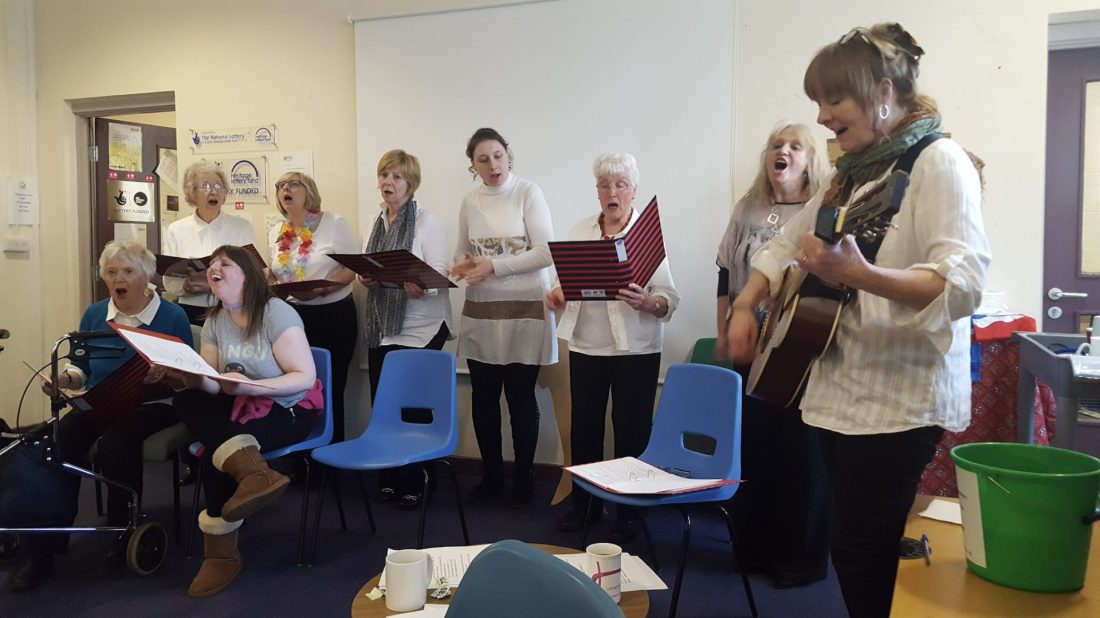
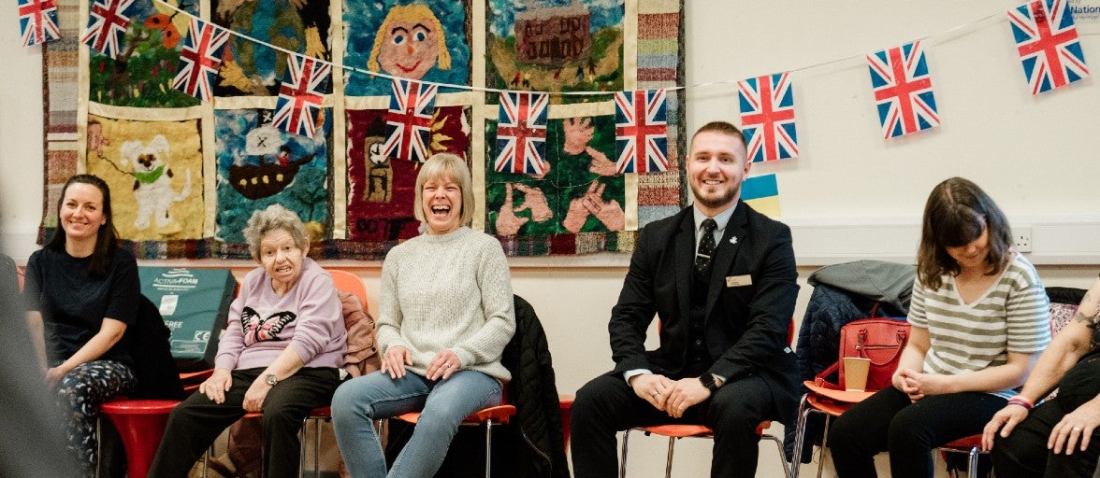
North Tyneside’s Young People have their annual fund raiser, which is always good for making connections in the real world. Enabling, Empowering, Engaging and sustaining those on the digital periphery is more effective with face-to- face involvement, especially when it is also fun!













 Weevles Updates Disabled Bloggers Team