I love watching Great British Railway Journeys on BBC2 on the telly. I am going to catch up with the new series and download all the episode’s later on tonight on my Sky Plus Box from the last two weeks. I am looking forward to watching all the ten episode’s soon in the next few days.
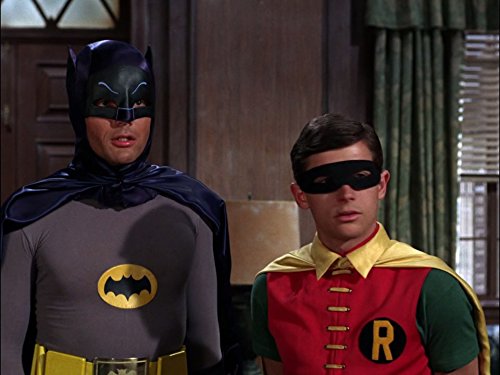
I am looking forward to watching my Batman And Robin 1966 / 67 dvd boxset all over again sometime. It is an eighteen dvd disc my Mum got me it for my birthday two years ago I am going to start watching it all over again soon. The TV series and episode’s were all from before I was born.
I am looking forward to watching Wwe Wrestlemania 38 2022 again on the Wwe Network sometime I thought it was really good. I will be watching Wrestlemania Saturday and Wrestlemania Sunday. Wrestlemania Saturday is on for 3 hours and 53 minutes and Wrestlemania Sunday is on for 3 hours and 45 minutes.
I am looking forward to watching Wwe Wrestlemania 40 2024 from this past April on the Wwe Network again I thought it was really good. I am going to watch Wrestlemania 40 Night 1 and Night 2 again sometime. Night 1 is on for 3 hours and 41 minutes and Night 2 is on for 4 hours and 13 minutes.
The development of tanks in World War I was a response to the stalemate that developed on the Western Front. Although vehicles that incorporated the basic principles of the tank (armour, firepower, and all-terrain mobility) had been projected in the decade or so before the War, it was the alarmingly heavy casualties of the start of its trench warfare that stimulated development. Research took place in both Great Britain and France, with Germany only belatedly following the Allies’ lead.
In Great Britain, an initial vehicle, nicknamed Little Willie, was constructed at William Foster & Co., during August and September 1915. The prototype of a new design that became the Mark I tank was demonstrated to the British Army on 2 February 1916. Although initially termed “Landships” by the Landship Committee, production vehicles were named “tanks”, to preserve secrecy. The term was chosen when it became known that the factory workers at William Foster referred to the first prototype as “the tank” because of its resemblance to a steel water tank.
The Germans, on the other hand, began development only in response to the appearance of Allied tanks on the battlefield. Whilst the Allies manufactured several thousand tanks during the war, Germany deployed only 18 of its own.
The first tanks were mechanically unreliable. There were problems that caused considerable attrition rates during combat deployment and transit. The heavily shelled terrain was impassable to conventional vehicles, and only highly mobile tanks such as the Renault FTs and Mark IV performed reasonably well. The Mark I’s rhomboid shape, caterpillar tracks, and 26-foot (8 m) length meant that it could negotiate obstacles, especially wide trenches, that wheeled vehicles could not. Along with the tank, the first self-propelled gun (the British Gun Carrier Mk I) and the first armoured personnel carrier followed the invention of tanks.
Mark 3II; tank no. 799 captured near Arras on 11 April 1917A German-captured British tank in 19171917: British tanks captured by the Germans being transported by railGerman forces using captured British Mark IVs during the Second Battle of the Marne
The conceptual roots of the tank go back to ancient times, with siege engines that were able to provide protection for troops moving up against stone walls or other fortifications. With the coming of the Industrial Revolution and the demonstrable power of steam, James Cowan presented a proposal for a Steam Powered Land Ram in 1855, towards the end of the Crimean War. Looking like a helmet on ‘footed’ Boydell wheels, early forerunners of the Pedrail wheel, it was essentially an armoured steam tractor equipped with cannon and rotating scythes sprouting from the sides. Lord Palmerston is said to have dismissed it as ‘barbaric’.
Hornsby tractorArtillery tractors (here a Holt tractor) were in use in the French Army in 1914–1915. Here, in the Vosges, spring 1915
From 1904 to 1909, David Roberts, the engineer and managing director of Hornsby & Sons of Grantham, built a series of tractors using his patented ‘chain-track’, which were put through their paces by the British Army, a (small) section of which wanted to evaluate artillery tractors. At one point in 1908, Major William E. Donohue of the Mechanical Transport Committee remarked to Roberts that he should design a new machine with armour that could carry its own gun. However, disheartened by years of ultimately-fruitless tinkering for the Army, Roberts did not take up the idea. In later years, he expressed regret at not having pursued it.[5]
An engineer in the Austro-Hungarian Army, Lieutenant Gunther Burstyn, designed a tracked armoured vehicle in 1911 carrying a light gun in a rotating turret; equipped also with hinged ‘arms’, two in front and two at the rear, carrying wheels on the ends to assist with obstacles and trenches, it was a very forward-looking design, if rather small. The Austro-Hungarian government said that it would be interested in evaluating it if Burstyn could secure commercial backing to produce a prototype. Lacking the requisite contacts, he let it drop. An approach to the German government was similarly fruitless.
In 1912, Lancelot De Mole, of South Australia, submitted a proposal to the British War Office for a “chain-rail vehicle which could be easily steered and carry heavy loads over rough ground and trenches”. De Mole made more proposals to the War Office in 1914 and 1916, with a culminating proposal in late 1917, accompanied by a huge one-eighth scale model, but all fell on substantially-deaf ears. De Mole’s proposal already had the climbing face, which was so typical of the later World War I British tanks, but it is unknown whether there was some connection.
Inquiries to the government of Australia after the war yielded polite responses that Mr. De Mole’s ideas had unfortunately been too advanced for the time to be properly recognised at their just value. The Commission on Awards to Inventors in 1919, which adjudicated all the competing claims to the development of the tank, recognised the brilliance of De Mole’s design and even considered that it was superior to the machines actually developed, but its narrow remit allowed it only to make a payment of £987 to De Mole to cover his expenses. He noted in 1919 that he was urged by friends before the war to approach the Germans with his design but declined to do so for patriotic reasons.
Before World War I, motorised vehicles were still relatively uncommon, and their use on the battlefield was initially limited, especially of heavier vehicles. Armoured cars soon became more common with most belligerents, especially in more-open terrain. On 23 August 1914 the French Colonel Jean Baptiste Eugène Estienne, later a major proponent of tanks, declared, “Gentlemen, victory will belong in this war to the one of the two belligerents that will manage to be the first to succeed in putting a 75 mm cannon on a vehicle that can move on all types of terrain.”
Armored cars indeed proved useful in open land, such as in deserts, but were not very good at crossing obstacles, such as trenches and barriers, or in more-challenging terrain. The other issue was that it was very hard to add much protection or armament.
The main limitation was the wheels, which gave a high ground pressure for the vehicle’s weight. That could be solved by adding more wheels, but unless they also were driven, the effect was to reduce traction on the powered wheels. Driving extra wheels meant more drive train weight, which required a larger and heavier engine to maintain performance. Even worse, none of the extra weight was put into an improvement of armour or armament carried, and the vehicles could still not cross very rough terrain.
The adoption of caterpillar tracks offered a new solution to the problem. The tracks spread the weight of the vehicles over a much greater area, all of which was for traction to move the vehicle. The limitation on armour and firepower was no longer the ground pressure but the power and weight of the power-plant.
The remaining issue was how to use and configure a vehicle. Major Ernest Dunlop Swinton of the Royal Engineers was the official British war correspondent serving in France in 1914 and recounted in his book Eyewitness how the idea of using caterpillar tracks to drive an armoured fighting vehicle came to him on 19 October 1914 while he was driving through northern France. In July 1914, he had received a letter from a friend, Hugh Marriott, a mining engineer, who drew his attention to a Holt caterpillar tractor that Marriott had seen in Belgium.
Marriott thought that it might be useful for transport over difficult ground, and Swinton had passed the information on to the appropriate departments. Swinton then suggested the idea of an armoured tracked vehicle to the military authorities by sending a proposal to Lieutenant-Colonel Maurice Hankey, who tried to interest Lord Kitchener in the idea. When that failed, he sent a memorandum in December to the Committee of Imperial Defence, of which he was himself the secretary. Winston Churchill the First Lord of the Admiralty was one of the members of the committee. Hankey proposed to build a gigantic steel roller pushed by tracked tractors to shield the advancing infantry.
Churchill, in turn, wrote a note on 5 January to Prime Minister H. H. Asquith and warned that the Germans might any moment introduce a comparable system. A worried Asquith now ordered Kitchener to form a committee, headed by General Scott-Moncrieff, to study the feasibility of Swinton’s idea; however, after trials with a Holt 75 horsepower machine, the committee concluded in February 1915 that the idea was impractical.
Landship Committee
Churchill, however, decided that unless the Army took up the idea, the Navy should proceed independently, even if it exceeded the limits of his authority. He created the Landship Committee in February 1915, initially to investigate designs for a massive troop transporter. As a truer picture of front-line conditions was developed the aims of the investigation changed. A requirement was formulated for an armoured vehicle capable of 4 mph (6.4 km/h), climbing a 5 feet (1.5 m) high parapet, crossing an 8 feet (2.4 m) wide gap, and armed with machine guns and a light artillery piece.
A similar proposal was working its way through the Army GHQ in France, and in June, the Landships Committee was made a joint service venture between the War Office and the Admiralty. The Naval involvement in Armoured Fighting Vehicle (AFV) design had originally come about through the Royal Naval Air Service Armoured Car Division, the only British unit fielding AFVs in 1914. Surprisingly, until the end of the war, most experimentation on heavy land vehicles was conducted by the Royal Naval Air Service Squadron 20.
At first, protecting heavy gun tractors with armour appeared the most promising line of development. Alternative early ‘big wheel’ designs on the lines of the Russiantsar tank of 1915 were soon understood to be impractical. However, adapting the existing Holt Company caterpillar designs, the only robust tracked tractors available in 1915 into a fighting machine, which France and Germany did, was decided against. Although armour and weapon systems were easy to acquire, other existing caterpillar and suspension units were too weak, existing engines were underpowered for the vehicles that the designers had in mind and the ability to cross trenches was poor because of the shortness of the wheelbase.
The Killen-Strait tractor with three tracks was used for the first experiments in June but was much too small to be developed further. The large Pedrail monotrack vehicle was proposed in a number of different configurations, but none were adopted. Trials to couple two American Bullock tractors failed. There also were considerable differences of opinion between the several committee members. Col R.E.B. Crompton, a veteran military engineer and electrical pioneer, drafted numerous designs with Lucien Legros for armoured troop carrying vehicles and gun-armed vehicles, to have used either Bullock tracks or variants of the Pedrail.
At the same time, Lt Robert Macfie, of the RNAS, and Albert Nesfield, an Ealing-based engineer, devised a number of armoured tracked vehicles, which incorporated an angled front ‘climbing face’ to the tracks. The two men fell out bitterly as their plans came to nought; Macfie in particular pursued a vendetta against the other members of the Landships Committee after the war.
To resolve the threatened dissipation of effort, it was ordered in late July that a contract was to be placed with William Foster & Co. Ltd, a company having done some prewar design work on heavy tractors and known to Churchill from an earlier experiment with a trench-crossing supply vehicle, to produce a proof-of-concept vehicle with two tracks, based on a lengthened Bullock tractor chassis. Construction work began three weeks later.
A Mark I tank, moving from left to right. The rhomboidal shape allowed it to climb parapets and cross trenches. Photo by Ernest Brooks.
Fosters of Lincoln built the 14 ton “Little Willie“, which first ran on 8 September. Powered by a 105 hp (78 kW) Daimler engine, the 10-foot-high (3.0 m) armoured box was initially fitted with a low Bullock caterpillar. A rotating top turret was planned with a 40 mm gun but abandoned due to weight problems, leaving the final vehicle unarmed and little more than a test-bed for the difficult track system. Difficulties with the commercial tracks supplied led to Tritton designing a completely new track system different from, and vastly more robust than, any other system then in use.
The next design by Lieutenant Walter Gordon Wilson RNAS, a pre-war motor engineer, added a larger track frame to the hull of “Little Willie”. In order to achieve the demanded gap clearance a rhomboidal shape was chosen—stretching the form to improve the track footprint and climbing capacity. To keep a low centre of gravity the rotating turret design was dropped in favour of sponsons on the sides of the hull fitted with naval 6-pounder (57 mm) guns.
A final specification was agreed on in late September for trials in early 1916, and the resulting 30 ton “Big Willie” (later called “Mother”) together with “Little Willie” underwent trials at Hatfield Park on 29 January and 2 February. Attendees at the second trial included Lord Kitchener, Lloyd George, Reginald McKenna and other political luminaries. On 12 February an initial order for 100 “Mother” type vehicles was made, later expanded to 150.
Crews rarely called tanks “Willies”; at first they referred to them as “cars”, and later informally “buses”.[6] Although landship was a natural term coming from an Admiralty committee, it was considered too descriptive and could give away British intentions. The committee, therefore, looked for an appropriate code term for the vehicles. Factory workers assembling the vehicles had been told they were producing “mobile water tanks” for desert warfare in Mesopotamia. Water Container was therefore considered but rejected because the committee would inevitably be known as the WC Committee (WC meaning water closet was a common British term for a toilet).
The term tank, as in water tank, was in December 1915 accepted as its official designation. From then on, the term “tank” was established among British and also German soldiers. While in German Tank specifically refers to the World War I type (as opposed to modern Panzer), in English, Russian and other languages the name even for contemporary armored vehicles is still based on the word tank.
A captured British tank in German hands destroying a tree
It is sometimes mistakenly stated that, after completion, the tanks were shipped to France in large wooden crates. For secrecy and in order to not arouse any curiosity, the crates and the tanks themselves were then each labeled with a destination in Russian, “With Care to Petrograd“. In fact, the tanks were never shipped in crates: the inscription in Russian was applied on the hull for their transport from the factory to the first training centre at Thetford.
The first fifty had been delivered to France on 30 August. They were ‘male’ or ‘female’, depending upon whether their armament comprised two 6-pounder cannons and three Hotchkiss machine guns or four Vickers machine guns and one Hotchkiss. It had a crew of eight, four of whom were needed to handle the steering and drive gears. The tanks were capable of, at best, 6 km/h (3.7 mph), matching the speed of marching infantry with whom they were to be integrated to aid in the destruction of enemy machine guns. In practice, their speed on the broken ground could be as little as 1 mph.
After the war the Royal Commission on Awards to Inventors decided that the principal inventors of the Tank were Sir William Tritton, managing director of Fosters, and Major Walter Gordon Wilson. Fosters returned to manufacturing Traction engines and steam lorries, but incorporated a small trademark outline image of a tank on the front smokebox door of their postwar road locomotives. During WWII, Tritton and Wilson were called upon to design a Heavy tank, which was known as TOG1, (named for “The Old Gang”), but this was not a success. However, Lincoln City erected a full-size outline Mk 1 as a memorial to the invention of the tank in 2015, and placed it on the Tritton Road roundabout.
For secrecy, the six new tank companies were assigned to the Heavy Section of the Machine Gun Corps.[6] The first use of tanks on the battlefield was the use of British Mark I tanks by C and D Companies HS MGC at the Battle of Flers-Courcelette (part of the Battle of the Somme) on Friday 15 September 1916, with mixed results. Many broke down, but nearly a third succeeded in breaking through. Of the forty-nine tanks shipped to the Somme, only thirty-two were able to begin the first attack in which they were used, and only nine made it across “no man’s land” to the German lines. The tanks had been rushed into combat before the design was mature enough (against the wishes of Churchill and Ernest Swinton) and the number was small but their use gave important feedback on how to design newer tanks, the soundness of the concept and their potential to affect the course of the war.
On the other hand, the French Army was critical of the British employment of small numbers of tanks at the battle. It felt the British had sacrificed the secrecy of the weapon but used it in numbers too small to be decisive. Since the British attack was part of an Anglo-French offensive, and the Russians were attacking at the same time, Haig felt justified in making a maximum effort, regardless of the limitations of the tank force.
Tank crews who had read press reports depicting the new weapon driving through buildings and trees, and crossing wide rivers, were disappointed. The Mark I’s were nonetheless capable of performing on the real battlefield of World War I, one of the most difficult battlefield terrains in history. Despite their reliability problems, when they worked, they could cross trenches or craters of 9 feet (2.7 m) and drive right through barbed wire. It was still common for them to get stuck, especially in larger bomb craters, but overall, the rhomboid shape allowed for extreme terrain mobility.
Splatter mask used by tank crews in World War One
Most World War I tanks could travel only at about a walking pace at best. Their steel armour could stop small arms fire and fragments from high-explosive artillery shells. However, they were vulnerable to a direct hit from artillery and mortar shells. The environment inside was extremely unpleasant; as ventilation was inadequate the atmosphere was heavy with poisonous carbon monoxide from the engine and firing the weapons, fuel and oil vapours from the engine and cordite fumes from the weapons. Temperatures inside could reach 50°C (122°F). Entire crews lost consciousness inside the tanks, or collapsed when again exposed to fresh air. Crews learned how to create and leave behind supply dumps of fuel, motor oil, and tread grease, and converted obsolete models into supply vehicles for newer ones.
To counter the danger of bullet splash or fragments knocked off the inside of the hull, the crew wore helmets with goggles and chainmail masks. Fragments were not as dangerous as fire, because of explosive fumes and the large amount of fuel aboard; smoking was prohibited inside and within 20 yards outside tanks. Gas masks were also standard issue, as they were to all soldiers at this point in the war due to the use of chemical warfare. The side armour of 8 mm initially made them largely immune to small arms fire, but could be penetrated by the recently developed armour-piercing K bullets.
There was also the danger of being overrun by infantry and attacked with grenades. The next generation had thicker armour, making them nearly immune to the K bullets. In response, the Germans developed a larger purpose-made anti-tank rifle, the 3.7 cm TAK 1918 anti-tank gun, and also a Geballte Ladung (“Bunched Charge”)—several regular stick grenades bundled together for a much bigger explosion.
Engine power was a primary limitation on the tanks; the roughly one hundred horsepower engines gave a power-to-weight ratio of 3.3 hp/ton (2.5 kW/ton). By the end of the 20th century, power-to-weight ratios exceeded 20 hp/ton (15 kW/ton).
Many feel that because the British Commander Field MarshalDouglas Haig was himself a horse cavalryman, his command failed to appreciate the value of tanks. In fact, horse cavalry doctrine in World War I was to “follow up a breakthrough with harassing attacks in the rear”, but there were no breakthroughs on the Western Front until the tanks came along. Despite these supposed views of Haig, he made an order for 1,000 tanks shortly after the failure at the Somme and always remained firmly in favour of further production.
In 1919, Major General Sir Louis Jackson said: “The tank was a freak. The circumstances which called it into existence were exceptional and not likely to recur. If they do, they can be dealt with by other means.”
French developments
Renault FT tanks being operated by the US Army in France. Light tanks with a crew of only two, these were mass-produced during World War I.
France at the same time developed its own tracked AFVs, but the situation there was very different. In Britain a single committee had coordinated design, and had to overcome the initial resistance of the Army, while the major industries remained passive. Almost all production effort was thus concentrated into the Mark I and its direct successors, all very similar in shape. In France, on the other hand, there were multiple and conflicting lines of development which were badly integrated, resulting in three major and quite disparate production types.
A major arms producer, Schneider, took the lead in January 1915 and tried to build a first armoured vehicle based on the Baby Holt tractor but initially the development process was slow until in July they received political, even presidential, support by combining their project with that of a mechanical wire cutter devised by engineer and politician Jean-Louis Bréton. In December 1915, the influential Colonel Estienne made the Supreme Command very enthusiastic about the idea of creating an armoured force based on these vehicles; strong Army support for tanks was a constant during the decades that followed. Already in January and February 1916, quite substantial orders were made at that moment with a total number of 800, much larger than the British ones.
French Saint-Chamond tanks had long bodies with a lot of the vehicle projecting forward off of the short caterpillar tracks, making them more liable to get ditched in trenches.
Army enthusiasm and haste had its immediate drawbacks however. As a result of the involvement of inexperienced army officers ordered to devise a new tank based on the larger 75 hp Holt chassis in a very short period of time, the first French tanks were poorly designed with respect to the need to cross trenches and did not take the sponson-mounting route of the British tanks. The first, the CharSchneider CA equipped with a short 75 mm howitzer, had poor mobility due to a short track length combined with a hull that overhung both front and rear.
It was unreliable as well; a maximum of only about 130 of the 400 built were ever operational at the same time. Then industrial rivalry began to play a detrimental role: it created the heavy Char St Chamond, a parallel development not ordered by the Army but approved by government through industrial lobbying, which mounted much more impressive weaponry—its 75mm was the most powerful gun fielded by any operational tank up until 1941—but also combined many of the Schneider CA’s faults with an even larger overhanging body. Its innovative petro-electrical transmission, while allowing for easy steering, was insufficiently developed and led to a large number of breakdowns.
But industrial initiative also led to swift advances. The car industry, already used to vehicle mass production and having much more experience in vehicle layout, designed the first practical light tanks in 1916, a class largely neglected by the British. It was Renault‘s excellent small tank design, the FT, incorporating a proper climbing face for the tracks, that was the first tank to incorporate a top-mounted turret with a full 360° traverse capability.
The FT was in many respects the first truly ‘modern’ tank, having a layout that has been followed by almost all designs ever since: driver at the front; main armament in a fully rotating turret on top; engine at the rear. Previous models had been “box tanks”, with a single crowded space combining the role of engine room, fighting compartment, ammunition stock and driver’s cabin. (A very similar Peugeot prototype, with a fixed casemate mounting a short 75mm cannon, was trialed in 1918 but the idea was not pursued). The FT had the largest production run of any tank of the war, with over 3700 built, more numerous than all British and German tanks combined. That this would happen was at first far from certain; some in the French army lobbied for the alternative mass production of super-heavy tanks.
Much design effort was put in this line of development resulting in the gigantic Char 2C, the most complex and technologically advanced tank of its day. Its very complexity ensured it being produced too late to participate in World War I and in the very small number of just ten, but it was the first tank with a three-man turret; the heaviest to enter service until late in World War II and still the largest ever operational tank.
French production at first lagged behind the British. After August 1916 however, British tank manufacture was temporarily halted to wait for better designs, allowing the French to overtake their allies in numbers. When the French used tanks for the first time on 16 April 1917, during the Nivelle Offensive, they had four times more tanks available. But that did not last long as the offensive was a major failure; the Schneiders were badly deployed and suffered 50% losses from German long-range artillery. The Saint-Chamond tanks, first deployed on 5 May, proved to be so badly designed that they were unable to cross the first line of German trenches.
German developments
Germany concentrated more on the development of anti-tank weapons than on development of tanks themselves. They only developed one type of tank which saw combat in the war. The A7VSturmpanzerwagen was designed in 1917 and was used in battle from March 1918. It was manned by a crew of 18, and had eight machine guns and a 57-millimetre cannon. Only 20 A7Vs were produced during the war. The Germans did, however, capture Allied tanks and re-purpose them for their own uses.
Battle of Cambrai
British-operated FT tank attached to Canadian troops
The first battle in which tanks made a great impact was the Battle of Cambrai in 1917. British Colonel J.F.C. Fuller, chief of staff of the Tank Corps, was responsible for the tanks’ role in the battle. They made an unprecedented breakthrough but the opportunity was not exploited. Ironically, it was the soon-to-be-supplanted horse cavalry that had been assigned the task of following up the motorised tank attack.
Tanks became more effective as the lesson of the early tanks was absorbed. The British produced the Mark IV in 1917. Similar to the early Marks in appearance, its construction was considered to produce a more reliable machine; the long-barrelled naval guns were shortened, (the barrels of the earlier, longer guns were prone to digging in the mud when negotiating obstacles) and armour was increased just enough to defeat the standard German armour-piercing bullet.
A British Mark V* tank – carries an unditching beam on the roof that could be attached to the tracks and used to free itself from muddy trenches and shell craters
The continued need for four men to drive the tank was solved with the Mark V which used Wilson’s epicyclic gearing in 1918. Also in 1918 the French produced the Renault FT, the result of a co-operation between Estienne and Louis Renault. As mentioned before, it had the innovative turret position, and was operated by two men. At just 8 tons it was half the weight of the Medium A Whippet but the version with the cannon had more firepower. It was conceived for mass production, and the FT became the most produced tank of World War I by a wide margin, with over 3,000 delivered to the French Army. Large numbers were also used by the Americans and several were lent to the British.
In July 1918, the French used 480 tanks (mostly FTs) at the Battle of Soissons, and there were even larger assaults planned for the next year. In Plan 1919, the Entente hoped to commit over 30,000 tanks to battle in that year.
Finally, in a preview of later developments, the British developed the Whippet. This tank was specifically designed to exploit breaches in the enemy front with its relatively higher speed (around 8 mph vs 3–4 mph for the British heavy tanks). The Whippet was faster than most other tanks, although it carried only machine gun armament, meaning it was not suited to combat with armoured vehicles but instead with infantry. Postwar tank designs reflected this trend towards greater tactical mobility.
The German General Staff did not have enthusiasm for tanks but allowed the development of anti-tank weapons. Regardless, the development of a German tank was underway. The only project to be produced and fielded was the A7V, although only twenty were built. The majority of the fifty or so tanks fielded by Germany were captured British vehicles. A7Vs were captured by the Allies, but they were not used, and most ended up being scrapped.
The first tank-versus-tank battles took place on 24 April 1918. It was an unexpected engagement between three German A7Vs and three British Mk. IVs at Villers-Bretonneux.
Fuller‘s Plan 1919, involving massive use of tanks for an offensive, was never used because the blockade of Germany and the entry of the US brought an end to the war.
Airplanes were just coming into military use at the outset of the war. Initially, they were used mostly for reconnaissance. Pilots and engineers learned from experience, leading to the development of many specialized types, including fighters, bombers, and trench strafers.
Ace fighter pilots were portrayed as modern knights, and many became popular heroes. The war also saw the appointment of high-ranking officers to direct the belligerent nations’ air war efforts.
While the impact of airplanes on the course of the war was mainly tactical rather than strategic, the most important role being direct cooperation with ground forces (especially ranging and correcting artillery fire), the first steps in the strategic roles of aircraft in future wars were also foreshadowed.
The early years of war
At the 1911 meeting of the Institute of International Law in Madrid, legislation was proposed to limit the use of aeroplanes to reconnaissance missions and banning them from being used as platforms for weapons. This legislation was rooted in a fear that aeroplanes would be used to attack undefended cities, violating Article 25 of the Den Hague Reglement (the set of international laws governing warfare).
At the start of the war, there was some debate over the usefulness of aircraft in warfare. Many senior officers, in particular, remained skeptical. However the initial campaigns of 1914 proved that cavalry could no longer provide the reconnaissance expected by their generals, in the face of the greatly increased firepower of twentieth century armies, and it was quickly realised that aircraft could at least locate the enemy, even if early air reconnaissance was hampered by the newness of the techniques involved. Early skepticism and low expectations quickly turned to unrealistic demands beyond the capabilities of the primitive aircraft available.
Even so, air reconnaissance played a critical role in the “war of movement” of 1914, especially in helping the Allies halt the German invasion of France. Aircraft were first used in Alexander von Kluck‘s German First Army during the Battle of Mons to target its guns on British II Corps positions. On 22 August 1914, British Captain L.E.O. Charlton and Lieutenant V.H.N. Wadham of the Royal Flying Corps (RFC) reported von Kluck’s forces were preparing to surround the British Expeditionary Force, contradicting all other intelligence. The British High Command took note of the report and started to withdraw from Mons, saving the lives of 100,000 soldiers. Later, during the First Battle of the Marne, observation aircraft discovered weak points and exposed flanks in the German lines, allowing the allies to take advantage of them.
In Germany the great successes of the early Zeppelin airships had largely overshadowed the importance of heavier-than-air aircraft. Out of a paper strength of about 230 aircraft belonging to the army in August 1914 only 180 or so were of any use. The French military aviation exercises of 1911, 1912, and 1913 had pioneered cooperation with the cavalry (reconnaissance) and artillery (spotting), but the momentum was, if anything, slacking.
The United Kingdom had “started late” and initially relied largely on the French aircraft industry, especially for aircraft engines. The initial British contribution to the total allied airwar effort in August 1914 (of about 184 aircraft) was three squadrons with about 30 serviceable machines. By the end of the war, the British Armed Forces had formed the world’s first air force to be independent of either army or naval control, the Royal Air Force. The United States Armed Forces air services were far behind; even in 1917, when the United States entered the war, they were to be almost totally dependent on the French and British aircraft industries for combat aircraft.
The 517 Hp 18 cylinder Mercedes D.VI engine was the strongest aeroengine which was ever developed during WW1
By the end of 1914 the line between the Imperial German Army and the Allied powers stretched from the North Sea to the Alps. The initial “war of movement” largely ceased, and the front became static. Three main functions of short range reconnaissance squadrons had emerged by March 1915.
The first was photographic reconnaissance: building up a complete mosaic map of the enemy trench system. The first air cameras used glass plates. (Photographic film had been invented by Kodak, but did not at this stage have sufficient resolution).
A Marconi Crystal Receiver, Mark III, known as a ‘Cat’s Whisker receiver’, and used on the ground to receive signals from aeroplanes. Displayed at Porthcurno Telegraph Museum.
Artillery “spotting” enabled the ranging of artillery on targets invisible to the gunners. Radio telephony was not yet practical from an aircraft, so communication was a problem. By March 1915, a two-seater on “artillery observation” duties was typically equipped with a primitive radio transmitter transmitting using Morse code, but had no receiver. The artillery battery signalled to the aircraft by laying strips of white cloth on the ground in prearranged patterns. Observation duties were shared with the tethered balloons, which could communicate directly with their batteries by field telephone, but were far less flexible in locating targets and reporting the fall of shot.
“Contact patrol” work attempted to follow the course of a battle by communicating with advancing infantry while flying over the battlefield. The technology of the period did not permit radio contact, while methods of signalling were necessarily crude, including dropping messages from the aircraft. Soldiers were initially reluctant to reveal their positions to aircraft, as they (the soldiers) found distinguishing between friend and foe problematic.
Reconnaissance flying, like all kinds, was a hazardous business. In April 1917, the worst month for the entire war for the RFC, the average life expectancy of a British pilot on the Western Front was 93 flying hours.
Typical 1914 aircraft could carry only very small bomb loads – the bombs themselves, and their storage, were still very elementary, and effective bomb sights were still to be developed. Nonetheless the beginnings of strategic and tactical bombing date from the earliest days of the war. Notable are the raids by the RNAS on the German airship sheds at Düsseldorf, Cologne and Friedrichshafen in September, October and November 1914, as well as the formation of the Brieftauben Abteilung Ostende.
The dawn of air combat
As Dickson had predicted, initially air combat was extremely rare, and definitely subordinate to reconnaissance. There are even stories of the crew of rival reconnaissance aircraft exchanging nothing more belligerent than smiles and waves. This soon progressed to throwing grenades, and other objects—even grappling hooks. The first aircraft brought down by another was an Austrian reconnaissance aircraft rammed on 8 September 1914 by a Russian pilot Pyotr Nesterov in Galicia in the Eastern Front. Both planes crashed as the result of the attack, killing all occupants. Eventually, pilots began firing handheld firearms at enemy aircraft; however, pistols were too inaccurate and the single-shot rifles too unlikely to score a hit. On August 23, 1914, no 5 Squadron British observer Lt Leslie da Costa Penn Gaskell opened fire on a German aircraft with a machine gun for the first time and the era of air combat was underway as more and more aircraft were fitted with machine guns.
As early as 1912, designers at the British firm Vickers were experimenting with machine gun carrying aircraft. The first concrete result was the Vickers Experimental Fighting Biplane 1, which featured at the 1913 Aero Show in London. and appeared in developed form as the FB.5 in February 1915. This pioneering fighter, like the Royal Aircraft FactoryF.E.2b and the Airco DH.1, was a pusher type. These had the engine and propeller behind the pilot, facing backward, rather than at the front of the aircraft, as in a tractor configuration design. This provided an optimal machine gun position, from which the gun could be fired directly forward without an obstructing propeller, and reloaded and cleared in flight. An important drawback was that pusher designs tended to have an inferior performance to tractor types with the same engine power because of the extra drag created by the struts and rigging necessary to carry the tail unit. The F.E.2d, a more powerful version of the F.E.2b, remained a formidable opponent well into 1917, when pusher fighters were already obsolete. They were simply too slow to catch their quarry.
Machine gun synchronisation
Diagram of Fokker’s “Stangensteuerung” synchronisation mechanism. Pulling the green handle drops the red cam follower onto the propeller shaft cam wheel. Twice during each rotation of the propeller the cam lifts the follower which depresses the blue rod against the spring, connecting the yellow trigger plate to the purple firing button allowing a round to be fired.
The forward firing gun of a pusher “gun carrier” provided some offensive capability—the mounting of a machine gun firing to the rear from a two-seater tractor aircraft gave defensive capability. There was an obvious need for some means to fire a machine gun forward from a tractor aircraft, especially from one of the small, light, “scout” aircraft, adapted from pre-war racers, that were to perform most air combat duties for the rest of the war. It would seem most natural to place the gun between the pilot and the propeller, firing in the direct line of flight so that the gun could be aimed by “aiming the aircraft”. It was also important that the breech of the weapon be readily accessible to the pilot so that he could clear the jams and stoppages to which early machine guns were prone. However, this presented an obvious problem: a percentage of bullets fired “free” through a revolving propeller will strike the blades, with predictably destructive results. Early experiments with synchronised machine guns had been carried out in several countries before the war. Franz Schneider, then working for Nieuport in France but later working for L.V.G. in Germany, patented a synchronisation gear on 15 July 1913. Early Russian gear was designed by a Lieutenant Poplavko: the Edwards brothers in England designed the first British example, and the Morane-Saulnier company were also working on the problem in 1914. All these early experiments failed to attract official attention, partly due to official inertia and partly due to the failures of early synchronising gears, which included dangerously ricocheting bullets and disintegrating propellers. The Lewis gun used on many Allied aircraft was almost impossible to synchronise due to the erratic rate of fire resulting from its open bolt firing cycle. Some RNAS aircraft, including Bristol Scouts, had an unsynchronised fuselage-mounted Lewis gun positioned to fire directly through the propeller disk. The propeller blades were reinforced with tape to hold the wood together if hit, and it relied on the fact that the odds of any single round hitting a blade below 5%, so if short bursts were used, it offered a temporary expedient even if it was not an ideal solution.
A Morane-Saulnier’s propeller with the “wedges” fitted.
The Maxim guns used by both the Allies (as the Vickers) and Germany (as the Parabellum MG 14 and Spandau lMG 08) had a closed bolt firing cycle that started with a bullet already in the breech and the breech closed, so the firing of the bullet was the next step in the cycle. This meant that the exact instant the round would be fired could be more readily predicted, making these weapons considerably easier to synchronise. The standard French light machine gun, the Hotchkiss, was, like the Lewis, also unamenable to synchronisation. Poor quality control also hampered efforts, resulting in frequent “hang fire” rounds that didn’t go off. The Morane-Saulnier company designed a “safety backup” in the form of “deflector blades” (metal wedges), fitted to the rear surfaces of a propeller at the radial point where they could be struck by a bullet. Roland Garros used this system in a Morane-Saulnier L in April 1915. He managed to score several kills, although the deflectors fell short of an ideal solution as the deflected rounds could still cause damage. Engine failure eventually forced Garros to land behind enemy lines, and he and his secret weapon were captured by the Germans. Famously, the German High Command passed Garros’ captured Morane to the Fokker company—which already produced Morane type monoplanes for the German Air Service—with orders to copy the design. The deflector system was totally unsuitable for the steel-jacketed German ammunition so that the Fokker engineers were forced to revisit the synchronisation idea (perhaps infringing Schneider’s patent), crafting the Stangensteuerung system by the spring of 1915, used on the examples of their pioneering Eindecker fighter. Crude as these little monoplanes were, they produced a period of German air superiority, known as the “Fokker Scourge” by the Allies. The psychological effect exceeded the material: The Allies had up to now been more or less unchallenged in the air, and the vulnerability of their older reconnaissance aircraft, especially the British B.E.2 and French Farman pushers, came as a very nasty shock.
Other methods
The actual Scout C, RFC serial no. 1611, flown by Lanoe Hawker on 25 July 1915 in his Victoria Cross–earning engagement.
Another method used at this time to fire a machine gun forward from a tractor design was to mount the gun to fire above the propeller arc. This required the gun to be mounted on the top wing of biplanes and be mounted on complicated drag-inducing structures in monoplanes. Reaching the gun so that drums or belts could be changed, or jams cleared, presented problems even when the gun could be mounted relatively close to the pilot. Eventually, Foster mounting became more or less the standard way of mounting a Lewis gun in this position in the R.F.C.: this allowed the gun to slide backward for drum changing, and also to be fired at an upward angle, a very effective way of attacking an enemy from the “blind spot” under its tail. This type of mounting was still only possible for a biplane with a top wing positioned near the apex of the propeller’s arc: It put considerable strain on the fragile wing structures of the period, and it was less rigid than a gun mounting on the fuselage, producing a greater “scatter” of bullets, especially at anything but very short range.
The earliest versions of the Bristol Scout to see aerial combat duty in 1915, the Scout C, had Lewis gun mounts in RNAS service that sometimes were elevated above the propeller arc, and sometimes (in an apparently reckless manner) firing directly through the propeller arc without synchronisation. During the spring and summer of 1915, Captain Lanoe Hawker of the Royal Flying Corps, however, had mounted his Lewis gun just forward of the cockpit to fire forwards and outwards, on the left side of his aircraft’s fuselage at about a 30° horizontal angle. On 25 July 1915 Captain Hawker flew his Scout C, bearing RFC serial number 1611 against several two-seat German observation aircraft of the Fliegertruppe, and managed to defeat three of them in aerial engagements to earn the first Victoria Cross awarded to a British fighter pilot, while engaged against enemy fixed-wing aircraft.
The actual aircraft that started the “Fokker Scourge”, LeutnantKurt Wintgens‘ Fokker M.5K/MG with IdFlieg military serial number “E.5/15”, as it appeared at the time of Wintgens’ pioneering engagement on 1 July 1915.Max Immelmann of Feldflieger Abteilung 62 in the cockpit of his early production Fokker E.I. (s/n E.13/15).
The first purpose-designed fighter aircraft included the British Vickers F.B.5, and machine guns were also fitted to several French types, such as the Morane-Saulnier L and N. Initially the German Air Service lagged behind the Allies in this respect, but this was soon to change dramatically.
In July 1915 the Fokker E.I, the first aircraft to enter service with a “synchronisation gear” which enabled a machine gun to fire through the arc of the propeller without striking its blades, became operational. This gave an important advantage over other contemporary fighter aircraft. This aircraft and its immediate successors, collectively known as the Eindecker (German for “monoplane“) – for the first time supplied an effective equivalent to Allied fighters. Two German military aviators, LeutnantsOtto Parschau and Kurt Wintgens, worked for the Fokker firm during the spring of 1915, demonstrating the revolutionary feature of the forward-firing synchronised machine gun to the embryonic force of Fliegertruppe pilots of the German Empire.
The first successful engagement involving a synchronised-gun-armed aircraft occurred on the afternoon of July 1, 1915, to the east of Lunéville, France when LeutnantKurt Wintgens, one of the pilots selected by Fokker to demonstrate the small series of five special Eindecker service-test prototype aircraft, forced down a French Morane-Saulnier “Parasol” two seat observation monoplane behind Allied lines with his Fokker M.5K/MG Eindecker production prototype/service-test aircraft, carrying the IdFlieg military serial number “E.5/15”. Some 200 shots from the synchronised Parabellum MG14 machine gun on Wintgens’ aircraft had hit the Gnome Lambda rotary engine of the Morane Parasol, forcing it to land safely in Allied territory.
By late 1915 the Germans had achieved air superiority, rendering Allied acquisition of vital intelligence derived from continual aerial reconnaissance more dangerous. In particular the defencelessness of Allied reconnaissance types was exposed. The first German “ace” pilots, notably Max Immelmann, had begun their careers.
The number of actual Allied casualties involved was for various reasons very small compared with the intensive air fighting of 1917–18. The deployment of the Eindeckers was less than overwhelming: the new type was issued in ones and twos to existing reconnaissance squadrons, and it was to be nearly a year before the Germans were to follow the British in establishing specialist fighter squadrons. The Eindecker was also, in spite of its advanced armament, by no means an outstanding aircraft, being closely based on the pre-war Morane-Saulnier H, although it did feature a steel tubing fuselage framework (a characteristic of all Fokker wartime aircraft designs) instead of the wooden fuselage components of the French aircraft.
Nonetheless, the impact on morale of the fact that the Germans were effectively fighting back in the air created a major scandal in the British parliament and press. The ascendancy of the Eindecker also contributed to the surprise the Germans were able to achieve at the start of the Battle of Verdun because the French reconnaissance aircraft failed to provide their usual cover of the German positions.
Fortunately for the Allies, two new British fighters that were a match for the Fokker, the two-seat F.E.2b and the single-seat D.H.2, were already in production. These were both pushers, and could fire forwards without gun synchronisation. The F.E.2b reached the front in September 1915, and the D.H.2 in the following February. On the French front, the tiny Nieuport 11, a tractor biplane with a forward firing gun mounted on the top wing outside the arc of the propeller, also proved more than a match for the German fighter when it entered service in January 1916. With these new types the Allies re-established air superiority in time for the Battle of the Somme, and the “Fokker Scourge” was over.
The Fokker E.III, Airco DH-2 and Nieuport 11 were the very first in a long line of single seat fighter aircraft used by both sides during the war. Very quickly it became clear the primary role of fighters would be attacking enemy two-seaters, which were becoming increasingly important as sources of reconnaissance and artillery observation, while also escorting and defending friendly two-seaters from enemy fighters. Fighters were also used to attack enemy observation balloons, strafe enemy ground targets, and defend friendly airspace from enemy bombers.
Almost all the fighters in service with both sides, with the exception of the Fokkers’ steel-tube fuselaged airframes, continued to use wood as the basic structural material, with fabric-covered wings relying on external wire bracing. However, the first practical all-metal aircraft was produced by Hugo Junkers, who also used a cantilever wing structure with a metal covering. The first flight tests of the initial flight demonstrator of this technology, the Junkers J 1 monoplane, took place at the end of 1915 heralding the future of aircraft structural design.
The slow, all-too-stable B.E. 2c was still in service in 1916, literally a “flying target” for German pilots.
Creating new units was easier than producing aircraft to equip them, and training pilots to man them. When the Battle of the Somme started in July 1916, most ordinary RFC squadrons were still equipped with planes that proved easy targets for the Fokker. New types such as the Sopwith 1½ Strutter had to be transferred from production intended for the RNAS. Even more seriously, replacement pilots were being sent to France with pitifully few flying hours.
Nonetheless, air superiority and an “offensive” strategy facilitated the greatly increased involvement of the RFC in the battle itself, in what was known at the time as “trench strafing” – in modern terms, close support. For the rest of the war, this became a regular routine, with both attacking and defending infantry in a land battle being constantly liable to attack by machine guns and light bombs from the air. At this time, counter fire from the ground was far less effective than it became later, when the necessary techniques of deflection shooting had been mastered.
The first step towards specialist fighter-only aviation units within the German military was the establishment of the so-called Kampfeinsitzer Kommando (single-seat battle unit, abbreviated as “KEK”) formations by Inspektor-Major Friedrich Stempel in February 1916. These were based around Eindeckers and other new fighter designs emerging, like the Pfalz E-series monoplanes, that were being detached from their former Feldflieger Abteilung units during the winter of 1915–16 and brought together in pairs and quartets at particularly strategic locations, as “KEK” units were formed at Habsheim, Vaux, Avillers, Jametz, and Cunel, as well as other strategic locations along the Western Front to act as Luftwachtdienst (aerial guard force) units, consisting only of fighters. In a pioneering move in March 1916, German master aerial tactician Oswald Boelcke came up with the idea of having “forward observers” located close to the front lines to spot Allied aircraft approaching the front, to avoid wear and tear on the trio of Fokker Eindecker scout aircraft he had based with his own “KEK” unit based at Sivry-sur-Meuse, just north of Verdun. By April 1916, the air superiorityestablished by the Eindecker pilots and maintained by their use within the KEK formations had long evaporated as the Halberstadt D.II began to be phased in as Germany’s first biplane fighter design, with the first Fokker D-series biplane fighters joining the Halberstadts, and a target was set to establish 37 new squadrons in the next 12 months – entirely equipped with single seat fighters, and manned by specially selected and trained pilots, to counter the Allied fighter squadrons already experiencing considerable success, as operated by the Royal Flying Corps and the French Aéronautique Militaire. The small numbers of questionably built Fokker D.IIIs posted to the Front pioneered the mounting of twin lMG 08s before 1916’s end, as the building numbers of the similarly armed, and much more formidable new twin-gun Albatros D.Is were well on the way to establishing the German air superiority marking the first half of 1917.
Allied air superiority was maintained during the height of both battles, and the increased effectiveness of Allied air activity proved disturbing to the German Army’s top-level Oberste Heeresleitung command staff. A complete reorganisation of the Fliegertruppen des deutschen Kaiserreiches into what became officially known as the Luftstreitkräfte followed and had generally been completed by October 1916. This reorganisation eventually produced the German strategic bombing squadrons that were to produce such consternation in England in 1917 and 1918, and the specialist close support squadrons (Schlachtstaffeln) that gave the British infantry such trouble at Cambrai and during the German spring offensive of 1918. Its most famous and dramatic effect, however, involved the raising of specialist fighter squadrons or Jagdstaffeln – a full year after similar units had become part of the RFC and the French Aéronautique Militaire. Initially these units were equipped with the Halberstadt D.II (Germany’s first biplane fighter), the Fokker D.I and D.II, along with the last few surviving Eindeckers, all three biplane design types using a single lMG 08, before the Fokker D.III and Albatros D.I twin-gun types arrived at the Front.
A lineup of Albatros D.IIIs of Jasta 11 in early 1917 – the second aircraft in this lineup belonged to Manfred von Richthofen.
The first half of 1917 was a successful period for the jagdstaffeln and the much larger RFC suffered significantly higher casualties than their opponents. While new Allied fighters such as the Sopwith Pup, Sopwith Triplane, and SPAD S.VII were coming into service, at this stage their numbers were small, and suffered from inferior firepower: all three were armed with just a single synchronised Vickers machine gun. On the other hand, the jagdstaffeln were in the process of replacing their early motley array of equipment with Albatros D-series aircraft, armed with twin synchronised MG08s. The D.I and D.II of late 1916 were succeeded by the new Albatros D.III, which was, in spite of structural difficulties, “the best fighting scout on the Western Front” at the time. Meanwhile, most RFC two-seater squadrons still flew the BE.2e, a very minor improvement on the BE.2c, and still fundamentally unsuited to air-to-air combat.
This culminated in the rout of April 1917, known as “Bloody April“. The RFC suffered particularly severe losses, although Trenchard’s policy of “offensive patrol”, which placed most combat flying on the German side of the lines, was maintained.[23]
During the last half of 1917, the British Sopwith Camel and S.E.5a and the French SPAD S.XIII, all fitted with two forward firing machine guns, became available in numbers. The ordinary two seater squadrons in the RFC received the R.E.8 or the F.K.8, not outstanding warplanes, but far less vulnerable than the BE.2e they replaced. The F.E.2d at last received a worthy replacement in the Bristol F.2b. On the other hand, the latest Albatros, the D.V, proved to be a disappointment, as was the Pfalz D.III. The exotic Fokker Dr.I was plagued, like the Albatros, with structural problems. By the end of the year the air superiority pendulum had swung once more in the Allies’ favour.
1918: The Spring Offensive
The surrender of the Russians and the Treaty of Brest-Litovsk in March 1918, and the resulting release of troops from the Eastern Front gave the Germans a “last chance” of winning the war before the Americans could become effectively involved. This resulted in the last great German offensive of the war, the “Spring Offensive”, which opened on 21 March. The main attack fell on the British front on the assumption that defeat of the British army would result in the surrender of the mutiny-weakened French.
In the air, the battle was marked by the carefully coordinated use of the Schlachtstaffeln or “battle flights”, equipped with the light CL class two seaters built by the Halberstadt and Hannover firms, that had proved so effective in the German counter-attack in early October’s Battle of Cambrai. The new German fighter aircraft, notably the Fokker D.VII, that might have revived German air superiority in time for this battle had not however reached the Jagdstaffeln in sufficient numbers, despite its own premier on the Western Front in the mid-Spring of 1918. As with several offensives on both sides, thorough planning and preparation led to initial success, and in fact to deeper penetration than had been achieved by either side since 1914. Many British airfields had to be abandoned to the advancing Germans in a new war of movement. Losses of aircraft and their crew were very heavy on both sides – especially to light anti-aircraft fire. However, by the time of the death of Manfred von Richthofen, the famed Red Baron, on 21 April, the great offensive had largely stalled. The new German fighters had still not arrived, and the British still held general air superiority.
The month of April 1918 began with the consolidation of the separate British RFC and RNAS air services into the Royal Air Force, the first independent air arm not subordinate to its national army or navy. By the end of April, the new Fokker, Pfalz and Roland fighters had finally begun to replace the obsolescent equipment of the Jagdstaffeln, but this did not proceed with as much dispatch as it might have, due to increasing shortages of supplies on the side of the Central Powers, and many of the Jastas still flew Albatros D types at the time of the armistice. The rotary enginedFokker D.VIII and Siemens-Schuckert D.IV, as well as surviving Fokker Triplanes, suffered from poor reliability and shortened engine life due to the Voltol-based oil that was used to replace scarce castor oil – captured and salvaged Allied aircraft (especially Sopwith Camels) were scrounged, not only for engines and equipment, but even for their lubricants. Nonetheless, by September, casualties in the RFC had reached the highest level since “Bloody April” – and the Allies were maintaining air superiority by weight of numbers rather than technical superiority.
Readying for battle
Major General Mason Patrick was assigned Chief of the U.S. Air Service by General John J. Pershing in May 1918 to improve organization and production in the Air Service.
1918, especially the second half of the year, also saw the United States increasingly involved with the allied aerial efforts. While American volunteers had been flying in Allied squadrons since the early years of the war, not until 1918 did all-American squadrons begin active operations. Technically America had fallen well behind the European powers in aviation, and no American designed types saw action, with the exception of the Curtiss flying boats. At first, the Americans were supplied with second-rate and obsolete aircraft, such as the Sopwith 1½ Strutter, Dorand AR and Sopwith Camel, and inexperienced American airmen stood little chance against their seasoned opponents.
General John J. Pershing assigned Major General Mason Patrick as Chief of the United States Army Air Service to remedy these issues in May 1918. As numbers grew and equipment improved with the introduction of the twin-gun Nieuport 28, and later, SPAD XIII as well as the S.E.5a into American service near the war’s end, the Americans came to hold their own in the air; although casualties were heavy, as indeed were those of the French and British, in the last desperate fighting of the war. One of the French twin-seat reconnaissance aircraft used by both the French and the USAAS, was the radial powered Salmson 2 A.2.
Leading up to the Battle of Saint-Mihiel, The US Air Service under Maj. Gen. Patrick oversaw the organization of 28 air squadrons for the battle, with the French, British, and Italians contributing additional units to bring the total force numbers to 701 pursuit planes, 366 observation planes, 323 day bombers, and 91 night bombers. The 1,481 total aircraft made it the largest air operation of the war.
Impact
The day has passed when armies on the ground or navies on the sea can be the arbiter of a nation’s destiny in war. The main power of defense and the power of initiative against an enemy has passed to the air.
By war’s end, the impact of aerial missions on the ground war was in retrospect mainly tactical; strategic bombing, in particular, was still very rudimentary indeed. This was partly due to its restricted funding and use, as it was, after all, a new technology. On the other hand, the artillery, which had perhaps the greatest effect of any military arm in this war, was in very large part as devastating as it was due to the availability of aerial photography and aerial “spotting” by balloon and aircraft. By 1917 weather bad enough to restrict flying was considered as good as “putting the gunner’s eyes out”.
Some, such as then-Brigadier General Billy Mitchell, commander of all American air combat units in France, claimed, “[T]he only damage that has come to [Germany] has been through the air”. Mitchell was famously controversial in his view that the future of war was not on the ground or at sea, but in the air.
During the course of the War, the exact number of German, British and French planes destroyed is unknown. However, the Luftstreitkräfte suffered enormous losses, so much so that seeing a German plane was considered rare towards the end of the war.
I have really enjoyed watching all four seasons of Strange But True on YouTube. All the way from May 93 when I was six years old when I was at Killingworth School to November 1997 from when I was little when I was in my last year at Glebe School when I was eleven years old. I have just three more episode’s to watch then I have seen all the Strange But True episode’s and series I am going to watch those tonight and catch up with them.





_tank.jpg)
.jpg)


_flown_by_Lanoe_Hawker_in_his_Victoria_Cross-earning_military_engagement_on_July_25th,_1915._(49177372226).jpg)



 Weevles Updates Disabled Bloggers Team