This is Nelson Mandela House from Only Fools And Horses then and now. On the left is how it looked like back in the 80’s back in those days 1990’s and on the right is how it looks like now.
Weevles Updates Disabled Bloggers Team
Weevl Bloggers Corner

This is Nelson Mandela House from Only Fools And Horses then and now. On the left is how it looked like back in the 80’s back in those days 1990’s and on the right is how it looks like now.

These are my favourite Only Fools And Horses logo’s. The red and yellow picture comes on at the end of the Only Fools And Horses episode’s and the blue and yellow picture comes on at he start of the Only Fools And Horses episode’s.
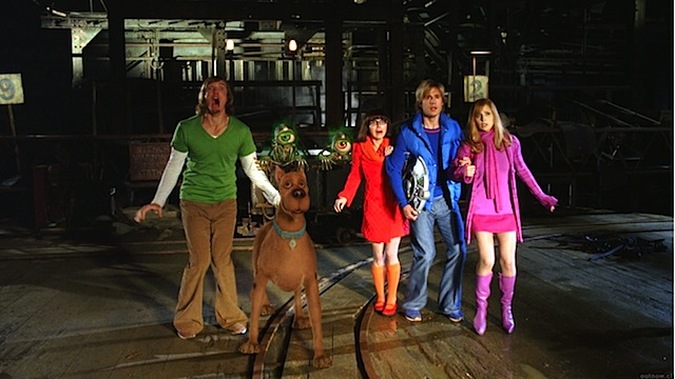

This is my other Scooby Doo film I really like it is Scooby Doo 2 Monsters Unleashed 2004. It is on for 92 minutes an hour and 32 minutes just over an hour and a half. It came out and was released on Friday the 2nd April 04 when I was seventeen years old when I was in my first year at College when I was younger.


This is one of my favourite film’s from when I was younger it is Scooby Doo The Movie 2002. It came out and was released on Friday the 12th July 02 when I was fifteen years old and in year ten at Southlands School when I was in my fourth year at Southlands. It is on for 86 minutes 1 hour and 26 minutes just under an hour and a half.
I have started watching all the Strange But True episode’s from Season One on YouTube. I have 37 more episode’s from Season One to watch on YouTube. All the episode’s are all about real life Documentaries investigations and real life murders that happened in the 60’s 70’s and the 1980’s all before I was born. I think it is really good and so are all the episode’s the first season is from 93 May of 1993 from when I was six years old and when I was still at Killingworth School. I have never seen all the episode’s before I missed them all when I was little because I never watched it when I was little because I never knew about it until Carl told me about it.


I love this song it is Shanice I Love Your Smile from 91. It came out and was released on the 22nd October 1991 when I was five years old when I was little. It gets played in The Hunting Lodge when I go their every Saturday with Carl. I love listening to the song in my music library on my iPhone with my AirPods on when I am out and about walking or if I am on The Metro on my way to NTDF or when I am on The Metro on my way back home from NTDF.

At the beginning of 1914 the British Army had a reported strength of 710,000 men including reserves, of which around 80,000 were professional soldiers ready for war. By the end of the First World War almost 25 percent of the total male population of the United Kingdom of Great Britain and Ireland had joined up, over five million men. Of these, 2.67 million joined as volunteers and 2.77 million as conscripts (although some volunteered after conscription was introduced and would most likely have been conscripted anyway). Monthly recruiting rates for the army varied dramatically.
At the outbreak of war on 4 August 1914, the British regular army numbered 247,432 serving officers and other ranks. This did not include reservists liable to be recalled to the colours upon general mobilization or the part-time volunteers of the Territorial Force. About one-third of the peace-time regulars were stationed in India and were not immediately available for service in Europe.
For a century British governmental policy and public opinion were against conscription for foreign wars. At the start of World War I the British Army consisted of six infantry divisions, one cavalry division in the United Kingdom formed shortly after the outbreak of the war, and four divisions located overseas. Fourteen Territorial Force divisions also existed, and 300,000 soldiers were in the Reserve Army. Lord Kitchener, the Secretary of State for War, considered the Territorial Force untrained and useless. He believed that the regular army must not be wasted in immediate battle, but instead used to help train a new army with 70 divisions—the size of the French and German armies—that he foresaw would be needed to fight a war lasting many years.
All recruits underwent a physical exam by Army medical officers to ascertain whether they would be suitable for military service which used a number and lettering system to categorise the health of each recruit. The following list are the categories used by the British Army in 1914.
Medical examinations were conducted in a very specific way according to War Office Instructions issued within the Regulations for the Medical Services of the Army, the Regulations for Recruiting, and the regulations for the Territorial Force on 1 August 1914. Basic requirements for a recruit was that their height, weight, chest measurement and age all correlated with a standard table. Medical examiners were given the discretion to decide a recruit’s “apparent age,” based on their appearance and physical stature, when they did not bring satisfactory documentation for proof of age.
Detailed body examinations would include looking for signs of sexually transmitted diseases, vaccination marks, lesions and rashes; the scrotum and anus would also be checked; there would be a stethoscopic examination of the heart, lung and abdomen; the hands and feet, elbows and knees would be studied for lameness, weakness and deformities; teeth (for loss and decay as being unable to chew because of poor oral hygiene was a common cause for failing the medical examination); eyesight and hearing.
Aside from the physical tests, examiners would also the note the intelligence, voice, and character of the recruit in response to questions they would ask him. This would be used to create a psychological profile that would help determine the fitness of the candidate.
There were numerous medical reasons why recruits might be deemed unfit for service.

In 1914, the British had about 5.5 million men of military age, with another 500,000 reaching the age of 18 each year. The first call was for 100,000 volunteers, made on 11 August, followed by another 100,000 on 28 August. By 12 September, almost half a million men had enlisted. At the end of October, 898,005 men had enlisted, of whom approximately 640,000 were non-TF enlistments. Around 250,000 underage boys also volunteered, either by lying about their age or giving false names. These were always rejected if the lie was discovered.
The standard Regular terms of service in the British Army were 7 years service with the colours, and 5 years in the reserve. To facilitate recruitment, supplementary Regular terms of service were announced by Army Order 296 dated 6 August 1914. Recruits to the New Army could serve for “three years or the duration of the war, whichever the longer”. These “General Service” terms were changed by Army Order 470 dated 7 November, simplified to “the duration of the war.” The recruit had the right to choose the regiment they joined.
To address the short-term need for trained men to replenish the originally deployed BEF units, supplementary Special Reserve terms of service were announced by Army Order 295 dated 6 August 1914, rescinded 7 November 1914. Ex-military men could reenlist for “one year or the duration of the war, whichever the longer”.
It was believed that former NCOs may be reticent to reenlist, having to serve as Privates. Given the need not only for former privates to enlist, but also experienced NCOs to play a part in the expansion of the army, Army Order 315 dated 17 August 1914 clarified matters. It states that ‘an ex-non-commissioned officer of the regular army who enlists [under the supplemental terms of service announced on 6 August 1914].. [will be] promoted forthwith to the rank held on discharge.
One early peculiarity was the formation of ‘pals battalions‘: groups of men from the same factory, football team, bank or similar, joining and fighting together. The idea was first suggested at a public meeting by Lord Derby. Within three days, he had enough volunteers for three battalions. Lord Kitchener gave official approval for the measure almost instantly and the response was impressive. Manchester raised nine specific pals battalions (plus three reserve battalions); one of the smallest was Accrington, in Lancashire, which raised one. One consequence of pals battalions was that a whole town could suffer a severe impact on its military-aged menfolk in a single day of fierce battle.
.jpg)
The women’s suffrage movement was sharply divided, the slight majority becoming very enthusiastic patriots and asking their members to give white feathers (the sign of the coward) in the streets to men who appeared to be of military age to shame them into service. After assaults became prevalent the Silver War Badge was issued to men who were not eligible or had been medically discharged.

The available pool was diminished by roughly 1.5 million men who were “starred”: kept in essential occupations. Almost 40 percent of the men who volunteered were rejected for medical reasons. Malnutrition was widespread in U.K. society; working class 15‑year‑olds had an average height of only 5 feet 2 inches (157 cm) while the upper class was 5 feet 6 inches (168 cm)
From the start Kitchener insisted that the British must build a massive army for a long war, arguing that the British were obliged to mobilise to the same extent as the French and Germans. His goal was 70 divisions, and the Adjutant General asked for 92,000 recruits per month, well above the number volunteering (see the graph). The obvious remedy was conscription, which was a hotly debated political issue. Many Liberals, including Prime Minister H. H. Asquith, were ideologically opposed to compulsion, but by 1915 they were wavering.
15 July 1915 the National Registration Act was passed by the British Government, exactly one month later there was a census of every citizen aged 15 to 65, approximately 29 million forms completed. A pink coloured registration card was issued to each registree, listing pertinent data. These records were ordered to be destroyed in 1921, yet some did survive, including the lately discovered forms of 2,409 women living in Cirencester, since transcribed and made publicly available. The Cabinet were given a strong warning in September 1915 in a paper presented by their only Labour member, Minister of Education Arthur Henderson. He argued many working men would strongly resist serving a nation in which they did not have a legitimate share in governing. They resented the idea of being dragooned to face possible death by a Parliament they had no part in electing—forty percent of men over 21 were denied the vote by the franchise and registration laws (until the Representation of the People Act of 1918). To them conscription was yet another theft of working men’s rights by rich capitalists. The only counter-argument the Government could offer was it was of absolute necessity. Workers must be convinced that there were too few volunteers to meet the need, meaning the loss of the war and the end of Britain! Army leaders should convince Union leaders by stating military facts. Henderson’s own son was killed in the war a year later.
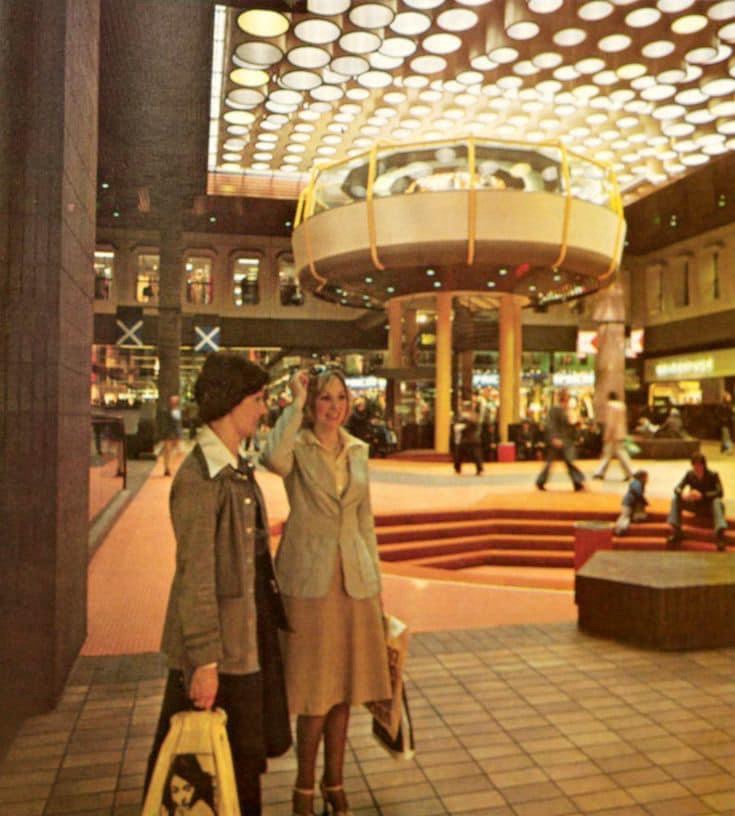
This is Newcastle Eldon Square was like back in the 1970s before I was born as you can see it was a lot different then to how it looks like now. It was like this for years in the 70’s.
Dorothy Field was one of the first women who volunteered to work overseas as a Voluntary Aid Detachment (VAD) nurse. She tended the wounded throughout the Battle of the Somme.
Dorothy was a member of the Voluntary Aid Detachments of the British Red Cross Society during the First World War. In spring 1915, she went to France and was posted first to No.4 General Hospital at Versailles and then to No.10 General Hospital in Rouen.
Private papers

Dorothy Field photographed in her Red Cross uniform after the end of the war. She is wearing the medal ribbons of the 1914-15 Star, the British War Medal and the Victory Medal, and has four chevrons on her arm indicating four years service overseas.
In small pocket diaries, Dorothy recorded brief details of what she saw and heard. On 24 June 1916, the great artillery bombardment on the Somme began, marking the start of the battle. Although she was many miles away at the time, in Rouen, Dorothy noted in her diary that she could hear the guns firing ‘very distinctly’. When the sound finally stopped on 1 July, casualties began to pour into No.10 General Hospital.
Private papers

Pocket diaries kept by Dorothy Field during the First World War.
The first convoy of 170 men arrived at 4am on 2 July. ‘The “going over the top” results’, Dorothy wrote. ‘Practically all surgicals.’ Over the next 48 hours, four convoys of wounded arrived, while two convoys of stabilised patients left for other hospitals in France or Britain. Such was the intensity of the work at the hospital, it was 13 July before Dorothy was able to take a rest from her duties.
Over the following weeks the steady arrival of wounded men charted the course of the battle. In July, Dorothy nursed her first Australian casualties. A few weeks later she met soldiers from New Zealand and towards the end of September men from Canada.
With patients frequently dying from wounds, it was a tiring and, at times, depressing experience. But like the soldiers at the front, the hospital staff took their mind off the war with theatrical entertainments during quiet periods. Among Dorothy’s possessions is a concert programme from 2 September 1916.
Dorothy later served for a year in Italy, where she was stationed at Genoa, Turin, Arquata and Cremona. During the Second World War, she worked for the London Volunteer Ambulance Service.

I really enjoyed my Bacon and Cheese Burger and Chips I had for dinner last night when I went to The Beacon Pub with my Mum and Steve it was very nice. It had been a while since I had a Bacon and Cheese Burger and Chips at The Beacon so I really enjoyed it.
 Weevles Updates Disabled Bloggers Team