A third of people who are offline find that the NHS is one of the most difficult organisations to interact with (Lloyds, 2022). In addition, those who are offline are twice as likely to indicate a health condition compared to those who are online (Lloyds, 2023).
These statistics tell us that not only do those who are digitally excluded struggle to interact with health services, they are also more likely to need to.
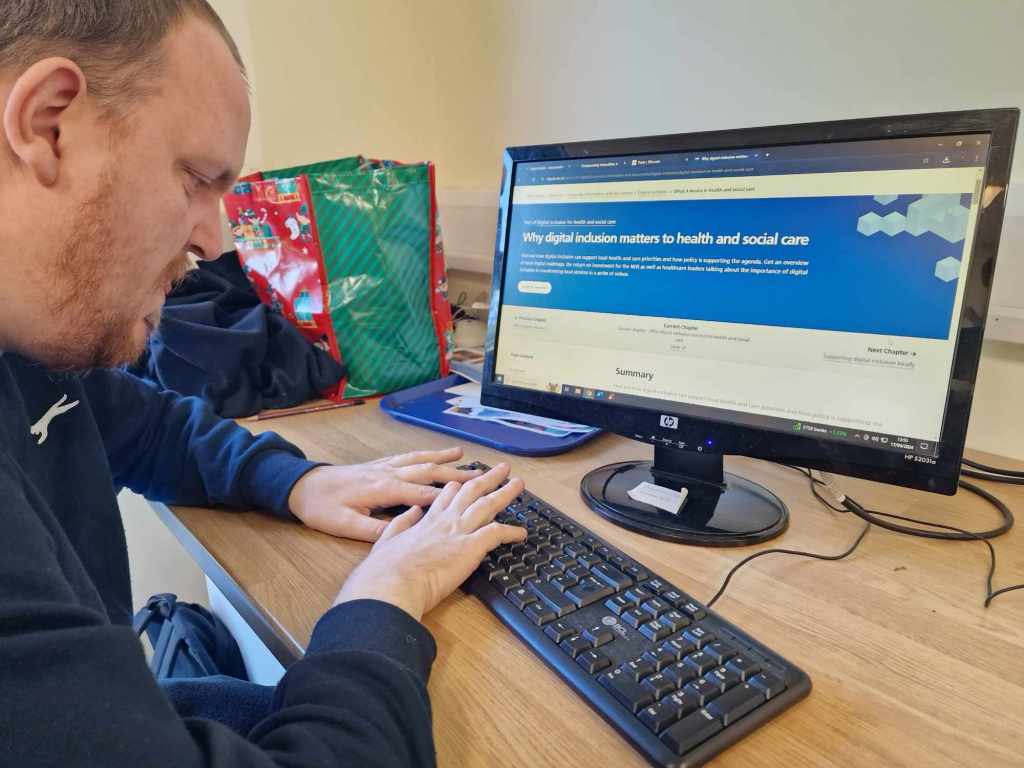
This overlap between digital exclusion and access to health-care has been well researched by member organisations within the VCSE (Voluntary, Community and Social Enterprise) Health and Wellbeing Alliance, a partnership between voluntary sector representatives and the health and care system focused on improving services for communities. Our recent ‘Designing For Digital Inclusion in Healthcare’ seminar series was a project supported by the alliance, with the aim of drawing together this research and learning, to help reduce barriers to accessing health care.https://www.goodthingsfoundation.org/what-we-do/news/compounding-inequalities-in-accessing-digital-health-services/?fbclid=IwAR1jF9yfb9ziCsQ4XTuv0s8C43TVfMm8mBcFu-kc5zcnFw5804XrUbrKwr8

 Weevles Updates Disabled Bloggers Team
Does this really make a difference?
LikeLiked by 2 people
I think it probably does for many of those who are the most likely digitally excluded.
LikeLike
Absolutely, but it’s not just about digital knowledge it encompasses physical access as well.
LikeLiked by 1 person
This is where Assistive Technology steps in. Our website link has much more to say about this. https://www.parkviewprojectne.com/my-computer-my-way
LikeLike