Nurses and Midwives in Nazi Germany
In 1933, Adolf Hitler became Chancellor of Germany. The philosophies of the Nazi party, of which he was head, were based on eugenics – a pseudoscience that had much traction around the world at the time.
Eugenics dictated that only the healthiest and fittest be allowed to procreate and to live. The Nazis’ racial policies, which divided human races into levels of fitness for life, synergised with eugenics to support programmes declaring certain people ‘life unworthy of life‘ or ‘useless feeders.’
Under such policies, people with mental illnesses, physical and intellectual disabilities, and conditions such as epilepsy, chronic alcoholism and a range of genetic diseases, were considered a burden on society and should be annihilated.
To this end, in 1939, Hitler, through his personal physician Dr Karl Brandt, set up the ‘T4′ programme – the systematic, state-sanctioned murder of the disabled and chronically ill. The first people to be killed were disabled children.
The main killing centres were hospitals and homes for the disabled. Parents and carers were encouraged to place their loved ones and children into institutions. They would then be moved to another institution a long way from home, and contact between child and parent ceased.
After some months, parents received a letter saying that their child had died of something like pneumonia or appendicitis and that the parents could come and collect their ashes and pay for the funeral.
Doctors would assess the patients and make a mark on a standard questionnaire that dictated whether the person was to be killed or allowed to live.
While doctors made the decisions about who should live or die, the nurses did the killing. The killings took place in hospitals. Who constitutes the largest proportion of the workforce in a hospital? It’s the nurses, and it was the nurses who killed.
They used intravenous injections, lethal doses of drugs such as phenobarbitone, or starvation or hypothermia from exposure.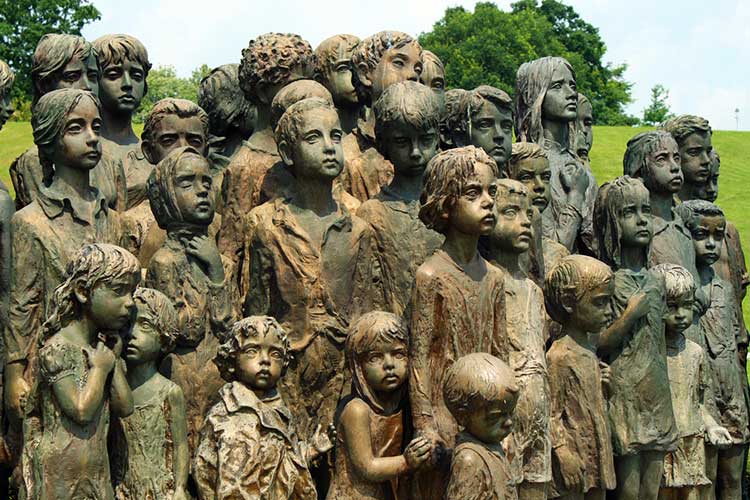
Memorial to the Children Victims of the War, Lidice, Czech Republic.
What made the nurses do this, surely they were there to care for patients?
In Hitler’s Germany, propaganda underpinned everything.
Propaganda about ‘life unworthy of life’ and ‘useless feeders’ was everywhere, even in arithmetic exercises for primary school children.
Many people genuinely believed that by removing these burdens on society, Germany would be a better place. Nurses, too, succumbed to the propaganda. Many believed that they were doing the right thing, that Germany would be a better place because of these policies.
Of course, there were many who disagreed and would not take part. These nurses were not punished, nor ostracised – they were moved to another hospital or another ward.
In other words, the nurses who participated in this murder did so willingly and voluntarily.
 Weevles Updates Disabled Bloggers Team